How to Propagate Kalanchoe: Easy Stem, Leaf, and Plantlet Methods

Kalanchoe is one of those generous little succulents that makes you feel like a plant genius. Cut a stem, let it dry, tuck it into gritty soil, and with a bit of patience, you’ve got a new plant.
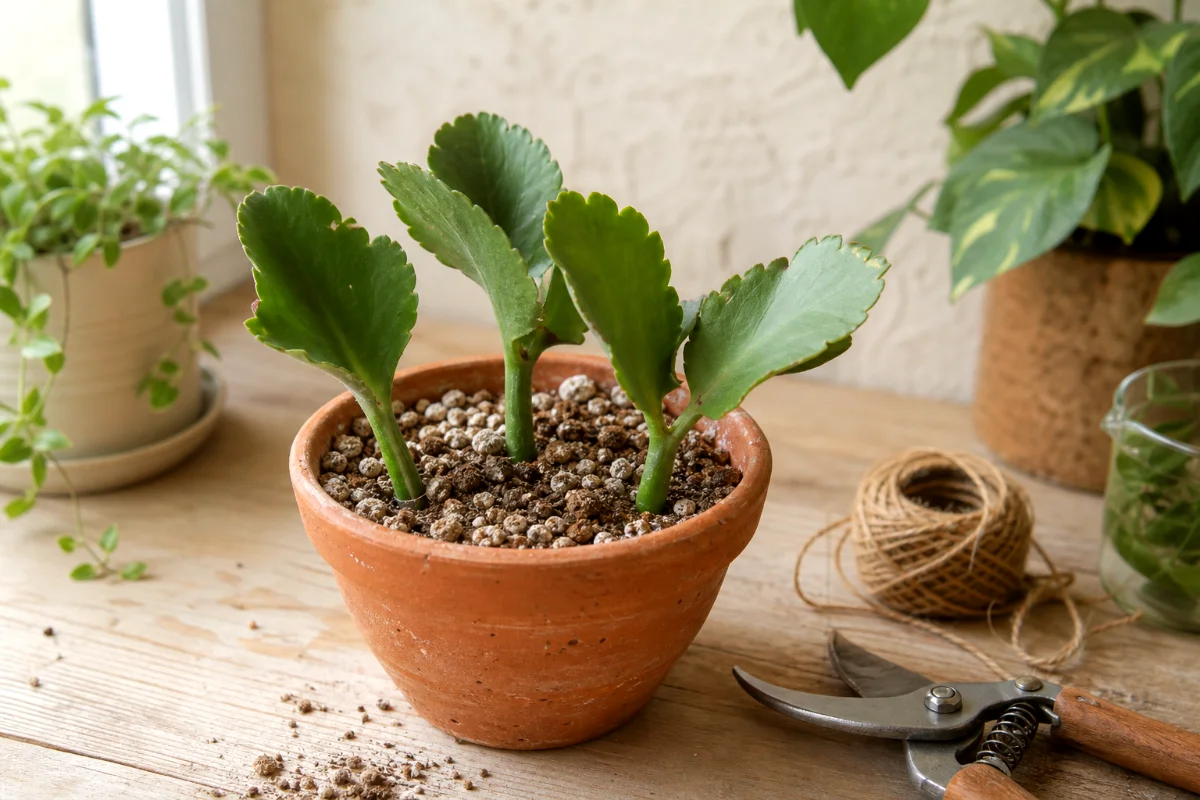
Still, there’s one mistake that ruins more kalanchoe cuttings than anything else. Too much water. I’ve done it. Most gardeners have.
The easiest way to propagate kalanchoe is with stem cuttings in spring or summer. You can also use leaf cuttings, and if you grow a Mother of Thousands type, you can plant the tiny offsets that form along the leaf edges.
Best Time to Propagate Kalanchoe
The best time to propagate kalanchoe is late spring to early summer, when the plant grows actively and roots faster.
Can you do it year-round? Yes. But winter cuttings often sit there like stubborn little sticks because cooler temperatures and lower light slow everything down.
If you’re new to propagation, stack the odds in your favor. Choose a warm season, bright indirect light, and a fast-draining potting mix.
What You’ll Need
- A healthy kalanchoe plant
- Sharp, clean pruning shears or scissors
- A small terracotta pot or nursery pot with drainage holes
- Cactus or succulent potting mix
- Perlite or pumice, if your mix feels heavy
- Rooting hormone, optional
- A spray bottle for leaf cuttings and offsets
Don’t overthink the gear. Kalanchoe doesn’t need fancy equipment. It needs clean cuts, dry calluses, airy soil, and restraint with the watering can.
Method 1: Stem Cuttings, the Best Method
If a friend hands me a kalanchoe and asks how to make more, I recommend stem cuttings first. They root faster than leaves, they grow into fuller plants sooner, and beginners get better results.
Step 1: Choose the Right Stem
Pick a healthy, non-flowering stem. Flowering stems spend energy on blooms, not roots, so skip those if you can.
Look for a firm green stem with plump leaves. Avoid stems that look wrinkled, mushy, pest-damaged, or stretched thin from poor light.
Step 2: Make a Clean Cut
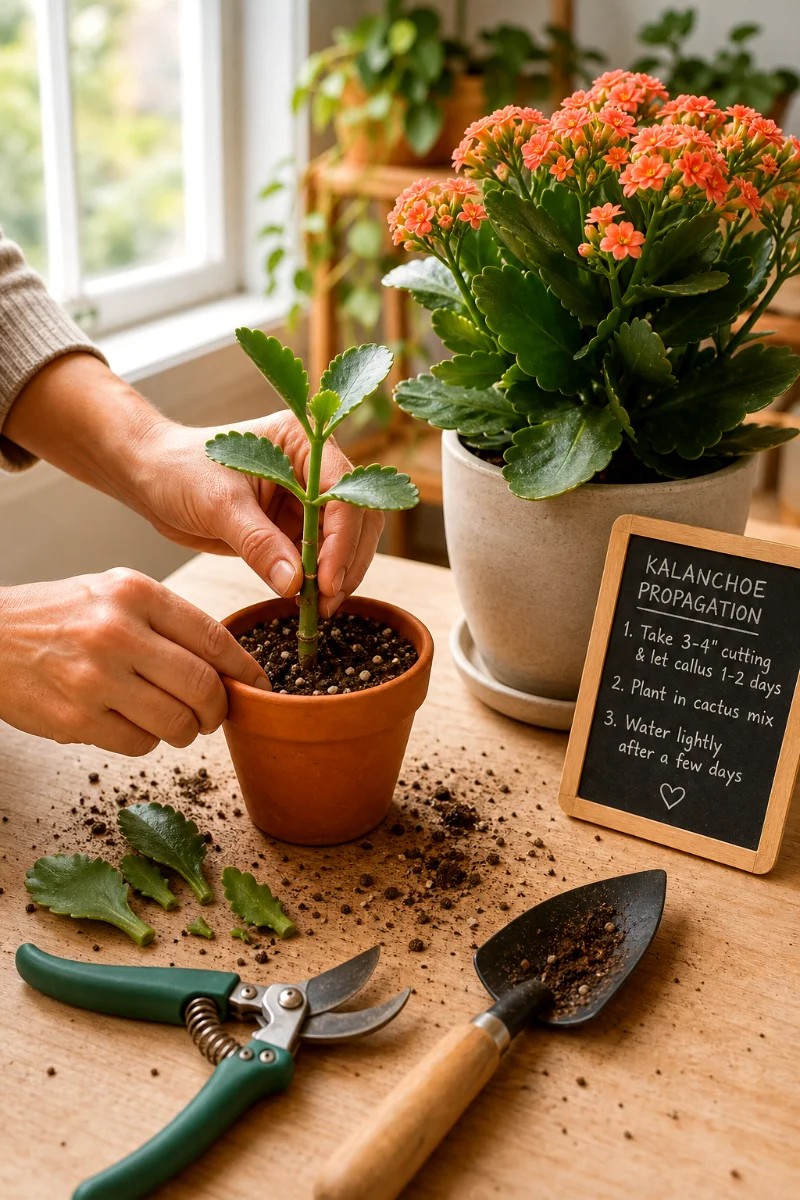
Cut a 3 to 4 inch stem piece just below a leaf node. A node is the spot where leaves attach to the stem, and it’s a good place for roots to form.
Use sharp, clean shears. Dirty blades can pass along bacteria or fungus, and ragged cuts heal slowly.
Step 3: Remove the Lower Leaves
Strip off the lower leaves, leaving only a few at the top. You want a bare section of stem to sit in the potting mix.
Don’t bury leaves under the soil. They usually rot. And once rot starts, it travels fast in succulent cuttings.
Step 4: Let the Cutting Callus
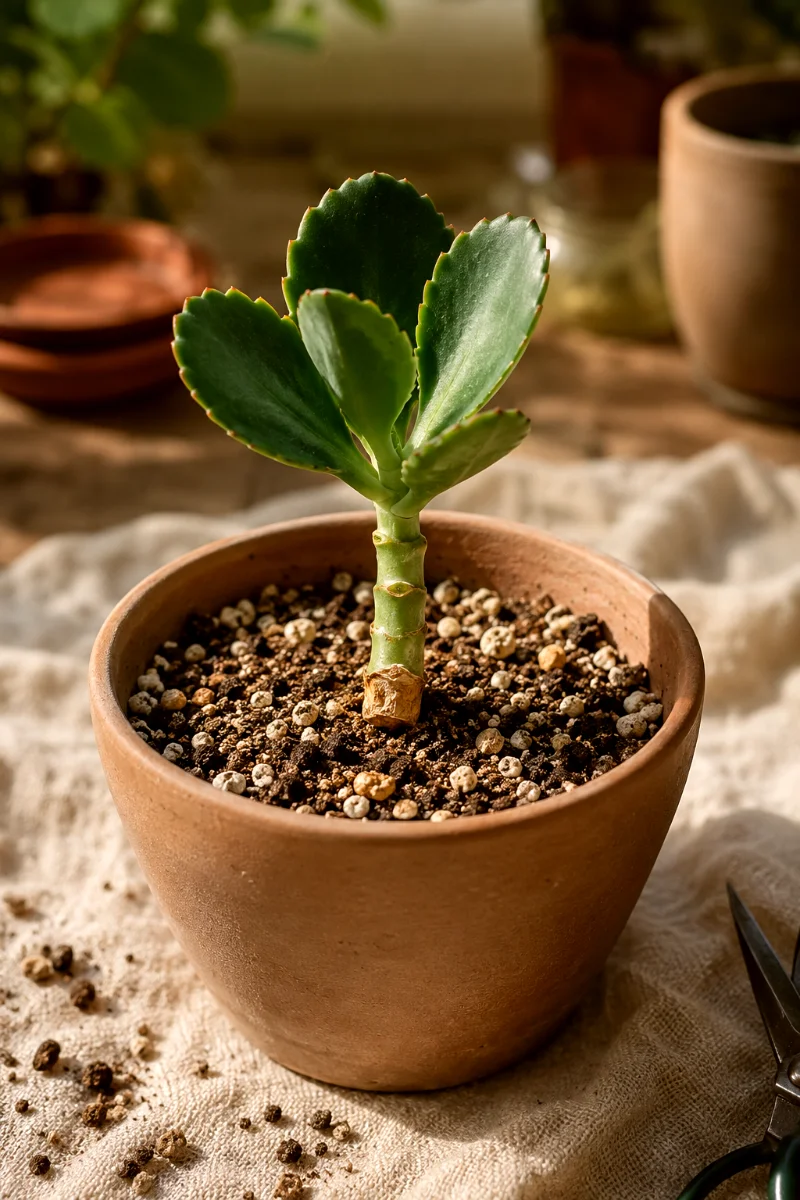
Set the cutting in a warm, dry spot for 2 to 3 days. The cut end needs to dry and form a callus.
This step feels odd to beginners. But it matters. A fresh succulent cutting is juicy inside, and if you stick that wet wound straight into moist soil, you invite rot.
A callused end looks dry, sealed, and slightly pale. That’s your green light.
Step 5: Plant in Succulent Mix
Fill a small pot with cactus or succulent potting mix. If the mix holds too much moisture, blend in extra perlite or pumice.
Dip the callused end in rooting hormone if you like. It’s optional. Kalanchoe usually roots without it, but hormone can help weaker cuttings get moving.
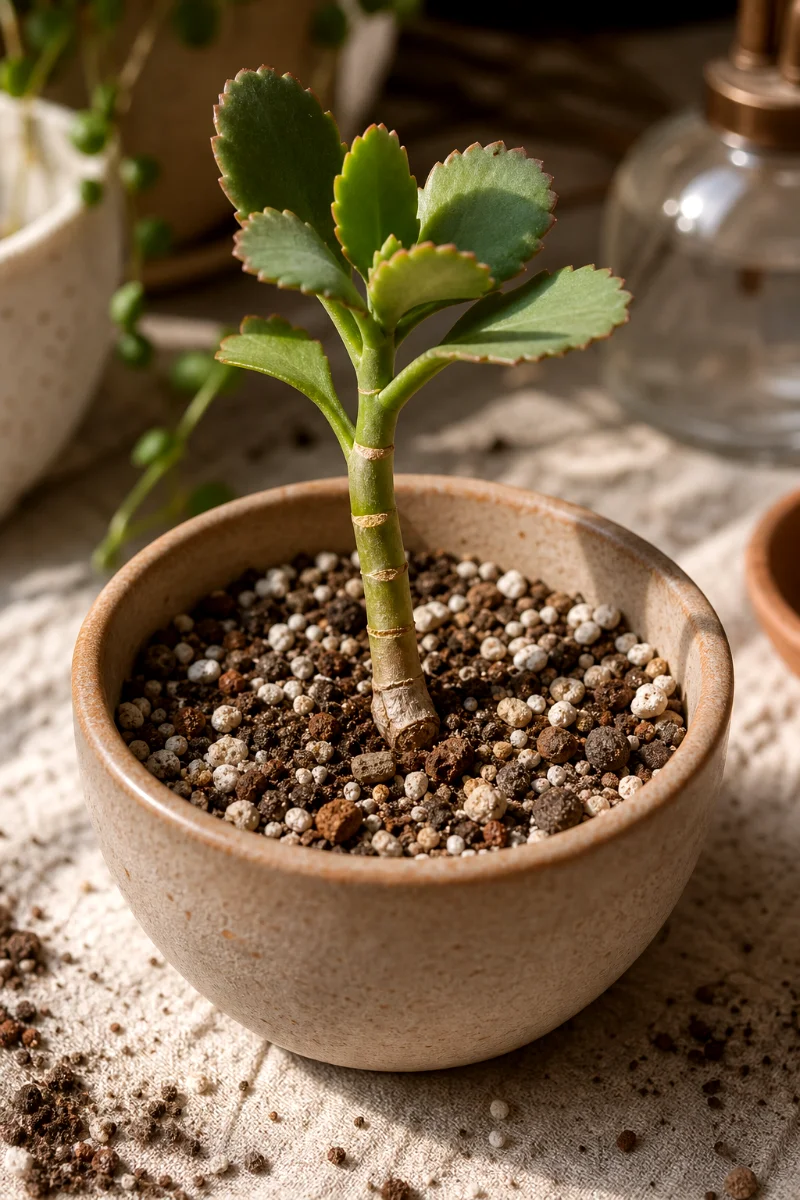
Plant the stem about 1 inch deep. Firm the soil gently so the cutting stands upright, but don’t pack it hard like cement.
Step 6: Water Lightly and Wait
Moisten the mix lightly after planting. Not soggy. Not swampy. Just barely damp.
Place the pot in bright, indirect light. Keep it out of direct sun while it roots because harsh light can dry the cutting before it has roots to replace moisture.
Roots usually develop in 2 to 3 weeks. After that, you can treat the young plant more like a mature kalanchoe.
Method 2: Leaf Cuttings
Leaf cuttings are slower. They’re also a little less reliable. But they’re fun, especially if a healthy leaf drops off and you hate wasting good plant material.
Step 1: Choose a Firm Leaf
Gently pull a healthy, firm leaf from the parent plant. Try to remove the whole leaf cleanly, including the base.
A torn leaf base often struggles to root. So take your time. Wiggle it gently from side to side instead of yanking.
Step 2: Let the Leaf Dry
Place the leaf on a dry surface for 1 to 2 days. The base should dry before it touches soil.
Again, this prevents rot. Succulents forgive a lot, but they don’t forgive wet wounds sitting in damp mix.
Step 3: Set the Leaf in Soil
Insert the callused end slightly into succulent mix, or lay the leaf on top with the base touching the soil.
Use a shallow pot if you have one. Leaf cuttings don’t need deep soil, and deep pots stay wet longer than kalanchoe likes.
Step 4: Mist Lightly
Mist the soil lightly every day or every few days. Your goal is gentle moisture near the leaf base, not wet soil from top to bottom.
Eventually, small roots and a tiny new plant may appear. The original leaf may shrivel as it feeds the baby plant. That’s normal. A little sad-looking, yes, but normal.
Method 3: Offsets from Mother of Thousands
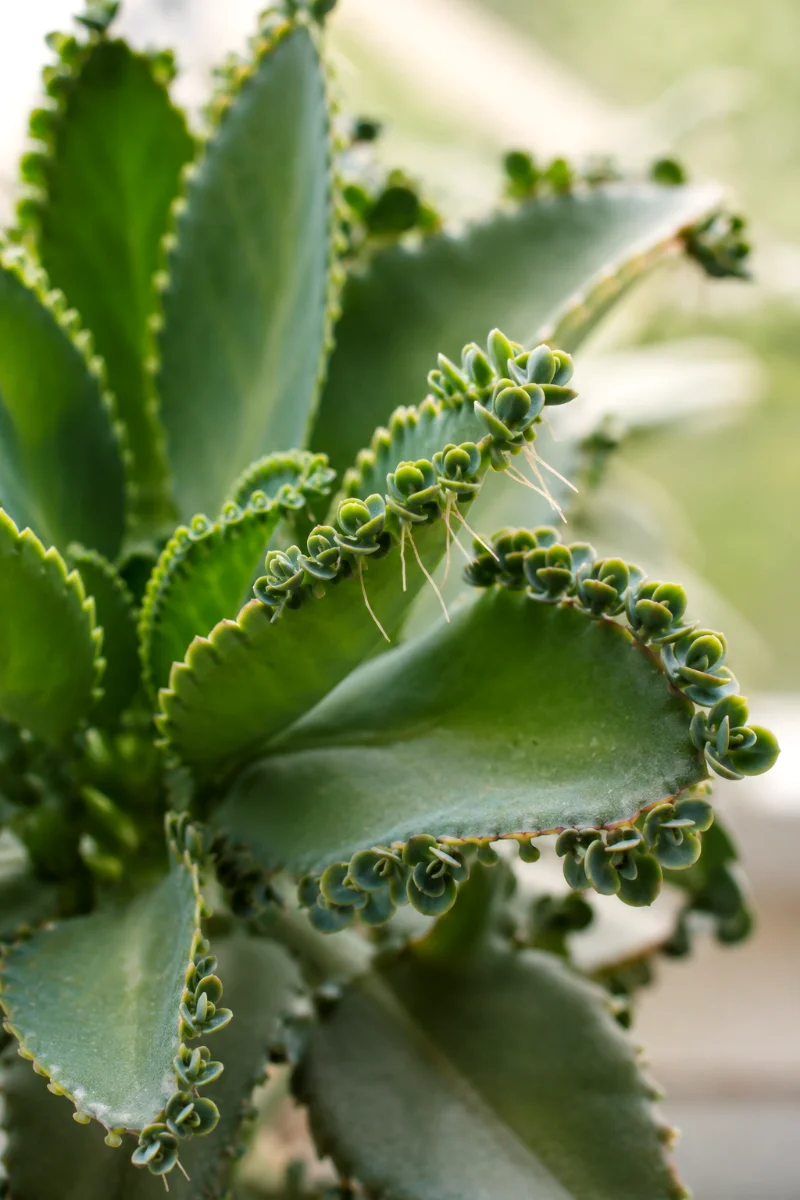
Some kalanchoe types, especially Mother of Thousands, practically propagate themselves. They grow tiny plantlets along the leaf edges, complete with miniature leaves and sometimes fine roots.
Honestly, this plant can be a bit too talented. Those babies drop into nearby pots and start new colonies if you blink.
Step 1: Remove the Plantlets
Gently pull the tiny plantlets from the leaf edges. If they’re ready, they’ll come away with almost no effort.
Don’t scrape or gouge the parent leaf. You’re collecting babies, not performing surgery.
Step 2: Place Them on Succulent Soil
Fill a small pot with succulent mix and place the plantlets on the surface. Press them lightly so their tiny roots touch the soil.
No deep planting. These are tiny plants, and burying them can smother them.
Step 3: Mist Until They Grow
Mist lightly to keep the top layer of soil just a bit moist. Once the plantlets start growing and anchoring themselves, reduce misting.
Give them bright, indirect light. They’ll stretch and weaken in dim corners.
Light for Kalanchoe Cuttings
Kalanchoe cuttings need bright, indirect light while they root. Think near a sunny window, but not pressed against hot glass in direct afternoon sun.
Direct sun can scorch leaves and dry cuttings too fast. Low light causes weak growth and slow rooting.
My favorite spot is a bright east-facing windowsill or a table a few feet back from a south-facing window. Warm. Bright. Gentle.
Soil That Keeps Cuttings Alive
Use fast-draining cactus or succulent mix. This is not the moment for rich, moisture-holding potting soil.
Kalanchoe stores water in its leaves and stems. Heavy soil traps moisture around the cutting, and that’s how you end up with black, mushy stems.
If your mix feels dense, add perlite, pumice, or coarse sand. I like a mix that feels gritty and loose in my hand, not soft and peaty like a seed-starting blend.
How to Water Kalanchoe Cuttings
Water lightly. Then wait.
For stem cuttings, keep the soil slightly moist while roots form, but let the surface dry a bit between waterings. For leaf cuttings and offsets, mist gently instead of soaking the whole pot.
Here’s the backyard-fence truth: more kalanchoe cuttings die from kindness than neglect. If you’re unsure, wait another day before watering.
How Long Does Kalanchoe Take to Root
Stem cuttings usually root in 2 to 3 weeks under warm conditions with bright, indirect light.
Leaf cuttings take longer. Sometimes much longer. Offsets can settle in quickly because they’re already tiny plants.
To check a stem cutting, tug very gently after a couple of weeks. If you feel resistance, roots have started. If it slides out easily, tuck it back in and give it more time.
Common Mistakes to Avoid
- Planting cuttings too soon: Always let stem cuttings callus for 2 to 3 days.
- Using wet, heavy soil: Choose cactus or succulent mix with excellent drainage.
- Giving direct hot sun: Use bright, indirect light while roots form.
- Watering like it’s a fern: Kalanchoe wants light moisture, not soggy soil.
- Taking flowering stems: Pick non-flowering stems for stronger rooting.
- Using a pot with no drainage: Drainage holes are not negotiable for this plant.
When to Pot Up Your New Kalanchoe
Once the cutting roots and starts new growth, keep it in its small pot for a while. Small roots like a snug home.
Move it up only when roots fill the pot or the plant dries out too quickly. Choose a pot just one size larger, not a giant container.
After rooting, let the soil dry more between waterings. Mature kalanchoe prefers a dry spell between drinks.
Aftercare for Young Kalanchoe Plants
Once your new plant grows steadily, give it brighter light than it had during rooting. A few hours of gentle morning sun can help compact, sturdy growth.
Feed lightly during spring and summer if you want. Use a diluted succulent fertilizer, and don’t feed stressed or freshly planted cuttings.
Pinch back leggy tips if the plant stretches. That encourages branching and gives you a fuller little kalanchoe instead of one tall, awkward stem.
FAQ
Can I propagate kalanchoe in water?
You can try, but I don’t recommend it for beginners. Kalanchoe cuttings root more safely in succulent mix because wet stems rot easily in water.
Do I need rooting hormone?
No. Rooting hormone can help, but kalanchoe usually roots without it. Clean cuts and a proper callus matter more.
Why is my kalanchoe cutting turning black?
Black, mushy tissue usually means rot. You likely planted before the cut end callused, used soil that stayed too wet, or watered too often.
Why are my leaf cuttings shriveling?
Some shriveling is normal as the old leaf feeds new roots and baby growth. If it turns mushy instead of dry and wrinkled, the soil is too wet.
How big should a kalanchoe stem cutting be?
A 3 to 4 inch cutting is ideal. It has enough stored energy to root, but it isn’t so large that it struggles before roots form.
Can I propagate a flowering kalanchoe?
You can, but choose a non-flowering stem if possible. The cutting will root better when it isn’t spending energy on flowers.