How to Propagate Wandering Jew Plant from Cuttings

The plant many people call Wandering Jew also goes by inch plant or Tradescantia. You may see names like Tradescantia zebrina, Tradescantia fluminensis, or Tradescantia pallida on plant tags.
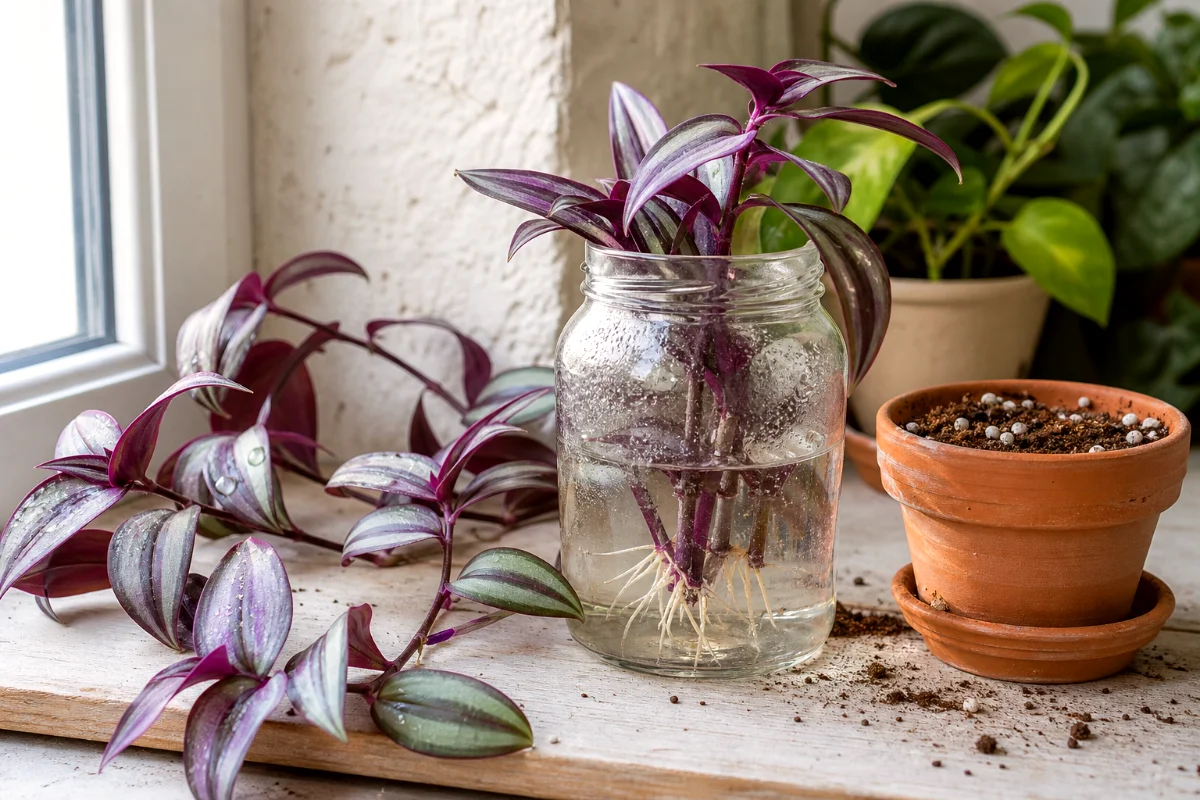
That older common name still shows up in shops and search results, so I’ll use it here for clarity. At home, I usually call mine Tradescantia. Same plant family. Same easy rooting habit.
And when I say easy, I mean it. This plant practically begs you to make more plants from it.
Why Tradescantia Is So Easy To Propagate
Tradescantia roots from stem nodes. A node is the little bump or joint on the stem where leaves grow. If that node touches water or moist soil, it can push out roots fast.
This is why a broken piece often roots if it lands in a damp pot. It’s not magic. It’s just a plant with a very strong survival habit.
Spring, summer, and early autumn give you the quickest results because the plant is actively growing. You can still try cuttings in winter, but they may sulk a bit and root more slowly.
What You’ll Need
Keep this simple. Beginners often make propagation harder than it needs to be.
- A healthy Tradescantia plant
- Clean scissors, snips, or pruning shears
- A small glass jar for water propagation
- A small pot with drainage holes for soil propagation
- Fresh potting mix
- Perlite, if your potting mix feels heavy
- Room-temperature water
- Optional rooting hormone
Clean tools matter. Dirty scissors can push bacteria into fresh cuts, and while Tradescantia forgives a lot, there’s no sense starting with trouble.
How To Take The Right Cutting
Choose A Healthy Stem
Look for a stem that has good color, firm growth, and several leaf nodes. A cutting around 4 to 6 inches long works beautifully.
Skip stems that look mushy, yellow, shriveled, or pest-damaged. Weak cuttings can root, but they often make weak little plants. Start strong.
Cut Just Below A Node
Make your cut at a slight angle just below a leaf node. That node is where the roots will come from, so don’t cut a long bare tail below it.
Short and tidy. That’s the trick.
Remove The Lower Leaves
Strip the leaves from the lower two-thirds of the cutting. Leave a few leaves at the top so the cutting can keep making energy.
Do this for both water and soil propagation. Leaves buried in wet soil or sitting underwater rot quickly, and rotting leaves can foul the whole cutting.
Method 1: Water Propagation
If you’re new to propagation, start here. Water propagation lets you watch the roots grow, which is both useful and ridiculously satisfying.
Roots often show within a week. Sometimes sooner. Tradescantia likes to show off.
Step 1: Place The Cutting In Water
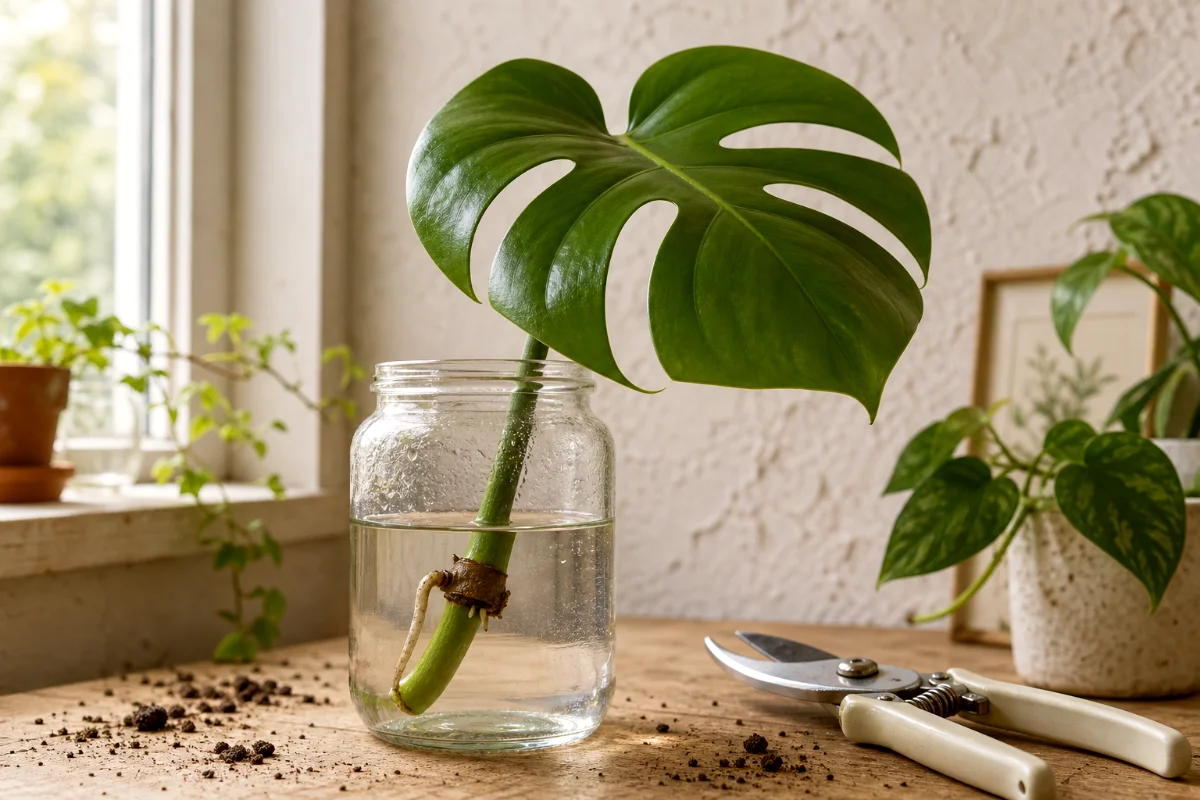
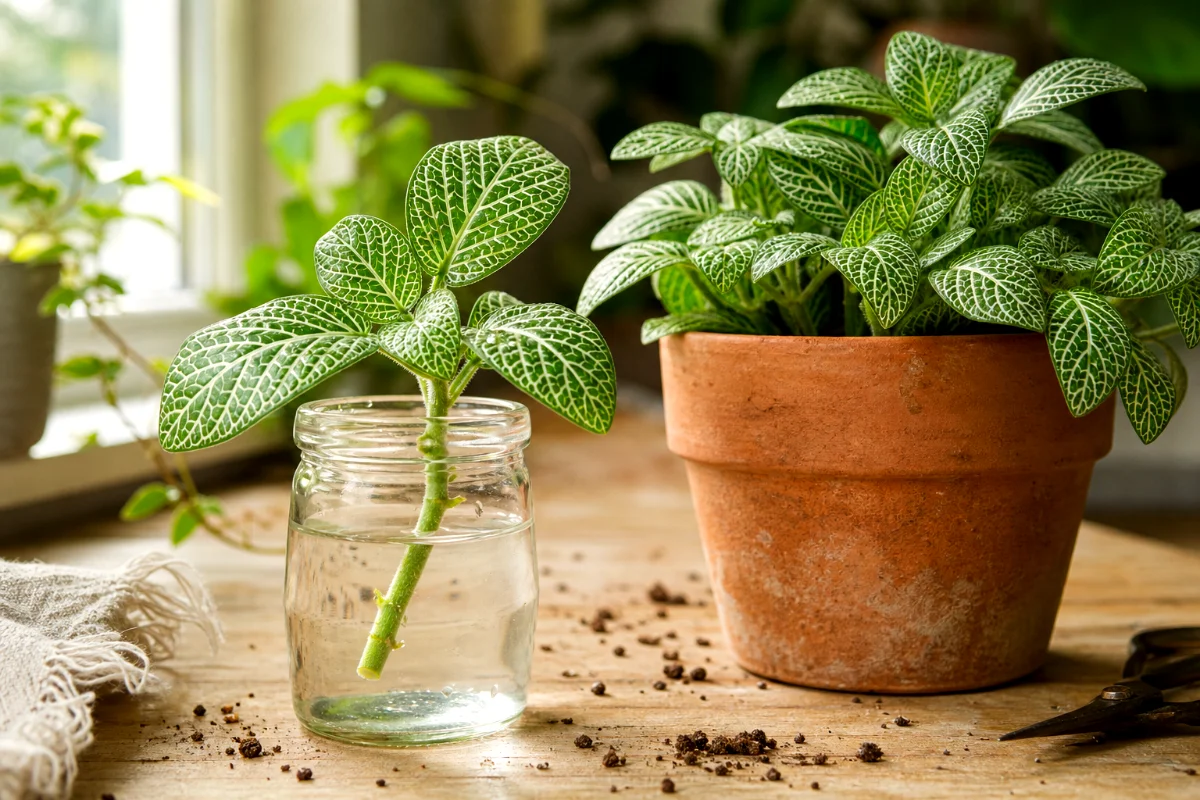
Set the prepared cutting in a clean jar or glass of room-temperature water. Make sure at least one or two nodes sit below the water line.
The leaves should stay above the water. If they touch the water, remove a few more.
Step 2: Give It Bright, Indirect Light
Put the jar near a bright window, but keep it out of harsh direct sun. Direct sun can heat the water and stress the cutting.
Bright, indirect light gives the cutting enough energy to root without frying those tender leaves.
Step 3: Change The Water Every 3 To 4 Days
Fresh water keeps bacteria down and adds oxygen back around the stem. If the water turns cloudy, change it sooner.
And don’t top it off forever without cleaning the jar. Old water gets funky. Your nose will tell you.
Step 4: Pot It Up When Roots Reach 3 To 4 Inches
Once roots reach about 3 to 4 inches long, move the cutting into potting soil. This usually takes 2 to 3 weeks.
Don’t wait for a giant root beard. Long water roots tangle easily and can struggle when moved into soil.
How To Move Water-Rooted Cuttings Into Soil
Fill a small pot with fresh, well-draining potting mix. Water it lightly before planting so the mix feels evenly damp, not soggy.
Use your finger or a pencil to make a hole. Slide the rooted cutting in gently, cover the roots, and firm the soil just enough to hold the stem upright.
For the first week, keep the soil slightly more moist than you normally would. Water roots need a little time to adjust to soil life.
But don’t drown them. Soggy soil steals air from the roots, and roots need air as much as they need moisture.
Method 2: Soil Propagation
Soil propagation skips the jar and puts the cutting straight where it will grow. I prefer this method when I want a fuller pot fast.
It’s not as showy because you can’t see the roots forming. But the plant often establishes faster because it doesn’t have to switch from water roots to soil roots later.
Step 1: Prepare A Small Pot
Choose a pot with drainage holes. Tradescantia likes moisture while rooting, but it hates sitting in stale, soggy soil.
Use a loose potting mix. If your mix feels dense or muddy, add perlite. A simple blend of potting soil and perlite works well.
Step 2: Plant The Cutting Deep Enough
Poke a small hole in the damp soil. Insert the cutting so at least two nodes sit under the soil surface.
Firm the soil around the stem. Don’t pack it like concrete. Just close the air gaps.
Step 3: Keep The Soil Consistently Moist
For the first few weeks, keep the soil lightly moist. Think wrung-out sponge, not swamp.
If the surface dries a little, that’s fine. If the whole pot dries bone-dry before roots form, the cutting may wilt hard.
Step 4: Watch For New Growth
Roots usually form in about 2 to 3 weeks. New leaves or side shoots tell you the cutting has started to settle in.
You can tug very gently after a couple of weeks. If you feel resistance, roots are grabbing the soil. Don’t yank it out to check. I know it’s tempting.
Water Or Soil: Which Method Should You Choose?
Both work. Truly.
Choose water propagation if you want to see the roots and enjoy the process. It’s fun, clear, and beginner-friendly.
Choose soil propagation if you want less transplant shock and a quicker path to a sturdy plant. This is the method I use when I’m refreshing a leggy mother plant.
If you only have one precious cutting, water can feel safer because you can monitor it. If you have several cuttings, do both. Gardeners call that experimenting. I call it not putting all your stems in one jar.
How To Make A Fuller, Bushier Plant
A single Tradescantia cutting can look a bit lonely in a pot. The easiest fix? Plant several together.
Use 3 to 4 cuttings in one small pot for a fuller look right away. Space them around the pot so the growth trails evenly instead of flopping to one side.
Once the cuttings root and start growing, pinch off the growing tips. This tells the plant to branch instead of making one long, skinny vine.
Pinching feels rude the first time. Do it anyway. Tradescantia responds by getting thicker and prettier.
How To Fix A Leggy Wandering Jew Plant With Cuttings
Leggy Tradescantia happens. It usually means the plant wants more light, or it has grown long and tired after months of trailing.
Here’s the fix I use: prune the long stems, take several healthy cuttings, and root them right back into the same pot.
This does three things at once:
- It shortens the overgrown vines
- It creates new roots in bare spots
- It makes the pot look full again without buying another plant
After you replant the cuttings, move the pot into brighter indirect light. If you keep it in the same dim corner, it will stretch again. Plants don’t lie about light.
Do You Need Rooting Hormone?
No. Tradescantia roots so readily that rooting hormone usually feels like bringing a ladder to step over a puddle.
But you can use it if you want a faster start, especially with soil propagation. Dip the cut end lightly, tap off the extra powder, and plant the cutting.
Use a light hand. More powder doesn’t mean more roots. It just makes a mess.
Best Light For New Cuttings
Give cuttings bright, indirect light. A spot near an east-facing window works well. A few feet back from a bright south or west window can also work.
Too little light slows rooting and creates stretched growth. Too much direct sun can scorch leaves and dry soil before roots have a chance.
If your plant has purple, silver, or striped leaves, good light helps keep those colors sharp. In dull light, Tradescantia often fades and stretches.
Watering New Tradescantia Cuttings
New cuttings need steadier moisture than established plants. They don’t have a full root system yet, so they can’t recover from deep drying as easily.
Check the soil with your finger. If the top inch feels dry, water gently. If it still feels damp, wait.
Once the cuttings start growing well, let the top inch dry between waterings. Tradescantia likes moisture, but it does not need wet feet every day.
Common Problems And Quick Fixes
The Cutting Turns Mushy
Mush usually means rot. Remove the cutting, trim above the soft part, strip any wet leaves, and try again in fresh water or fresh soil.
Also check your water level. Leaves underwater rot fast.
The Leaves Wilt After Planting
A little wilting can happen while roots adjust. Keep the soil lightly moist and move the pot out of hot sun.
If the stem still feels firm, give it time. If the stem collapses, take a fresh cutting.
No Roots After Two Weeks
Check the node. If no node sits in water or soil, roots may not form where you expect.
Also look at light and temperature. Cool rooms and dim corners slow everything down.
The New Plant Gets Leggy Again
Move it closer to bright indirect light and pinch the tips more often. Long gaps between leaves usually point to weak light.
Don’t be afraid to prune. Tradescantia grows better when you boss it around a little.
My Simple Propagation Routine
When my Tradescantia gets long and thin, I cut several stems in the morning while the plant looks fresh. I trim each cutting to about 4 or 5 inches and remove the lower leaves.
Then I split the batch. Half goes in water because I like watching roots. Half goes straight into the mother pot because I want fullness fast.
Two or three weeks later, I pot the water-rooted cuttings into any bare spots. It’s not fancy. It works.
FAQ
Can You Propagate Wandering Jew Plant From One Leaf?
No, not reliably. You need a piece of stem with at least one node. A leaf alone may stay fresh for a while, but it won’t grow into a full plant.
How Long Does It Take Tradescantia To Root In Water?
You may see roots within a week. Most cuttings grow good transplanting roots in about 2 to 3 weeks.
Can I Put Tradescantia Cuttings Straight Into The Mother Plant Pot?
Yes. This is one of the best ways to fill in a thin plant. Keep the soil lightly moist while the new cuttings root.
Why Are My Cuttings Rotting In Water?
Rot usually comes from submerged leaves, dirty water, or a jar that sits too long without a water change. Strip the lower leaves and change the water every 3 to 4 days.
Should I Propagate In Spring Only?
Spring, summer, and early autumn work best because the plant grows faster then. You can try in winter, but expect slower rooting.
How Many Cuttings Should I Put In One Pot?
For a full young plant, use 3 to 4 cuttings in one pot. For a very full hanging basket, use more and space them evenly.
Take one more cutting than you think you need. Tradescantia roots so easily that the extra stem often becomes the prettiest little backup plant on the windowsill.