How to Propagate Begonia in Water from Cuttings

If you’ve got a leggy begonia leaning toward the window like it pays rent, don’t toss that extra growth. Use it.
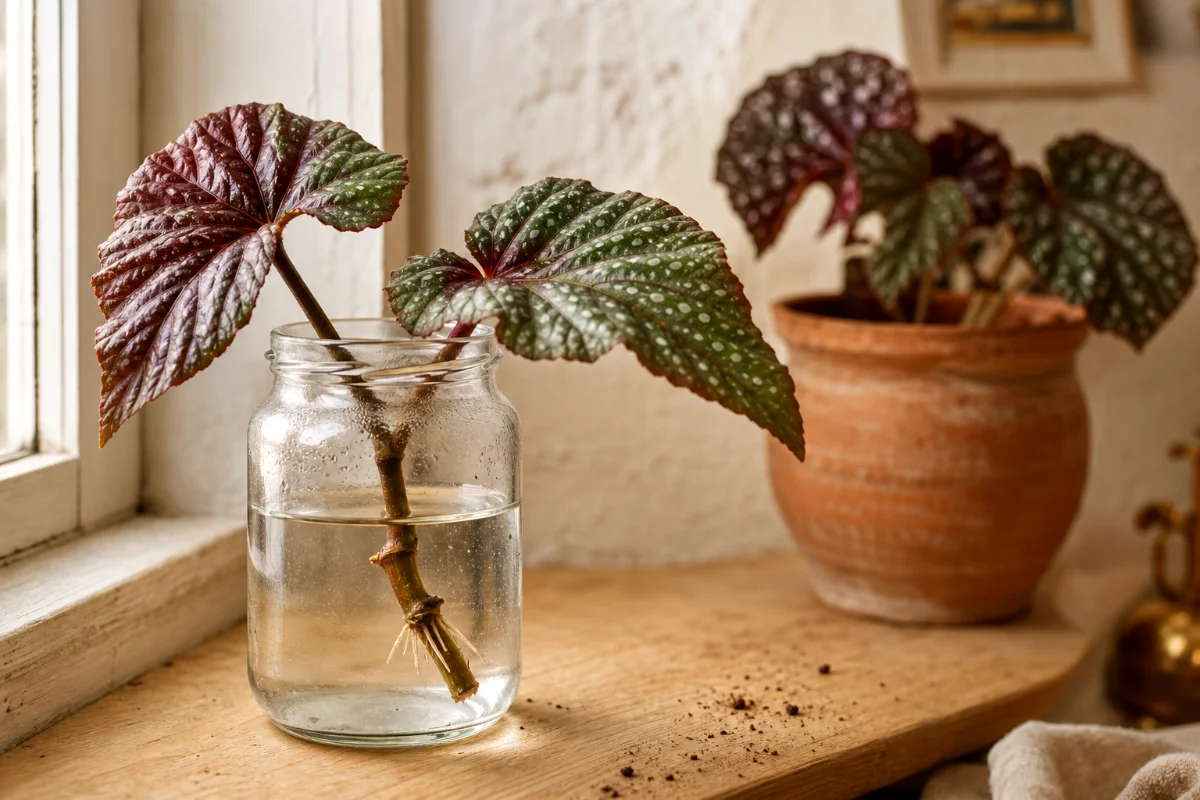
Propagating begonia in water works because the stem nodes can grow roots when they stay moist, bright, and clean. A node is that little bump where a leaf grows from the stem. It looks boring. It does the magic.
Water propagation also lets beginners see what’s happening. No guessing. No digging around in soil and snapping baby roots because curiosity got the better of you.
The best time to do it is spring or early summer, when begonias are already in growing mode. You can still try later in the year, but expect slower roots and more sulking. Plants have moods. Begonias have several.
What You Need Before You Take a Cutting
Keep this simple. You don’t need a propagation station that looks like a science lab.
- A healthy begonia plant
- Clean scissors or pruning snips
- A small clear jar or vase
- Room temperature water
- Optional: one tiny drop of 3 percent hydrogen peroxide
- Optional: a clear bag or humidity dome for dry homes
I like clear glass because you can spot root growth, cloudy water, and rot early. A jam jar works just fine. Fancy is optional.
Choose the Right Begonia Cutting
Look for a Healthy, Slightly Leggy Stem
Pick a stem that looks firm, plump, and pest-free. A long or leggy stem is perfect because trimming it also helps the parent plant grow bushier.
Take a 3 to 4-inch stem cutting with at least two leaf nodes. Cut at a slight angle with clean scissors. That angled cut gives the stem a little more surface area and helps it sit neatly in the jar.
Skip mushy stems, yellowing growth, or anything with suspicious spots. Propagation rewards good starting material. Bad cuttings usually become compost with extra steps.
Which Begonias Root Best in Water?
Cane begonias, angel wing begonias, wax begonias, and many fibrous-rooted begonias usually root nicely from stem cuttings in water.
Rex begonias and some rhizomatous types can be pickier. Many of them propagate better from leaf cuttings in soil or another moist medium, but you can still try a leaf with a short stem attached if you’re feeling patient.
How to Propagate Begonia in Water Step by Step
Step 1: Make a Clean Cut
Cut a 3 to 4-inch piece from a healthy stem. Aim to include at least two nodes.
And don’t use grimy scissors from the shed floor. Wash them, then wipe them with rubbing alcohol if you have it. Clean tools reduce the odds of bacteria moving into that fresh cut.
Step 2: Remove the Lower Leaves
Strip off the lower leaves, leaving only one or two leaves at the top. Be gentle, but don’t baby it too much.
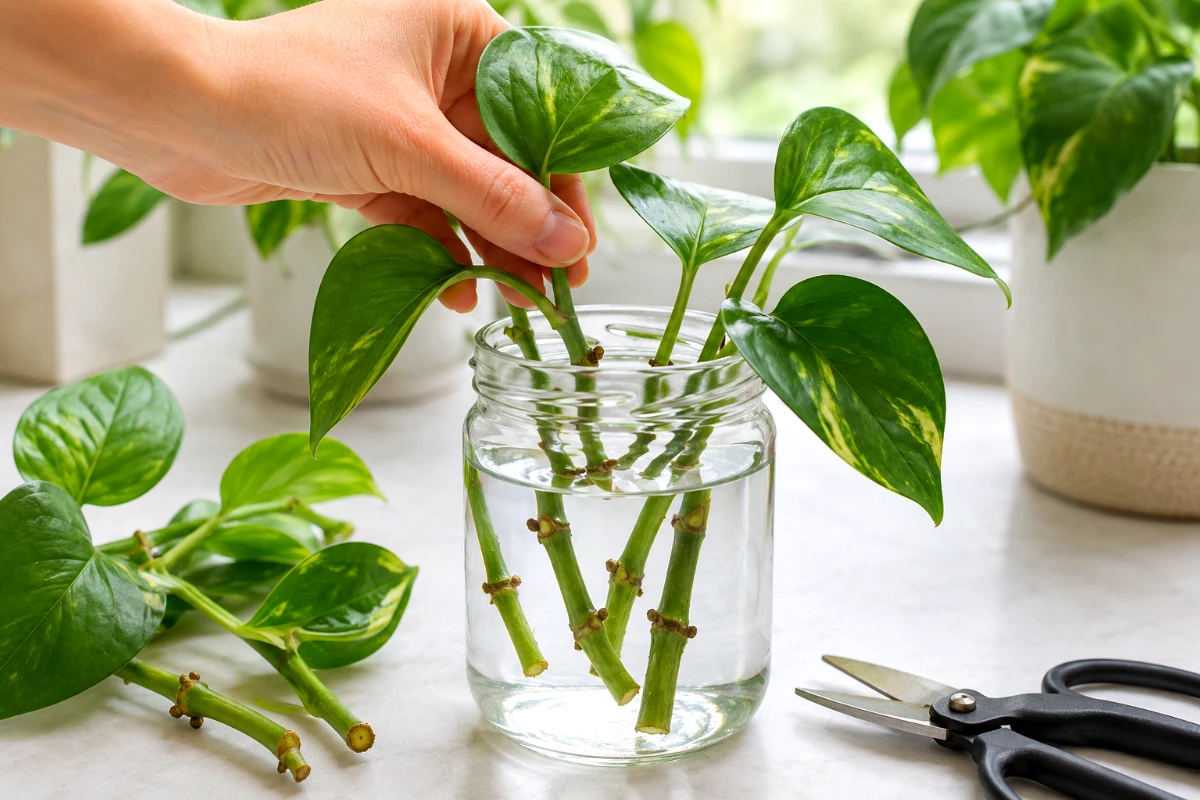
The bottom node needs to sit under water. The leaves do not. Submerged leaves rot fast, and rotten leaves turn clean water into a swampy little mess.
Step 3: Place the Cutting in Water
Put the cutting in a small jar filled with room temperature water. Keep at least one node below the waterline.
If the cutting keeps slipping, use a narrow-necked bottle or rest the stem through a small loop of twine. The goal is simple: node in water, leaves in air.
Step 4: Give It Bright, Indirect Light
Set the jar near a bright window, but keep it out of hot direct sun. East-facing windows are lovely. A spot a few feet back from a south or west window can work too.
Too much sun cooks the water and stresses the cutting. Too little light makes rooting slow and weak. Bright but gentle is the sweet spot.
Step 5: Change the Water Weekly
Change the water once a week. If it turns cloudy before then, change it sooner.
Fresh water keeps bacteria down and gives the stem a cleaner place to root. I also rinse the jar when it feels slippery inside. That slick film is not your friend.
Step 6: Watch for Roots
Begonia roots usually show up in 3 to 4 weeks. Sometimes faster. Sometimes not.
At first, you’ll see tiny white bumps near the node. Then thin roots appear. Don’t panic if nothing happens for the first couple of weeks. Cuttings spend some time deciding whether you’re trustworthy.
How to Prevent Begonia Cuttings From Rotting
Rot is the thing that trips up most beginners. Not because begonias are hard, but because water propagation can get dirty quickly.
Keep Leaves Out of the Water
This is the big one. Leaves underwater rot, and rot spreads.
If a leaf is touching the waterline, remove it. Yes, even if it looks pretty. Pretty rotten leaves still rot.
Use a Tiny Drop of Hydrogen Peroxide
You can add one tiny drop of 3 percent hydrogen peroxide to the jar to help slow algae and bacterial growth. Tiny means tiny.
Don’t pour it in like plant medicine. More is not better. Too much can bother tender new roots.
Trim Away Any Mushy Stem
If the stem turns brown, translucent, or mushy, take it out right away. Cut off the rotten part with clean scissors, making sure you cut back to firm green or healthy tissue.
Then place it in fresh water and a clean jar. Sometimes that saves the cutting. Sometimes it doesn’t. Gardeners learn both lessons.
Give It Humidity, Not Stale Air
Begonias like humidity, especially while rooting. If your home is dry, loosely cover the cutting with a clear plastic bag, but leave a small opening for airflow.
So, don’t seal it tight. A sealed bag can trap too much moisture and invite mold. Think humid greenhouse, not wet sandwich bag.
When to Move Begonia Cuttings From Water to Soil
Move your begonia cutting to soil when the roots are about 1 to 2 inches long. That length gives the cutting enough root to settle in, but not so much that the roots become tangled and water-soft.
Water roots are tender. They aren’t exactly the same as soil roots, so the move can shock the plant if you wait too long or use dry soil.
How to Pot the Rooted Cutting
- Choose a small pot with drainage holes.
- Fill it with light, fresh potting mix.
- Moisten the mix before planting.
- Make a small hole with your finger or a pencil.
- Set the rooted cutting in place and gently firm the soil around it.
- Keep the soil lightly moist for the first couple of weeks.
Use a small pot at first. A huge pot holds too much wet soil around tiny roots, and begonias hate sitting in soggy conditions.
Aftercare for the First Two Weeks
Keep the new plant in bright, indirect light. Hold off on fertilizer until you see fresh growth.
The cutting may droop a bit after potting. That’s normal. But if it collapses completely, check the soil. Bone-dry soil and soaking wet soil can both cause trouble.
Can You Propagate Begonia From a Single Leaf in Water?
Yes, with some begonias. Take a healthy leaf with about a 2-inch stem, also called a petiole, attached.
Place only the petiole in water, not the leaf blade. Keep the leaf above the jar rim where it can breathe.
But here’s my honest gardener take: stem cuttings are easier for beginners. Leaf propagation can be slower, and some varieties root without making a proper new plant for quite a while. If you want quick confidence, start with a stem.
Common Problems and Quick Fixes
The Water Turns Cloudy
Change it immediately and rinse the jar. Cloudy water usually means bacteria, decaying plant bits, or algae are building up.
The Cutting Wilts
Move it out of direct sun and raise humidity. Also check that the cut end hasn’t turned mushy.
No Roots After 4 Weeks
Be patient for another week if the stem still looks firm. If it looks tired, take a fresh cutting from healthier growth and try again in warmer, brighter conditions.
The Stem Turns Black
That’s rot. Cut away the black section if enough healthy stem remains. If not, compost it and start fresh.
My Best Beginner Tips for Stronger Begonia Roots
- Propagate in spring or early summer for faster rooting.
- Use a short cutting instead of a long floppy one. Long cuttings lose more moisture.
- Keep only one or two leaves so the cutting doesn’t work too hard.
- Change water weekly, even if it looks mostly clear.
- Use bright, indirect light, not harsh sun.
- Pot up at 1 to 2-inch roots instead of waiting for a giant root tangle.
One more thing. Don’t keep poking the cutting. I know. It’s tempting. But constant handling bruises tender tissue and slows things down.
FAQ
How long does it take to propagate begonia in water?
Most begonia stem cuttings grow roots in 3 to 4 weeks. Cool rooms, low light, or older stems can slow the process.
Can I use tap water for begonia propagation?
Usually, yes. If your tap water is heavily treated or very hard, let it sit out overnight or use filtered water.
Should I add fertilizer to the water?
No. Wait until the cutting has roots and new growth in soil. Fertilizer in propagation water can encourage algae and stress fresh roots.
Why are my begonia cuttings rotting in water?
Rot usually comes from submerged leaves, dirty water, low light, or a weak cutting. Remove lower leaves, clean the jar, and keep the cutting in bright, indirect light.
Can I leave begonia cuttings in water forever?
You can keep them in water for a while, but they grow better long term in soil. Pot them when roots reach 1 to 2 inches.
Do begonia cuttings need humidity?
They root better with moderate to high humidity. If your room is dry, use a loose clear cover and let some air move through.