How to Propagate Desert Rose: Cuttings, Seeds, and No-Rot Tips

Desert rose looks tough, and in many ways it is. Thick trunk. Glossy leaves. Flowers that look far too fancy for a plant that likes dry feet.
But propagation is where beginners often get into trouble. Too much water, too soon, and that pretty cutting turns to mush.
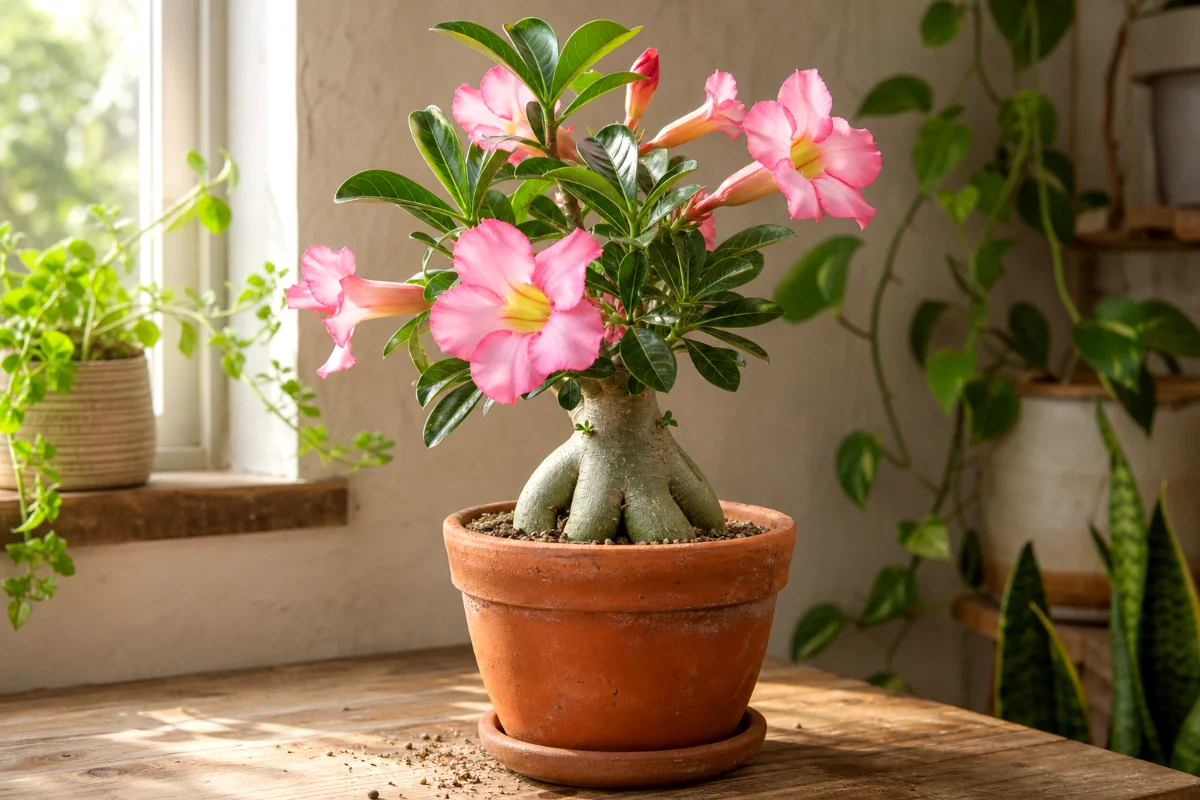
The easiest way to propagate desert rose, also called Adenium obesum, is by stem cuttings in spring or summer. Take a healthy 4 to 6 inch stem, let the cut end dry for 2 to 3 days, dip it in rooting hormone, then plant it in a gritty cactus mix. Keep it in bright, indirect light and water sparingly until roots form, usually in 3 to 6 weeks.
Simple. Not instant.
Before You Start: Cuttings or Seeds?
You can propagate desert rose two main ways: stem cuttings or seeds. Both work, but they give you slightly different plants.
Stem Cuttings: Best for Matching the Parent Plant
Stem cuttings are the go-to method for most home growers. If your desert rose has a flower color you love, especially a named hybrid, cuttings give you the best chance of keeping that same look.
There’s one catch. Cuttings often don’t develop the same big, swollen caudex that seed-grown plants make. They can still become beautiful plants, but they may look more like rooted branches than little bonsai trunks for a while.
I still recommend cuttings for beginners. You learn fast, you see progress faster, and you don’t have to fuss over tiny seedlings.
Seeds: Best for a Fat Caudex
Seeds are the better choice if you want that classic chunky desert rose base. Seed-grown adeniums usually form a swollen caudex early, which gives the plant that sculptural look everyone wants.
Fresh seed matters. Sow desert rose seeds soon after harvest because old seed loses strength quickly. If you buy seeds online, choose a seller with recent harvest dates, not vague promises and blurry flower photos.
The Best Time to Propagate Desert Rose
Do this in spring or summer, when the plant is actively growing. Warmth pushes root growth, and desert rose likes warm conditions.
Don’t take cuttings in winter unless you have strong grow lights and steady warmth. The plant slows down, the cutting sits there, and rot gets a head start.
Here’s my plain rule: if your desert rose is making new leaves, it’s a good time. If it looks sleepy, wait.
What You’ll Need
- A healthy desert rose plant
- A sharp, sterilized knife or pruning blade
- Gloves, because desert rose sap can irritate skin
- A small pot with drainage holes
- Cactus mix, perlite, and coarse sand or pumice
- Rooting hormone powder, or cinnamon in a pinch
- A dry, shaded spot for callusing
- Optional: a clear plastic bag for light humidity
Use a pot that drains well. I like terracotta because it breathes and dries faster than plastic. Desert rose cuttings hate soggy soil more than they hate being a little dry.
Step-by-Step: How to Propagate Desert Rose From Cuttings
1. Choose a Healthy Stem
Pick a firm, green stem from a healthy plant. Avoid soft, wrinkled, blackened, or pest-damaged growth.
Look for a tip cutting that’s about 4 to 6 inches long. That size gives you enough stem to plant, but not so much leafy growth that the cutting dries out too fast.
Skip stems with flowers if you can. Flowers pull energy away from root-making, and right now you want roots, not a show.
2. Make a Clean Cut
Sterilize your blade with rubbing alcohol. Then cut the stem cleanly.
Don’t saw back and forth. A ragged cut gives fungus more places to move in, and adenium cuttings already walk a fine line with moisture.
Wear gloves. The milky sap can bother your skin, and you don’t want it near your eyes or mouth.
3. Remove Flowers and Lower Leaves
Pinch off any flowers or buds. Remove the lower leaves too, leaving just a few leaves at the top.
Fewer leaves means less water loss. But keep a couple leaves if the cutting looks strong, since they help the cutting keep working while it builds roots.
4. Let the Cutting Callus for 2 to 3 Days
This step makes or breaks the whole project.
Set the cutting in a dry, shaded place for 2 to 3 days. The cut end should form a dry, hardened callus. It may look slightly corky or sealed.
Don’t rush it. Planting a fresh, wet desert rose cutting is like putting a sponge into damp soil and hoping it won’t rot. It often will.
Keep the cutting out of harsh sun while it calluses. Bright shade works well.
5. Add Rooting Hormone or Cinnamon
Once the end has callused, dip it into rooting hormone powder. Tap off the extra.
No rooting hormone? Use a light dusting of cinnamon. Cinnamon isn’t magic, but it can help discourage fungus on the cut end.
Don’t cake powder all over the stem. A thin coat does the job.
6. Plant in a Gritty, Fast-Draining Mix
Fill a small pot with a gritty mix. A good beginner blend is:
- 1 part cactus soil
- 1 part perlite or pumice
- 1 part coarse sand
Make a small hole with your finger or a pencil. Set the cutting in about 1 to 2 inches deep, then firm the mix gently around it.
The mix should hold the cutting upright but still drain fast. If it feels like regular potting soil, lighten it with more perlite or pumice.
7. Give Bright, Indirect Light
Place the pot in bright, indirect light. A warm windowsill with filtered sun works well.
Don’t put a fresh cutting in blazing afternoon sun. It has no roots yet, so it can’t replace water fast enough. It may shrivel before it has a fair chance.
Warmth helps. Aim for a cozy spot, not a cold drafty one.
8. Water Sparingly
Here’s where many new growers love their plant to death.
Water lightly after planting if the mix is bone dry, then leave it alone until the mix dries out again. Don’t keep the soil damp. Don’t mist it every day. Don’t hover with a watering can.
Desert rose cuttings need a little moisture, but they need air around the stem even more. Wet soil blocks that air and invites rot.
How Long Does Desert Rose Take to Root?
Most desert rose cuttings root in 3 to 6 weeks. Sometimes they take a little longer, especially if temperatures dip or the cutting came from slower growth.
New leaf growth is a good sign. It usually means roots have started working.
Don’t yank the cutting out to check. I know it’s tempting. Instead, give it a very gentle wiggle after a few weeks. If you feel resistance, roots are likely forming.
Should You Cover the Cutting With a Plastic Bag?
You can use a clear plastic bag to raise humidity, but use it carefully. Desert rose doesn’t want the swamp treatment.
If you cover the pot, prop the bag so it doesn’t touch the leaves. Open it daily for fresh air. If you see heavy condensation all day or smell mustiness, remove the bag.
I only use a bag in very dry homes. In average indoor conditions, bright warmth and careful watering work just fine.
Preventing Rot: The Part Nobody Should Skip
Rot usually comes from three things: planting too soon, using heavy soil, or watering too often.
Here’s the fix:
- Callus the cutting for 2 to 3 days before planting.
- Use a gritty mix with cactus soil, perlite, pumice, or coarse sand.
- Choose a pot with drainage holes, not a cute sealed container.
- Water only when dry, especially before roots form.
- Keep it warm, because cold damp soil is trouble.
If the base turns black, soft, or foul-smelling, rot has started. Cut back to healthy firm tissue, let it callus again, and restart in fresh dry mix. If the rot has climbed too far, toss it and try again.
No shame there. Every gardener has lost cuttings. The good ones learn why.
Propagating Desert Rose From Seeds
Seeds take more patience, but they’re fun if you want plants with fat bases.
How to Sow Desert Rose Seeds
- Use fresh seeds whenever possible.
- Fill a shallow pot with a fast-draining seed mix.
- Lay seeds flat on the surface and cover lightly with mix.
- Moisten the mix, then let extra water drain away.
- Keep the pot warm and bright, but out of harsh direct sun.
- Keep the mix barely moist, not soggy.
Seedlings can appear quickly when seed is fresh and warm. Once they grow a few sets of leaves, give them more light and a gentle watering routine.
Don’t expect seedlings to match the parent flower exactly. Desert rose genetics can surprise you. Sometimes that’s the fun part.
When to Pot Up a Rooted Cutting
Wait until the cutting shows steady new growth and resists a gentle wiggle. Then you can move it to a slightly larger pot.
Slightly larger means just that. Don’t jump from a tiny starter pot to a big deep container. Extra soil holds extra moisture, and extra moisture causes problems.
Use a cactus-style mix again. Plant at the same depth, water lightly, and let it settle in bright, indirect light for a week before moving it into stronger sun.
Common Desert Rose Propagation Mistakes
Watering Like It’s a Pothos
Desert rose is not a thirst machine. It stores water in its stem and caudex, so soggy mix feels like punishment.
Skipping the Callus
This is the classic beginner mistake. Fresh cuts need to dry and seal before they meet soil.
Using Dense Potting Soil
Regular houseplant mix holds too much moisture. Add grit. Lots of it.
Starting With a Weak Parent Plant
A stressed plant gives weak cuttings. Feed and water the parent well during the growing season, then take cuttings from firm, healthy growth.
Expecting a Cutting to Grow a Big Caudex Fast
Cuttings can thicken with age, but they often don’t form the dramatic swollen base that seed-grown desert roses do. If that chunky look matters most, grow from seed.
FAQ: Desert Rose Propagation
Can I propagate desert rose in water?
I don’t recommend it. Desert rose cuttings rot easily in water, and they prefer air around the cut end. A gritty cactus mix gives you better odds.
Can I use cinnamon instead of rooting hormone?
Yes, you can use cinnamon as a simple antifungal dusting. Rooting hormone usually gives stronger rooting help, but cinnamon can work when that’s what you have.
Why is my desert rose cutting shriveling?
A little shriveling can happen before roots form. Severe shriveling usually means too much sun, too little stored moisture, or a cutting that sat too long before planting.
Why is my cutting turning black?
Black, soft tissue usually means rot. Cut back to firm healthy tissue, let it callus, and restart in a fresh gritty mix. Water less next time.
Will a desert rose cutting bloom?
Yes. A rooted cutting can bloom once it has enough light, warmth, and energy. Cuttings from blooming-size plants often flower sooner than seedlings.
How much sun does a new cutting need?
Start with bright, indirect light. After rooting and new growth, slowly move it toward stronger light. Sudden hot sun can scorch an unrooted cutting.