How to Propagate Jade Plant from Stem and Leaf Cuttings

Jade plants make propagation feel generous. One healthy stem or one plump leaf can turn into a whole new plant, if you give it the dry, bright, patient care it likes.
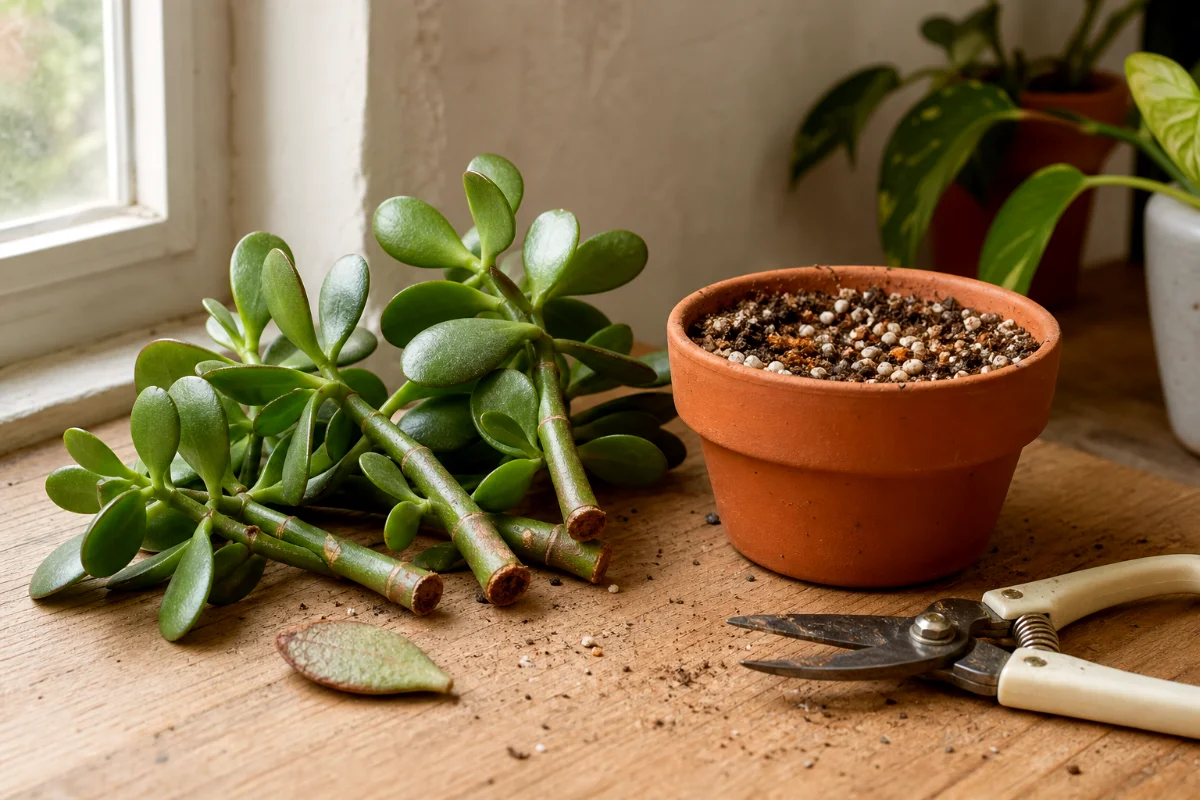
Here’s the part beginners often miss: jade cuttings don’t want pampering. They want a clean cut, a few dry days, gritty soil, and very little water.
Too much love kills more jade cuttings than neglect ever will. Harsh, but true.
The Best Time to Propagate a Jade Plant
The best time to propagate jade plant cuttings is late spring to early summer. The plant grows more actively then, so cuttings root faster and recover better.
You can try at other times indoors, especially if your home stays warm and bright. But winter propagation often moves like cold molasses. Roots may still form, but the cutting sits longer, which gives rot more time to sneak in.
What You’ll Need
- A healthy jade plant
- Clean, sharp pruning shears or a knife
- A small terracotta pot with a drainage hole
- Succulent or cactus potting mix
- Optional perlite or pumice for extra drainage
- Optional rooting hormone
- A dry, shaded spot for callusing
Use a pot that feels almost too small. Jade cuttings hate sitting in a big pot of damp soil. I like terracotta because it breathes, dries evenly, and forgives the occasional heavy-handed watering day.
Method 1: Stem Cuttings, the Most Reliable Way
If you want the best odds, start with a stem cutting. It roots faster than a leaf cutting and becomes a fuller little plant much sooner.
Step 1: Choose a Healthy Stem
Pick a firm, green stem that looks plump, not wrinkled. Aim for a piece about 3 to 4 inches long with a few leaf nodes.
Skip weak, yellowing, mushy, or pest-damaged growth. Propagation isn’t a rescue mission for bad material. Start with strength.
Step 2: Make a Clean Cut
Use clean, sharp shears or a knife. Cut just above a leaf node on the parent plant, and take your cutting in one clean motion.
A ragged cut heals slowly. A clean cut dries better, which lowers the chance of rot.
Step 3: Let the Cutting Callus
Lay the stem cutting in a dry, shaded spot for 2 to 3 days. The cut end should dry and seal over.
This callus is not optional in my garden book. It acts like a little scab. If you plant a fresh, juicy jade cutting straight into soil, that wet wound can rot before roots even think about growing.
Step 4: Plant the Callused Stem
Fill a small pot with dry succulent or cactus mix. Push the callused end into the soil just deep enough to stand upright.
If the cutting topples, don’t pack the soil like concrete. Use a small bamboo skewer, a pebble, or a loose bit of twine support until roots grab hold.
Step 5: Give Bright Light and Very Little Water
Set the pot in bright, indirect light. A sunny windowsill with filtered light works well, but hot direct sun can shrivel a fresh cutting.
Water only when the soil is completely dry. In the first couple of weeks, that may mean barely watering at all.
Roots usually appear in 2 to 4 weeks. Don’t yank the cutting out to check. After 2 to 3 weeks, give it a tiny tug. If you feel resistance, roots have started.
Method 2: Leaf Cuttings, Slower but Pretty Satisfying
Leaf propagation feels a little magical. It also tests your patience.
A single jade leaf can make roots and a tiny plantlet at the base, but not every leaf succeeds. Start several at once if you want one or two strong babies.
Step 1: Remove a Plump Leaf
Choose a thick, healthy leaf. Gently wiggle it from side to side until it releases from the stem.
You need a clean break at the base of the leaf. If the base tears or leaves part of itself behind, it may not grow a new plantlet.
Step 2: Let the Leaf Dry
Place the leaf in a dry, shaded spot for 3 to 5 days. The broken base should dry over before it touches soil.
Again, this protects the leaf from rot. Succulents store water in their leaves, so they bring their own packed lunch.
Step 3: Lay the Leaf on Soil
Fill a shallow pot or tray with dry succulent mix. Lay the leaf flat on top, or tuck the base just slightly into the soil.
Don’t bury the whole leaf. It needs air. A buried jade leaf often turns soft and sad before it roots.
Step 4: Mist Lightly, Then Back Off
Mist the soil occasionally, but keep it mostly dry. If the mix stays damp, you’re asking for trouble.
In a few weeks, roots and a tiny new plantlet should form at the base. The original leaf may slowly wrinkle as it feeds the baby plant. That’s normal.
Why Jade Cuttings Need to Dry Before Planting
Jade plants are succulents, which means their stems and leaves hold water. That stored moisture helps them survive dry spells, but it also makes fresh cuts prone to rot.
Callusing gives the wound time to seal. Think of it as letting paint dry before you touch it. Rush this step, and things get messy.
Beginners often lose cuttings because they plant and water on the same day. Don’t. Let the cutting dry first, plant it dry, and water sparingly later.
The Best Soil for Jade Plant Cuttings
Use a fast-draining succulent or cactus mix. If your mix feels heavy, add perlite or pumice.
A good jade propagation mix should drain quickly and feel slightly gritty. It shouldn’t cling together like brownie batter.
- Good choice: cactus mix with added perlite
- Even better: succulent mix, pumice, and coarse sand in a loose blend
- Avoid: moisture-holding potting soil made for ferns or tropical plants
Jade roots like oxygen around them. Dense, wet soil squeezes out air and invites rot. That’s the whole game right there.
Watering Jade Cuttings the Right Way
Water less than you think. Then wait longer.
For stem cuttings, I usually plant into dry mix and wait several days before adding a small drink. If your home feels humid, wait even longer.
For leaf cuttings, mist the soil now and then, but don’t soak it. A leaf has enough stored moisture to get started.
Once the cutting has roots and begins new growth, you can water more normally. Still, let the soil dry out between waterings. Jade plants don’t like wet feet at any age.
Should You Use Rooting Hormone?
Rooting hormone can help, but you don’t need it. Jade plants root willingly when you give them the right conditions.
If you use it, dip only the callused end lightly before planting. Tap off the extra powder. More isn’t better here.
I reach for rooting hormone when a cutting is a bit woody or when I’m propagating outside the ideal season. For fresh spring cuttings, I often skip it.
How to Tell Your Jade Cutting Has Rooted
Look for small signs. New leaf growth is the clearest one, but it may take time.
- The cutting stands more firmly in the pot
- A gentle tug gives slight resistance
- The stem looks plump instead of wrinkled
- New leaves appear at the tip or nodes
- For leaf cuttings, tiny roots or a baby plantlet forms at the base
Check gently after 2 to 3 weeks. If the cutting lifts out with no resistance, tuck it back in and wait. No panic needed.
Common Mistakes That Ruin Jade Plant Propagation
Watering Too Soon
This is the big one. Fresh jade cuttings need time to seal before they meet moisture.
If the cut end turns black or mushy, rot has started. Trim back to healthy tissue if possible, let it callus again, and try once more.
Using Heavy Soil
Regular potting soil often holds too much water. Jade cuttings want quick drainage and air around their future roots.
If you only have indoor potting mix, cut it heavily with perlite or pumice before using it.
Putting Cuttings in Hot Sun
Bright light helps. Harsh sun punishes.
A fresh cutting can’t replace lost water quickly because it has no roots yet. Strong direct sun can wrinkle, scorch, or collapse it.
Checking Roots Every Day
I know. It’s tempting.
But every time you pull up a cutting, you break tiny new roots. Give it time. Gardening teaches patience whether we ask for the lesson or not.
When to Pot Up a New Jade Plant
Wait until the cutting has clear root resistance and new growth. Then you can move it into a slightly larger pot if needed.
Don’t rush into a big planter. A small root system in a large wet pot often struggles. Step up gradually, one pot size at a time.
Use the same gritty succulent mix. Keep the plant in bright, indirect light for a week or two after repotting, then slowly introduce more sun if your jade is ready for it.
FAQ
Can I propagate jade plant cuttings in water?
You can, but I don’t recommend it as the first choice. Jade stems root more naturally in a dry, gritty mix, and water-rooted cuttings often struggle when moved to soil.
How long does it take jade cuttings to root?
Most stem cuttings root in 2 to 4 weeks. Leaf cuttings may take longer, especially in cool rooms or low light.
Why is my jade cutting shriveling?
A little wrinkling can happen before roots form. If the cutting turns soft, black, or mushy, you’re likely dealing with rot from too much moisture.
Can I plant a jade cutting straight into soil?
Yes, but only after the cut end calluses. Let stem cuttings dry for 2 to 3 days and leaf cuttings dry for 3 to 5 days first.
Do jade leaf cuttings always make new plants?
No. Some leaves root but never grow a plantlet. Start with several plump leaves so you don’t pin all your hopes on one.