How to Propagate Chinese Evergreen: 3 Easy Methods

Chinese Evergreen, also called Aglaonema, is one of those houseplants that makes beginners feel good at plants. It tolerates lower light, forgives the odd missed watering, and still looks polished on a shelf.
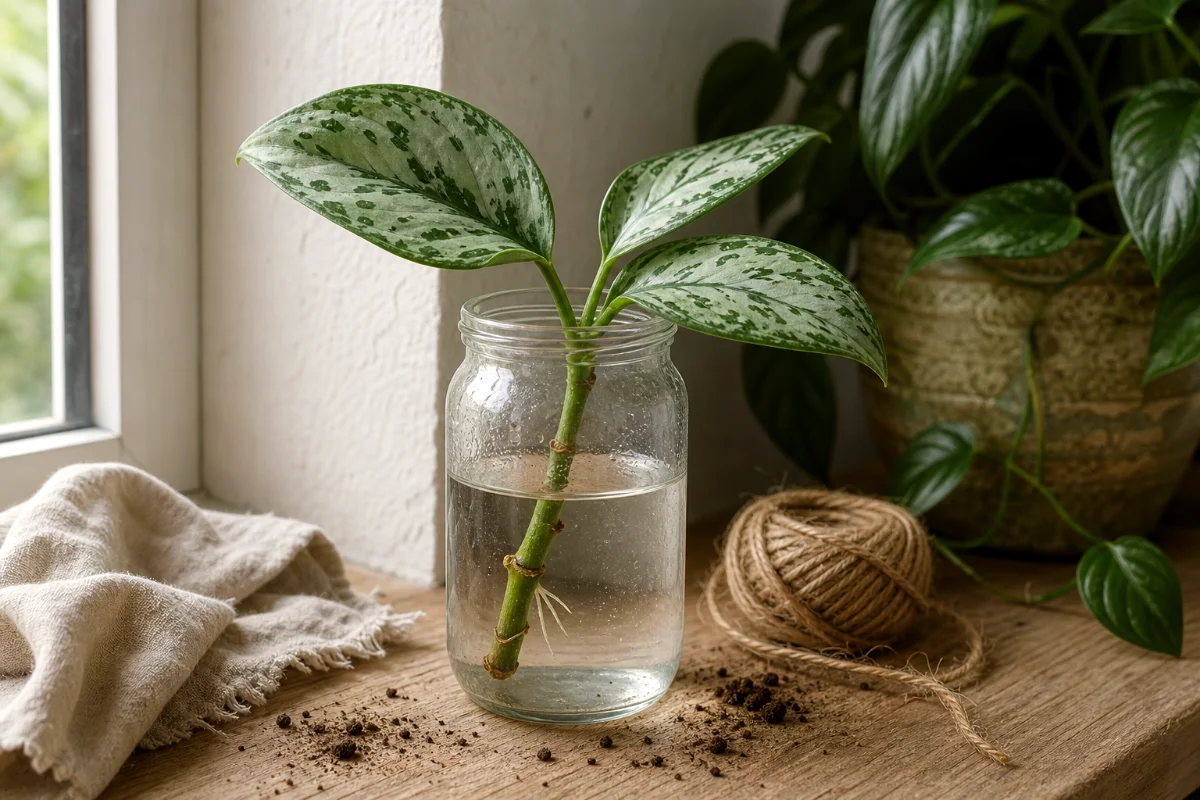
Propagation is not hard. But it does ask for patience.
The best time to propagate Chinese evergreen is spring or summer, when the plant is actively growing and warm temperatures help new roots form faster. You can use stem cuttings in water, stem cuttings in soil, or division during repotting.
Here is my honest gardener take. Water propagation is the easiest to watch. Soil propagation often gives the strongest start. Division is the quickest way to get a full new plant if your Aglaonema already has offsets.
Before You Cut: What Chinese Evergreen Needs to Root
Chinese evergreen roots from a node. That little bump or ring on the stem is where roots can grow. A leaf alone will not make a new plant, no matter how pretty it looks in a jar.
So, yes. The node matters.
A good cutting should have:
- A healthy stem piece about 4 to 6 inches long
- At least one node, though two is better
- About 2 to 3 leaves before trimming
- No mushy, yellow, pest-damaged, or wrinkled tissue
Use a sharp, disinfected knife or pruning snips. I wipe blades with rubbing alcohol before cutting, especially if I have been working around older soil. It takes ten seconds, and it saves a lot of heartbreak.
Best Time to Propagate Chinese Evergreen
Spring and summer give you the highest odds. The plant has more energy, the days are longer, and your home usually stays warmer.
Aim for temperatures between 65°F and 80°F, or 18°C to 27°C. Below that, roots can drag their feet. In a cold room, a cutting may sit for weeks looking fine, then suddenly rot from the base.
Can you propagate in winter? Sometimes.
But I do not recommend it for beginners unless you have a warm spot and bright indirect light. Winter cuttings move slowly, and slow cuttings are more likely to rot before they root.
Method 1: Propagating Chinese Evergreen Stem Cuttings in Water
This is the easiest method for beginners because you can see what is happening. Roots appear right in the jar, which is both useful and oddly satisfying.
Water propagation works well when you want confidence. It also helps you spot rot early.
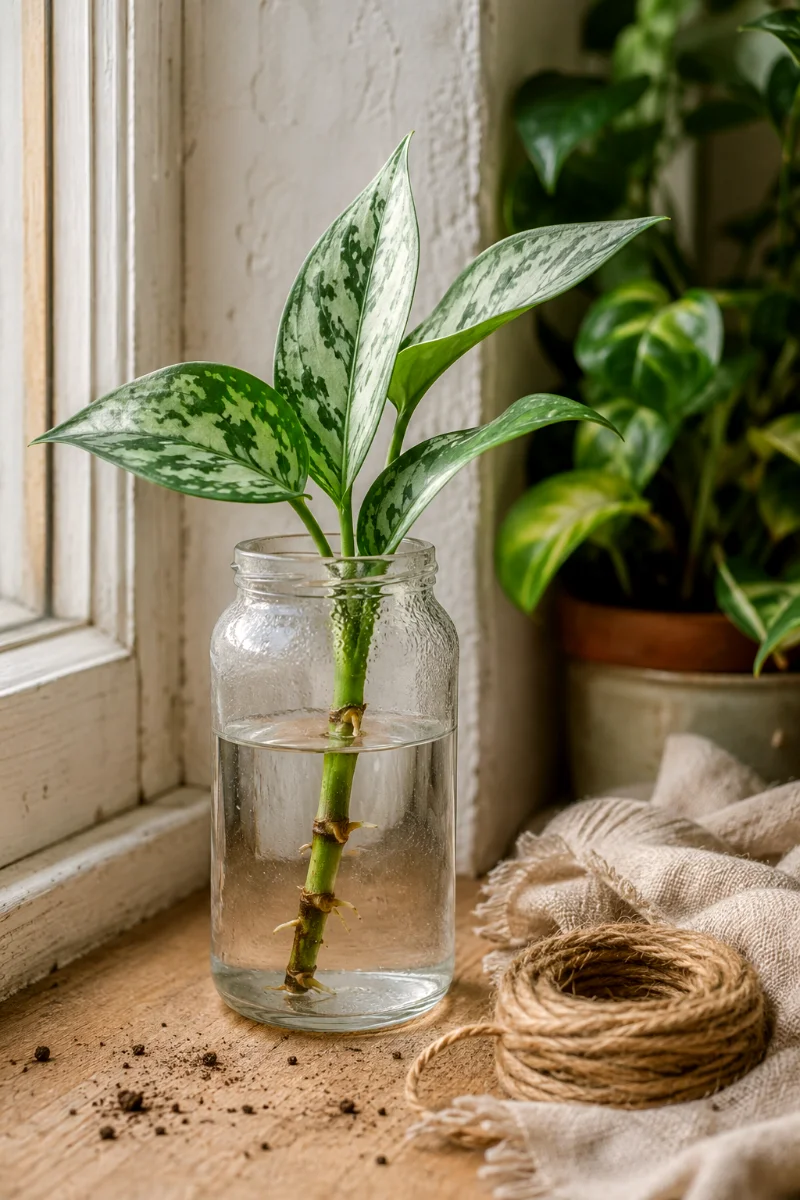
Step 1: Cut a Healthy Stem
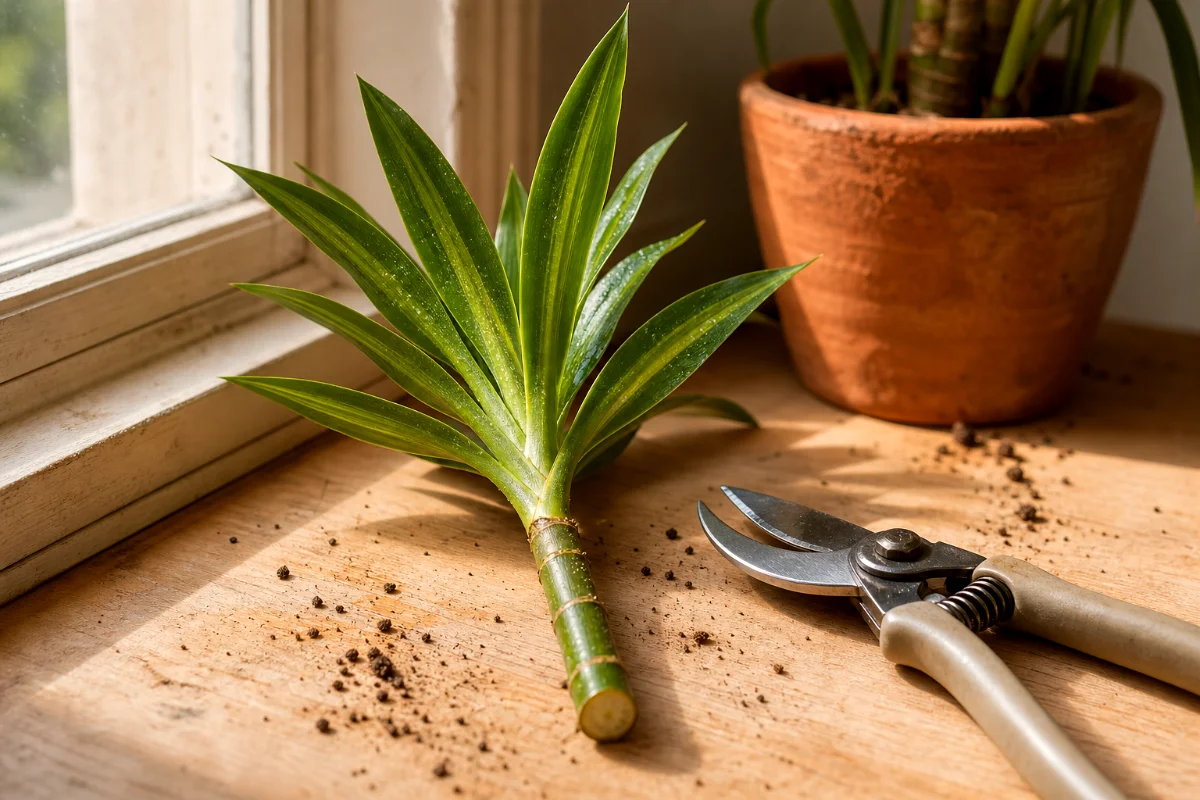
Choose a firm, healthy stem with 2 to 3 leaves. Cut a 4 to 6 inch piece just below a node.
Make the cut clean. Do not saw at it like a stale loaf of bread.
Step 2: Remove the Lower Leaves
Strip off the lower leaves so only 1 to 2 leaves remain at the top. Any leaf that sits underwater can rot and foul the water.
And once the water turns cloudy and sour, the cutting has a much harder job.
Step 3: Place the Cutting in Water
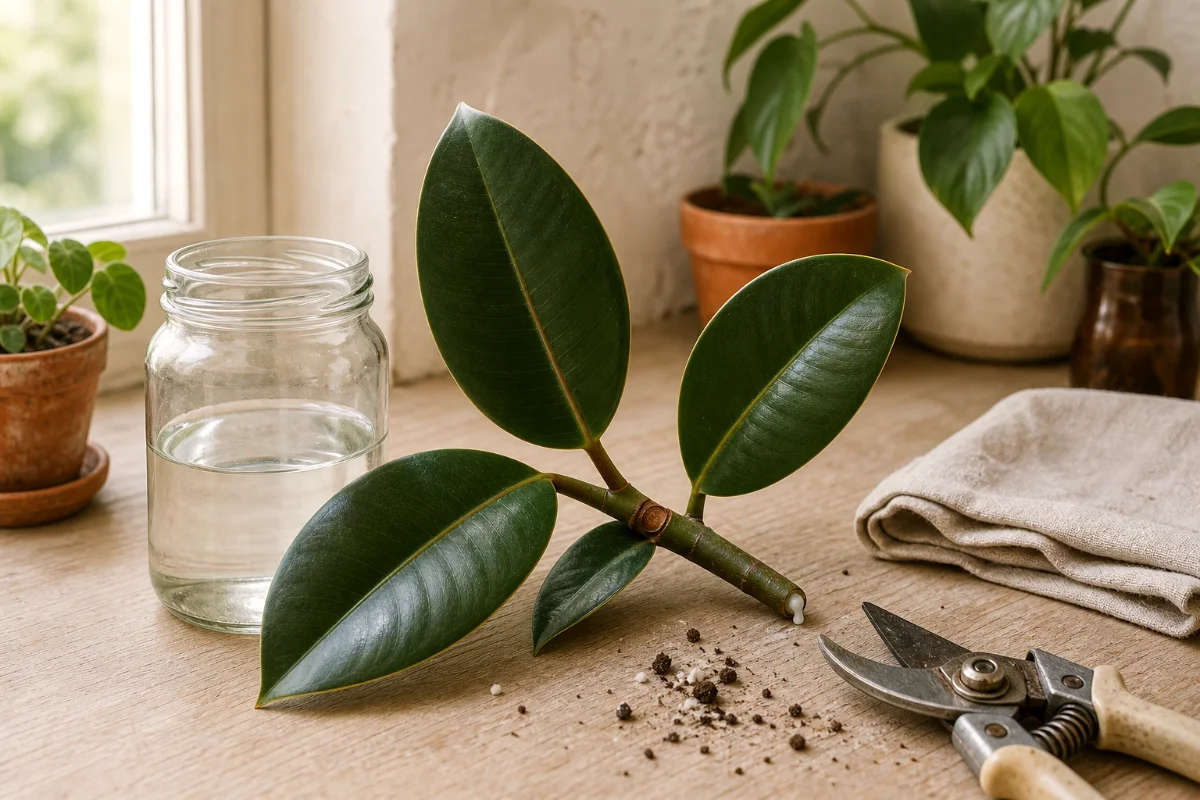
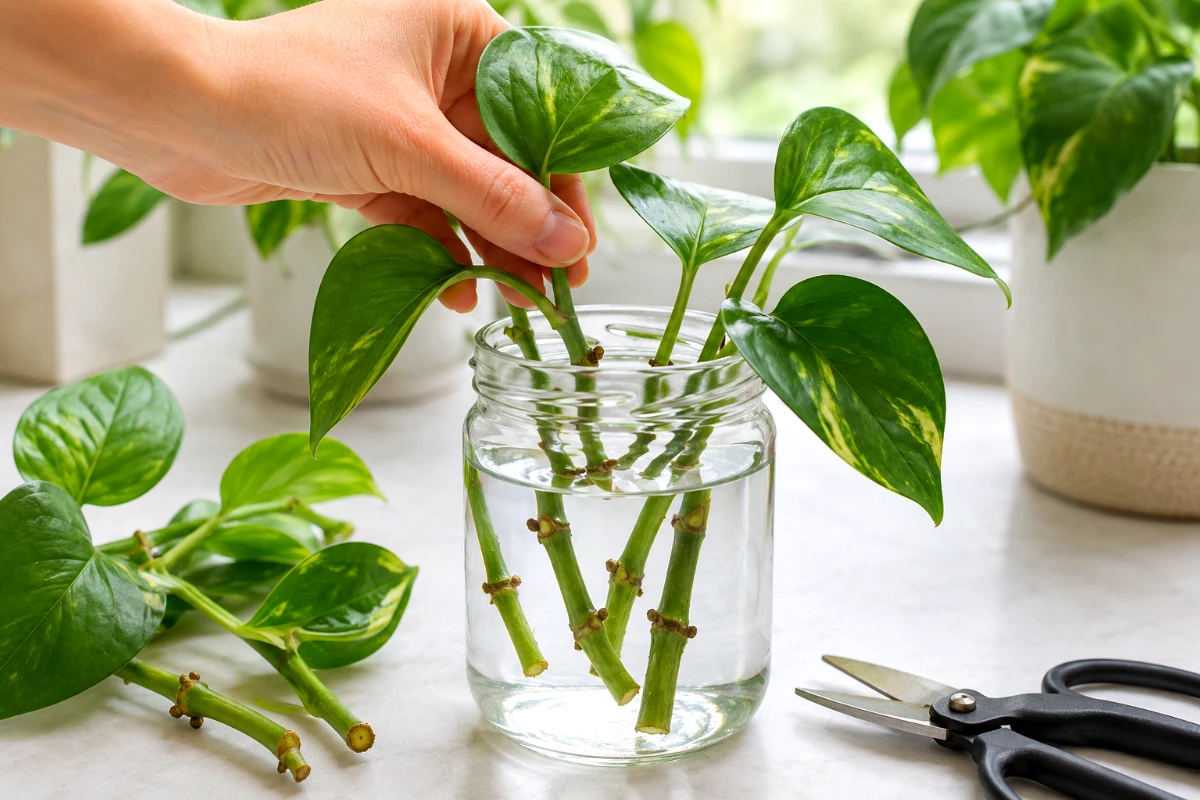
Set the cutting in a clear glass jar or small vase. Keep the nodes under water, but keep the leaves above the waterline.
Use room-temperature water if you can. Cold water shocks tender cuttings more than people think.
Step 4: Give It Bright, Indirect Light
Place the jar near a bright window, but not in hot direct sun. Direct sun can heat the water and stress the cutting.
Bright indirect light is the sweet spot. Think near a sheer-curtained window, not pressed against a scorching pane.
Step 5: Change the Water Weekly
Change the water once a week. If it looks cloudy before then, change it sooner.
Fresh water keeps oxygen available around the stem. Stale water gets funky fast, especially in warm rooms.
Step 6: Pot It When Roots Are Ready
Roots usually appear in about 3 to 4 weeks. Wait until they reach 1 to 2 inches long, then move the cutting into potting mix.
Do not wait until the roots are long, tangled, and fragile. Water roots break easily when you finally pot them up.
Method 2: Propagating Chinese Evergreen Stem Cuttings in Soil
Soil propagation gives you less to stare at, but it often produces a sturdier young plant. The cutting roots directly into the medium it will keep growing in, so it skips the awkward move from water to soil.
This is the method I choose when I want the highest success rate.
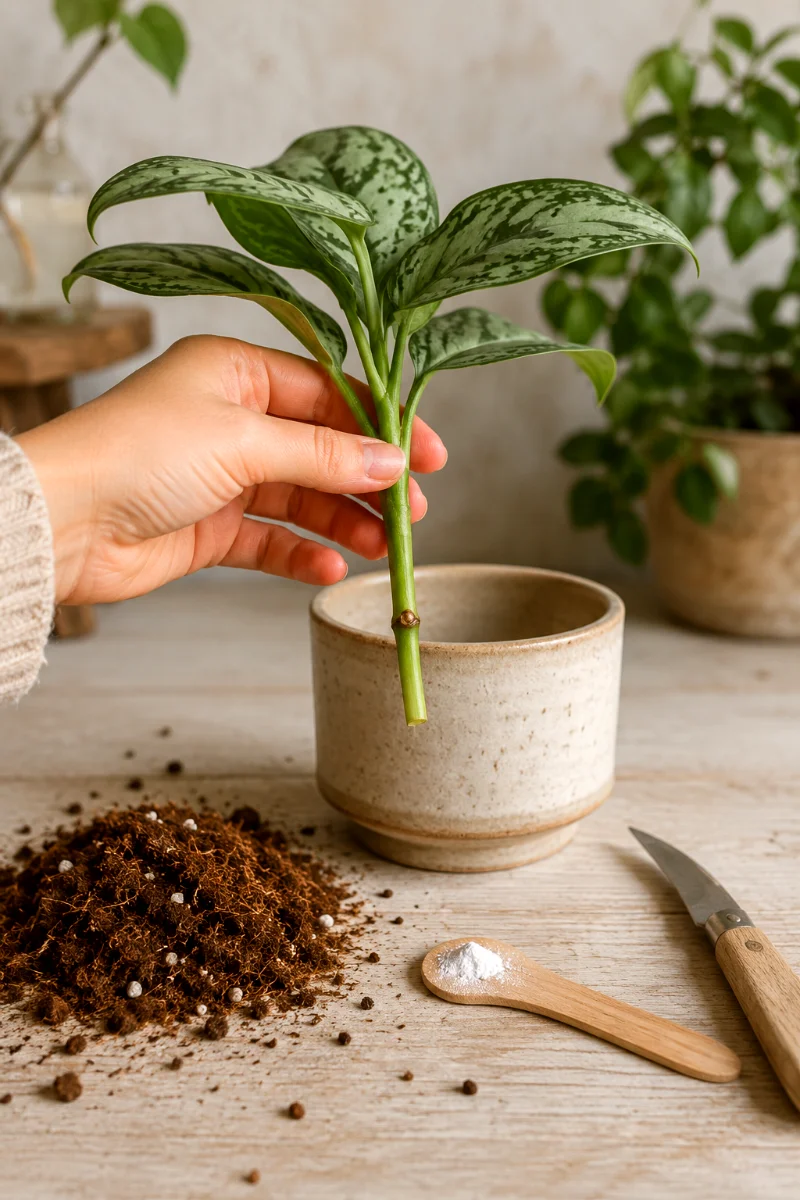
Step 1: Prepare the Cutting
Take a 4 to 6 inch stem cutting with at least one node. Remove the lower leaves and keep 1 to 2 leaves at the top.
You can dip the cut end in rooting hormone. It is optional, not magic dust. But it can help, especially if your home runs cool or dry.
Step 2: Choose the Right Potting Mix
Use a moist, well-draining mix. A peat-free houseplant mix, coco peat blend, or light aroid-style mix can work well.
The goal is simple: hold moisture, but let air reach the stem. Roots need both.
A heavy, soggy mix is where cuttings go to sulk. Then rot.
Step 3: Plant the Cutting
Fill a small pot with lightly moist mix. Make a hole with your finger or a pencil, place the cutting in so the node sits below the surface, then firm the mix gently around it.
Do not crush the stem. Just tuck it in.
Step 4: Keep It Warm and Humid
Set the pot in warm, bright indirect light. Keep the soil moist but not soggy.
If your air is dry, cover the pot loosely with a clear plastic bag or place it in a propagation box. Leave a small gap for airflow. Cuttings like humidity, but they do not like stale, swampy air.
Step 5: Wait for Roots
Roots usually form in 4 to 6 weeks. You may see new leaf growth, but do not use that as your only sign.
After several weeks, tug the cutting very gently. If you feel resistance, roots have started gripping the soil.
Method 3: Propagating Chinese Evergreen by Division
Division is the best method for a mature Chinese evergreen. It gives you an instant plant with roots already attached.
No waiting for bare stems to root. Nice, right?
Use this method during spring or summer repotting, especially if your plant has smaller side shoots growing from the base. These are often called offsets or daughter plants.
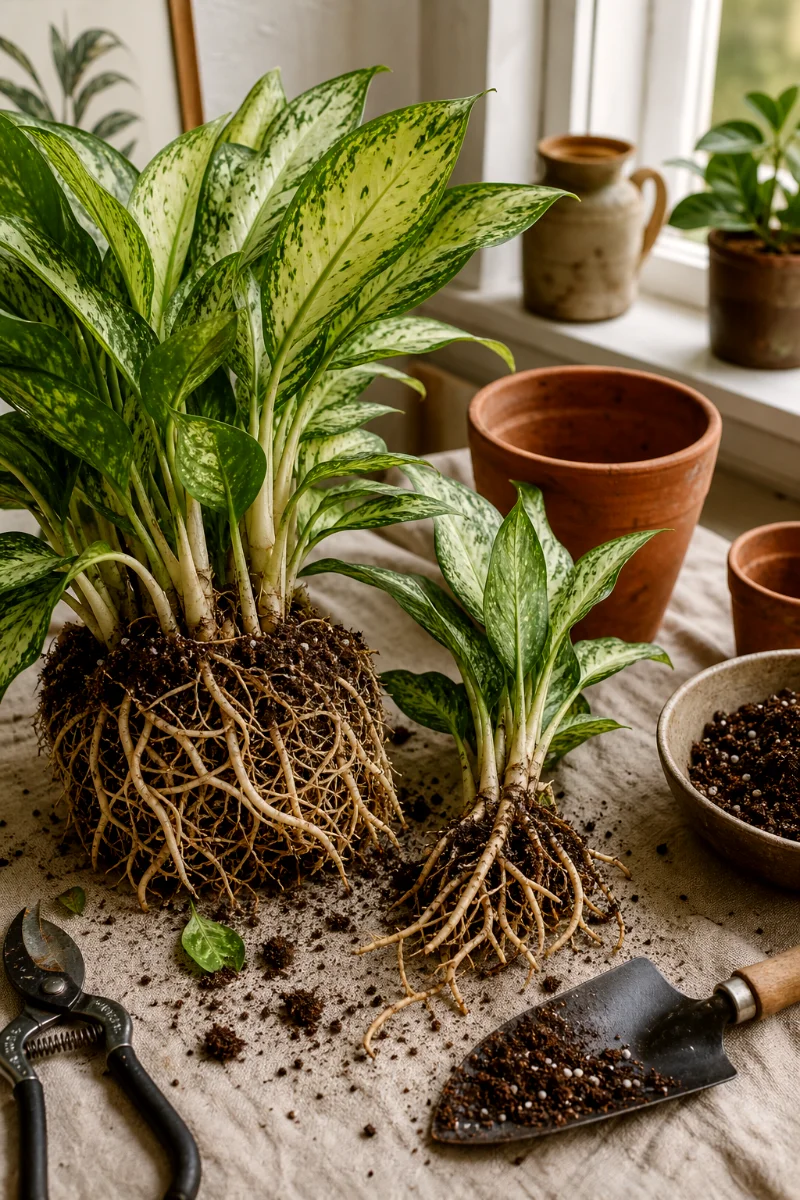
Step 1: Remove the Plant from Its Pot
Water the plant a day before division if the soil is bone dry. Slightly moist soil slides out more easily and helps protect the roots.
Tip the pot sideways and ease the plant out. If it sticks, squeeze the pot or run a blunt tool around the inside edge.
Step 2: Find the Natural Sections
Look for smaller rooted shoots connected to the main root ball. Good divisions have their own stems, leaves, and roots.
Do not force a single stem away if it has no roots. That is not division. That is just damage with confidence.
Step 3: Separate the Offsets
Gently pull the offset away from the main plant. If the roots are tangled, tease them apart with your fingers.
If you must cut, use a clean sharp knife. Keep as many roots as possible with each section.
Step 4: Repot Each Division
Plant each division in its own pot with fresh, well-draining potting mix. Water thoroughly until water runs from the drainage holes.
Then let the top inch of soil begin to dry before watering again. Fresh divisions need moisture, not a mud bath.
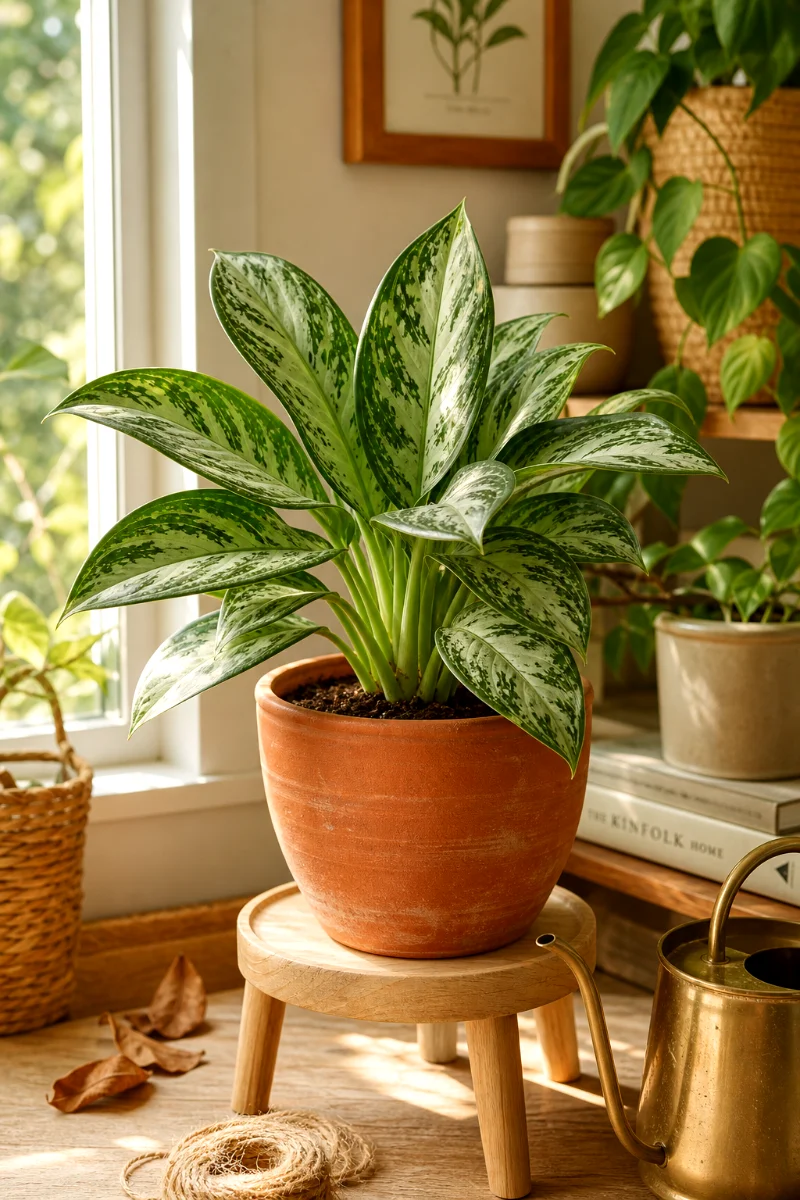
Water vs Soil vs Division: Which Method Should You Choose?
If you are brand new, start with water. Seeing roots helps you learn the plant’s rhythm.
If you care more about strength than entertainment, choose soil cuttings. They can take longer to prove themselves, but they often settle in with less fuss after rooting.
If your plant is large and crowded, choose division. It is clean, practical, and usually the fastest path to a full-looking new Aglaonema.
- Use water if you want the easiest visual method.
- Use soil if you want strong root establishment from the start.
- Use division if your mature plant has rooted offsets.
Aftercare for New Chinese Evergreen Plants
New propagations need gentler care than a settled parent plant. Baby them a little, but do not smother them.
Light
Give bright, indirect light. Chinese evergreen can tolerate lower light once established, but new cuttings root better with brighter conditions.
Avoid direct afternoon sun. It can scorch leaves and dry small pots too quickly.
Water
Keep the mix lightly moist while roots form. Once the plant settles in, water when the top inch or two of soil feels dry.
Overwatering is the classic beginner mistake here. The leaves may yellow, the stem may soften, and the roots may rot before you notice trouble above the soil.
Humidity
Average home humidity works for established plants, but cuttings appreciate extra moisture in the air. A clear cover, propagation box, or nearby pebble tray can help.
But vent covered cuttings often. A tiny greenhouse can turn into a mold party if you seal it tight and forget it.
Fertilizer
Skip fertilizer until roots form and you see steady new growth. Fertilizer does not create roots in a fresh cutting.
Once the plant grows well, feed lightly during spring and summer with a balanced houseplant fertilizer at half strength.
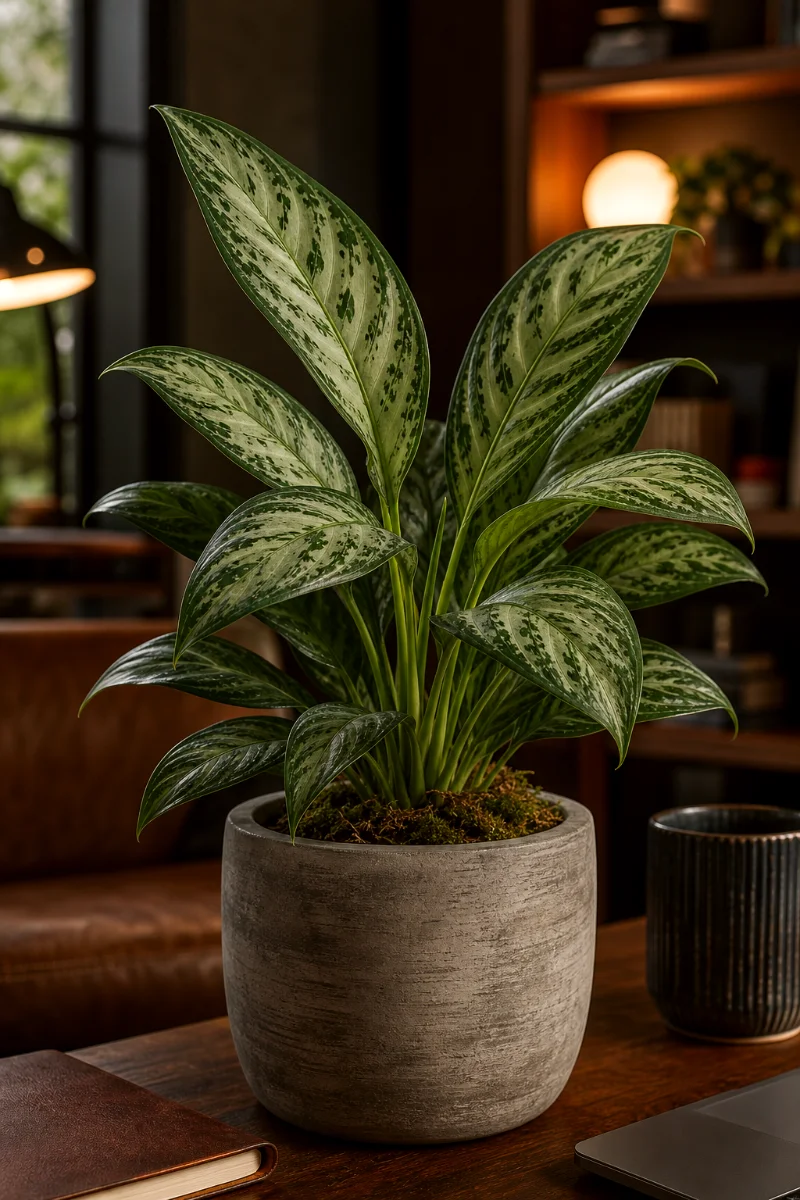
Common Mistakes When Propagating Chinese Evergreen
Cutting Without a Node
This is the big one. A Chinese evergreen cutting needs a node because that is where new roots emerge.
A leaf stuck in water may stay green for a while. It will not become a full plant.
Leaving Leaves Underwater
Submerged leaves rot quickly. Remove lower leaves before placing a cutting in water or soil.
Clean stems root better. Simple as that.
Using a Pot That Is Too Big
Small cuttings belong in small pots. A large pot holds too much wet soil around tiny roots.
Choose a snug container with drainage holes. Move up one pot size later when the plant fills its pot.
Keeping Soil Soggy
Moist is good. Soggy is not.
If you press the soil and water squeezes out, it is too wet. Add more drainage, use a lighter mix, or water less often.
Putting Cuttings in Harsh Sun
Direct sun can cook a water jar and wilt a soil cutting. Bright indirect light gives energy without the stress.
That balance matters more than fancy equipment.
How Long Does Chinese Evergreen Propagation Take?
Water cuttings often grow roots in 3 to 4 weeks. Soil cuttings usually root in 4 to 6 weeks. Divisions look like new plants right away, though they may need a couple of weeks to settle.
Some cuttings move slower. That does not always mean failure.
If the stem stays firm, the leaves stay mostly upright, and no sour smell appears, give it more time. Plants do not read calendars.
Signs Your Cutting Is Doing Well
- The stem feels firm, not mushy
- Leaves stay upright or only droop slightly
- Water stays fairly clear between changes
- New white roots appear from the nodes
- Soil cuttings resist a gentle tug after several weeks
- New growth appears after roots form
One yellow lower leaf does not always mean disaster. Cuttings often drop a leaf while they redirect energy into roots.
But a soft black stem means rot. Remove the cutting, trim back to healthy tissue if possible, disinfect your tool, and start again in fresh water or fresh mix.
FAQ About How to Propagate Chinese Evergreen
Can I propagate Chinese evergreen from a leaf?
No. You need a stem cutting with at least one node. A leaf may last in water for a while, but it cannot grow into a new Aglaonema plant by itself.
Is water or soil better for Chinese evergreen propagation?
Water is easier for beginners because you can see the roots. Soil often gives stronger root growth because the cutting does not need to adjust from water roots to soil roots later.
Where should I cut a Chinese evergreen for propagation?
Cut a healthy stem just below a node. Aim for a 4 to 6 inch piece with 2 to 3 leaves before you strip the lower leaves.
When should I move a water cutting to soil?
Move it when roots reach about 1 to 2 inches long. At that stage, the roots are useful but not so long that they snap during planting.
Why is my Chinese evergreen cutting turning mushy?
Mushy stems usually mean rot. The most common causes are dirty tools, stale water, buried leaves, cold temperatures, or soil that stayed too wet.
Can I propagate Chinese evergreen while repotting?
Yes. Repotting is the perfect time to divide a mature plant. Separate rooted offsets from the main root ball and pot them into fresh mix.