How to Propagate Roses from Cuttings

If you’ve ever looked at a rose bush and thought, I want five more of that one, you’re in the right place.
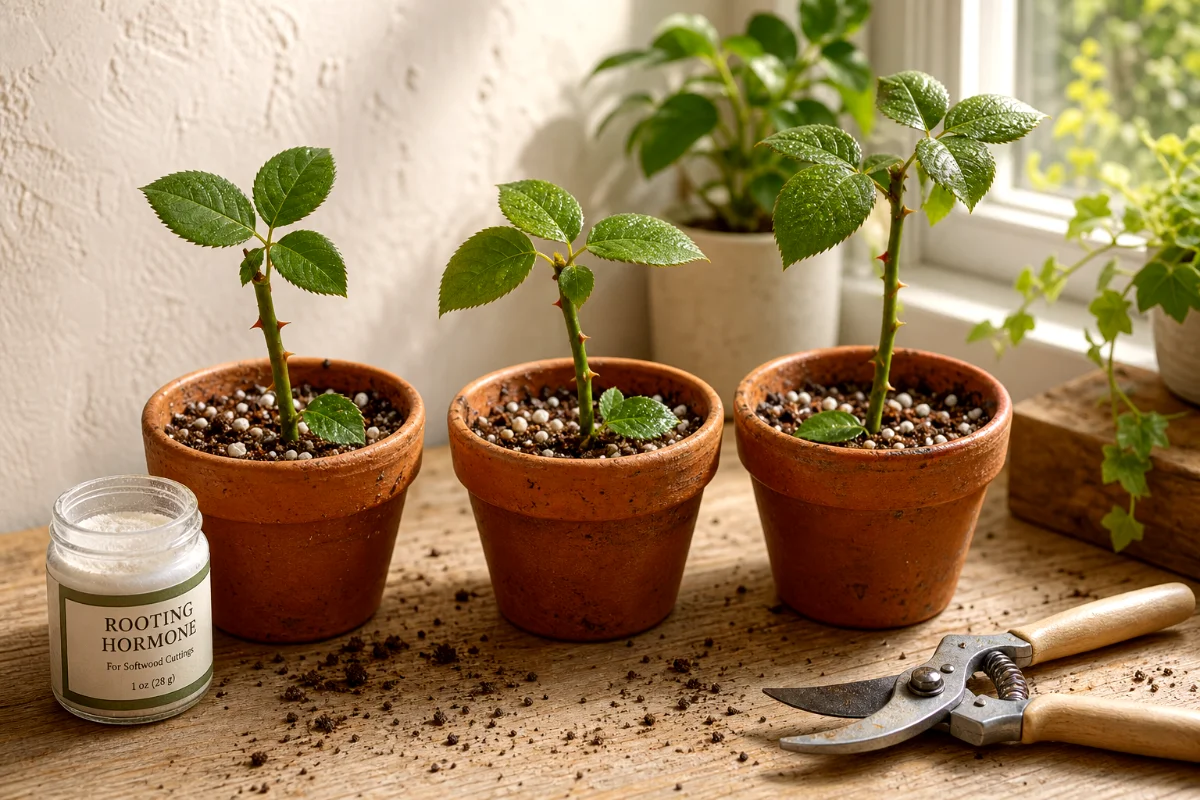
The easiest way to learn how to propagate roses is by taking stem cuttings. You cut a healthy piece of stem, help it grow roots, and raise it like a tiny new plant.
Simple idea. Fussy plant? Sometimes.
Roses can be a little dramatic, especially when the cutting dries out. But if you choose the right stem, keep it humid, and avoid soggy soil, you give yourself a very fair shot.
Before You Cut: A Quick Word on Rose Patents
Some modern roses are patented. That means you shouldn’t propagate them without permission while the patent is active.
Check the plant tag if you still have it. If it says patented, pick a different rose, especially if you plan to sell or share plants.
Old garden roses, many family pass-along roses, and some unnamed roses are often fine candidates. When in doubt, ask the nursery where you bought it.
The Best Time to Propagate Roses
You can propagate roses from softwood cuttings or hardwood cuttings. Both work, but they behave differently.
Softwood Cuttings
Softwood cuttings come from fresh, flexible new growth. I like these best for beginners because they root faster when the weather is warm and the plant is actively growing.
Take softwood cuttings after the rose has bloomed, usually late spring into early summer. The stem should bend without snapping like dry kindling.
Hardwood Cuttings
Hardwood cuttings come from mature, woody stems. They root more slowly, but they can work well in late fall or winter when the rose is dormant.
They need patience. Lots of it.
If you’re new, start with softwood. You’ll see results sooner, and that matters when you’re hovering over a pot like a nervous parent.
What You’ll Need
- Clean, sharp pruners
- A healthy rose stem that bloomed this year
- Small pots with drainage holes
- Well-draining potting mix, such as potting soil mixed with perlite or compost
- Rooting hormone powder or gel
- A pencil or dibber for making planting holes
- Clear plastic bag, cut bottle, or propagation dome
- Plant label
- Water
Clean tools matter. A dirty blade can shove disease straight into the cutting, and that’s a rotten way to start.
How to Choose the Right Rose Cutting
Pick a healthy stem that has flowered this year. Don’t choose a weak, yellowing, black-spotted, or pest-covered stem.
You want strong growth, not a rescue mission.
Look for a stem about pencil-thick if possible. It should have several leaf nodes, which are the little bumps where leaves meet the stem. Roots often form from these nodes, so don’t ignore them.
What a Good Cutting Looks Like
- Green or slightly firm, not shriveled
- About 6 to 8 inches long
- At least 3 leaf nodes
- No flower buds left on it
- No signs of disease or heavy insect damage
Don’t take cuttings during the heat of the afternoon. Morning is kinder. The stems hold more moisture then, which buys you time.
Step-by-Step: How to Propagate Roses in Soil
This is the method I recommend first. Soil-grown roots usually adapt better when you pot the rose up later.
1. Cut a 6 to 8 Inch Stem
Make your cut at a 45 degree angle just below a leaf node. That angled cut gives you more surface area and helps you remember which end goes into the soil.
Yes, that sounds obvious. But every gardener has stared at a bare stick and second-guessed themselves at least once.
2. Remove the Flower and Lower Leaves
Snip off any spent flower or flower bud. A cutting should spend its energy making roots, not trying to bloom.
Remove the lower leaves, leaving only a few leaves at the top. This reduces moisture loss while still letting the cutting make a little food from light.
3. Wound the Base, If the Stem Is Firm
For slightly woody stems, scrape a thin sliver of outer bark from the bottom inch of the cutting. Don’t whittle it like a pencil. Just expose a little fresh tissue.
This can encourage rooting because the plant responds to that wounded area by making new growth tissue.
4. Dip the Base in Rooting Hormone
Dip the bottom end into rooting hormone. Tap off the extra powder so it doesn’t clump.
Rooting hormone isn’t magic dust, but it helps. It gives slow or stubborn cuttings a nudge toward root growth, and roses often appreciate the nudge.
5. Make a Hole Before Planting
Use a pencil to make a hole in the damp potting mix. Then slide the cutting in.
Don’t jam the cutting straight into the soil after dipping it in hormone. The soil can scrape the hormone right off, and then you’ve wasted the best part.
6. Bury at Least Two Nodes
Set the cutting deep enough that at least two nodes sit below the soil. Firm the mix gently around the stem.
The cutting needs contact with moist mix, but it doesn’t need a compacted brick around it. Gentle pressure does the job.
7. Create a Humid Mini Greenhouse
Cover the pot with a clear plastic bag or a cut plastic bottle. Keep the plastic from pressing hard against the leaves if you can.
Humidity keeps the cutting from drying out before it has roots. This step makes a big difference. Skip it, and the leaves often wilt fast.
8. Place It in Bright Indirect Light
Set the pot somewhere warm with bright, indirect light. A windowsill with harsh afternoon sun can cook the cutting inside its cover.
Bright shade works better. Warmth helps. Blazing sun does not.
9. Keep the Mix Moist, Not Soggy
Check the pot every few days. The soil should feel like a wrung-out sponge.
If it smells sour or looks swampy, back off the watering and open the cover for a little air. Roses hate sitting in muck, and cuttings rot quickly when they can’t breathe.
How Long Rose Cuttings Take to Root
Most rose cuttings take 4 to 8 weeks to form roots. Some take longer, especially hardwood cuttings.
Don’t tug hard on the stem every day. I know it’s tempting.
After about a month, you can give the cutting a very gentle pull. If you feel resistance, roots may be forming. If it slides out with no fight, tuck it back in and wait.
How to Propagate Roses in Water
Water propagation is fun because you can watch roots appear. It’s also less reliable for roses than soil, in my experience.
Still, it’s worth trying if you like seeing progress.
Water Method Steps
- Take a 6 to 8 inch cutting from healthy growth.
- Remove the lower leaves so no leaves sit under water.
- Place the cutting in a clean glass jar with fresh water.
- Set the jar in bright, indirect light.
- Change the water every few days.
- Pot the cutting into soil once roots are 1 to 2 inches long.
Here’s the catch. Water roots are tender and used to an easy life. When you move them into soil, they can sulk.
Keep the soil evenly moist for the first couple of weeks after potting. Don’t let those new roots dry out while they adjust.
What About the Potato Method?
You may have seen the trick where someone sticks a rose cutting into a potato. The idea is that the potato holds moisture around the stem.
It can work sometimes. It can also rot, attract fungus gnats, and turn into a weird little compost project in your pot.
I don’t use it. A clean pot, airy mix, rooting hormone, and steady humidity work better and cause less nonsense.
The Best Soil Mix for Rose Cuttings
Use a loose, well-draining mix. Heavy garden soil holds too much water in a pot and can smother new roots.
A good beginner mix looks like this:
- Half quality potting mix
- Half perlite
You can also use a compost and perlite blend if the compost is fine and finished. The goal is moisture plus air. Roots need both.
Too much water fills the air pockets. Then the cutting rots from the bottom up, and you’re left blaming yourself when the mix was the real problem.
How to Care for Rose Cuttings While They Root
Keep Humidity High
The cutting has no roots at first, so it can’t replace water lost through leaves. That’s why you remove lower leaves and cover the pot.
Open the cover every few days for fresh air. A little air flow helps prevent mold.
Watch the Light
Give bright light, but avoid direct hot sun. If the leaves scorch or the cover fogs heavily all day, move the pot back from the window.
Soft light keeps the cutting alive without pushing it too hard.
Don’t Fertilize Yet
Skip fertilizer until the cutting has roots and fresh growth. Fertilizer won’t force roots on a stem that isn’t ready.
At this stage, fertilizer can burn tender tissue. Water and patience do more.
When to Pot Up a Rooted Rose Cutting
Pot up the cutting when you see new growth and feel gentle resistance when you lightly tug the stem.
Move it into a slightly larger pot with regular potting mix. Don’t jump to a huge container. A small root system can drown in a big pot of wet soil.
After transplanting, keep it in bright shade for a week or two. Then slowly introduce morning sun.
When to Plant a New Rose Outside
Don’t rush a baby rose into the garden. Wind, sun, and dry soil can knock it flat.
Let the rooted cutting grow in a pot until it has a strong root system and several sets of new leaves. For many gardeners, that means waiting a few months.
Harden it off before planting outside. Set it outdoors in shade for a few hours, then bring it back in. Increase outdoor time over 7 to 10 days.
Plant it where it gets good sun, rich soil, and decent air flow. Roses like sun on their leaves and air around their stems. Crowding invites fungal problems.
Common Mistakes That Ruin Rose Cuttings
- Taking weak cuttings: Sick stems rarely turn into strong plants.
- Leaving too many leaves: Extra leaves dry the cutting before roots can form.
- Using soggy soil: Wet, heavy mix causes rot.
- Putting cuttings in direct sun: Heat builds under plastic fast.
- Skipping humidity: Dry air pulls moisture from the cutting.
- Checking roots too often: Pulling the cutting up breaks tiny new roots.
If a cutting turns black from the bottom, toss it. Don’t baby it. That stem has usually rotted, and keeping it around can spread trouble to nearby cuttings.
My Practical Success Tips
Take more cuttings than you need. Not every rose cutting roots, even when you do everything right.
I usually take 4 to 6 cuttings if I want one good plant. That isn’t pessimism. That’s gardening math.
- Label each pot with the rose name and date.
- Use fresh mix, not old soil from a tired container.
- Keep cuttings out of strong wind.
- Try both soil and water if you’re curious.
- Don’t give up after one failed batch.
Some roses root like weeds. Others act like royalty and make you wait.
FAQ About Propagating Roses
Can you propagate roses from a bouquet?
Sometimes, but it’s hit or miss. Florist roses may be treated, shipped cold, or cut too long ago.
If the stems still look fresh and have nodes, you can try. Use the soil method and keep your expectations modest.
Do rose cuttings need rooting hormone?
No, but rooting hormone improves your odds. I use it because roses can be slow to root, and beginners deserve every easy advantage.
Can I put rose cuttings straight into the ground?
You can, especially in mild weather, but pots give you more control. In the ground, cuttings face drying wind, pests, heavy rain, and curious pets.
Start in pots if you’re learning. It’s easier to manage moisture and shade.
Why are my rose cuttings wilting?
They’re losing water faster than they can replace it. Remove extra leaves, increase humidity, and keep them out of direct sun.
If the stem stays green, it may recover. If it turns black and mushy, it’s done.
How many nodes should I bury?
Bury at least two nodes. Roots often form from nodes, so placing them under the soil gives the cutting more chances to root.
Can I propagate roses in winter?
Yes, with hardwood cuttings. They root slowly, so don’t expect quick action.
Keep them protected from deep freezes and soggy conditions. Winter cuttings reward patient gardeners.