19 Aesthetic Urban Herb Garden Ideas for Tiny Kitchens & Balconies

You want fresh basil, but you live in a concrete box. I get it. I’ve grown tomatoes on rusty fire escapes and mint in cracked teacups. You don’t need a sprawling backyard to grow your own food. You just need good light, decent soil, and a little imagination.
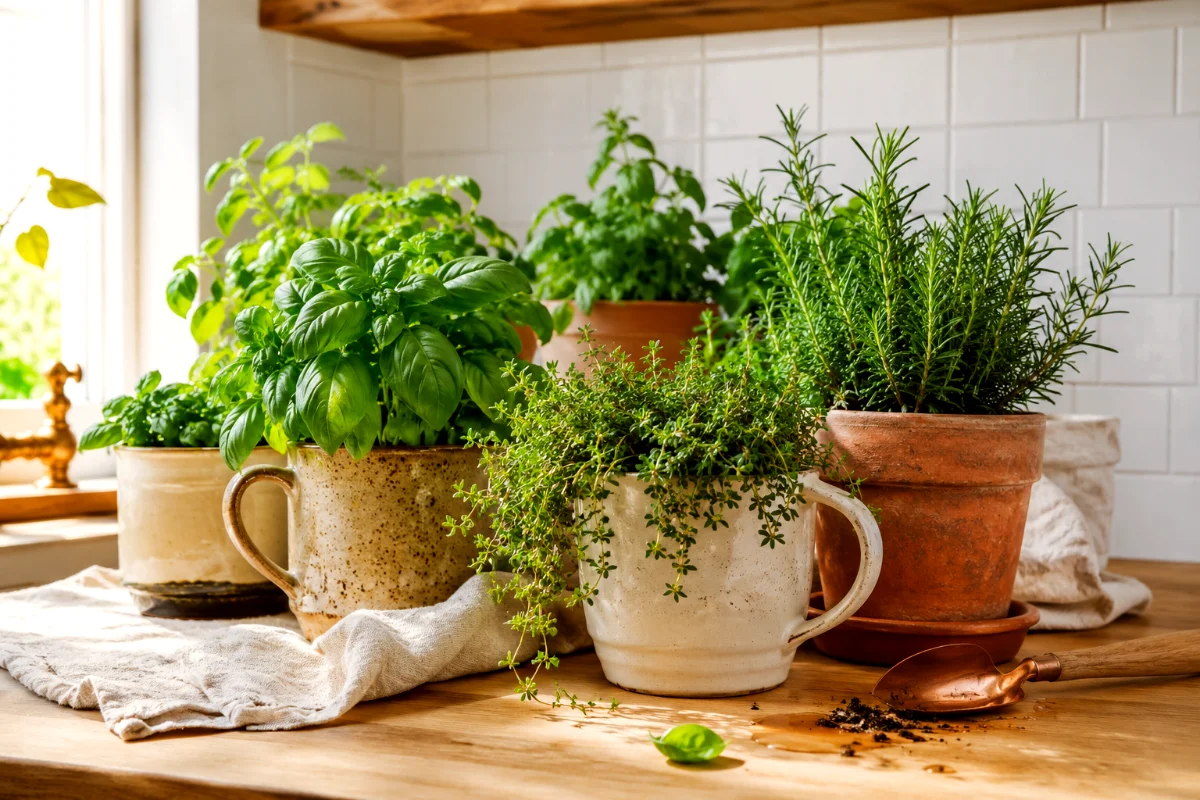
Here are 19 ways to make it happen without ruining your apartment’s vibe.
1. The A-Frame Ladder
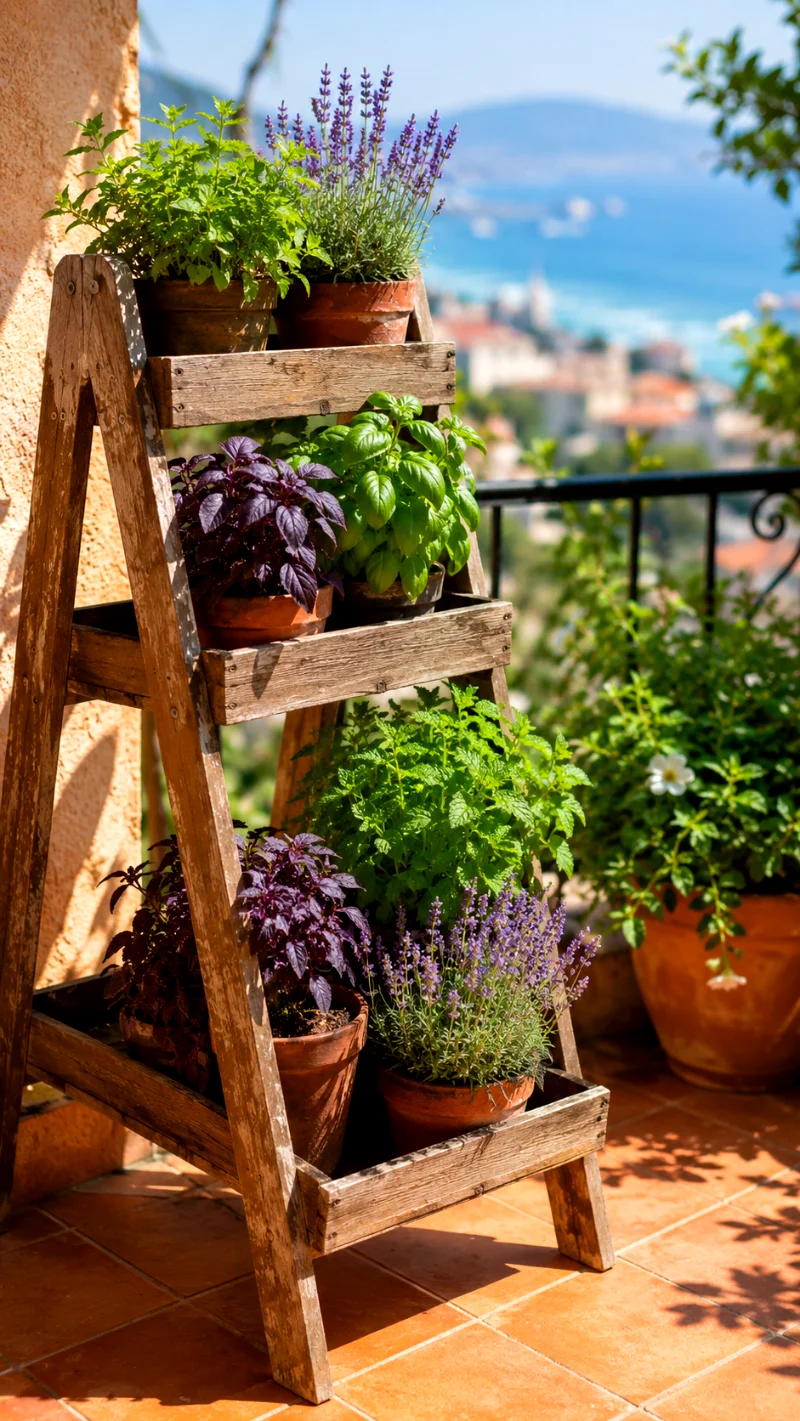
Ladders are magic for small spaces. They give you serious vertical real estate without forcing you to drill holes in your landlord’s walls. Throw some heavy terracotta pots on the steps.
Terracotta breathes well. This keeps plant roots from rotting if you happen to get heavy-handed with the watering can. Put sun-hungry rosemary on the top step. Keep your shade-tolerant mint lower down where it stays cool.
2. Upcycled Artisan Mugs
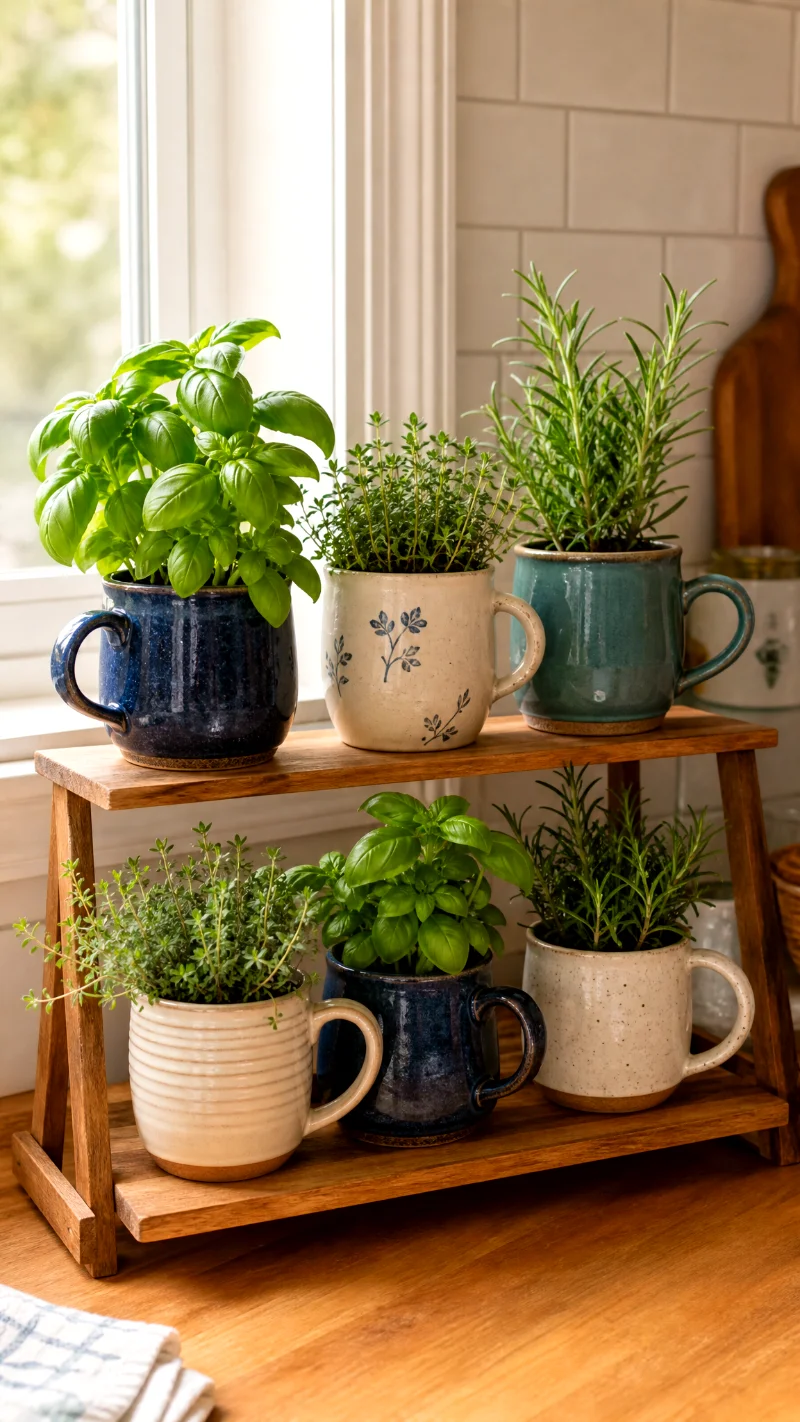
Don’t overthink your containers. Grab those heavy, beautiful mugs you never actually drink from.
But listen to me carefully. You absolutely must drill a drainage hole in the bottom with a masonry bit. No hole means dead, swampy roots in a matter of weeks. Drop in some thyme or chives and line them up on your sunniest windowsill.
3. Balcony Railing Boxes
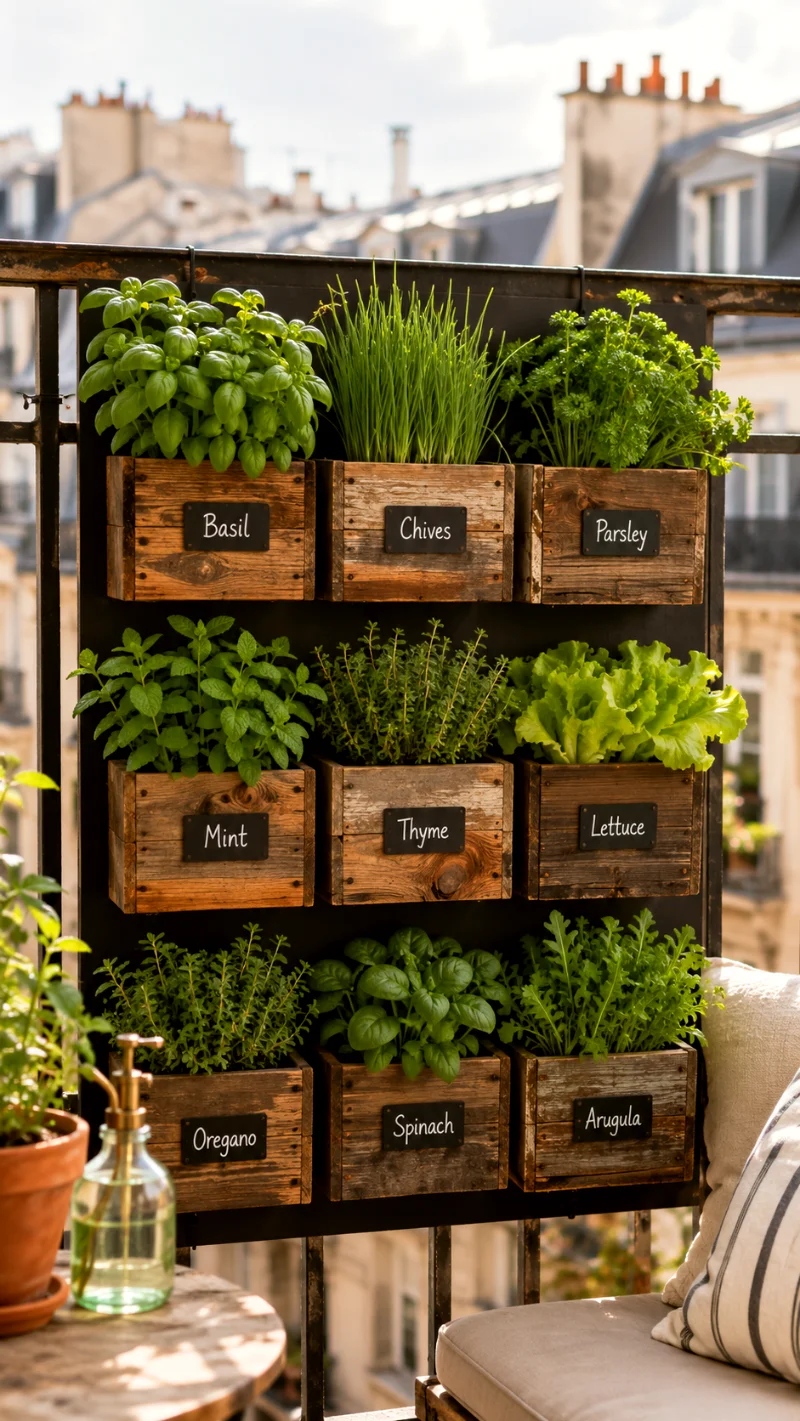
This is the classic space-saver. Hang wooden boxes right on your railing so they catch maximum sun.
Mix your plants right to avoid a mess. Put basil next to parsley since they both like damp soil. Keep the aggressive, spreading oregano in its own private box so it doesn’t choke out the others.
4. Sleek Black Troughs
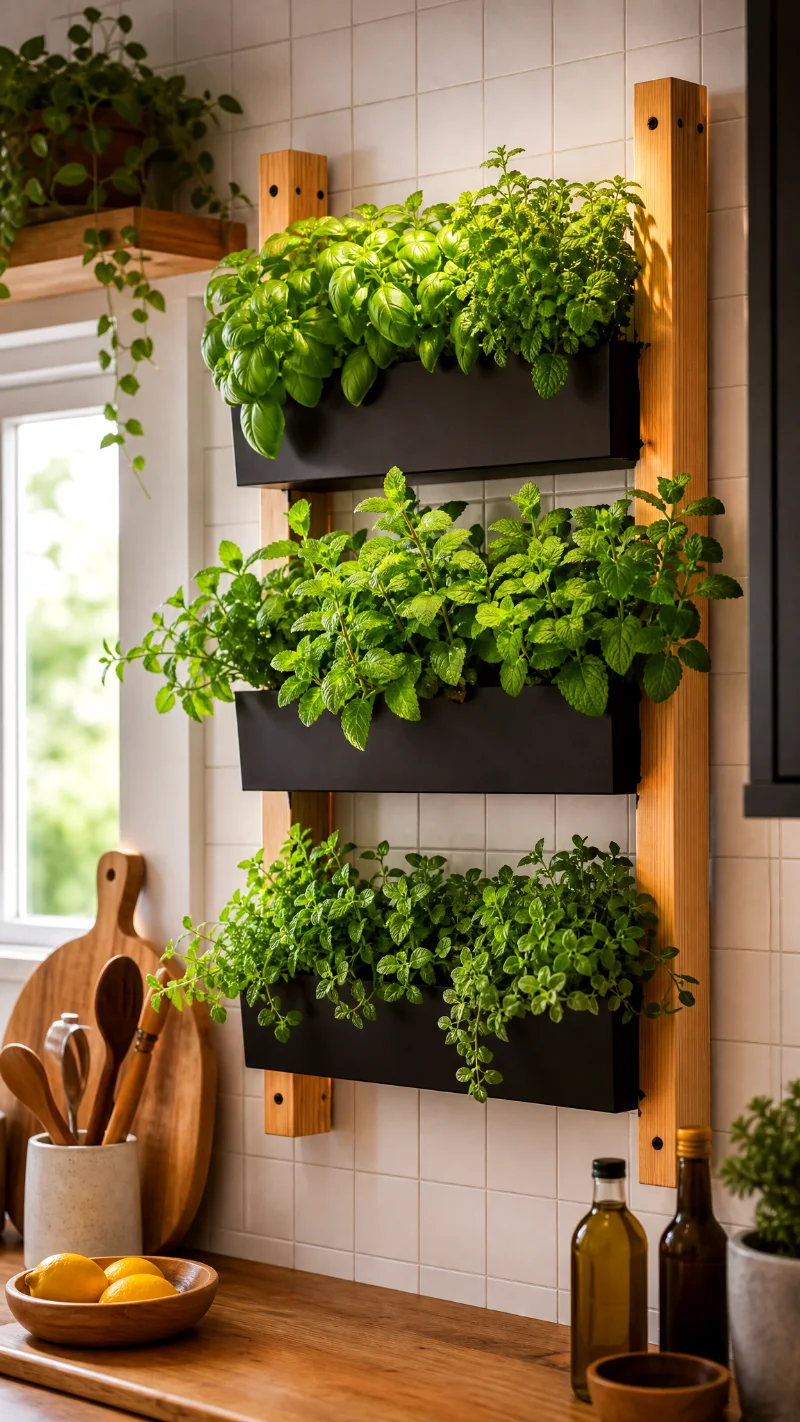
Sleek. Modern. Easy. Wall-mounted black troughs absorb the sun’s heat.
Heat makes Mediterranean herbs like sage and oregano very happy. Just make sure you use a lightweight potting mix heavily cut with perlite. You don’t want heavy, wet dirt ripping your drywall down.
5. Cottage Core Tiered Stand
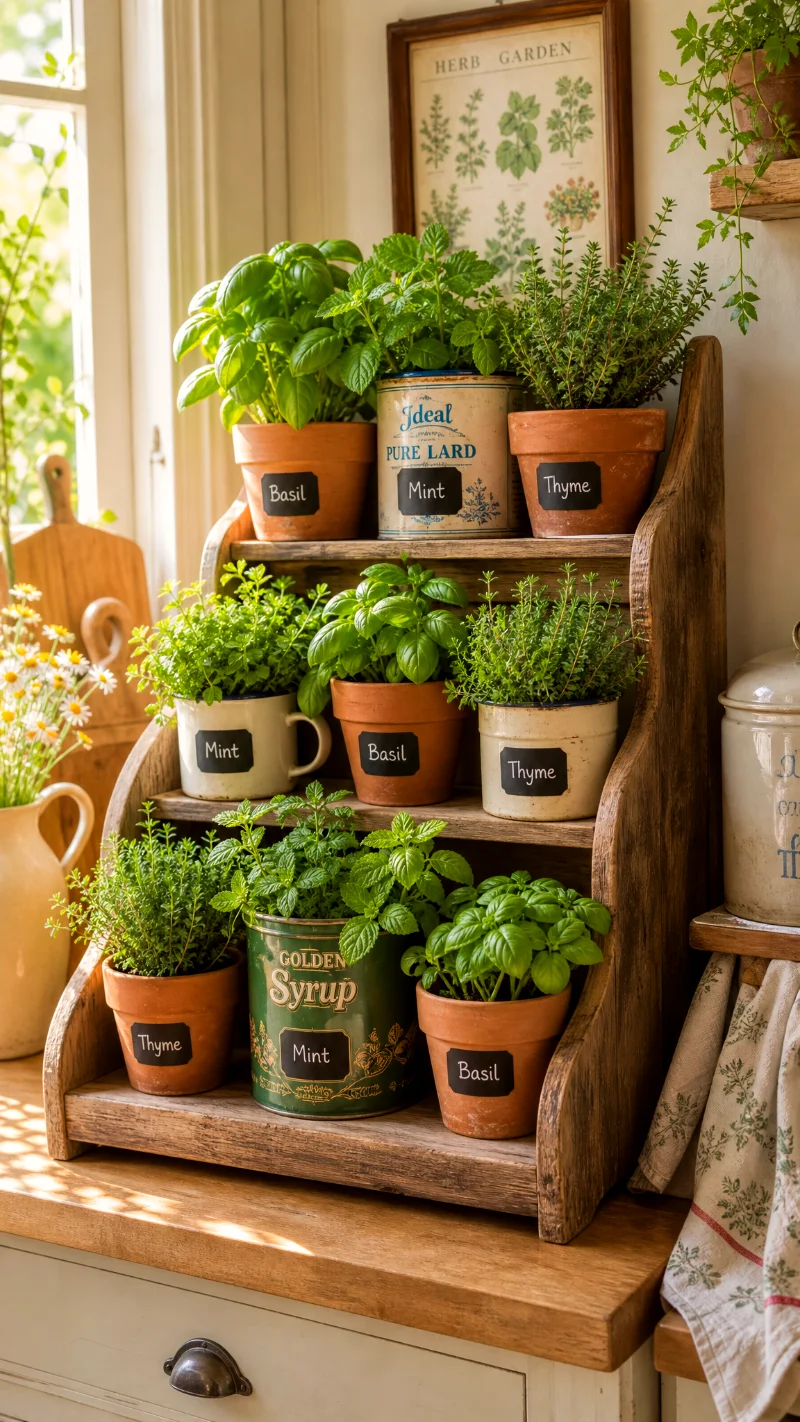
Want that countryside grandma vibe? A tiered wooden stand does the trick perfectly.
It keeps your delicate herbs like cilantro out of the harsh midday bake by letting you rotate them easily. Group plants with similar water needs on the exact same tier so you don’t overwater by accident.
6. Dark Wood & Black Pots
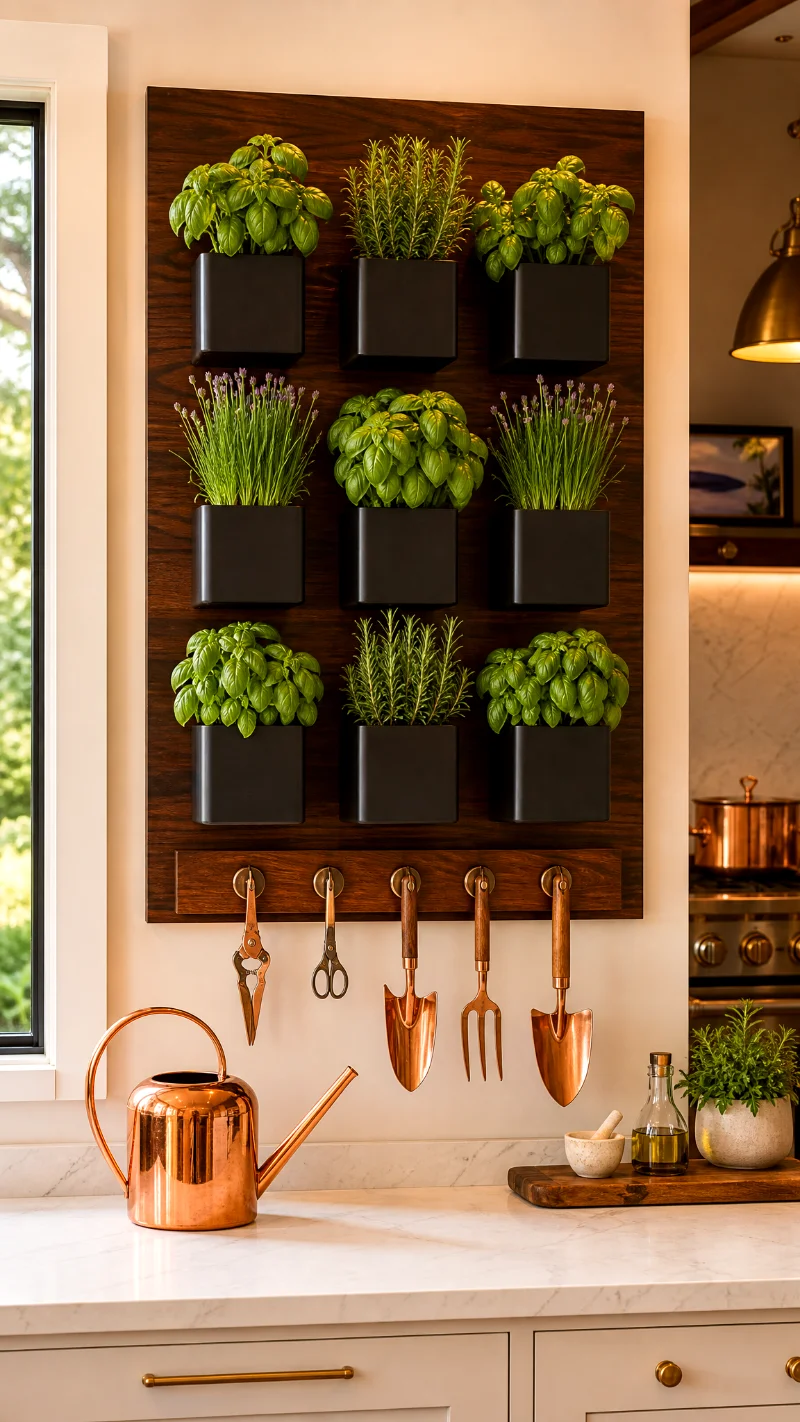
This look is sharp. Dark wood framing paired with bold black pots turns your standard basil into living art.
If you use this setup indoors, watch out for fungus gnats. They love dark, damp soil. Let the top inch of dirt dry out completely between waterings to kill off the larvae.
7. Felt Pocket Walls
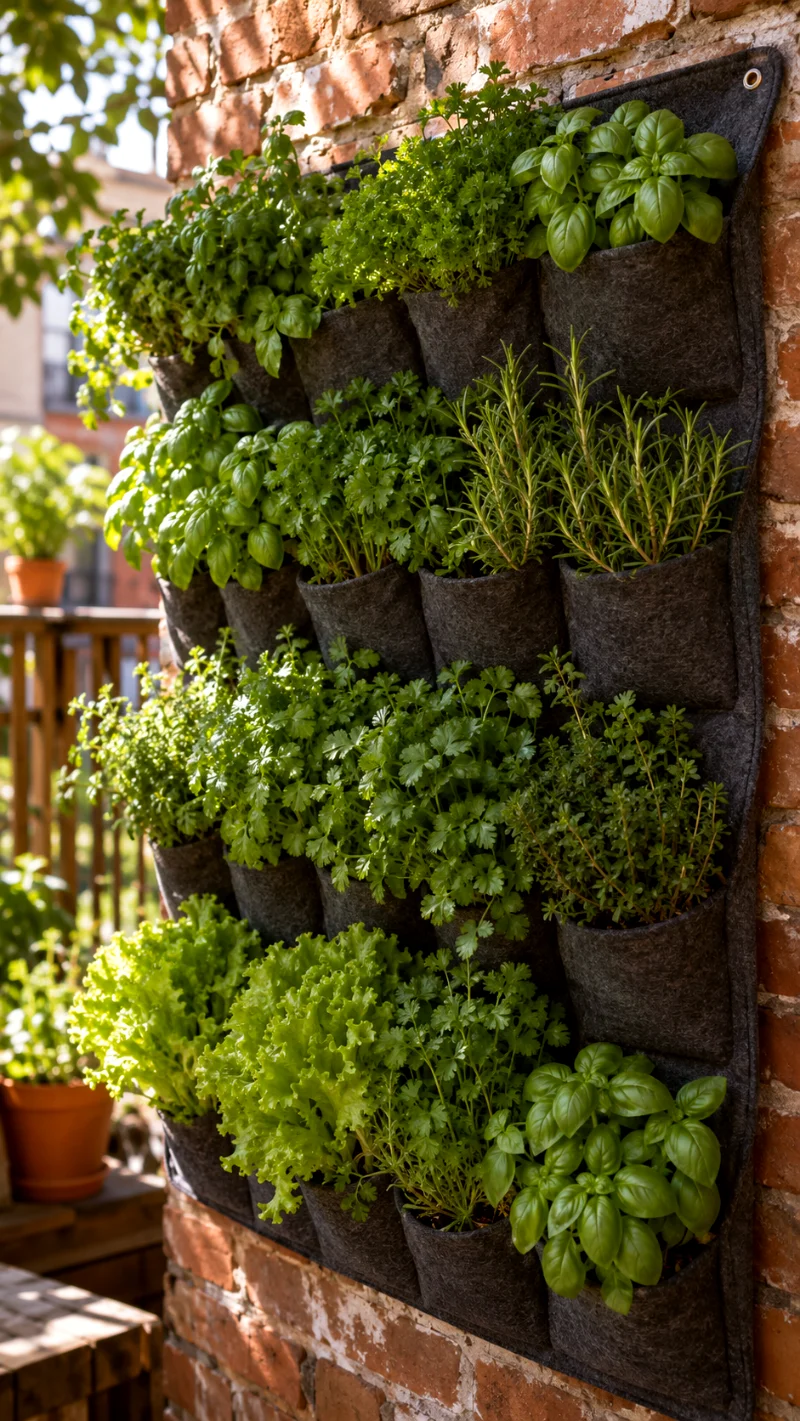
I have a serious love-hate relationship with felt pockets. They look absolutely incredible hanging against an old bare brick wall.
But man, they dry out so fast. The felt fabric actively wicks moisture away from the dirt. You will need to water these pockets every single day in the peak of summer, or your plants will turn to dust.
8. Freestanding Rooftop Planter
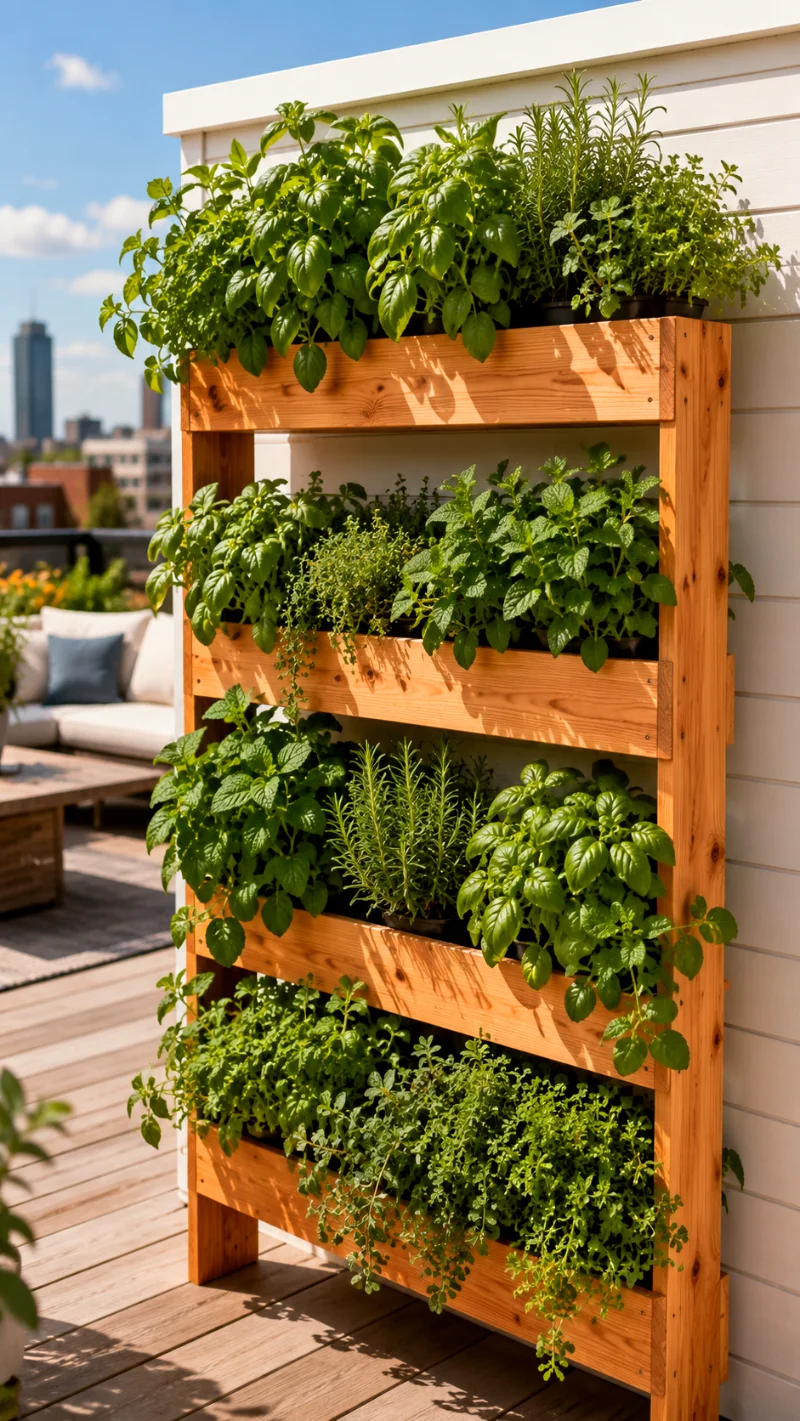
Got a flat roof or a big terrace? Build a tiered freestanding wood box.
You can pack a ton of soil in these deep beds. Deep soil means happy, massive root systems. Your sage will literally grow into a thick, woody bush by August. And deep soil doesn’t dry out nearly as fast as small pots.
9. High-Tech LED Gardens
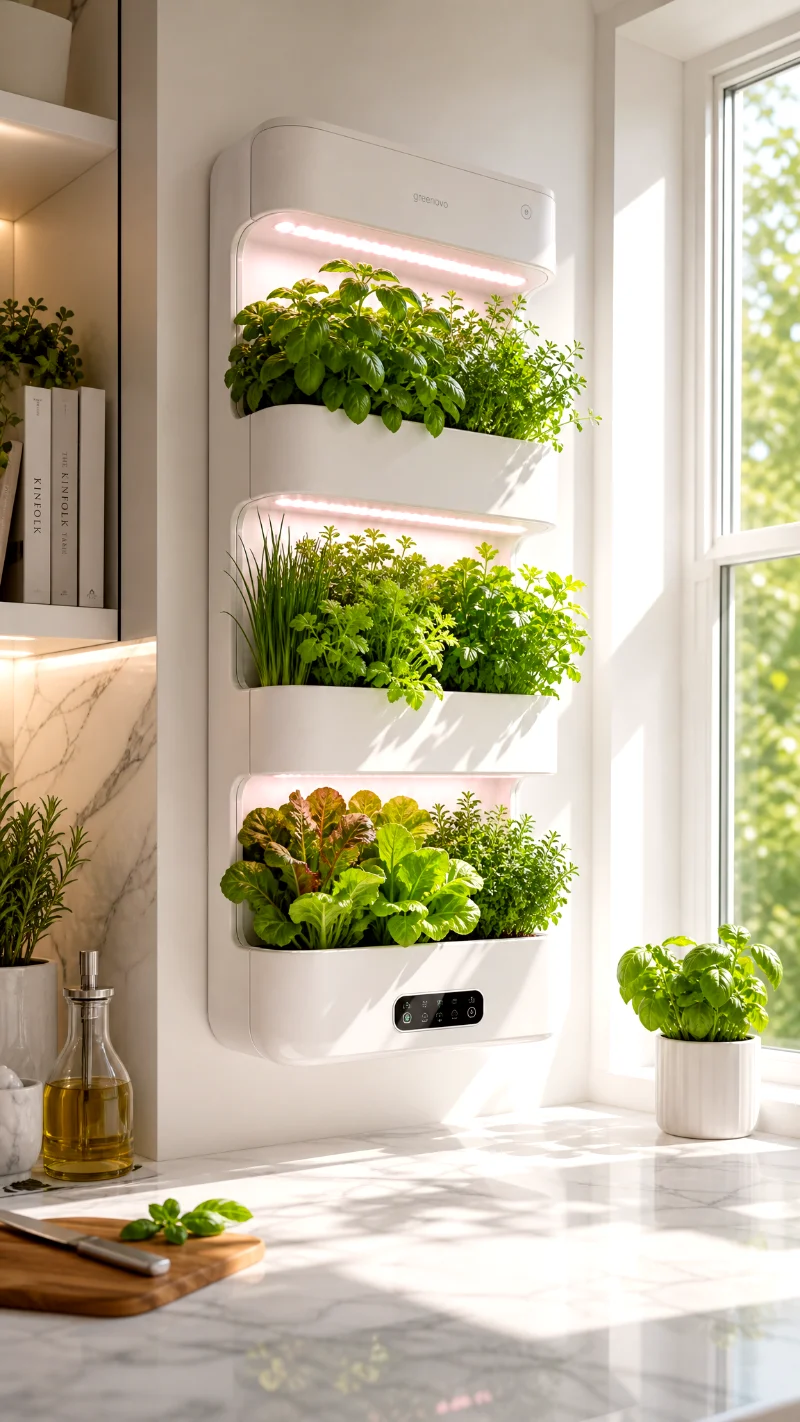
I usually prefer natural sunlight. But sometimes your kitchen just faces a solid brick wall.
Smart LED setups actually work really well. They give consistent, perfect light cycles. Your basil won’t get leggy and sad, reaching for a window that has no sun.
10. White Pots on a Green Wall
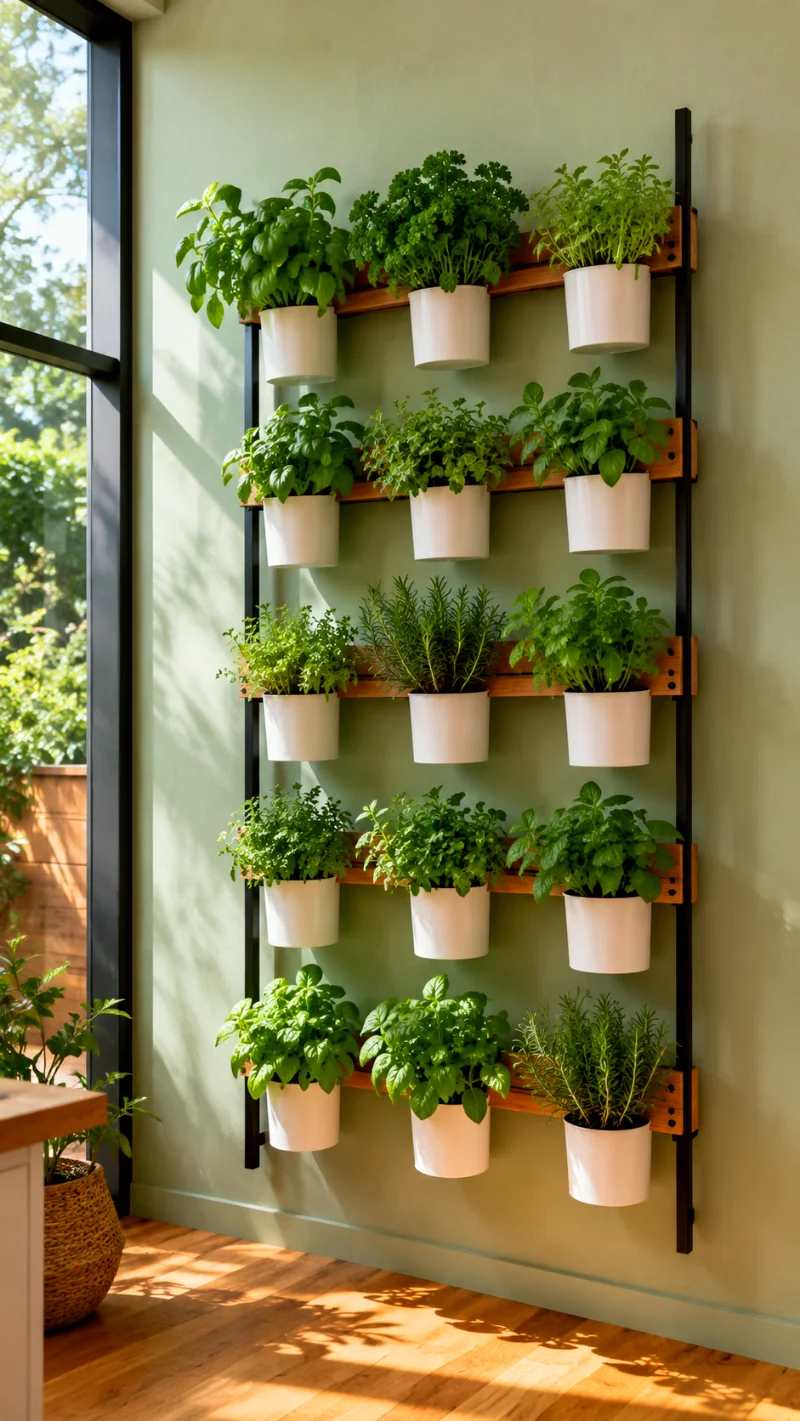
Contrast is everything in interior design. Bright white pots pop beautifully against a painted green wall.
Keep it simple. Use identical pots for a clean, unified look that doesn’t distract the eye.
11. Indoor Wood Troughs
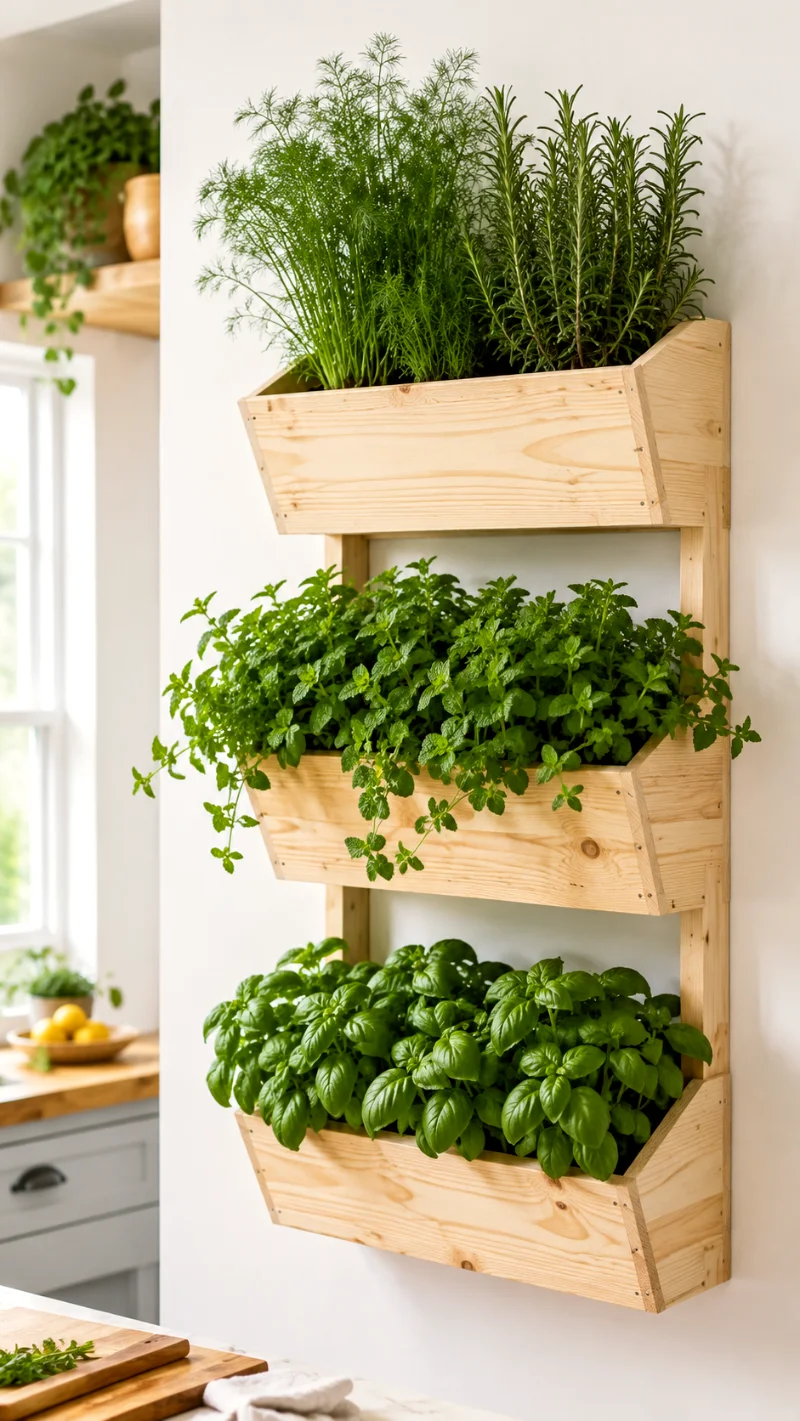
Troughs hold way more soil than individual pots. More soil holds moisture much longer.
This means you can skip a day of watering without killing your precious dill. Just be smart and line the inside of the wood with thick plastic sheeting so the wet dirt doesn’t rot the wood out.
12. Industrial Metal & Wood
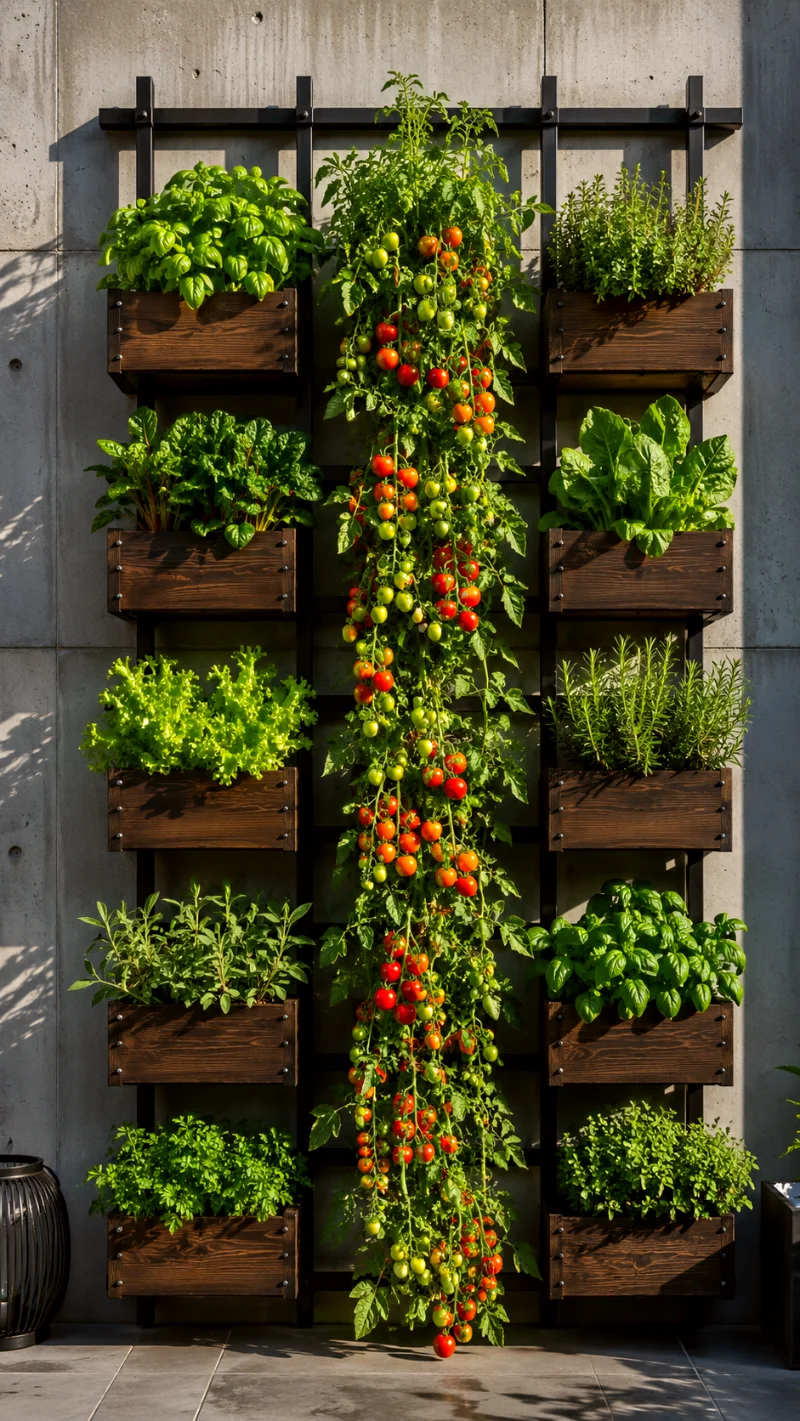
This is my personal favorite build. Tough metal grids paired with thick, chunky wood boxes look incredibly rugged.
You can even grow trailing cherry tomatoes in this setup. The metal grid acts as a perfect built-in trellis for the heavy vines to climb up. It’s practical, and it looks great on a bare concrete balcony.
13. Minimalist Wood Boxes
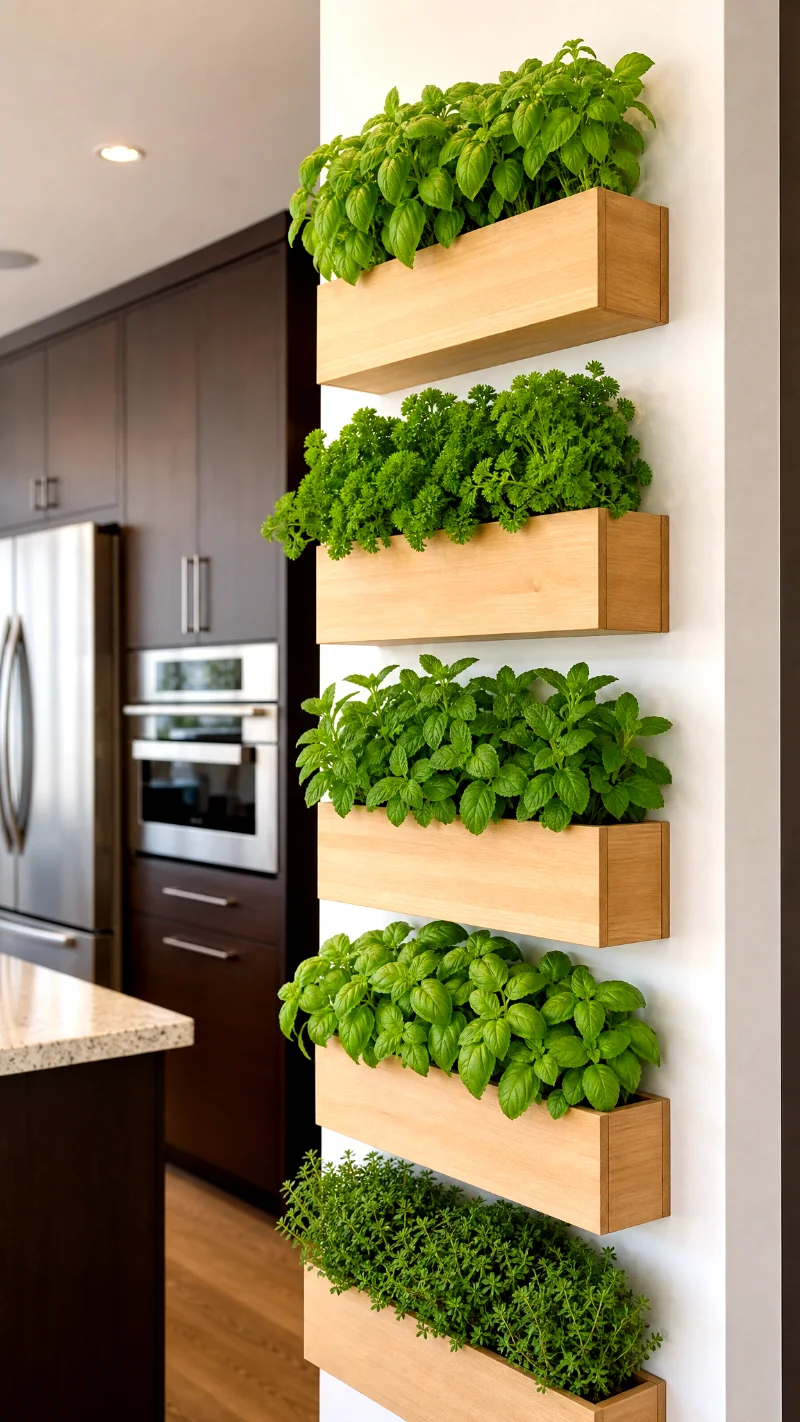
Keep it perfectly clean. Simple square wooden boxes mounted vertically save serious counter space.
Just be careful with drainage indoors. Drop a cheap plastic liner pot inside the wood box so water doesn’t ruin the finish or drip all over your floor.
14. Outdoor Slanted Planters
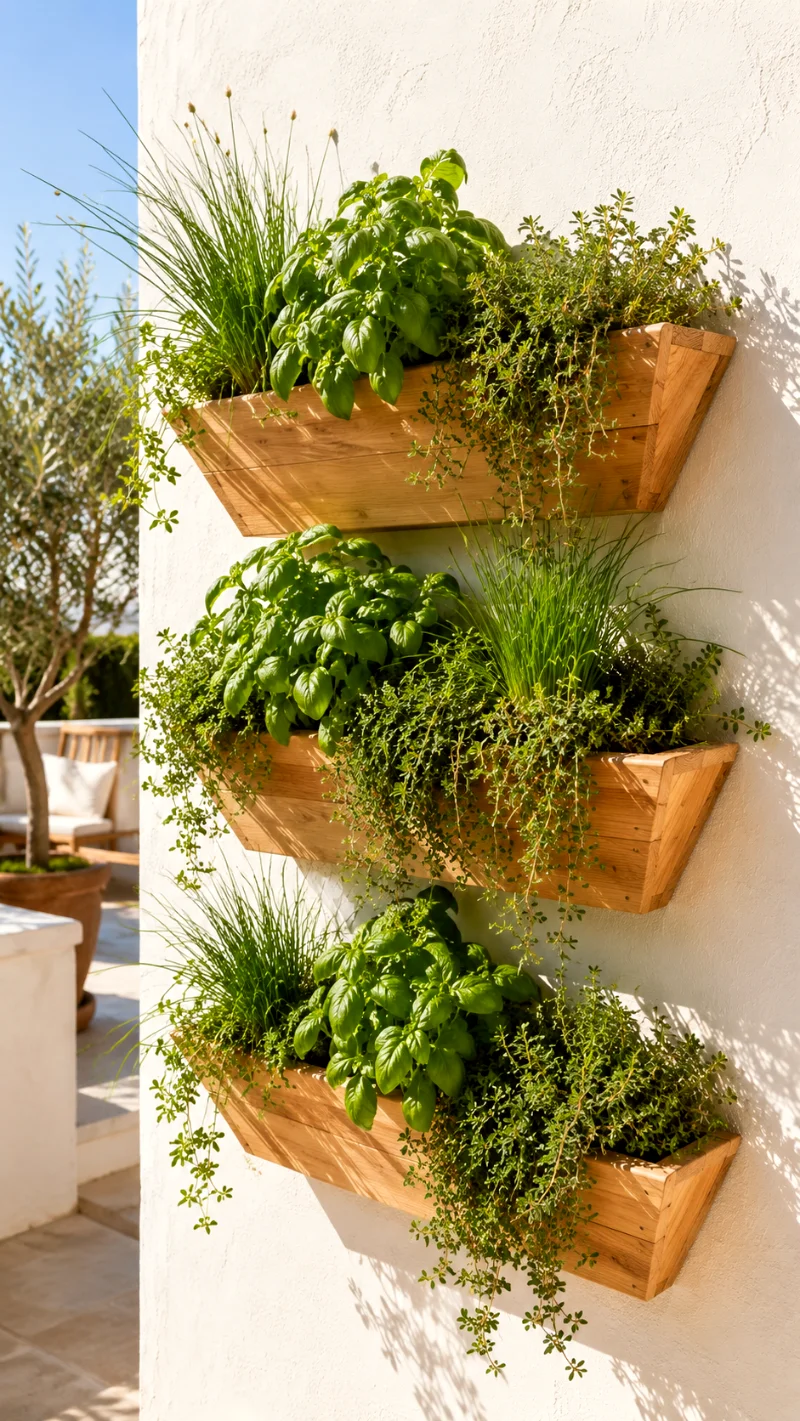
Slanted designs are pure genius. The sharp angle gives every single plant direct access to the sun.
There’s no top row shading out the bottom row. I highly recommend this specific build for hardcore sun-worshippers like lavender and thyme.
15. The Rustic Pallet
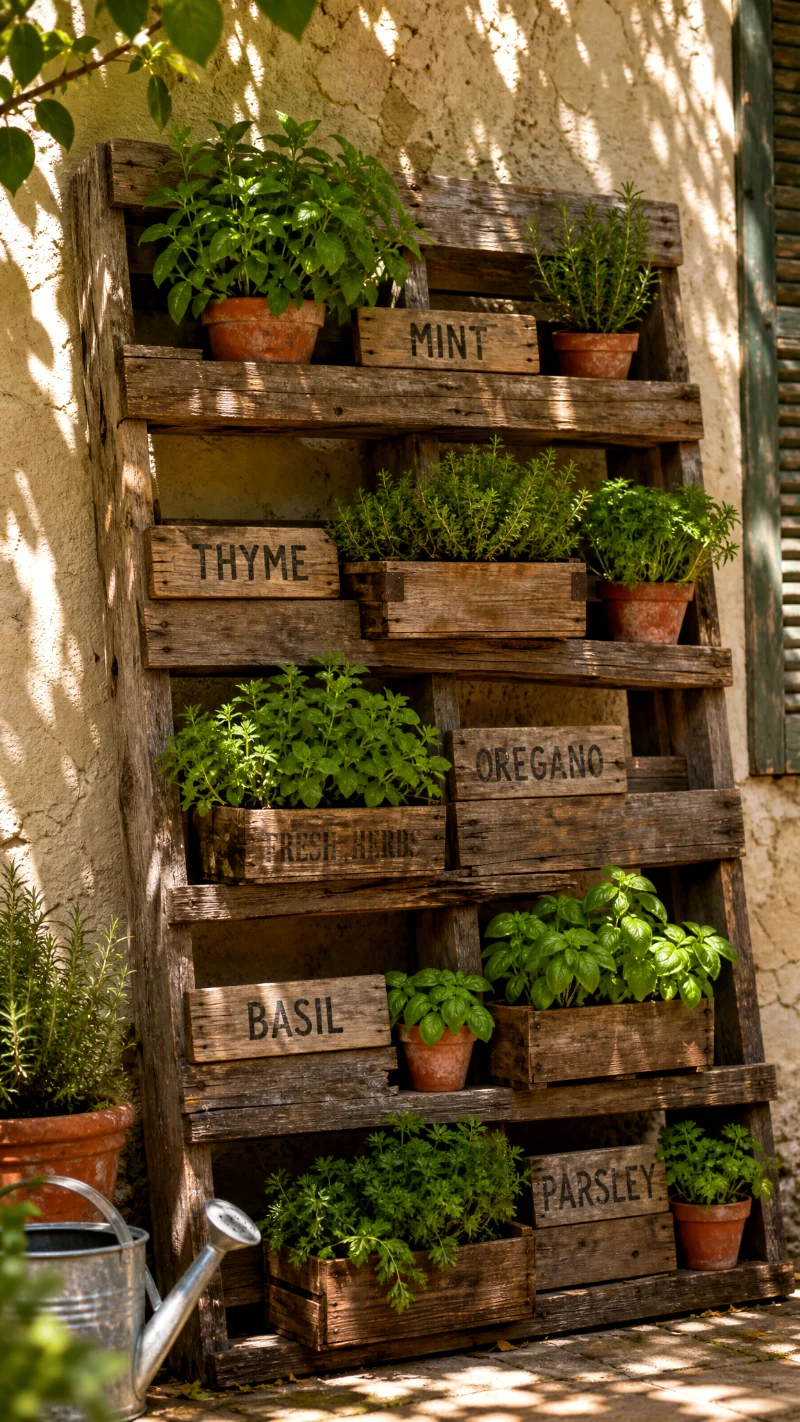
Pallets are cheap. Sometimes they are totally free behind grocery stores.
Lean one up against your balcony wall and staple heavy landscaping fabric inside the slats to hold the dirt. Boom. Instant vertical garden. Just check the stamp on the wood to make sure it was heat-treated, not soaked in toxic chemicals.
16. Rustic Brick Wall Planter
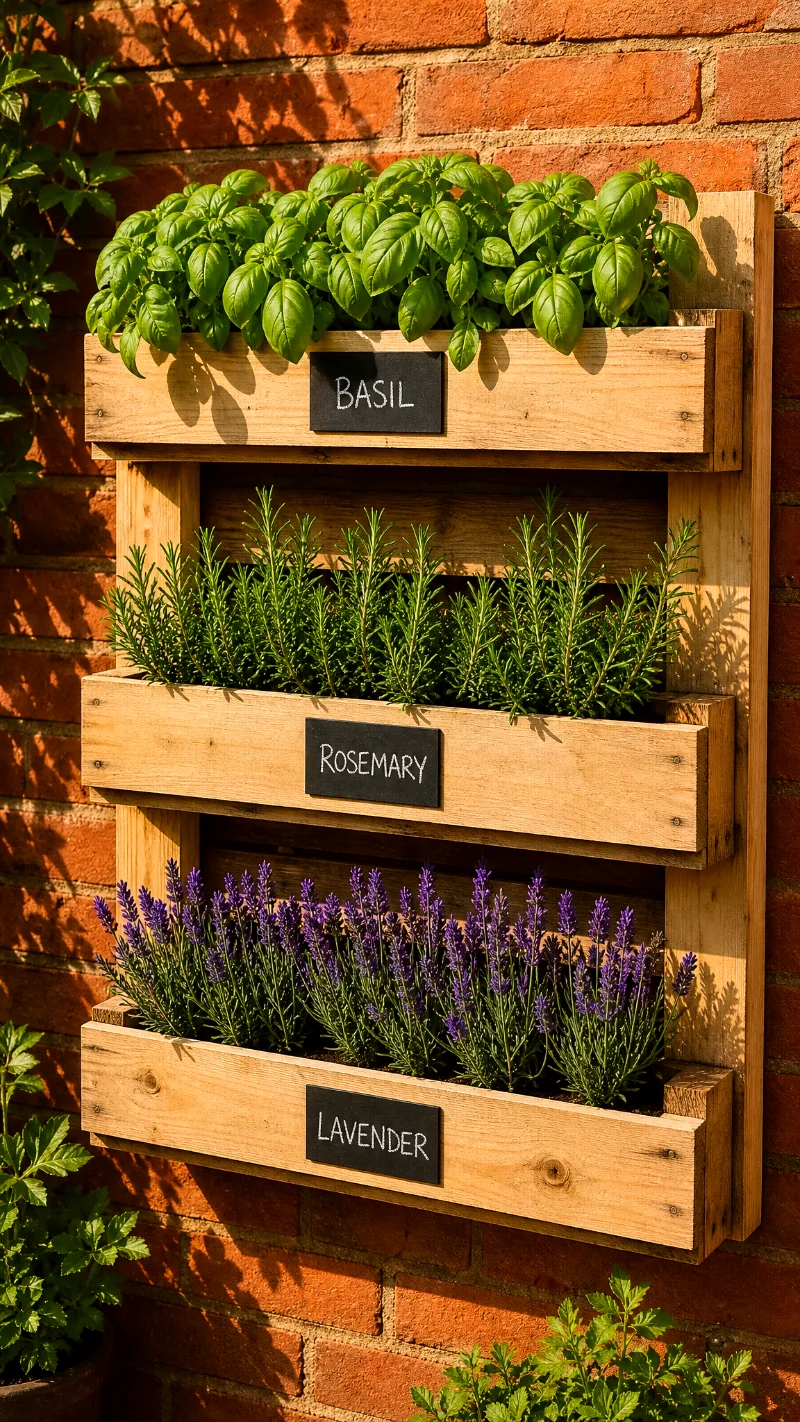
Nothing beats the look of weathered wood against old brick.
The brick holds heat beautifully during the hot afternoons. That stored heat slowly radiates out at night, keeping your herbs cozy and warm through chilly spring evenings.
17. Hanging Coco Coir Baskets
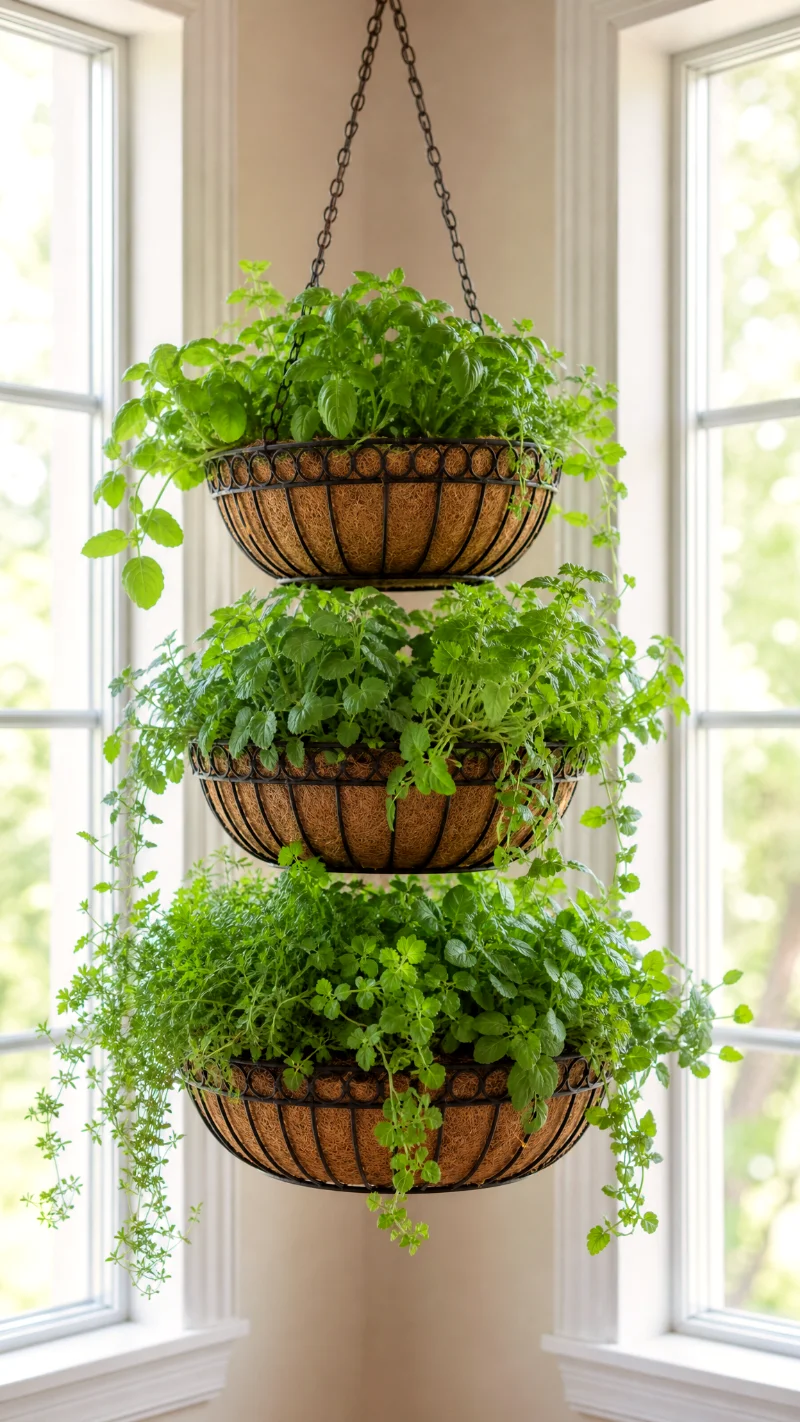
These are perfect for tight corners. A three-tier hanging basket takes up absolutely zero floor space.
The coconut coir material drains instantly. You absolutely must water these over a sink or a bucket, or you will flood your kitchen floor in seconds.
18. Three-Tier Wedge Planter
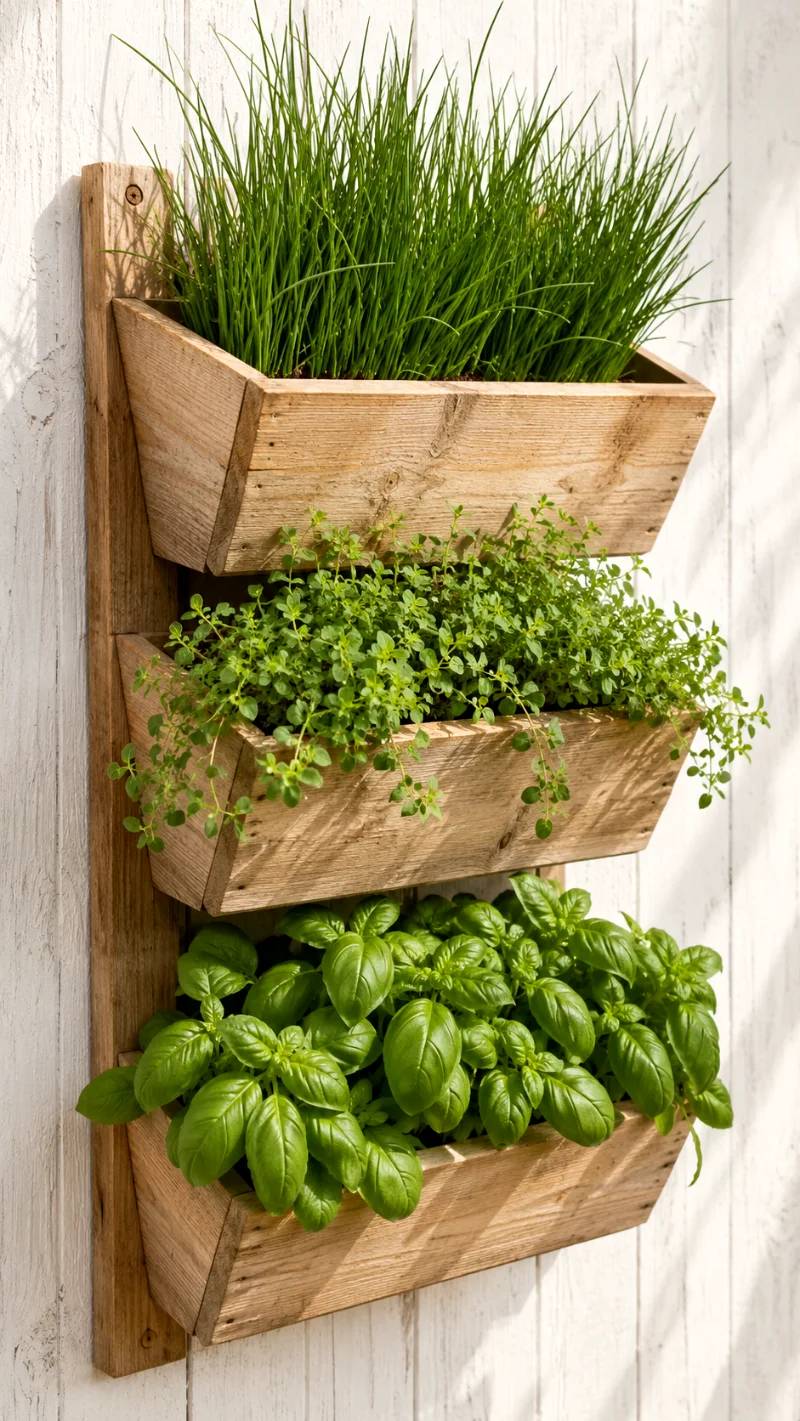
Wedge planters hug the wall tightly. They have a sleek, flat profile that won’t bump your shoulders when you walk past on a narrow balcony.
Fill the top wedge with strongly scented chives. The smell drops down and naturally deters aphids from eating the softer plants below.
19. The Urban Wire Rack
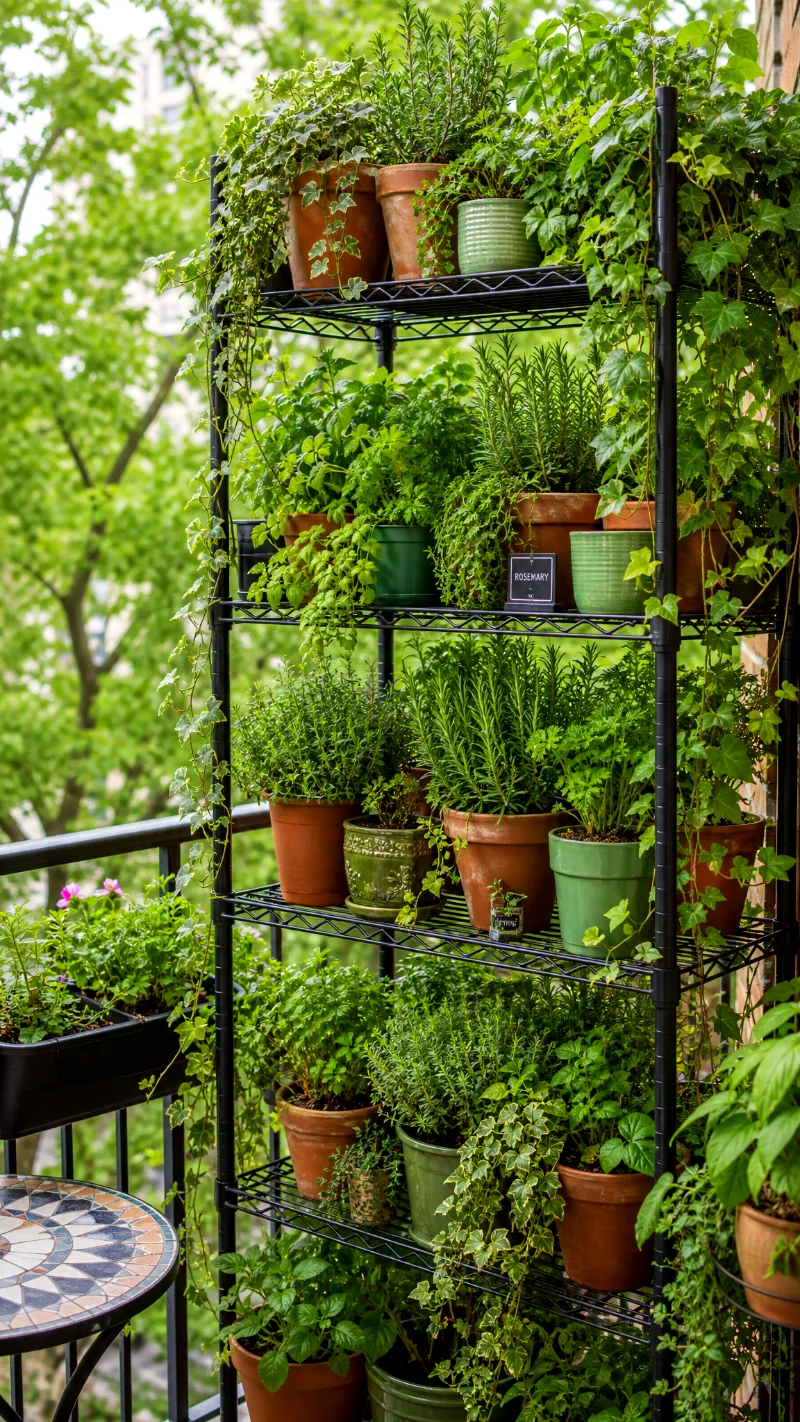
Wire utility racks are practically indestructible. They easily hold the weight of wet soil and let water drain straight through the shelves.
Always put your heaviest terracotta pots on the bottom shelf. This lowers the center of gravity and stops the wind from blowing the whole thing over during a summer storm.
Quick FAQ for Urban Gardeners
What is the absolute easiest herb for a beginner to grow?
Mint. It grows like a weed. But keep it in its own isolated pot. Mint is a bully. Its roots will choke out every other plant sharing its soil.
How often should I water my indoor herbs?
Stop watering on a strict schedule. Stick your index finger an inch into the dirt. If it’s dry, water it heavily. If it feels moist, walk away. Overwatering kills more indoor herbs than under-watering.
Why are my balcony herbs turning yellow?
You probably don’t have enough drainage. Drill more holes in your pots. Or, the nutrients in your cheap potting soil washed out. Add a liquid organic fertilizer once a month.
Don’t overcomplicate this. Pick one sunny window, grab a cheap pot with a hole in the bottom, and just plant something today.
Do I really need drainage holes?
Yes. Always. Plants breathe through their roots. Sitting in swampy water drowns them.
How often should I fertilize pots?
Potted plants wash their nutrients out every time you water them. Hit them every two weeks with a weak liquid fish emulsion.
Don’t buy cheap plastic pots if you live in a hot climate. The sun bakes the plastic, the plastic bakes the soil, and your plant dies of heatstroke. Stick to wood, ceramic, or thick metal.