How to Propagate String of Pearls: Easy Soil Method That Actually Works

String of pearls looks fancy. It isn’t.
This trailing succulent, botanically known as Curio rowleyanus, propagates best from stem cuttings laid on moist, gritty soil. That method gives the little nodes direct contact with the mix, which is exactly what they want.
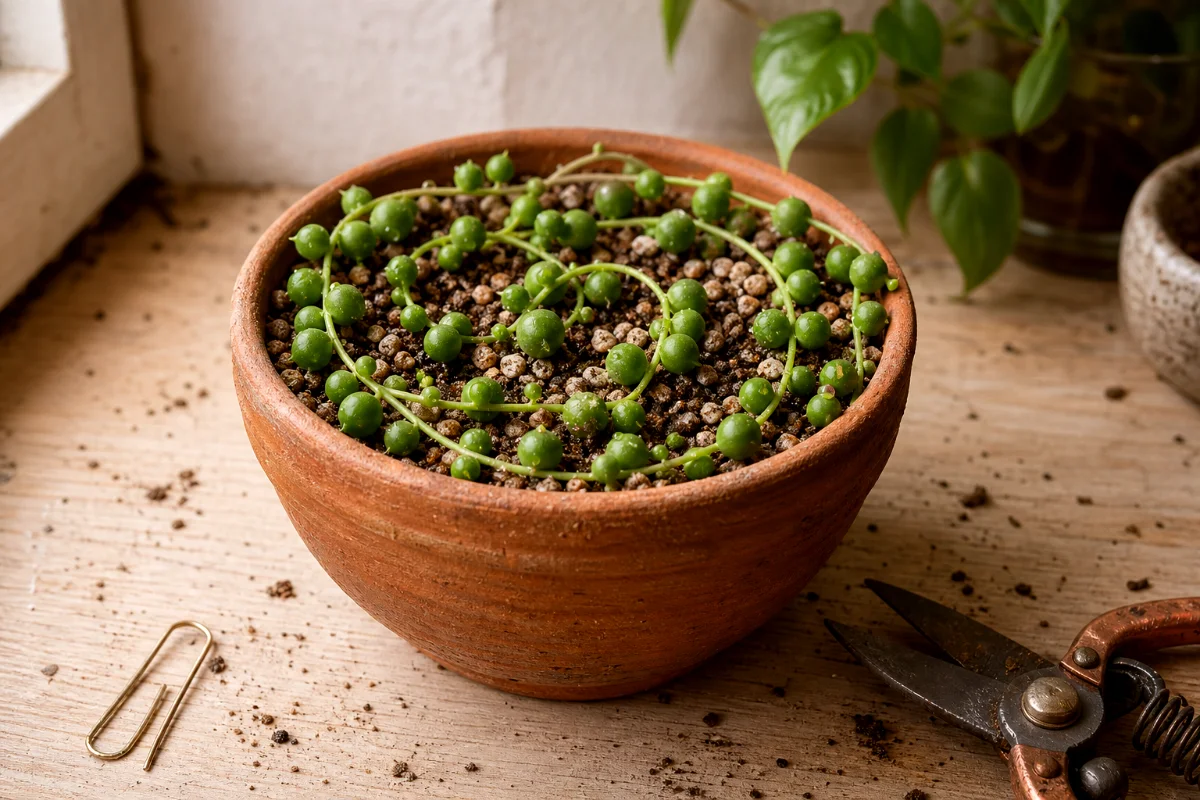
And yes, you can root it in water too. But if you asked me over the garden fence, I’d tell you to start with soil. It’s steadier, less fussy, and usually gives you a stronger baby plant.
Best Time to Propagate String of Pearls
Propagate string of pearls in spring or early summer if you can. That’s when the plant wakes up and pushes new growth.
Can you do it in winter? Sometimes. But you’ll wait longer, and the cuttings may sulk like a cat in the rain.
Warmth, longer days, and bright indirect light all help the cuttings root faster. Most healthy cuttings form roots in about 3 to 4 weeks.
What You’ll Need
- Healthy string of pearls mother plant
- Clean scissors or small pruning snips
- Small pot with drainage holes
- Succulent or cactus potting mix
- U-shaped floral pins, bent paperclips, or hairpins
- Spray bottle or small watering can
- Optional clear jar for water propagation
Don’t use heavy regular potting soil by itself. It holds too much water around those skinny stems, and string of pearls can rot fast when it sits wet.
Method 1: Soil Propagation, My Recommended Method
Soil propagation works so well because string of pearls naturally roots where the stem touches the ground. You’re not forcing the plant to do anything strange. You’re just giving it a better place to land.
This method also saves you from the awkward water-to-soil move later. Water roots can be tender. Soil roots form ready for real life.
Step 1: Take Healthy Cuttings
Use clean scissors to cut 4-to-6-inch strands from a healthy mother plant. Shorter 3-inch cuttings can work, but I like a little extra length because it gives you more nodes to root.
Choose firm, plump strands. Skip shriveled stems, mushy pearls, or anything with pests.
Step 2: Remove Pearls From the Bottom Nodes
Gently remove the pearls from the bottom inch of each stem. This exposes the leaf nodes, which are the spots where roots grow.
Be gentle. The stems snap easily, and the pearls can pop off if you tug like you’re opening a stubborn drawer.
Step 3: Let the Cuttings Callus
Let the cuttings sit at room temperature for 1 to 2 days. This dry rest helps the cut ends seal over.
It’s a small step. But it can make a big difference, especially if your home runs cool or humid.
Step 4: Prepare the Soil
Fill a small pot with a well-draining succulent or cactus mix. Moisten the mix all the way through, then let extra water drain out.
The soil should feel lightly damp, not soggy. Think wrung-out sponge, not swamp.
Step 5: Lay or Coil the Cuttings on Top
Lay the cuttings on top of the soil, or coil them gently around the pot. Make sure the exposed nodes touch the soil surface.
This part matters. Roots won’t leap across the air and find the potting mix on their own. They need contact.
Step 6: Pin the Stems Down
Use U-shaped floral pins, bent paperclips, or hairpins to hold the stems lightly against the soil. Don’t crush them.
I often use bent paperclips because they’re cheap and they work. Fancy tools are nice, but plants don’t care about fancy.
Step 7: Keep the Soil Slightly Damp
Place the pot in bright, indirect light. Mist the top of the soil or water lightly when the surface starts to dry.
Keep it slightly damp until roots form, usually in 3 to 4 weeks. Not wet. Not bone dry. Just lightly moist where the nodes sit.
Method 2: Water Propagation
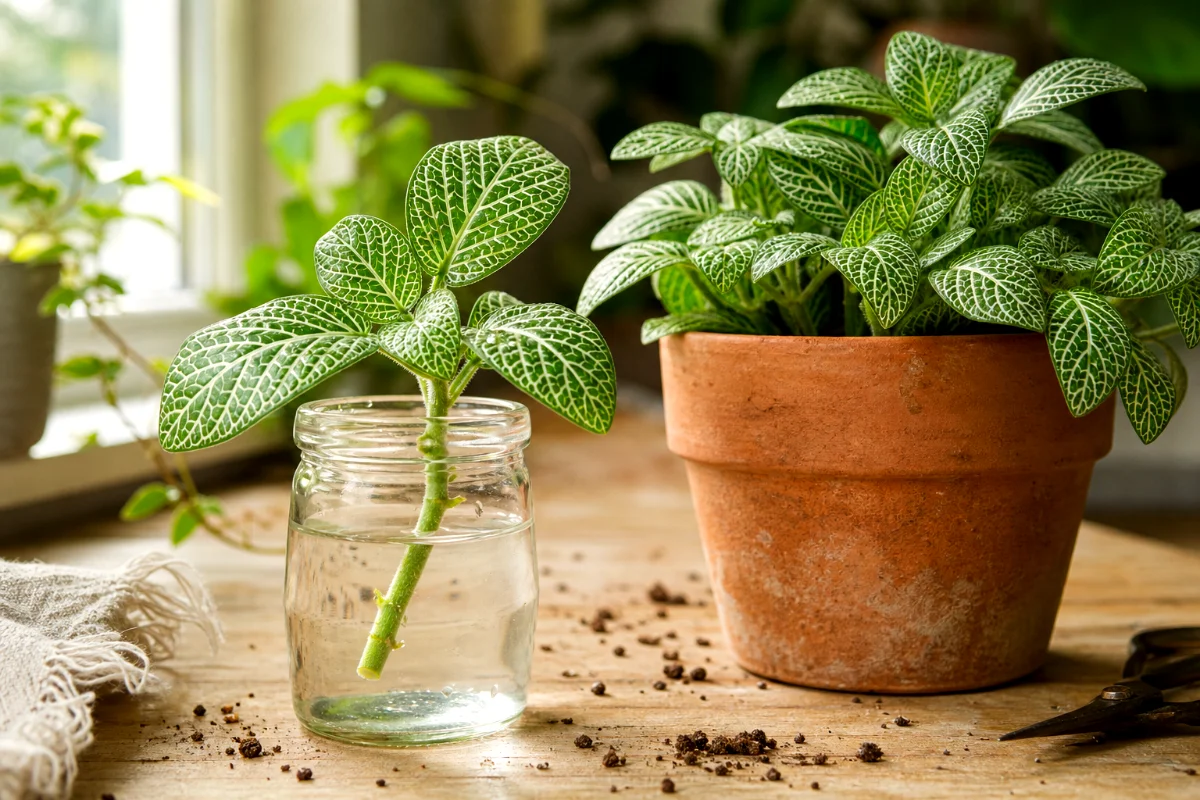
Water propagation is fun because you can watch the roots grow. Beginners love it for that reason, and fair enough. Seeing roots feels like a tiny miracle.
But water propagation adds one extra step: transplanting. Be patient when you move the cuttings to soil.
Step 1: Take 4-Inch Cuttings
Cut healthy 4-inch strands from the mother plant. Remove the bottom pearls so the nodes can sit below the water line.
Step 2: Place the Cut Ends in Water
Put the bare node end into a small clear jar of water. Keep the pearls above the water if you can.
If pearls sit underwater too long, they may turn mushy. Nobody wants pearl soup.
Step 3: Keep the Jar in Bright Indirect Light
Set the jar near a bright window, but away from hot direct sun. Change the water whenever it turns cloudy.
Fresh water lowers the chance of rot and keeps the cutting cleaner while it roots.
Step 4: Move to Soil When Roots Reach 1 Inch
When roots grow about 1 inch long, plant the cutting in succulent mix. Water lightly and keep the soil a bit more evenly moist for the first week.
After that, ease back. String of pearls likes a dry-down once it settles in.
Soil Propagation vs Water Propagation
If you want the simplest path, choose soil. If you want to watch roots, choose water.
Here’s my blunt gardener take: soil propagation gives string of pearls a better start because the roots form in the same place they’ll keep growing. Water propagation works, but the plant has to adjust after transplanting.
- Use soil propagation if you want a fuller pot with less fuss.
- Use water propagation if you’re nervous and want to see roots before planting.
- Use several cuttings no matter which method you choose. One lonely strand looks sad for a long time.
How to Make a Fuller String of Pearls Plant
Plant more cuttings than you think you need. A full-looking string of pearls rarely comes from one heroic strand.
Lay several cuttings across the soil surface so the top of the pot fills in before the plant starts trailing. This gives you that lush, cascading look much faster.
You can also trim long strands later and pin those trimmings back on top. That’s how growers keep hanging baskets thick instead of bald on top.
Light, Water, and Warmth While Cuttings Root
String of pearls cuttings need bright indirect light. Too little light makes them weak and leggy. Too much harsh sun can shrivel them before roots form.
A bright windowsill with filtered light works beautifully. East-facing windows are often kind. South or west windows may need a sheer curtain.
Keep the top layer of soil lightly damp until roots form. Once you see new growth, start watering more like a succulent: soak lightly, then let the mix dry most of the way.
Common Mistakes That Ruin String of Pearls Cuttings
- Keeping soil too wet: Wet soil causes rot, especially before roots form.
- Burying the pearls: Pearls rot when packed under damp soil. Lay stems on top instead.
- Using dim light: Low light leads to stretched, weak growth.
- Skipping node contact: Nodes need to touch soil or sit in water to root.
- Taking weak cuttings: Thin, shriveled strands have less stored moisture and less energy.
- Moving water roots too late: Long water roots can struggle when shifted into soil.
How to Tell Your Cuttings Have Rooted
Don’t yank them. Please. I know it’s tempting.
Instead, look for signs like new pearl growth, firmer stems, and strands that stay in place when you brush them lightly. If you must check, lift one pinned section very gently after 3 weeks.
White roots along the nodes mean you’re in business.
Aftercare for New String of Pearls Plants
Once the cuttings root, treat them like young succulents. Give them bright indirect light, a pot with drainage, and breathing room between waterings.
Water when the pearls start to look slightly less plump or when the soil has dried most of the way down. In most homes, that means watering less often than your leafy tropical plants.
And don’t rush fertilizer. Wait until you see steady new growth, then use a diluted succulent fertilizer during spring or summer.
FAQ
Can you propagate string of pearls from just one pearl?
Usually, no. A single pearl without a bit of stem and node won’t grow into a new plant. You need a stem cutting with nodes.
How long does string of pearls take to root?
Most cuttings root in 3 to 4 weeks when kept warm, bright, and slightly damp at the soil surface.
Should I propagate string of pearls in soil or water?
Soil works best for most beginners. It mimics how the plant grows naturally and helps roots settle in faster.
Do string of pearls cuttings need to callus?
Yes, I recommend it. Let cuttings dry for 1 to 2 days before soil propagation to lower the risk of rot.
Why are my cuttings shriveling?
They may need more humidity at the soil surface, better node contact, or brighter indirect light. Check that the soil stays lightly damp while roots form.
Can I put several cuttings in one pot?
Yes, and you should. Multiple cuttings create a fuller plant and help the top of the pot fill in instead of looking bare.