How to Propagate African Violets from Leaf Cuttings

African violets bring vibrant color and life to our indoor spaces. Once you fall in love with these fuzzy-leafed beauties, you will naturally want more of them. Fortunately, you can easily multiply your favorite plants for free.
This guide walks you through the exact steps, common pitfalls, and insider secrets to successfully turn one healthy leaf into a whole new cluster of blooming houseplants.
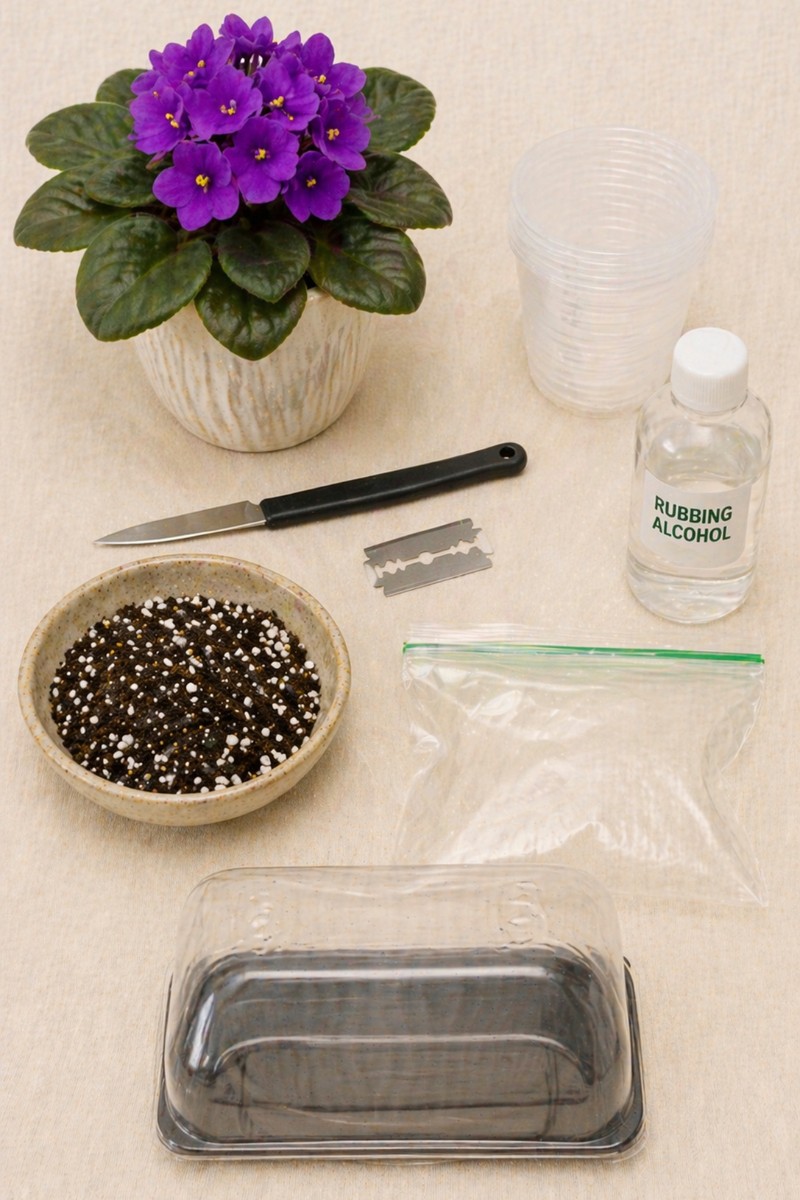
Materials You Will Need
Gather your supplies before you start. Having the right tools ensures a clean cut and prevents disease.
- A mature, healthy African violet plant.
- A clean, sharp knife or razor blade. Avoid scissors, as they crush the delicate stem tissue.
- Rubbing alcohol to sterilize your blade.
- A well-draining soil mix. A 50/50 blend of peat moss and perlite is ideal.
- A clear plastic bag or a humidity dome.
- The Right Container (Pro-Tip): The biggest mistake beginners make is using a pot that is too large. Excess soil holds excess water, leading to rot. Use 2-inch plastic nursery pots. If you do not have those, pierce drainage holes in the bottom of a plastic condiment cup or a small bathroom paper cup. These restrict the roots perfectly and encourage the plant to push out top growth faster.
Step 1: Select the Perfect Leaf
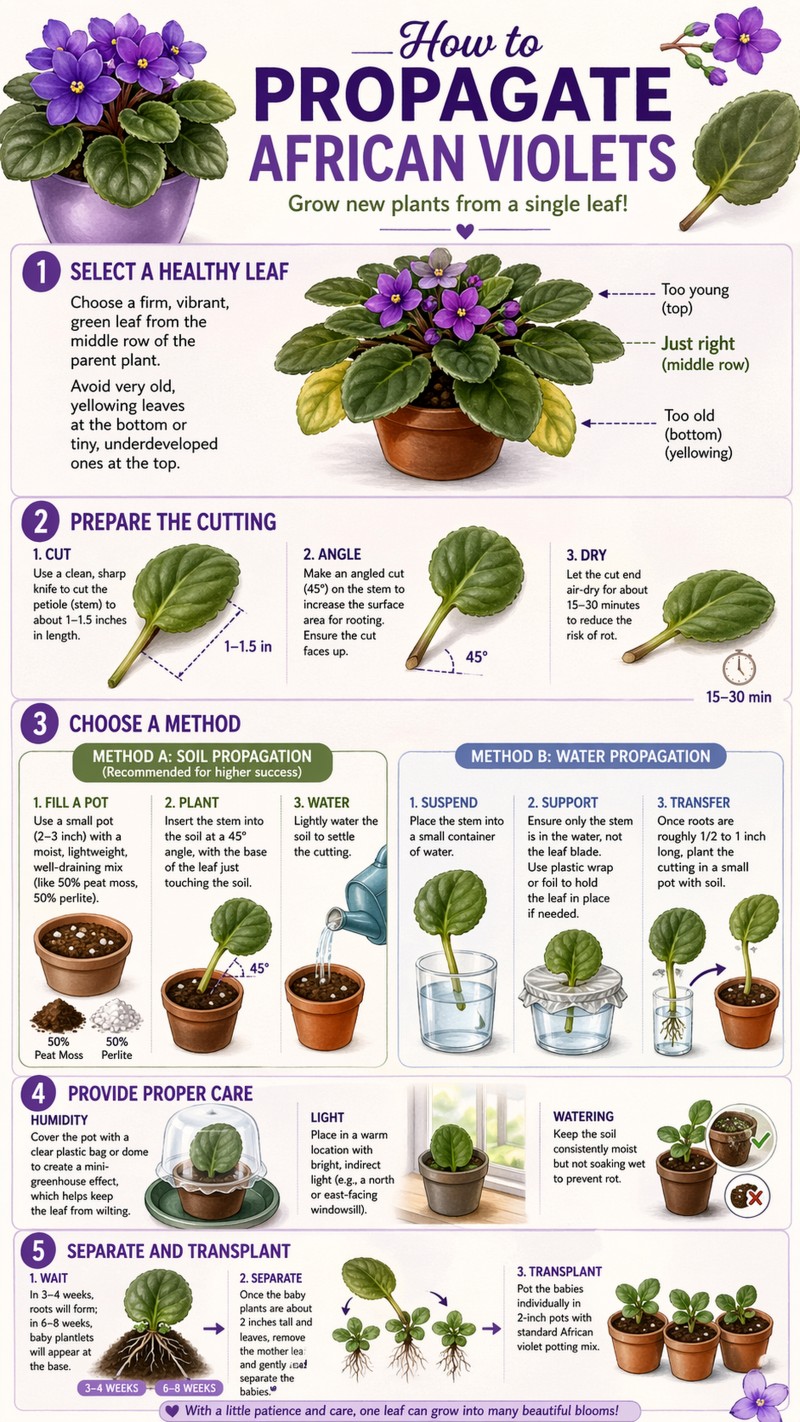
Your success begins with choosing the right material. Look closely at the middle row of your parent plant.
Choose a firm, vibrant, and green leaf from this specific section. Avoid the old, yellowing leaves at the very bottom; they lack the energy needed to push out new growth. Similarly, skip the tiny, underdeveloped leaves at the crown. A middle-row leaf contains the perfect balance of mature cell structure and vigorous growth potential.
Step 2: Prepare the Cutting
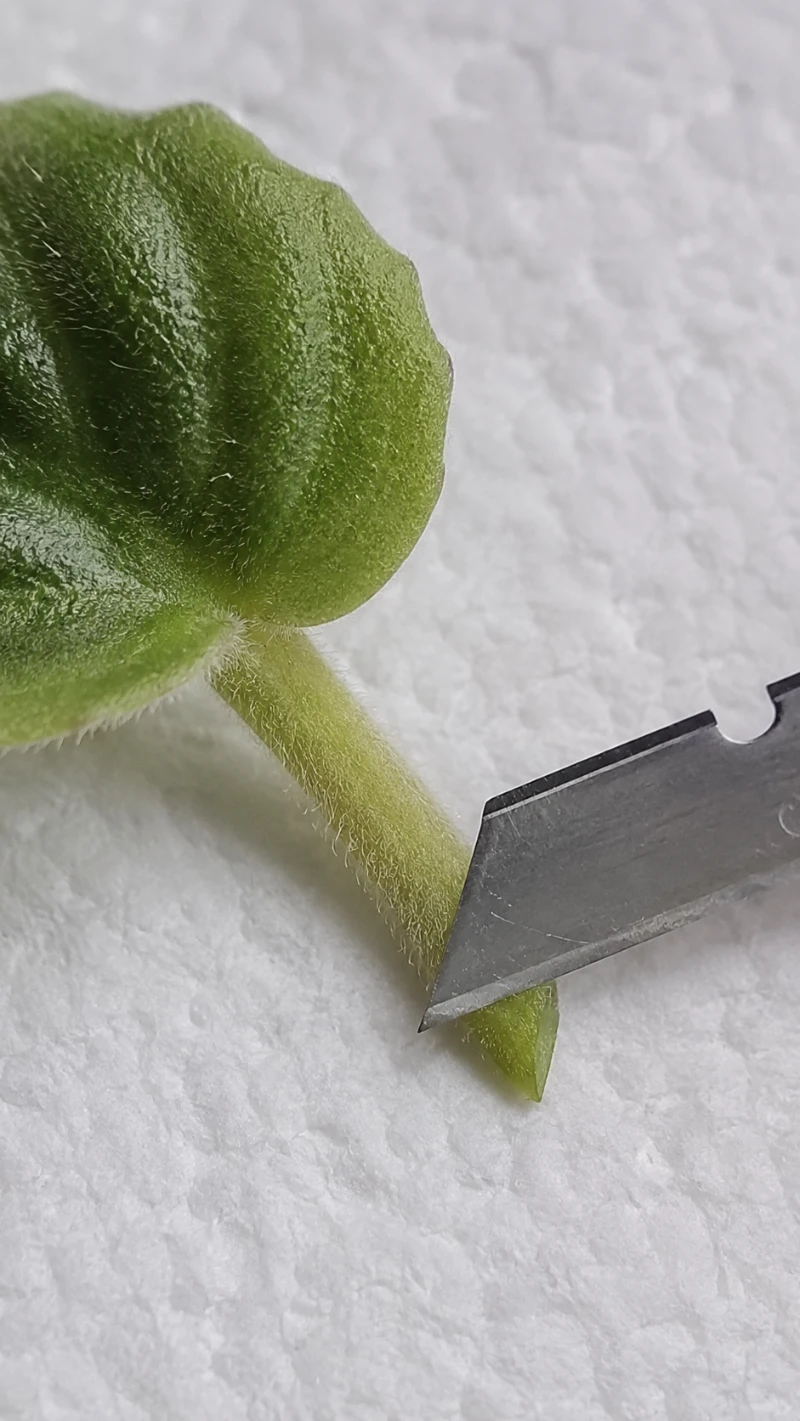
Next, you need to remove and prepare the leaf correctly.
- Cut the Stem: Sterilize your blade. Cut the petiole (the stem of the leaf) so it is exactly 1 to 1.5 inches long.
- Create an Angle: Make a sharp, 45-degree angled cut at the bottom of the stem. Ensure the cut face points upward toward the front of the leaf. This specific angle drastically increases the surface area for new roots to emerge.
- Let it Heal: Do not plant the leaf immediately. Let the cut end air-dry on a paper towel for 15 to 30 minutes. This drying period allows the wound to scab over, which significantly reduces the risk of root rot.
Step 3: Choose Your Propagation Method
You have two main paths to propagate your cutting: soil or water.
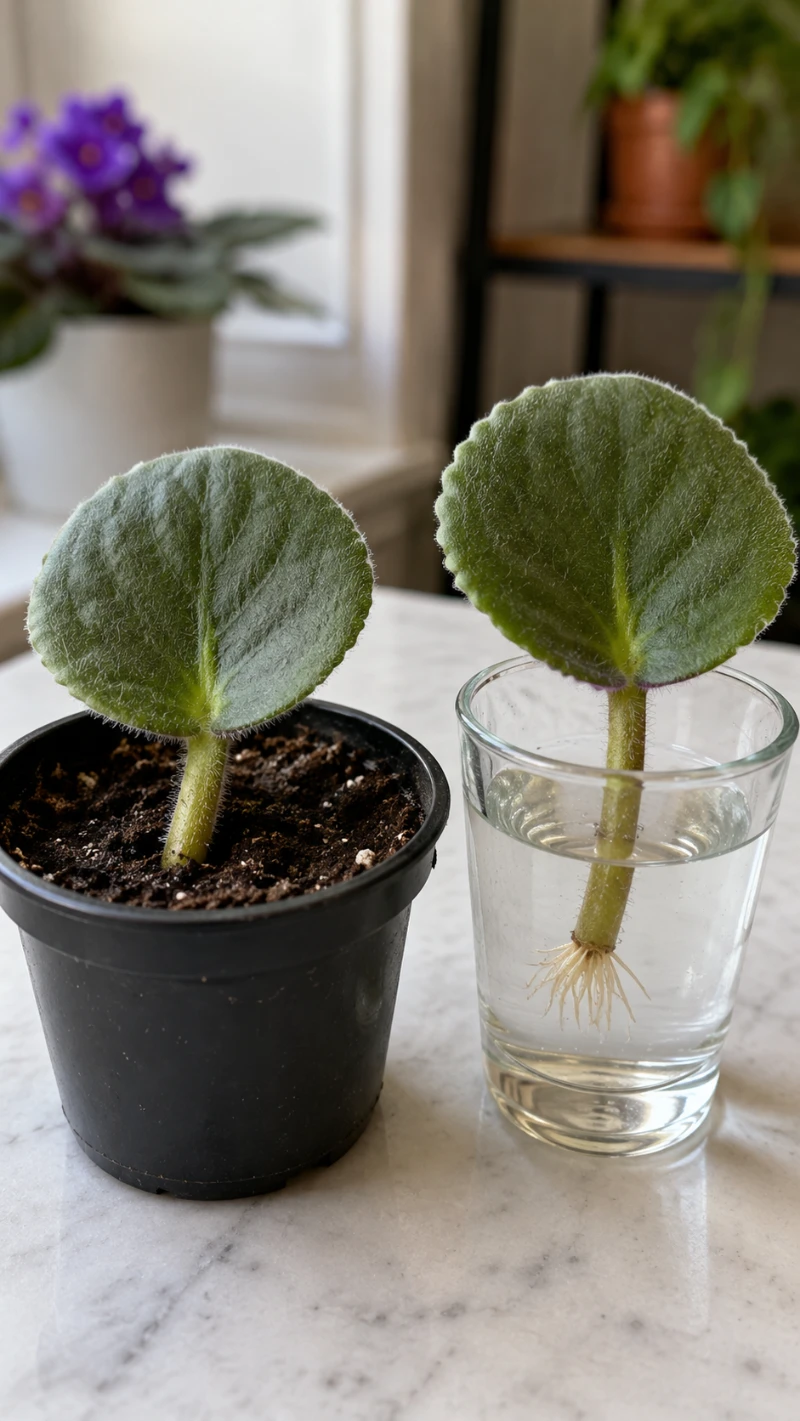
Method A: Soil Propagation (The Expert Recommendation)
Cuttings grown in soil develop stronger root systems right from the start. Fill your small 2-inch container with the slightly moist peat and perlite mix. Insert the stem into the soil at a 45-degree angle. Push it down just enough so the base of the actual leaf touches the soil surface. Finally, water the soil very lightly to settle the cutting securely into place.
Method B: Water Propagation (The Visual Method)
If you love watching roots grow, try water propagation. Fill a small glass with room-temperature water. Suspend the stem into the water. Only the stem should touch the water; keep the leaf blade completely dry to prevent rotting.
You can stretch a piece of plastic wrap over the top of the glass, poke a small hole, and rest the leaf on top to hold it in place. Once the water roots grow roughly 1/2 to 1 inch long, gently transplant the cutting into a small pot with soil.
Step 4: Provide the Perfect Environment
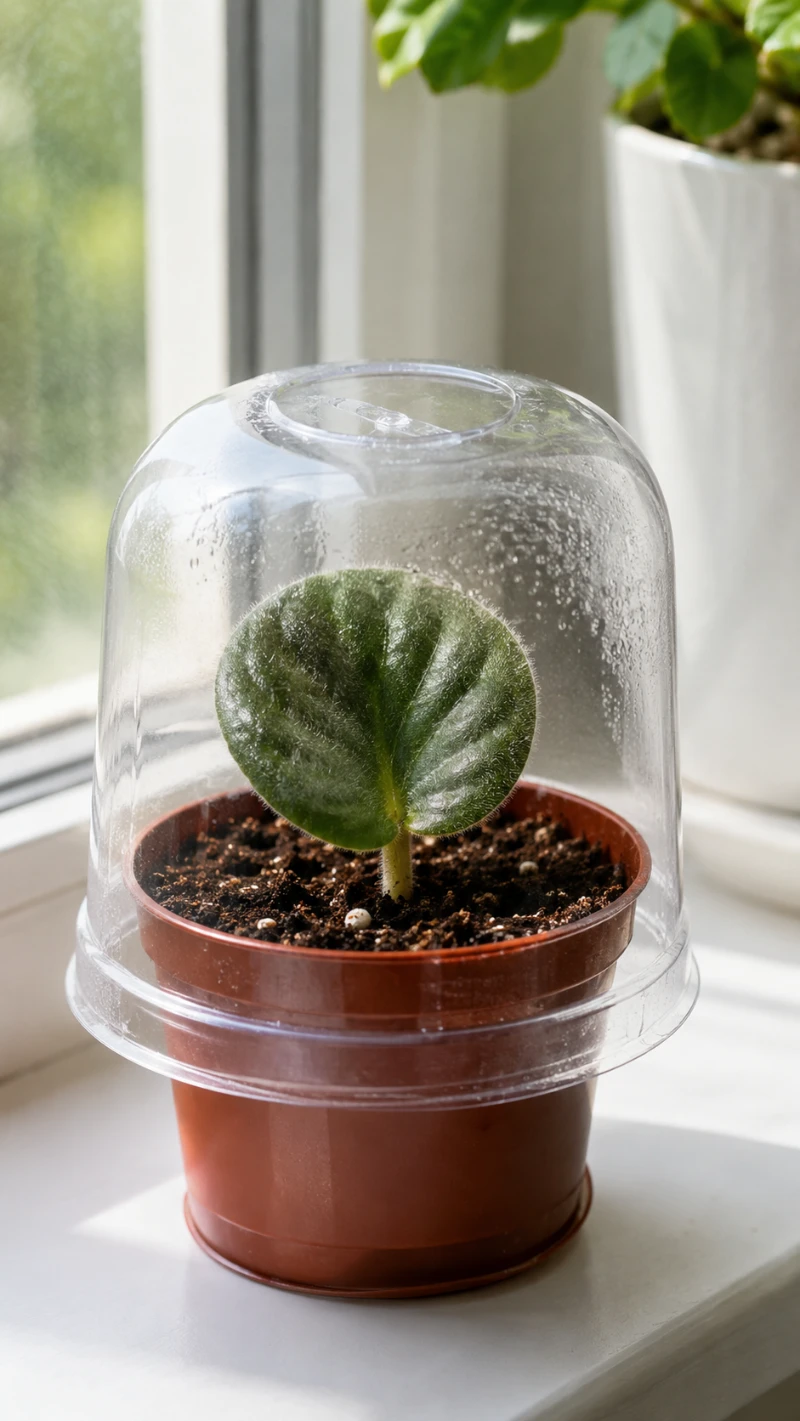
African violet cuttings thrive in a “mini-greenhouse” environment.
- Boost the Humidity: Cover your potted cutting with a clear plastic bag or a plastic dome. This traps the moisture inside and prevents the mother leaf from wilting while it lacks roots.
- Find the Right Light: Place the pot in a warm location that receives bright, indirect light. A north-facing or east-facing windowsill provides the perfect gentle morning sun. Avoid harsh, direct sunlight, which will bake the cutting.
- Master the Water Quality: Check the pot every few days. Keep the soil consistently moist, but never soaking wet. Furthermore, never use cold tap water. African violets are notoriously sensitive to cold water on their roots and leaves (it causes permanent white rings). Always use room-temperature water. If your city water is heavily chlorinated, let it sit out overnight before using it, or opt for distilled water.
Step 5: Separate and Transplant the Babies
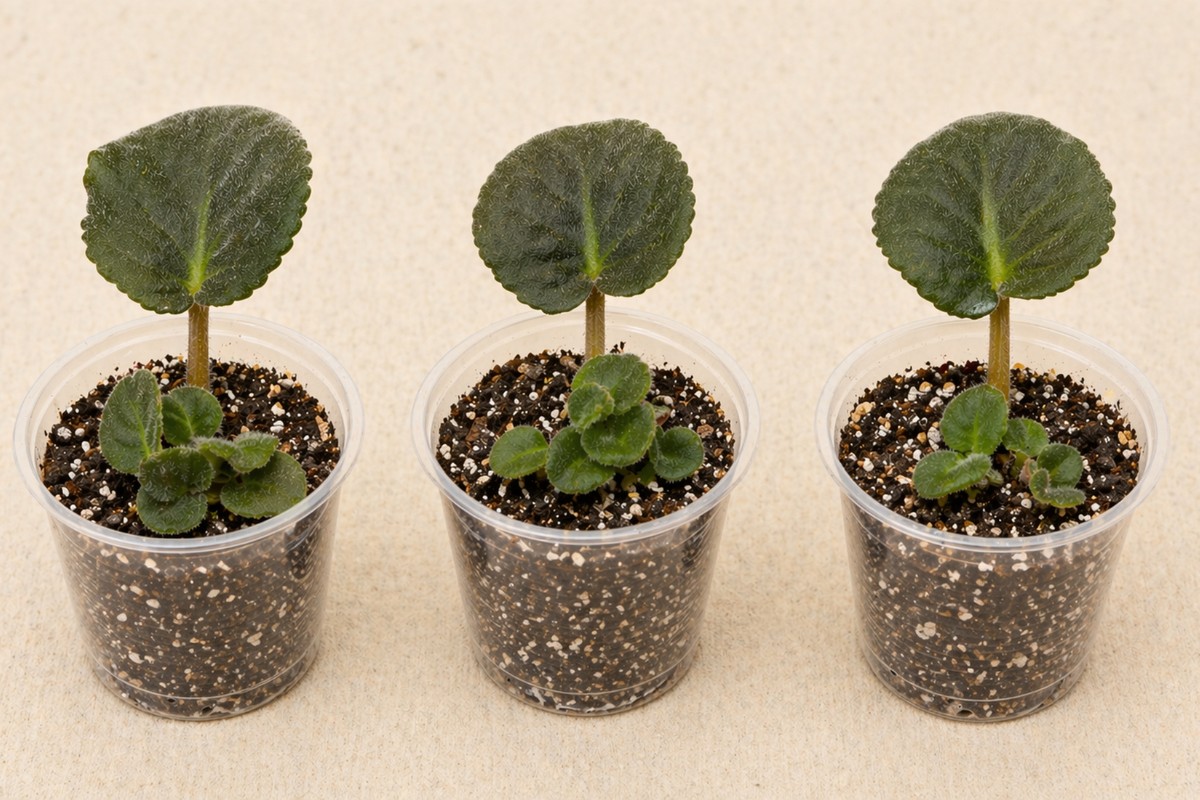
Now, you simply need patience. In about 3 to 4 weeks, unseen roots will form beneath the soil. In 6 to 8 weeks, tiny “baby” plantlets will push up through the soil at the base of the mother leaf.
Wait until these baby plants stand about 2 inches tall and feature their own distinct, fuzzy leaves. At this point, carefully unpot the whole cluster. Gently pull away the original mother leaf. Carefully tease the roots apart to separate the individual babies. Finally, pot each new little violet into its own 2-inch pot using a standard African violet potting mix.
Troubleshooting: Why Did My Cutting Fail?
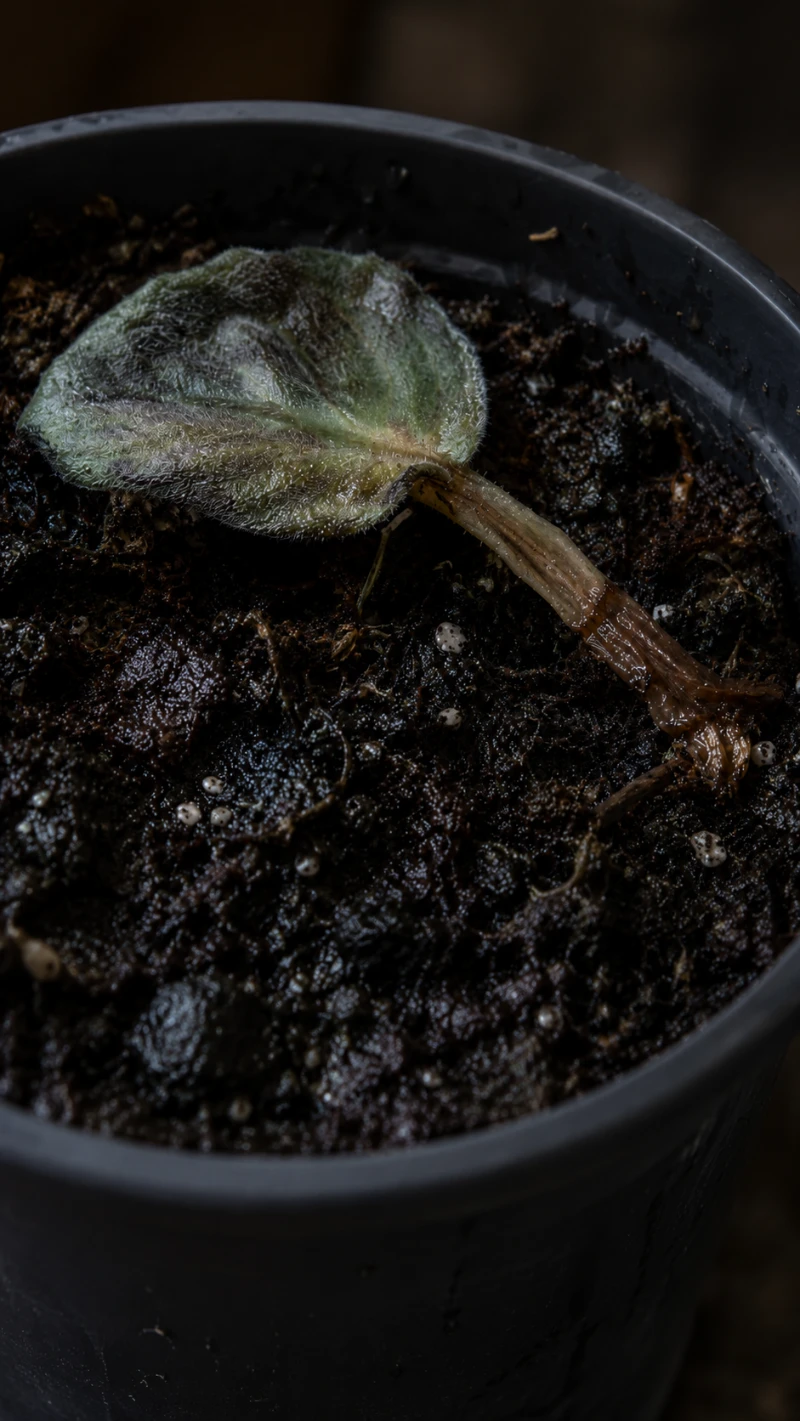
Even experienced growers lose a leaf now and then. If your propagation did not go as planned, look for these common culprits:
- The stem turned mushy and brown: This is stem rot. Overwatering, using a pot that is too large, or failing to let the cut end “scab over” before planting usually causes this. Discard the leaf and try again.
- The leaf is limp and wilting: The humidity is too low. Ensure your plastic dome or bag is completely sealed to trap the moisture.
- It has been 10 weeks and there are no babies: African violets are highly temperature-sensitive. If your home is below 68 degrees Fahrenheit, rooting slows to a crawl. Try moving the pot to a warmer spot or placing it on a seedling heat mat.
The “Second Flush” Secret: Don’t Throw Away the Mother Leaf!
When you separate your new baby plantlets, take a close look at the original mother leaf. If it is still firm, green, and healthy, do not throw it away! You can slice another 1/4 inch off the bottom of the stem, let it callous, and replant it. Often, a strong mother leaf has enough stored energy to produce a second flush of baby plants.
Important Note on Chimera African Violets
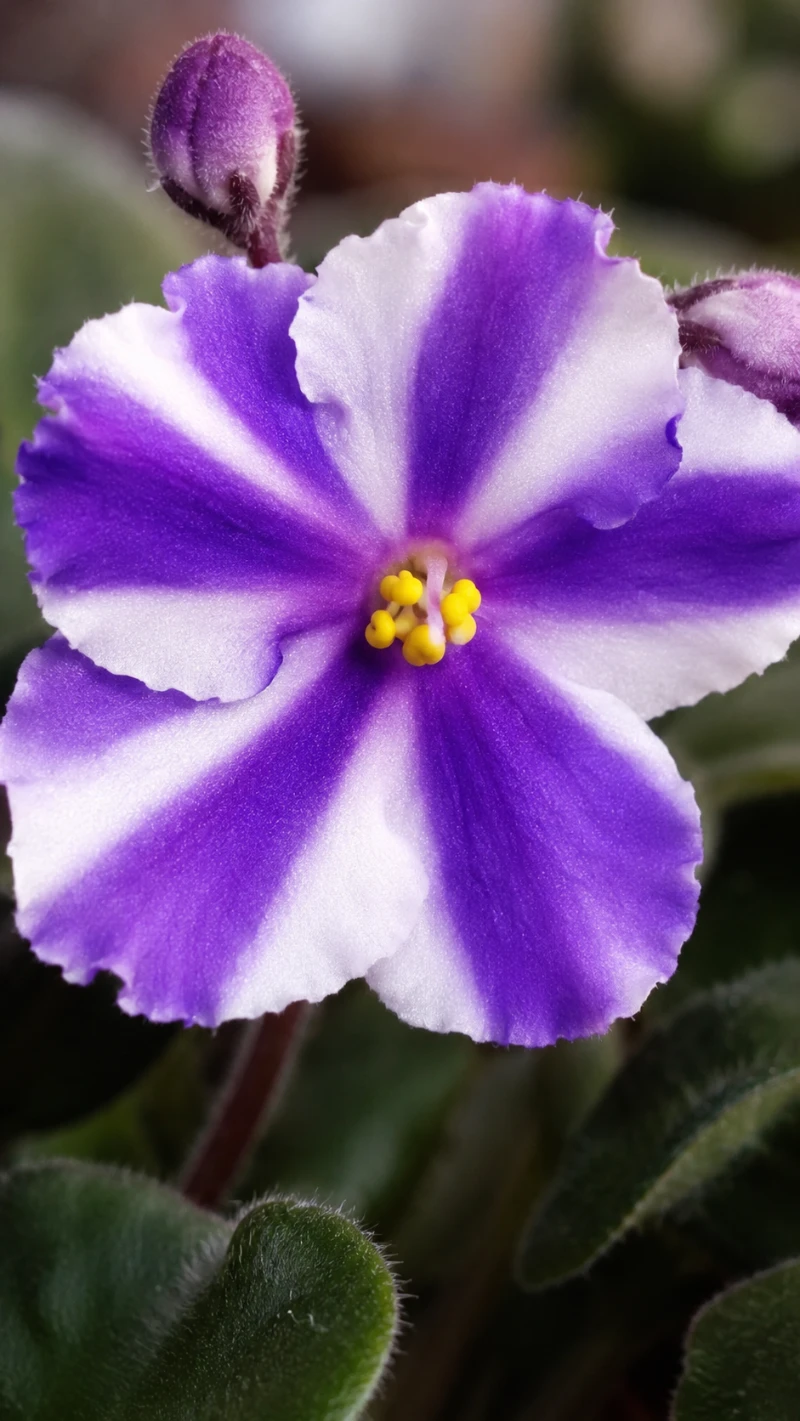
Do you own a chimera African violet? These highly prized varieties feature striking striped or “pinwheel” patterns on their flowers.
You need to know a unique genetic rule: leaf cuttings from a chimera will not produce an identical plant. Because of their unique cellular makeup, a leaf cutting from a chimera usually blooms as a solid color. If you want an exact clone of your striped chimera, you must propagate it using flower stalk cuttings or by dividing suckers instead.