How to Propagate Basil from Cuttings

Basil is one of the easiest herbs to propagate, which is gardener-speak for making more plants from the one you already have.
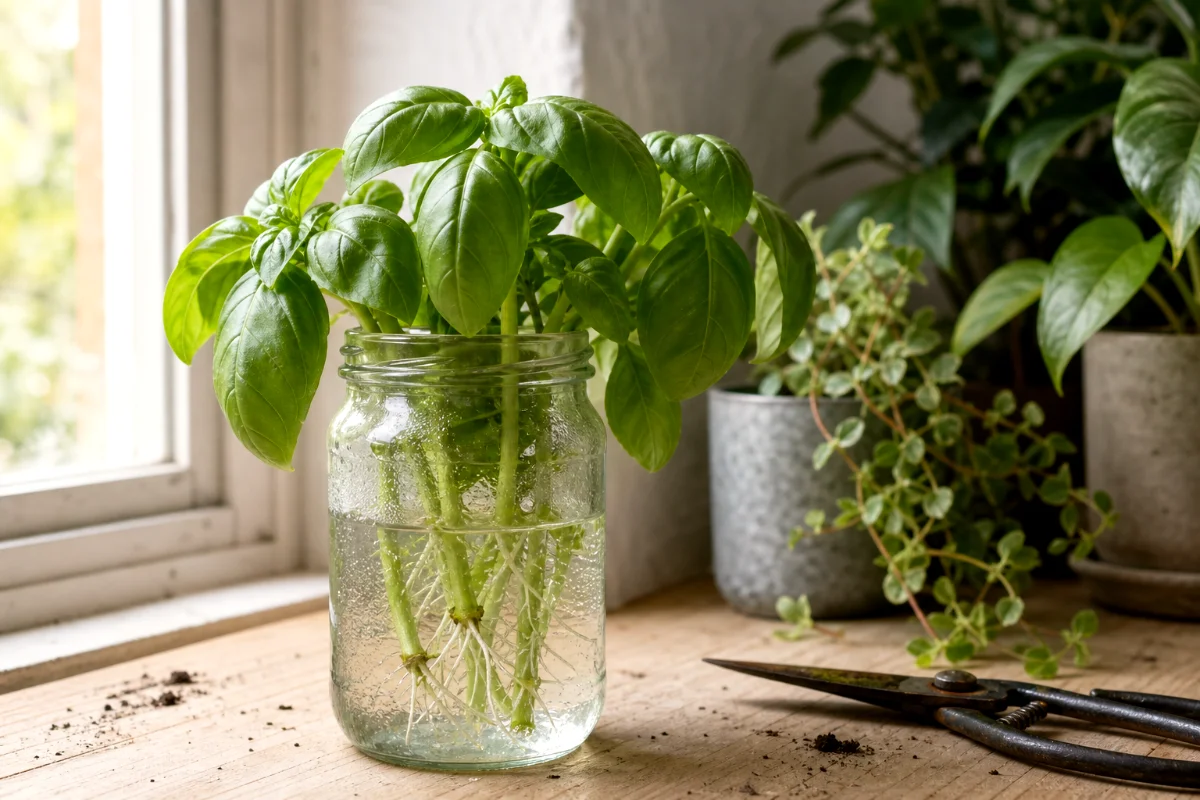
And honestly? Basil is almost too generous. Give it a clean cut, a jar of water, and a bright windowsill, and it usually starts pushing out roots in about 5 to 7 days.
The best method for beginners is simple: take 4 to 6-inch stem cuttings, root them in water, then plant them in soil once the roots reach about 1 to 2 inches long. No fancy gear. No lab coat. Just a healthy basil plant and a little patience.
Why Basil Roots So Easily From Cuttings
Basil has soft, fast-growing stems with lots of leaf nodes. Those little nodes are where leaves grow from the stem, but they can also grow roots when you place them in water or damp soil.
That is the trick.
You don’t need to start basil from seed every time. A cutting from a strong plant can become a full new basil plant faster than most seedlings can get their act together.
This is especially handy in spring and summer, when basil grows like it has somewhere to be.
What You’ll Need
Keep it simple. Basil doesn’t ask for much.
- A healthy basil plant
- Clean scissors, snips, or pruning shears
- A clear glass jar or small vase
- Fresh room-temperature water
- A small pot with drainage holes
- Well-draining potting soil
A clear jar helps you watch the roots form, which is both useful and strangely satisfying. I still check basil roots like a kid checking a cookie tray.
Best Time to Propagate Basil
The best time to propagate basil is spring or summer, when the plant is actively growing.
Warm weather tells basil to make leaves, stems, and roots. That means your cuttings recover faster and root faster.
You can try in fall or winter indoors, but expect slower growth. Basil hates cold windowsills. It sulks. Sometimes dramatically.
How to Propagate Basil in Water
Water propagation is the easiest method for beginners because you can see exactly what is happening. Roots appear before you pot the cutting, so there’s less guessing.
Step 1: Choose the Right Stem
Pick a healthy stem that looks green, sturdy, and pest-free. Aim for a stem that has not flowered yet.
Flowering stems put energy into blooms and seed. Leafy stems put energy into growth. You want the leafy one.
Choose a cutting about 4 to 6 inches long. Look for several sets of leaves and a visible node near the lower part of the stem.
Step 2: Cut Just Below a Leaf Node
Use clean scissors or snips and cut just below a leaf node.
Don’t tear it. Don’t pinch it with dirty fingers. A clean cut lowers the chance of rot and gives the cutting a better start.
If your snips have been outside, wipe them first. I know, it feels fussy. But basil stems are soft, and soft stems get infected more easily than woody ones.
Step 3: Remove the Lower Leaves
Strip the leaves from the bottom 2 inches of the stem.
This matters more than beginners think. Any leaf sitting underwater will decay, and decaying leaves turn clean water into a smelly little swamp.
Leave the top leaves in place. Those leaves help the cutting keep making energy while it grows roots.
Step 4: Place the Cutting in Water
Set the cutting in a jar of water with the bare stem underwater and the top leaves above the water line.
Use enough water to cover the lower nodes. Don’t drown the whole cutting.
If a leaf touches the water, remove it. Be ruthless. Basil forgives pruning, but it doesn’t forgive soggy leaves.
Step 5: Put the Jar in Bright, Indirect Light
Place the jar near a bright window. An east-facing windowsill works beautifully in many homes.
But watch the heat. Harsh direct sun can cook tender cuttings, scorch the leaves, and warm the water too much.
Bright, indirect light gives basil enough energy to root without stressing it out.
Step 6: Change the Water Often
Change the water every 1 to 2 days.
Fresh water keeps oxygen around the stem and helps prevent rot. If the water looks cloudy, change it right away.
You should often see roots starting in 5 to 7 days. Some cuttings take longer. Don’t panic if yours needs closer to 2 weeks, especially if your room runs cool.
When to Plant Rooted Basil Cuttings
Plant basil cuttings once the roots are about 1 to 2 inches long.
Shorter roots may not hold well in soil. Much longer roots can tangle, break, or struggle when they leave water and move into potting mix.
That sweet spot, 1 to 2 inches, gives the cutting enough root to drink from soil without making transplanting awkward.
How to Pot Basil Cuttings
- Fill a small pot with well-draining potting soil.
- Moisten the soil before planting so it feels damp, not soggy.
- Make a hole with your finger or a pencil.
- Lower the roots gently into the hole.
- Firm the soil lightly around the stem.
- Water once to settle the soil.
Do not jam the cutting into dry soil. That breaks roots, and those fresh roots are delicate.
For the first few days after potting, keep the basil in bright, indirect light. Once it perks up and starts growing, move it into stronger light if needed.
The Soil Method: Rooting Basil Without Water
You can also root basil cuttings directly in moist potting soil.
This method skips the water jar and avoids the small shock that can happen when water-grown roots move into soil. But it also hides the roots, so beginners sometimes overwater because they can’t see progress.
How to Root Basil Cuttings in Soil
- Take a 4 to 6 inch cutting from a healthy, non-flowering basil stem.
- Remove the leaves from the bottom 2 inches.
- Dip the cut end in rooting hormone if you have it.
- Place the cutting into moist potting soil.
- Cover loosely with a clear plastic bag or cover to hold humidity.
- Keep it in bright, indirect light.
Prop the plastic so it doesn’t press against the leaves. A couple of small sticks or chopsticks work fine.
Open the cover daily for a little fresh air. If you trap stale, wet air for too long, fungus moves in like it owns the place.
Water Propagation vs Soil Propagation
If you’re new to this, start with water. You can see the roots, learn the timing, and spot problems early.
Soil propagation works well too, especially once you’ve got a feel for basil’s moisture needs. It often creates roots that adapt to potting soil right away.
My opinion? Use water for your first few tries. Once you’ve rooted basil successfully, try soil. Gardeners learn fastest when they can see what’s going on.
Common Mistakes That Ruin Basil Cuttings
Leaving Leaves Underwater
This is the big one.
Leaves underwater rot fast. Rotten plant tissue clouds the water, feeds bacteria, and can make the stem turn mushy.
Strip the lower leaves cleanly. The bare stem should sit in water, not the leafy part.
Using a Flowering Stem
A flowering basil stem may still root, but it often roots slower.
When basil flowers, the plant changes priorities. It starts thinking about seed instead of leafy growth.
Choose green, leafy stems for the best results.
Putting Cuttings in Harsh Sun
A sunny windowsill sounds right, but blazing afternoon sun can fry basil cuttings.
Remember, the cutting has no roots yet. It can’t replace moisture as fast as the leaves lose it.
Go bright, not brutal.
Letting the Water Get Gross
If the water smells bad or looks cloudy, change it.
Clean water keeps stems healthier while roots form. I change basil water every day when the kitchen is warm, and every other day when the room stays cooler.
Waiting Too Long to Pot the Cutting
Those long white roots look impressive, but don’t wait forever.
Once roots reach 1 to 2 inches, plant the cutting. Water roots can get used to the jar, and very long roots break more easily during planting.
How to Care for Newly Planted Basil
Newly potted basil needs a gentle hand for about a week.
Keep the soil evenly moist, not soaked. Basil likes moisture, but wet soil with poor airflow can rot young roots.
Give it bright light. If it leans hard toward the window, rotate the pot every couple of days.
After you see new leaf growth, pinch the top growth to encourage branching. This makes a fuller plant instead of one tall, leggy stem.
How Many Basil Cuttings Should You Take?
Take more than one.
I usually root three or four cuttings even if I only need one new plant. Not every cutting behaves, and extra basil is hardly a tragedy.
If they all root, pot them separately or share them with a neighbor. Fresh basil has a way of making friends.
Can You Propagate Store-Bought Basil?
Yes, you can often propagate store-bought basil, especially those potted basil plants from the grocery store.
Choose the freshest stems. Avoid blackened, wilted, or slimy growth.
Grocery store basil often grows crowded in one pot, so cuttings can actually save the plant. Take a few healthy stems, root them in water, then pot them into fresh soil with more breathing room.
FAQ
How long does basil take to root in water?
Basil often starts showing roots in 5 to 7 days. Most healthy cuttings produce enough roots for planting within 1 to 2 weeks.
Can I propagate basil from a single leaf?
No, not reliably. You need a stem cutting with at least one node because roots form from nodes on the stem.
Should basil cuttings sit in direct sun?
No. Give basil cuttings bright, indirect light. Strong direct sun can scorch leaves and stress cuttings before they have roots.
Do I need rooting hormone for basil?
Not for water propagation. Basil roots easily without it. Rooting hormone can help if you’re rooting cuttings directly in soil, but it’s optional.
Why is my basil cutting turning black?
Black or mushy stems usually mean rot. Remove any leaves below the water line, change the water often, and use a fresh cutting if the stem feels soft.
When can I harvest from my new basil plant?
Wait until the plant has settled into the soil and shows new growth. Then pinch small amounts from the top to encourage bushy growth.