How to Water Scented Geraniums: The Ultimate Guide for Beginners

If you recently brought home a scented geranium (Pelargonium), you might feel anxious about keeping it alive. As a beginner, your first instinct is likely to water your new plant frequently to show it some love. However, overwatering is the number one mistake I see new plant parents make.
Scented geraniums actually thrive on neglect. These resilient plants are highly drought-tolerant and strictly prefer dry conditions over constant moisture. If you treat them like a tropical fern, they will struggle to survive.
In this guide, I will walk you through exactly how and when to water your scented geraniums. You will learn professional techniques, how to adjust for the seasons, and how to build a routine that guarantees a healthy, fragrant plant.
Two Foolproof Ways to Check Soil Moisture
Generally, you only need to water scented geraniums every 1 to 2 weeks. However, relying solely on a calendar is a dangerous habit. Your home’s temperature, humidity, and lighting will constantly change how fast the soil dries out. Instead, rely on these two professional methods to check moisture levels.
1. The 1-2 Inch Soil Test
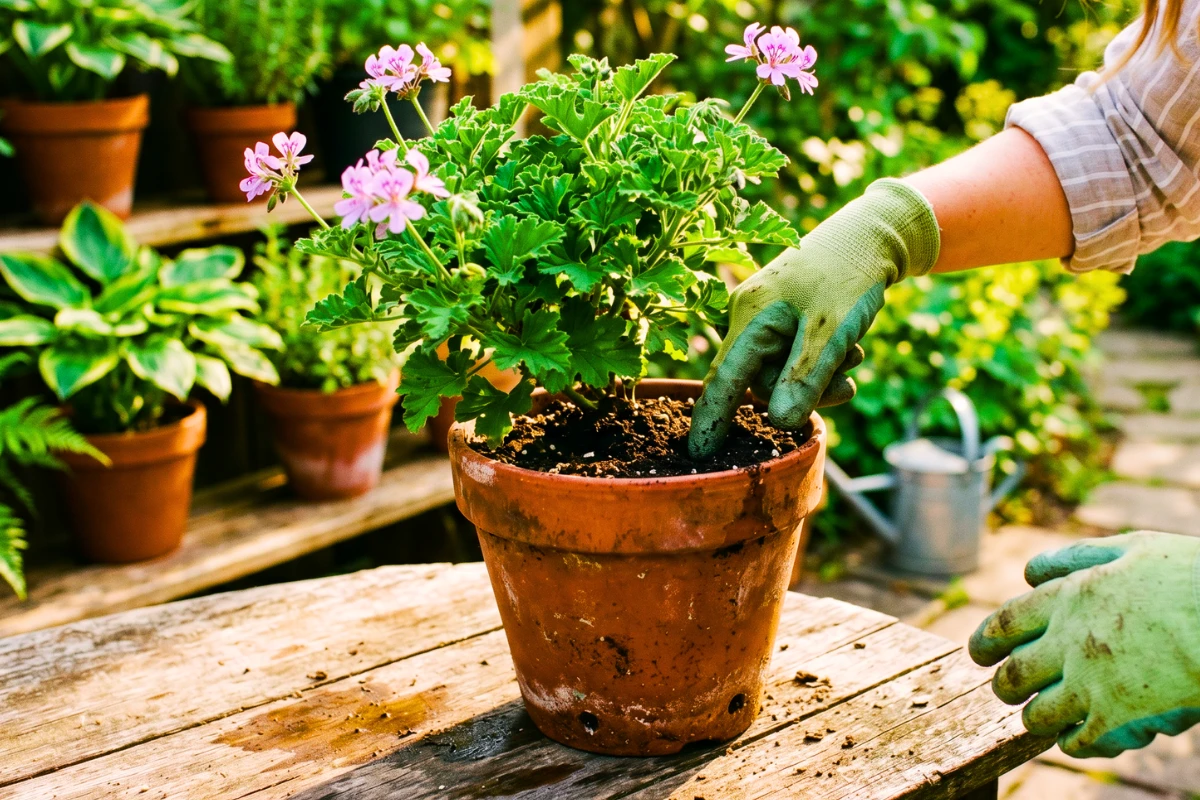
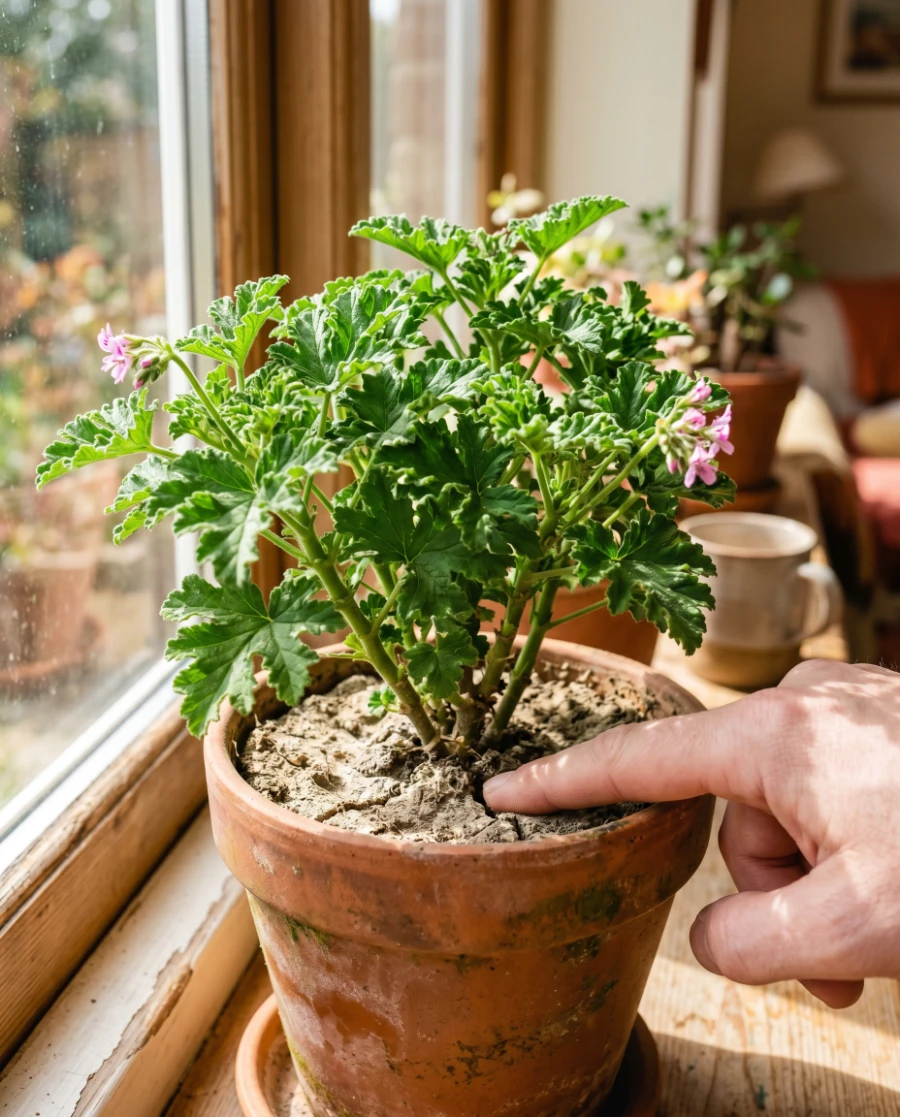
Before you grab your watering can, stick your finger directly into the potting mix. You want to feel the soil about 1 to 2 inches below the surface. If the soil feels moist, walk away and wait a few more days. If the soil feels completely dry, it is time to water your plant.
2. The Grower’s Secret: The Lift Test
Professional nurseries rarely stick their fingers in every single pot. Instead, they use the “Lift Test.” Right after you thoroughly water your geranium, lift the pot to feel how heavy it is. Check the weight again a week later when the soil is dry. You will quickly learn to gauge your plant’s thirst simply by feeling how light the pot has become.
Timing and Technique: How the Pros Water
When it is finally time to water, your technique matters just as much as your timing.
- Water in the morning: Always water your scented geraniums early in the day. This gives the plant plenty of time to absorb moisture before the afternoon heat hits. It also allows any accidental splashes on the leaves to dry in the sun before nightfall.
- Use room-temperature water: Shocking your plant’s root system with ice-cold tap water stunts its growth. Fill your watering can the night before and let it sit out to reach room temperature.
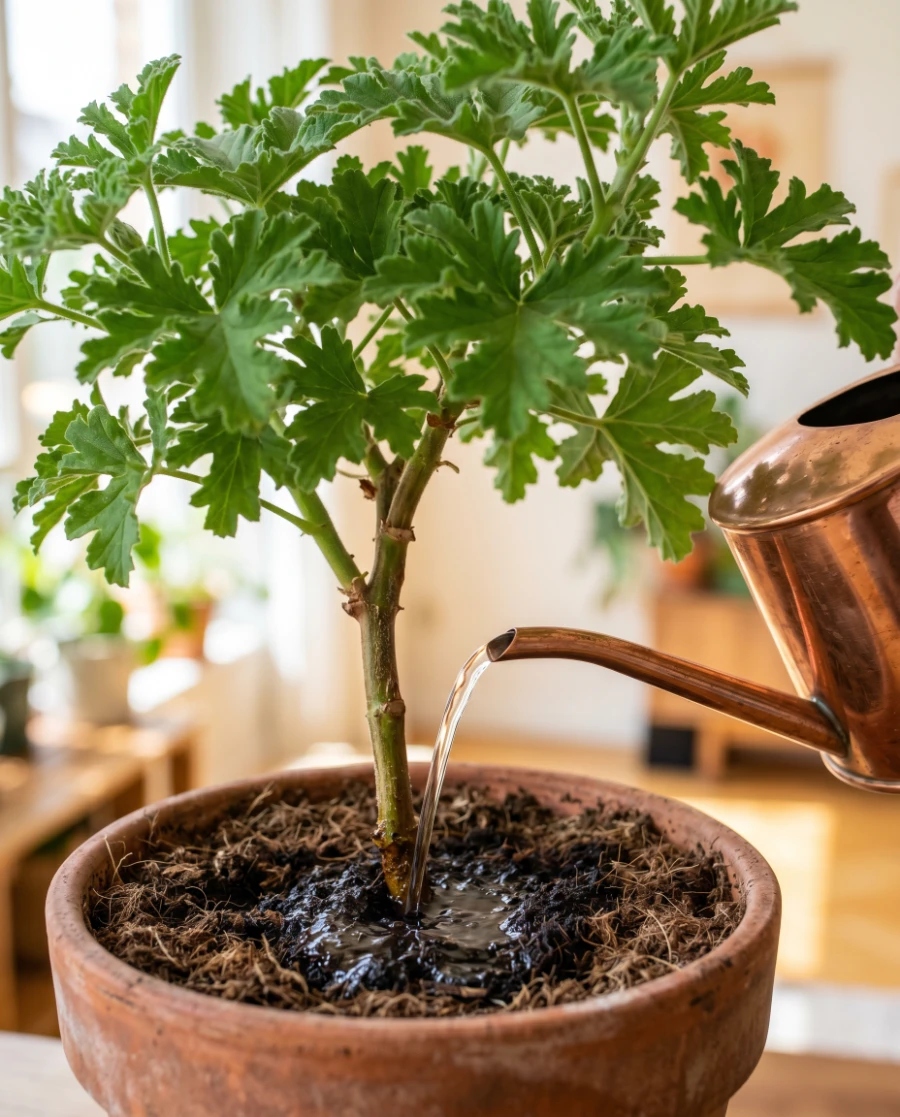
- Water deeply at the base: Never lightly sprinkle water over the top of the plant. Pour the water directly onto the soil at the base of the stem until liquid freely pours out of the bottom drainage holes.
Most importantly, keep the foliage dry. Water sitting on the textured, velvety leaves of a scented geranium creates a perfect breeding ground for fungal diseases. By directing the water strictly to the soil, you protect your plant’s leaves from rot and mildew.
Decoding Your Plant’s Leaves
Even with a great routine, your plant might occasionally stress out. Fortunately, scented geraniums communicate their needs clearly through their foliage.
Signs of Overwatering
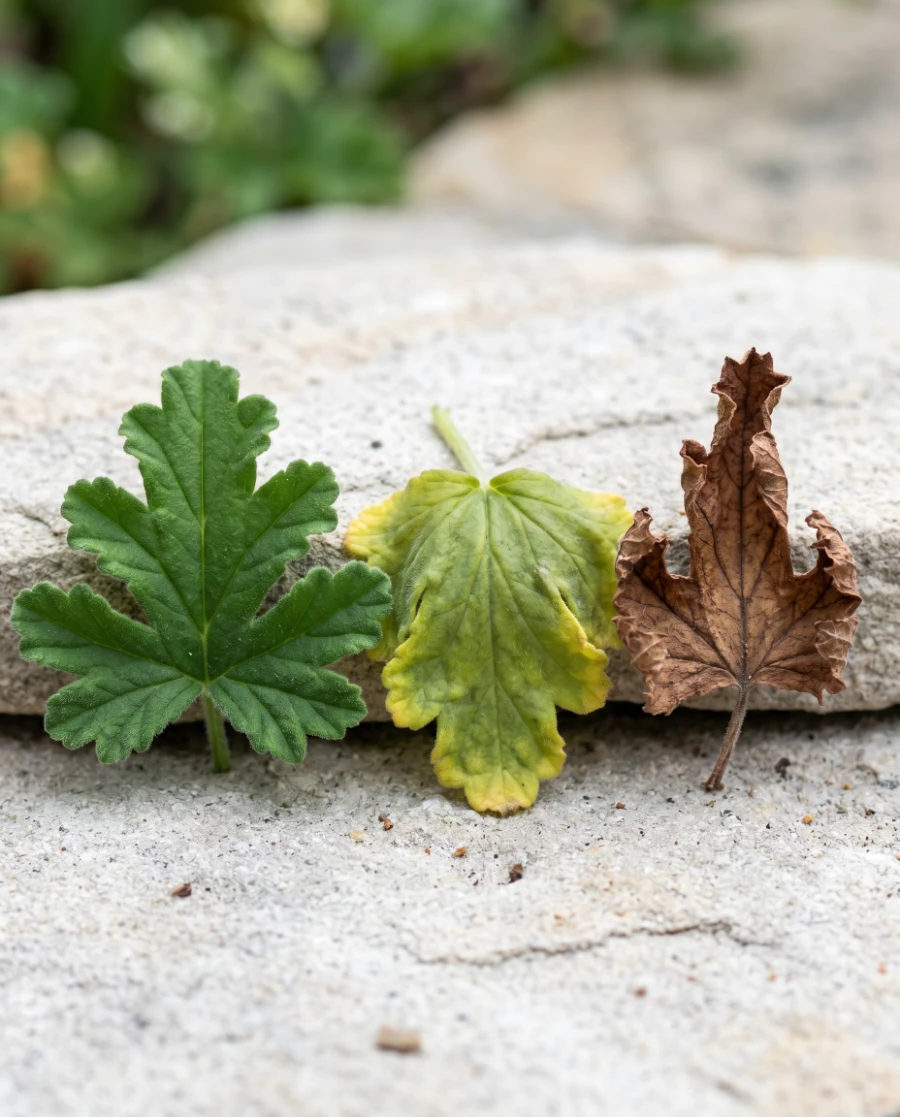
If you give your plant too much water, the leaves will quickly turn yellow and start to wilt. This happens because the roots are drowning in soggy soil and cannot absorb oxygen. Eventually, this constant moisture causes root rot, a fatal condition that destroys the plant from the bottom up. If you spot yellowing, immediately pause your watering routine and let the soil dry out completely.
Signs of Underwatering
If you neglect your plant for too long, the leaves will turn dry, become brown, and eventually drop off. While this looks alarming, do not panic. Scented geraniums are incredibly resilient and store water in their thick stems. Once you give them a thorough, deep watering, they almost always bounce back within a day.
The Seasonal Watering Schedule
Your plant’s thirst shifts dramatically depending on the time of year and where it lives. You must adjust your habits to match its natural growth cycle.
- Summer and Outdoors: High summer heat causes moisture to evaporate rapidly. If you keep your geranium outdoors, or if it lives in a very small pot, it will dry out much faster. During active summer growth, you may need to water your plant every few days.
- Winter and Indoors: When temperatures drop and days get shorter, your plant enters a dormant resting phase. It uses very little energy and therefore needs very little water. In the winter, let the plant dry out almost completely between waterings, which may mean watering only every 2 to 3 weeks.
Soil and Drainage: Setting Up for Success
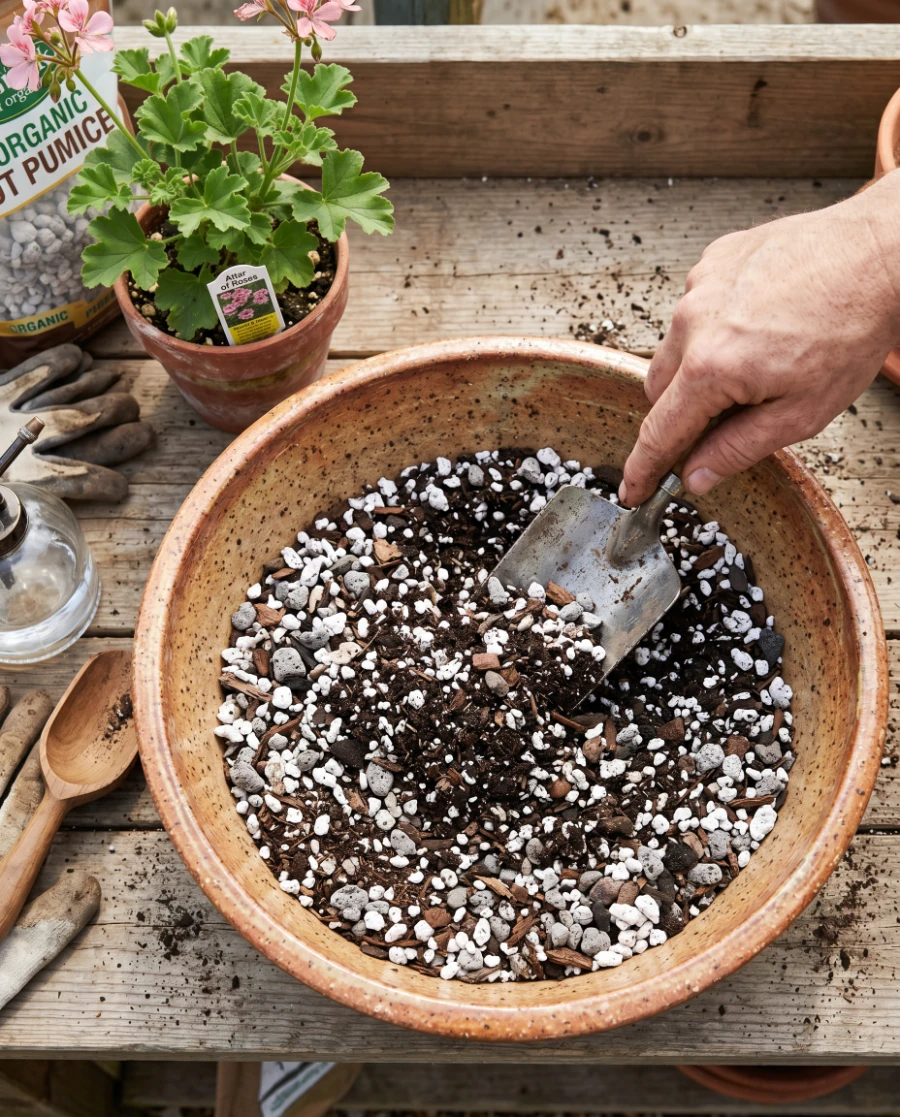
You cannot water a scented geranium properly if you use the wrong container or the wrong dirt. Your pot absolutely must have drainage holes at the bottom. Without them, water pools at the base and drowns the roots.
Furthermore, standard indoor potting soil often holds far too much moisture for a drought-tolerant geranium. Mix standard potting soil with generous handfuls of perlite or pumice. This creates air pockets in the dirt, allowing water to drain quickly and roots to breathe easily.
Finally, pay attention to the drip tray underneath your pot. After you water your plant, wait ten minutes for the excess water to drain out. Then, empty the tray completely. Never let your scented geranium sit in standing water.
Is Rainwater Good for Scented Geraniums?
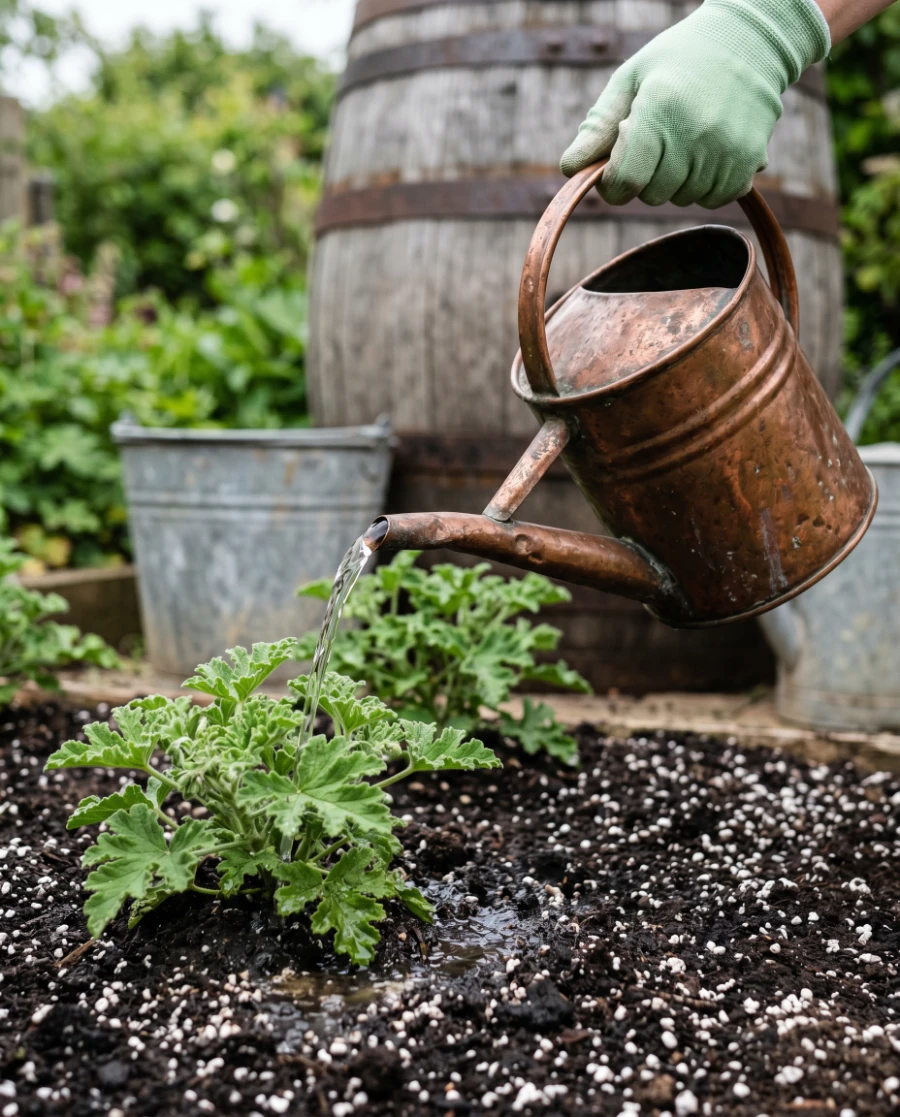
Rainwater is actually the gold standard for hydrating your plants. Unlike city tap water, which often contains harsh chlorine and fluoride, rainwater delivers beneficial trace nitrates that naturally boost plant growth. Watering with harvested rain gives your scented geraniums nutrients that tap water simply cannot compete with.
However, letting your potted geraniums sit outside completely exposed during a rainstorm introduces a few major risks. To protect your plant, you must manage how it receives this water.
The Dangers of Direct Rainfall:
- The Risk of Root Rot: A prolonged, heavy downpour easily overwhelms even well-draining potting soil. If your plant sits out during days of continuous rain, the roots will quickly drown.
- Fungal Leaf Issues: Remember the golden rule of keeping the foliage dry? Direct rain completely soaks those velvety leaves. When strong sunshine immediately follows a summer storm, this trapped moisture creates a humid microclimate that breeds fungal diseases.
- Physical Damage: Heavy, driving rain easily batters and crushes the delicate, soft-petaled blooms of your scented geranium.
Instead of leaving your plants at the mercy of the weather, harvest the rain yourself. Place a clean bucket outside during the next storm to collect the water. Then, use your watering can to apply this nutrient-rich rainwater directly to the soil at the base of your plants, keeping those delicate leaves perfectly dry.
How Long Can Scented Geraniums Go Without Water?
If you are planning a vacation or simply forgot about your plant, do not panic. Because scented geraniums naturally store water in their thick stems, they boast impressive drought resistance. You absolutely do not need to water them every day.
While there is no universal timeline, a healthy scented geranium can typically survive one to two weeks without a single drop of water in standard indoor conditions. However, several environmental factors will stretch or shrink this survival window.
What Impacts Your Plant’s Thirst:
- Temperature and Light: Mild weather and indirect sunlight drastically slow down evaporation. In cool, moderately lit environments, your plant retains moisture much longer.
- Plant Variety: Specific types, such as ivy-leaf geraniums, feature thick, waxy foliage that actively reduces moisture loss. These specialized varieties can easily outlast standard scented geraniums during a dry spell.
- Pot Material: Porous terracotta pots breathe and pull moisture directly from the dirt. Plants housed in terracotta will dry out much faster than those in glazed ceramic or plastic containers.
If you accidentally push your plant past its limit, the leaves will eventually droop and wilt. Fortunately, you can usually reverse this damage. Simply soak the root ball completely with a deep, thorough watering. Once the excess water drains away, you will typically watch the foliage perk right back up within 24 hours.
Final Thoughts
Mastering scented geranium care simply requires a shift in your mindset. Remember that less is always more. Wait for the top two inches of soil to dry out, water deeply at the base in the morning, and use a fast-draining soil mix. By holding back the watering can and listening to your plant’s cues, you will enjoy a lush, fragrant companion for years to come.
Frequently Asked Questions (FAQ)
Can I mist my scented geranium?
No, you should never mist a scented geranium. Moisture sitting on the fuzzy leaves encourages harmful fungal diseases like powdery mildew. Keep the foliage completely dry and focus all water directly onto the soil.
Are self-watering pots good for scented geraniums?
Avoid self-watering pots for this specific plant. These pots provide a constant, steady supply of moisture to the bottom roots. Since scented geraniums need their soil to dry out significantly between waterings, self-watering setups almost always lead to root rot.
Why are the bottom leaves of my scented geranium turning yellow?
Yellowing leaves, particularly near the bottom of the stem, are the universal sign of overwatering. Check the soil immediately. If it feels wet, stop watering, ensure your pot has proper drainage, and move the plant to a brighter spot to help the soil dry out faster.
Should I water my scented geranium from the top or the bottom?
Watering from the top directly into the soil is the best method. This flushes out excess fertilizer salts and ensures the entire root ball receives moisture, provided you let the excess water drain away completely into the sink or yard.