How to Bring an African Violet Back to Life: Expert Rescue Guide

You look at your windowsill and feel a pang of guilt. Your once-vibrant African violet looks limp, yellowed, and dangerously close to death. Take a deep breath. You can absolutely save this plant.
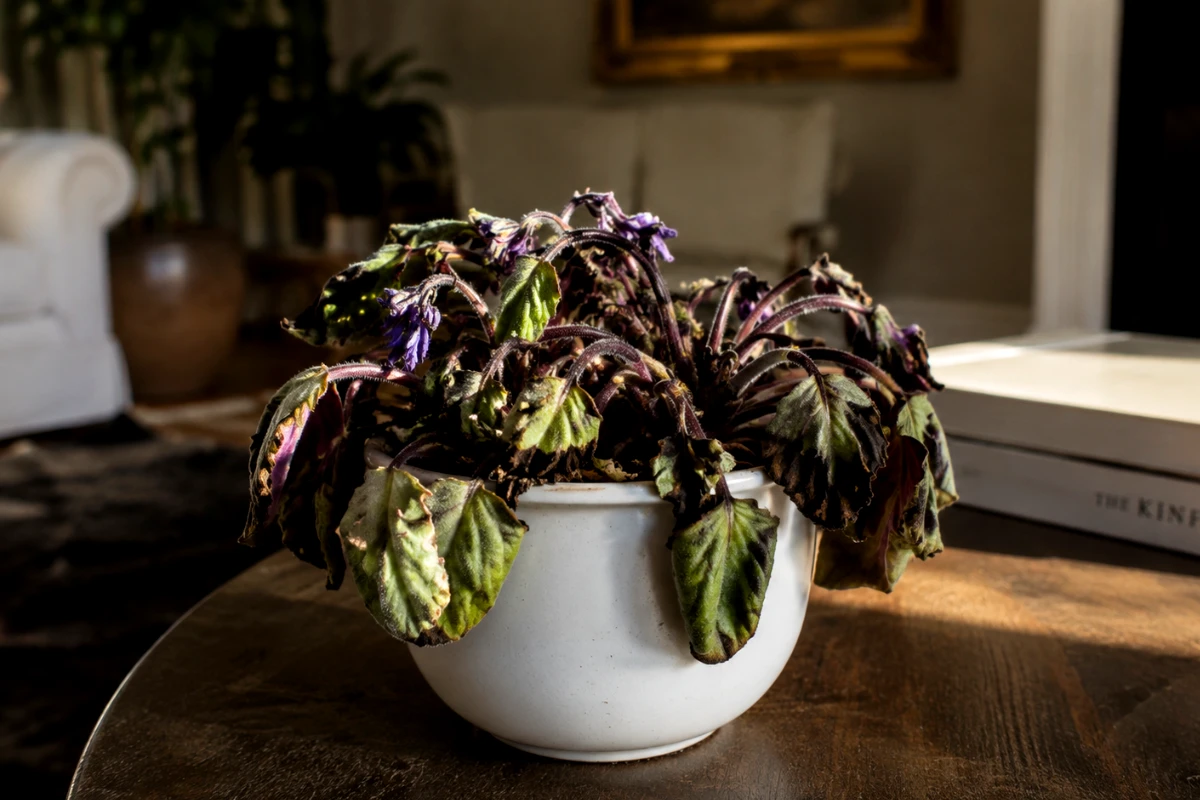
Overwatering and neglect claim countless houseplants every year, but African violets possess a remarkable will to live. Whether you drowned the roots or let the soil turn to dust, the rescue strategy requires swift, deliberate action. Let’s get your hands dirty and bring that beautiful, velvet-leafed plant back from the brink.
Step-by-Step African Violet Rescue Plan
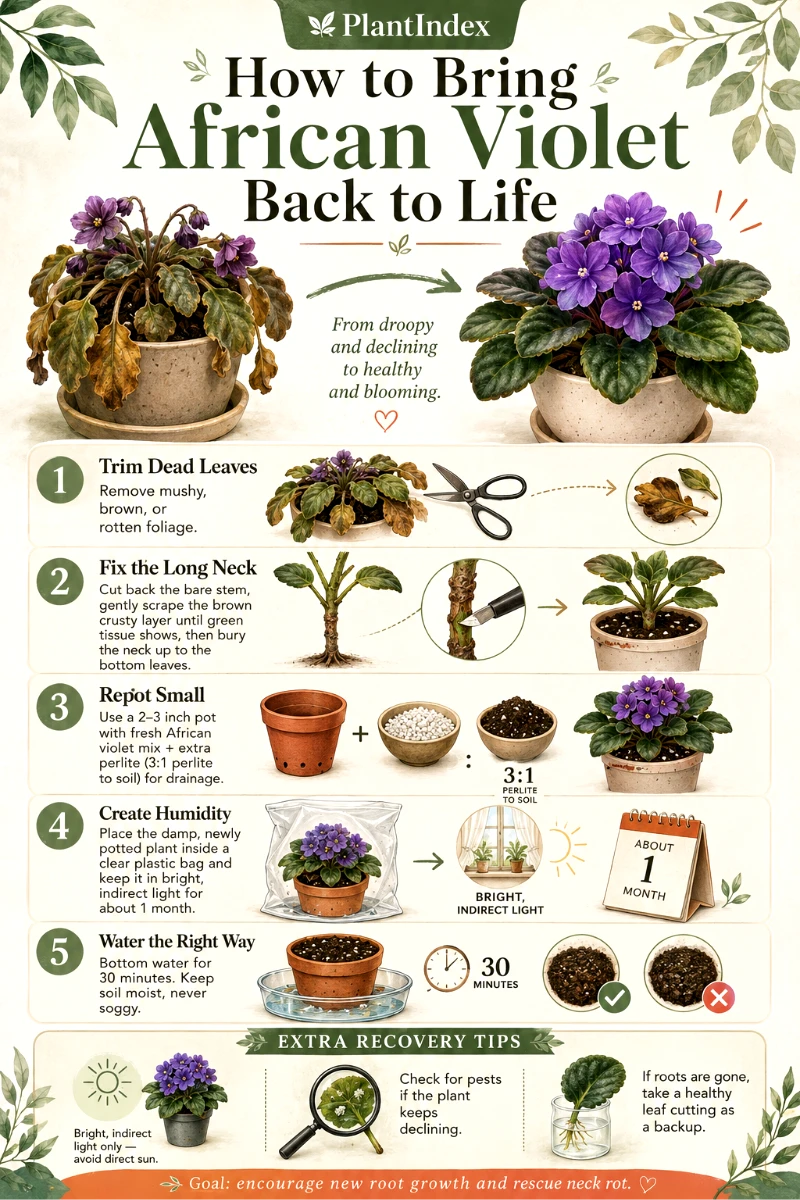
Step 1: Strip Away the Damage
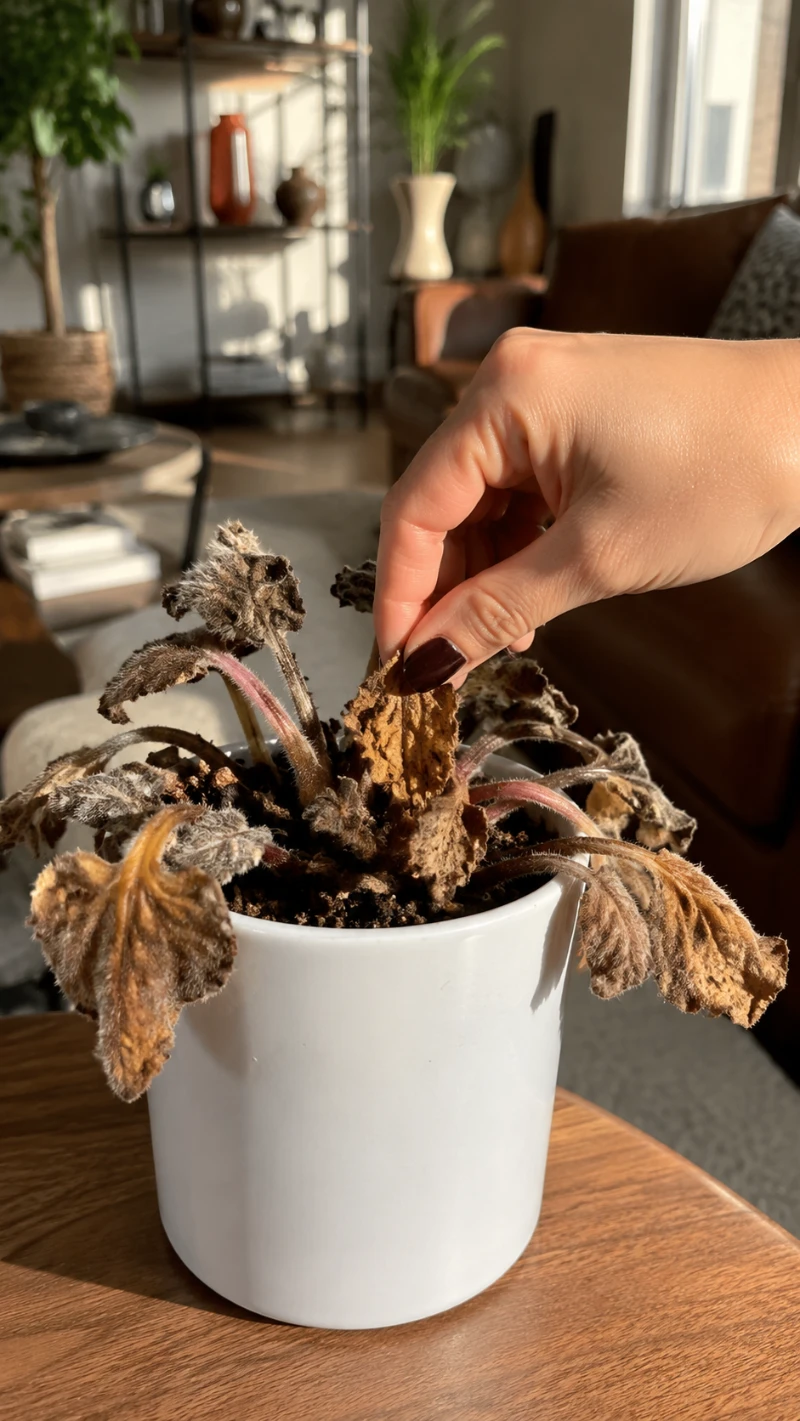
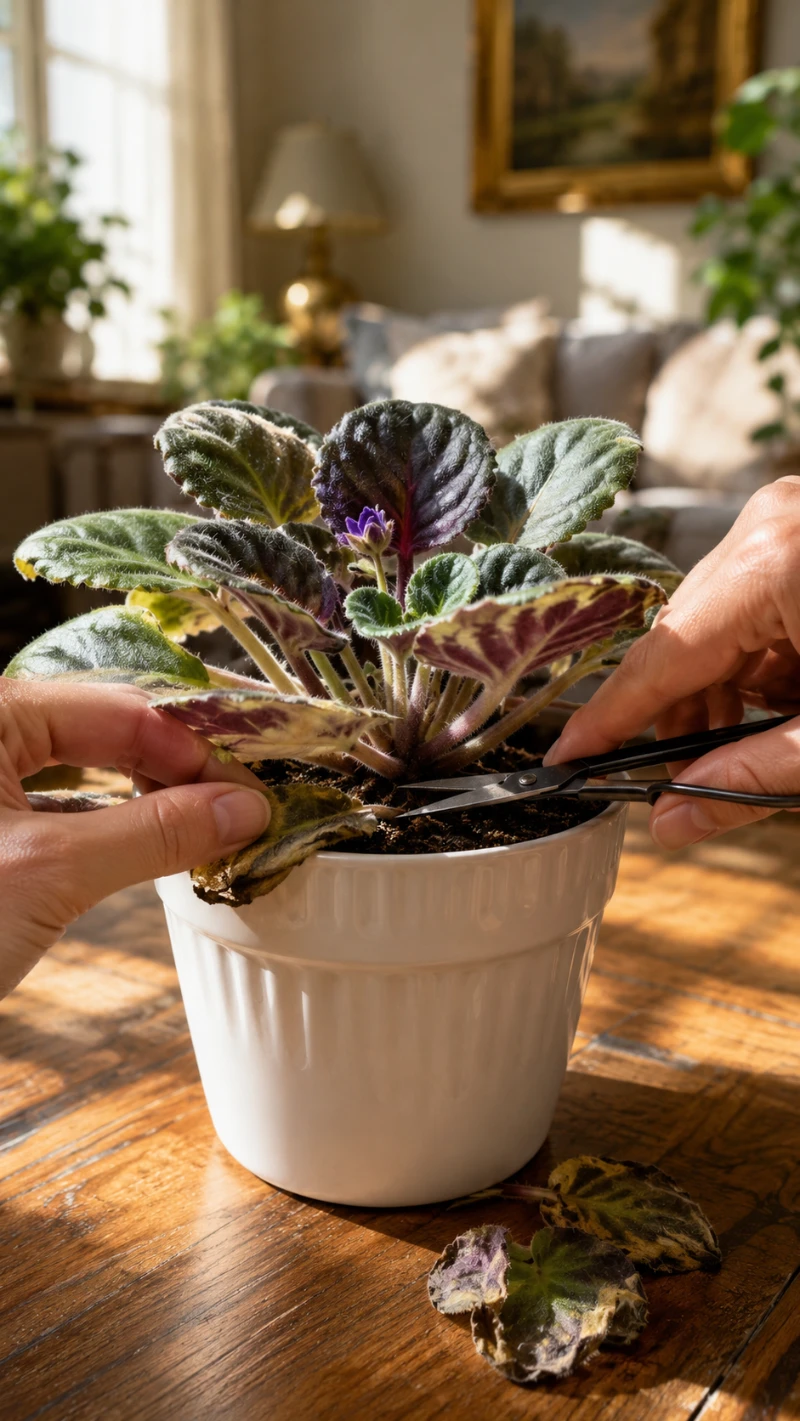
Start by removing any dead, mushy, or completely brown leaves. Snap them off cleanly right at the base of the plant. Rot spreads rapidly through soft plant tissue. Cutting away the decay stops the spread of dangerous bacteria immediately. This severe pruning also redirects the plant’s precious energy toward pushing out healthy new growth rather than maintaining dying foliage.
Step 2: Cure the Dreaded “Long Neck”
As older leaves die off over time, your violet develops a woody, bare stem known as a “neck.” This exposed stem looks unsightly and actively weakens the plant, making it highly susceptible to neck rot.
You need to bury this bare stem to encourage fresh root development. Take a sharp, sterilized knife and gently scrape the brown, crusty outer layer of the stem. You want to reveal the fresh, green tissue underneath. This simple scraping technique triggers the plant’s natural survival response, forcing it to push out new root nodes exactly where you made the cuts.
Step 3: Downsize the Pot and Upgrade the Soil
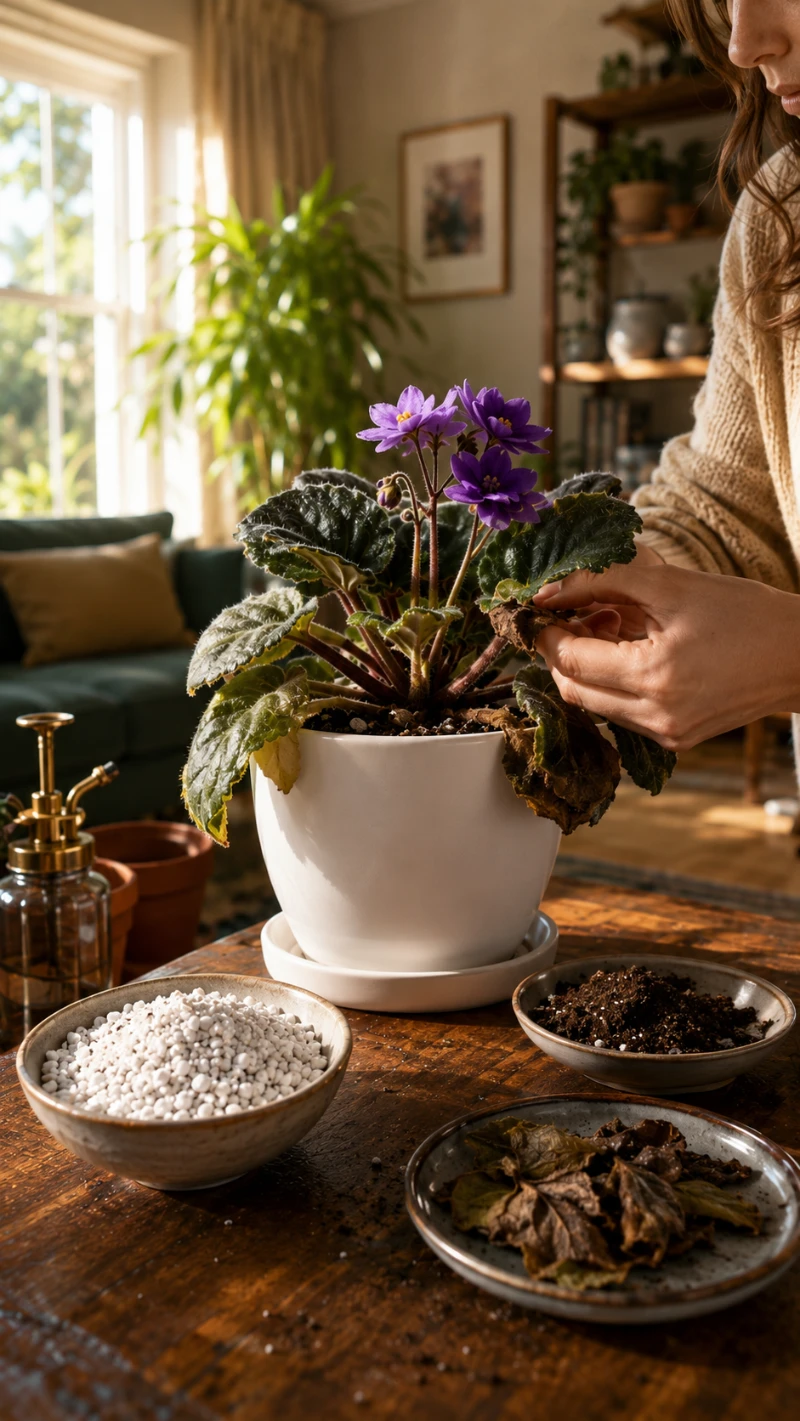
Root rot destroys delicate root systems. A plant with fewer roots will drown in a large pot because the excess soil holds far too much water. Move your struggling violet into a much smaller 2-3-inch pot.
Strictly use plastic or glazed ceramic pots. Unglazed terracotta wicks moisture away too aggressively and causes fertilizer salts to build up on the rim, which chemically burns delicate violet leaves resting against it.
Bury the scraped neck all the way up to the bottom leaves. Fill this new pot with a highly aerated mix. Blend three parts extra perlite to one part standard African violet potting soil. This specific 3:1 ratio naturally sits around a pH of 5.8 to 6.2. Violets require this slightly acidic sweet spot to absorb nutrients properly once they eventually recover.
This gritty mixture forces water to drain instantly, ensuring those fragile roots get the oxygen they desperately need.
Step 4: Build a Mini Greenhouse
A recovering plant loses moisture through its leaves faster than its damaged roots can replace it. You can solve this fatal dehydration with a simple kitchen item. Place your newly potted, slightly damp violet inside a clear plastic bag.
Seal it shut completely. This traps moisture and creates a 100% high-humidity environment, acting like an intensive care unit for your plant. Keep the bagged violet in bright, indirect light for about a month while new roots establish. Avoid direct sunlight at all costs, as the intense rays will quickly bake your plant inside the plastic.
Step 5: Master the Bottom-Watering Method
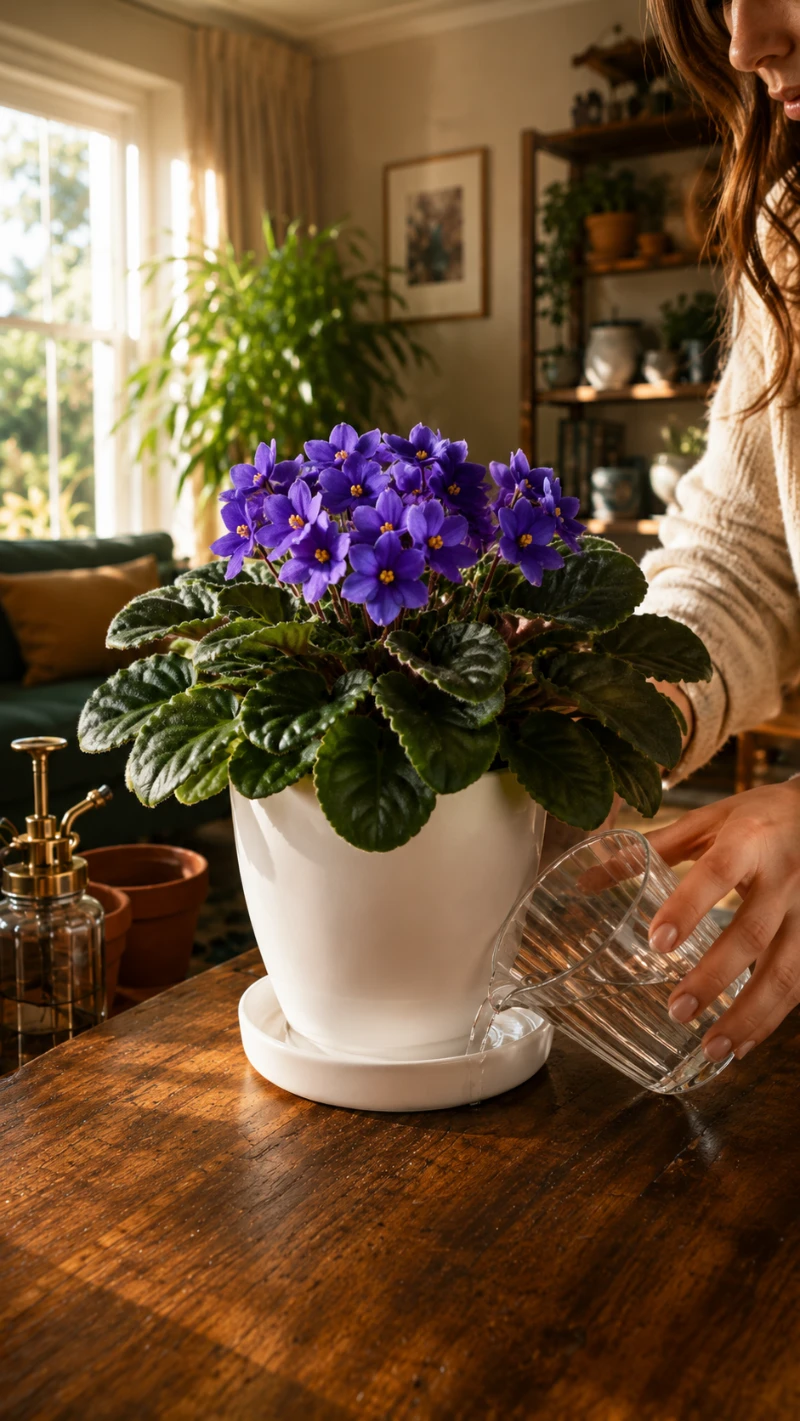
Once your plant graduates from its plastic bag greenhouse, change your watering habits completely to prevent future disasters. Never pour water directly over the crown of an African violet. Instead, practice bottom-watering.
Always use room-temperature water. Hitting the roots or leaves with cold tap water shocks the plant’s vascular system and causes permanent, ugly white blotches known as “ring spot.”
Place the small pot in a shallow container of room-temperature water for exactly 30 minutes. The soil will wick up exactly what it needs through the bottom drainage holes. Dump out any remaining water immediately to prevent the newly formed roots from sitting in a puddle.
Professional Troubleshooting Tips
- Starve the plant temporarily: Never fertilize a dying or recovering African violet. The concentrated nitrogen and phosphorus will instantly chemically burn the fragile, microscopic root hairs trying to grow in the humidity bag. Wait at least six weeks until you see vigorous new green leaves before applying a diluted fertilizer.
- Create a propagation backup: Pull the plant up and check the base. If you discover the root system is completely dead and mushy, do not panic. Snip off one or two of the healthiest remaining leaves. Stick these stems into damp perlite to propagate a brand-new clone of your original plant.
- Check for hidden pests: Sometimes, a sudden decline points to an infestation rather than a watering issue. Inspect the undersides of the remaining leaves and the center crown for tiny webs, white cotton-like fuzz, or crawling insects.
Ready for the Rescue
Grab your pruners, an empty plastic bag, and a fresh bag of perlite. Your African violet still has plenty of life left inside it. Address the root rot today, bury that woody neck, and watch your beloved houseplant bounce back stronger than ever.
Saving Your African Violets
How long does it take an African violet to recover?
Expect to wait three to four weeks. Keep the plant in its humidity bag during this time. You will eventually see the limp leaves firm up and notice tiny green shoots emerging from the center crown.
Can I save a violet with absolutely no roots?
Yes. Cut away all the rotting root mass entirely until you reach clean, green stem tissue. Scrape the stem, plant it in a damp, perlite-heavy mix, and seal it in a plastic bag. The green stem will grow an entirely new root system.
Why are my African violet leaves drooping?
Drooping leaves indicate a severe moisture imbalance. The plant is either severely dehydrated from neglect, or it is actively drowning from overwatering. Check the soil moisture immediately to determine the correct rescue path.