How to Propagate Ice Plant: Delosperma from Cuttings, Division, and Layering

If you’ve got one happy ice plant, you’ve got the makings of a whole sun-loving carpet. Delosperma spreads low, trails along the soil, and often roots wherever its stems touch the ground.
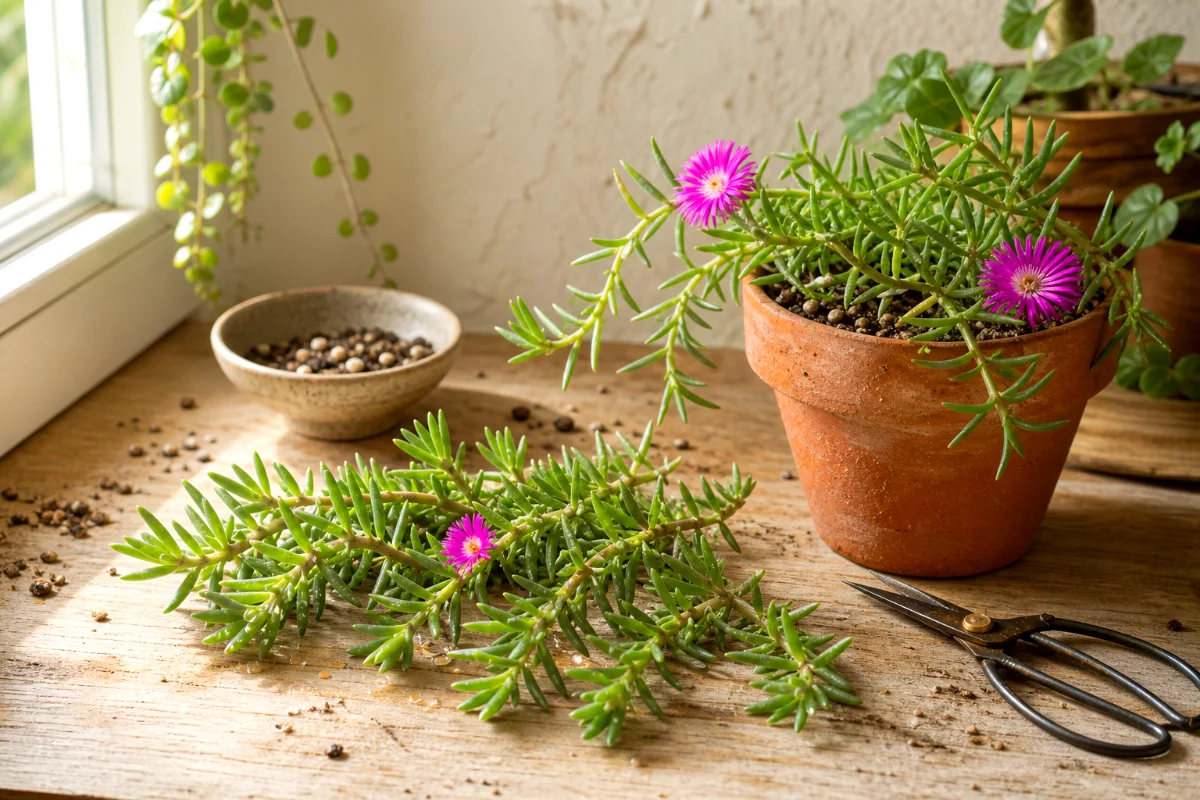
That’s gardener-friendly behavior. Very friendly.
Ice plant is a succulent ground cover, so it stores water in its fleshy leaves and stems. That means it hates soggy soil, but it handles dry spells like a champ. When you propagate it, your main job is simple: give it air, grit, sun, and restraint with the watering can.
The Best Ways to Propagate Ice Plant
You can propagate ice plant in three beginner-safe ways:
- Stem cuttings, the most common and tidy method
- Division, best for mature, established clumps
- Layering, the easiest method if your plant has already rooted along the ground
Stem cuttings win for most home gardeners because they don’t disturb the parent plant much. Division gives you bigger plants right away. Layering feels almost like cheating, in the best way.
What You Need Before You Start
Keep it simple. Ice plant doesn’t need a fancy propagation station.
- Clean scissors, snips, or pruning shears
- Small pots with drainage holes
- Succulent or cactus potting mix
- Extra perlite, pumice, coarse sand, or fine gravel if your mix feels heavy
- A bright spot with gentle light at first
- A watering can with a light pour
Don’t use dense garden soil in a pot. It holds too much water around the cut stem, and that wet, airless pocket invites rot fast.
Method 1: Propagate Ice Plant From Stem Cuttings
This is the method I reach for most often. It’s quick, neat, and easy to repeat if you want a whole border full of Delosperma.
Choose the Right Stem
Pick a healthy, non-flowering stem from the tip of the plant. Cut a section about 2 to 3 inches long.
Non-flowering stems usually root better because the plant can spend its energy making roots instead of feeding blooms. I know the flowers are tempting. Leave them on the mother plant.
Let the Cutting Callus
Set the cuttings in a dry, shaded place for 1 to 2 days. The cut end should dry over and form a thin callus.
Don’t skip this. A fresh succulent cutting stuck straight into damp soil can rot before it gets a fair shot at rooting. The callus acts like a little scab.
Plant the Cutting
Fill a small pot with lightly moistened succulent or cactus mix. Poke a small hole with your finger or a pencil, then insert the cut end into the soil.
Firm the mix just enough to hold the cutting upright. Don’t pack it hard. Roots need tiny air spaces.
Place It in the Right Light
Start the pot in bright, indirect light for a few days if the cutting looks stressed. Then move it toward stronger sun.
Once it settles in, ice plant roots fastest in a sunny spot. Full sun suits established Delosperma beautifully, but fresh cuttings can sulk if you throw them straight into harsh afternoon heat.
Water Sparingly
Water lightly when the soil feels dry. That’s it.
Moist doesn’t mean soaked. If the pot feels heavy or the surface stays damp for days, back off. With succulent cuttings, too little water usually causes a pause. Too much water causes a funeral.
Watch for Roots
Roots usually form in a few weeks. Give the cutting a very gentle tug after two or three weeks. If it resists, roots have started grabbing the soil.
New growth tells the same story. Tiny fresh leaves mean the cutting has settled in and started working.
Method 2: Propagate Ice Plant by Division
Division works best when you already have a mature ice plant with a solid root system. Use this method when the plant has grown into a thick mat or has spread farther than you planned.
Dig Up the Plant Carefully
Water the plant lightly the day before if the ground is bone dry. Then slide a garden fork or trowel under the clump and lift it with as much root as you can.
Be patient here. Ice plant stems can snap easily, and the roots may spread wider than you expect.
Separate the Root Ball
Gently pull the clump apart into smaller sections. If the roots feel tight, use a clean, sharp knife to cut the root ball.
Each section should have roots and several healthy stems. Skip tiny scraps unless you enjoy nursing weak plants along.
Replant Right Away
Replant the divisions at the same depth they grew before. Firm the soil lightly around the roots and water them in.
Keep them slightly more watered than mature ice plant for the first couple of weeks. Not wet. Just not forgotten.
Method 3: Propagate Ice Plant by Layering
Layering is what ice plant often does on its own. A trailing stem touches the soil, sits there long enough, and roots pop out.
So let the plant do the hard part.
Find a Rooted Stem
Lift a trailing stem gently and look for white or tan roots growing from nodes along the stem. These rooted bits are ready-made new plants.
If the stem resists when you lift it, don’t yank. Check near the soil. It may already be anchored.
Cut and Move It
Use clean snips to cut the rooted section away from the mother plant. Move it to a prepared spot with sandy, fast-draining soil.
Water it lightly after planting. Then give it sun and space.
Best Conditions for Delosperma Propagation
Ice plant roots quickly when you match its natural habits. Think sun-baked, lean, gritty, and never swampy.
Soil
Use sandy, well-draining soil. In pots, choose succulent or cactus mix. If your mix stays damp too long, add perlite, pumice, or coarse sand.
In the garden, avoid heavy clay unless you amend it well or plant on a slope, mound, or raised edge. Ice plant wants drainage around its roots, especially during cool weather.
Light
Start fresh cuttings in bright, indirect light if they look soft or wilted. Then transition them to full sun.
Established Delosperma loves strong light. More sun usually means tighter growth and better flowering.
Water
Water lightly at first. Let the soil dry before watering again.
This is where beginners often love the plant to death. Ice plant leaves already hold water. Your job is to encourage roots to search, not sit in a soggy mess.
Temperature
Warm weather speeds rooting. Spring and early summer usually give the best results because the plant is actively growing.
In hot climates, avoid taking cuttings during a brutal heat wave. Morning work is kinder to the plant and to you.
Common Ice Plant Propagation Mistakes
Planting Cuttings Too Soon
Fresh cuts need time to dry. Give them that 1 to 2 day callus period, especially if your weather is humid.
Using Soil That Holds Water
Regular potting soil can work only if you lighten it heavily. Straight garden soil in a small pot? Bad plan.
It compacts, stays wet, and suffocates new roots.
Watering on a Schedule
Don’t water every Tuesday just because Tuesday showed up. Check the soil.
If it’s dry, water lightly. If it’s damp, wait.
Taking Flowering Stems
Flowering stems can root, but they often root slower. Choose non-flowering tips when you can.
Moving New Plants Into Harsh Sun Too Fast
Ice plant loves full sun once established. Fresh cuttings may need a short adjustment period.
Give them bright light first, then stronger sun. No drama needed.
How to Tell Your Ice Plant Cutting Has Rooted
Look for these signs:
- New leaves forming at the tip
- Firm stems that don’t shrivel
- Gentle resistance when you tug lightly
- Soil drying a little faster as roots begin drinking
Don’t keep pulling the cutting up to check. I know it’s hard. Roots are fragile at first, and curiosity can set them back.
When to Transplant Propagated Ice Plant
Move rooted cuttings once they show steady new growth and hold firmly in the pot. If you rooted them in small containers, give them a little time to fill the mix before planting them out.
Choose a sunny, well-drained spot. Space plants so they can spread without smothering tiny neighbors.
After transplanting, water lightly for the first week or two. Then treat them like succulents, not thirsty bedding plants.
FAQ
Can you root ice plant cuttings in water?
You can try, but soil works better for most Delosperma cuttings. Water rooting keeps the stem too wet and raises the chance of rot. A callused cutting in gritty mix gives cleaner, sturdier roots.
How long does ice plant take to root?
Most cuttings root in a few weeks when they get warmth, bright light, and sparse watering. Cool, cloudy weather can slow the process.
Do ice plant cuttings need rooting hormone?
No. Ice plant usually roots without it. If you already have rooting hormone, a tiny dusting won’t hurt, but don’t use it to make up for poor drainage.
Can I propagate ice plant in winter?
You can, but it often roots slower because growth naturally slows in cold, low-light conditions. Spring and early summer give beginners much better odds.
Why did my ice plant cutting turn mushy?
Too much moisture usually causes mushy cuttings. Let cuttings callus before planting, use gritty soil, and water only when the mix dries.
Will ice plant spread on its own?
Yes. Ice plant often self-propagates by rooting where trailing stems touch the soil. You can cut those rooted stems and move them to a new sunny spot.