How to Propagate Mint from Cuttings

Mint is one of the easiest herbs to propagate. Almost too easy.
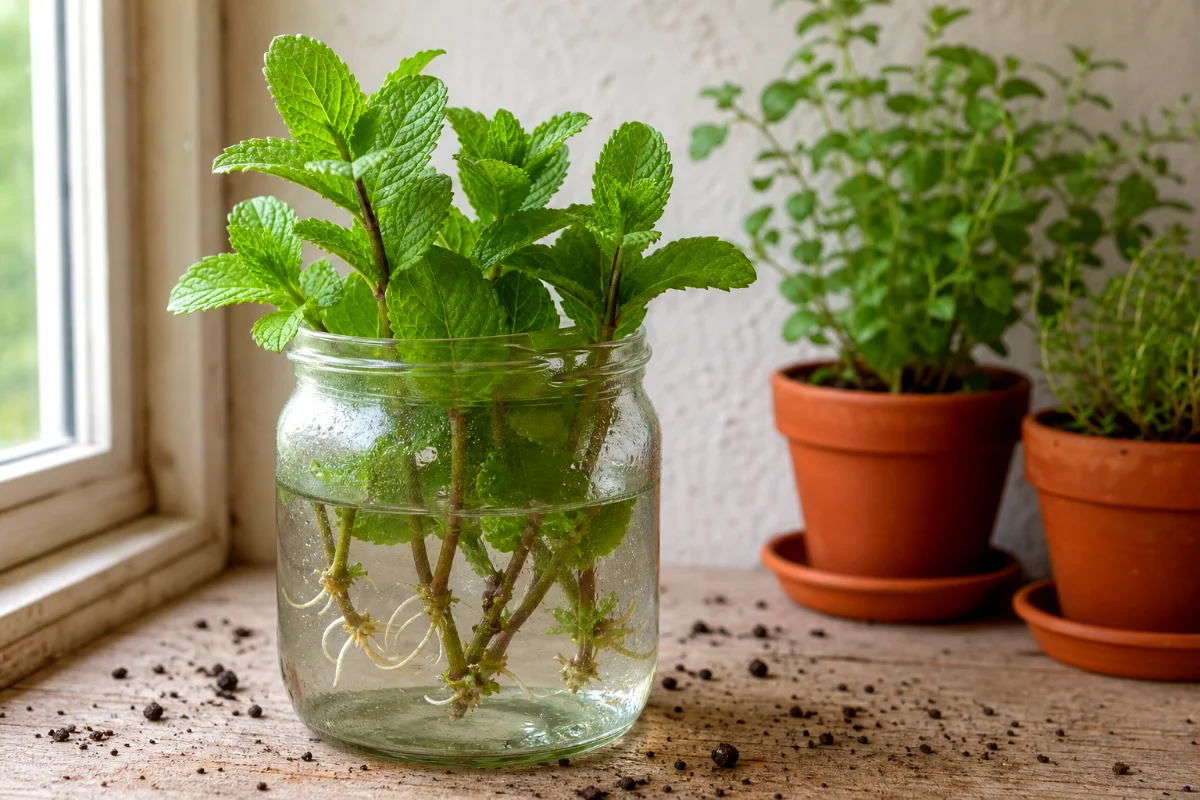
Give a healthy mint stem a glass of water, a little light, and a week or two, and it usually starts pushing out fresh white roots like it has somewhere to be. That’s why I love it for beginners. You get fast results, and you don’t need fancy gear.
But here’s my gardener’s warning, said with love: always grow mint in a container. Mint spreads aggressively through underground runners. Plant it straight in a garden bed and you’ll be pulling mint out from between your tomatoes, roses, and patio cracks for years.
The Best Way to Propagate Mint
The best way to propagate mint is by taking 4 to 6 inch cuttings from a healthy, non-flowering plant and rooting them in water or moist potting soil.
Water propagation is my favorite for beginners because you can see the roots form. It’s satisfying. It also lets you spot trouble early, like a mushy stem or cloudy water.
Soil propagation works too, but it asks for a little more trust. The roots grow hidden under the soil, so you judge success by fresh top growth and a cutting that stays perky.
What You Need Before You Start
You don’t need a propagation station or a shelf full of gadgets. Mint is not precious.
- A healthy mint plant or supermarket mint stems
- Clean scissors or pruning snips
- A clear glass or jar for water propagation
- Small pots with drainage holes
- Damp, well-draining potting mix
- Bright, indirect light
If you’re using supermarket mint, choose stems that still look fresh and firm. Avoid blackened, slimy, or badly wilted stems. They may root, but they’ll sulk first.
How to Propagate Mint in Water
This is the method I recommend first. It’s quick, clean, and wonderfully encouraging for new gardeners.
Step 1: Take a Healthy Cutting
Cut a 4 to 6 inch stem from a healthy mint plant. Choose a non-flowering stem if you can.
Make your cut just below a leaf node. That’s the little bump where leaves grow from the stem. Roots often form from that area, so don’t cut randomly halfway between two sets of leaves.
Step 2: Remove the Lower Leaves
Strip the leaves from the lower 2 to 3 inches of the stem.
Do this gently. You want a clean bare stem below the water line. Any leaves sitting underwater will rot, and rotten leaves turn a simple project into a smelly little swamp.
Step 3: Place the Stem in Water
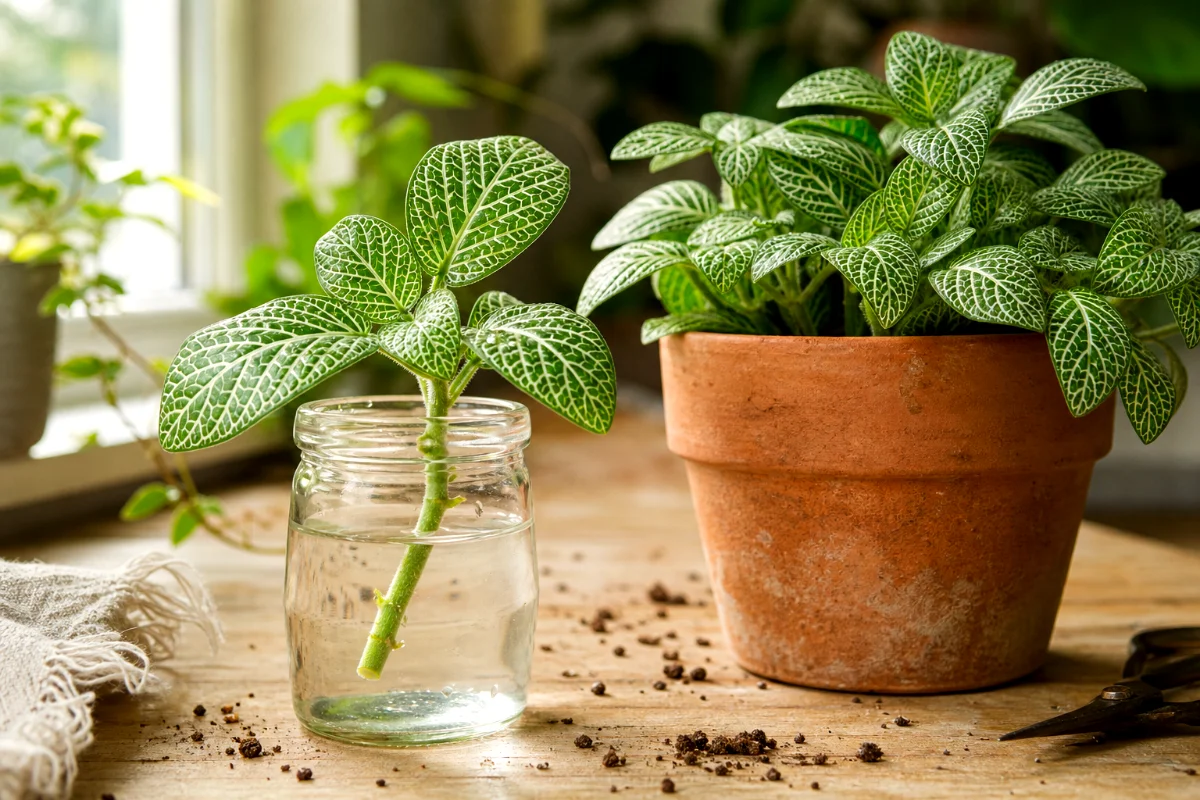
Put the cutting into a clear glass or jar of water. Keep the bare stem submerged, but keep all leaves above the water.
A narrow jar helps hold the cutting upright. If the stem flops, that’s fine, as long as the leaf joints stay out of the water.
Step 4: Give It Bright, Indirect Light
Set the jar near a bright window, but avoid harsh direct sun. Strong sun can cook the cutting through the glass, especially on a warm windowsill.
Change the water every 2 to 3 days. Fresh water keeps oxygen around the stem and cuts down on slime, which is usually where failed cuttings begin.
Step 5: Watch for Roots
Mint often grows roots in 7 to 10 days. Sometimes it takes closer to 2 weeks, especially if your room runs cool.
Wait until the roots reach about 1 to 2 inches long before potting the cutting. Tiny roots break easily and dry out fast, so give them a bit of length first.
Step 6: Pot the Rooted Cutting
Fill a small pot with damp, well-draining potting soil. Make a hole with your finger, lower the roots in gently, and firm the soil around the stem.
Water it in. Keep the soil evenly damp for the first week while the roots adjust from water to soil. Not soggy. Damp.
How to Propagate Mint Directly in Soil
Soil propagation skips the jar and starts the cutting where it will grow. This method works well if you already have small pots ready and you don’t want cuttings lined up across the kitchen windowsill.
Step 1: Cut and Prepare the Stem
Take a 4 to 6 inch cutting from a healthy mint plant. Cut just below a node, then remove the leaves from the lower part of the stem.
Same rule as water propagation: buried leaves rot. Don’t bury foliage and hope for the best. It rarely ends well.
Step 2: Plant the Cutting
Push the bare lower stem into a small pot filled with moist potting mix. Bury at least one node under the soil because that’s where roots can form.
Firm the mix lightly around the stem so it stands upright. Don’t pack it down like concrete. Roots need air as much as they need moisture.
Step 3: Keep It Moist and Bright
Place the pot in bright, indirect light. Keep the soil consistently damp while the cutting roots.
If the cutting wilts badly on day one, don’t panic. Mint can look dramatic. Give it moisture, shade from direct sun, and a little time.
Step 4: Check for New Growth
After 1 to 3 weeks, look for fresh leaves at the top. That’s your best sign that roots have started working.
Resist the urge to tug on the cutting every morning. I know. I’ve done it too. But tugging can snap the new roots you waited for.
Water vs Soil Propagation: Which Should You Choose?
Choose water propagation if you’re new, curious, or using grocery store stems. You can see exactly what’s happening.
Choose soil propagation if you want fewer steps and you can keep the potting mix evenly damp. It can produce sturdier roots from the start because the cutting never has to switch from water to soil.
My honest pick? Start mint in water your first time. Once you’ve seen those roots appear, you’ll understand the timing and feel far more confident with soil cuttings later.
Why Mint Roots So Easily
Mint has soft stems and a naturally eager growth habit. Those little nodes along the stem can make roots when they touch moisture.
That’s wonderful in a jar. It’s less charming in an open garden bed.
Mint spreads by runners that creep through soil and pop up away from the mother plant. A small clump can turn into a patch fast, especially in rich, moist soil. This is why experienced gardeners keep repeating the same advice: plant mint in pots.
The Container Rule You Shouldn’t Ignore
If you remember one thing, make it this: grow mint in a container.
A pot keeps the roots contained and saves you future digging. Use a container with drainage holes and a good potting mix. A terracotta pot works nicely because it breathes and helps prevent soggy soil.
For outdoor growing, choose a pot at least 10 to 12 inches wide. Mint grows fast, and tiny pots dry out quickly in summer.
And don’t set a mint pot directly on bare soil if roots can escape through the drainage holes. Place it on a patio, saucer, paver, or plant stand. Mint is sneaky like that.
How to Care for Newly Propagated Mint
New mint cuttings need steady moisture, good light, and a little patience. That’s it.
- Light: Give bright, indirect light at first. Move outdoor pots into morning sun once the plant grows strongly.
- Water: Keep soil damp, not waterlogged. Mint likes moisture, but roots still need air.
- Soil: Use well-draining potting mix. Avoid heavy garden soil in containers because it compacts.
- Pot size: Start small, then repot when roots fill the container.
- Feeding: Go easy. Too much fertilizer can make mint grow soft and bland.
Once the plant starts producing fresh leaves, pinch the tips. This encourages bushy growth instead of one tall, lanky stem.
When Can You Harvest Propagated Mint?
You can harvest a few leaves once the new mint plant has settled in and shows fresh growth for a couple of weeks.
Don’t strip a baby plant bare. Take a few top leaves or pinch stem tips, then let it regrow. Regular light harvesting makes mint fuller, but heavy harvesting too soon can slow it down.
For the best flavor, pick leaves in the morning after the plant perks up but before strong afternoon heat.
Common Mint Propagation Problems
The Stem Turns Black or Mushy
This usually means rot. Leaves may have sat underwater, or the water stayed dirty too long.
Start over with a fresh cutting. Remove the lower leaves and change the water every 2 to 3 days.
The Cutting Wilts in Soil
The cutting may lose water faster than it can grow roots. Move it out of direct sun and keep the soil evenly damp.
You can loosely cover the pot with a clear bag for a few days to hold humidity, but leave a gap for airflow. If you trap too much moisture, mold can move in.
No Roots After Two Weeks
Check the stem. If it’s still green and firm, give it more time.
Cool rooms slow rooting. Old, woody stems also root more slowly than fresh soft stems. Take a newer cutting if you’re tired of waiting.
The Water Gets Cloudy Fast
Cloudy water often means plant bits are decaying. Remove any fallen leaves, rinse the jar, and refill with fresh water.
A clear jar makes this easier because you can see trouble before you smell it.
Can You Propagate Mint from Supermarket Stems?
Yes, you can propagate mint from supermarket-bought stems if they’re fresh enough.
Look for stems with firm green growth and several leaf nodes. Trim the bottom cleanly, remove the lower leaves, and place the stems in water just like garden cuttings.
Some grocery mint has been chilled or stored too long, so not every stem roots. Take several cuttings at once. That way, one failure doesn’t ruin the whole project.
Best Time to Propagate Mint
Spring and early summer give the fastest results because mint is already in active growth.
You can also root mint indoors almost any time if you have enough light and warmth. A kitchen windowsill works well, as long as it doesn’t bake in hot sun or sit in a cold draft.
Avoid taking cuttings from stressed plants. If the mother plant looks thirsty, pest-ridden, or half-dead, fix that first or choose a better stem.
FAQ About Propagating Mint
How long does mint take to root in water?
Mint usually roots in water in 7 to 10 days. Wait until roots reach 1 to 2 inches before planting the cutting in soil.
Can I plant mint cuttings straight into soil?
Yes. Remove the lower leaves, insert the cutting into moist potting soil, and keep it damp in bright, indirect light until it establishes.
Do mint cuttings need rooting hormone?
No. Mint roots readily without rooting hormone. Save the powder for fussier plants.
Should mint grow indoors or outdoors?
Mint can grow in either place. Indoors, give it a bright window. Outdoors, give it a container and regular water.
Why shouldn’t I plant mint in the ground?
Mint spreads aggressively through underground runners. A container keeps it from taking over nearby beds and crowding other plants.
How many mint cuttings should I start?
Start three to five cuttings if you can. Mint roots easily, but extra cuttings give you a fuller pot and a backup if one fails.