How to Propagate Rosemary from Cuttings

Rosemary is one of those herbs that makes you feel clever in the garden. Snip a little stem, give it the right conditions, and you can turn one plant into many.
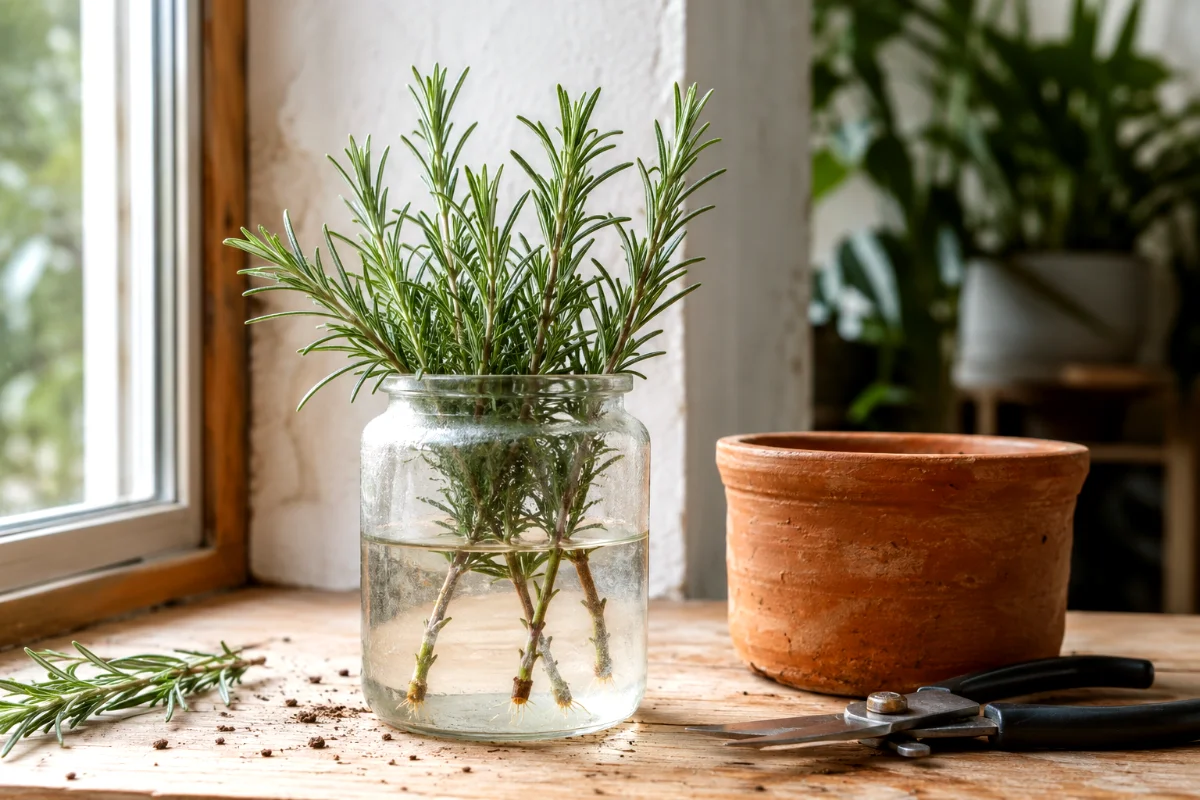
The easiest way to propagate rosemary is by taking 4 to 6 inch cuttings from soft green growth in spring or summer, stripping the lower leaves, and rooting the stems in water or a gritty potting mix.
That’s it. Mostly.
There are a few places beginners go wrong, though. They take old woody stems. They drown the cuttings. Or they put them in hot sun and wonder why the poor things wilt by lunchtime.
I’ve killed enough rosemary cuttings over the years to have strong feelings about this. Rosemary wants light, air, warmth, and drainage. It does not want soggy feet.
When Is the Best Time to Propagate Rosemary?
The best time to propagate rosemary is late spring through summer, when the plant is actively growing and pushing out tender green shoots.
Those soft green stems root far more readily than older brown, woody stems. Woody pieces can root, sure, but they’re slower and fussier. For beginners, skip the drama.
Look for stems that feel flexible, fresh, and healthy. Not floppy. Not flowering if you can help it. And not the tough brown stuff near the base of the plant.
What You’ll Need
You don’t need a fancy setup. Rosemary is happy with simple tools, as long as you keep things clean and well-drained.
- Healthy rosemary plant
- Clean scissors or pruners
- Small glass jar for water propagation
- Small pot with drainage holes for soil propagation
- Well-draining potting mix
- Sand, perlite, or grit to improve drainage
- Rooting hormone, optional
- Clear plastic bag or cut plastic bottle for humidity, optional for soil cuttings
Clean tools matter. A fresh cutting is an open wound, and dirty blades can invite rot or disease. Give your pruners a quick wipe before you start.
How to Take Rosemary Cuttings
This part sets the whole project up for success. Choose the right stem and you’re halfway there.
Step 1: Pick Soft Green Growth
Choose healthy, tender shoots that are green and flexible. Avoid brown, woody stems unless you enjoy waiting and guessing.
Cut each stem about 4 to 6 inches long. Make your cut just below a leaf node if you can see one. That’s a good rooting area, though rosemary won’t demand perfection.
Step 2: Strip the Lower Leaves
Remove the leaves from the bottom 2 to 3 inches of the stem.
Be firm but gentle. You want a clean bare stem that can sit in water or soil without leaves rotting below the surface.
And yes, it smells wonderful. That’s one of the perks.
Step 3: Keep the Top Leaves
Leave a small tuft of leaves at the top. Those leaves keep the cutting alive while it works on making roots.
If the top looks huge and bushy, pinch off a few leaves. A cutting with too much foliage loses water faster than it can replace it.
Method 1: Water Propagation for Rosemary
Water propagation is the easiest method for beginners because you can see what’s happening. Roots appear like little pale threads, and it’s oddly satisfying.
But water is also where people get careless. Stale water causes rot. Submerged leaves get slimy. Don’t do that to your cuttings.
Step 1: Place Cuttings in a Jar
Set the stripped rosemary stems in a clear jar with enough water to cover the bare lower section.
Keep all leaves above the water line. If even a few leaves sit underwater, pull the cutting out and strip it better.
Step 2: Give Bright, Indirect Light
Place the jar near a bright window, but out of harsh direct sun.
A hot windowsill can cook rosemary cuttings fast. Bright indirect light gives them energy without turning the jar into soup.
Step 3: Change the Water Often
Change the water every few days. Fresh water keeps oxygen levels up and helps prevent rot.
If the water smells off, change it right away. If a stem turns black and mushy, toss it. Don’t let one bad cutting spoil the batch.
Step 4: Pot Up When Roots Are Ready
Rosemary cuttings usually root in 2 to 6 weeks. Some race ahead. Some sulk.
Once roots reach about 1 to 2 inches long, plant the cutting in a small pot of well-draining potting mix.
Don’t wait until the jar looks like a bowl of noodles. Long water roots can struggle when moved into soil.
Method 2: Soil Propagation for Rosemary
Soil propagation feels less exciting because you can’t watch the roots grow. But it often creates sturdier young plants because the roots form in the medium where they’ll keep growing.
This method works especially well if you use a gritty mix and keep humidity around the leaves without soaking the soil.
Step 1: Prepare the Cutting
Take a 4 to 6 inch cutting from soft green rosemary growth. Strip off the lower leaves just like you would for water propagation.
If the cut end looks ragged, snip it cleanly. A clean cut heals and roots better than a crushed one.
Step 2: Use Rooting Hormone If You Want
Rooting hormone is optional. Rosemary can root without it.
That said, I use it when I have some nearby, especially for cuttings I really want to save. Dip the cut end lightly, then tap off the excess. More powder does not mean more roots.
Step 3: Plant in a Gritty Mix
Fill a small pot with moist, well-draining mix. A good beginner blend is regular potting mix with added perlite, coarse sand, or fine grit.
Poke a hole first with a pencil or your finger. Then slide the cutting in and firm the mix around it.
Don’t shove the stem into compacted soil. That can scrape off rooting hormone and bruise the cutting.
Step 4: Add Humidity
Cover the pot loosely with a clear plastic bag or a cut plastic bottle to hold humidity around the leaves.
But give it breathing room. If the plastic presses against the foliage, condensation can sit on the leaves and invite mildew.
I like to remove the cover for a few minutes every day. Fresh air helps. Plants aren’t museum pieces.
Step 5: Keep Soil Moist, Not Wet
This is the bit that matters most. Keep the mix lightly moist, but never waterlogged.
Rosemary comes from dry, lean, sunny places. It hates sitting in damp, heavy soil. If the pot feels cold, soggy, and heavy for days, back off the watering.
Water vs Soil: Which Rosemary Propagation Method Is Better?
For beginners, I’d start with water propagation. You can see the roots, and that builds confidence.
For stronger long-term plants, soil propagation has the edge. The roots don’t need to adjust from water to soil later.
Here’s my honest take: try both. Rosemary cuttings are small, and losing one or two isn’t the end of the world. Gardeners learn faster with side-by-side experiments than with perfect instructions.
How Long Does Rosemary Take to Root?
Rosemary cuttings usually root in 2 to 6 weeks.
Warmth speeds things up. Soft green stems help too. Cold rooms, old woody stems, and soggy soil slow everything down.
Don’t yank soil cuttings out every few days to check. I know it’s tempting. Instead, wait a few weeks, then give the cutting a very gentle tug. If you feel resistance, roots are forming.
How to Transplant Rooted Rosemary Cuttings
Once your cutting has roots, move it into a small pot with drainage holes and a gritty potting mix.
Start small. A tiny rooted cutting in a giant pot stays wet too long, and rosemary hates that.
Potting Mix That Rosemary Actually Likes
Use a mix that drains quickly. If water sits on top or the pot stays damp for days, the mix is too heavy.
- Two parts quality potting mix
- One part perlite, coarse sand, or grit
- A pot with a real drainage hole
Terracotta pots are great for rosemary because they breathe and dry out faster than plastic. They’re not required, but they help beginners avoid overwatering.
Aftercare for Young Rosemary Plants
For the first week after potting, keep the new rosemary in bright indirect light. Then slowly introduce more sun.
Water when the top inch of soil feels dry. Not on a schedule. Use your finger, not a calendar.
Once the plant starts pushing new growth, you can pinch the tips to encourage a fuller shape.
Common Rosemary Propagation Mistakes
Using Woody Stems
Old woody stems can root, but they take their sweet time. For easy propagation, use new green growth.
Leaving Leaves Underwater or Underground
Buried or submerged leaves rot. Rot spreads fast in a jar or a damp pot.
Strip the lower 2 to 3 inches cleanly before rooting.
Keeping the Soil Too Wet
This is the big one. Rosemary doesn’t want swamp life.
Moist is fine for rooting. Wet and heavy is trouble. If in doubt, use a lighter mix with more perlite or grit.
Putting Cuttings in Direct Hot Sun
Fresh cuttings don’t have roots yet, so they can’t replace lost moisture well.
Bright indirect light keeps them growing without frying them. Save full sun for after they root and settle in.
Skipping Humidity for Soil Cuttings
Soil cuttings can dry out before roots form. A loose plastic cover helps keep moisture around the leaves.
Just don’t seal the pot like leftovers. A little airflow prevents fungal problems.
My Best Tips for Better Rosemary Cuttings
- Take cuttings in the morning, when stems hold more moisture.
- Start more cuttings than you need. Not every stem will root.
- Use soft green growth, not woody brown stems.
- Keep cuttings in bright, indirect light.
- Change water every few days if rooting in a jar.
- Use gritty soil and a pot with drainage holes.
- Be patient. Rosemary isn’t the fastest herb, but it’s worth the wait.
One more thing. Don’t baby rosemary too much once it roots. This herb grows best when you give it sun, drainage, and a little tough love.
FAQ About Propagating Rosemary
Can you propagate rosemary from grocery store sprigs?
Sometimes, yes. If the sprigs are fresh, green, and not dried out, they may root.
But grocery rosemary often sits in cold storage, so results can be hit or miss. Fresh cuttings from a living plant work better.
Can rosemary cuttings root in plain water?
Yes. Rosemary cuttings can root in plain water as long as you keep leaves above the water line and change the water every few days.
Why are my rosemary cuttings turning black?
Black, mushy stems usually mean rot. The water may be stale, leaves may be submerged, or the soil may be too wet.
Remove bad cuttings quickly and refresh the setup.
Do rosemary cuttings need rooting hormone?
No, they don’t need it. Rooting hormone can speed things up, especially with soil propagation, but healthy soft cuttings can root without it.
Can I propagate rosemary in winter?
You can try, but spring and summer work better. In winter, rosemary grows more slowly, and cuttings often take longer to root.
When can I plant propagated rosemary outside?
Plant it outside after it has a strong root system and the weather is warm. Harden it off first by giving it a little outdoor time each day for about a week.
Give your first rosemary cutting a small pot, bright light, and fast-draining soil. That simple setup beats most fancy tricks.