How to Propagate Wisteria the Smart Way

If you want a new wisteria that behaves like the parent plant, skip the seeds. Really. Skip them.

The best ways to propagate wisteria are layering in spring or autumn and softwood cuttings in summer. Both methods create a clone of the parent plant, which means the new plant should match the original for flower color, growth habit, and blooming potential.
Seed-grown wisteria can take up to 20 years to flower, if it flowers at all. That’s not patience. That’s a hostage situation.
The Best Propagation Methods for Wisteria
Wisteria roots more willingly when you work with its natural growth rhythm. In spring and autumn, the plant has enough energy for root growth without the full stress of summer heat. In summer, soft green stems root faster because they’re still young and active.
Here’s the practical breakdown.
- Layering: Best for beginners, highest success rate, roots while still attached to the parent plant.
- Softwood cuttings: Best in summer, useful when you want several new plants.
- Hardwood cuttings: Best in winter, slower, less exciting, but still worth trying if you like a project.
Method 1: Propagate Wisteria by Layering
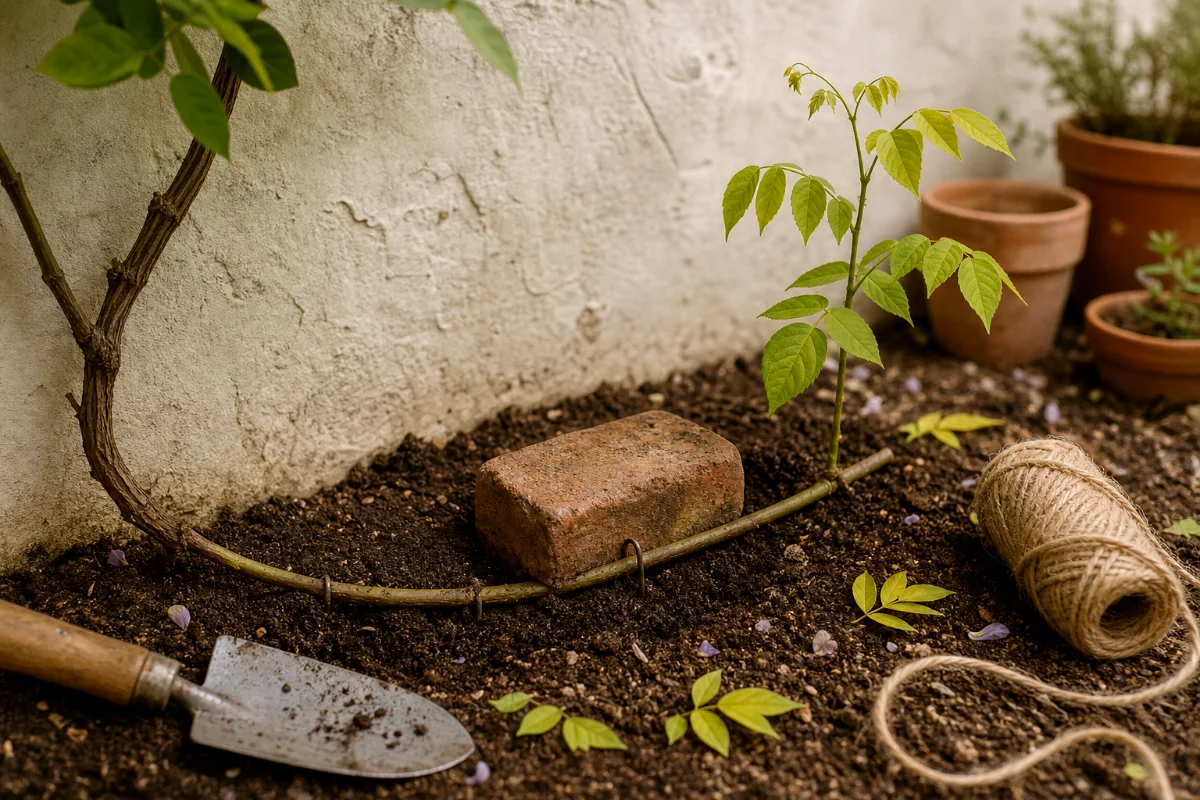
Layering is my first choice for beginners because the stem stays connected to the parent plant while it roots. That means it still gets water and food while it figures out how to grow its own roots.
It’s forgiving. And wisteria, for all its drama, responds well to forgiving methods.
When to Layer Wisteria
Layer wisteria in spring or autumn. Spring gives the stem a full growing season to root. Autumn works well too, especially in mild climates where the soil stays workable for a while.
Avoid layering during scorching, dry weather. The soil dries too quickly, and the buried section needs steady moisture to form roots.
What You’ll Need
- A low-growing, flexible wisteria stem
- A hand trowel
- A brick, landscape pin, or strong peg
- Compost or good garden soil
- Watering can
- Clean pruning shears for later
Step-by-Step Layering Instructions
- Choose a healthy, low-growing stem that bends down to the soil without snapping.
- Dig a small trench about 6 to 12 inches deep near the parent plant.
- Bend the stem into the trench, leaving the leafy tip above ground.
- Make a shallow notch or scrape on the underside of the buried section. This small wound encourages roots to form.
- Pin the stem down with a peg, stone, or brick so it stays in contact with the soil.
- Cover the buried section with soil and firm it gently with your hands.
- Water well, then keep the soil consistently moist.
- Wait 6 to 12 months for roots to develop.
- Once the layered stem has strong roots, cut it away from the parent plant and move it to its new spot.
Don’t keep yanking it up to check. I know it’s tempting. But every time you disturb the stem, you slow the rooting process.
A gentle tug after several months tells you enough. If it resists, roots have likely started forming.
Why Layering Works So Well
Layering copies what many climbing and rambling plants do in the wild. A stem touches soil, stays moist, gets a small injury, and starts making roots.
The buried notch matters because wisteria sends healing energy to that wounded area. Roots often form right there, especially when the stem stays dark, damp, and pressed against the soil.
Simple plant science. No lab coat needed.
Method 2: Propagate Wisteria from Softwood Cuttings
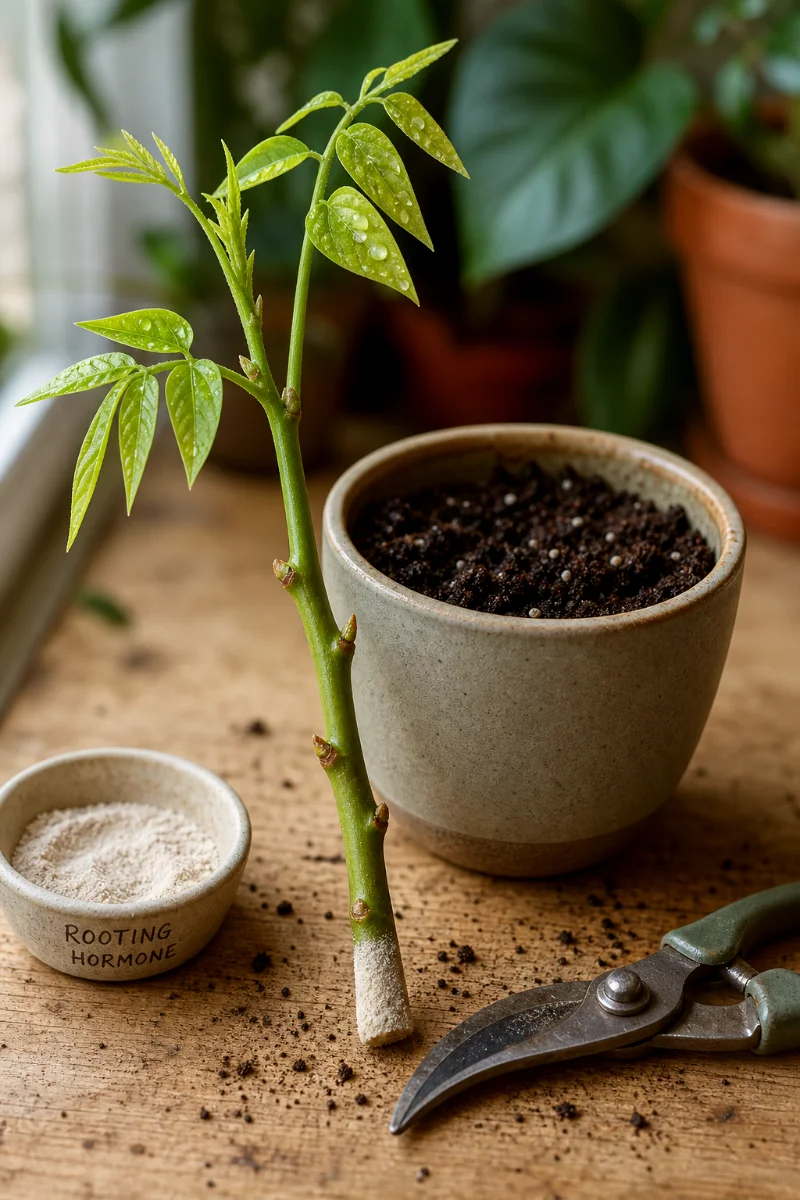
Softwood cuttings are the summer method. They’re faster than hardwood cuttings and handy if you want several young plants from one good parent.
Take cuttings from fresh, green growth. You want stems that bend but don’t collapse like wet noodles.
When to Take Softwood Cuttings
Take softwood cuttings in summer, preferably in the morning. Morning stems hold more moisture, which helps them survive the shock of being cut.
Hot afternoon cuttings often wilt fast. They look fine for about ten minutes, then flop like cooked spinach.
What You’ll Need
- Clean, sharp pruning shears
- Small pots
- Moist, well-draining potting mix
- Rooting hormone
- Clear plastic bag
- Plant labels
- Bright spot with indirect light
Step-by-Step Softwood Cutting Instructions
- Choose healthy new green growth with no flowers.
- Cut stem pieces about 8 to 10 cm long.
- Make the lower cut just below a leaf joint, also called a node.
- Remove the lower leaves so no foliage sits under the soil.
- Dip the cut end into rooting hormone.
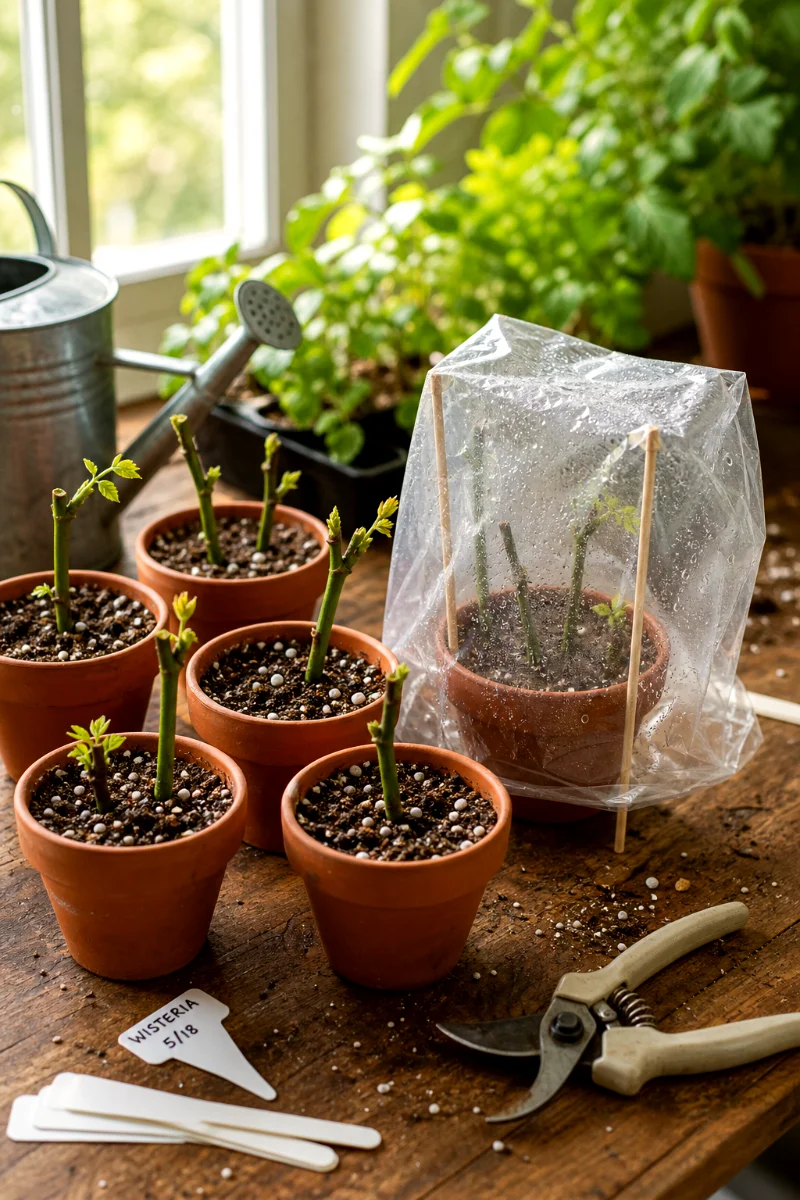
- Insert the cutting into moist, well-draining potting mix.
- Firm the mix gently around the stem.
- Cover the pot with a clear plastic bag to hold humidity.
- Place the pot in bright, indirect light, away from direct scorching sun.
- Keep the mix moist, not soggy.
Use a couple of sticks to keep the plastic bag from touching the leaves. Wet plastic pressed against foliage can invite rot.
And don’t seal the bag so tightly that the cutting sweats itself into trouble. A tiny bit of airflow helps.
How Long Softwood Cuttings Take to Root
Softwood wisteria cuttings may root in several weeks, though some take longer. Temperature, stem age, humidity, and the mood of the gardening gods all play a part.
Check for roots with a gentle tug after about 6 to 8 weeks. If the cutting holds firm, leave it alone and let the roots build strength.
Method 3: Propagate Wisteria from Hardwood Cuttings
Hardwood cuttings are taken in winter from dormant, woody stems. They’re tougher than softwood cuttings, but they root more slowly.
I see hardwood cuttings as the backup plan. Not bad. Just slower.
How to Take Hardwood Cuttings
- Wait until the wisteria is dormant in winter.
- Choose healthy woody stems about pencil thickness.
- Cut sections with several nodes.
- Place them into pots of moist soil or gritty compost.
- Set the pots in a cold frame or sheltered spot.
- Keep the soil lightly moist through winter.
Hardwood cuttings demand patience. You may not see much action for months, and that’s normal.
If you’re new to propagation, try layering first and softwood cuttings second. Hardwood cuttings can be your extra experiment.
Why You Shouldn’t Grow Wisteria from Seed
Wisteria seeds sprout easily enough, which tricks people into thinking seed propagation makes sense.
But here’s the catch: seed-grown wisteria doesn’t reliably match the parent plant. It may have weaker flowering, different bloom color, or a painfully long juvenile stage.
And yes, it can take up to 20 years to flower.
That’s why gardeners who want blooms within a reasonable lifetime use layering or cuttings. These methods clone a mature parent, so the new plant starts with better blooming odds.
Best Soil and Moisture for Rooting Wisteria
Wisteria likes moisture while rooting, but it hates sitting in muck. Think damp sponge, not soup.
For cuttings, use a light mix that drains well. A basic potting mix with added perlite or grit works nicely. For layering, improve heavy clay with compost so the buried stem gets moisture and air.
Moisture Tips That Save Cuttings
- Water before the mix dries completely.
- Let excess water drain away.
- Keep plastic-covered cuttings out of hot sun.
- Remove any fallen leaves from the pot surface.
- Open the bag now and then if condensation gets heavy.
Too dry, and roots won’t form. Too wet, and the stems rot before they get the chance.
Light and Temperature While Wisteria Roots
Cuttings need bright, indirect light. A warm windowsill with filtered light can work, but direct sun through glass can cook a covered cutting fast.
Layered stems can stay outdoors because they’re still part of the parent plant. Just keep the buried section watered during dry spells.
If your softwood cuttings wilt badly, move them to a cooler bright spot. Heat stress can ruin a promising batch in one afternoon.
When to Separate a Layered Wisteria Plant
Give layered wisteria 6 to 12 months before separating it. The longer window may feel slow, but strong roots matter more than speed.
Once the new plant resists a gentle tug and shows healthy growth, use clean pruning shears to cut the stem between the new roots and the parent plant.
If possible, move the new plant during mild weather. Spring or autumn gives it the best start.
Potting Up Young Wisteria Plants
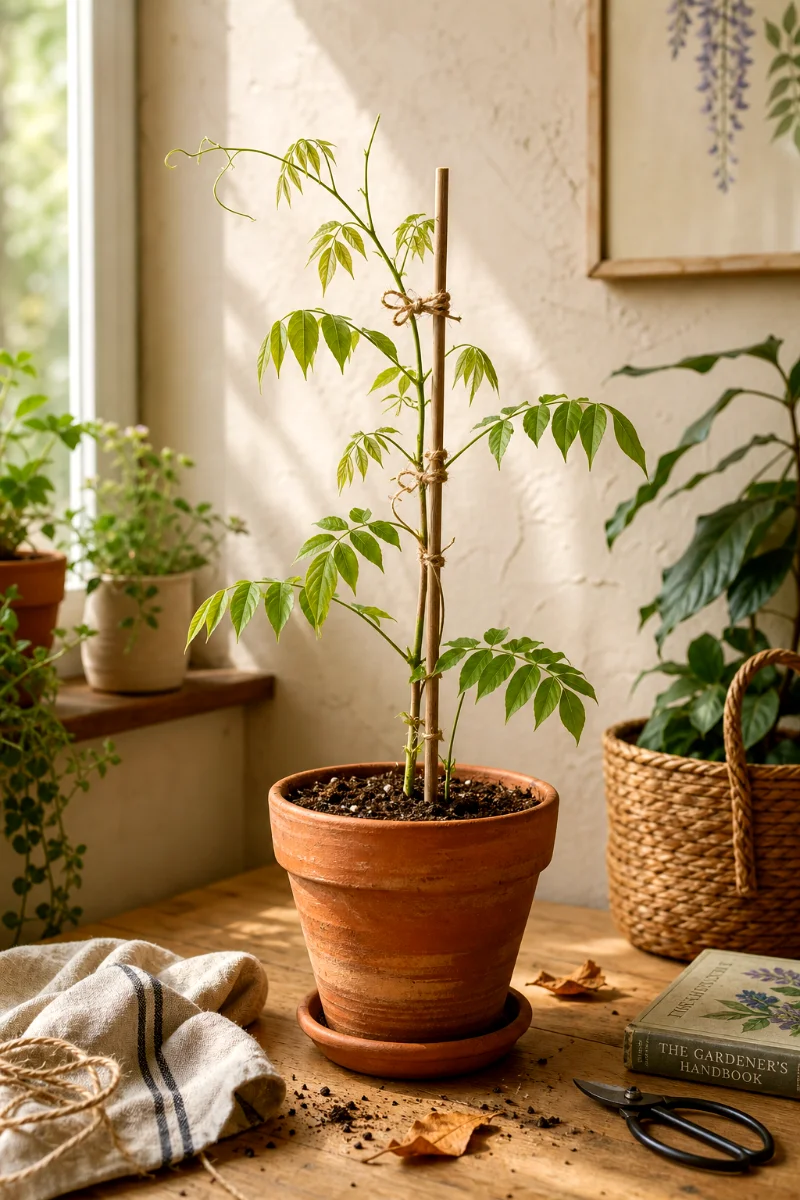
Once a cutting has rooted, don’t rush it straight into the ground. Pot it on first so it can build a stronger root system.
Use a deep pot with drainage holes and a sturdy cane or small support. Wisteria climbs early, and it likes to grab whatever sits nearby.
Aftercare for Young Plants
- Keep the soil evenly moist while roots establish.
- Feed lightly once the plant shows steady new growth.
- Harden off indoor-rooted cuttings before planting outdoors.
- Train one main stem if you want a neat framework.
- Plant only where you can give wisteria a strong support.
Wisteria gets heavy. Really heavy.
Don’t plant it on a flimsy trellis and hope for the best. Use a pergola, strong arbor, wall wires, or another tough structure that can handle mature growth.
Common Wisteria Propagation Mistakes
I’ve made some of these. Most gardeners have.
The trick is to catch the problem before you lose the whole batch.
- Starting from seed: Fine for curiosity, poor for reliable blooms.
- Taking weak cuttings: Thin, tired, or flowering stems root poorly.
- Using direct sun: Covered cuttings can overheat fast.
- Letting soil dry out: New roots need steady moisture.
- Keeping soil soggy: Wet compost can rot the stem base.
- Checking too often: Tugging and digging disturb tiny roots.
- Separating layers too early: A few roots won’t support a hungry young vine.
Which Method Should Beginners Choose?
Choose layering if you have an established wisteria with a low, bendable stem. It’s the easiest method because the parent plant does most of the feeding while roots form.
Choose softwood cuttings if it’s summer and you want several young plants. Take more cuttings than you need, because not every cutting will root.
Choose hardwood cuttings if it’s winter and you don’t mind waiting.
But if you want my honest backyard-fence answer, layer it first. Then take cuttings as a bonus.
FAQ About Propagating Wisteria
Can you propagate wisteria in water?
You can try, but soil or compost gives better results. Wisteria stems need oxygen around the rooting area, and a free-draining mix usually supports stronger root growth than water.
How long does wisteria take to root?
Layered stems usually take 6 to 12 months. Softwood cuttings may root in several weeks, though they can take longer depending on warmth, humidity, and stem quality.
Will a propagated wisteria flower faster than a seed-grown one?
Yes, usually. Layering and cuttings copy a mature parent plant, while seed-grown plants can stay juvenile for many years.
Can I propagate wisteria from a flowering stem?
Don’t choose flowering stems for cuttings. Pick healthy non-flowering green growth so the cutting puts energy into roots instead of blooms.
When is the best time to propagate wisteria?
Spring and autumn work best for layering. Summer works best for softwood cuttings. Winter is the time for hardwood cuttings.
Do wisteria cuttings need rooting hormone?
Rooting hormone isn’t magic, but it helps. I use it for wisteria cuttings because it improves the odds and gives the stem a clear push toward root growth.