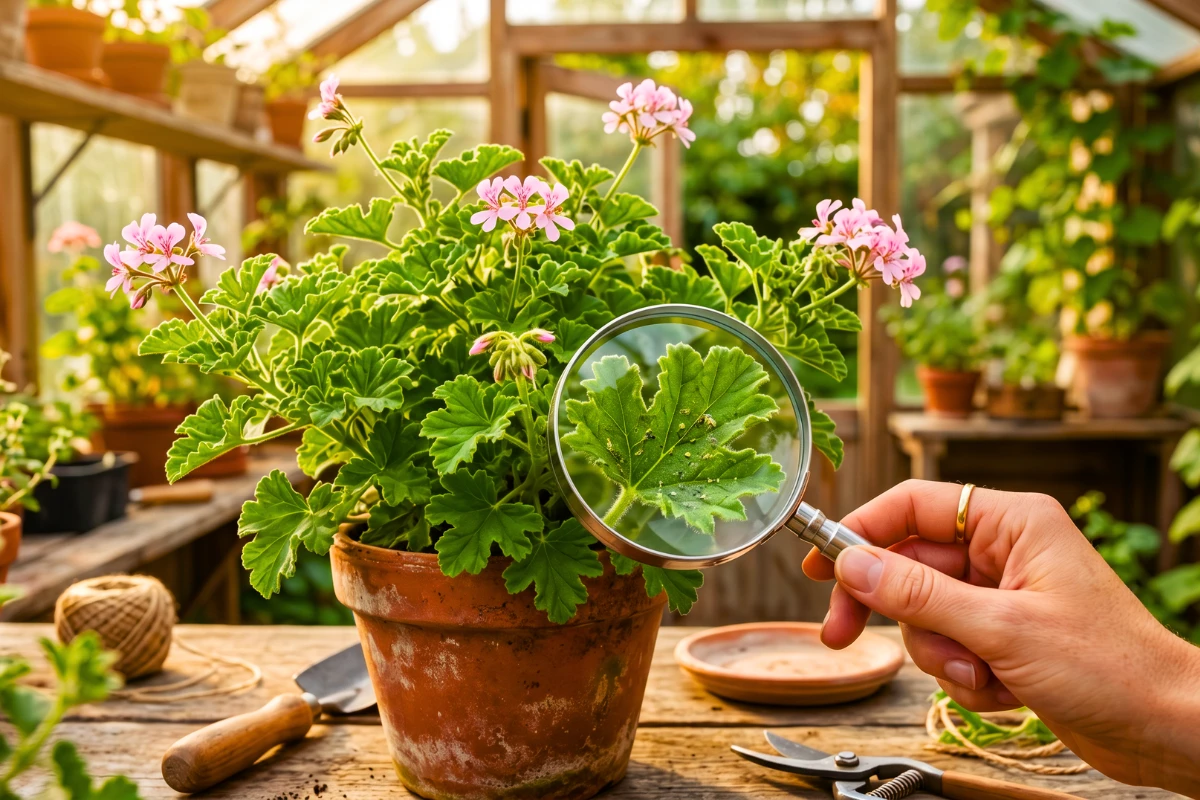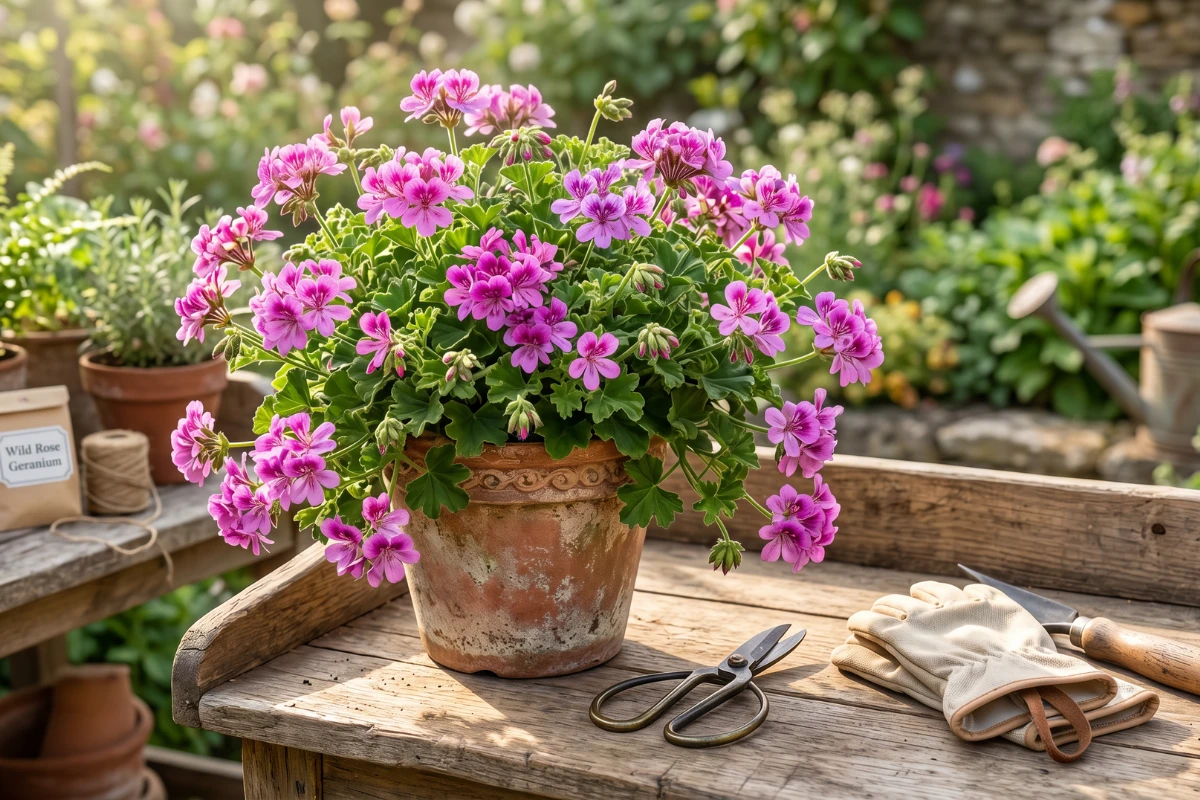
7 Best Companion Plants for Geraniums (And the Science Behind Them)

Many new gardeners buy a flat of geraniums, plant them alone in a pot, and hope for the best. While geraniums offer incredible color and thrive with minimal fuss, isolating them leaves serious garden benefits on the table. When you pair these classic flowers with the right neighbors, you unlock a powerful gardening strategy known as companion planting.
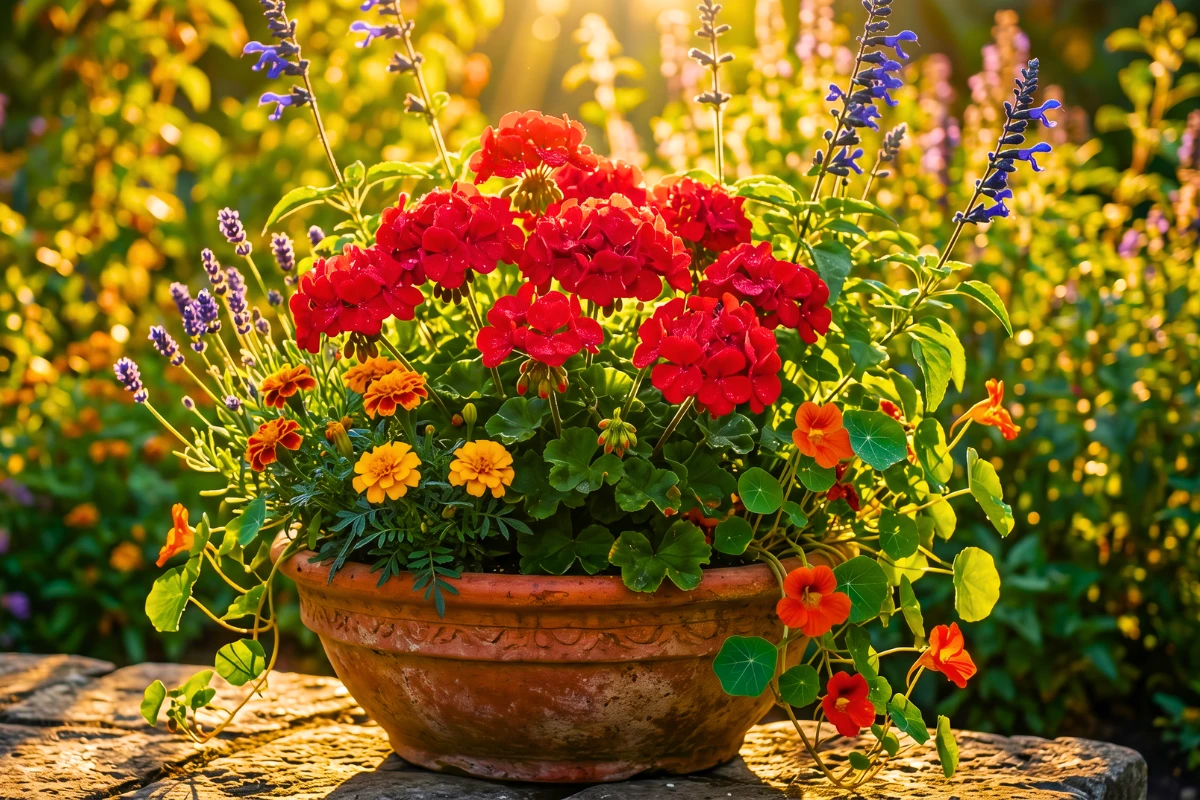
Companion planting goes far beyond simple aesthetics. Strategic pairings naturally deter pests, improve soil health, and maximize your garden space. Geraniums already produce compounds like citronellol and geraniol, which naturally repel pests like cabbage loopers and Japanese beetles. By adding the right companion plants alongside them, you amplify this natural pest control while creating visually stunning containers and garden beds.
If you want to design a resilient, low-maintenance garden this season, you need to choose neighbors that share the geranium’s love for full sun and well-draining soil. Here are the seven best companion plants for geraniums that guarantee healthier growth and brighter blooms.
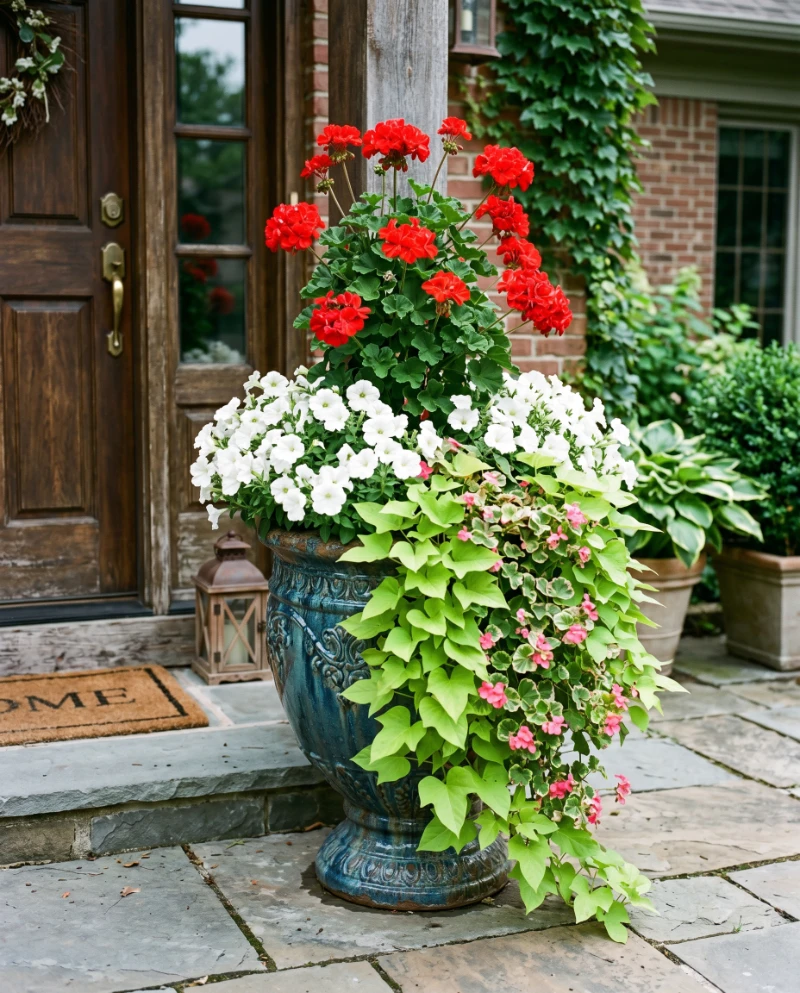
Why Companion Planting Works for Geraniums
Expert gardeners never pair plants based on looks alone. We look at the science of the root zone, the sunlight requirements, and the chemical compounds each plant releases. Geraniums prefer dry feet and blazing sun. If you plant them next to moisture-loving shade plants, one of them will inevitably rot or scorch.
Companion planting solves this by grouping plants into cooperative communities. The right companions act as living mulch to keep the soil cool, send down deep taproots to break up hard dirt, or emit scents that confuse predatory insects. You save time on maintenance, reduce your need for chemical pesticides, and enjoy a much longer blooming season.
The 7 Best Companion Plants for Geraniums
1. Marigolds (Tagetes)
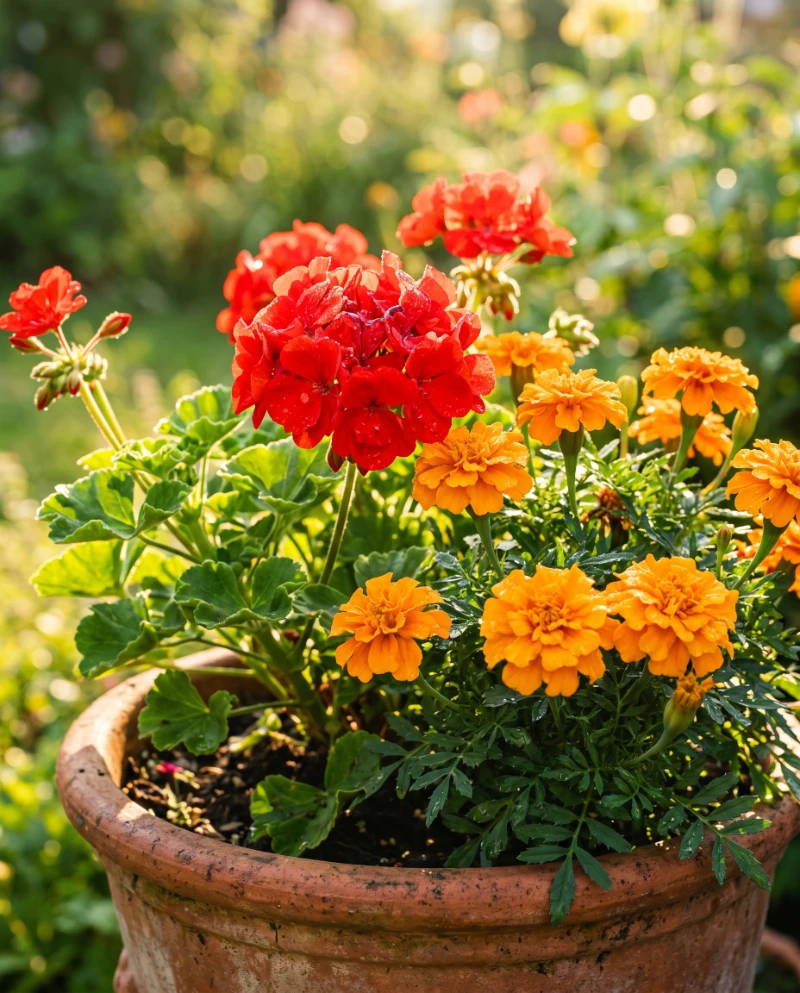
Marigolds stand out as the most rigorously proven companion plant for geraniums. They love the exact same hot, sunny, and well-draining conditions. Beyond looking great together, marigolds act as a heavy-duty biological shield for your delicate plant roots.
- Why it works: Marigold roots exude thiophenes, a natural chemical that kills root-knot nematodes in the soil. Meanwhile, their strong-smelling foliage releases limonene, which actively masks the scent of your geraniums from hungry herbivorous insects.
- Pro Tip: Space your marigolds about 8 to 10 inches away from your geranium crowns. Choose standard French or African varieties, as dwarf marigolds often lack the root mass needed to effectively suppress soil pests.
2. Lavender (Lavandula angustifolia)
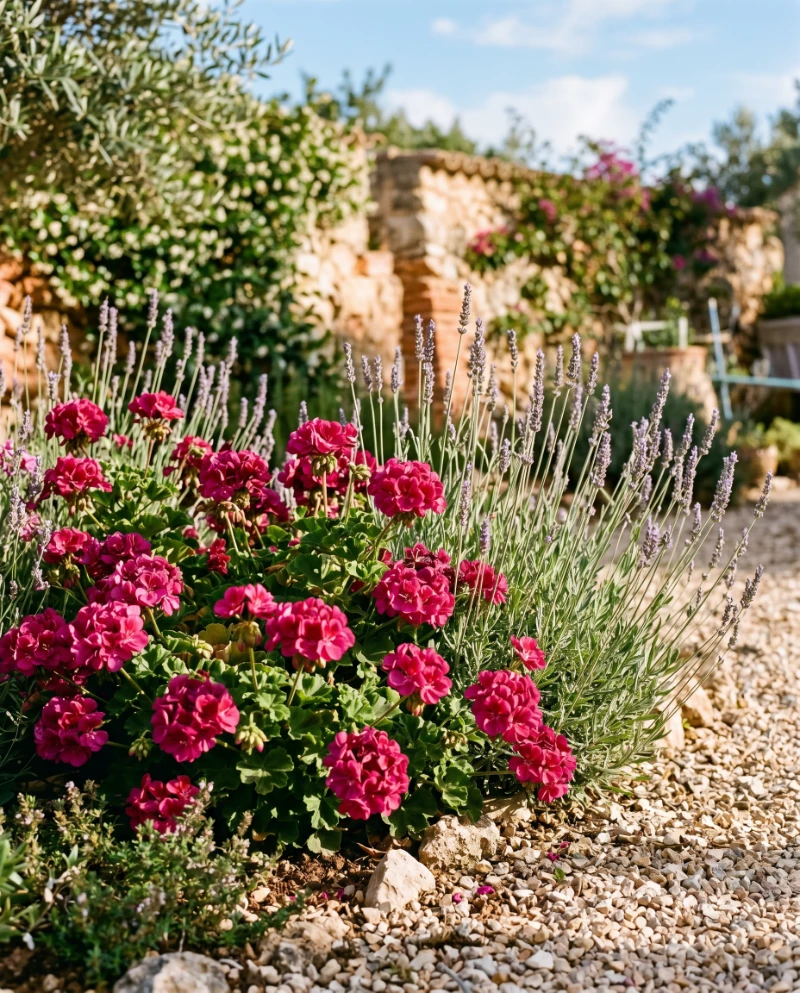
Pairing lavender with geraniums creates a classic, drought-tolerant Mediterranean display. They both thrive in blazing sun and require excellent drainage to prevent root rot. Lavender also grows a deep taproot, meaning it pulls nutrients from deep in the earth without competing with the geranium’s shallow root system.
- Why it works: Lavender leaves emit linalool, an aromatic oil that actively disrupts the olfactory receptors of aphids and thrips. This confusion reduces aphid colonization significantly. Lavender also attracts predatory insects like lacewings, which eagerly consume garden pests.
- Pro Tip: Choose compact lavender varieties like ‘Munstead’ or ‘Hidcote’. Plant them in a 5-to-1 ratio (five geraniums per one lavender) in large containers to guarantee neither plant competes for water.
3. Chives (Allium schoenoprasum)
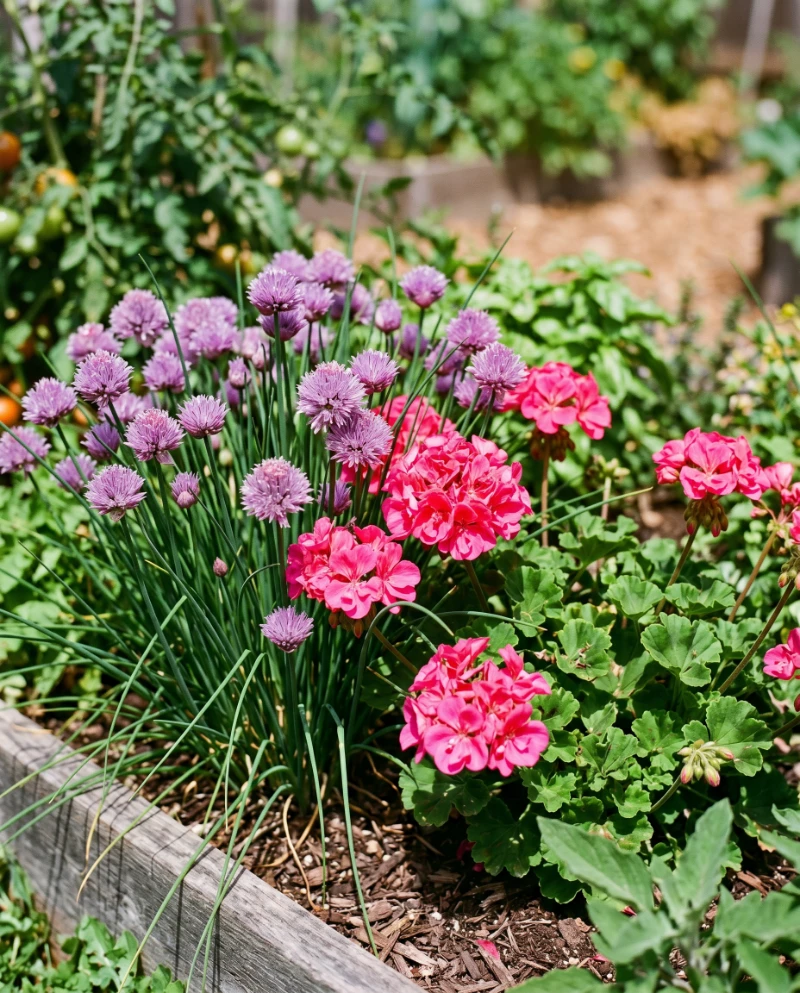
Most beginners overlook herbs when designing flower beds, but chives offer incredible functional benefits. They grow easily in the same sunny conditions as geraniums and require very little hands-on care. Because they grow in dense clumps, they act as a living mulch that stabilizes the soil structure.
- Why it works: Chives contain heavy sulfur compounds that repel destructive insects like onion maggots and carrot rust flies. Their fine, fibrous root systems also improve soil aggregate stability, which promotes better drainage and prevents the root rot that frequently kills potted geraniums.
- Pro Tip: Plant small clusters of chives around the base of your geranium pots. Snip the purple flowers off before they go to seed so the plant redirects its energy back into healthy leaf production.
4. Nasturtiums (Tropaeolum majus)
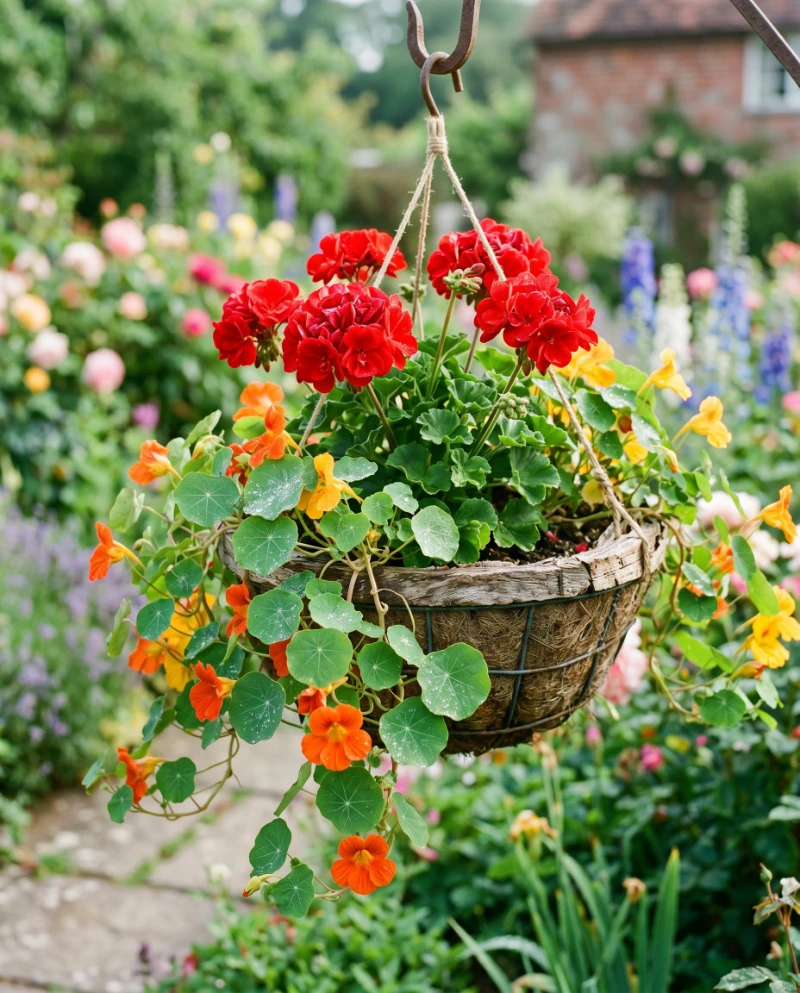
Nasturtiums provide a brilliant aesthetic contrast to upright geraniums. Their trailing vines spill perfectly over the edges of hanging baskets and raised beds. They also tolerate poor soil and actually produce more vibrant blooms when you withhold heavy fertilizers.
- Why it works: Nasturtiums serve as a highly effective trap crop. They naturally attract aphids and cabbage moths. The pests will completely cover the nasturtium vines while leaving your prized geraniums completely alone.
- Pro Tip: Plant trailing nasturtium seeds directly into the soil at the edge of your geranium containers. Let them spill over the side to maximize airflow and keep the center of the pot from becoming overcrowded.
5. Salvia (Salvia farinacea)
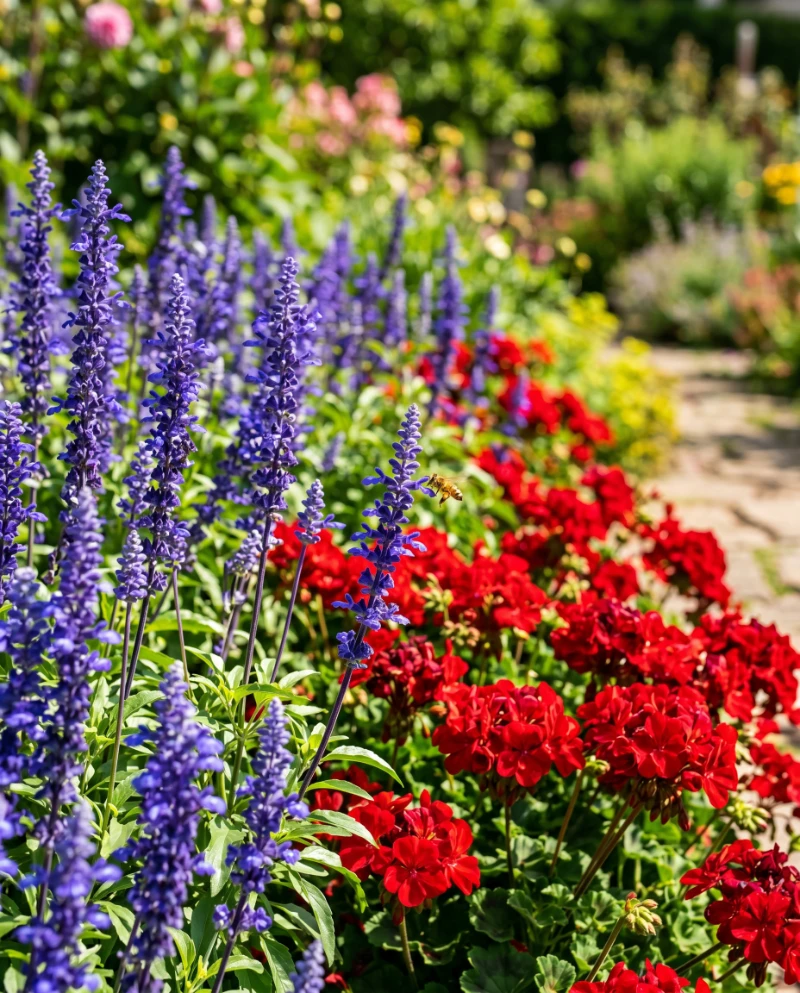
If you want to design a professional-looking garden bed, you need varying heights. Salvia provides striking vertical towers of purple and blue flowers that contrast beautifully against mounding red or pink geraniums. They share identical care requirements, demanding full sun and disliking soggy soil.
- Why it works: Salvia acts as a massive magnet for pollinators. By drawing bees, butterflies, and hummingbirds to the area, you ensure a thriving, active ecosystem. Their upright growth habit also prevents them from shading out the lower-growing geranium foliage.
- Pro Tip: Choose a shorter variety like Salvia farinacea ‘Victoria Blue’. It tops out around 20 inches tall, creating the perfect backdrop without dwarfing your geraniums.
6. Zinnias (Zinnia elegans)
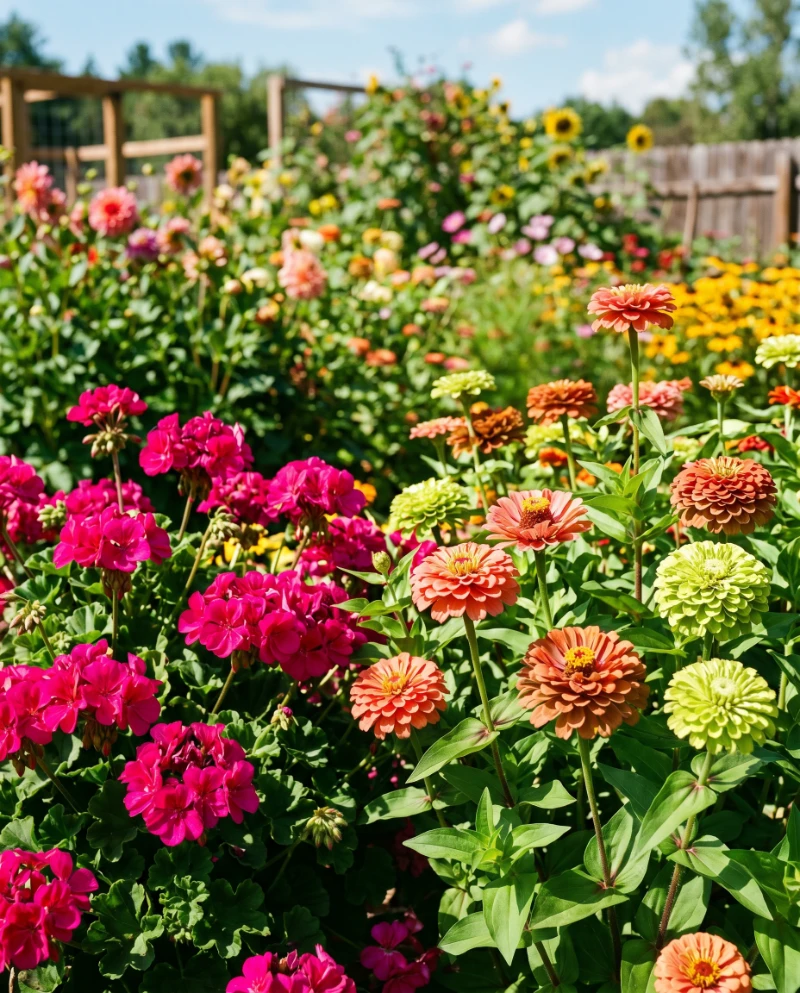
Zinnias represent the ultimate summer workhorse. They handle extreme heat without wilting and pump out brilliant, multi-layered blooms from early summer right up until the first frost. Like geraniums, they demand at least eight hours of direct sunlight and well-drained soil.
- Why it works: Zinnias fill the mid-summer bloom gap. If your geraniums slow down during an intense heatwave, zinnias will continue providing structural color and attracting beneficial ladybugs to the garden bed.
- Pro Tip: Give zinnias plenty of space to ensure proper air circulation. Crowding zinnias and geraniums together trap humidity, which creates the perfect environment for powdery mildew to take hold.
7. Verbena (Verbena aristigera)
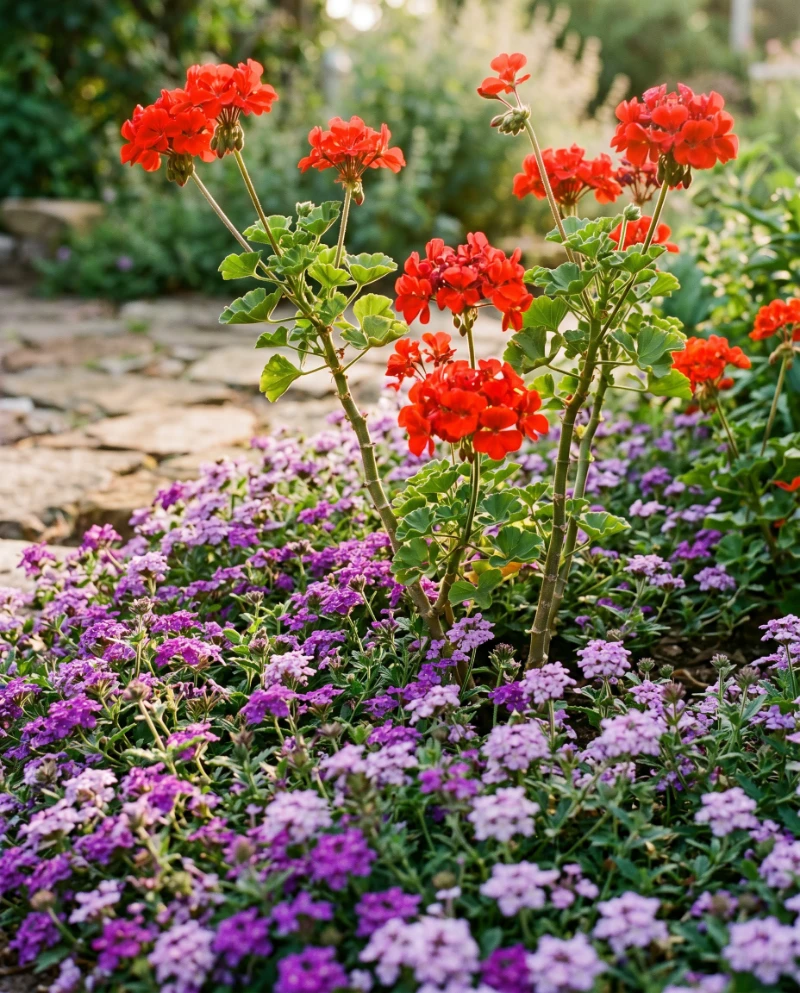
Verbena acts as the perfect groundcover companion for tall, leggy geraniums. This sprawling plant creeps along the surface of the soil, producing tight clusters of colorful flowers. They shrug off high heat and dry spells with ease.
- Why it works: Verbena functions as a living mulch. By shading the topsoil, verbena prevents rapid moisture evaporation during peak summer heat. This keeps the geranium roots cooler and reduces your daily watering chores.
- Pro Tip: Always water this duo directly at the base of the stems. Overhead watering wets the fuzzy foliage of both plants, inviting fungal diseases like botrytis blight.
What NOT to Plant With Geraniums
Knowing what to avoid matters just as much as knowing what to plant. Never pair geraniums with moisture-loving or shade-dwelling plants. Ferns, hostas, astilbes, and impatiens require consistently damp soil and protection from the afternoon sun.
If you put these plants in a container with a geranium, you face an impossible choice: overwater the geranium to save the fern, or scorch the fern to save the geranium. Stick to drought-tolerant, sun-worshipping neighbors.
Create Your First Companion Pairing
You do not need to plant all seven of these companions at once. Start small this weekend. Pick up a flat of geraniums and pair them with a border of French marigolds or a center spike of blue salvia. Focus on matching their sunlight needs, monitor your watering carefully, and watch how quickly your garden ecosystem balances itself.
Frequently Asked Questions (FAQ)
Do geraniums like to be crowded in pots?
No. Geraniums require excellent air circulation to prevent fungal diseases. Always space your companion plants according to the tags to ensure the foliage dries quickly after a rainstorm.
Can I plant geraniums next to vegetables?
Yes! Geraniums make fantastic companions for vegetables. They deter cabbage worms and Japanese beetles, making them great neighbors for cabbage, corn, and roses.
Why are the bottom leaves of my geranium turning yellow?
Yellowing lower leaves almost always indicate overwatering or poor drainage. Ensure your companion plants aren’t trapping too much moisture at the soil level, and only water when the top inch of dirt feels completely dry.