Chimera African Violets – Care Guide & Propagation

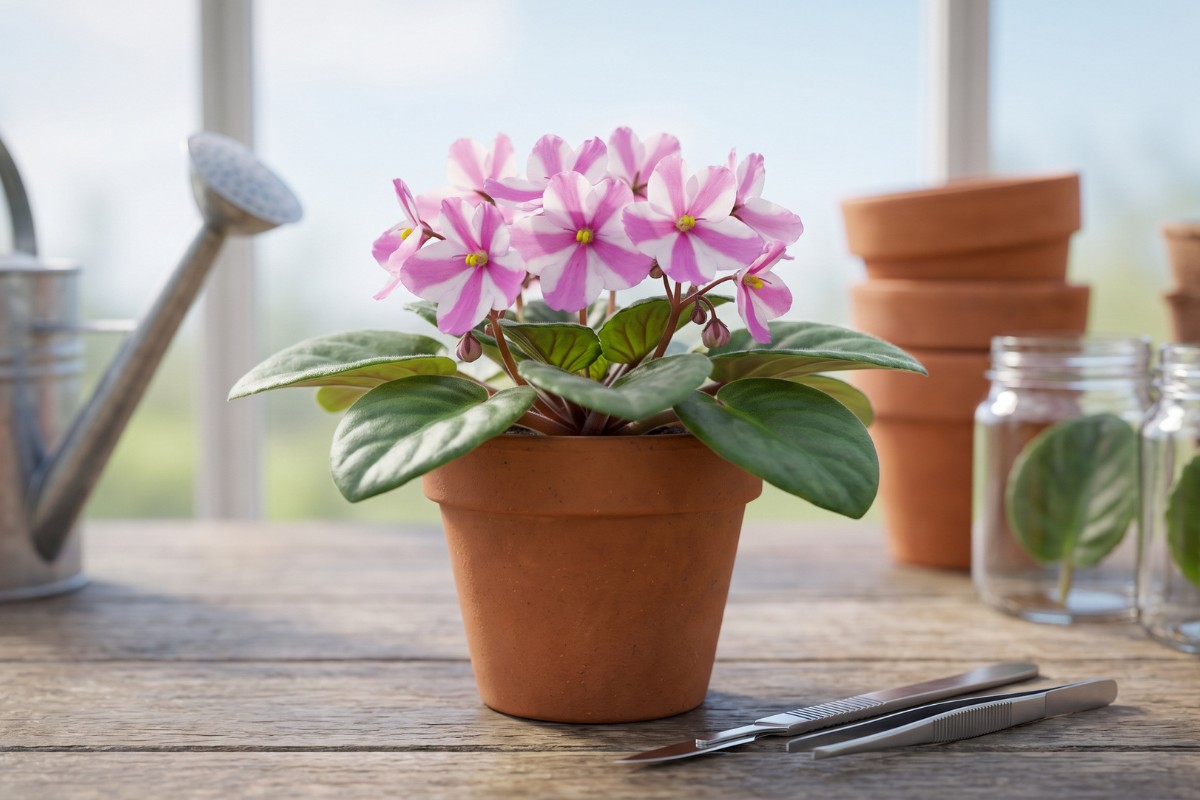
Have you ever seen an African violet with perfect, candy-cane stripes on its petals? If so, you have likely met a chimera African violet.
As a long-time African violet grower, I remember the first time I brought a chimera home. I was absolutely mesmerized by the sharp, contrasting colors. However, I quickly learned that these plants play by a completely different set of rules. You cannot just snip a leaf and grow a new striped baby.
If you want to understand these rare beauties, you are in the right place. In this guide, I will share my firsthand experience and the actual science behind how to grow, care for, and successfully propagate chimera African violets.
What Exactly is a Chimera African Violet? (The Science)
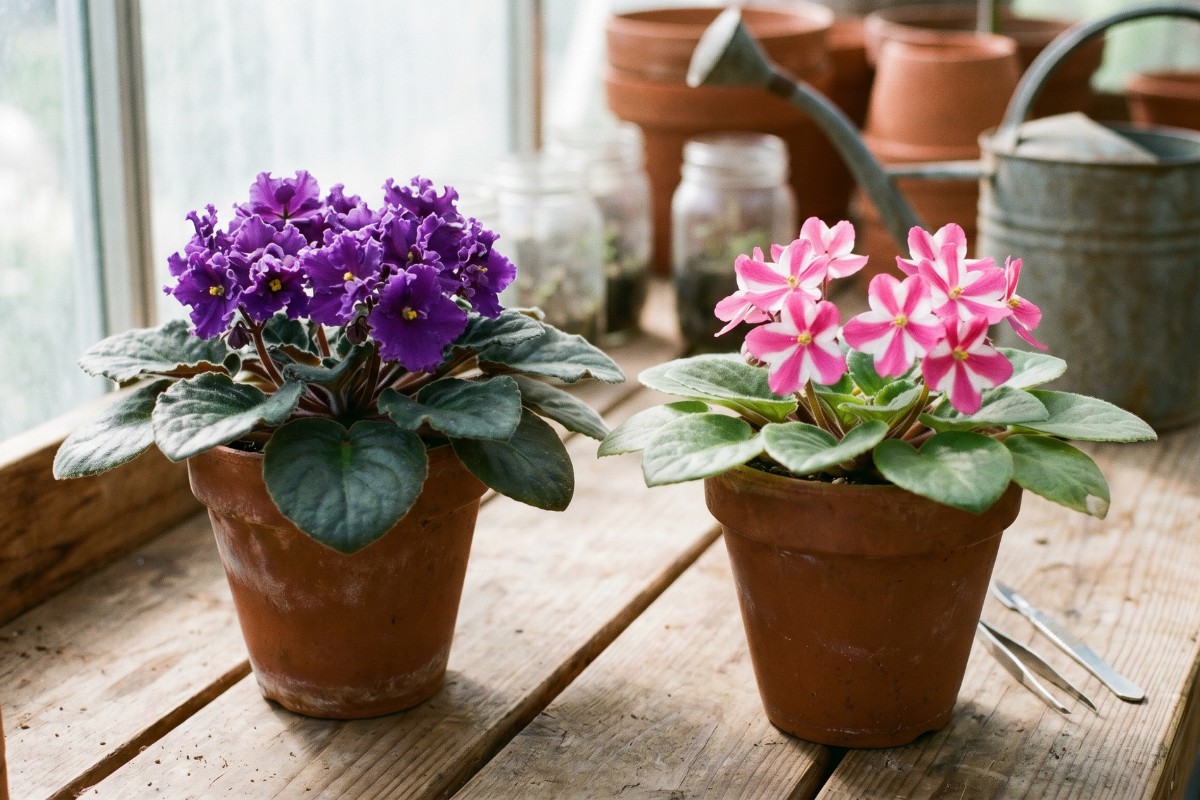
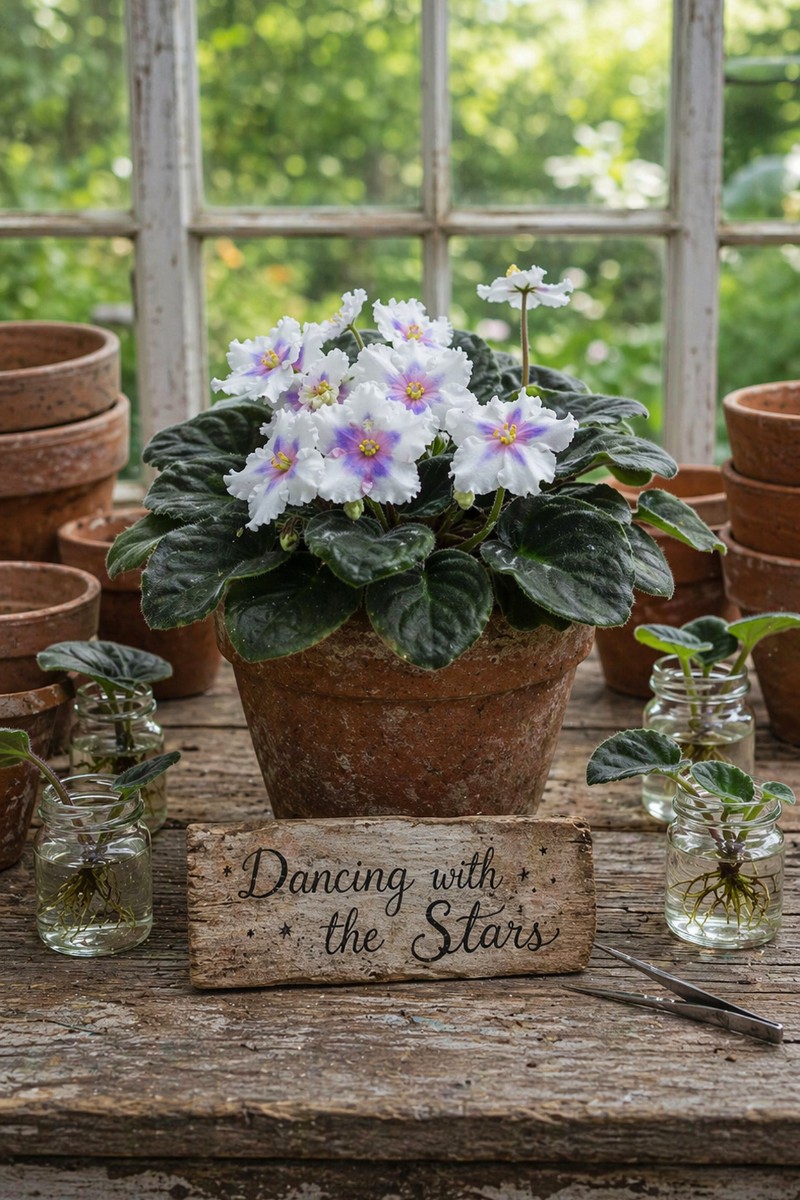
A chimera African violet is a highly prized, rare cultivar. You can easily spot them by their distinct “pinwheel” pattern. Each petal displays a bold stripe—usually white, pink, or purple—running straight down the center.
But what causes this incredible pattern? To understand a chimera, we have to look at botanical science.
A plant’s growing tip (the apical meristem) consists of three distinct layers of tissue: L1, L2, and L3.
- L1 forms the outer skin (epidermis).
- L2 and L3 form the inner tissues and reproductive organs.
A chimera occurs when a genetic mutation happens in just one of these layers (usually the L1 layer). The plant literally fuses two different sets of genetics together. Because of this unique biology, you cannot propagate them through regular leaf cuttings. A leaf cutting only pulls cells from the inner tissue layers, leaving the striped L1 mutation behind entirely!
Popular Varieties to Look For
If you want to add a chimera to your collection, the African Violet Society of America (AVSA) officially recognizes many stunning registered varieties. Some of the most highly sought-after cultivars include:
- ‘Yukako’: A legendary chimera featuring bright green stripes on blue petals.
- ‘Rob’s Magnetic Field’: A beautiful miniature variety with dark pink stripes.
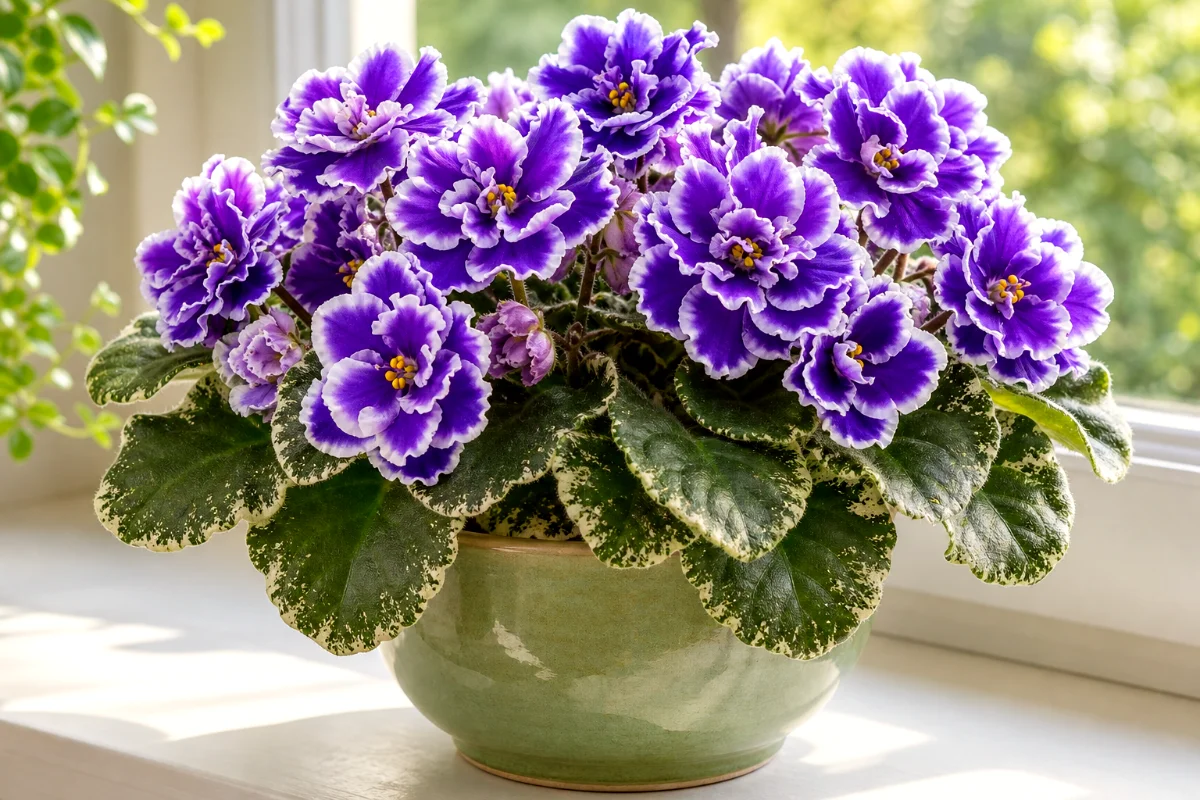
- ‘Fay’s Rachel’: Known for its crisp, beautiful white and purple contrast.
The Price Breakdown: Why Are Chimeras So Expensive?
If you shop for a chimera, you will immediately notice a price difference. You can usually buy a standard, solid-colored African violet at a grocery store for about $5 to $10.
However, a verified, blooming chimera from a specialized breeder will typically cost between $25 and $75 (or even more for extremely rare varieties).
This high price tag comes down to supply and demand. Because growers cannot use standard leaf cuttings, they must use highly specialized, time-consuming methods to reproduce them. This slow process severely limits the market supply.
How to Care for Your Chimera African Violet
Fortunately, you do not need a specialized greenhouse to keep a chimera alive. They require the exact same care as your standard African violets. Here is my proven care routine:
- Light: Provide bright, indirect sunlight. East-facing windows work beautifully. If you use artificial grow lights, keep them on for about 10 to 12 hours a day.
- Watering: Keep the soil consistently moist, but never soggy. I highly recommend bottom-watering or wick-watering to keep moisture off the delicate leaves.
- Temperature: African violets thrive in the same temperatures we do. Aim for a comfortable range between 65°F and 75°F (18°C to 24°C).
- Soil: Use a light, airy potting mix. A standard mix of 50% peat moss and 50% coarse perlite allows the delicate roots to breathe.
- Fertilizer: Feed your plant regularly with a diluted, balanced African violet fertilizer to encourage those stunning pinwheel blooms.
Step-by-Step Propagation Methods for Chimeras
To keep the pinwheel genetics intact, you must propagate using the plant’s exact stem tissue. Before we dive into the steps, here is a quick breakdown of the three methods and their success rates based on my experience:
| Propagation Method | Estimated Time to Root | Success Rate | Difficulty Level |
| Rooting Suckers | 3 to 5 weeks | 90% | Beginner |
| Bloom Stalks | 6 to 8 weeks | 40% | Intermediate |
| De-crowning | 4 to 6 weeks | 85% | Advanced (Intimidating!) |
1. Rooting Suckers
A “sucker” is a tiny baby plant that grows directly on the main stem of the mother plant.
- Wait until the sucker grows at least four tiny leaves.
- Carefully use a scalpel to pry the sucker away from the main stem.
- Plant the sucker in a tiny pot with moist, light soil and place it inside a humidity dome until it roots.
2. Bloom Stalk Propagation
You can actually grow a new plant from the flower stem itself!
- Find an open flower stalk that features two small, healthy green leaves (bracts) right below the blossom.
- Cut the stalk about an inch below those small leaves and snip off the flower buds at the top.
- Plant the stem in soil, making sure the two small leaves sit right at the soil line. Keep it in high humidity, and a baby plant will sprout from the center.
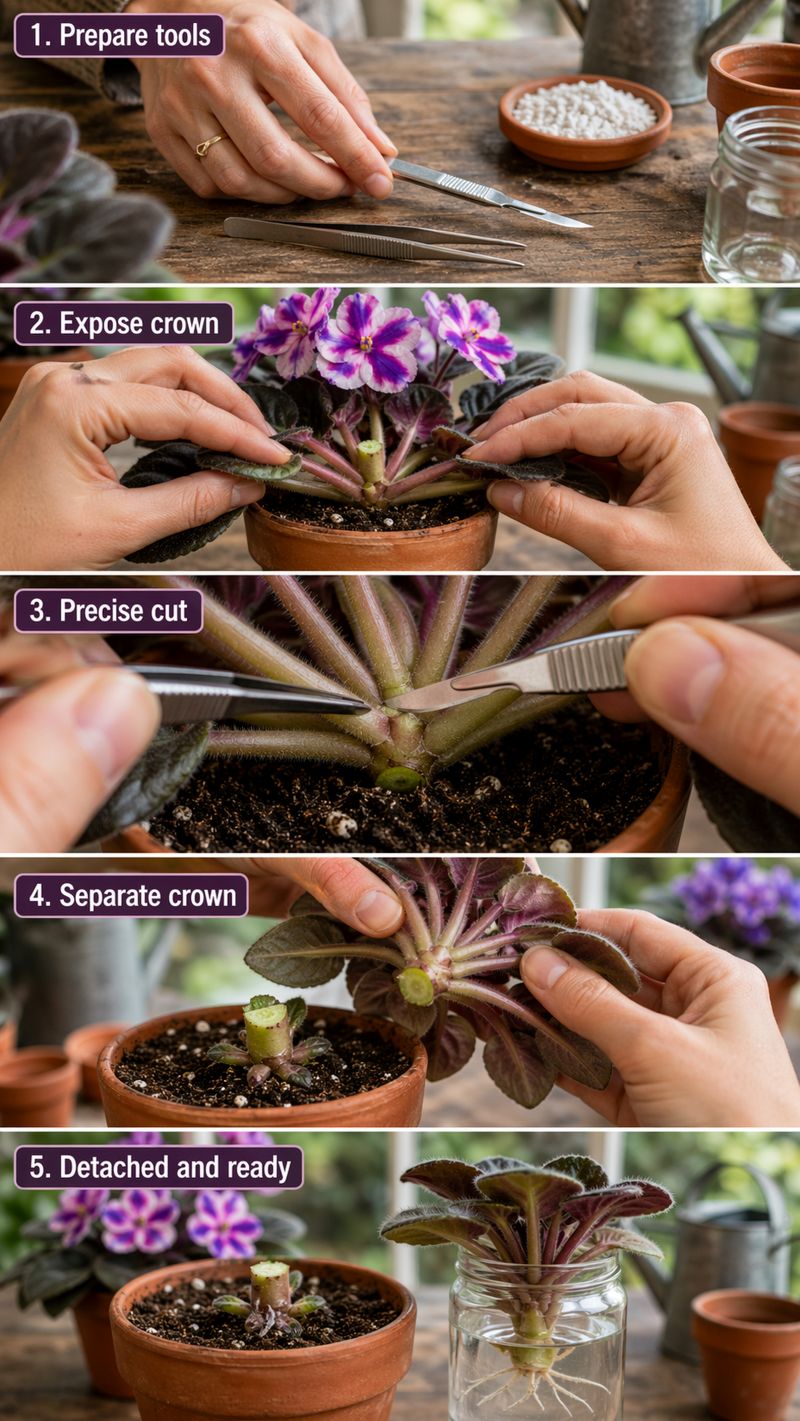
3. Decapitation (De-crowning)
If your chimera refuses to grow suckers, you can force it to produce them.
- Take a clean, sharp blade and slice the entire top crown off your mature plant.
- Root the top crown in soil just like a sucker.
- Leave the “stump” of the mother plant in its pot. Within a few weeks, the trauma will force the stump to push out multiple new suckers that you can harvest.
A Quick Note on “Sporting” (When Things Go Wrong)
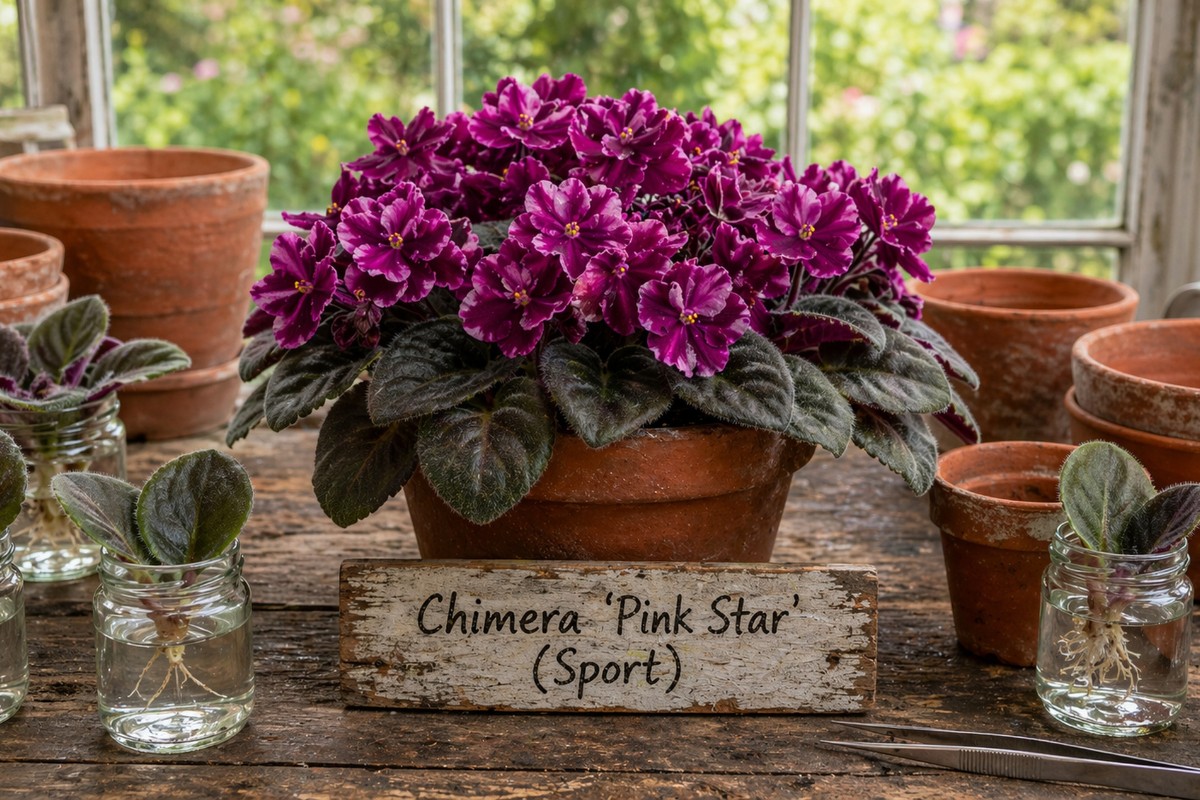
Even with perfect care, chimeras can sometimes be unpredictable. Occasionally, a chimera will “sport.” This means its genetics suddenly shift, and it begins blooming in solid colors. Extreme summer heat or sudden stress usually triggers this change.
If this happens, do not panic. Simply move the plant to a cooler, stable environment. The next flush of blooms often brings the stripes right back!
Troubleshooting FAQ
Why is my chimera’s stripe fading or bleeding into the petal?
Temperature fluctuations are usually the culprit. High heat (above 80°F) often causes the darker colors to bleed into the white stripes. Keep your growing room cool and stable, and the next blooms should look crisp again.
Can I use rooting hormone on a bloom stalk?
Yes, you can! A very light dusting of rooting hormone gel or powder on the freshly cut tip of the bloom stalk can encourage faster root development. Just be careful not to get the hormone on the delicate green bracts.
Will a leaf cutting from a chimera ever produce a striped baby?
Technically, it is possible, but the odds are incredibly low (less than 1%). It is generally considered a waste of time, which is why serious growers stick to suckers and bloom stalks.