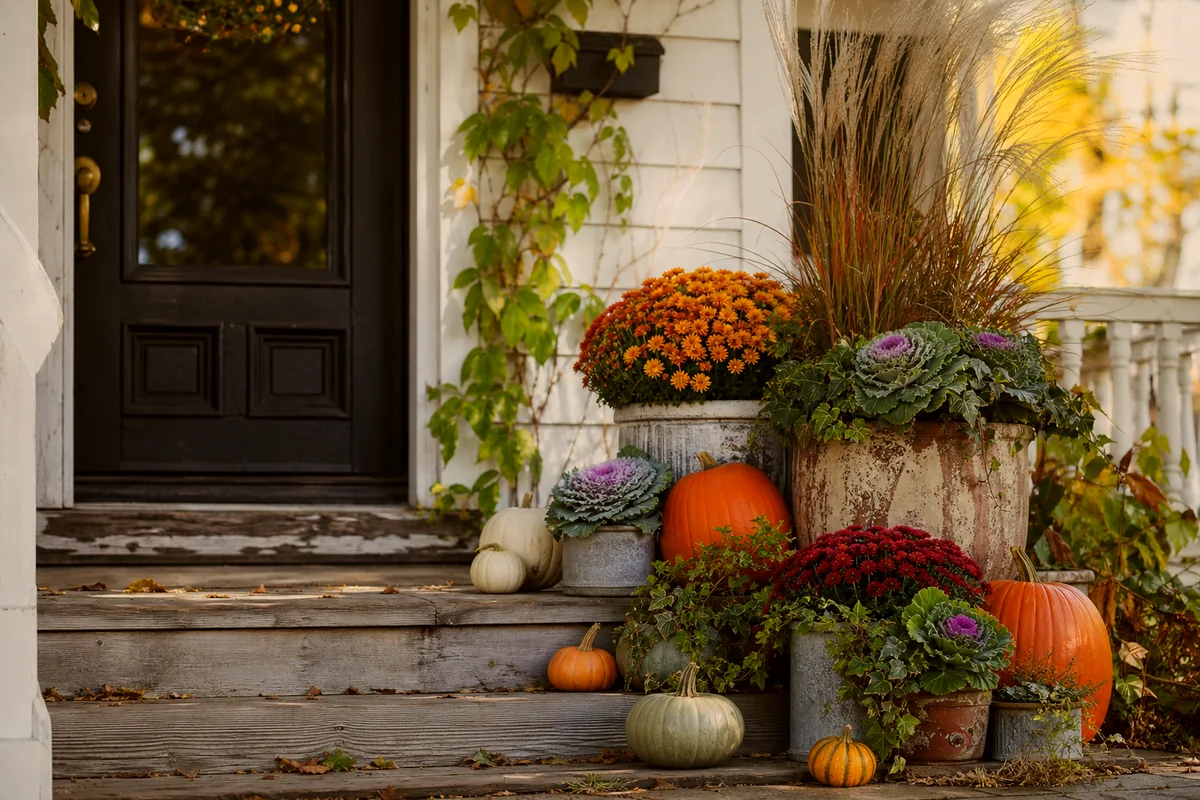
30 Fall Window Box Ideas

Fall window boxes are short-season containers, so they need to look good fast, handle cool nights, and keep some shape after the first frosty mornings. The best ones use a smart mix of live plants, trailing edges, sturdy foliage, and a few decorations that can be swapped out as the season changes.
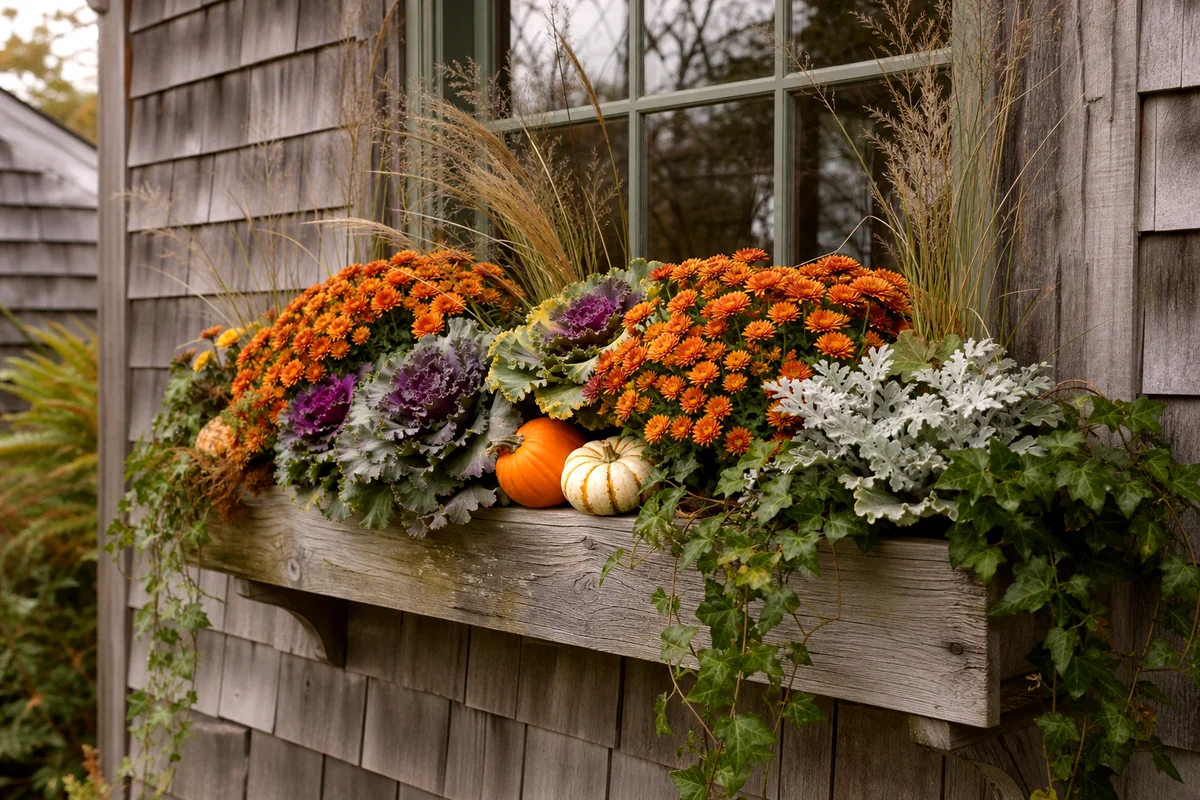
I like fall boxes that are generous but not jammed. Give roots some breathing room, make sure the box drains, and use pumpkins, gourds, branches, or dried stems where a living plant would struggle.
Classic Mum and Ivy Window Box
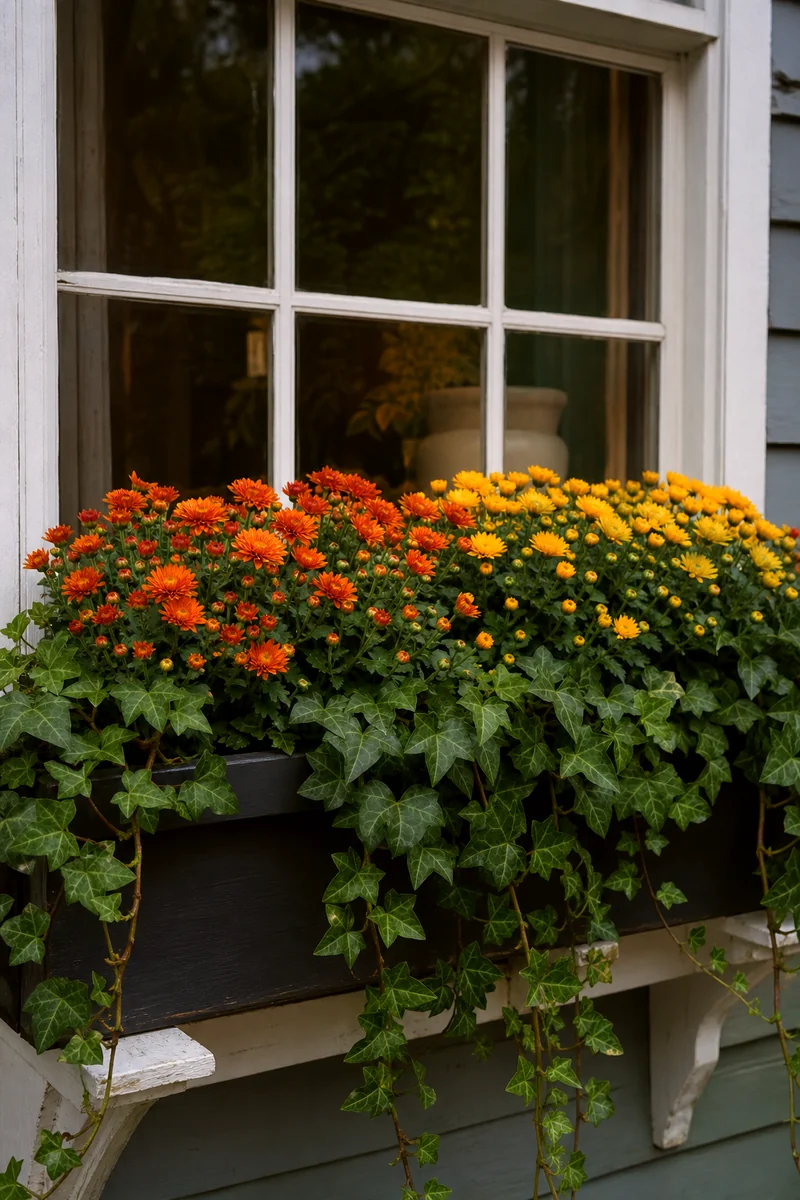
Orange and yellow mums are the quickest way to make a window box say autumn without overthinking it. Plant them as the main mound of color, then let trailing ivy spill over the front edge so the arrangement feels softer and less like a row of grocery store pots.
Buy mums with plenty of tight buds instead of fully open flowers. They may look less exciting on day one, but they last longer. Keep the soil evenly moist, because mums in shallow boxes dry out faster than they do in the ground. If the ivy starts covering the flowers, trim it back. Ivy is charming until it turns bossy.
Pumpkin and Ornamental Kale Window Box
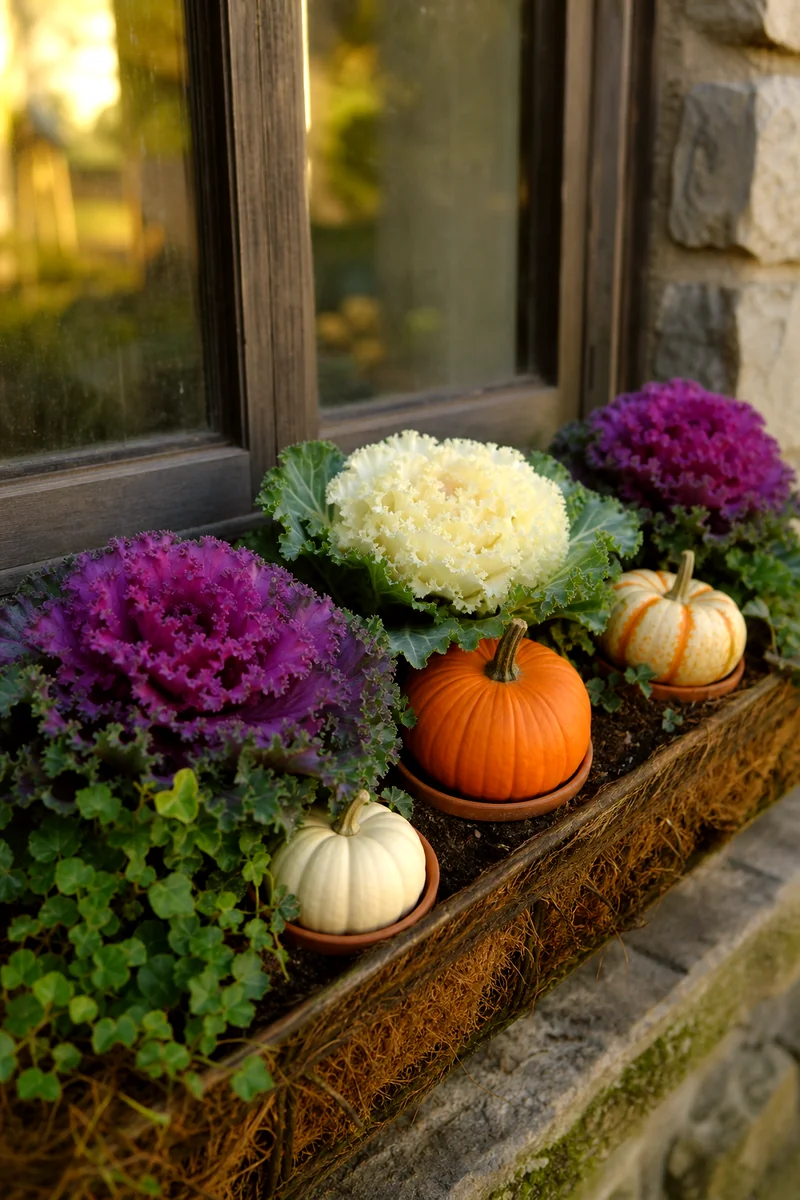
Purple ornamental kale, white ornamental cabbage, and mini pumpkins make a strong harvest-style box with very little fuss. The kale gives ruffled texture, the cabbage adds pale contrast, and pumpkins fill gaps without needing root space.
Set pumpkins on top of the soil rather than burying them. Even better, place them on small saucers, flat stones, or a bit of bark to slow rotting. This matters most in rainy fall weather, when pumpkins sitting in damp soil can soften quickly.
Burgundy and Gold Window Box
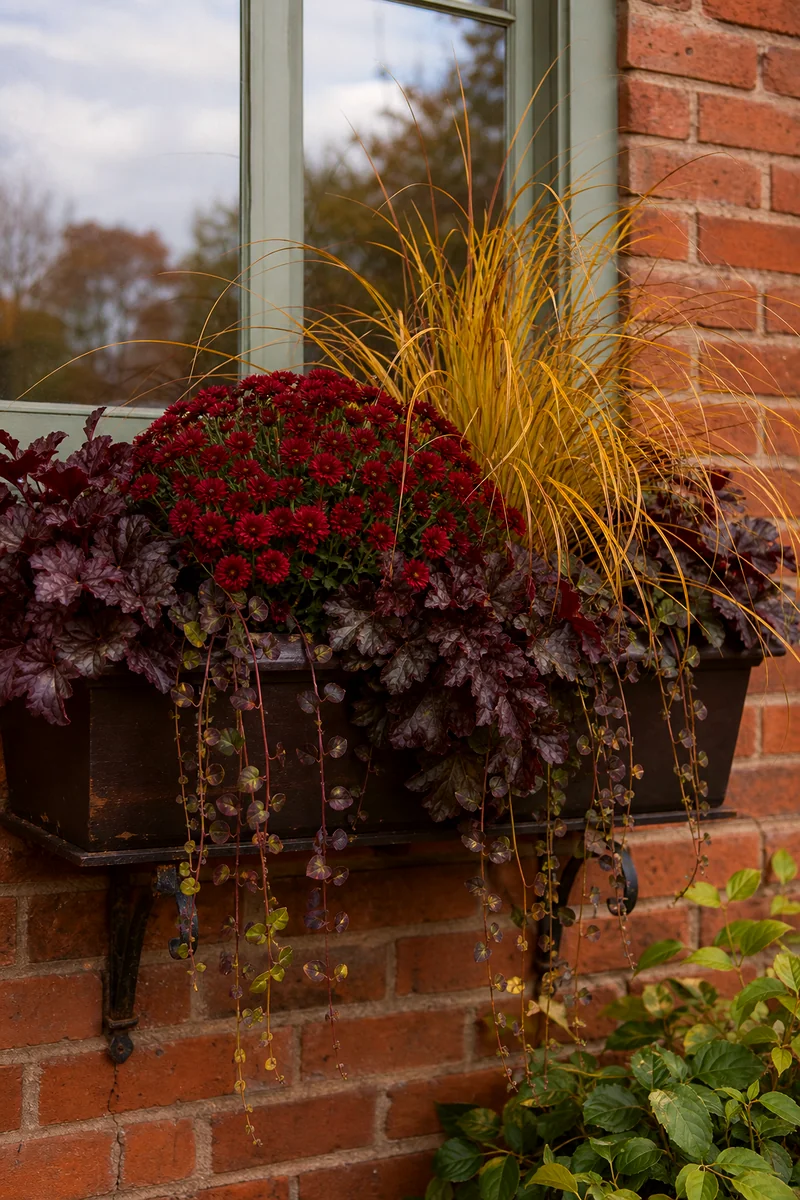
Burgundy mums, golden carex, and dark heuchera make a richer, moodier fall box than the standard orange display. It looks especially good against brick, dark siding, cream trim, or weathered wood.
The real strength here is foliage color. Mum flowers can fade, brown, or get battered by rain, but heuchera leaves and carex blades keep the box looking intentional. Put the golden carex toward the back or sides so its arching leaves catch light and keep the darker plants from looking heavy.
White Pumpkin Window Box
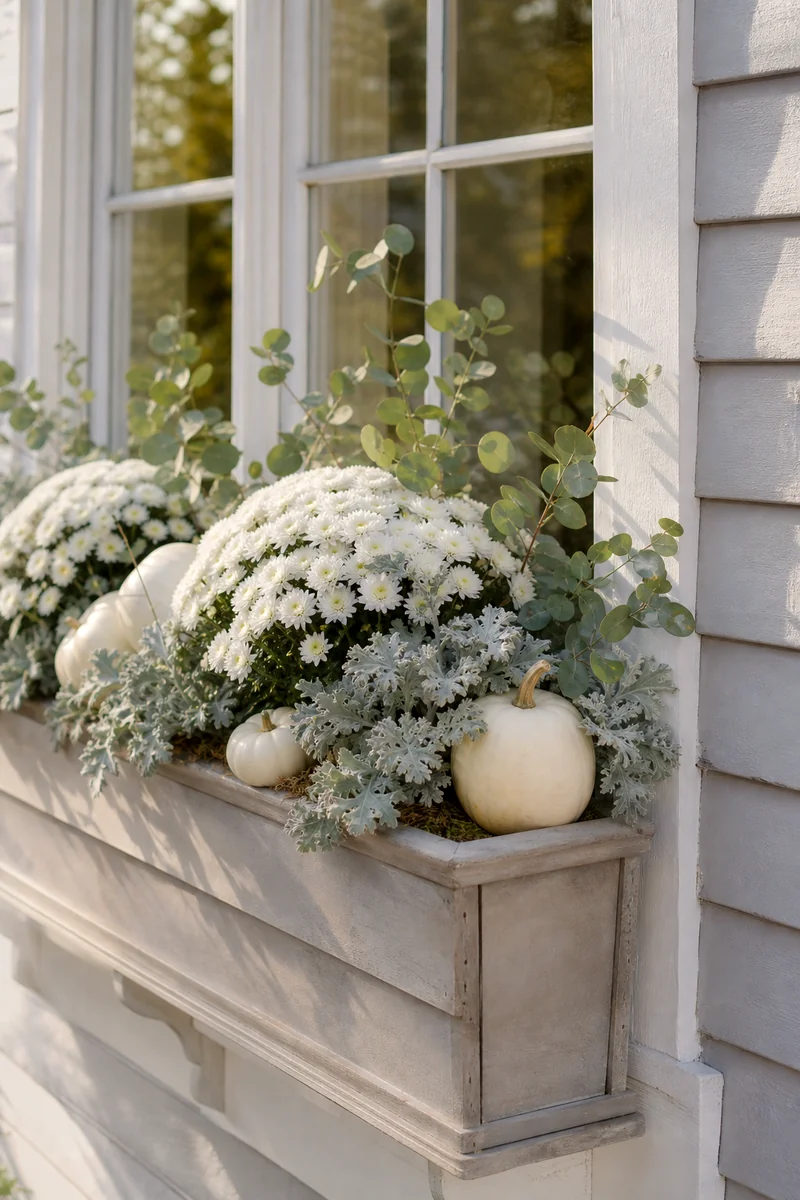
A white pumpkin window box is soft, calm, and a little more refined than the usual bright fall mix. Use white mums, dusty miller, pale pumpkins, and a few eucalyptus stems for a silvery neutral arrangement.
There is one catch. Pale displays show every bit of dirt, dead petal, and bruised leaf. Deadhead white mums often, wipe soil off pumpkin skins, and avoid splashing dirt onto dusty miller when you water. A long-spout watering can helps.
Rustic Farmhouse Window Box
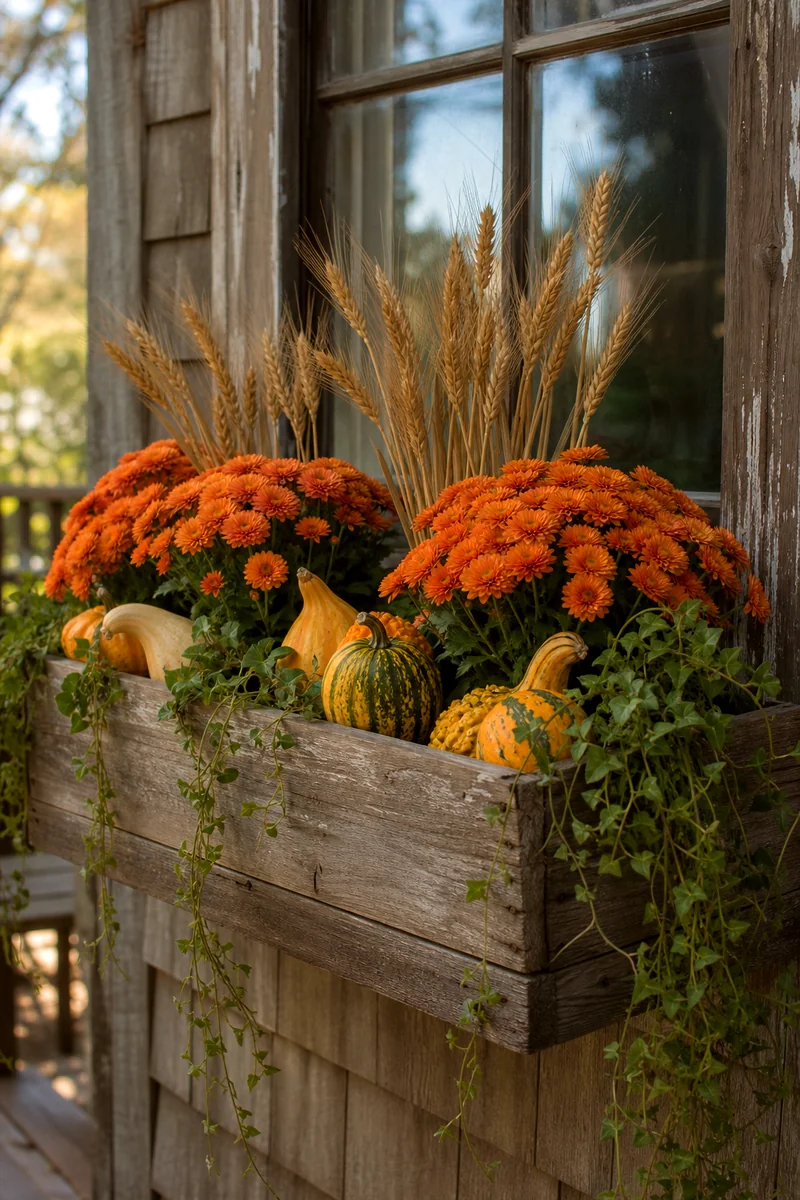
For a relaxed farmhouse look, use orange mums, dried wheat, mini gourds, and trailing greenery in a weathered wooden box. It should feel a little imperfect, not like it was measured with a ruler.
Old wooden boxes can be beautiful, but they often leak soil or dry out too quickly. Line the inside with landscape fabric or a plastic liner with drainage holes. Do not seal it up completely, because soggy fall soil is just as bad as dry soil.
Purple Fall Window Box
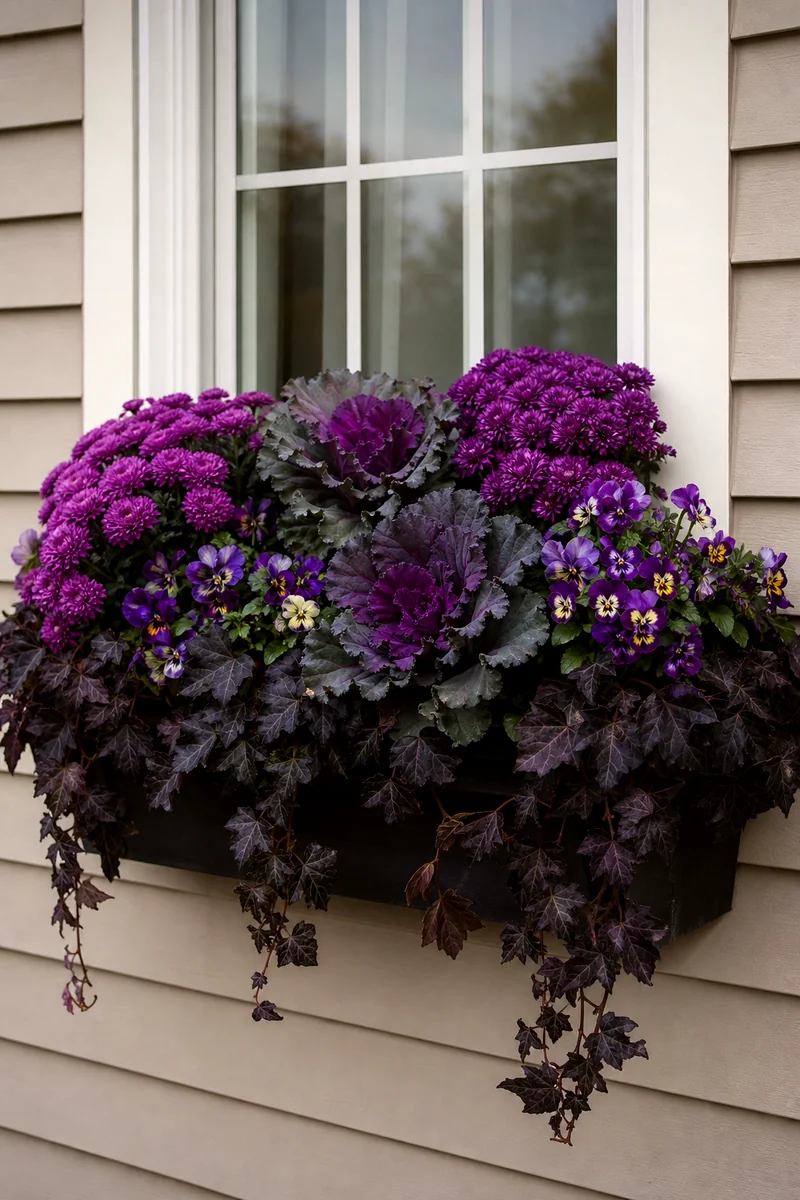
Purple chrysanthemums, ornamental cabbage, violas, and dark ivy create a deep jewel-toned display that feels cool and dramatic. This is a good choice for white, gray, charcoal, or stone homes where orange can feel a bit loud.
The trick is to vary flower size and leaf texture. Large mum blooms, smaller viola faces, ruffled cabbage leaves, and trailing ivy all catch the eye differently. Without that mix, an all-purple box can turn into one flat blob from a distance.
Pansy and Kale Window Box
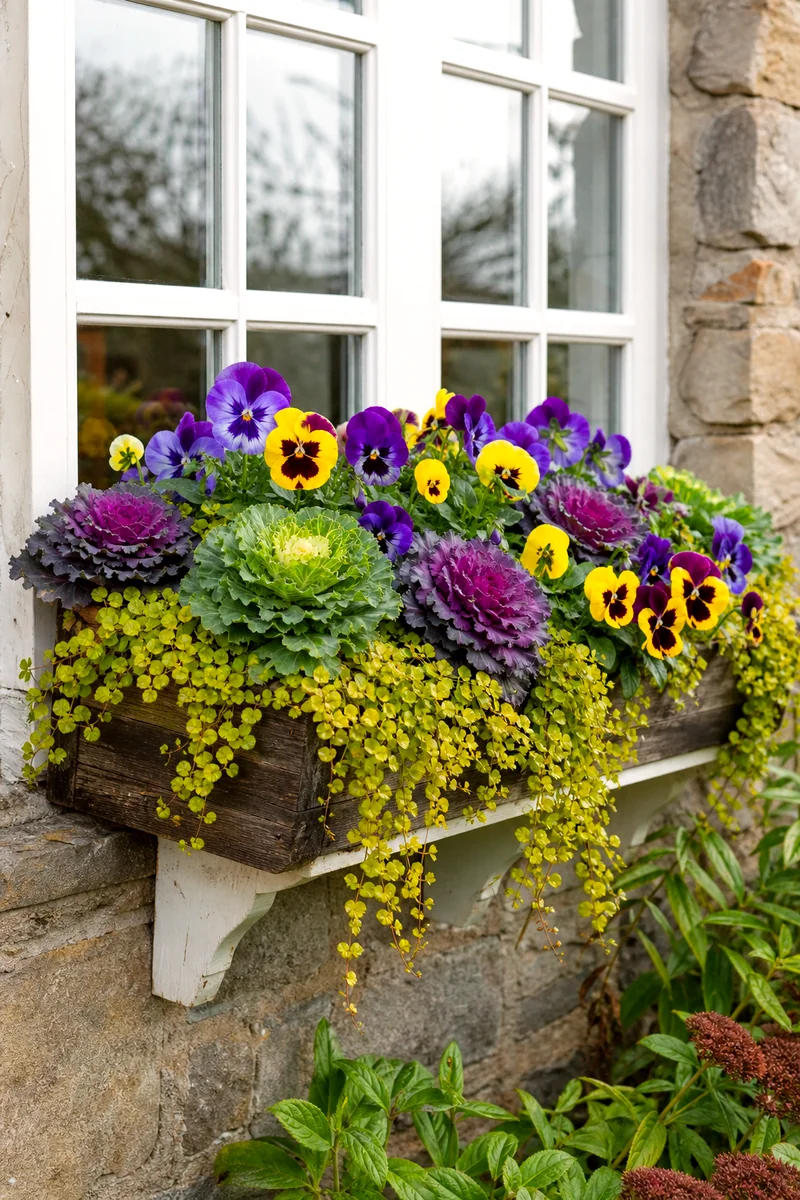
Purple and yellow pansies with ornamental kale and creeping Jenny make one of the most cheerful cool-weather combinations. Pansies often sulk in summer heat, but they perk up beautifully once nights turn cool.
Creeping Jenny adds movement over the rim, especially if your box sits high and needs something to soften the front. Keep the kale crowns slightly above the soil line, and tuck pansies around them rather than planting everything at the same height.
Ornamental Pepper Window Box
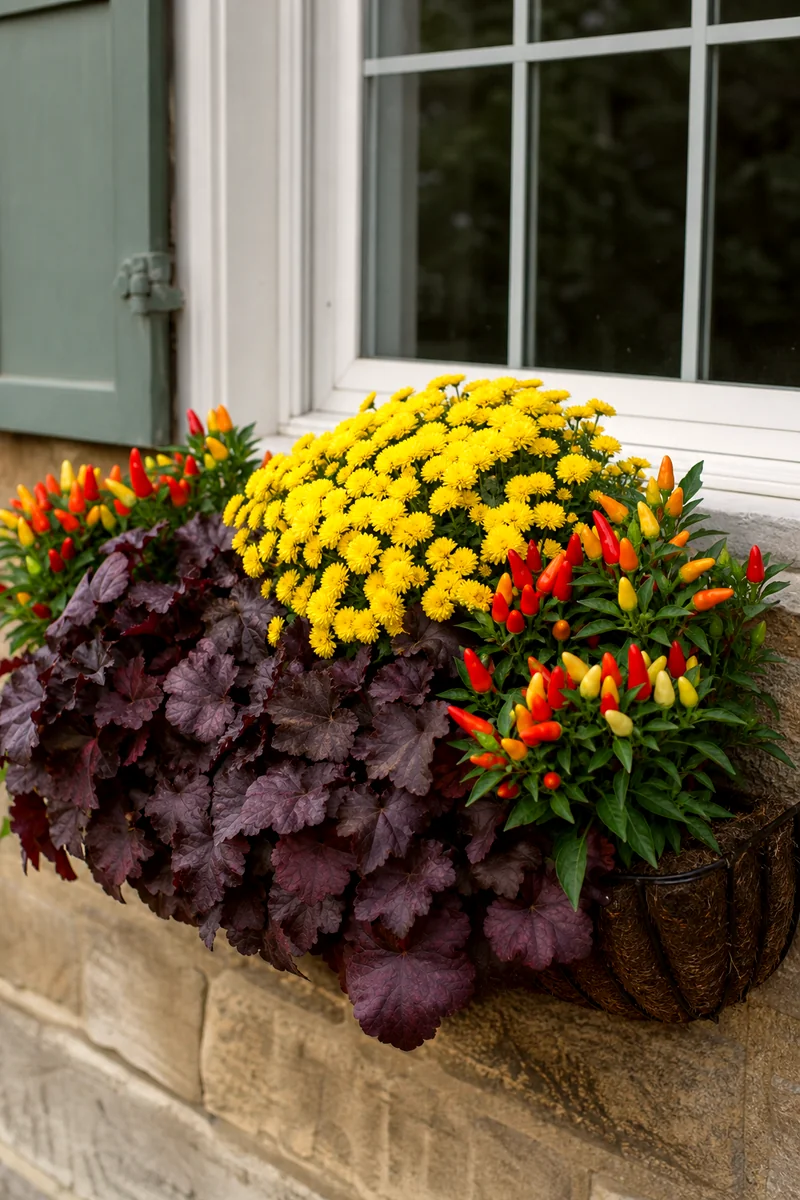
Ornamental peppers bring bright dots of red, orange, yellow, purple, or near-black to a fall box. Pair them with yellow mums and dark foliage for a playful display that still looks pulled together.
Treat ornamental peppers as decorative, especially around children and pets. Some are technically edible, but many are extremely hot and not grown for kitchen use. I would not put them where curious hands can easily grab them.
Pumpkin Patch Window Box
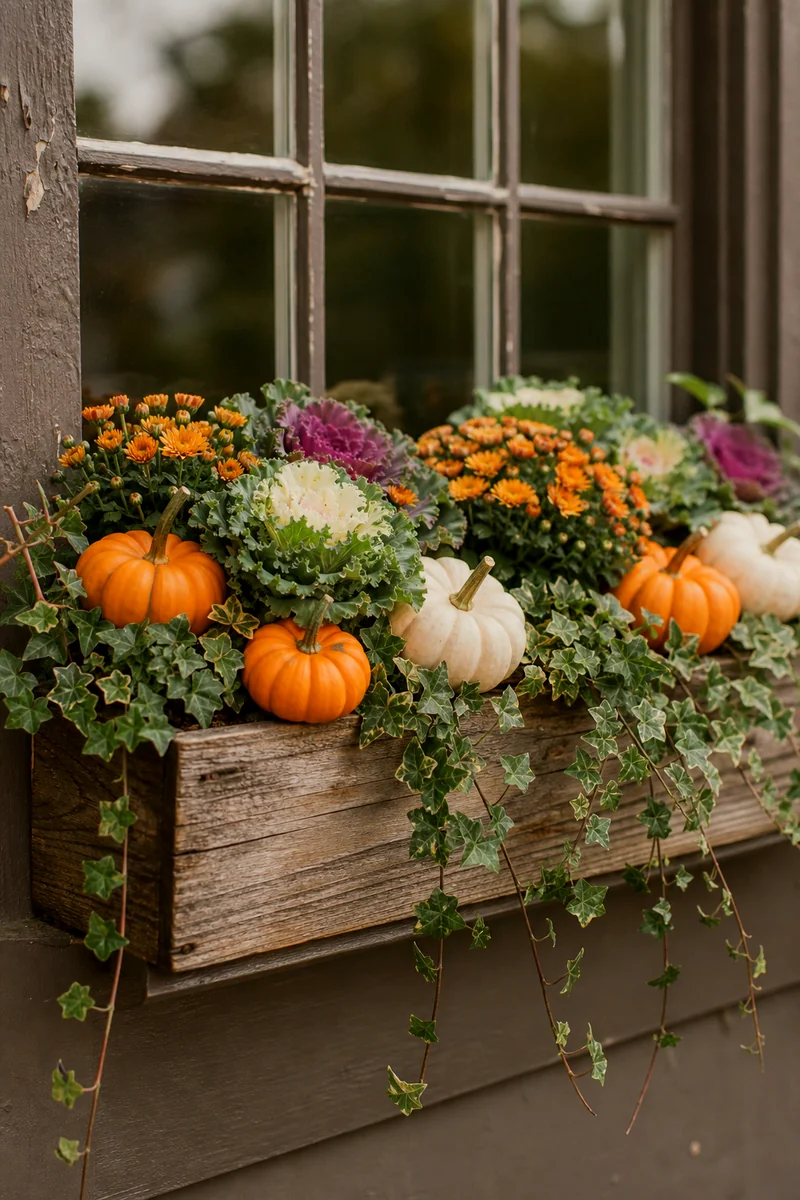
A pumpkin patch window box uses mini orange and white pumpkins tucked among ivy, mums, and ornamental cabbage. It is cute, but it can go wrong if the pumpkins are shoved in so tightly that the plants cannot breathe.
Leave the plant crowns open to air. Mums and cabbage need light and airflow at their centers, or they can rot in wet weather. Set pumpkins in open pockets of soil or on the front lip of the box, then train ivy around them instead of burying stems underneath.
Modern Black and White Window Box
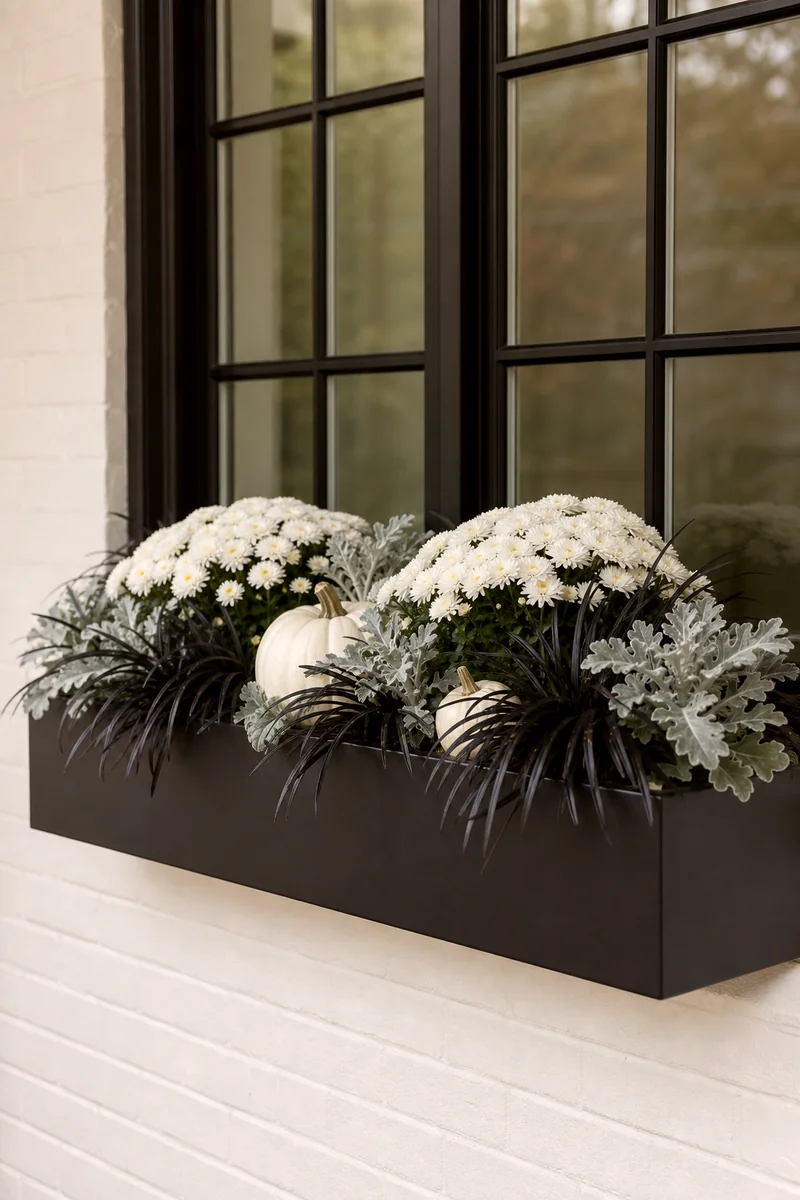
White mums, black mondo grass, dusty miller, and white pumpkins create a clean contemporary fall box. It works best with repetition, not a dozen different accents.
Use the white mums in a simple rhythm, repeat the dark grass in two or three spots, and let dusty miller bridge the contrast. The fewer plant types you use, the sharper this style looks. Too many gourds, ribbons, or extra colors will muddy the whole idea.
Autumn Grass Window Box
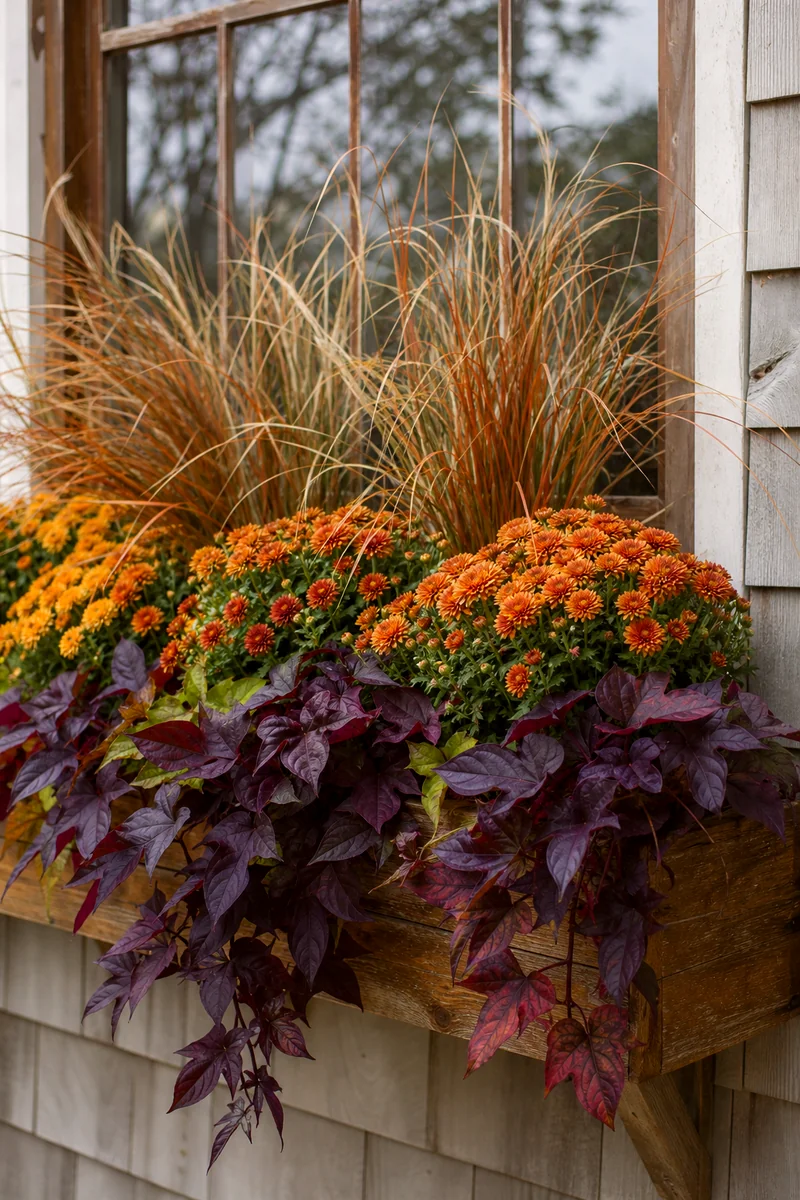
Dwarf ornamental grasses at the back give a window box height and movement, while bronze mums and trailing sweet potato vine fill the middle and front. Grasses are especially useful when you are tired of every fall container looking like round balls lined in a row.
Choose compact grasses that will not flop over the window or block the view from inside. Carex, small pennisetum varieties, or dwarf fountain grass can work depending on your climate and availability. In colder areas, treat many of these as seasonal plants in a window box.
Cottage Garden Fall Window Box
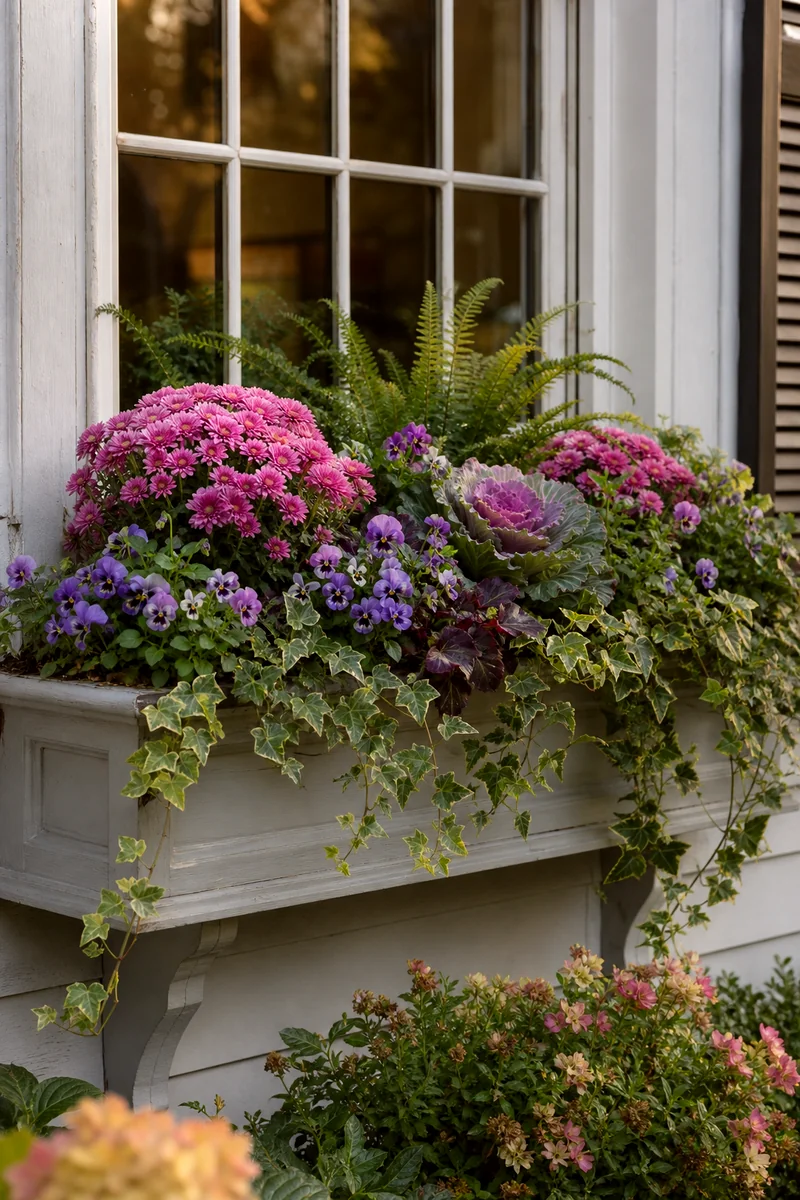
Pink mums, violas, small ferns, ivy, and ornamental cabbage make a soft cottage-style fall box. It should look abundant and friendly, not chaotic.
Repeat at least one color or foliage shape across the box. For example, use pink mums at both ends, or repeat ivy in two front corners. That little bit of order keeps the relaxed planting from looking like leftover nursery plants tossed together.
Red and Orange Window Box
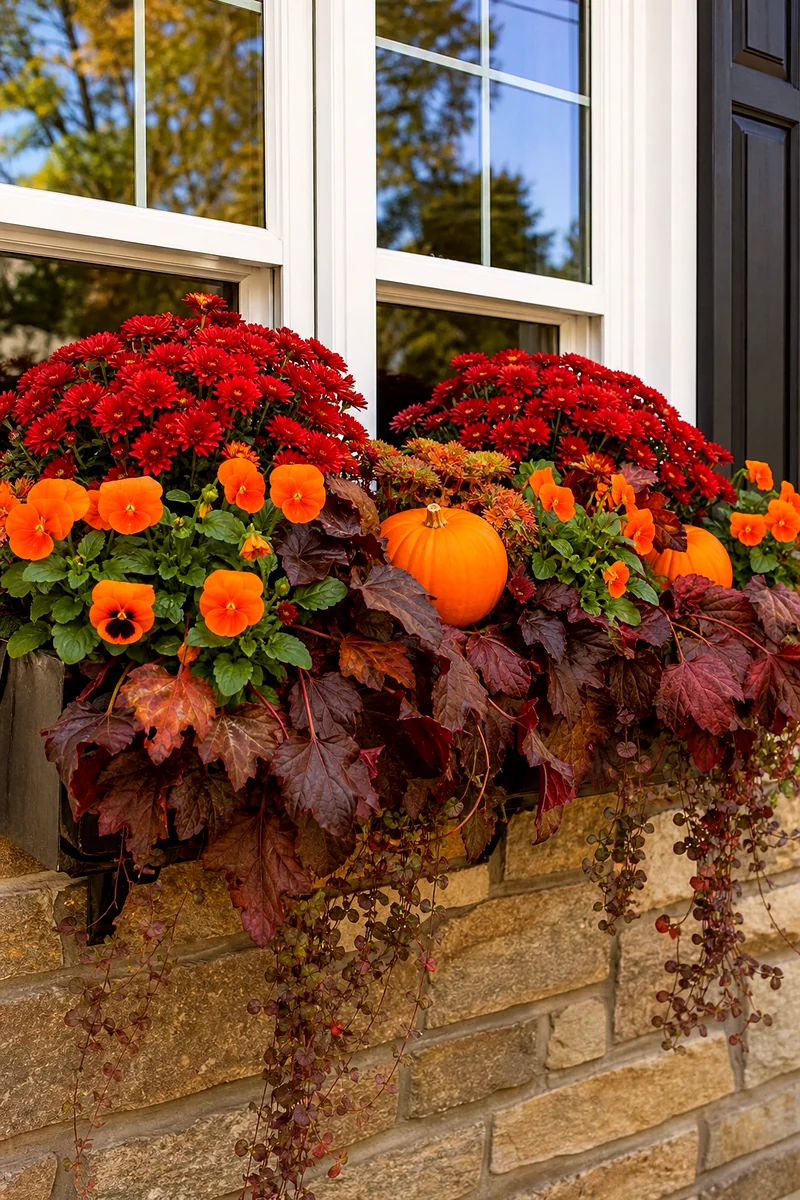
Red mums, orange pansies, bronze foliage, and small pumpkins make a bold autumn display that reads well from the street. That matters for second-story boxes or curb-facing windows, where subtle colors can disappear.
Use bronze heuchera, coppery carex, or dark sweet potato vine to break up the hot colors. A box filled only with red and orange flowers can look flat in bright sun. A few darker leaves give the eye somewhere to land.
Neutral Cream Window Box
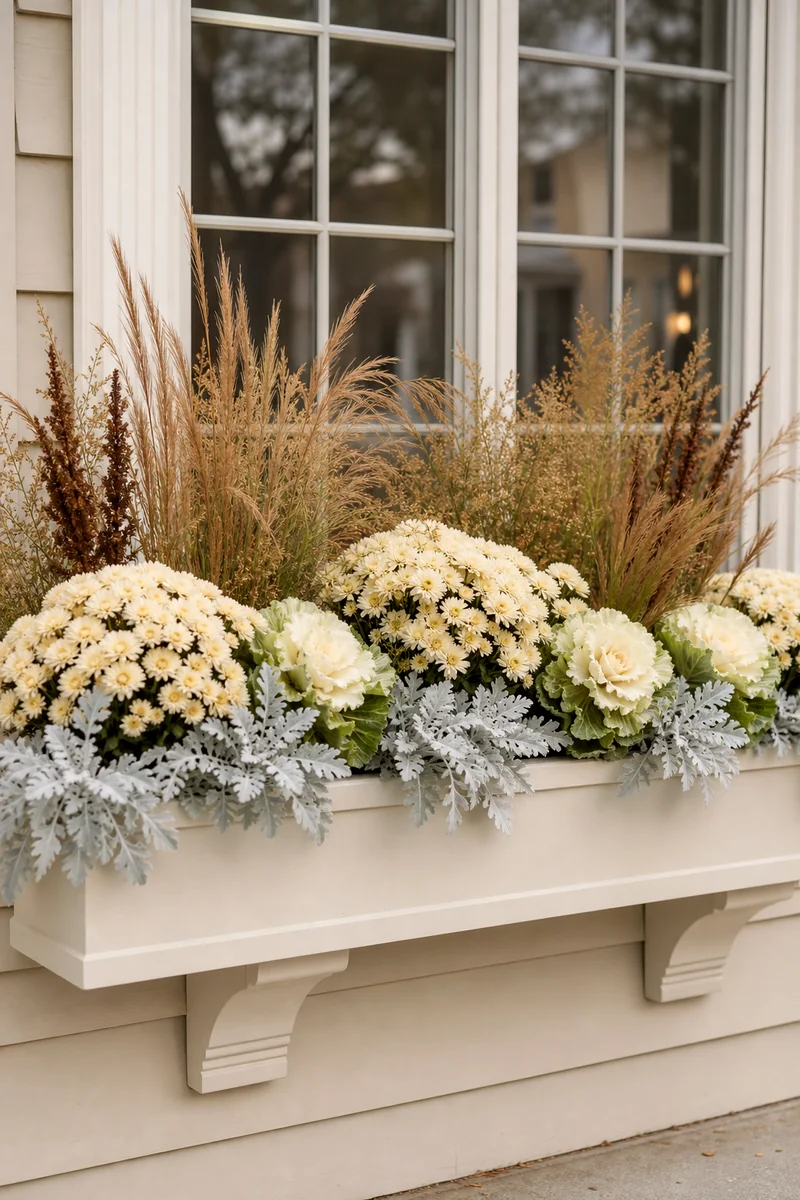
Cream chrysanthemums, white ornamental cabbage, silver foliage, and natural dried grasses create an understated fall window box. It is quiet, but not boring when the textures are right.
Neutral boxes depend on clean plant condition more than bright color. Remove browning mum flowers, clip damaged cabbage leaves, and keep dried grasses tidy. If the box starts looking dusty rather than soft, add one fresh cream mum or a pale pumpkin to sharpen it up.
Heuchera Foliage Window Box
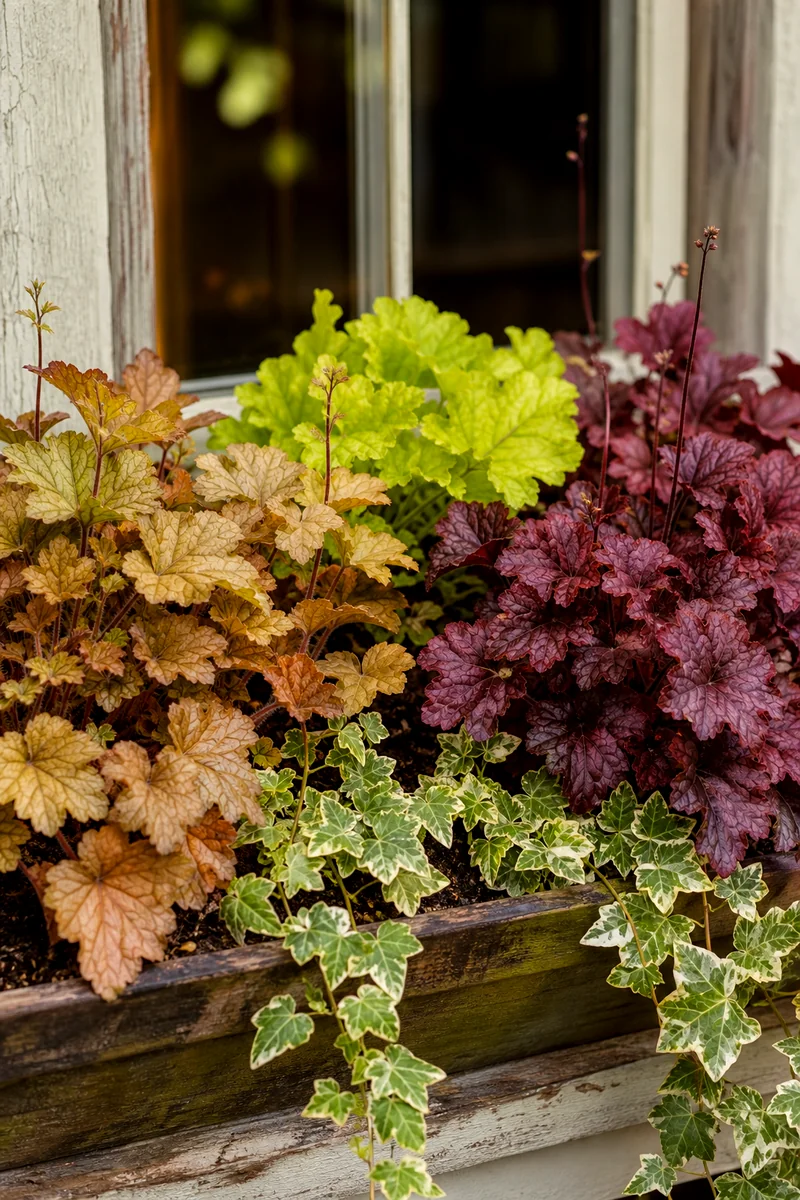
Heuchera is one of my favorite fall window box plants because the leaves do the work. Mix caramel, burgundy, and lime varieties with ivy for a display that stays attractive even without many flowers.
Heuchera likes soil that is evenly moist but not soggy. In a window box, that means drainage holes are not optional. If the leaves wilt in dry wind, water deeply, but do not keep the box sitting wet for days. The crowns can resent that.
Thanksgiving Harvest Window Box
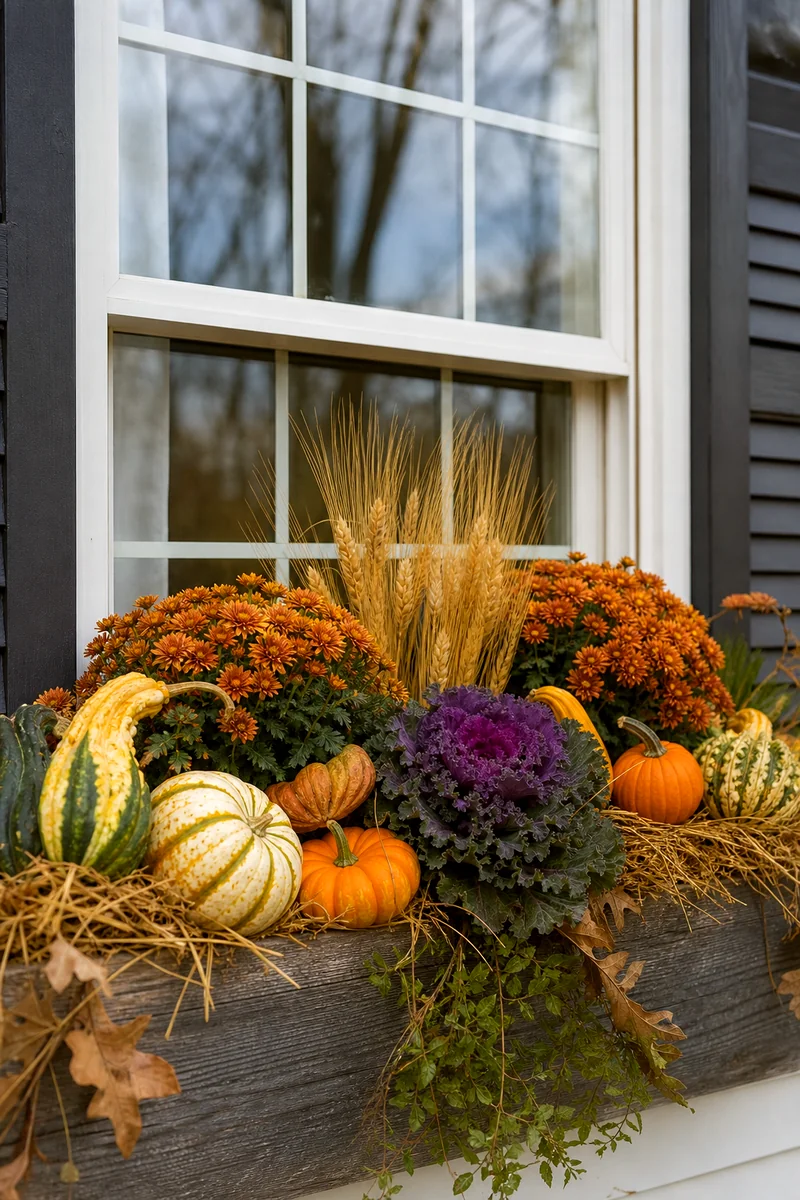
Bronze mums, wheat stalks, gourds, mini pumpkins, and ornamental kale make a festive harvest box for the weeks leading up to Thanksgiving. This style looks best when it feels full and generous.
Do not add every decorative piece too early. Gourds last well, but pumpkins and dried stems can weather, fade, or get pecked by wildlife. Add the showier decorations closer to the holiday so they still look fresh when guests arrive.
Woodland Fall Window Box
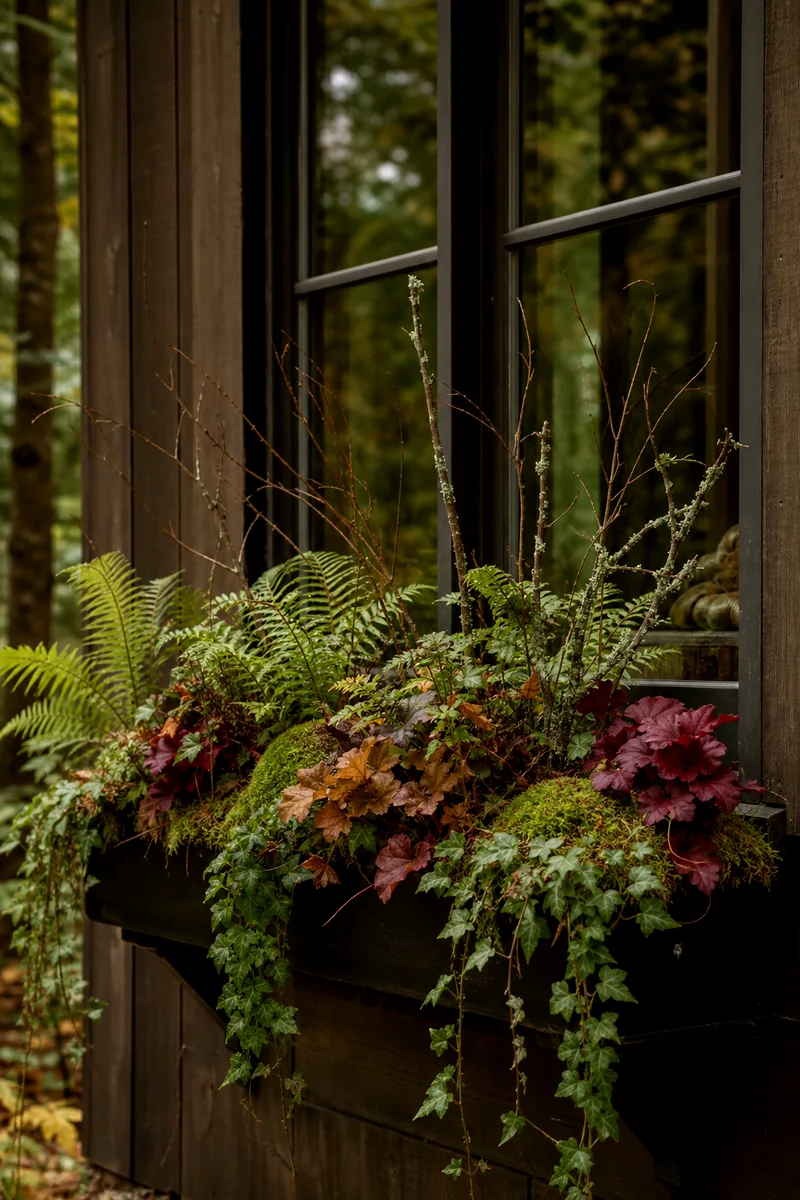
Ferns, heuchera, ivy, moss, and small branches create a woodland-inspired fall box that looks natural and earthy. It is a good fit for shadier windows where mums might not bloom as heavily.
This is not the best choice for a hot, exposed south-facing window. Ferns and mossy accents will struggle there. If you use decorative moss, keep it lightly moist at most, not waterlogged. Soggy moss packed around crowns can trap too much moisture.
Yellow and Purple Window Box
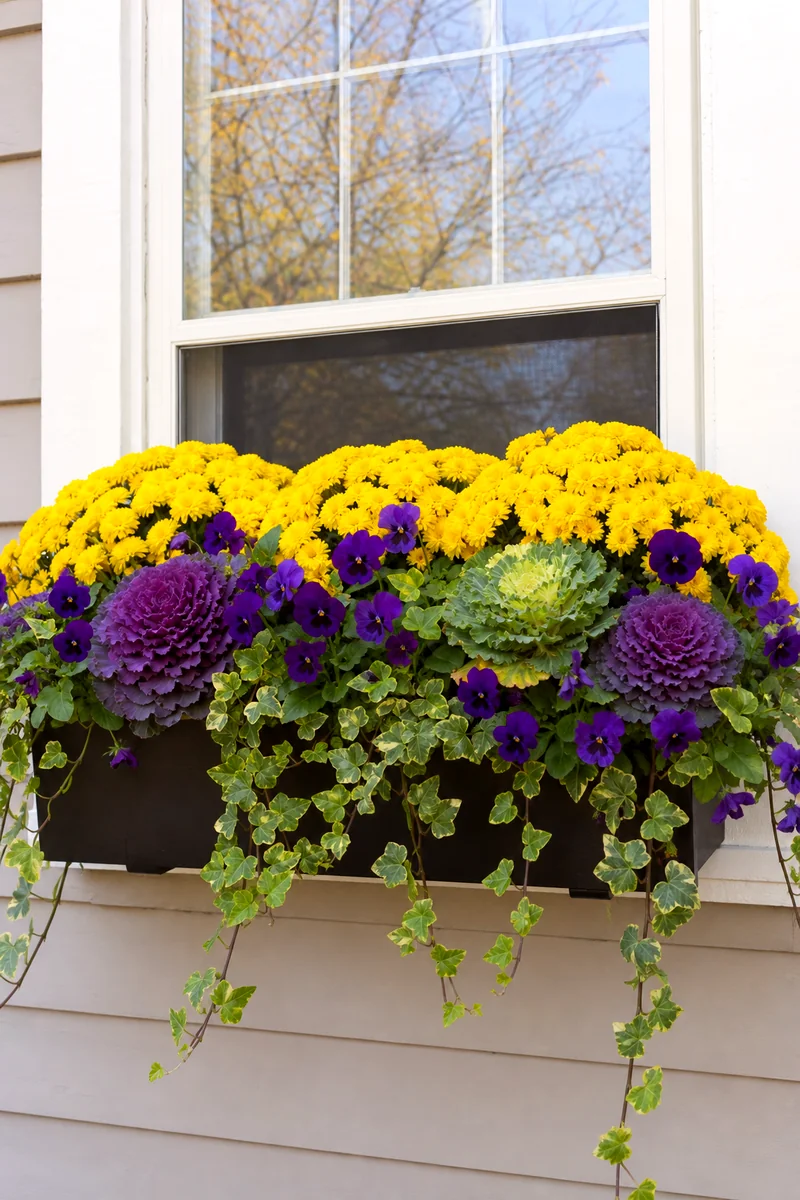
Yellow mums with purple pansies and ornamental cabbage give you strong contrast without needing many plant varieties. Yellow and purple sit opposite each other on the color wheel, so each one makes the other look clearer.
Add green foliage as a resting place for the eye. Ivy, small carex, or even the green outer leaves of ornamental cabbage can keep the contrast from feeling harsh. This is a good box for a shaded porch where yellow flowers help brighten the view.
Trailing Ivy Fall Window Box
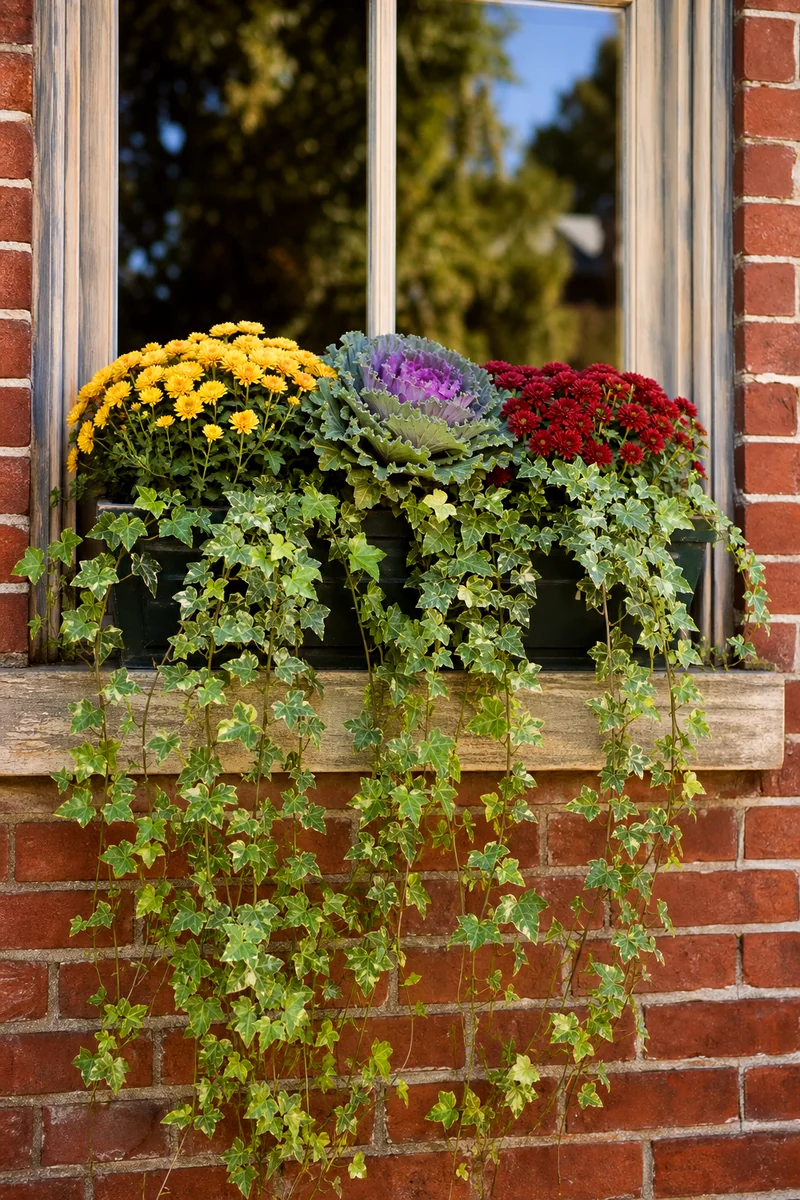
In this design, compact mums and kale sit in the center while long ivy strands cascade over the front. Ivy gives the box age and softness, even when the planting is brand new.
Watch the proportion. Ivy should frame the arrangement, not hide the box, block the window, or smother the mums. Trim long runners just above a leaf joint when they start looking stringy or heavy.
Sedum and Mum Window Box
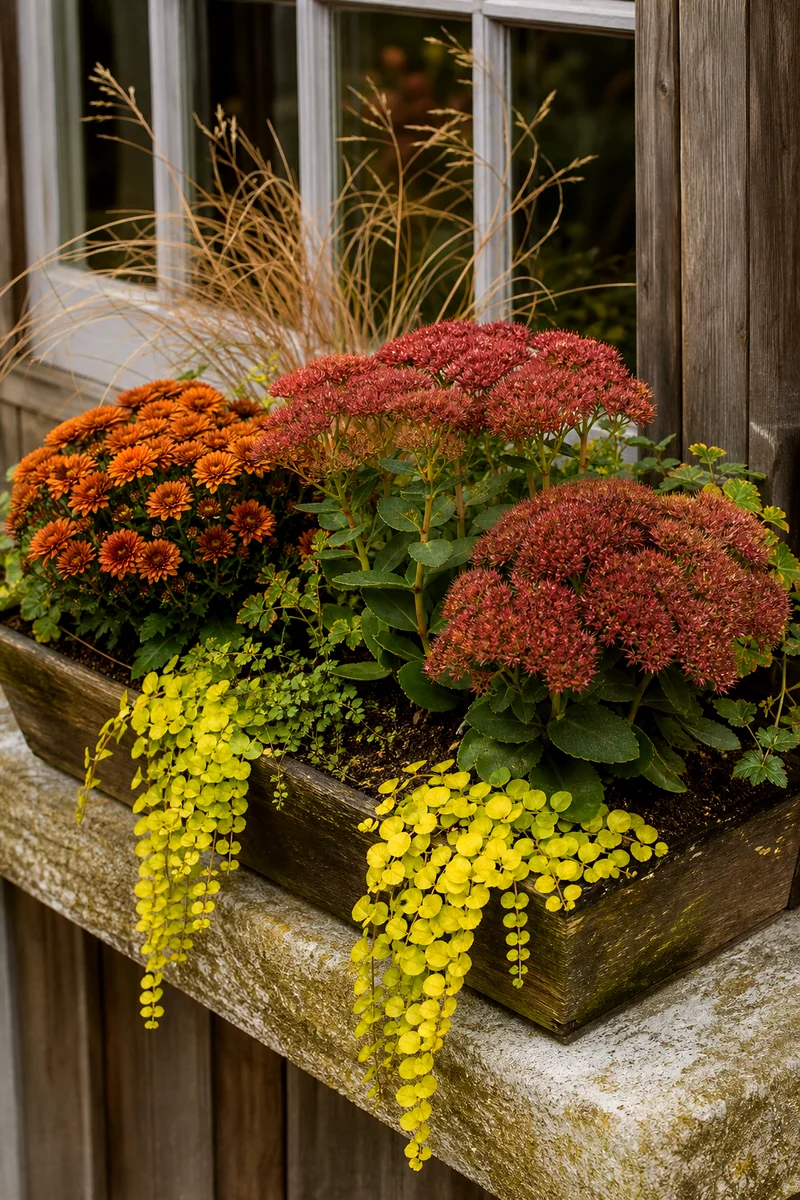
Autumn-blooming sedum pairs beautifully with bronze mums, grasses, and creeping Jenny. Sedum brings fleshy leaves and clustered flower heads that age nicely from pink to deeper rosy tones on many varieties.
Because sedum stores moisture in its leaves, it does not want the same constant watering as thirsty summer annuals. Use a free-draining potting mix and water when the top inch feels dry. If the stems get soft or the base looks mushy, the box is staying too wet.
Mini Evergreen Fall Window Box
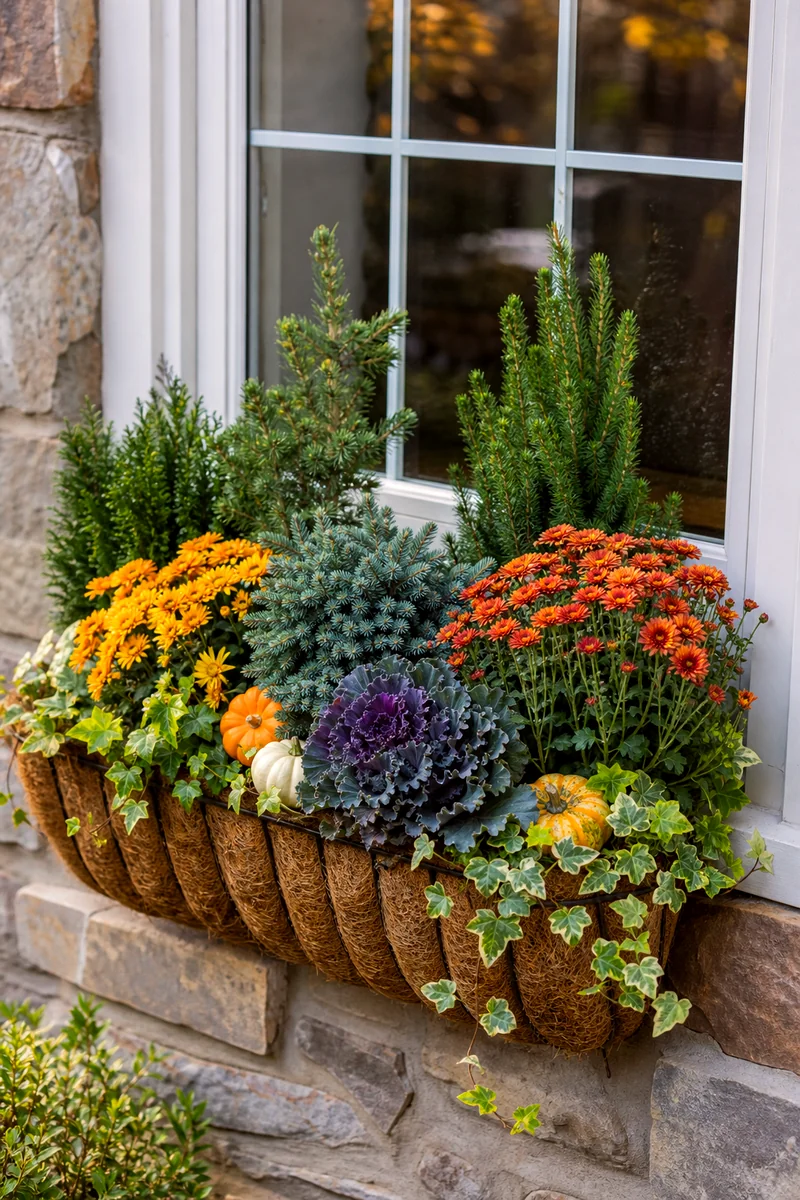
Dwarf conifers with mums, ornamental cabbage, and pumpkins make a box that can shift toward winter with only a few changes. The evergreens give structure after flowers fade.
Choose true dwarf plants if you plan to keep them long term, or treat small nursery evergreens as temporary seasonal features. A tiny spruce in a quart pot may not stay tiny forever. In colder climates, protect roots from hard freezes if you want to save the plants after the display is done.
Copper and Burgundy Window Box
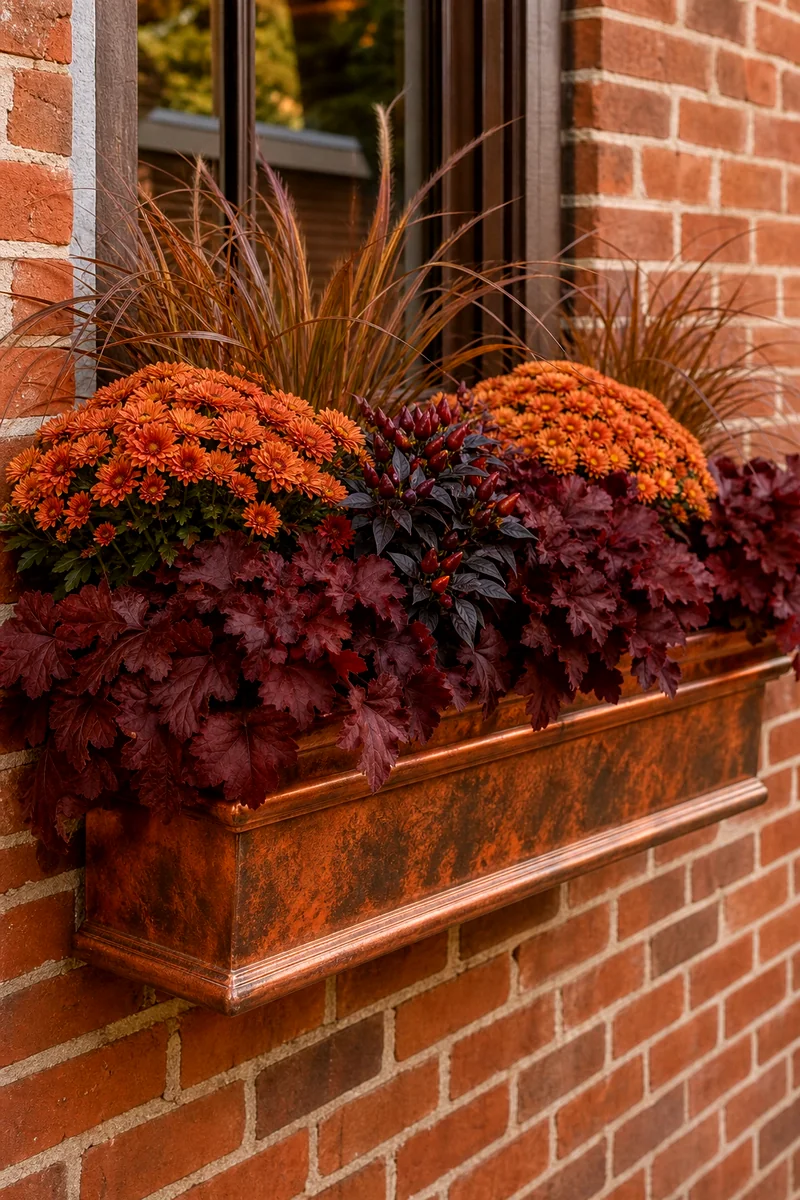
Rust-colored mums, burgundy heuchera, bronze sedges, and dark ornamental peppers make a warm, polished fall palette. It feels seasonal without looking random.
The secret is repeating copper and burgundy tones several times across the box. One burgundy plant looks accidental. Three burgundy touches look designed. Add bronze sedge for movement so the arrangement does not become too dense.
Apple Harvest Window Box
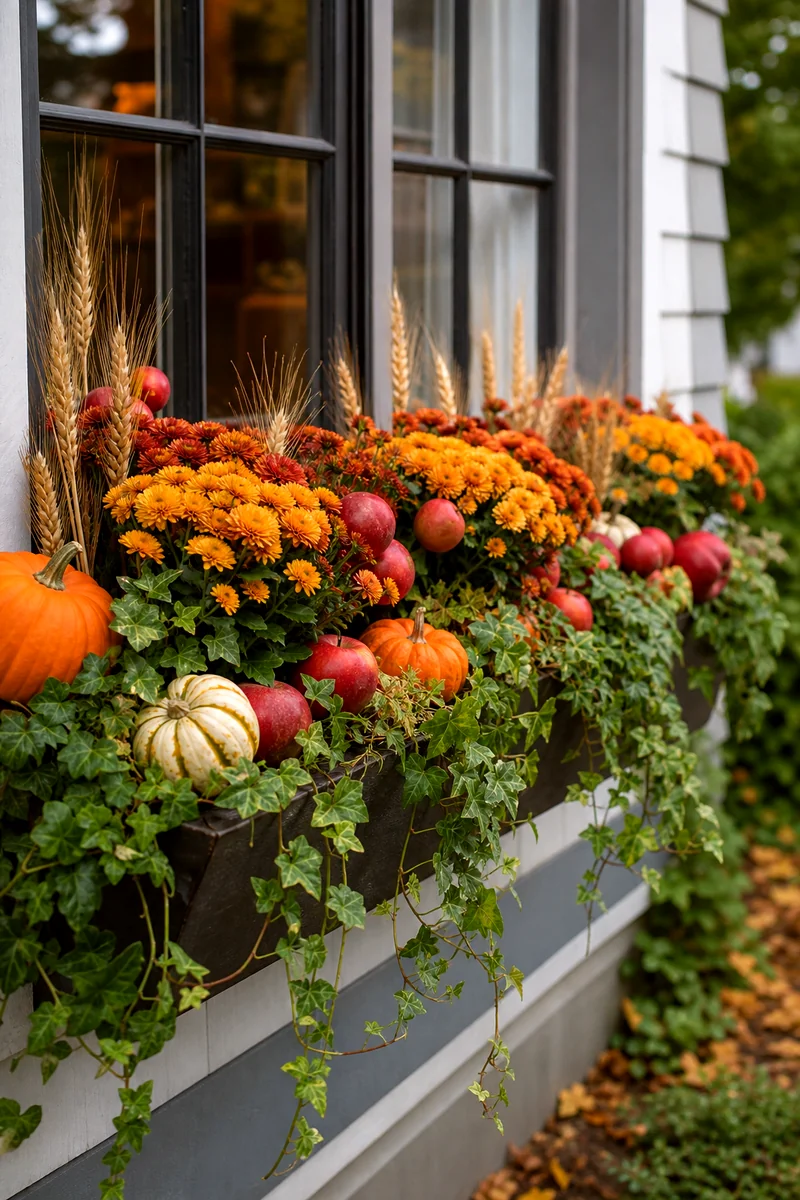
Small red apples, wheat stems, miniature pumpkins, mums, and ivy create an orchard-inspired window box. It is homey in the best way, especially near a kitchen or porch window.
Real apples can soften, bruise, or attract wildlife faster than gourds. Check them often and replace them when they lose their shine. If squirrels are a problem in your yard, use faux apples or keep the real ones for a short weekend display.
All-Foliage Fall Window Box
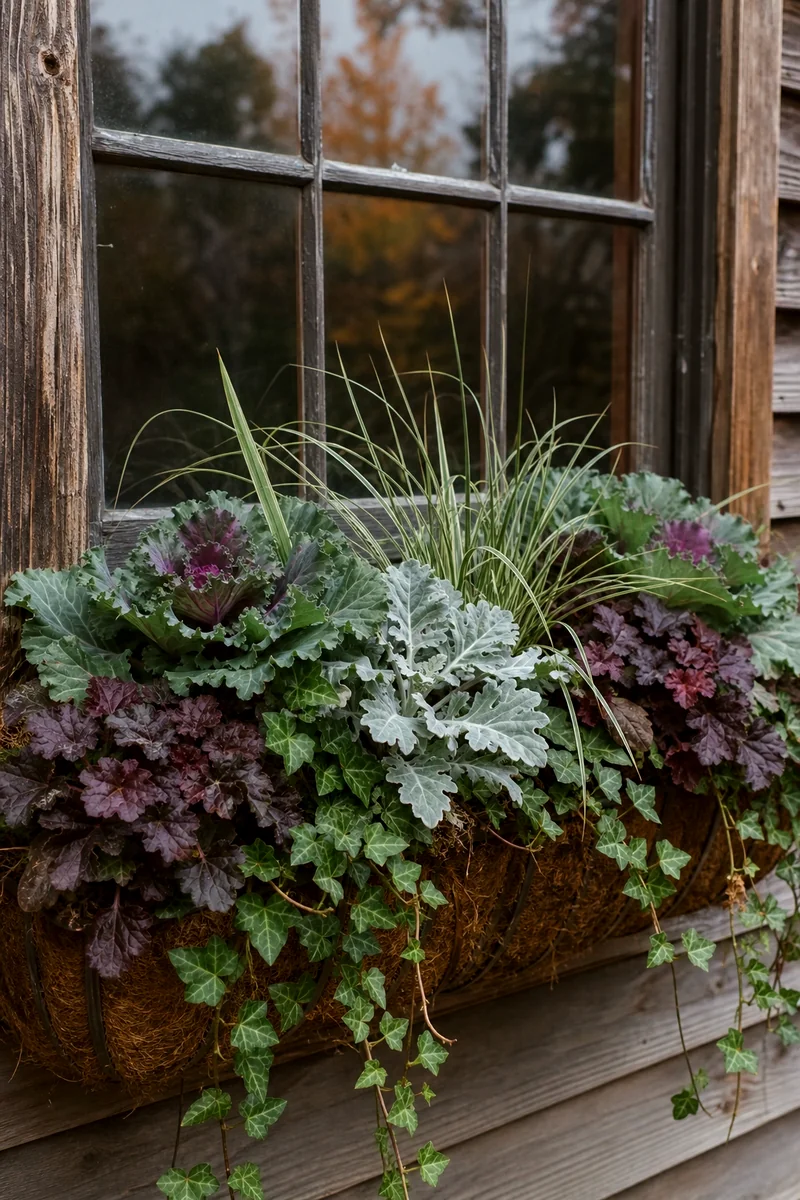
An all-foliage window box uses ornamental kale, heuchera, dusty miller, carex, and ivy for color without relying on blooms. This is one of the most forgiving options for beginners.
Flowers have a peak, then they decline. Foliage changes more slowly, so the box does not collapse visually after one rainy week. Mix leaf shapes carefully: ruffled kale, rounded heuchera, silvery dusty miller, fine carex, and trailing ivy all do different jobs.
Pink and Purple Autumn Window Box
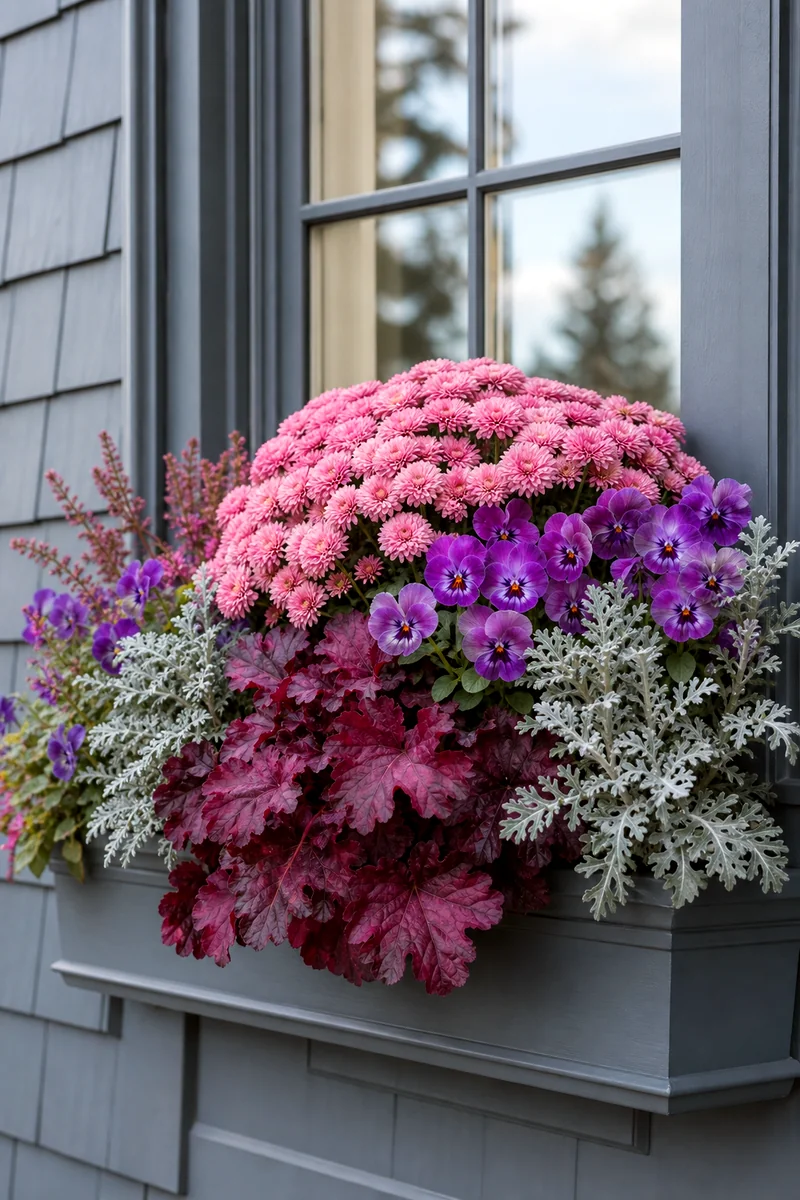
Dusty pink mums, purple violas, burgundy heuchera, and silver dusty miller create a softer fall scheme. It works beautifully near gray, white, blue, or sage-green homes where bright orange can feel too strong.
Keep the pinks muted rather than candy-bright. Dusty miller helps cool the palette, while burgundy heuchera gives depth. If the box looks too sweet, add a few dark ivy trails or a small purple cabbage to ground it.
Small-Space Fall Window Box
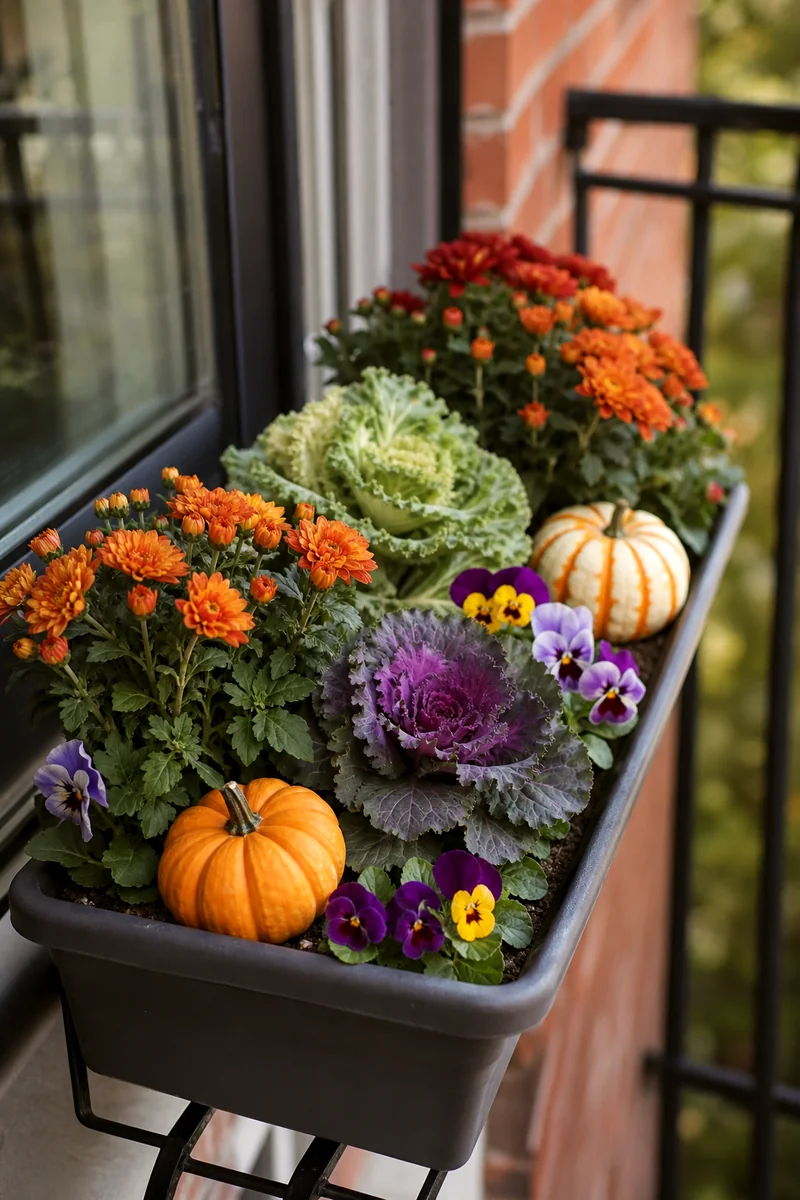
A narrow window box can still look full if you use compact mums, miniature kale, violas, and tiny pumpkins. Scale matters more than quantity.
Do not cram full-size nursery pots into a shallow box and hope for the best. Tease roots gently, use smaller plants, and leave some soil volume for watering. Tiny pumpkins are decorations, not plants, so use them to fill visual gaps without stealing root space.
Dramatic Dark Fall Window Box
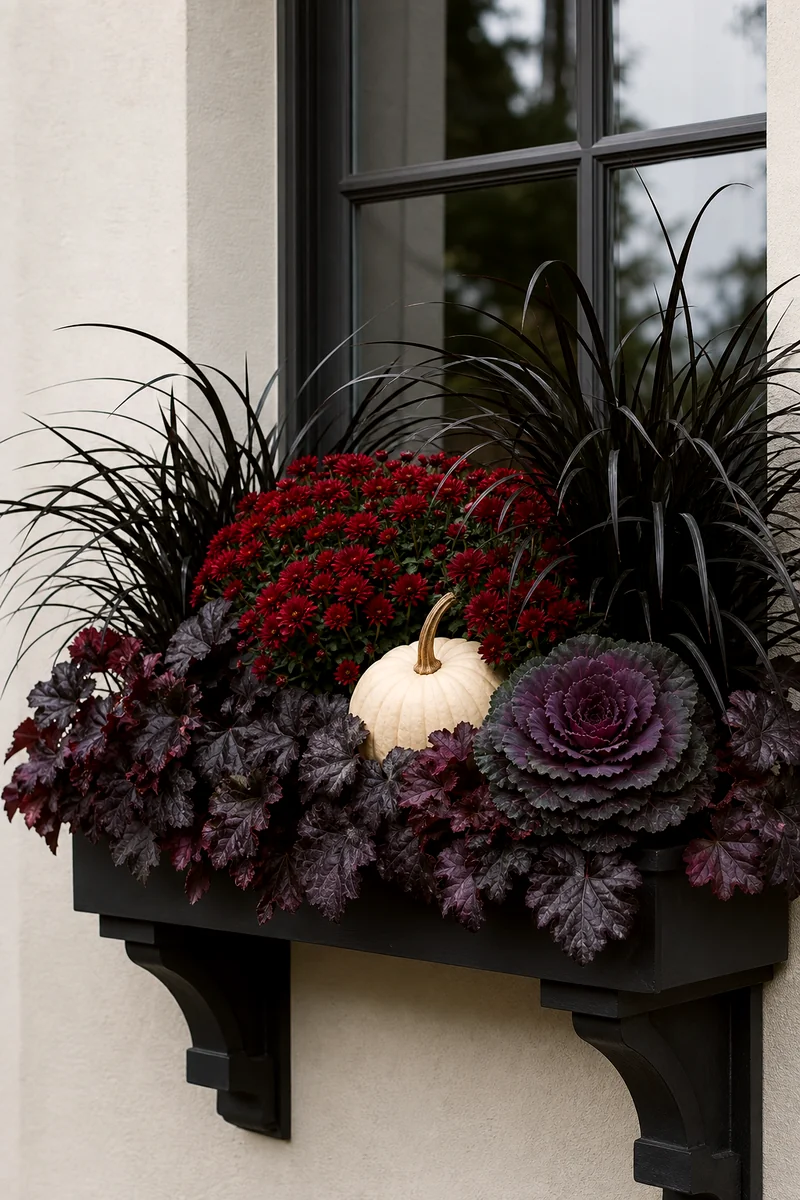
Black mondo grass, deep red mums, dark heuchera, and purple ornamental cabbage make a moody fall box with real presence. It is striking up close and handsome against pale siding.
Very dark plantings need a little contrast if they will be viewed from a distance. Add silver dusty miller, a pale pumpkin, or a few lighter cabbage leaves. Without that lift, the whole box can read as one dark mass on cloudy days.
Golden Harvest Window Box
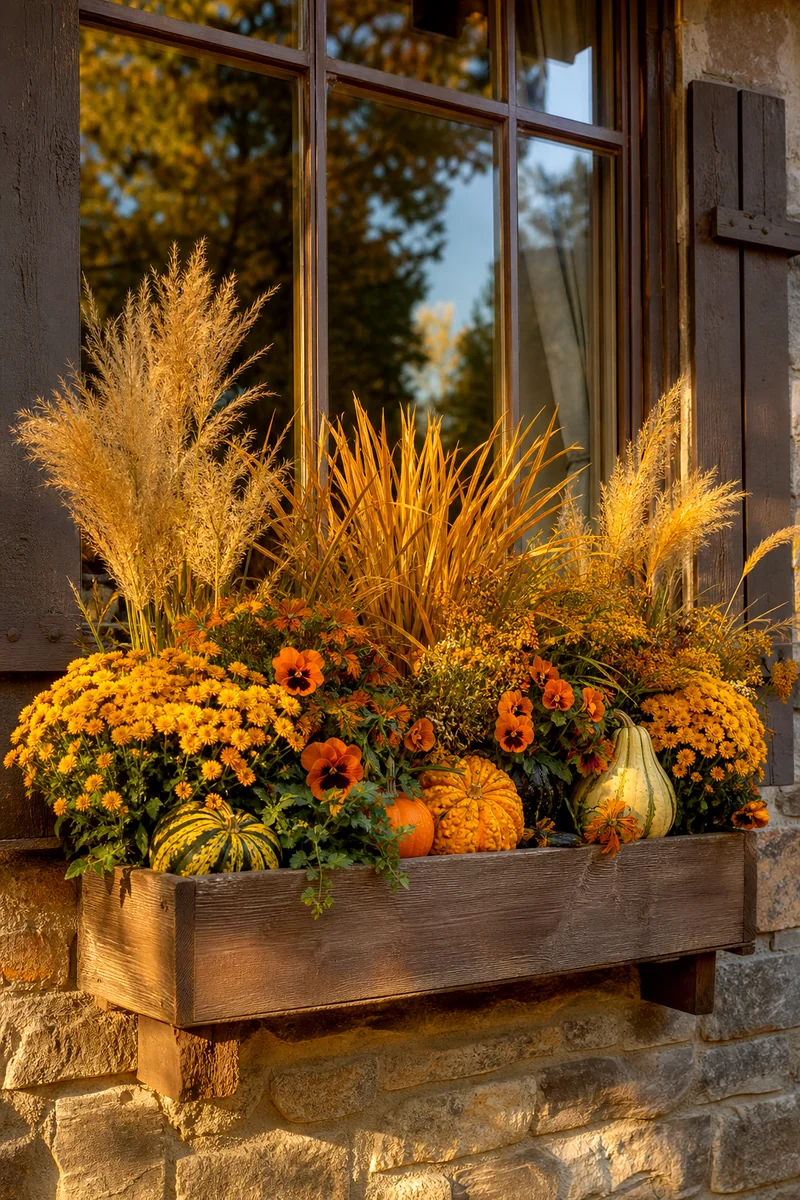
Yellow mums, golden grasses, orange pansies, and small gourds create a warm sunlit effect. This is a friendly, high-visibility window box for porches, front walks, and street-facing windows.
Use several shades of gold and orange instead of one flat block of color. Pale yellow mums, deeper golden carex, orange pansies, and tan gourds create depth. A few green leaves also help the warm colors look fresher.
Eucalyptus and Mum Window Box
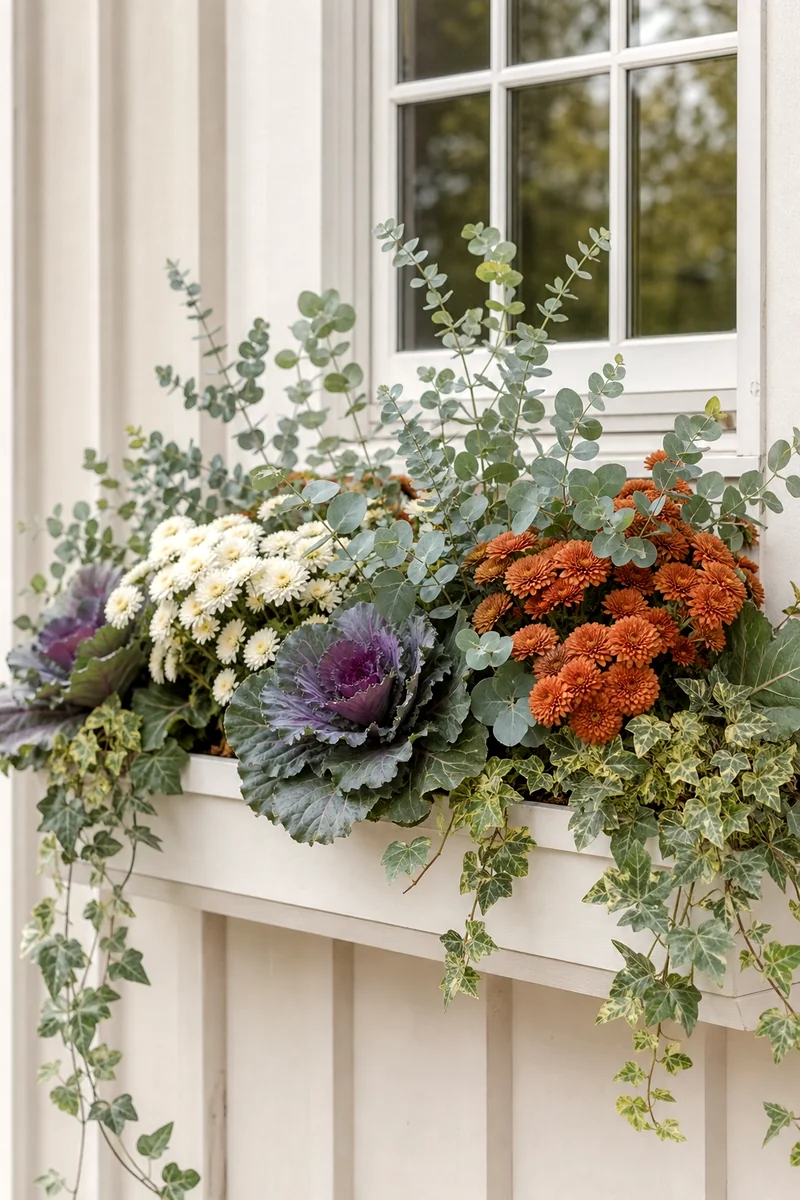
Silver-green eucalyptus with white and bronze mums, ornamental kale, and trailing ivy makes an elegant natural arrangement. Eucalyptus adds a relaxed, airy shape that balances the dense mum blooms.
Cut eucalyptus dries nicely in place, which is useful for a short-season box. Live potted eucalyptus is a different story. It may not be hardy in colder regions, so treat it as seasonal unless you know your climate and variety can handle winter.
Fall-to-Winter Transition Window Box
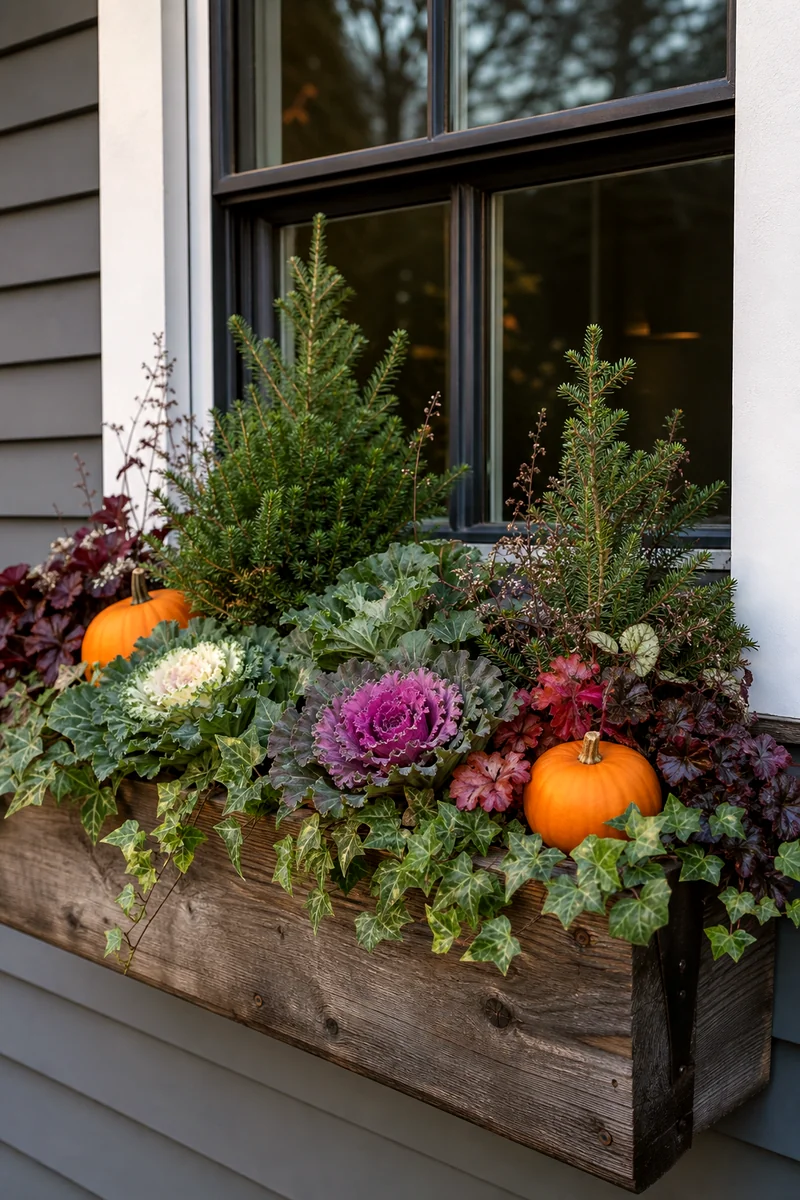
Dwarf evergreens, ornamental cabbage, ivy, heuchera, and a few pumpkins give you a fall box that does not need to be rebuilt from scratch for winter. Start with the plants that still look good after cold weather arrives.
Later, remove pumpkins and faded mums, then add pine cones, twiggy branches, cut evergreen boughs, or simple outdoor lights. The bones of the arrangement stay in place, which saves money and time. I am always in favor of that.
FAQ About Fall Window Boxes
What are the best plants for fall window boxes?
Mums, pansies, violas, ornamental kale, ornamental cabbage, heuchera, ivy, carex, dusty miller, sedum, and dwarf evergreens are all good choices. Pick plants that handle cool nights and still look attractive if blooms slow down.
How often should I water a fall window box?
Check the soil every few days, and more often during warm, windy spells. Water when the top inch feels dry. Fall boxes use less water than summer boxes, but shallow containers can still dry out quickly.
Do fall window boxes need drainage holes?
Yes. Drainage holes are non-negotiable for living plants. Without them, fall rain can leave roots sitting in soggy soil, which leads to rot, yellowing leaves, and tired-looking plants.
Can I leave pumpkins in a window box all season?
You can, but check them regularly. Pumpkins last longer when they sit above damp soil on a saucer, stone, or bark chip. Remove any that soften, mold, or leak.
When should I plant a fall window box?
Plant once nights start cooling but before hard freezes settle in. In many areas, that means early to mid fall. If summers stay hot where you live, wait until the worst heat has passed so mums and pansies do not burn out too fast.
A fall window box does not have to last forever. It just has to look good for the season you are actually in, and that is a much easier goal.