30 Fall Planters With Pumpkins

Pumpkins make fall containers look finished fast, but the best ones don’t just sit on top of bare soil like an afterthought. They work best when they are part of a living arrangement with foliage, grasses, herbs, berries, or cool-season flowers doing some of the heavy lifting.
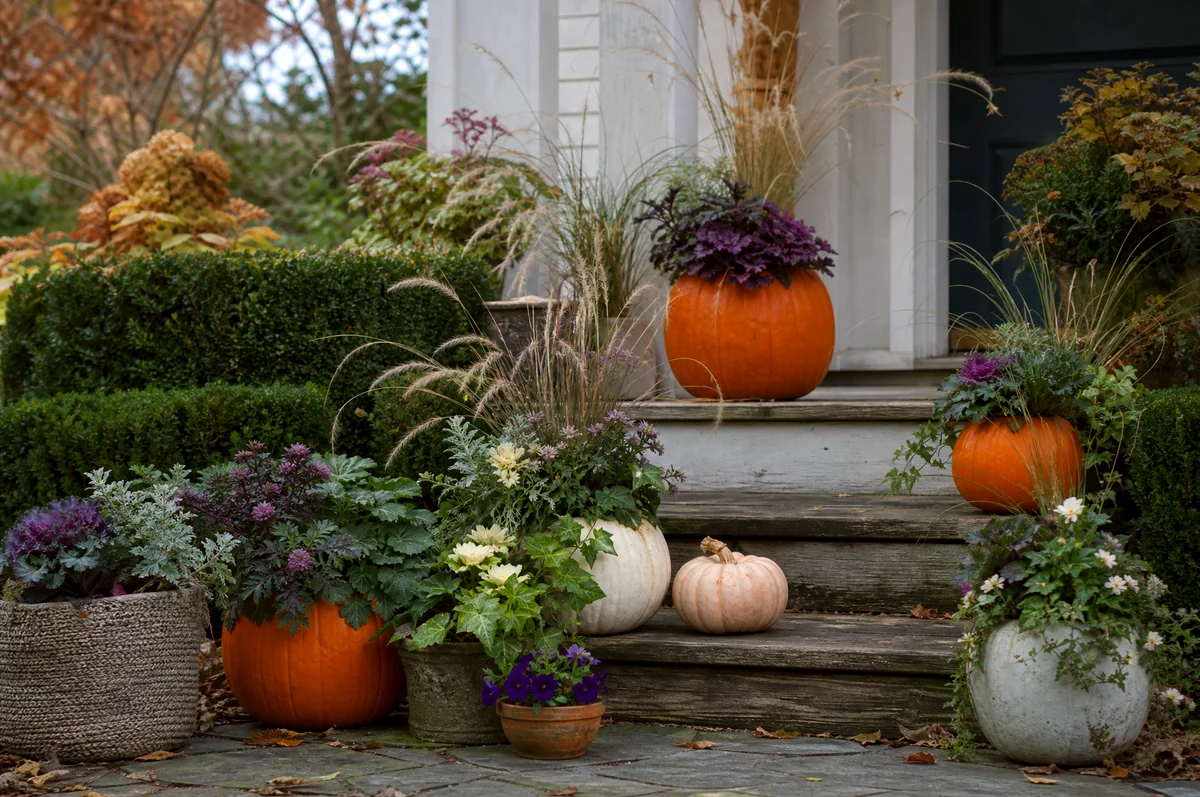
The trick is matching the plants to your porch light, keeping the pumpkins from sitting in wet soil, and choosing textures that still look good after one chilly weekend. A good fall planter should have staying power. Pretty is nice. Practical is better.
White Pumpkin and Eucalyptus Planter
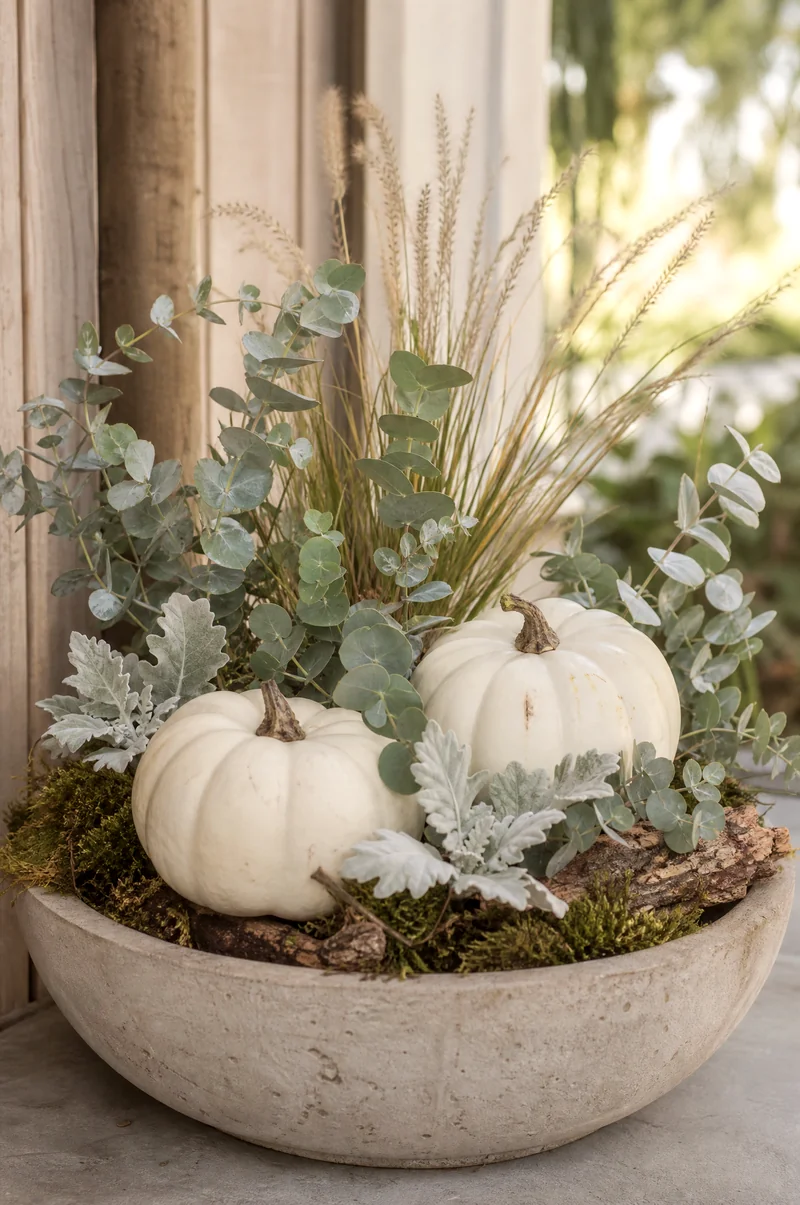
White pumpkins, silver eucalyptus, dusty miller, and soft ornamental grasses make a calm, pale container that looks especially good beside weathered wood, stone steps, or a light front door. Use a pale stone, concrete, or concrete-look pot so the whole arrangement feels intentional rather than washed out.
The important detail is moisture. Dusty miller and ornamental grasses can handle normal potting mix, but cut eucalyptus turns messy if its stems sit in constantly wet soil. Tuck eucalyptus stems into dry pockets, floral tubes, or around the edge where they can stay airy. Set the pumpkins on moss, bark, or a flat stone so the undersides don’t soften too quickly.
Pumpkin and Purple Fountain Grass Planter
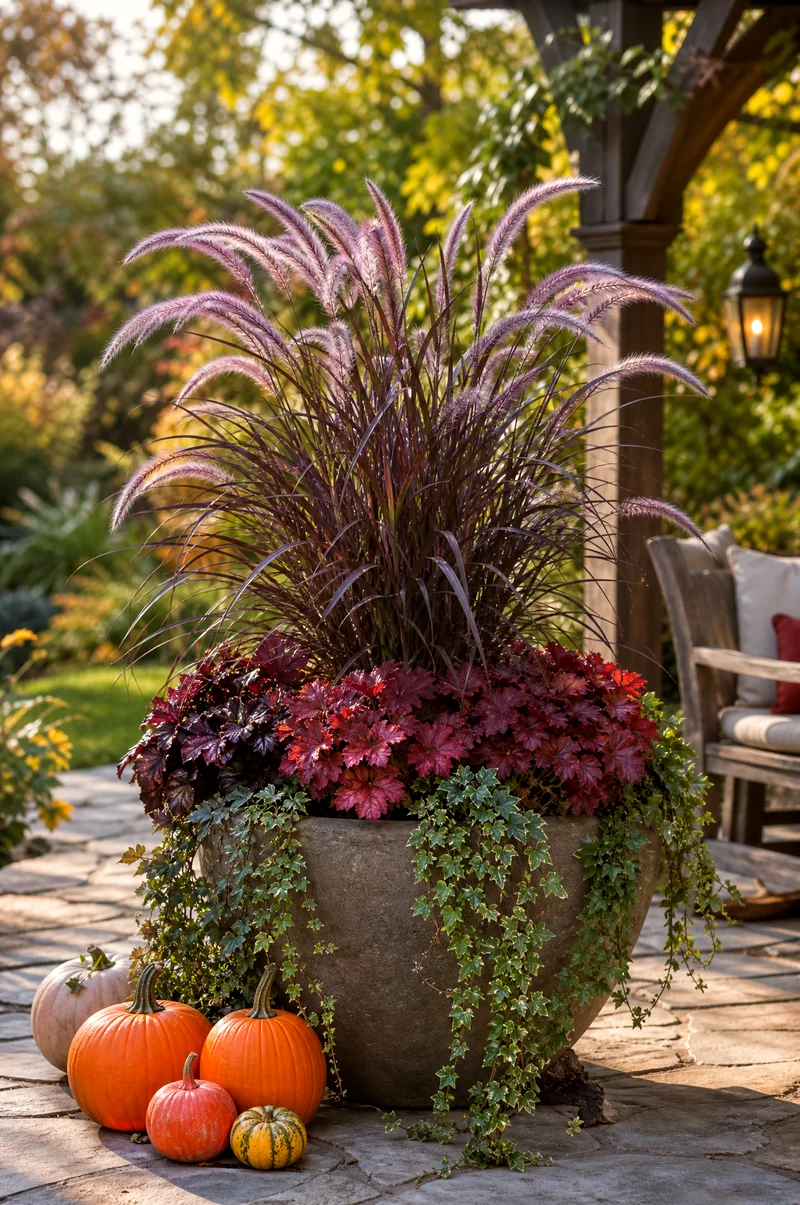
Purple fountain grass is made for fall containers. It gives height, movement, and those soft bottlebrush plumes that catch low autumn light beautifully. Place it in the center or slightly toward the back, then group orange pumpkins around the base with burgundy heuchera and trailing ivy.
The pumpkins are not just decoration here. They visually anchor the pot so the tall grass doesn’t look like it might blow away. This is a good choice for a sunny porch or patio, but remember that purple fountain grass is often grown as an annual in cold climates. Enjoy it while it looks good, then compost it after frost if it won’t overwinter where you live.
Rustic Pumpkin and Fern Planter
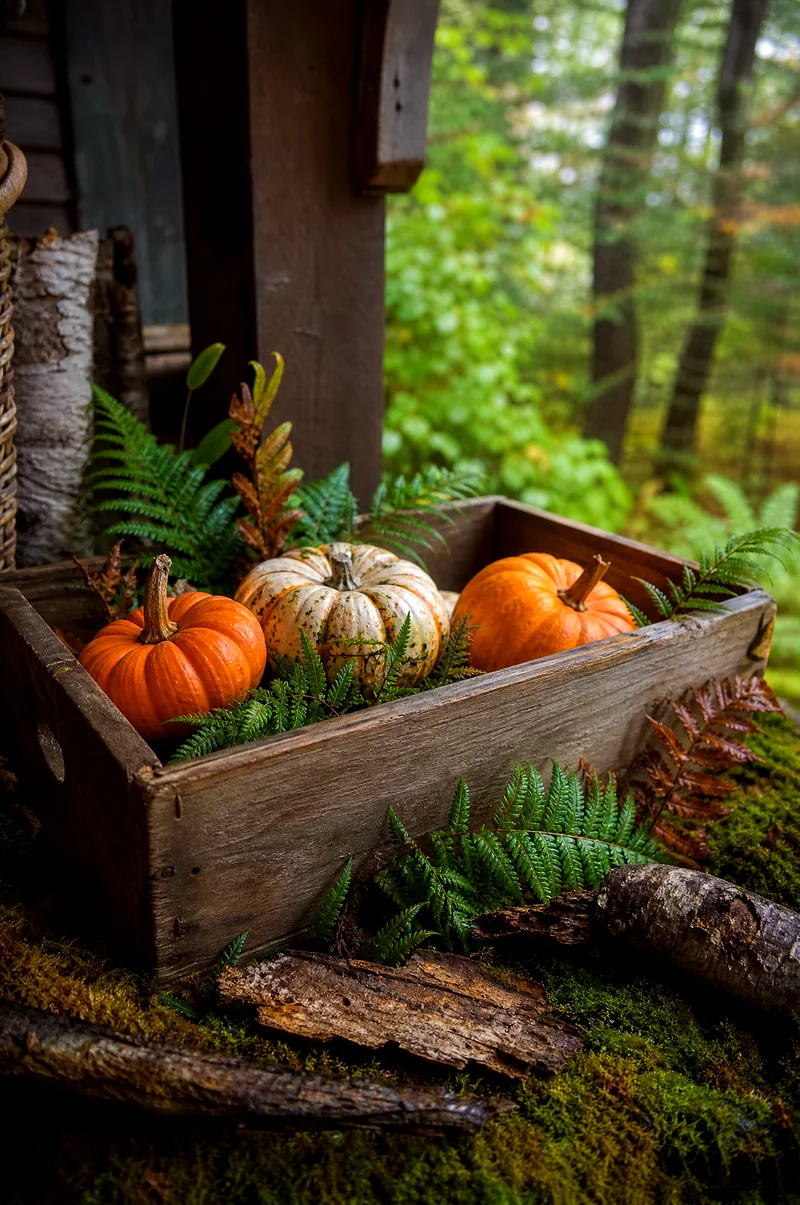
A weathered wooden box filled with small pumpkins, autumn ferns, moss, and natural branches gives you that quiet woodland look without trying too hard. It works especially well on a shaded porch, under a tree, or near a garden gate where bright sun-loving flowers would look a little out of place.
Ferns like more consistent moisture than pumpkins do, so don’t press pumpkins directly into damp potting mix. Set them on moss, bark chips, a saucer, or even a small upside-down nursery pot hidden below the moss. That small lift keeps air moving under the rind and buys you more time before rot starts.
Pumpkin and Ornamental Pepper Planter
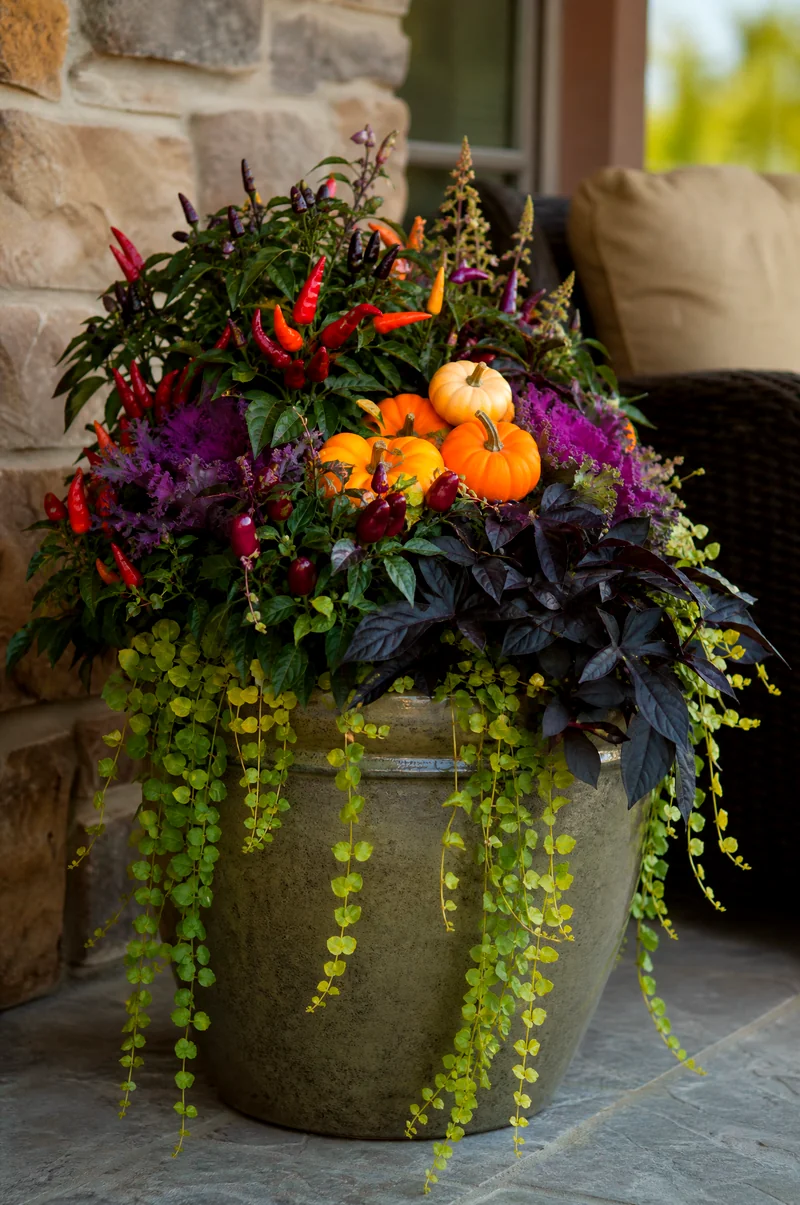
This is one of the brightest pumpkin planter ideas, and I mean bright in the best way. Mini pumpkins look fantastic beside ornamental peppers in red, orange, yellow, and purple, especially when you add dark foliage and a spill of creeping Jenny.
Use this one early in the season or on a protected porch because ornamental peppers are frost-sensitive. They can look superb in September and early October, then sulk fast after cold nights. If frost is forecast, move the pot under cover or enjoy it as a short-season display. Not every container has to last until Thanksgiving.
Succulent Pumpkin Planter
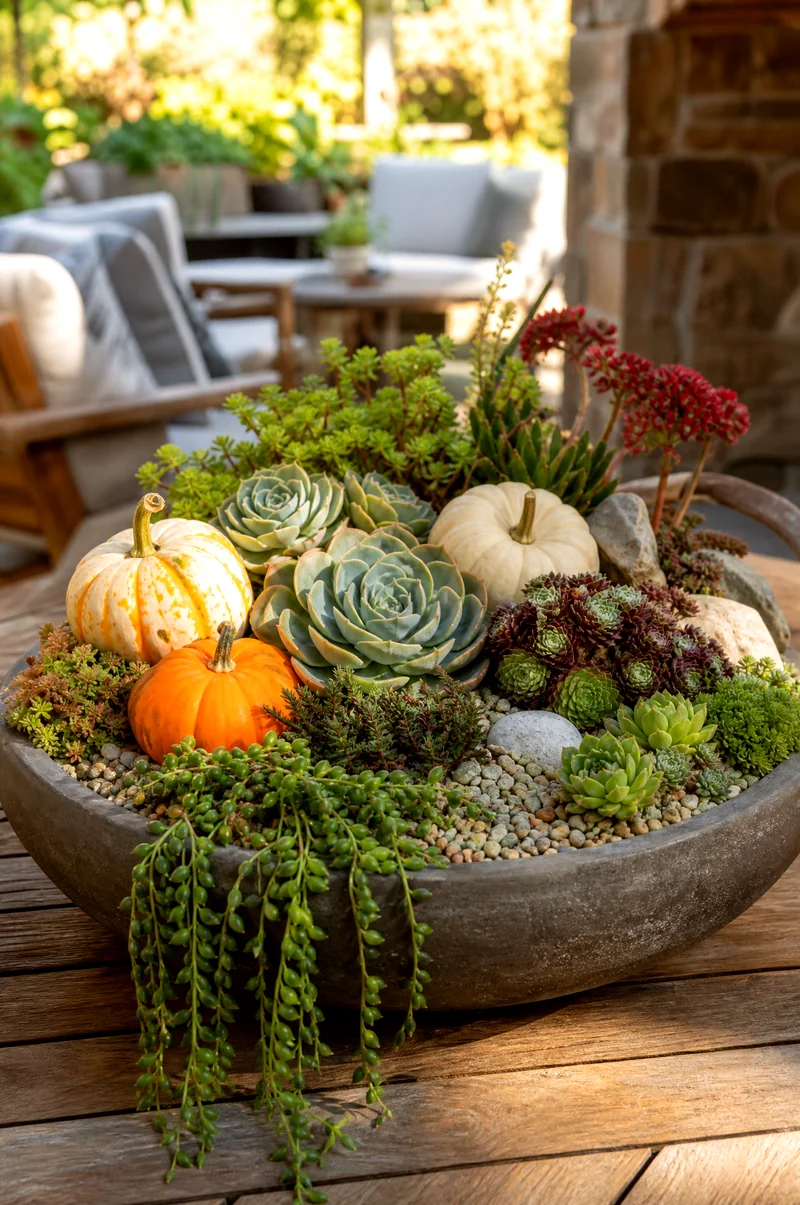
Miniature pumpkins paired with echeveria, sedum, sempervivum, and trailing succulents make a modern fall container with clean lines and lower water needs. It is a good choice for a sunny covered porch where rain won’t soak the pot every other day.
Succulents don’t want the same treatment as pansies or kale. Use a gritty mix, a pot with drainage, and water lightly only when the mix is dry. If you are tucking pumpkins into the arrangement, keep them above the soil surface on gravel or small flat stones. Soggy fall potting mix is where good succulent planters go to die.
Pumpkin and Pansy Planter
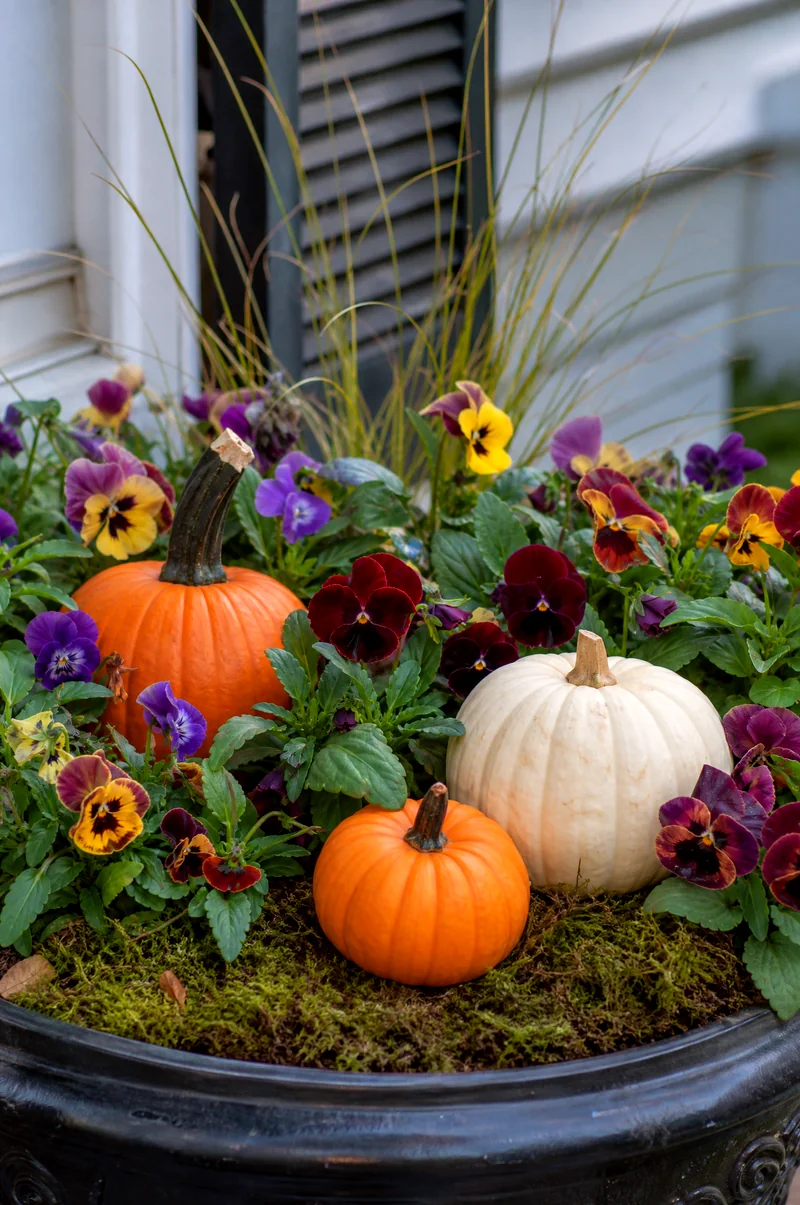
Pansies are reliable little workhorses for cool weather, and they pair beautifully with both orange and white pumpkins. Use purple, yellow, and burgundy pansies for a cheerful mix that still feels autumnal instead of springlike.
Deadhead spent pansy blooms every few days if you want steady color. They also bloom better with even moisture, but that creates the usual pumpkin problem. Raise pumpkins slightly above the soil with moss, bark, or a hidden plant saucer so the pansies can drink without the pumpkins rotting from below.
Pumpkin and Heuchera Planter
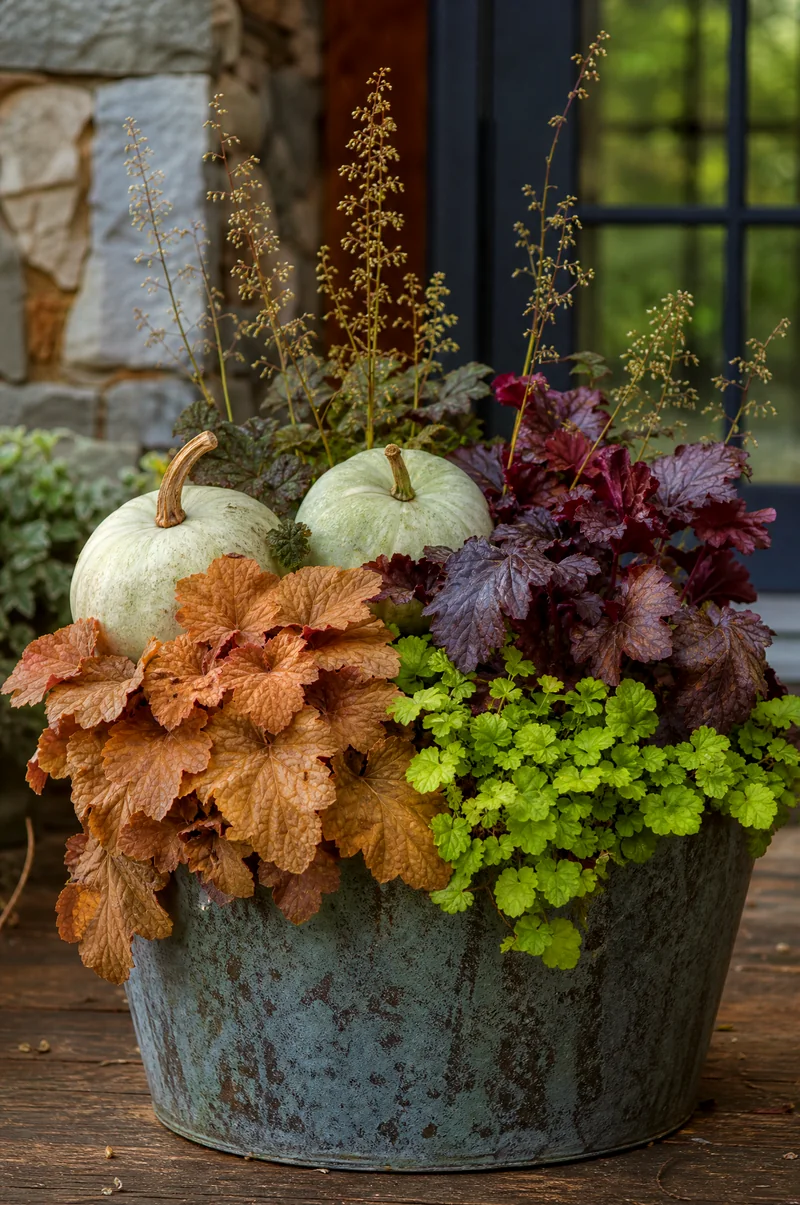
Heuchera is one of my favorite answers to tired fall containers because it gives strong color without depending on flowers. Caramel, burgundy, lime, plum, and copper varieties all look good with pale pumpkins, and the leaves keep their shape longer than many fall bloomers.
This combination is especially useful in part shade, where mums and some annuals may slow down. Use three different heuchera colors if the pot is large, but don’t overdo it in a small container. Too many foliage colors can look busy. Let the pumpkins act as quiet resting points between the leaves.
Pumpkin and Ornamental Corn Planter
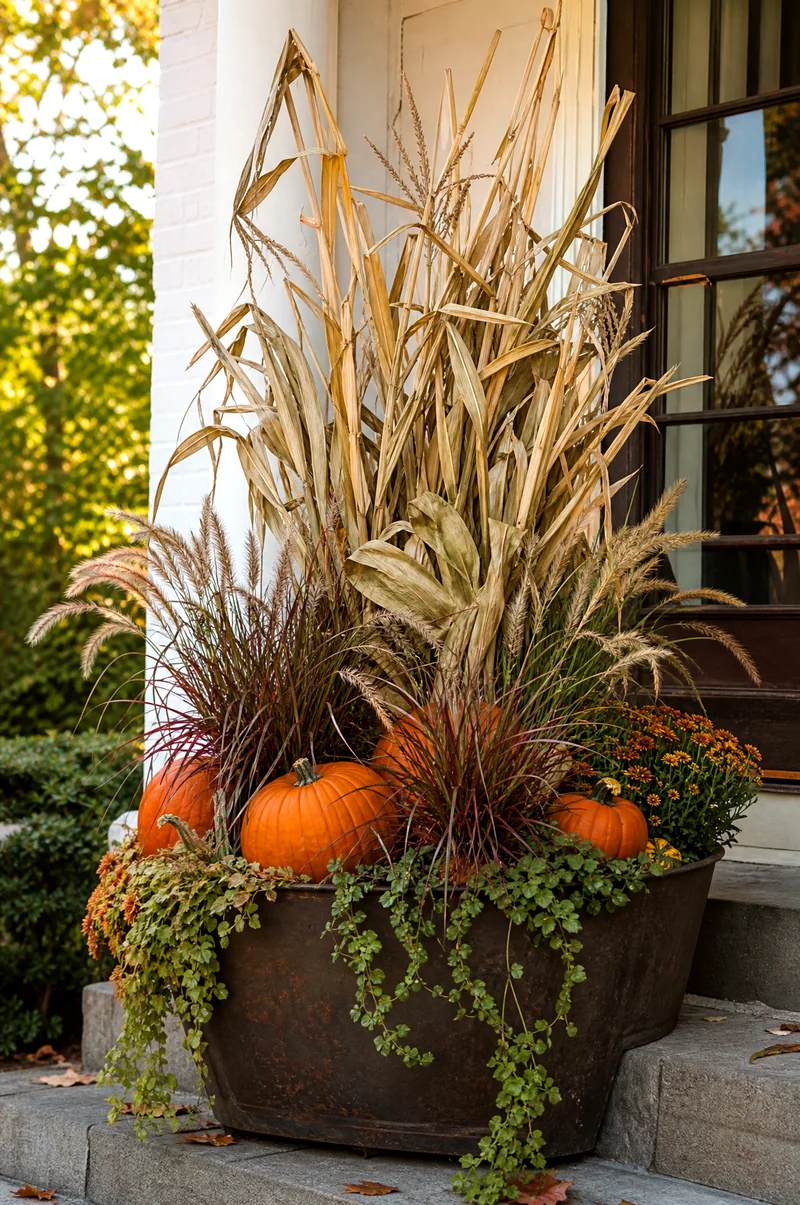
Dried ornamental corn stalks behind orange pumpkins, grasses, and trailing greenery create the classic harvest look many people want on a front porch. The vertical stalks add instant height, while the pumpkins and low plants keep the base from looking thin.
Anchor the stalks better than you think you need to. Dry fall wind can tip tall arrangements, especially in lightweight plastic or resin pots. Push the stalks deep into the soil, tie them to a bamboo stake if needed, and use a heavier container when the display sits in an exposed spot.
Pumpkin and Rosemary Planter
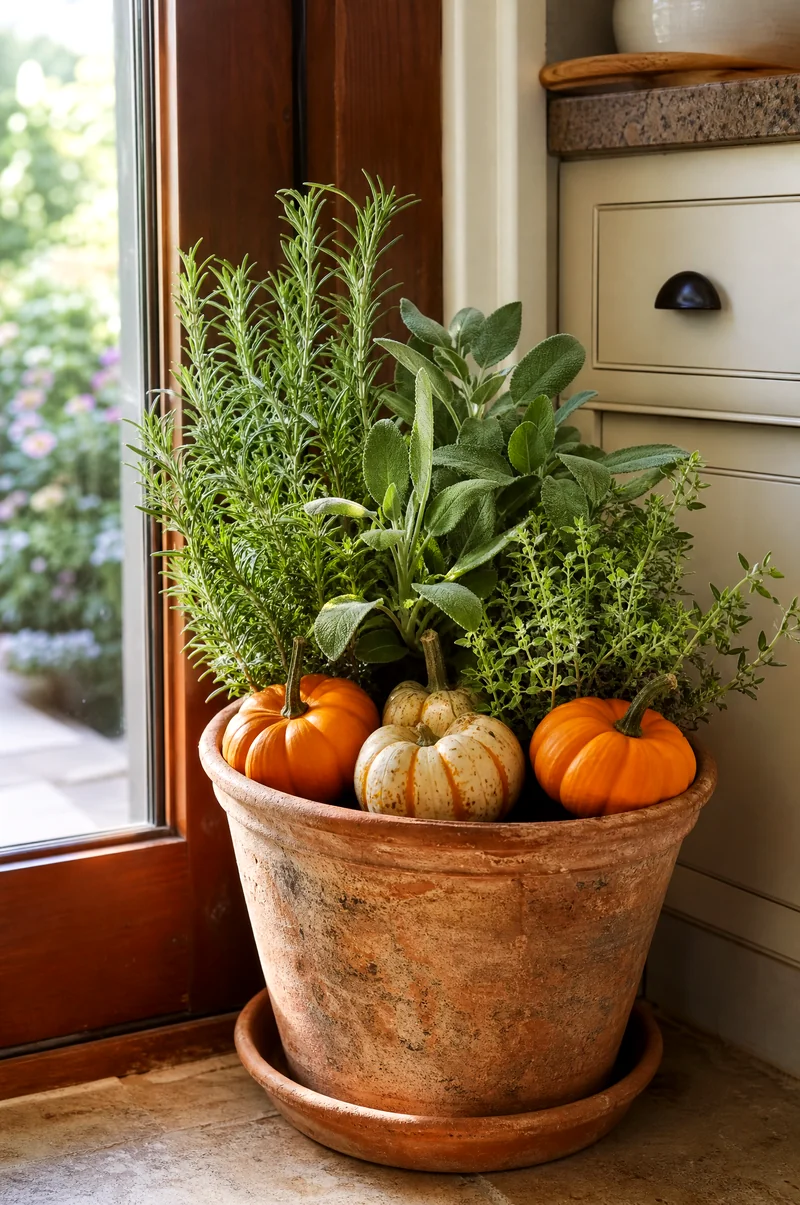
Mini pumpkins arranged around upright rosemary, sage, and thyme make a fragrant, useful fall container. It looks good by a kitchen door, and you can snip herbs while you cook, which is far better than letting them sit around as decoration only.
These Mediterranean herbs prefer sun and sharp drainage. A terracotta pot or any container with a good drainage hole is a smarter choice than a lined basket that holds too much water. If your rosemary starts dropping leaves or the thyme looks black at the base, the mix is probably staying too wet.
Black Pumpkin Gothic Planter
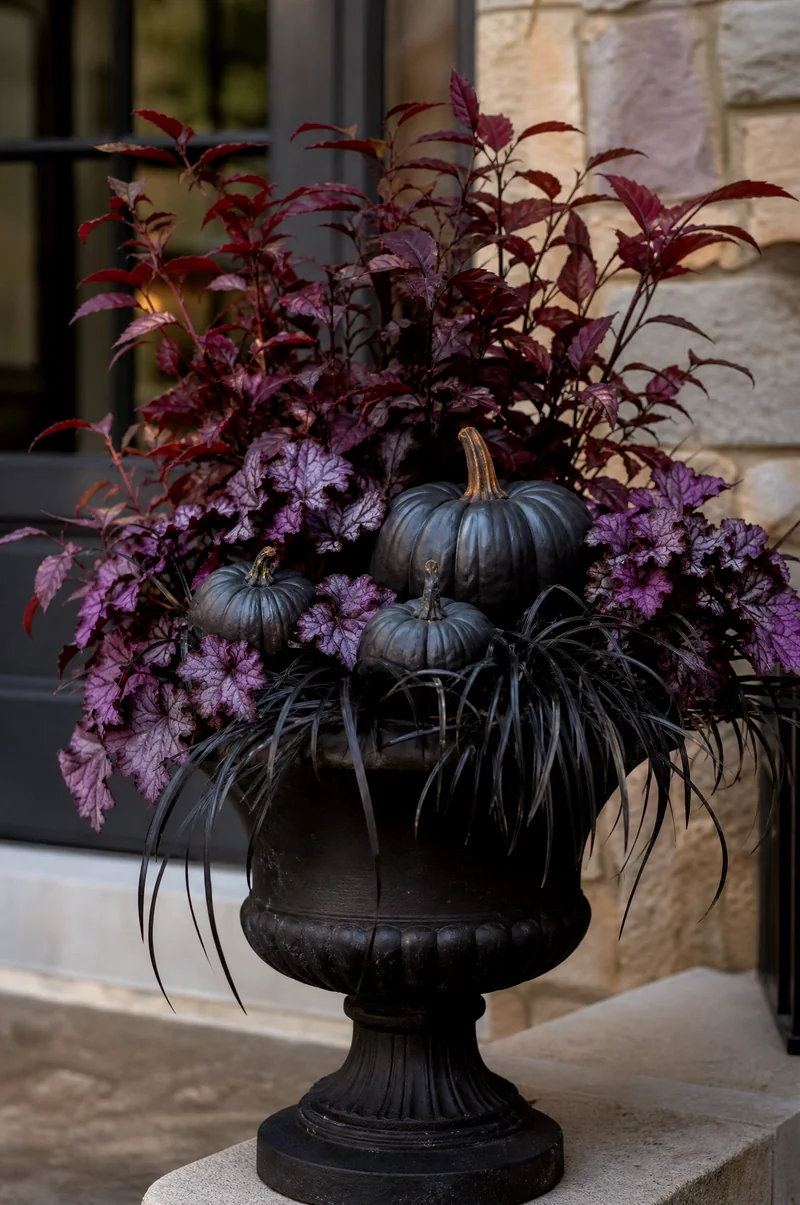
Dark pumpkins, black mondo grass, purple heuchera, and deep burgundy foliage can look dramatic without becoming cartoonish. A black urn makes sense here, but the trick is contrast. Use different leaf shapes and textures so the whole pot doesn’t read as one dark lump.
If you paint pumpkins, let them dry fully before placing them in the planter. Damp paint can stick to leaves, trap moisture, and make a mess. Matte black, charcoal, and deep plum usually look more natural than glossy jet black. Add just a touch of silver foliage if the arrangement needs a little breathing room.
Pumpkin and Sedum Planter
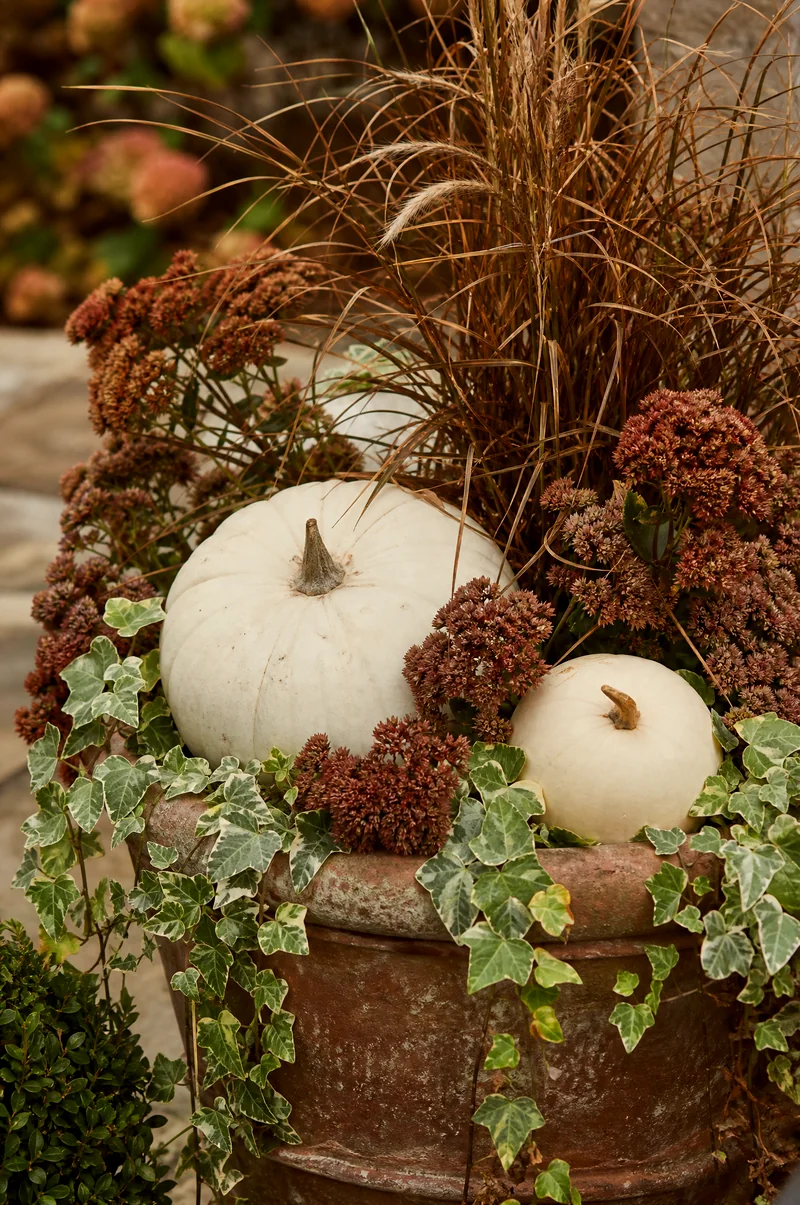
Rust-colored sedum flower heads, cream pumpkins, bronze grasses, and trailing ivy make a muted container that feels natural and grown-up. Sedum is useful in fall because the flower heads hold their structure when softer blooms start to collapse.
This is also a good option if you don’t want a bright orange display. Let the sedum provide the warm color, then use cream or pale green pumpkins to keep things soft. Sedum likes decent drainage, so avoid packing the pot with water-holding moss right around the crown.
Pumpkin and Cyclamen Planter
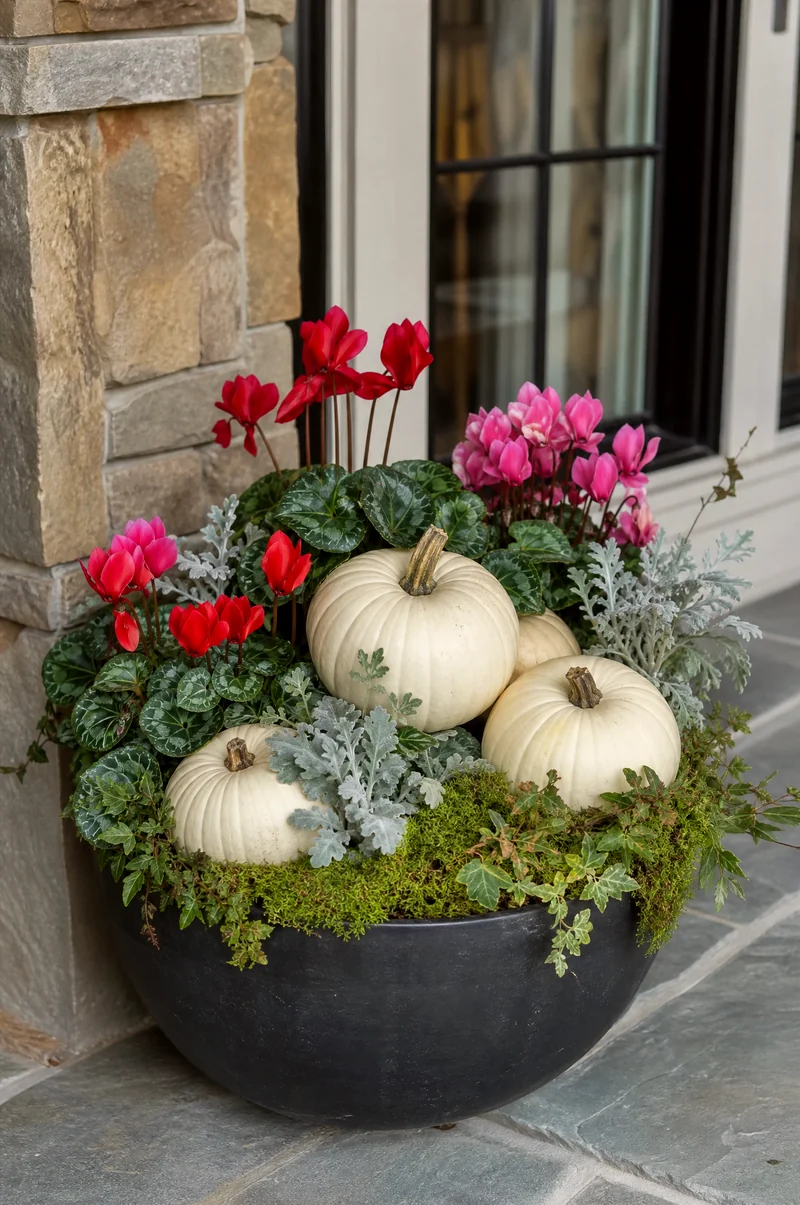
White pumpkins with red or pink cyclamen, silver foliage, and moss make an elegant planter for a covered porch. Cyclamen blooms look delicate, but they handle cool conditions well as long as they are not waterlogged.
Under cover is the key phrase. Cyclamen can rot if autumn rain soaks the pot day after day. Water near the edge of the plant rather than dumping water into the crown, and let the top of the mix dry slightly between waterings. If the flowers flop and the soil is wet, don’t water again out of sympathy. That usually makes it worse.
Pumpkin and Berry Branch Planter
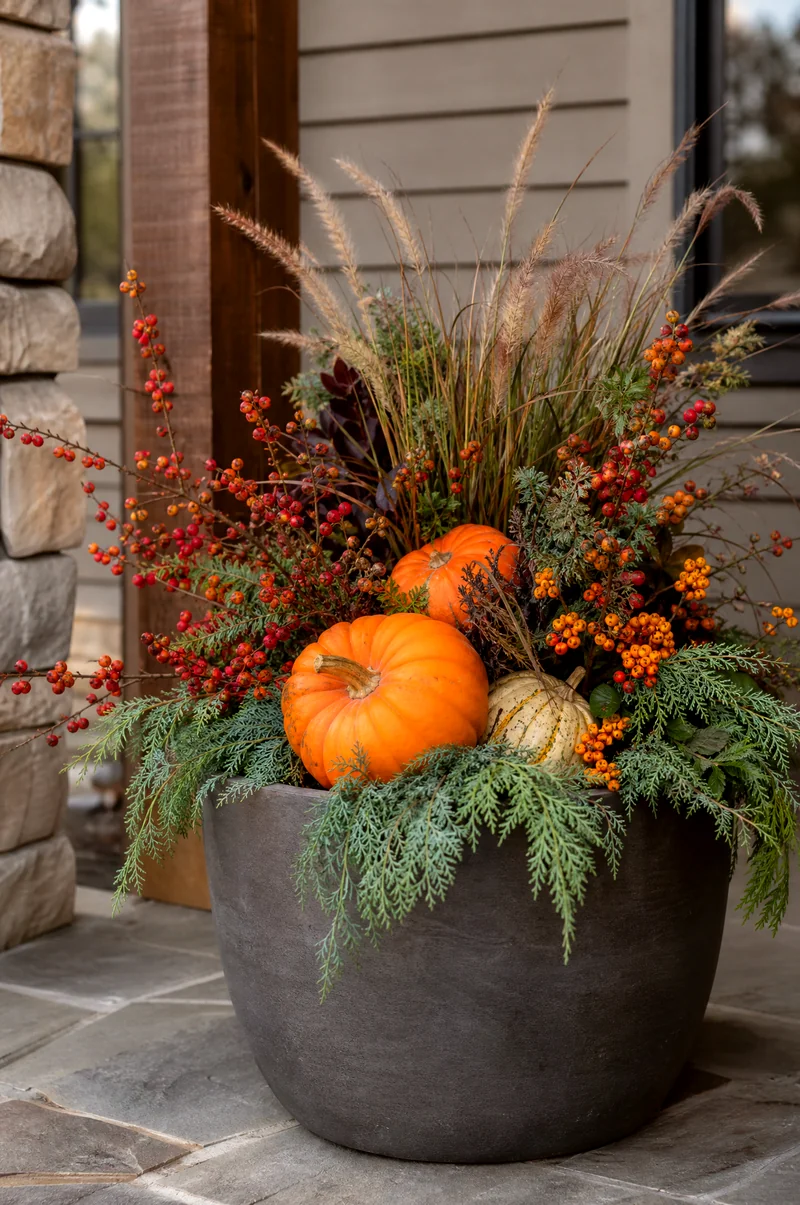
Pumpkins, berry branches, evergreen foliage, and ornamental grasses give a container height, color, and texture without relying on tender flowers. It is a strong choice for late fall because the branches keep looking good after many annuals are finished.
Choose berry materials carefully, especially near pets or young children. Some ornamental berries are toxic, and dropped berries on steps or walkways can be a nuisance. If safety is a concern, use faux berry stems, rose hips from a known safe source, or stick with colorful dogwood stems instead.
Cascading Pumpkin Planter
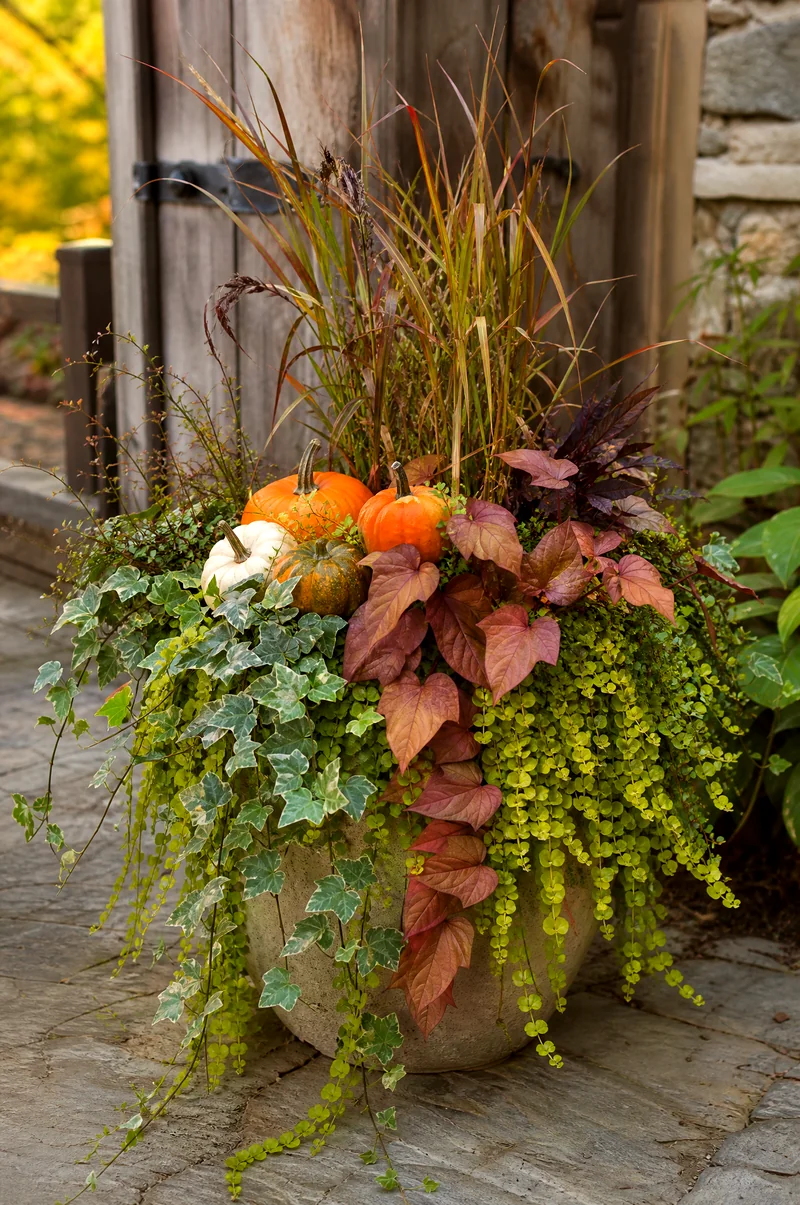
A cascading planter uses small pumpkins among upright grasses, with sweet potato vine, ivy, and creeping Jenny spilling over the sides. The trailing plants soften the pot edge and make the whole container look fuller, even if the center planting is simple.
Sweet potato vine is gorgeous until frost hits, then it can collapse almost overnight. That doesn’t make it a bad choice, but it does mean this planter is best for early fall or mild regions. Ivy and creeping Jenny usually hold longer in cool weather, so they can carry the display after the tender vine fades.
Pumpkin and Cabbage Basket Planter
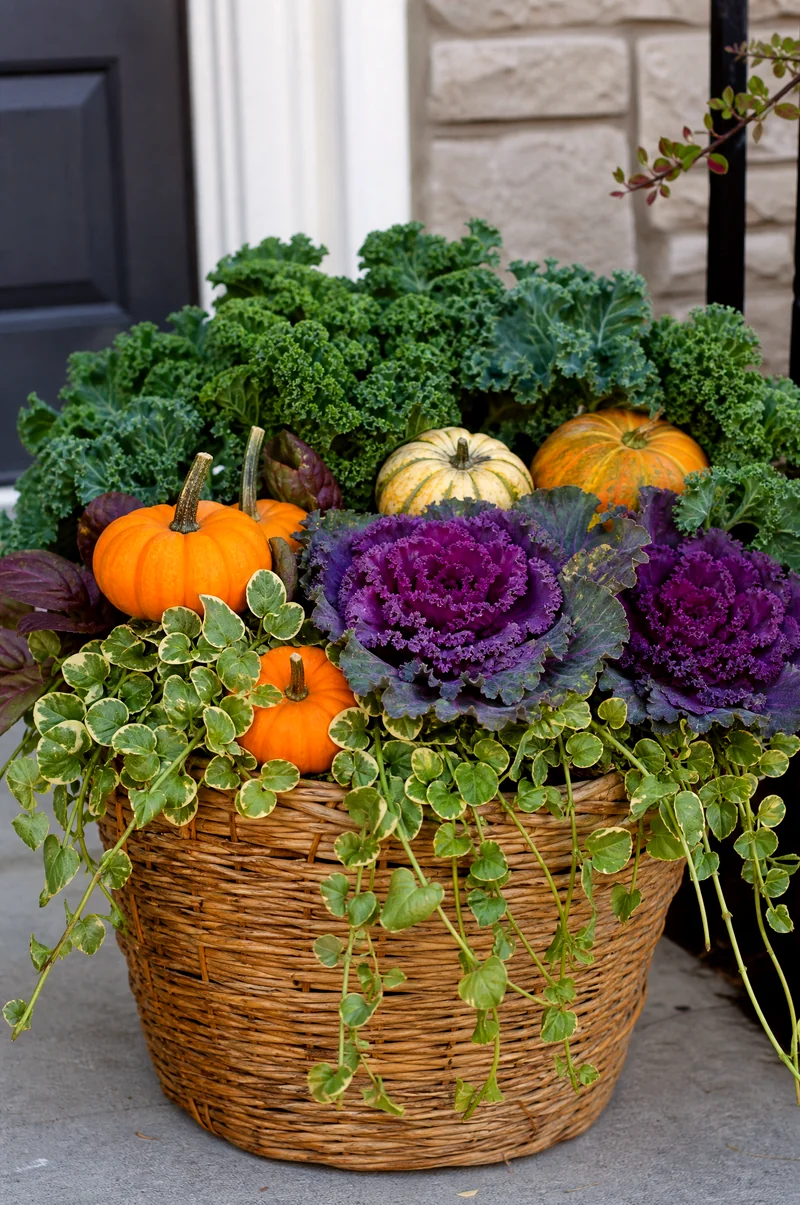
Purple ornamental cabbage, green kale, mini pumpkins, and trailing foliage look generous in a large woven basket. The basket brings warmth and texture, while the cabbage and kale handle cool nights better than many flowering annuals.
Do not plant directly into an unlined basket unless you enjoy replacing soggy, collapsing baskets. Use a plastic liner with drainage holes, then place a saucer or tray underneath if the basket sits on a surface you need to protect. The roots need moisture, but they should not sit in cold, wet soil for days.
Pumpkin and Lavender Planter
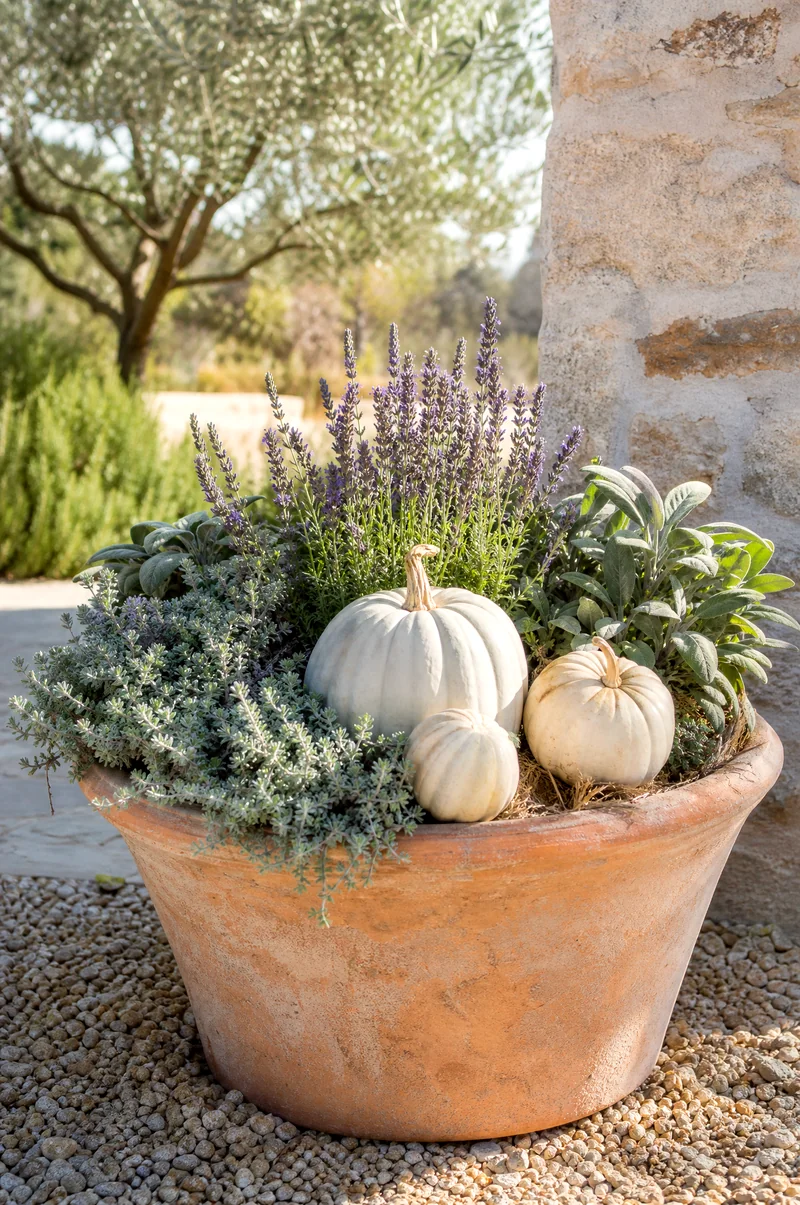
Pale pumpkins with lavender, sage, and other silver foliage make a soft Mediterranean-inspired fall container. It is especially pretty near pale brick, gravel paths, or a sunny porch where the gray-green leaves don’t get lost.
Lavender is not a plant for heavy, wet fall potting mix. Give it sun, drainage, and a lighter hand with the watering can. If you garden in a rainy climate, use this idea under an overhang or swap lavender for a tougher silver foliage plant that tolerates more moisture, such as dusty miller.
Pumpkin and Dwarf Conifer Planter
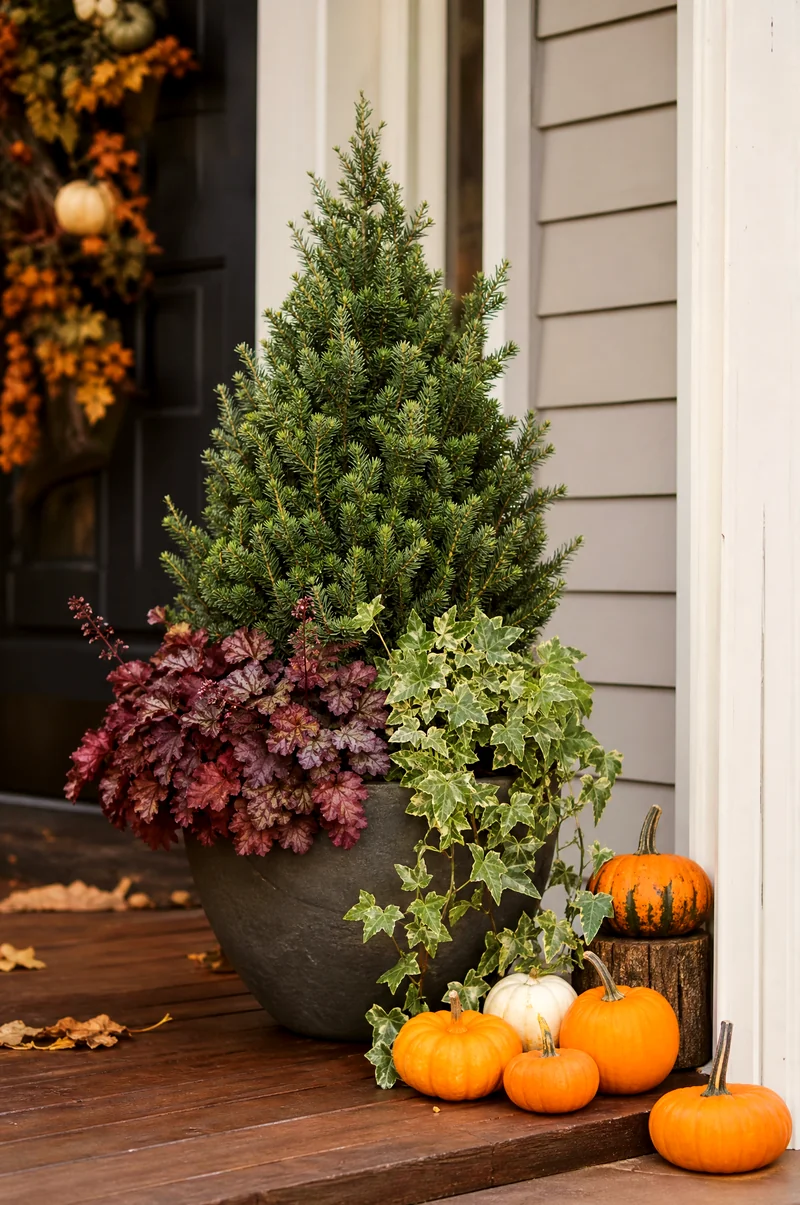
A small evergreen conifer surrounded by mini pumpkins, heuchera, and ivy gives you a planter that can move from fall into winter with very little fuss. Once the pumpkins soften or the season changes, remove them and tuck in pinecones, cut evergreen sprigs, or winter berries.
Just don’t treat the conifer like disposable décor if you want it to live. Dwarf conifers need root room, drainage, and regular watering until the soil freezes. A tiny nursery pot jammed into a decorative container may look fine for two weeks, but it won’t support healthy growth for long.
Pumpkin and Hydrangea Planter
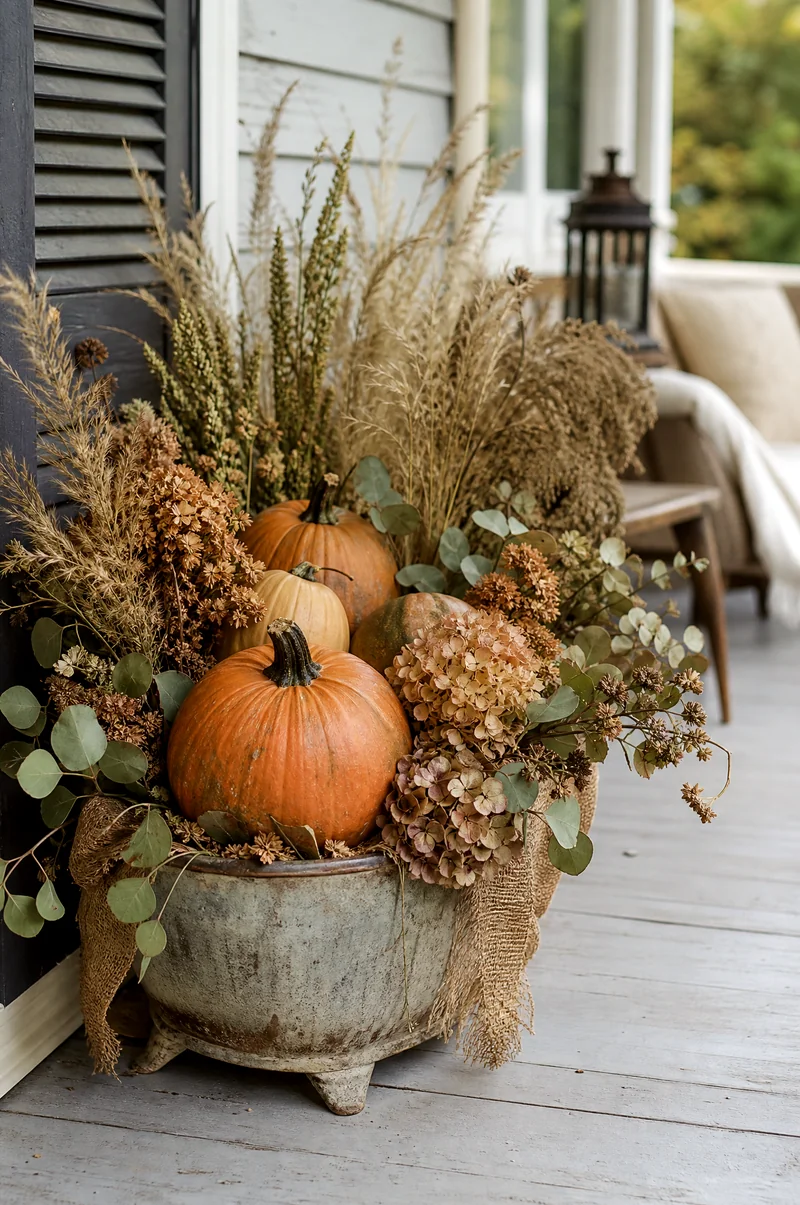
Dried hydrangea blooms, pumpkins, eucalyptus, and grasses create a vintage fall arrangement with plenty of volume. Dried hydrangeas are useful because they fill space without needing water, which is handy when you are trying to keep pumpkins dry.
This planter belongs on a covered porch, not out in steady rain. Dried hydrangeas can brown, sag, or mold when they stay wet. If you want a longer-lasting version, use sturdy dried blooms, keep them under cover, and avoid crowding them tightly against damp foliage.
Pumpkin and Red-Twig Dogwood Planter
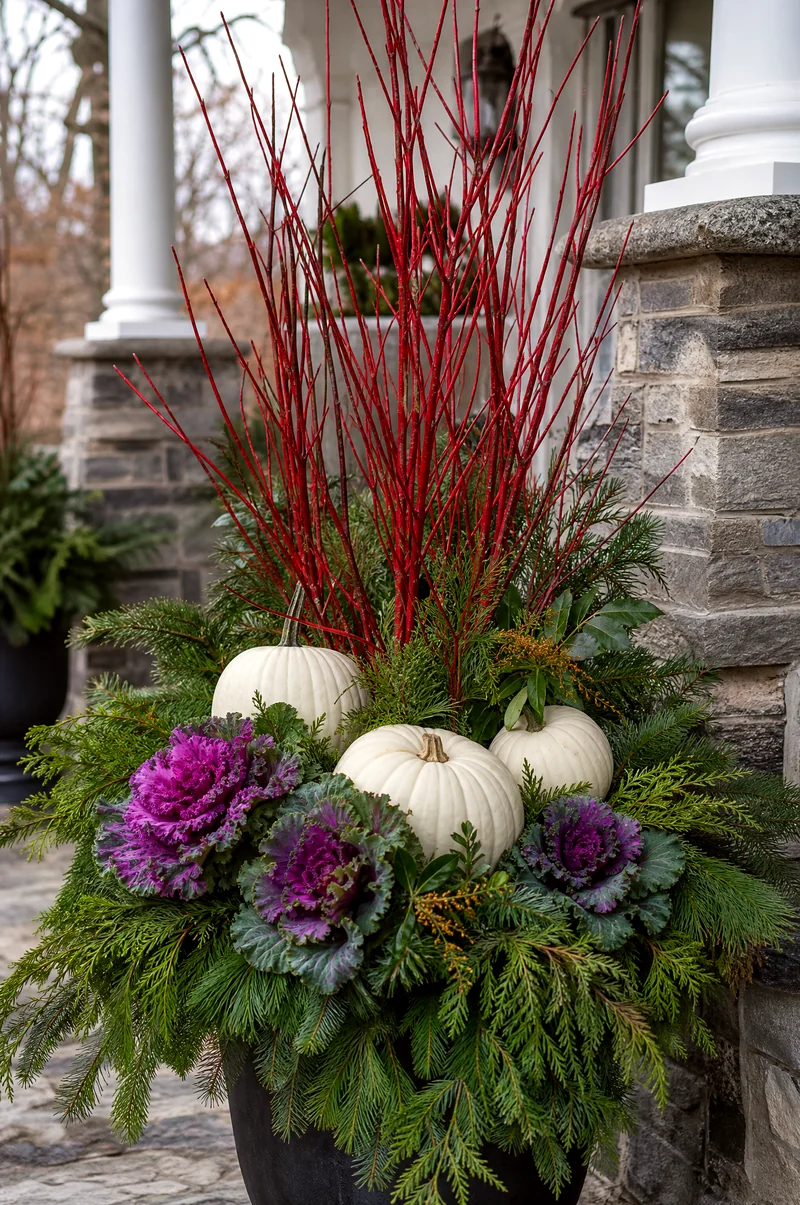
Red-twig dogwood branches bring strong vertical structure to a fall planter, especially above white pumpkins, ornamental kale, and evergreen foliage. The red stems look good in autumn and become even more useful as the season turns colder.
Push the branches deep into the soil or into a hidden block of floral foam set above the root zone. You want them upright, not wobbling every time the door opens. This is a smart option for gardeners who want one container to carry through the awkward stretch between fall flowers and winter greens.
Pumpkin and Golden Grass Planter
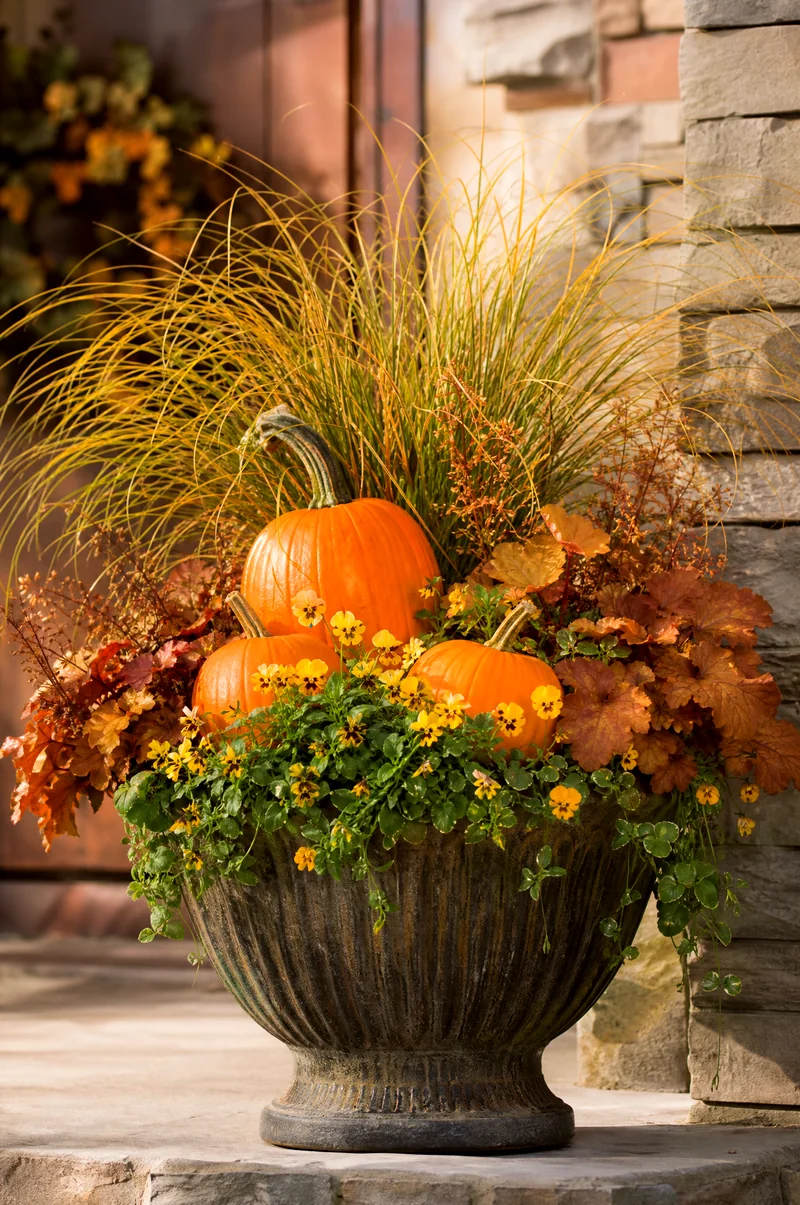
Orange pumpkins, golden carex, yellow violas, and bronze foliage create a warm, sunlit palette even on gray days. Golden grasses can brighten a shaded entry, but they still need enough light to hold their color.
If the grass starts looking dull green or weak, it may not be getting enough light. Place this planter where it receives morning sun or bright open shade. The violas will appreciate cool temperatures and steady moisture, while the pumpkins should still be lifted slightly so they don’t sit on wet soil.
Pumpkin and Fern Woodland Urn
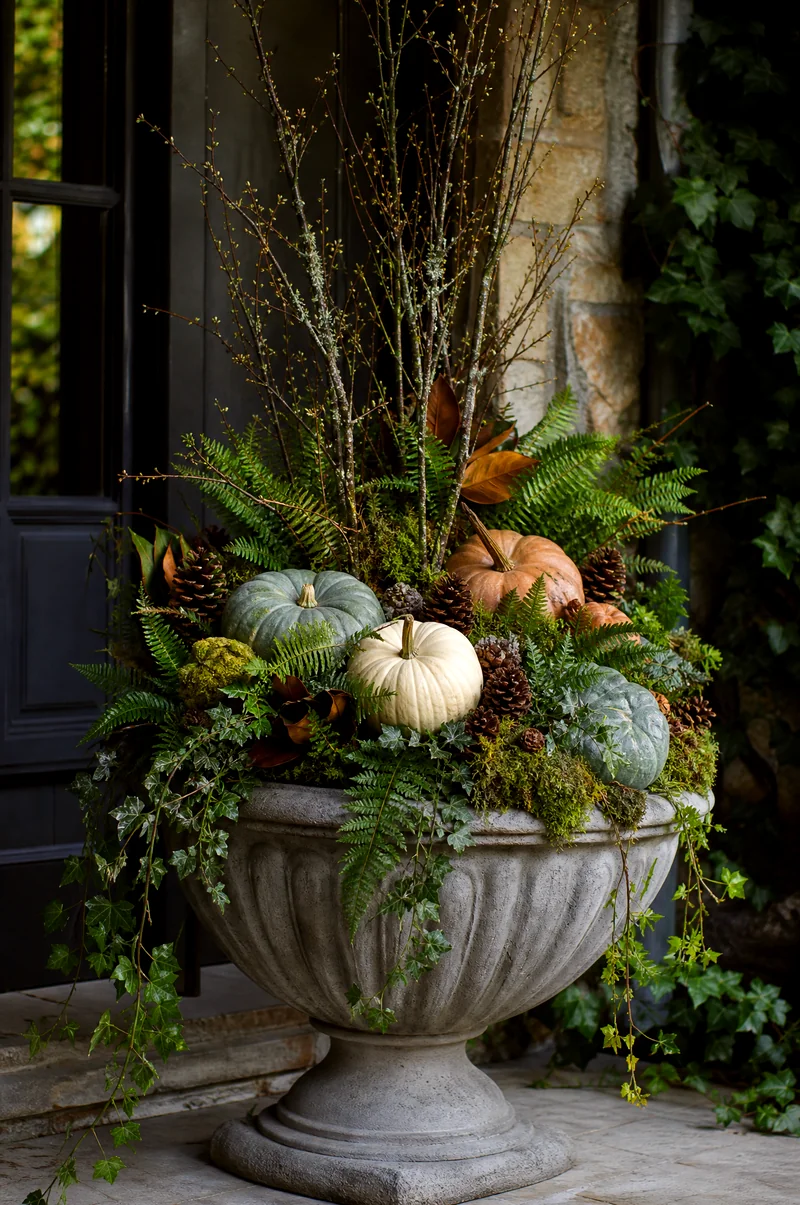
This version is more formal than the rustic wooden fern planter. Use a stone urn for weight and structure, then layer pumpkins with ferns, moss, ivy, pinecones, and a few upright branches.
The urn makes the arrangement feel intentional, almost like a small woodland centerpiece for an entry. Keep the ferns watered, but avoid burying the pumpkins into the dampest part of the pot. A moss-covered riser or bark layer gives you the look without sacrificing the pumpkins too quickly.
Pumpkin and Coleus Planter
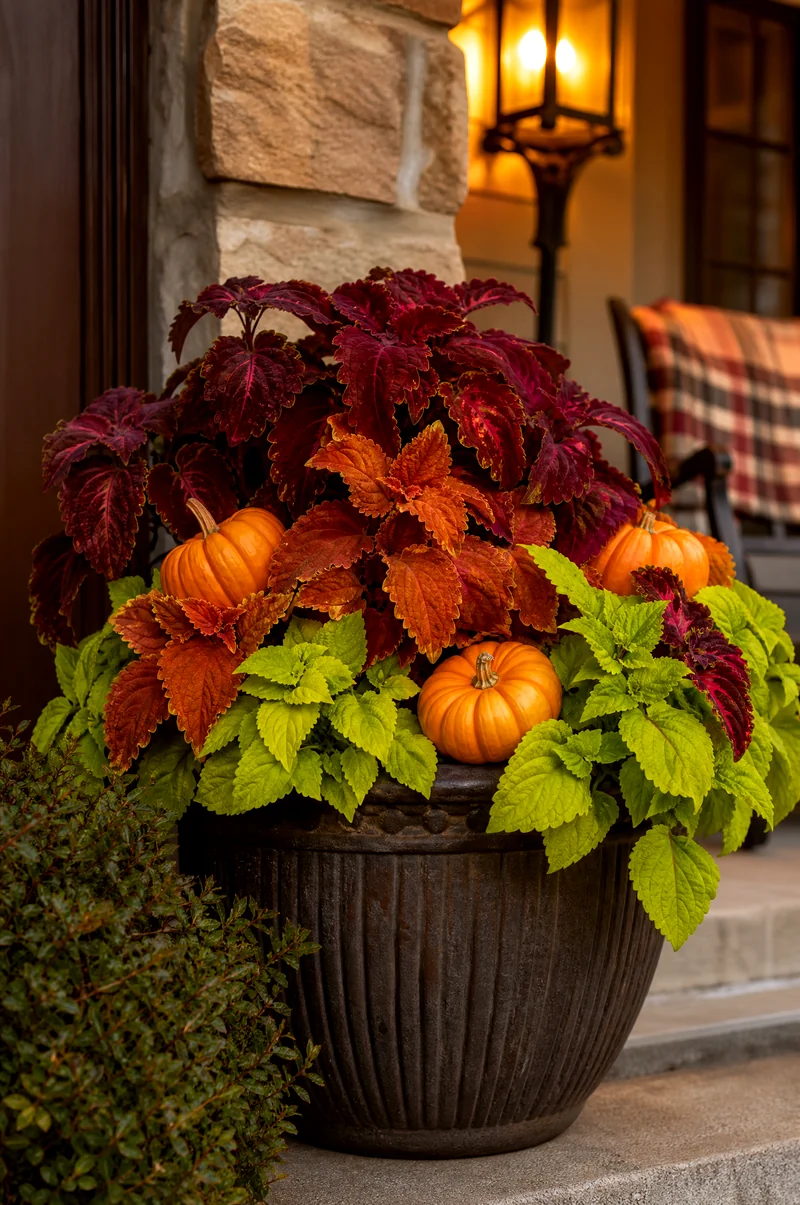
Burgundy, copper, and chartreuse coleus with mini pumpkins can be stunning in warm fall regions. Coleus gives bold foliage color that feels fresh when every porch on the street is leaning on mums.
The catch is cold. Coleus is not frost-hardy, and even chilly nights can make it look tired. Use this idea in mild climates, or treat it as an early fall display before the real cold arrives. Pinch off flower spikes if they appear so the plant keeps its energy in the leaves.
Pumpkin and Swiss Chard Planter
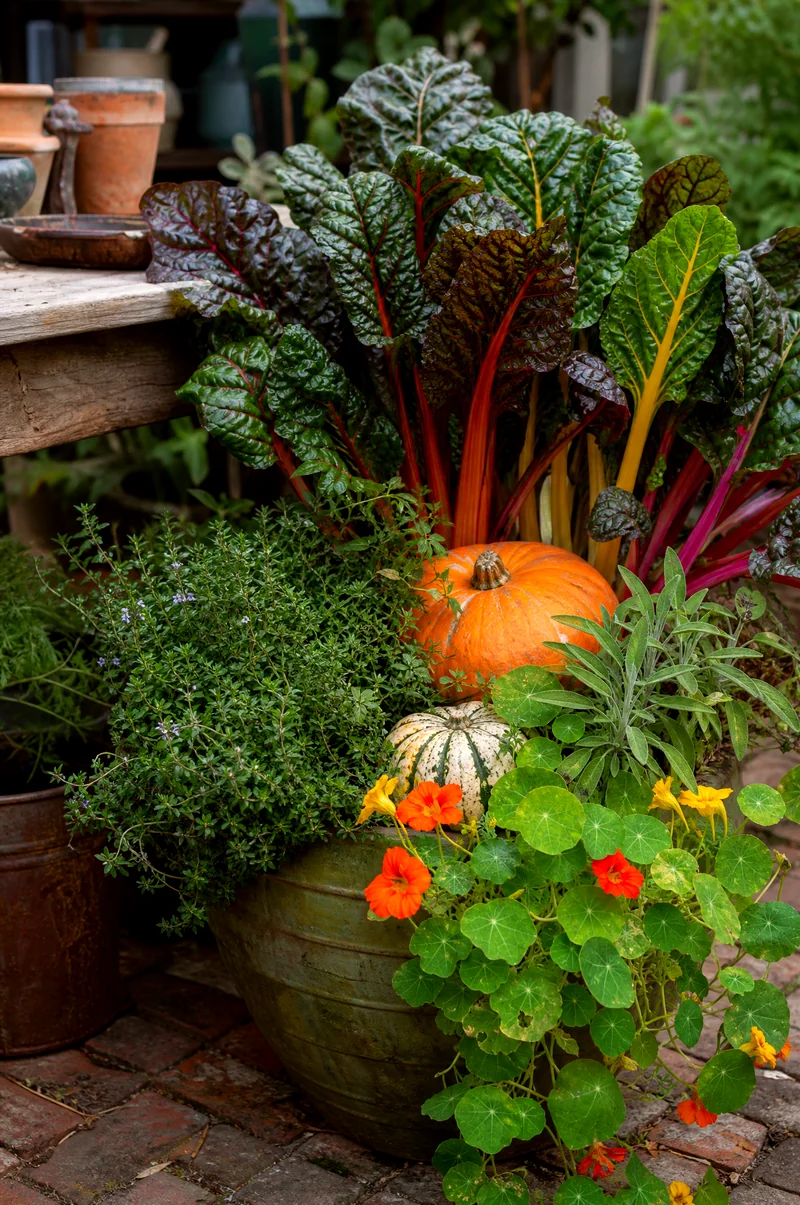
Colorful-stemmed Swiss chard, pumpkins, herbs, and trailing nasturtium make an edible ornamental container with real personality. Rainbow chard brings red, pink, orange, yellow, and white stems, which echo pumpkin colors without needing many flowers.
Chard handles cool weather better than nasturtium, so expect the nasturtium to quit first after frost. That’s fine. Pull it when it collapses and let the chard and herbs keep going. Use clean soil and avoid sprays if you plan to harvest from the container.
Pumpkin and Japanese Forest Grass Planter
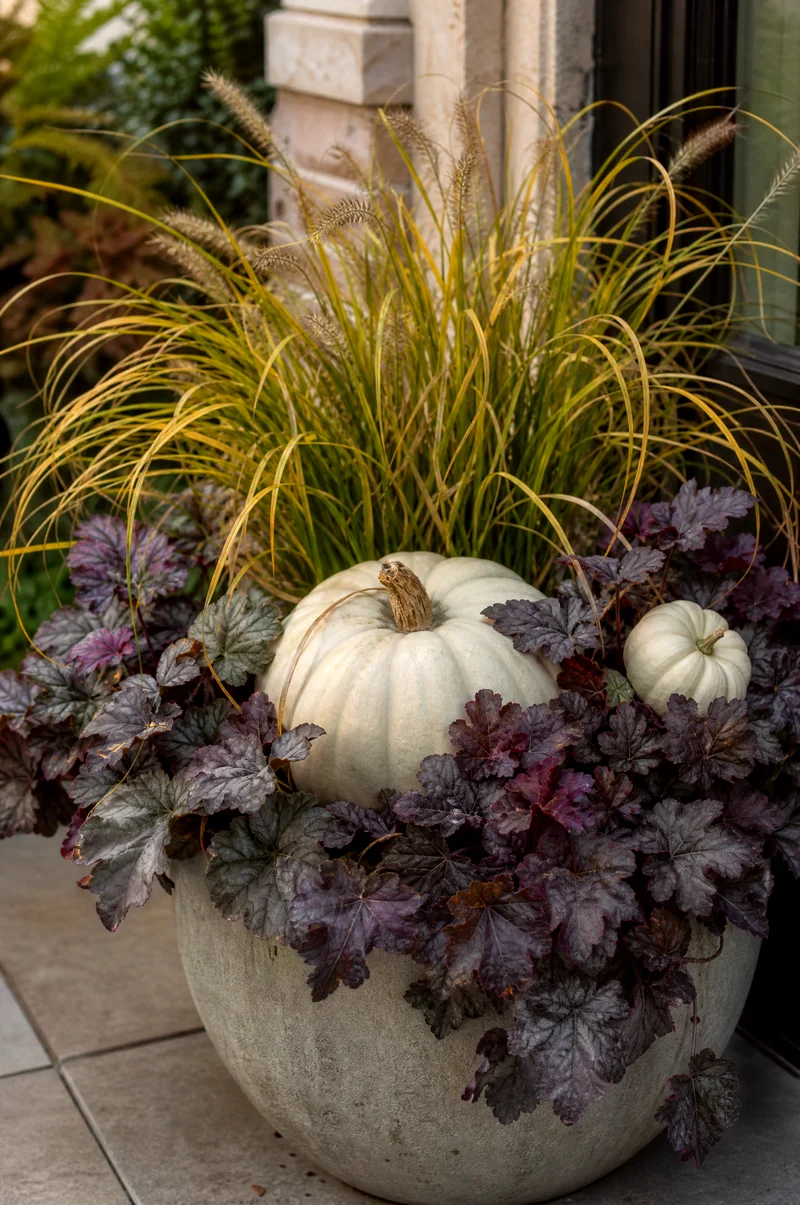
Golden Japanese forest grass, dark heuchera, and pale pumpkins make an elegant planter for a shaded porch. The arching grass gives movement, while the dark heuchera makes the pale pumpkins stand out.
This combination works because the main plants can handle part shade. Many classic fall containers are built around sun-loving plants, then people wonder why they stall by the front door. If your entry only gets gentle morning light or bright shade, this is one of the smarter choices.
Pumpkin and Aster Planter
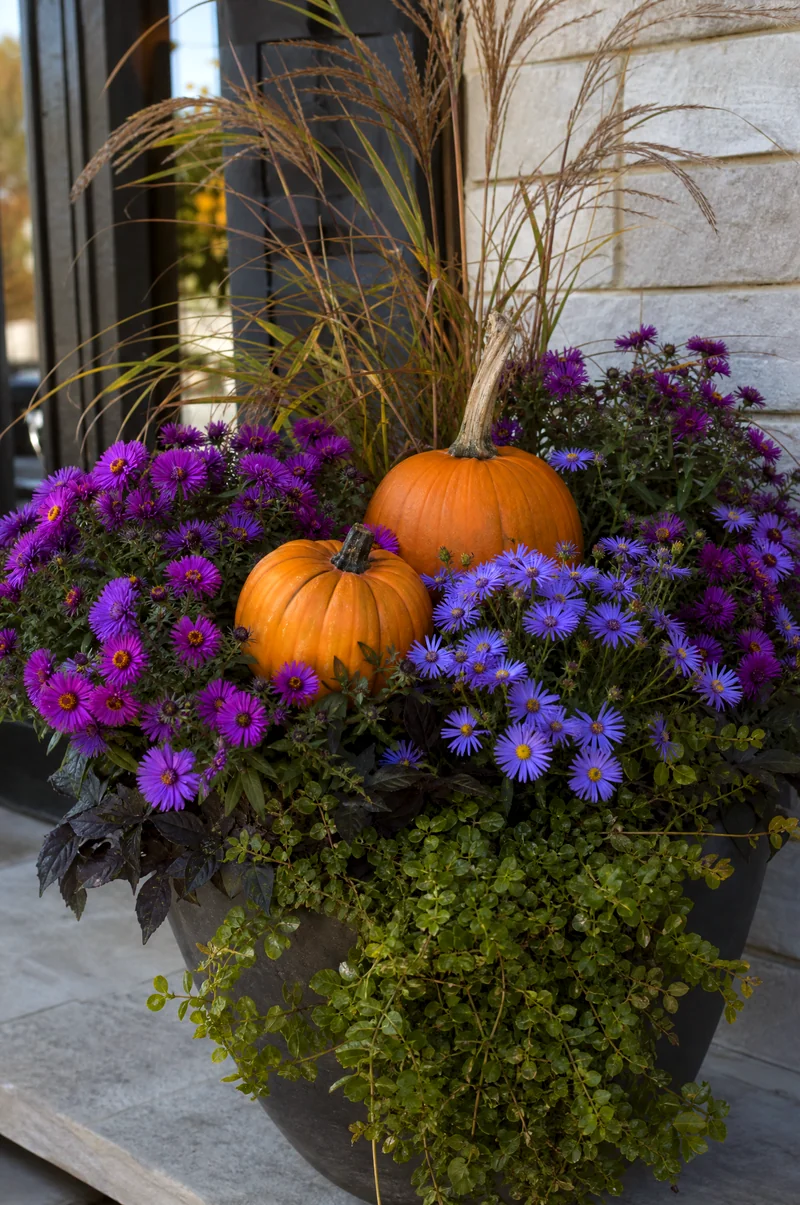
Purple or blue asters around small pumpkins give you a flower-filled fall display that isn’t just another mum pot. Add ornamental grasses and a little trailing greenery so the asters don’t look like a tight ball dropped into a container.
Asters need regular moisture while blooming, especially in pots. Trim spent flowers to keep the plant looking tidy and encourage a bit more color. Like pansies, asters and pumpkins want different moisture levels, so raise the pumpkins slightly rather than setting them directly on damp soil.
Pumpkin and Sunflower Planter
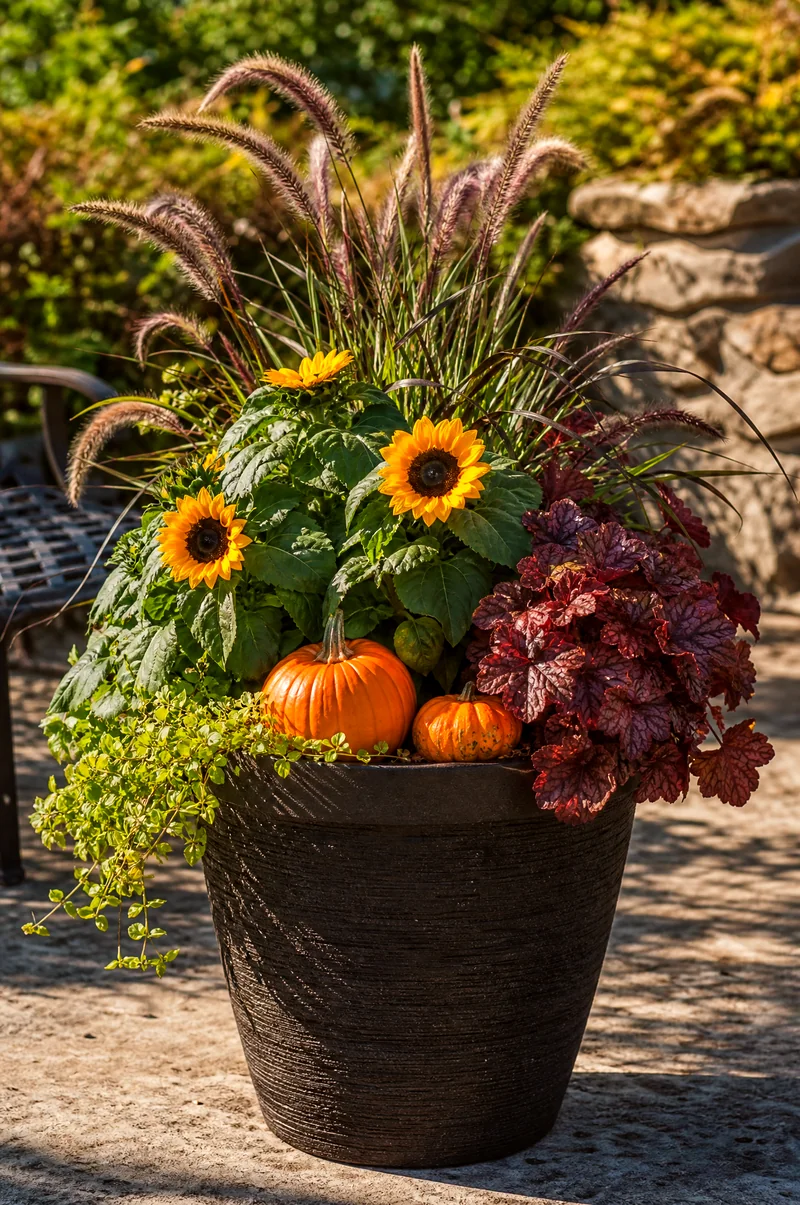
Dwarf sunflowers with orange pumpkins, ornamental millet, and burgundy foliage make a bold late-summer-to-fall container. This is a good bridge arrangement for the weeks when it still feels warm but you are ready for autumn color.
Use dwarf sunflower varieties in pots. Tall cutting sunflowers can act like sails in wind and tip a container fast. This display is best before hard frost, so don’t expect it to carry the whole season in a cold climate. Enjoy it early, then replace the sunflowers with kale, pansies, or evergreen sprigs when they fade.
Pumpkin and Ornamental Millet Planter
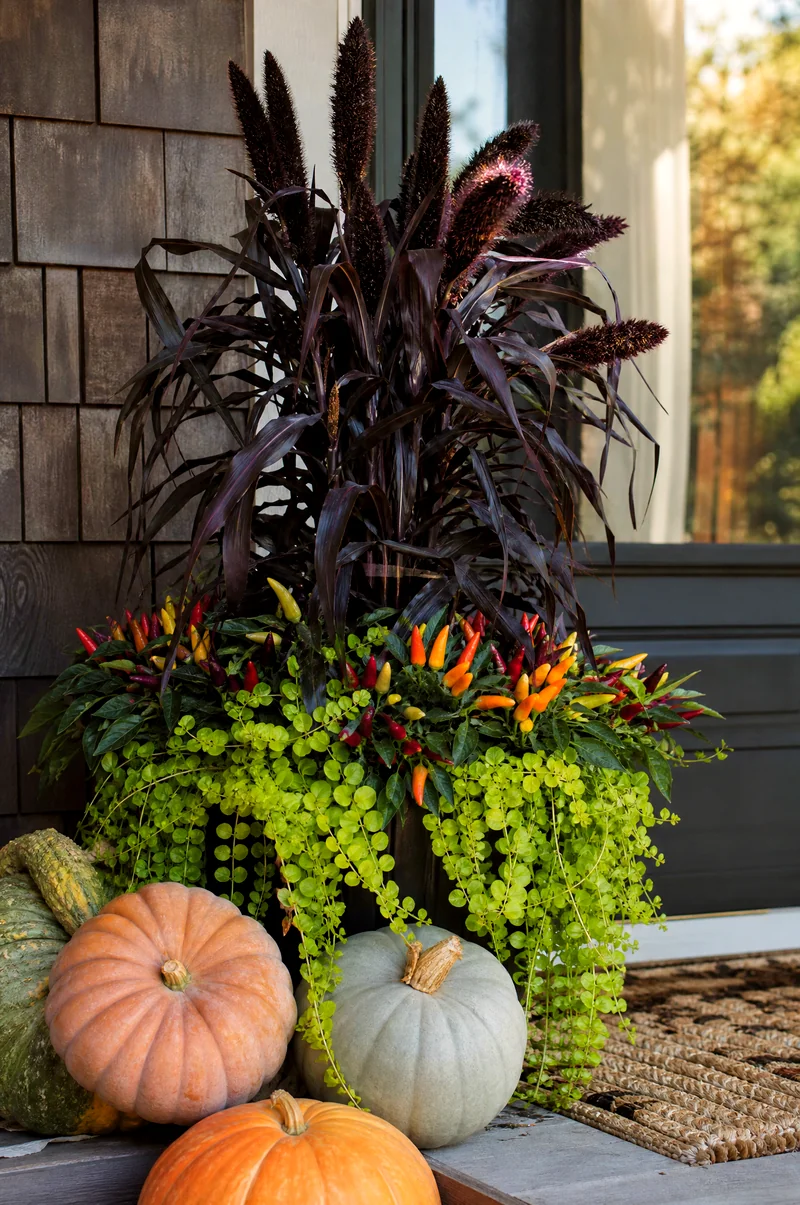
Dark ornamental millet makes a strong centerpiece, especially with pumpkins, ornamental peppers, and lime-green trailing foliage around the base. It gives the container a bold vertical shape and deep color without needing a lot of extra pieces.
Millet and peppers both lean toward early fall in colder areas. They look wonderful while nights are still fairly mild, then decline after frost. Use the pumpkins as your longer-lasting part of the display, and be ready to swap tender plants for cool-season choices if you want the pot to keep going.
Pumpkin and Dried Flower Planter
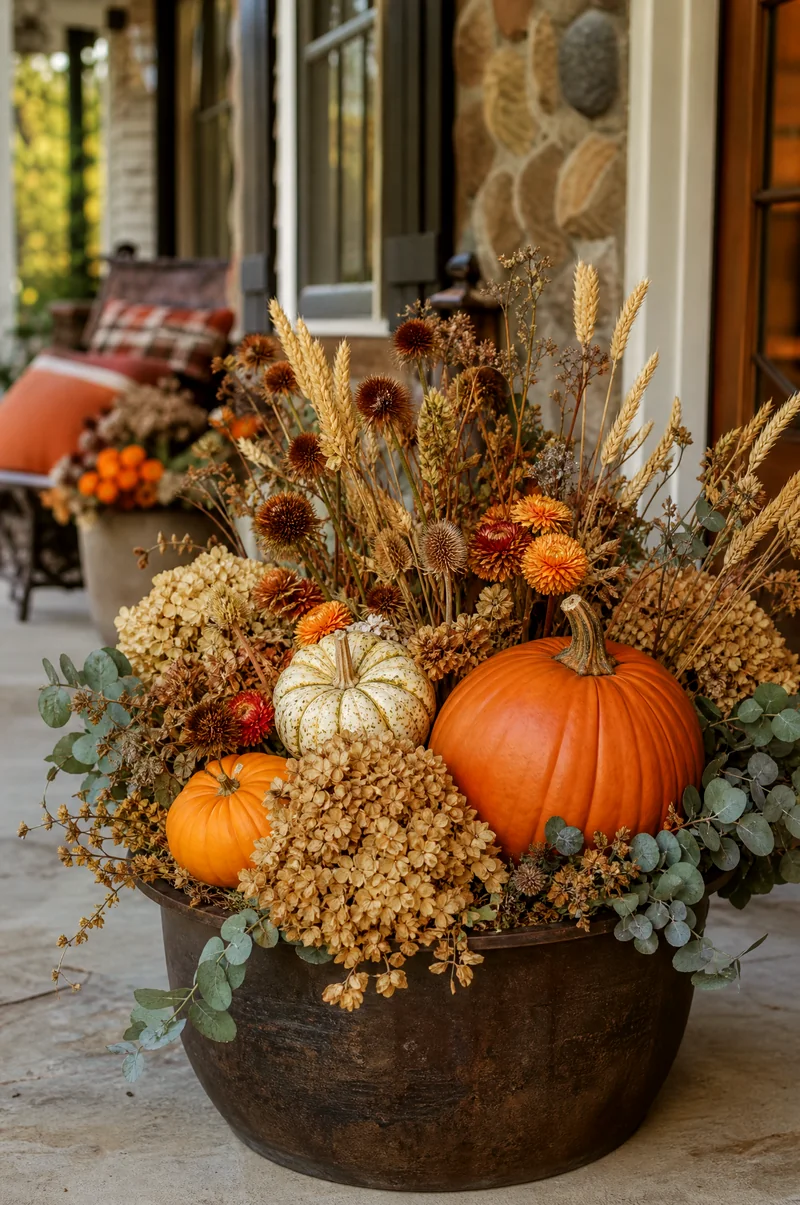
Pumpkins with dried hydrangeas, strawflowers, wheat, seed heads, and eucalyptus make a low-maintenance harvest arrangement for gardeners who forget to water. No judgment. A dry arrangement can be the smartest choice for a covered porch that is hard to reach with a watering can.
Dried materials still need protection from heavy rain. Water isn’t required, but weather protection is. Use a heavy pot so the wheat and seed heads don’t act like a sail, and keep the arrangement away from open flames, outdoor heaters, or anything that could make dry stems unsafe.
Pumpkin and Evergreen Herb Planter
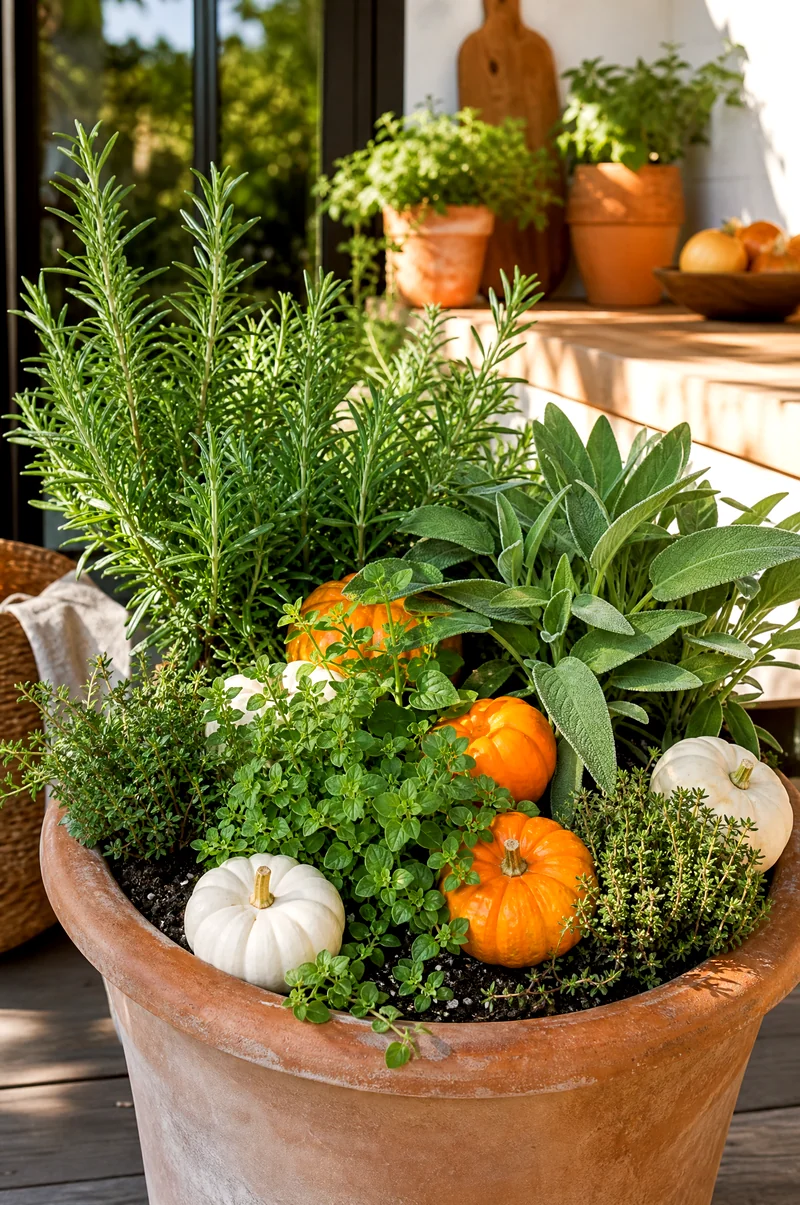
Rosemary, sage, thyme, and oregano with white and orange mini pumpkins create a natural container that remains useful after fall. It is simpler than many decorative planters, and honestly, that is part of its charm.
When the pumpkins soften or you are ready to change the display, lift them out and let the herbs keep growing. The pot needs sun and drainage, not a swampy decorative sleeve. In cold climates, some herbs may need winter protection or an indoor move, depending on the plant and your local conditions.
Mixed Pumpkin Harvest Planter
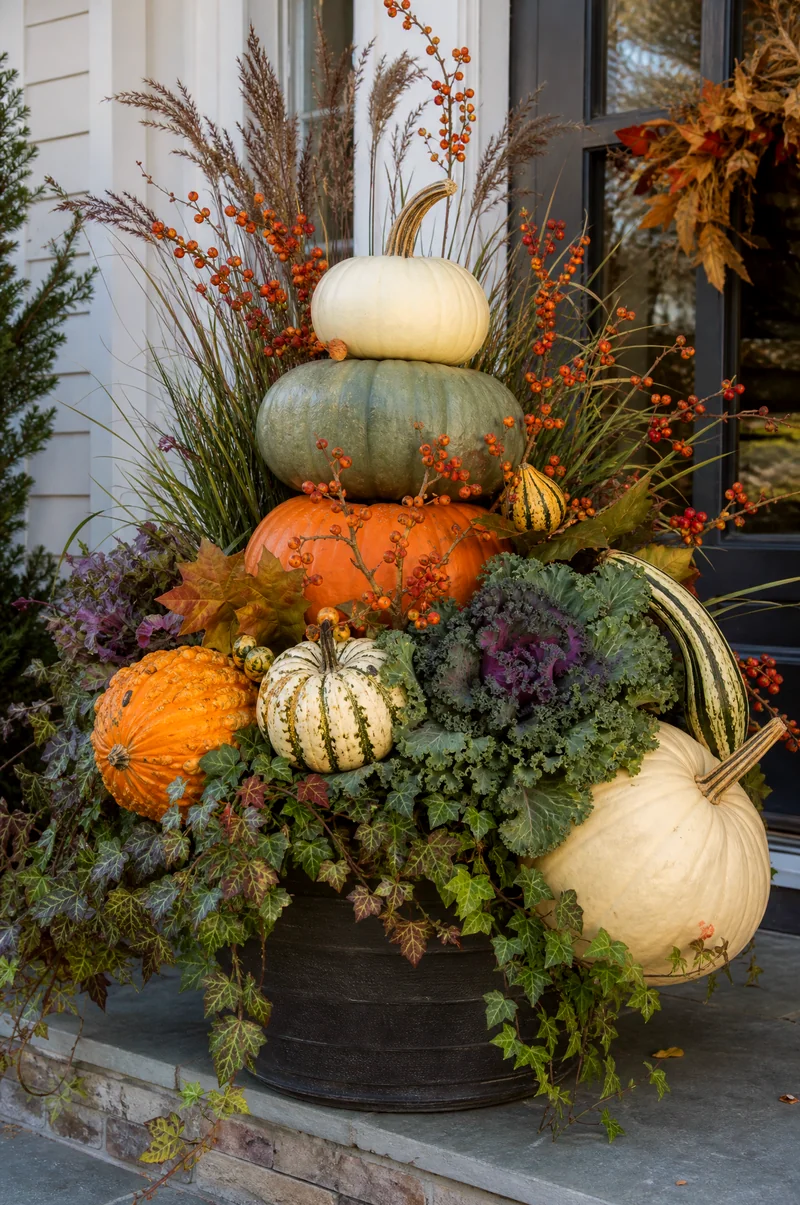
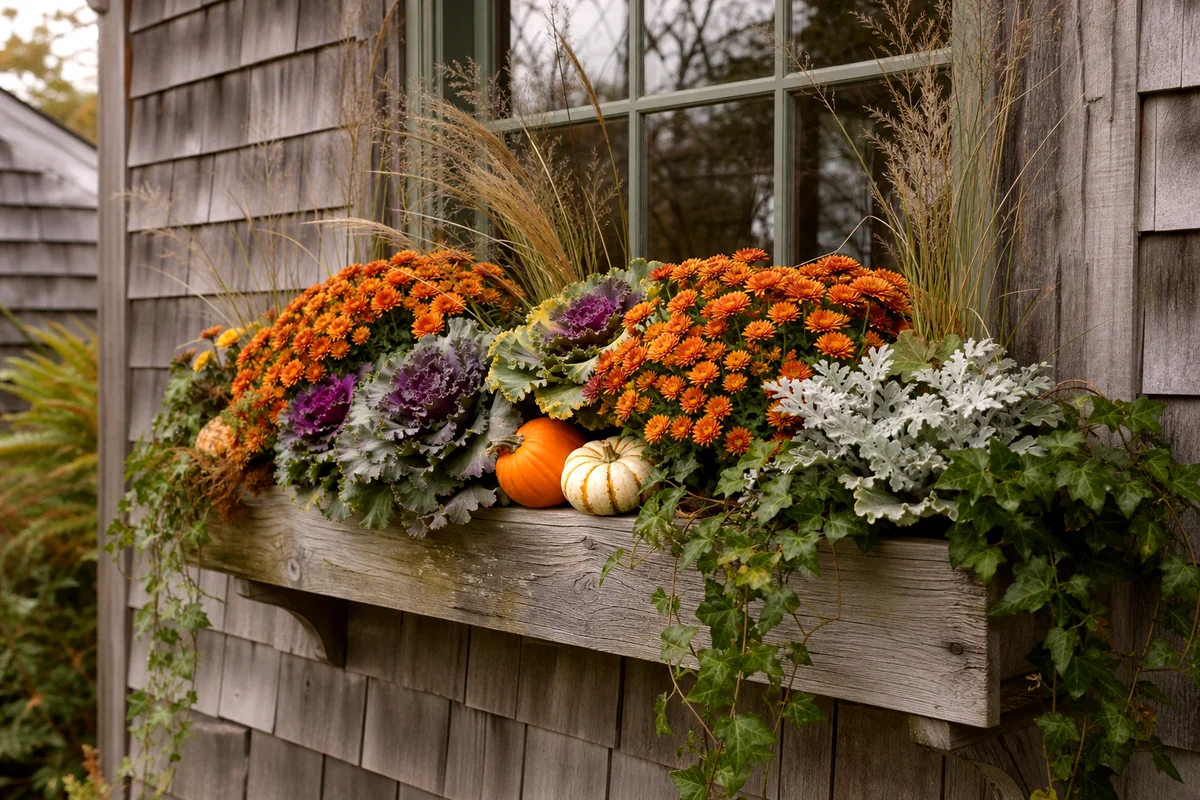
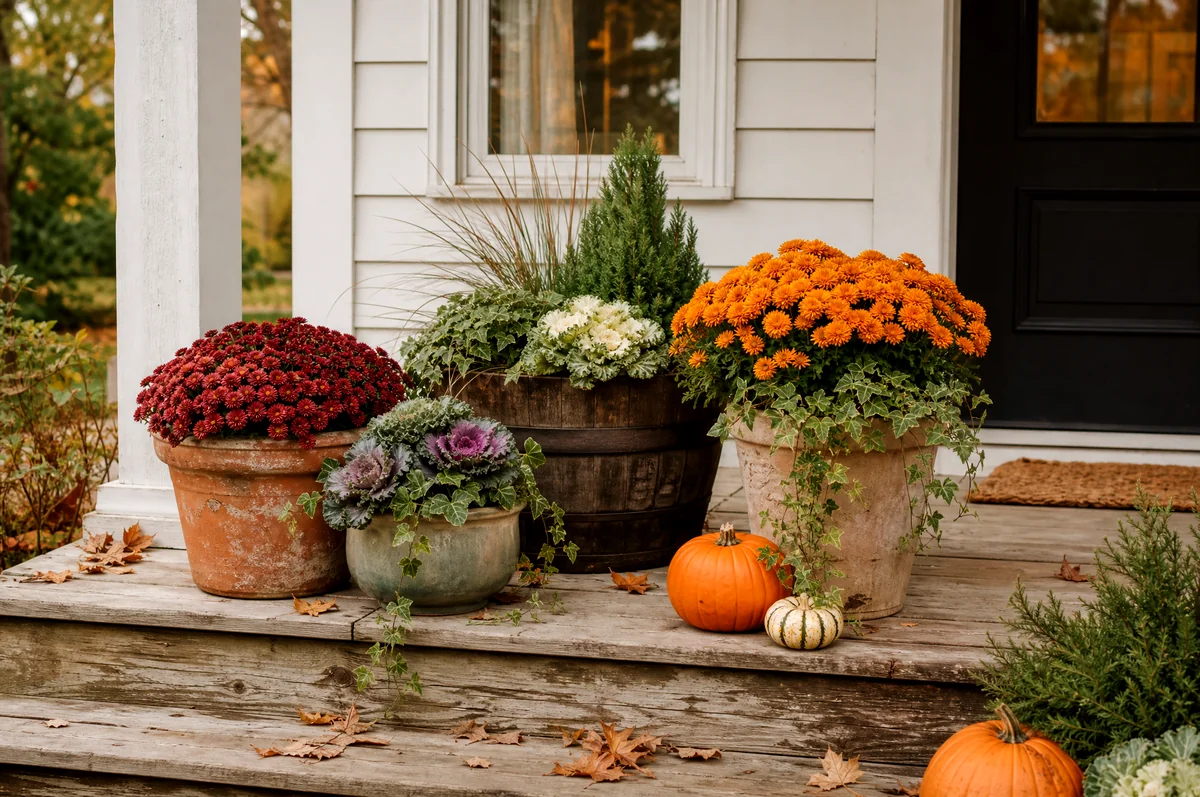
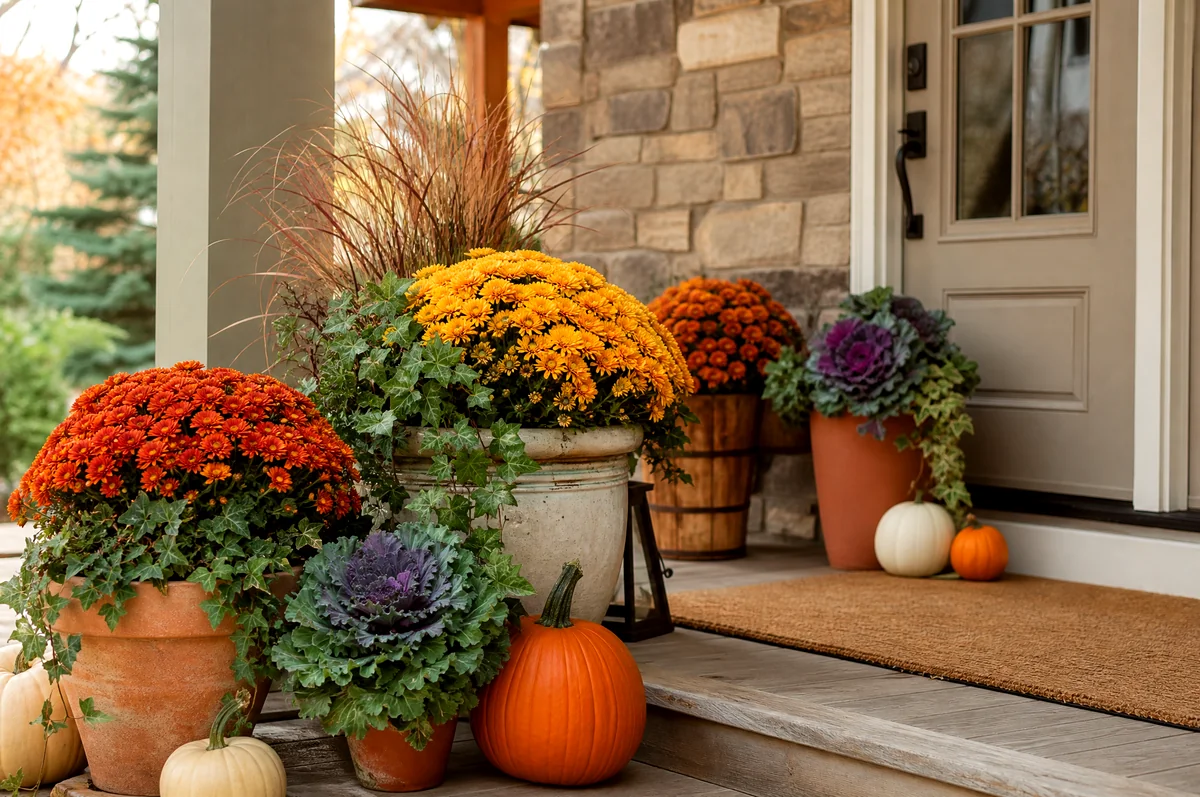
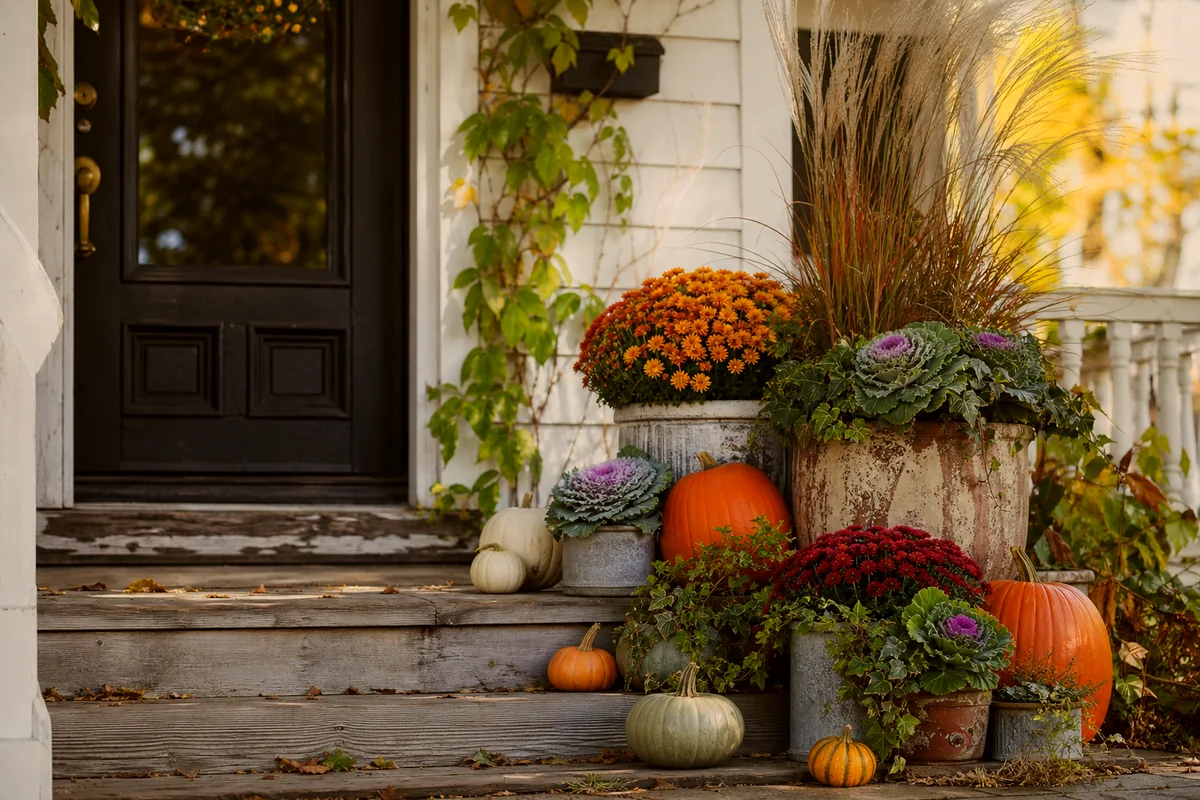
This is the big statement planter: white, green, orange, and striped pumpkins with ornamental grasses, kale, ivy, gourds, and berry branches. Done well, it looks abundant. Done poorly, it looks like a farm stand fell into a pot.
Start with height at the back or center, usually grasses or branches. Add foliage mass next with kale or heuchera, then place pumpkins in groups of odd numbers rather than scattering them evenly. Let ivy or another trailer spill over one or two sides, not every side. The eye needs a path through the arrangement.
One practical rule: repeat colors. If you use a green pumpkin, echo it with kale or ivy. If you use an orange pumpkin, repeat that warmth with bronze grass, a gourd, or berry stems. Repetition keeps a full planter from feeling cluttered.
FAQ
How do I keep pumpkins from rotting in fall planters?
Keep pumpkins off wet soil. Set them on moss, bark, gravel, a saucer, or a hidden nursery pot. Good airflow underneath matters more than most people think.
Can I plant real pumpkins in a container with flowers?
You can, but most fall displays use harvested pumpkins as decoration. Growing pumpkin vines need a long season, lots of sun, plenty of space, and regular feeding, so they are not practical for most finished porch planters.
Should I seal pumpkins before using them in outdoor planters?
You can wipe pumpkins clean and let them dry well before arranging them. Some gardeners use a light sealant, but it is not magic. Shade, airflow, and keeping pumpkins dry underneath usually make the bigger difference.
What plants last longest with pumpkins in cool weather?
Ornamental kale, cabbage, heuchera, pansies, violas, sedum, ivy, small conifers, rosemary, thyme, and many grasses usually hold well in cool fall weather. Tender plants like coleus, peppers, millet, and sweet potato vine look best before frost.
Can I make a pumpkin planter for a shady porch?
Yes. Use shade-tolerant or part-shade plants such as heuchera, ferns, ivy, Japanese forest grass, cyclamen under cover, and ornamental cabbage. Skip sun-loving herbs or lavender unless the porch gets several hours of bright light.
What should I do when the pumpkins start to soften?
Remove them right away. A soft pumpkin can leak, attract pests, and spread decay through the display. Replace it with a fresh pumpkin, pinecones, evergreen cuttings, or a small pot of cool-season flowers.
A planter can be seasonal without being wasteful. If the living plants are still healthy after the pumpkins are gone, keep them growing and let the container change with the weather.