25 Bulbs to Plant This Fall

Fall bulb planting is one of those small autumn jobs that feels almost too easy for the reward. You tuck dry little bulbs into cool soil, then months later the garden wakes up before almost anything else is ready.
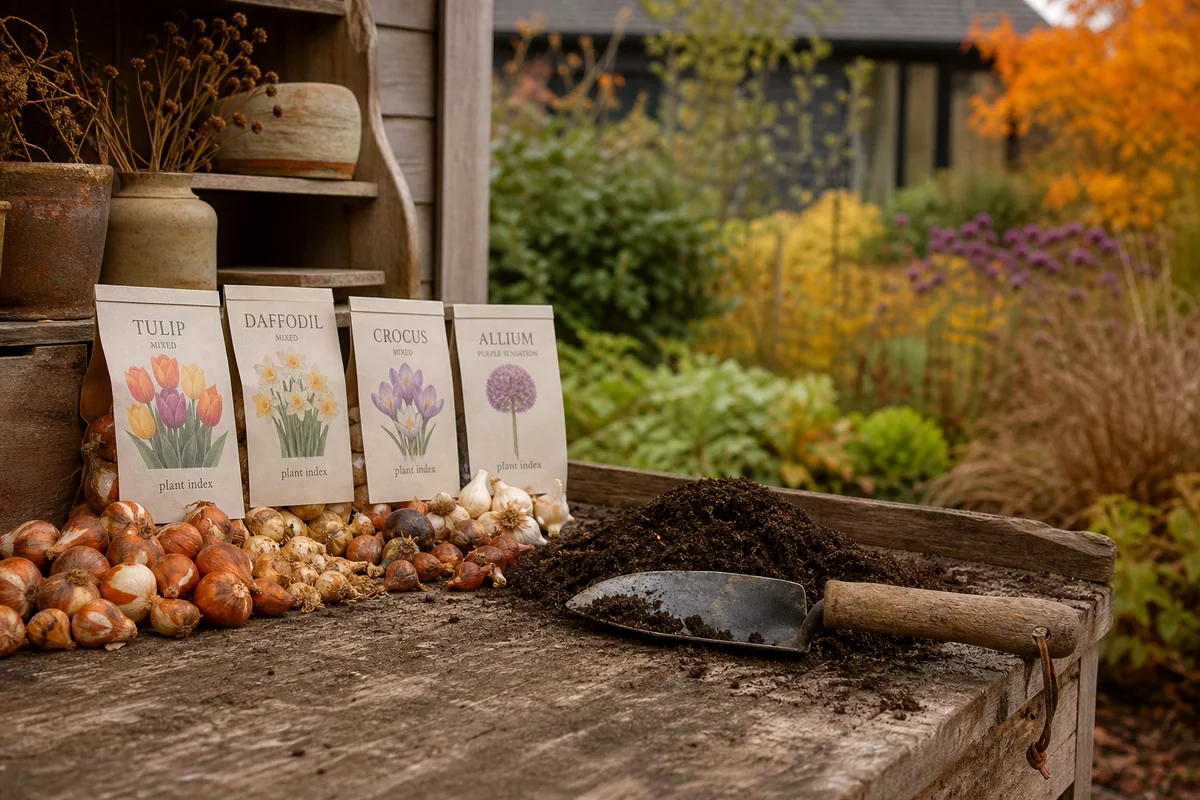
The trick is choosing the right bulbs for the right place. Most spring bulbs want good drainage, sensible planting depth, and enough time after flowering to recharge their leaves, but some are better for pots, some for lawns, and some for quiet woodland edges where they can spread in peace.
Tulips for Big Spring Color
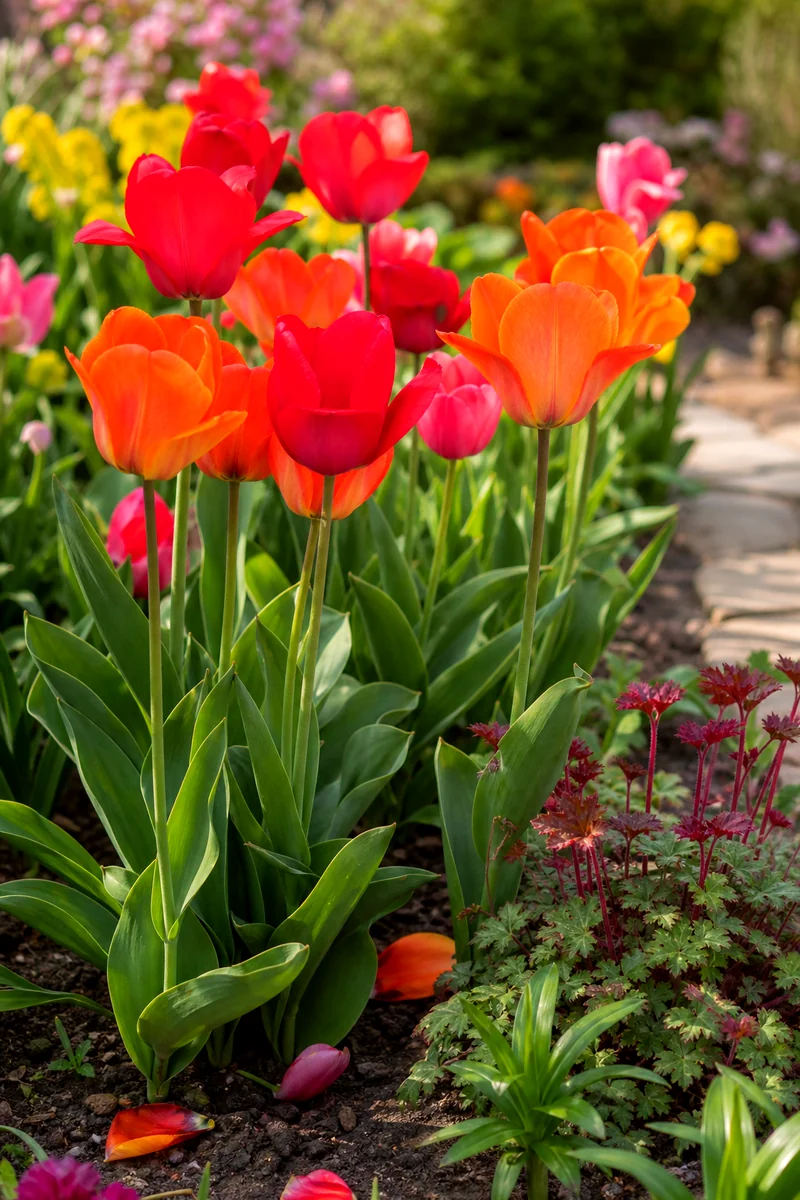
Tulips are the showboats of fall planting. If you want clean cups, ruffled doubles, lily-shaped flowers, or strong blocks of red, pink, purple, yellow, white, or nearly black, tulips are hard to beat.
Plant them in fall once the soil has cooled, usually after the first light frosts but before the ground freezes solid. In most gardens, tulip bulbs do best planted about 6 to 8 inches deep, measured from the base of the bulb. Deeper planting helps keep them cooler, steadier, and a little less obvious to hungry squirrels.
Here is my honest gardener’s note: many modern hybrid tulips are best treated as short-lived color, not guaranteed perennials. They may return for a year or two, but the flowers often get smaller. If you want a big display every spring, plant fresh bulbs each fall or mix showy hybrids with longer-lived species tulips.
Rodents can be a nuisance. If they dig in your beds, lay hardware cloth over newly planted areas until the ground settles, or plant tulips among less tasty bulbs such as daffodils. Bone meal scattered near the surface can sometimes attract animals, so I usually skip it.
Daffodils for Reliable Returns
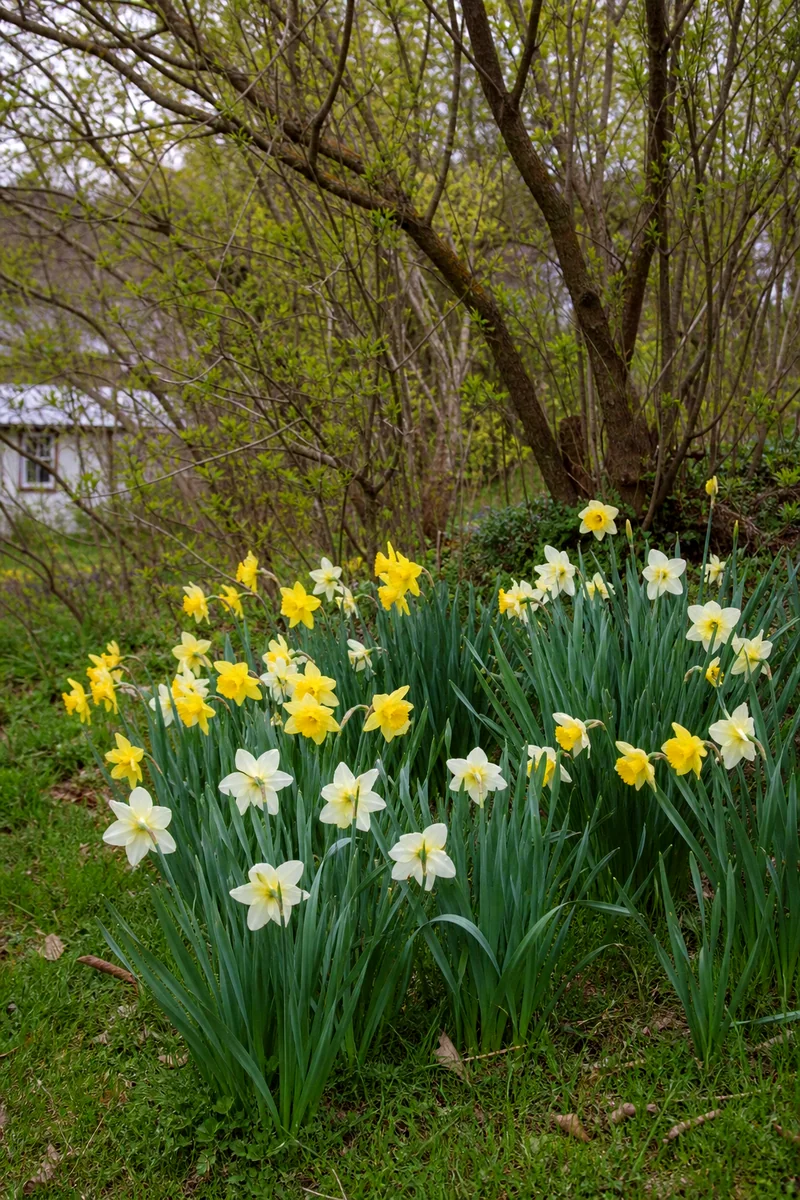
Daffodils are the bulb I recommend first to new gardeners. They are cheerful, dependable, and far less interesting to deer, voles, and squirrels than tulips.
Plant daffodil bulbs about 6 inches deep in well-drained soil, with the pointed end up. They handle borders, slopes, open ground under deciduous trees, and naturalized plantings where you want them to multiply slowly over time.
The main mistake is cutting the foliage too soon. Let the leaves yellow naturally after bloom, because that is how the bulb stores energy for next year. If floppy leaves bother you, plant daffodils behind emerging perennials such as daylilies, catmint, hardy geraniums, or hostas.
For a natural look, toss handfuls of bulbs gently onto the ground and plant them where they land. It looks much better than stiff little soldier rows.
Hyacinths for Fragrance Near Paths
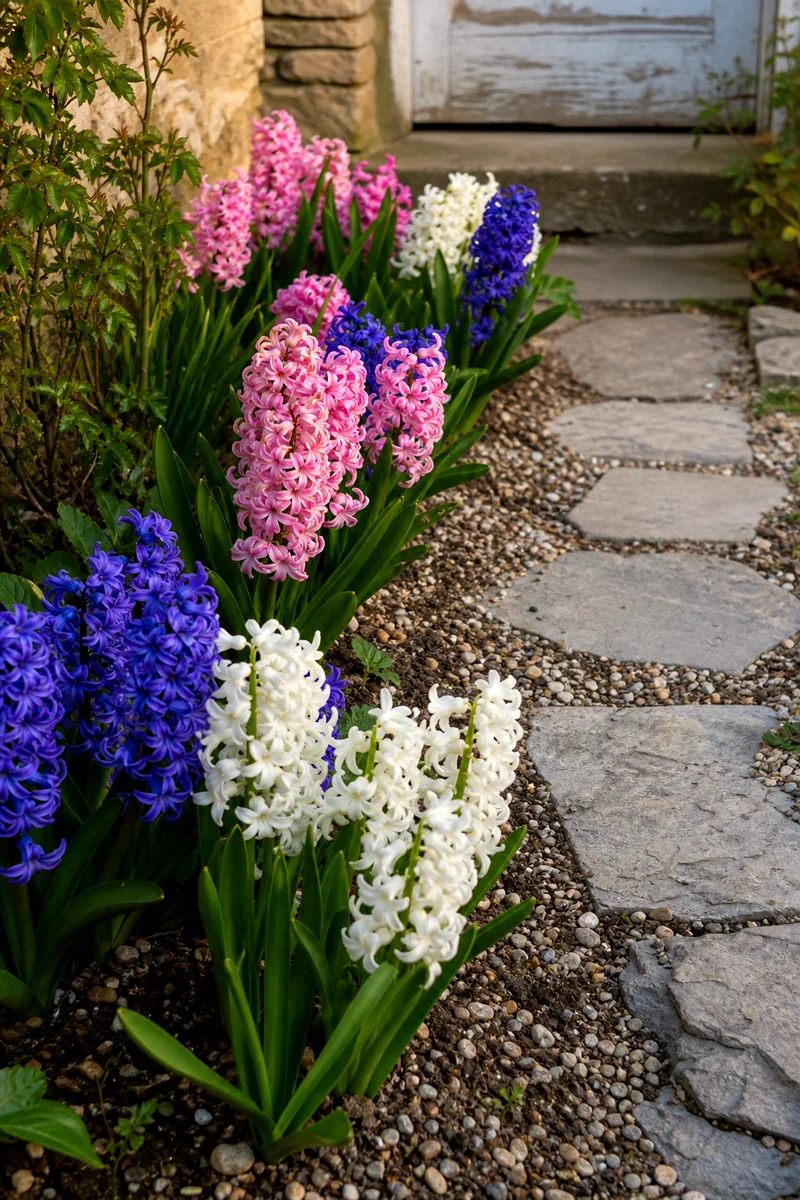
Hyacinths are worth planting where you can actually smell them. Put them near a front step, patio, gate, kitchen path, or seating area, and you will understand why people still bother with them.
Their dense flower spikes come in blue, purple, pink, cream, white, peach, and deep rose shades. They like sun to light shade and soil that drains well. Heavy, wet winter soil can rot the bulbs, so raised beds and containers are often safer than soggy borders.
Hyacinths are usually at their fattest and most formal the first spring. After that, many produce looser, more relaxed flower spikes. I don’t mind that look, but if you want tight florist-style spikes every year, plan to refresh a few bulbs each fall.
Dutch Crocuses for Early Color Patches
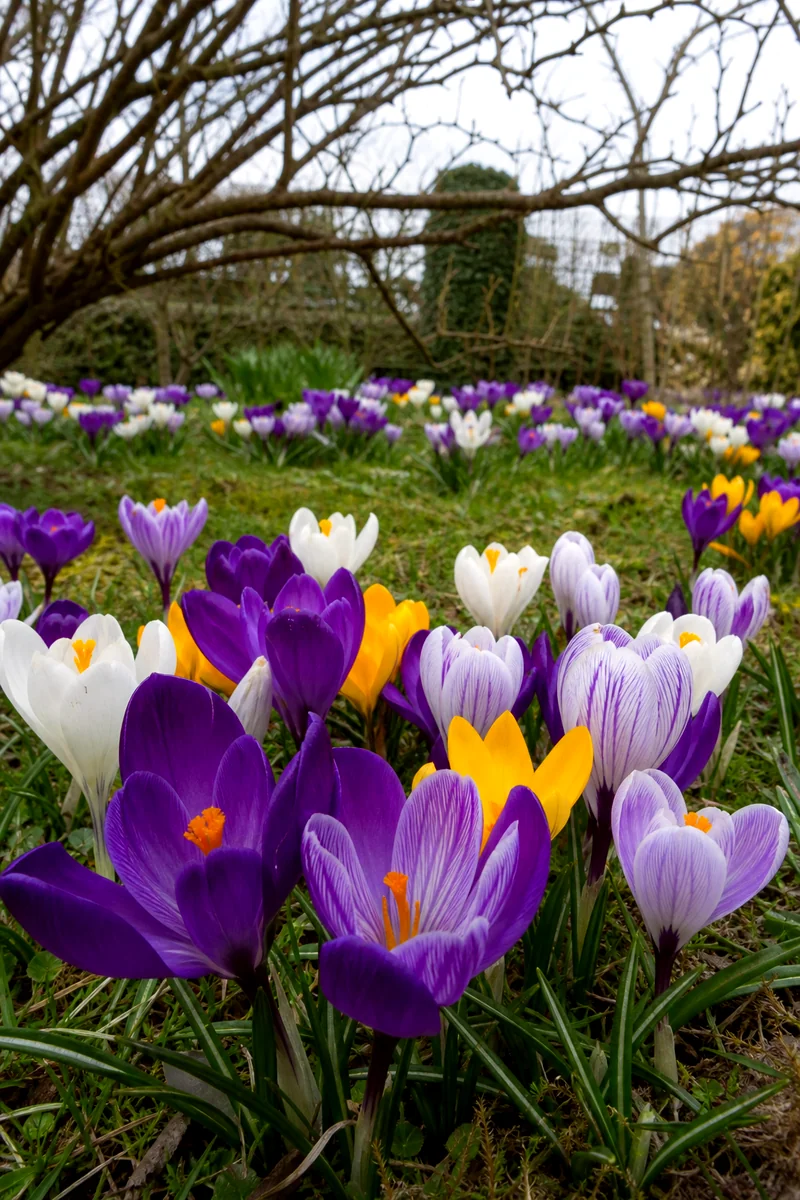
Dutch crocuses give you big, low splashes of color right when the garden still looks half asleep. They are larger than many botanical crocuses and show up well in lawns, beds, and under deciduous shrubs.
Plant the corms in fall about 3 to 4 inches deep. They look best in clusters, not dotted one by one. Purple, white, yellow, and striped varieties all work, but a single color planted in a generous patch often has the strongest effect.
If you plant them in grass, wait to mow until the crocus leaves have yellowed. That may mean living with a slightly shaggy patch of lawn for a few weeks. Worth it.
Grape Hyacinths for Easy Edging
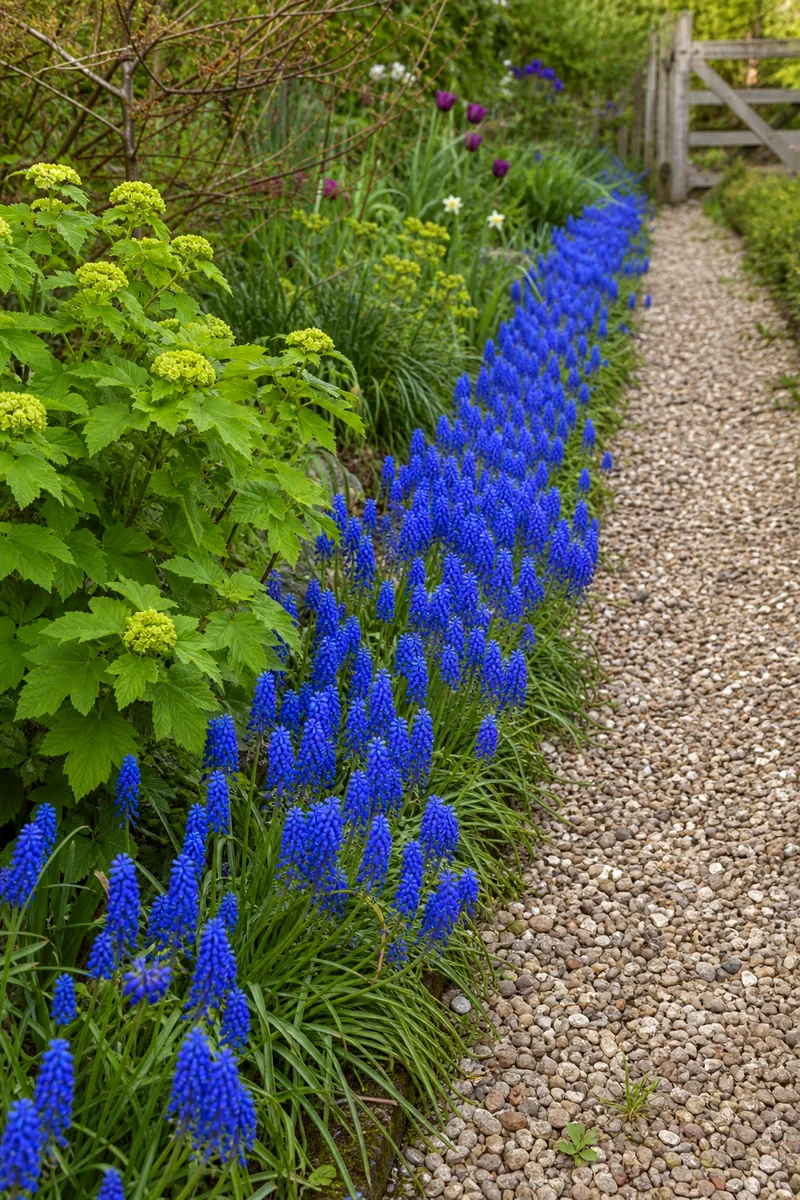
Grape hyacinths, also called muscari, are tough little bulbs with blue, purple, or white flower clusters that look like tiny bunches of grapes. They are excellent along paths, at the front of borders, and tucked around daffodils.
They are not fussy. Plant them about 3 inches deep in sun or part shade, and they will usually get on with it. Their narrow leaves may appear in fall and stay through winter in mild climates, which surprises people the first time they grow them.
One warning: grape hyacinths can spread generously where they are happy. That is lovely in a cottage border and irritating in a tight formal bed. If you like neat edges, deadhead before seeds mature or keep them in containers.
Giant Alliums for Garden Drama
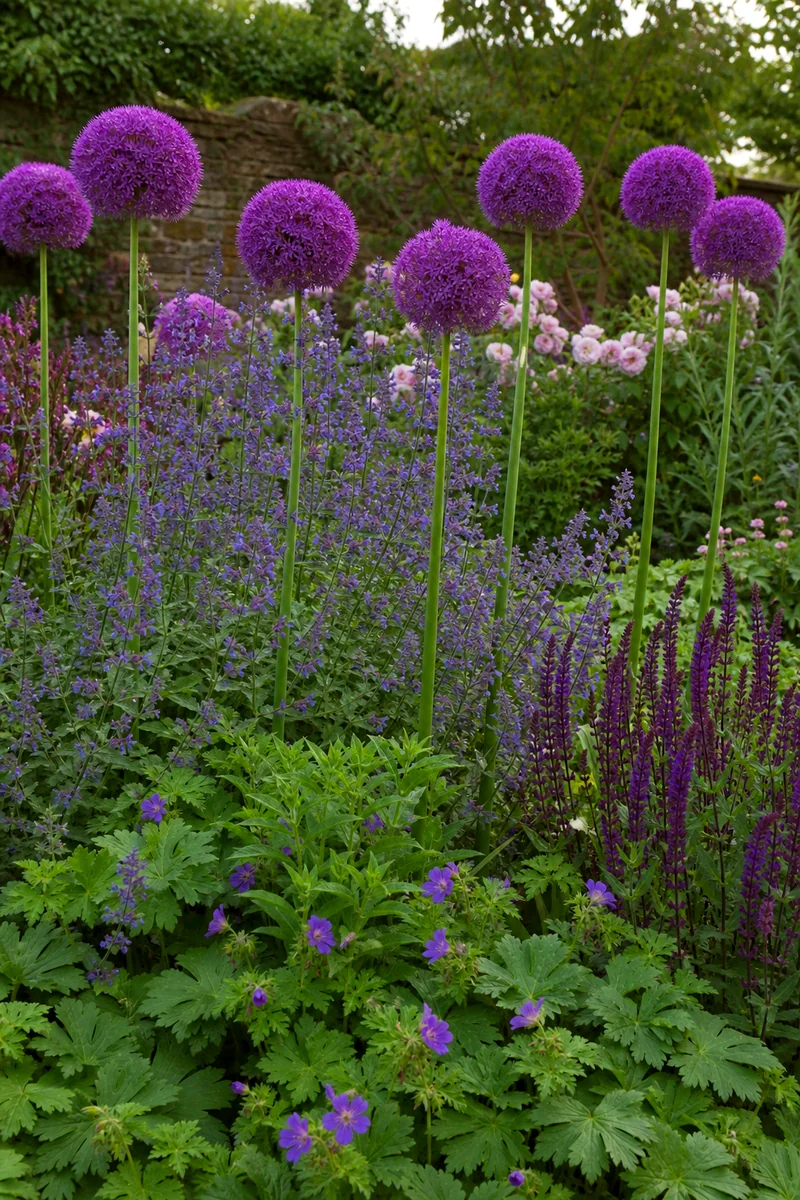
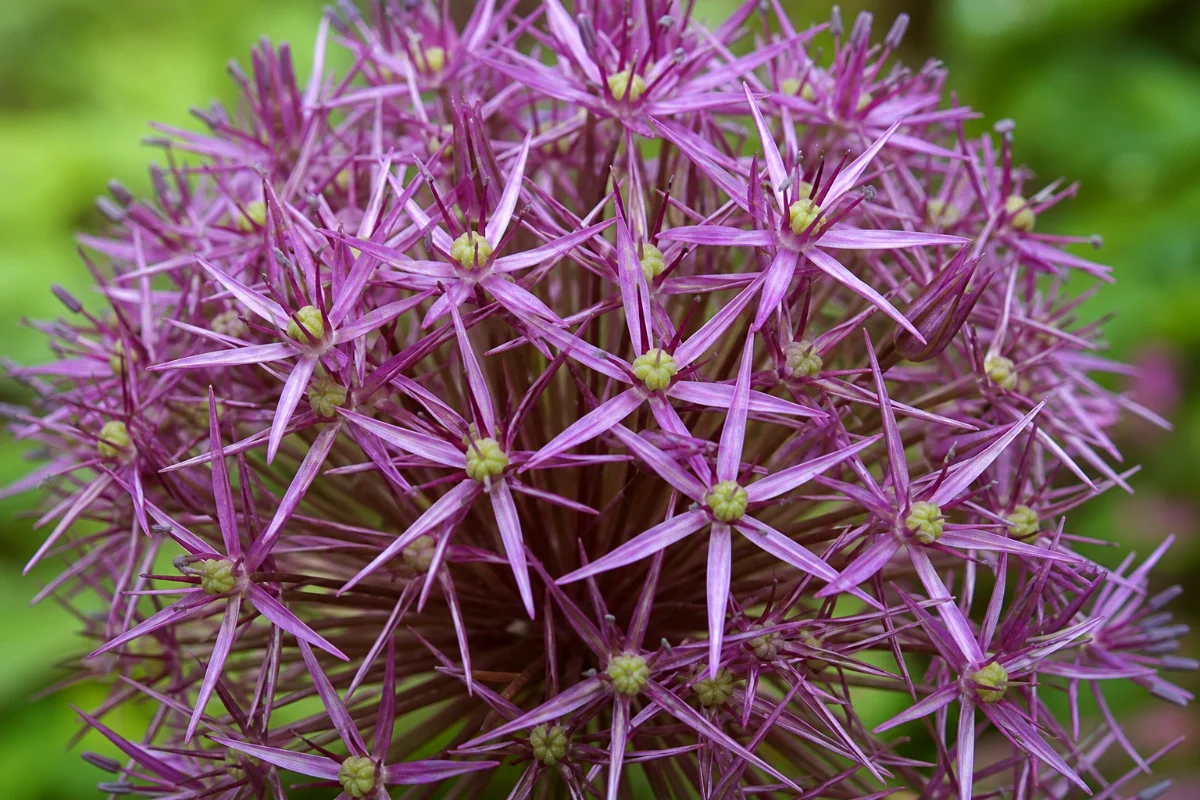
Giant alliums bring tall stems and round purple flower heads after many classic spring bulbs have finished. They look almost architectural, especially when planted through perennials.
Give them full sun and well-drained soil. Plant large bulbs about 6 to 8 inches deep, or follow the packet depth if the bulbs are especially large. The foliage often starts to look tired by bloom time, which is normal.
That fading foliage is the reason I rarely plant giant alliums alone in bare soil. They look much better rising through catmint, salvia, hardy geraniums, nepeta, or ornamental grasses that can hide the leaves while the flower globes do their work.
Snowdrops for the First Flowers
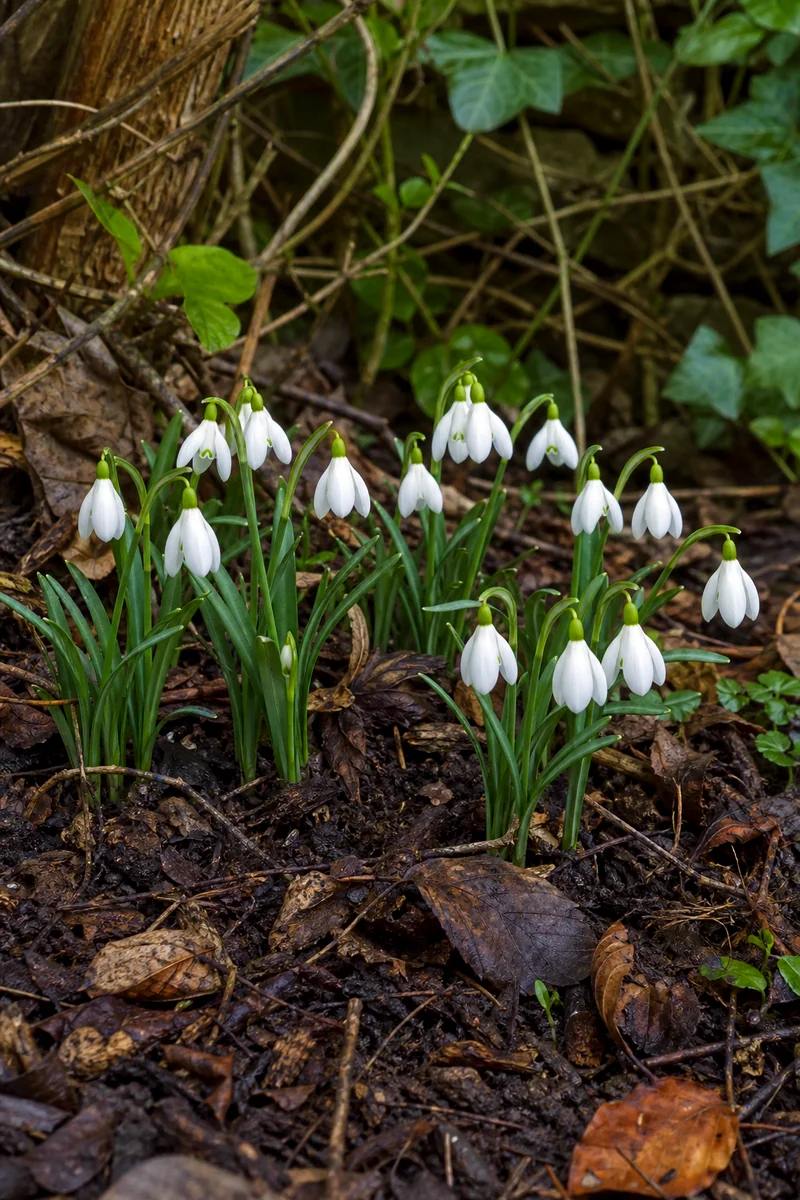
Snowdrops are not loud plants, and that is part of their charm. Their small white nodding flowers often appear while the weather still feels like winter.
They are best for woodland edges, shady borders, under deciduous shrubs, and quiet corners where you will notice them up close. Snowdrops often establish better when planted promptly and not allowed to dry out. If you can buy them freshly lifted or in growth from a reputable nursery, even better.
Dry, bargain-bin snowdrop bulbs can be disappointing. They may still grow, but they are less forgiving than daffodils. Plant them about 3 inches deep in humus-rich soil that stays reasonably moist but not waterlogged.
Siberian Squill for Blue Spring Carpets
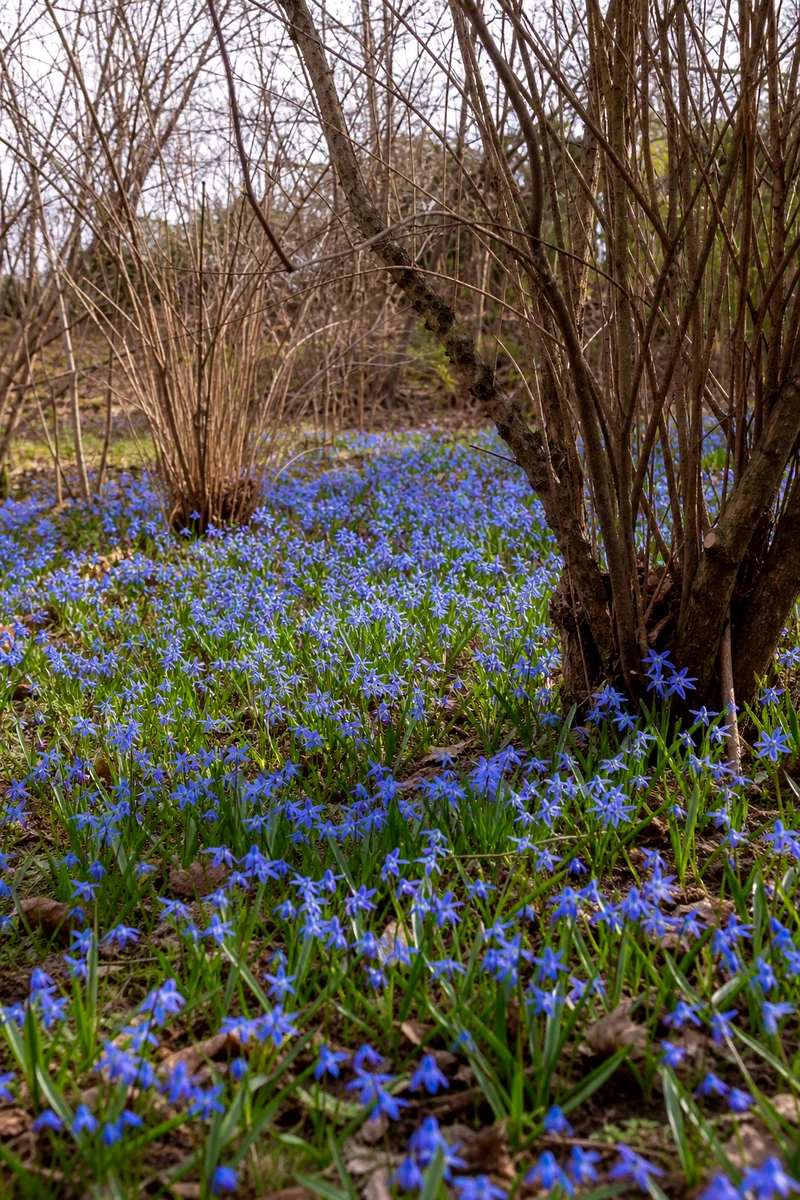
Siberian squill makes vivid blue, starry flowers in early spring and can spread into beautiful carpets under trees and shrubs. In the right garden, it looks effortless.
That spreading habit is both the reason to plant it and the reason to pause. In some regions, Siberian squill can move beyond where gardeners want it. Check local guidance before planting, especially near natural areas.
Where it is appropriate, plant the bulbs about 3 inches deep in fall under deciduous trees, shrubs, or open woodland edges. The plants finish much of their growth before trees leaf out fully, so they make good use of spring light.
Checkered Fritillary for Unusual Detail
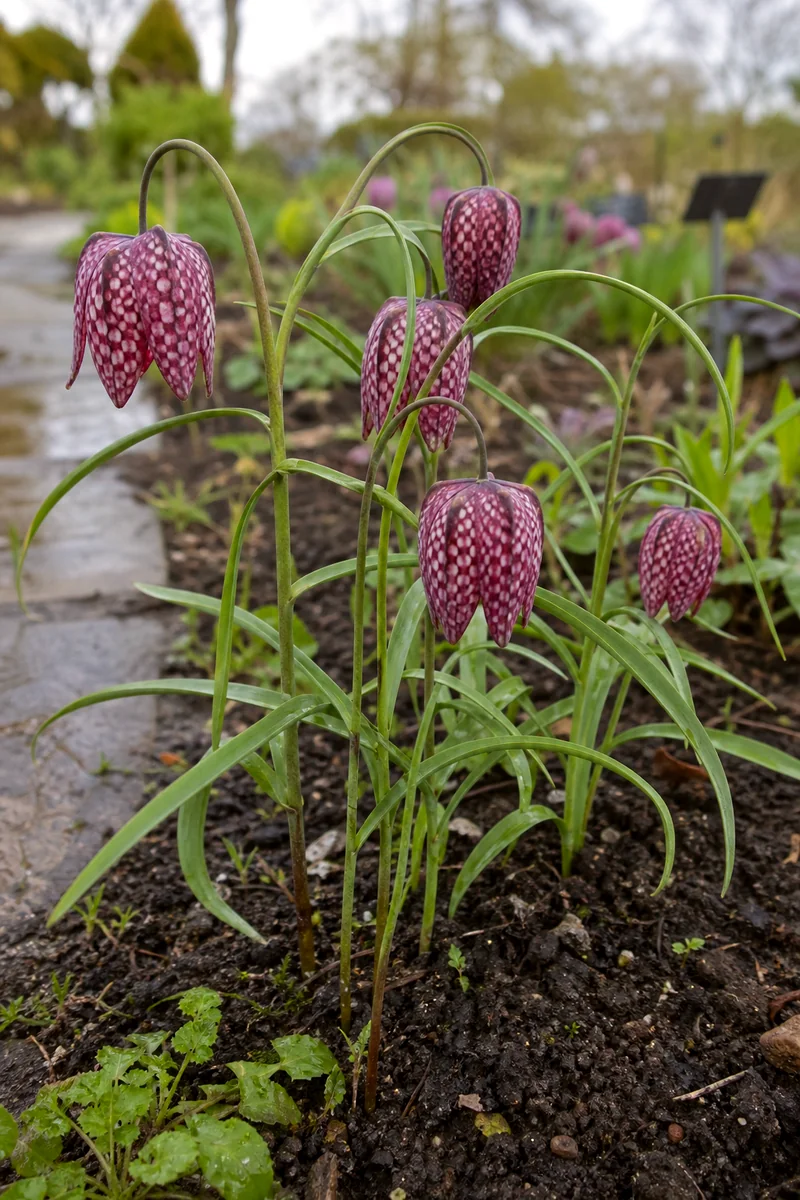
Checkered fritillary, often sold as Fritillaria meleagris, is for gardeners who like detail. The bell-shaped flowers have a soft purple and white checkered pattern that rewards anyone who stops and looks closely.
This is not a bold bedding bulb. Plant it in small groups near a path, seating area, or damp meadow-style planting where the flowers can be seen. It prefers moisture-retentive soil, especially in spring, and does not love baking dry ground.
Plant the small bulbs gently, about 3 to 4 inches deep. They can be a bit fragile, so don’t leave them sitting around for weeks before planting.
Crown Imperial for Bold Vertical Accent
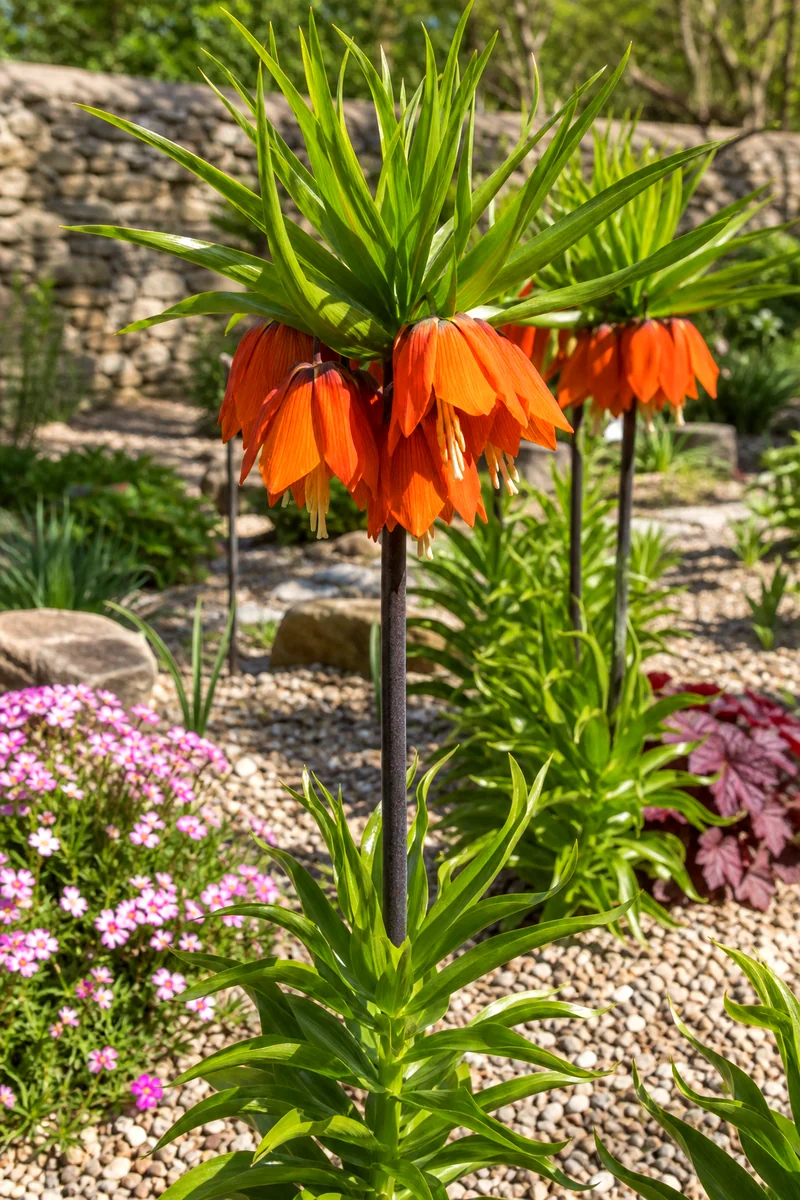
Crown imperial has a strong personality. Tall stems carry a topknot of leaves and hanging orange, red, or yellow bells, giving the plant a slightly wild, old-garden look.
It needs full sun to light shade, deep planting, and sharp drainage. Plant the bulbs around 6 to 8 inches deep, sometimes deeper for large bulbs, and set them where winter wet will not sit around them. Some gardeners plant the bulb slightly on its side to reduce water collecting in the top hollow.
Give crown imperial room. If you hide it behind shrubs or tall perennials, you miss the whole point. It belongs where its height and odd beauty can be seen.
Reticulated Iris for Pots and Front Borders
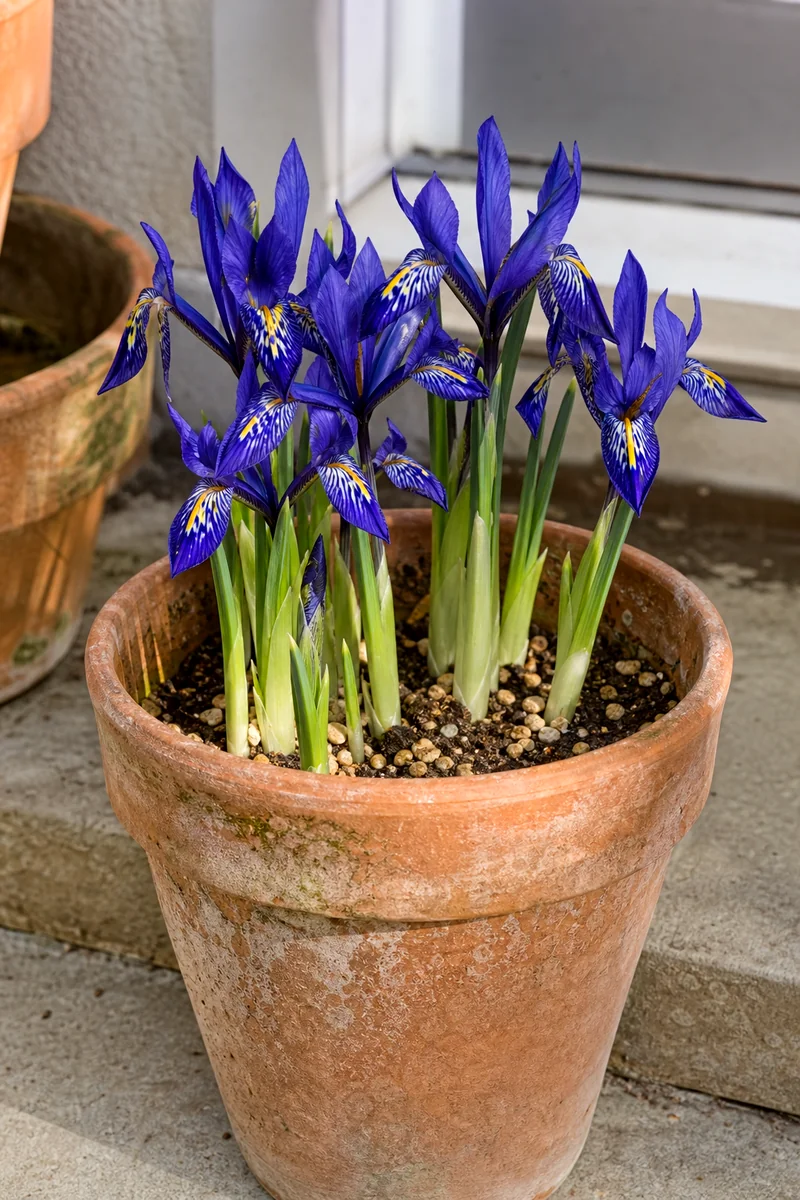
Reticulated iris is small, early, and surprisingly intense. The flowers often appear in deep violet, blue, purple, or yellow with fine markings that look best up close.
Use these bulbs in pots, rock gardens, gravel edges, troughs, and the very front of borders. They need sun and fast drainage. Wet winter soil is the quickest way to lose them.
Plant the bulbs about 3 to 4 inches deep. In containers, use a gritty, free-draining potting mix and keep the pot outside through winter so the bulbs get the cold period they need.
Glory of the Snow for Cold-Season Color
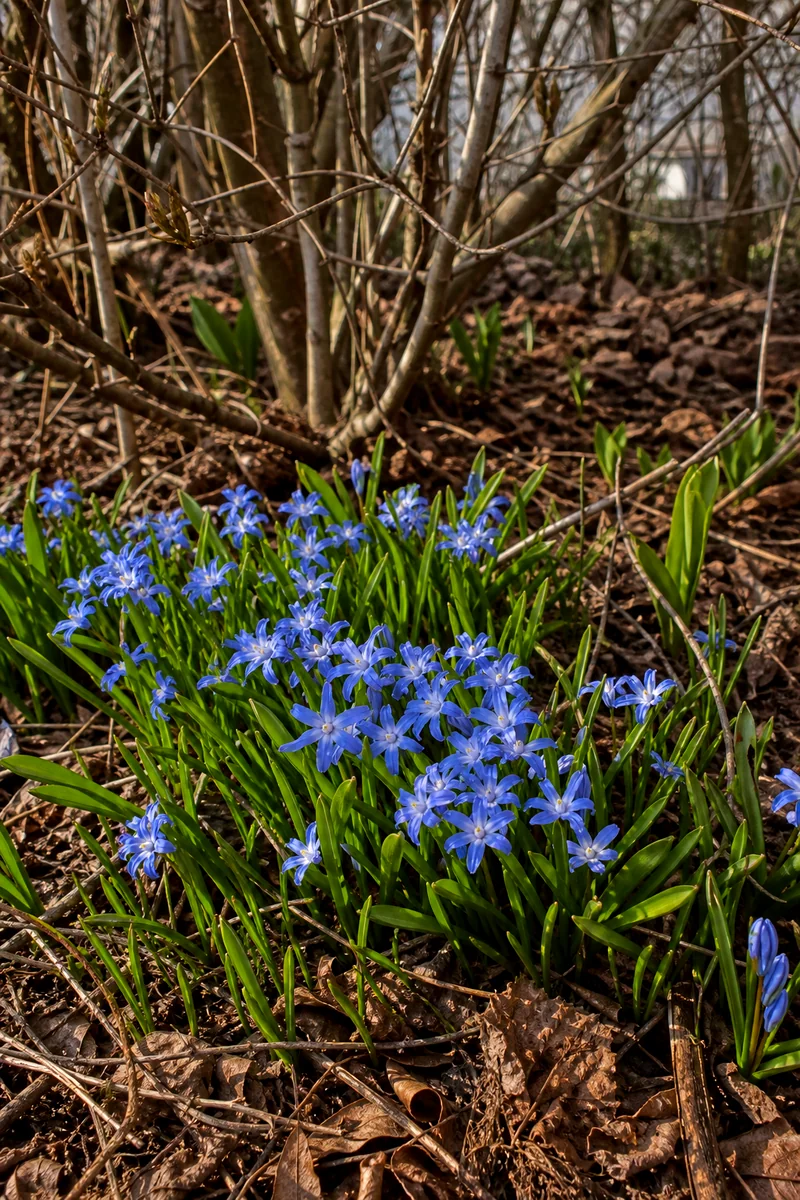
Glory of the snow, usually sold as Chionodoxa or under newer related names, blooms while the garden is still chilly. The starry flowers come in blue, pink, white, and soft lavender tones.
It is useful under deciduous trees and shrubs because it grows, flowers, and starts to fade before heavy shade arrives. Plant the small bulbs about 3 inches deep in fall, ideally in loose groups.
Like many small bulbs, it looks best when you plant more than you think you need. Ten bulbs make a hint. Fifty make a spring moment.
Grecian Windflower for Soft Groundcover
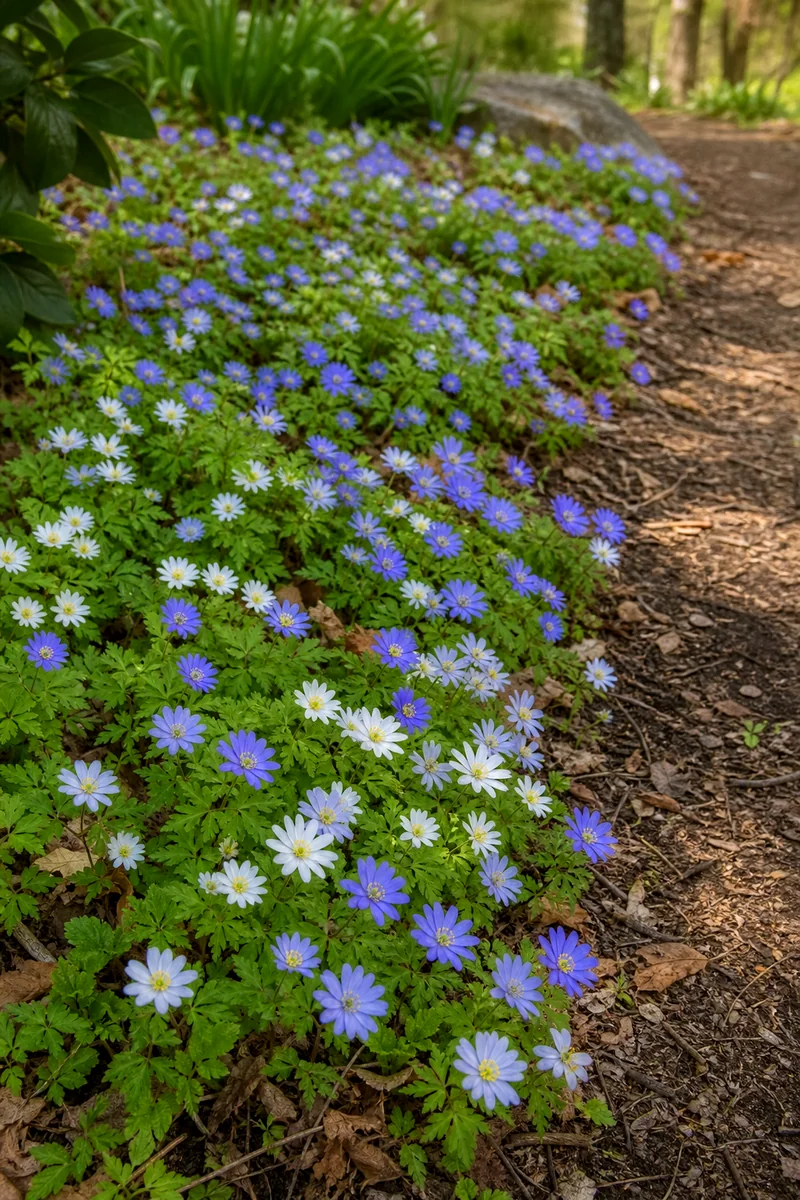
Grecian windflower, or Anemone blanda, makes low daisy-like flowers in blue, pink, purple, or white. It has a softer, more natural look than many upright bulbs.
The little tubers are hard and knobbly, and it can be difficult to tell which way is up. Don’t worry too much. Soak them in room-temperature water for a few hours before planting, then set them about 2 inches deep in well-drained soil.
They are lovely under shrubs, along informal paths, and at the front of woodland-style borders. They prefer spring moisture but do not want to sit in cold, wet muck.
Camassia for Late Spring Spires
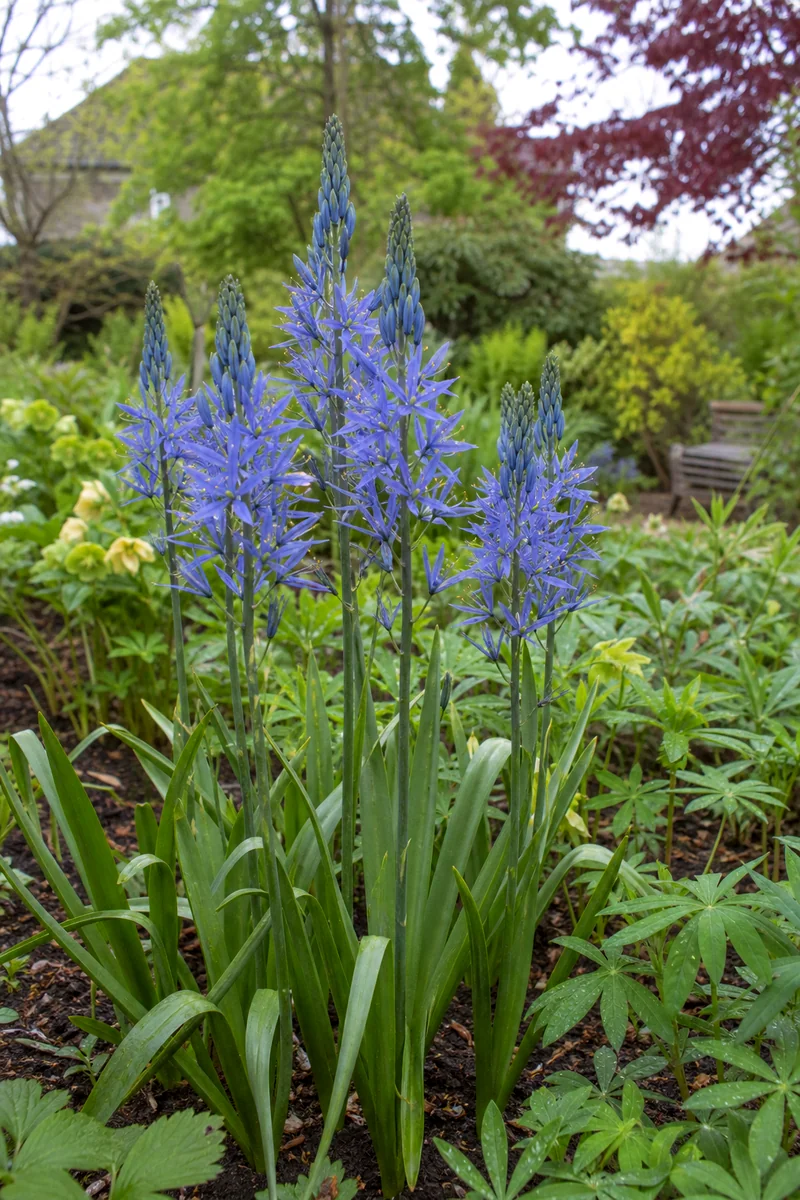
Camassia is a good bulb for gardeners who want color after daffodils and early tulips have passed. Tall spires of star-shaped blue, purple, or white flowers bridge the gap between spring bulbs and summer perennials.
Unlike tulips, camassia is often happy in heavier soil, as long as it is not waterlogged all winter. It also tolerates slightly moist ground, which makes it useful in meadow-style plantings, rain garden edges, and mixed borders with more generous soil.
Plant camassia bulbs about 4 to 6 inches deep in sun or light shade. Let the foliage ripen after flowering, just as you would with daffodils.
Summer Snowflake for Graceful Bells
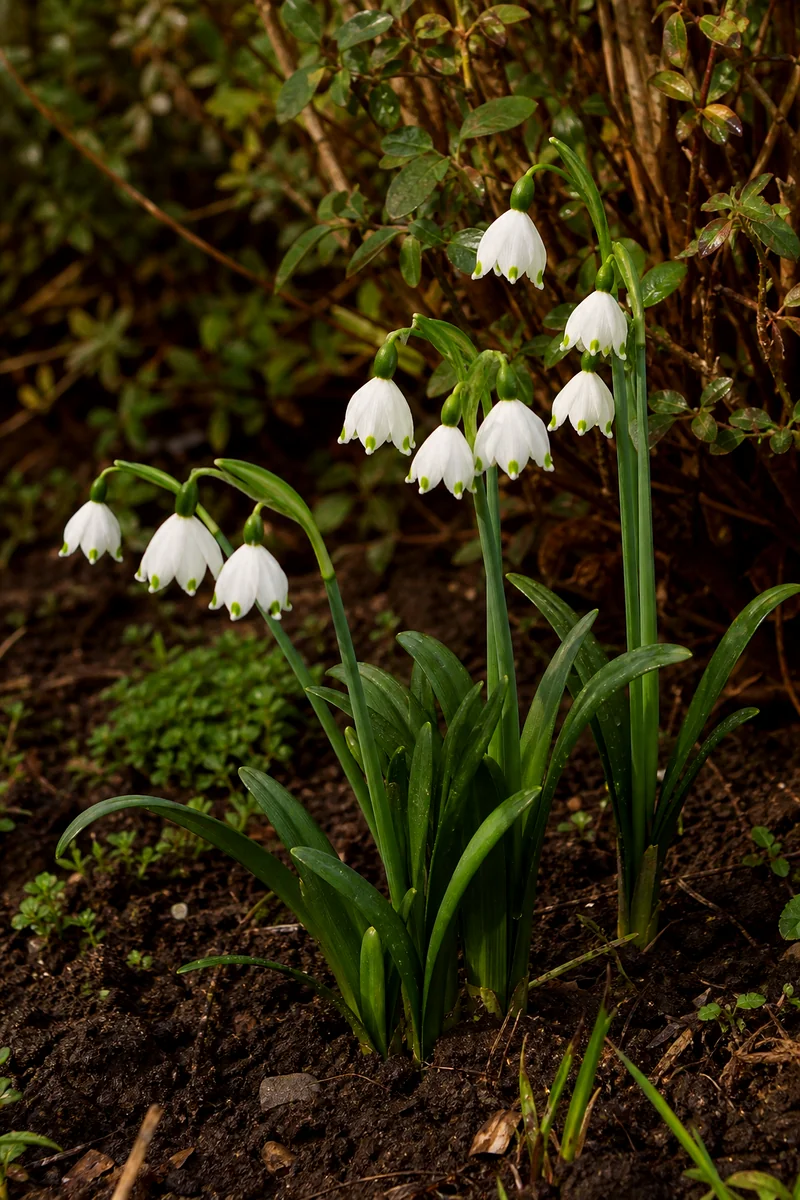
Summer snowflake, Leucojum aestivum, flowers in spring to early summer despite its common name. It produces nodding white bells tipped with green, on stems that feel graceful rather than flashy.
This bulb likes moist, fertile soil. It is a good choice near shrubs, in rain garden edges, beside paths where soil stays a little cool, or in low spots that drain enough not to stay waterlogged all winter.
Plant bulbs about 4 inches deep. Once settled, summer snowflake can form handsome clumps, but it is not usually instant drama the first year.
Winter Aconite for Tiny Yellow Carpets
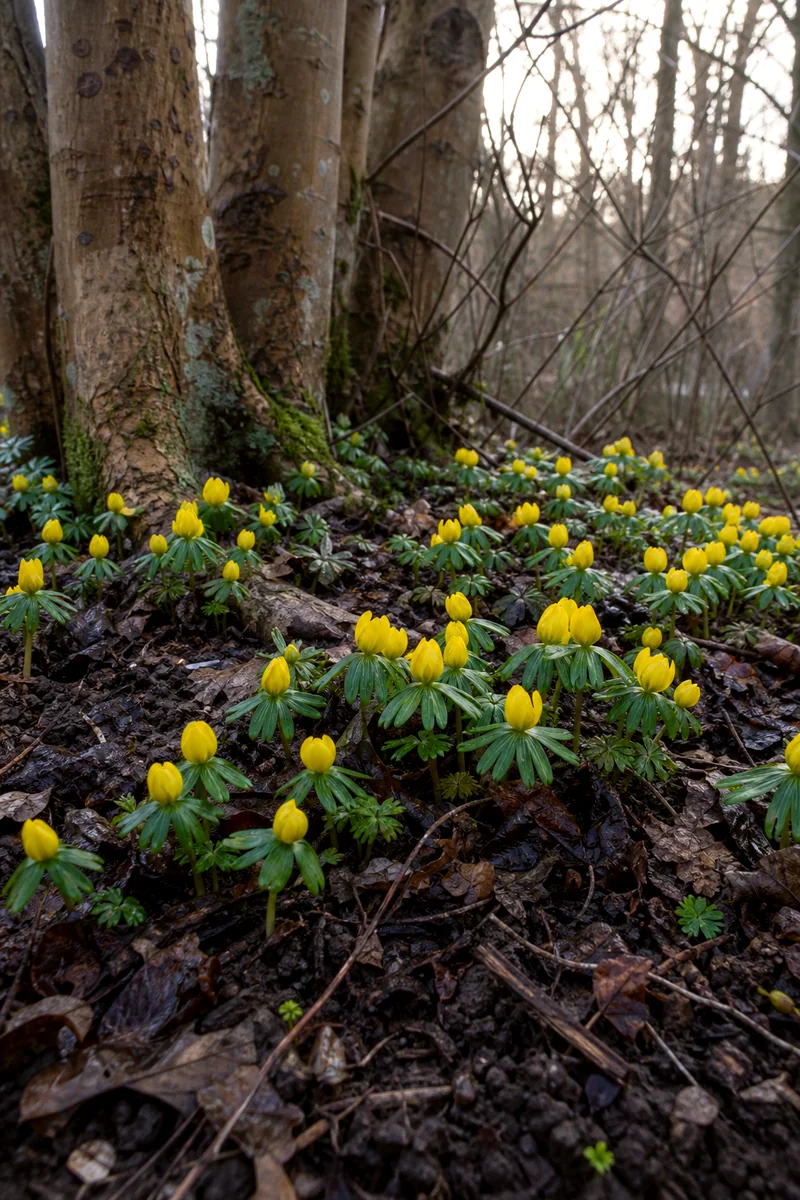
Winter aconite is one of the earliest yellow flowers many gardeners can grow. The small blooms sit above a ruff of green leaves and look especially good in drifts under deciduous trees.
It grows from small tubers, not true bulbs, and it appreciates soil that is not constantly disturbed. Plant it where you can leave it alone, because steady clumps are built over time.
Soaking the tubers before planting can help if they seem dry. Plant them about 2 to 3 inches deep in humus-rich soil, then be patient. The first year may be modest, but established patches are a welcome sight when winter is wearing thin.
Striped Squill for Small Spring Details
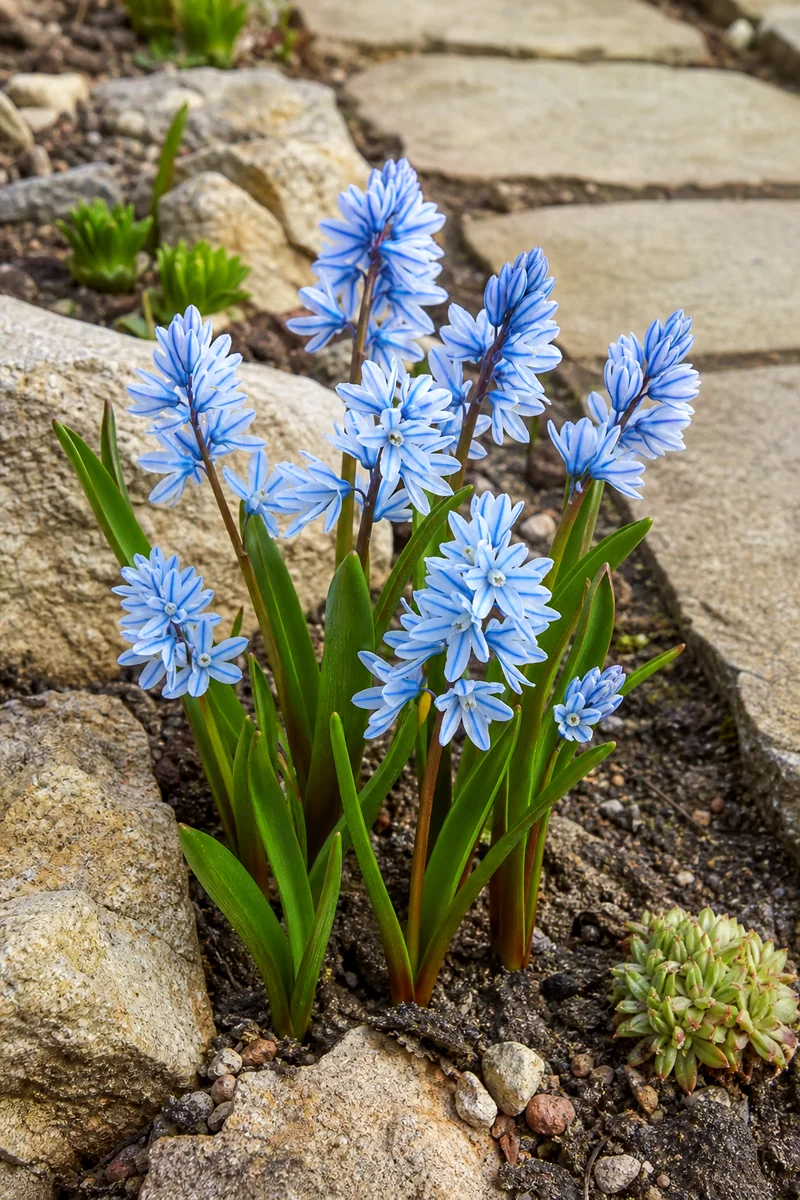
Striped squill, often sold as Puschkinia, has pale blue or white flowers marked with darker blue stripes. It is delicate, low, and easy to miss if you plant it too far from where you walk.
Use it along path edges, in containers, in rock gardens, or at the front of beds. It likes sun to light shade and well-drained soil that is not bone dry in spring.
Plant the bulbs about 3 inches deep in small clusters. It pairs nicely with miniature daffodils, early crocuses, and reticulated iris because all of them stay low enough to be appreciated close to the ground.
Star of Bethlehem for Crisp White Blooms
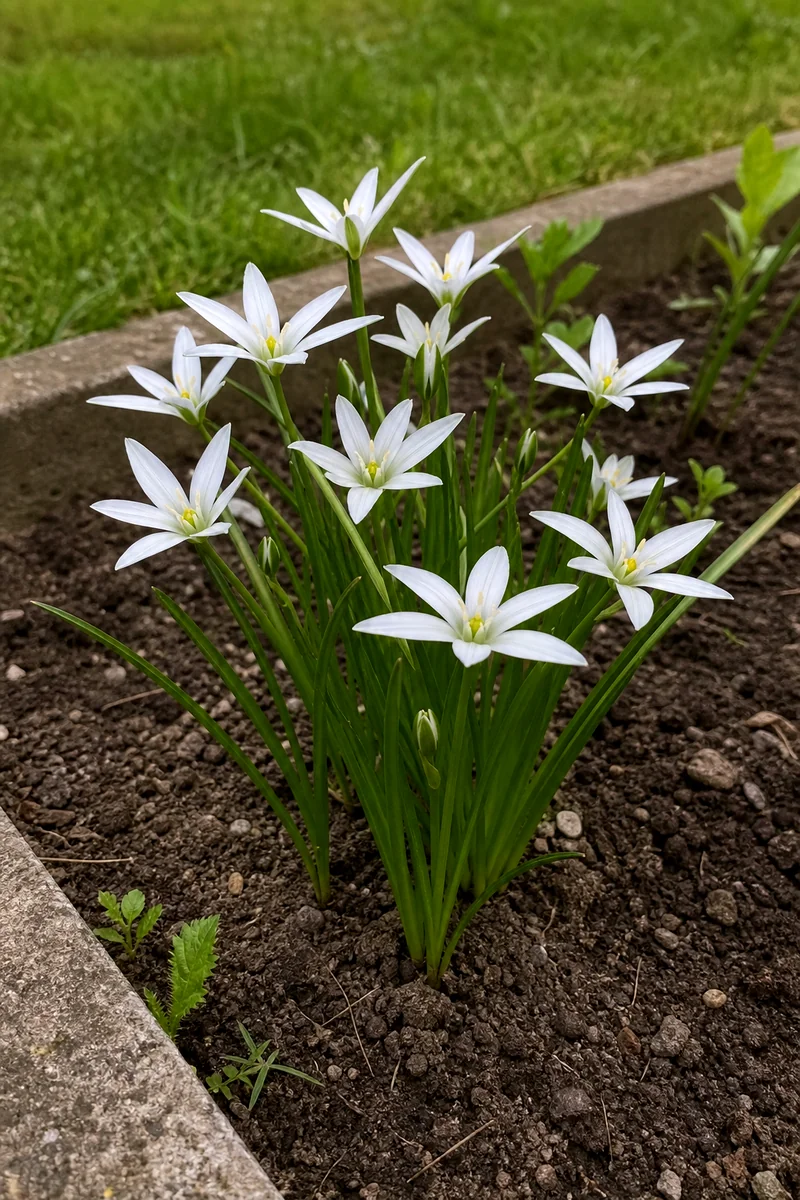
Star of Bethlehem produces crisp white star-shaped flowers that can brighten spring borders. It is easy to grow, sometimes too easy.
This name is used for several Ornithogalum species, and some can spread strongly by bulbs or seed. Before planting, check which species you are buying and whether it is considered weedy or invasive in your region.
If it is suitable for your area, plant it where spreading will not cause trouble. Informal borders and contained areas are better choices than precious mixed beds packed with small, slow-growing plants.
Sicilian Honey Garlic for Quirky Allium Flowers
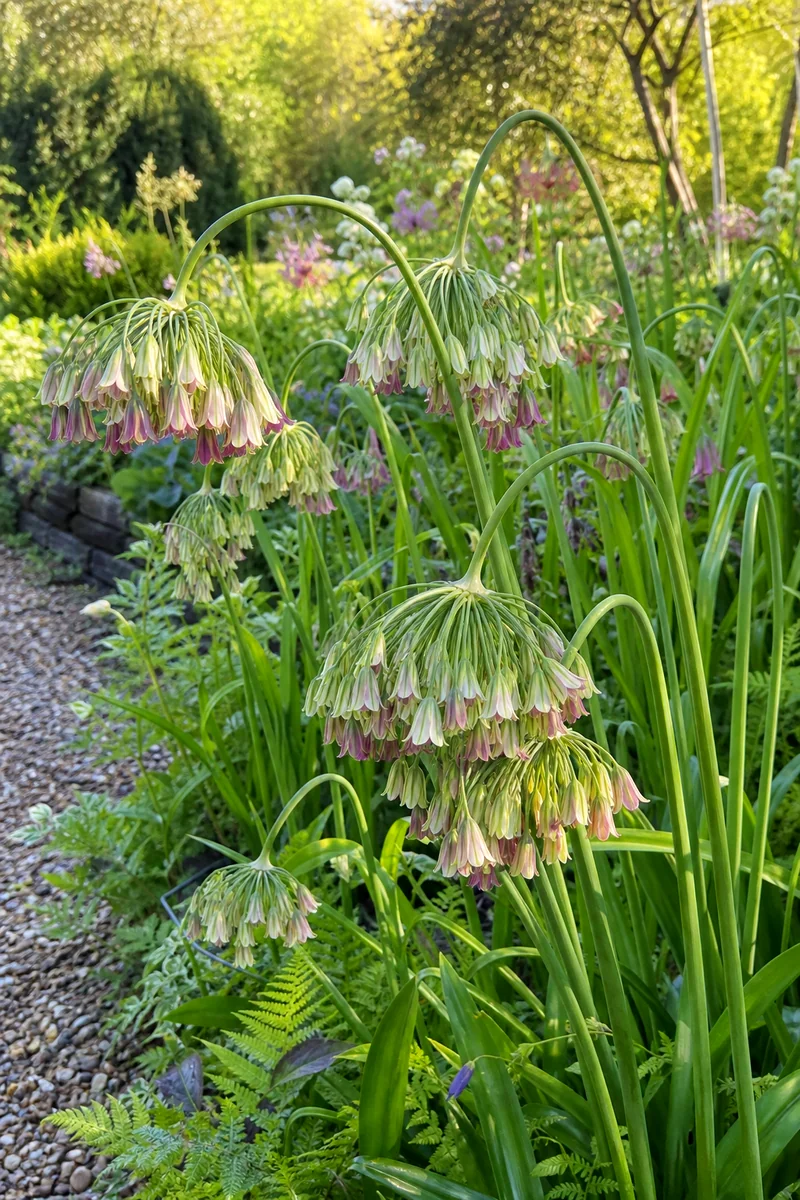
Sicilian honey garlic, often listed as Allium siculum or Nectaroscordum siculum, is an ornamental allium with dangling cream, pink, and green bells. It is wonderfully odd in the best way.
Plant it in a sunny, well-drained spot where the arching flower stems can lean and sway naturally. It is not the same look as a purple globe allium, so don’t expect tidy round heads.
It works well in relaxed borders with grasses, salvias, catmint, and other airy plants. Plant bulbs about 4 inches deep and avoid soggy winter soil.
Spanish Bluebells for Tough Woodland Color
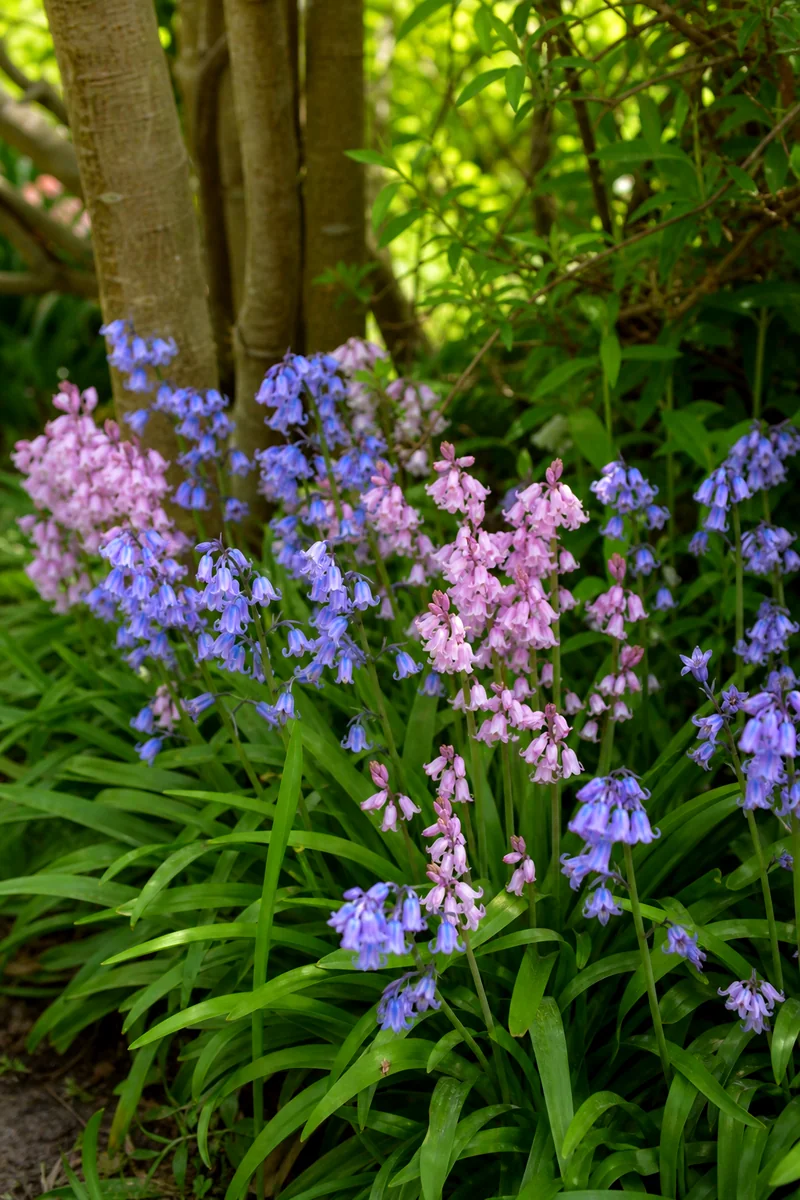
Spanish bluebells are robust spring bulbs for part shade. They produce arching stems with blue, pink, or white bell-shaped flowers and can handle less-than-perfect woodland-edge conditions.
They are tougher and more vigorous than English bluebells, which is useful in informal plantings but not always welcome in tight formal beds. Give them room, or they may take more than you planned.
Plant bulbs about 4 inches deep under deciduous trees, along shrub borders, or in wilder corners where spreading looks natural rather than messy.
English Bluebells for Natural Woodland Planting
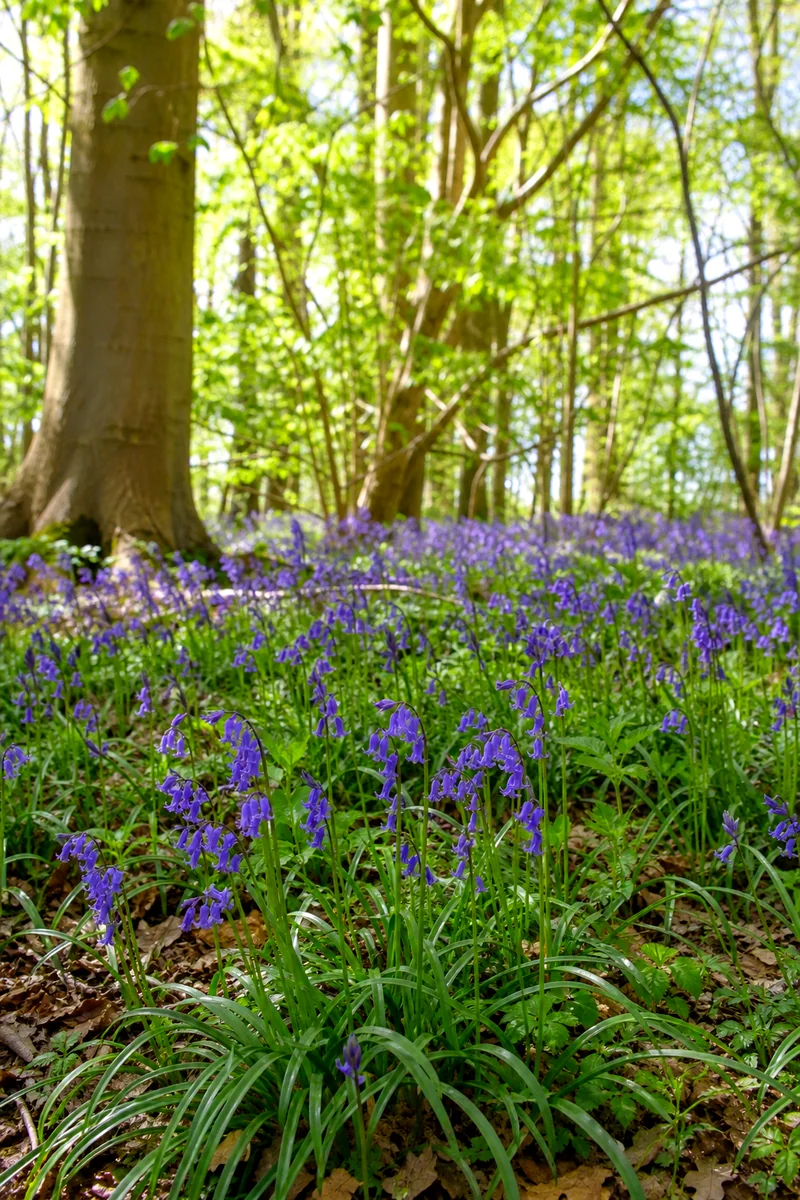
English bluebells are classic woodland bulbs with blue-violet, fragrant flowers that nod from one side of the stem. They are best under deciduous trees, where spring light reaches the ground before the canopy fills in.
Buy from reputable sources. In places where preserving true English bluebells matters, avoid vague mixes or plants that may be hybrids with Spanish bluebells. Hybrids can blur the traits that make English bluebells special.
Plant in humus-rich, well-drained soil that does not dry hard in spring. Once established, leave the clumps alone and let the foliage die back naturally.
Species Tulips for Longer-Lived Plantings
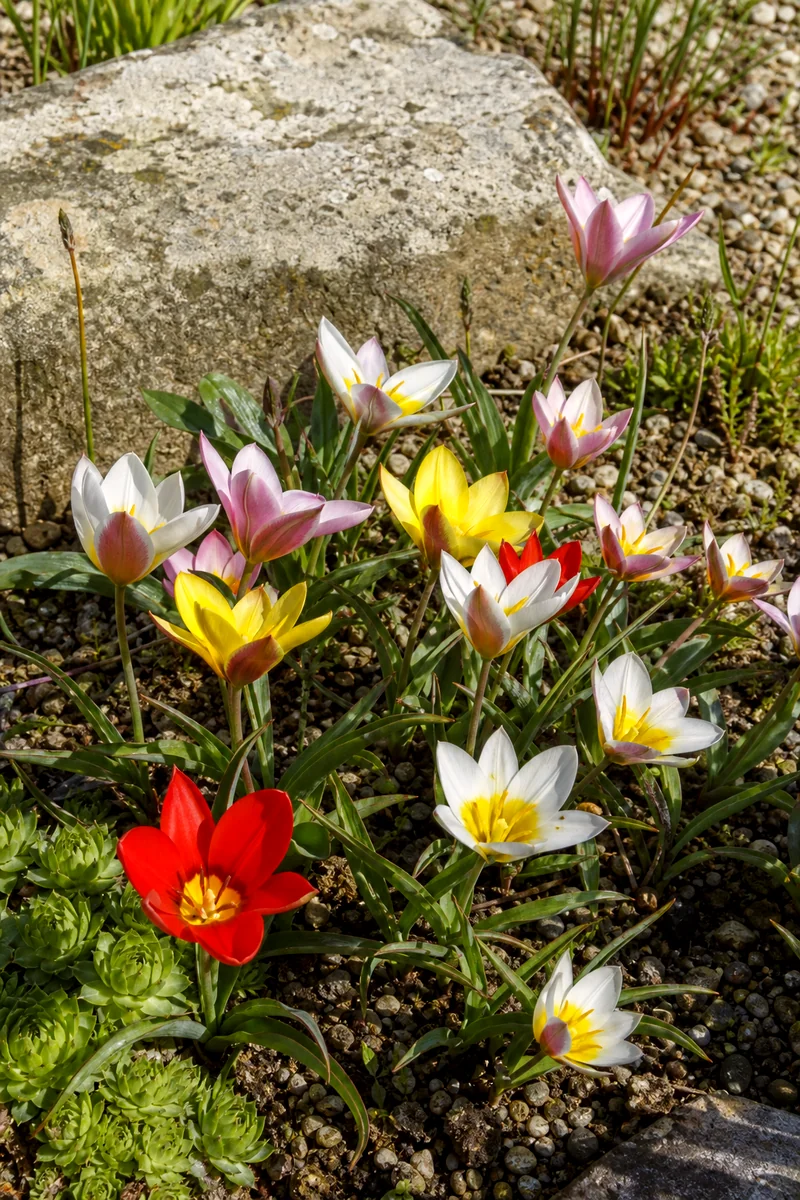
Species tulips are smaller and less formal than big hybrid tulips, but they often return better in the right place. Many have charming pointed petals, striped leaves, or flowers that open wide in sun.
They need full sun and excellent drainage, especially during summer dormancy. Rock gardens, gravel edges, raised beds, and natural-style borders are good fits.
Plant them about 4 to 6 inches deep, depending on bulb size. If your garden has heavy clay, try them in a container or raised bed rather than forcing them into wet soil and hoping for the best.
Miniature Daffodils for Pots and Pathways
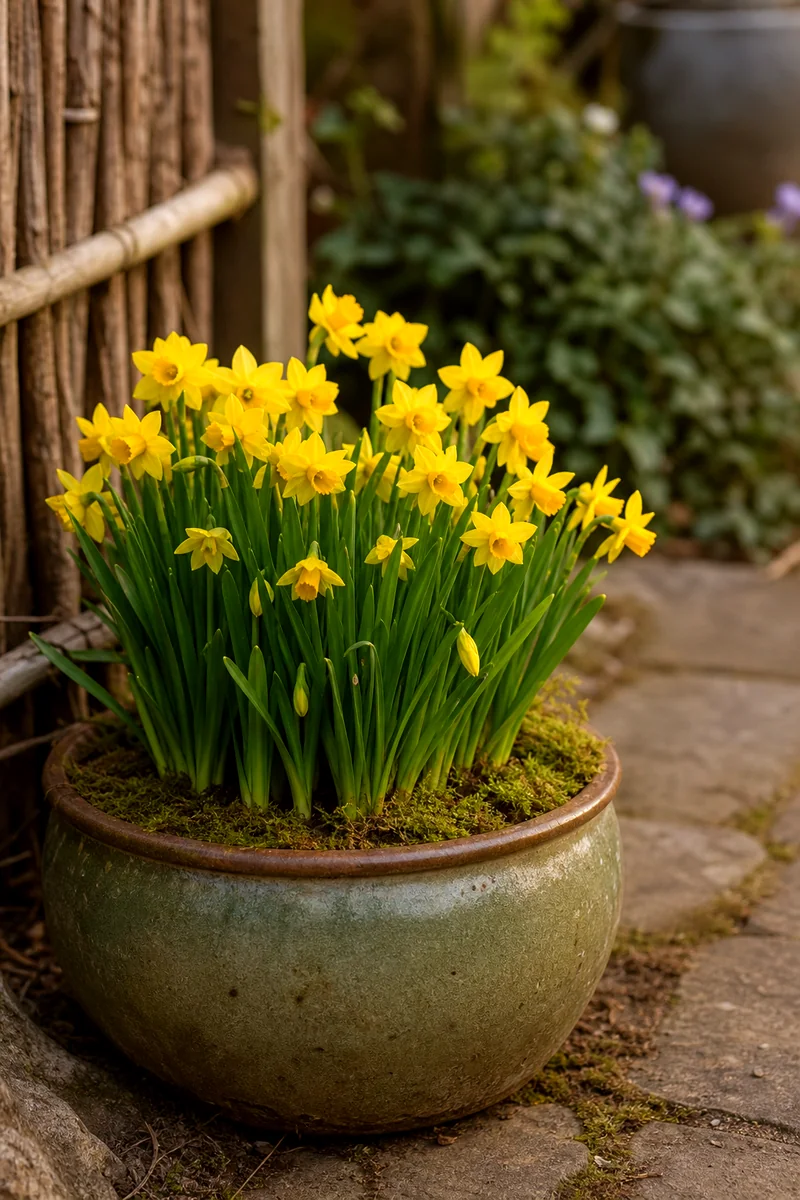
Miniature daffodils give you all the cheer of larger daffodils in a compact package. Varieties such as Tete-a-Tete and Minnow are excellent in pots, small gardens, rock gardens, and front borders.
Because the flowers are short, placement matters. Don’t plant them behind big emerging perennials where you will never see them. Put them near paths, steps, patio pots, or the front edge of beds.
They are usually as reliable as larger daffodils and just as unappealing to many browsing animals. Plant bulbs about 4 inches deep, or a little deeper in loose soil.
Botanical Crocuses for Natural Spreading
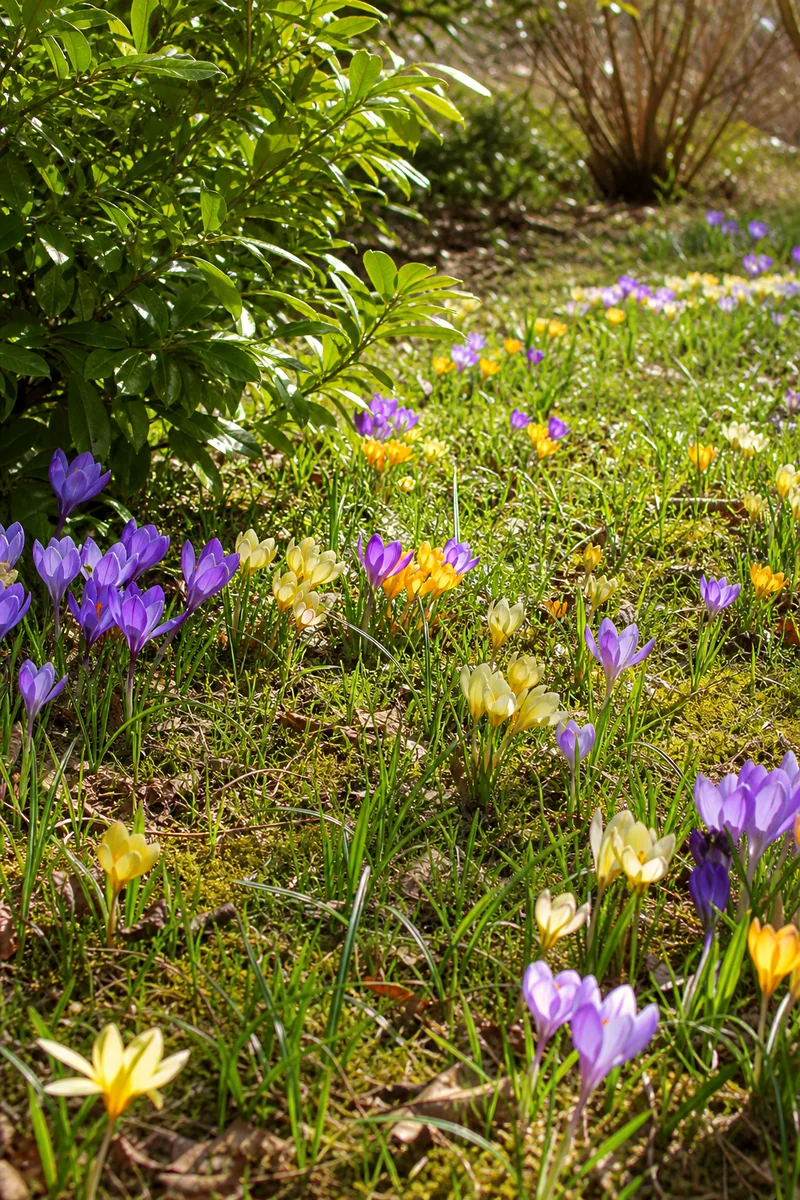
Botanical crocuses are smaller and often earlier than large Dutch crocuses. They are excellent for naturalizing in lawns, under shrubs, and in sunny pockets that warm quickly in late winter.
Because the flowers are small, plant them generously. A dozen can disappear visually, but a drift of fifty or more can look wonderful as it slowly spreads.
Plant the corms about 3 inches deep. In lawns, delay mowing until the leaves have yellowed. If you cannot tolerate that, plant them in beds instead.
Drumstick Alliums for Late Texture
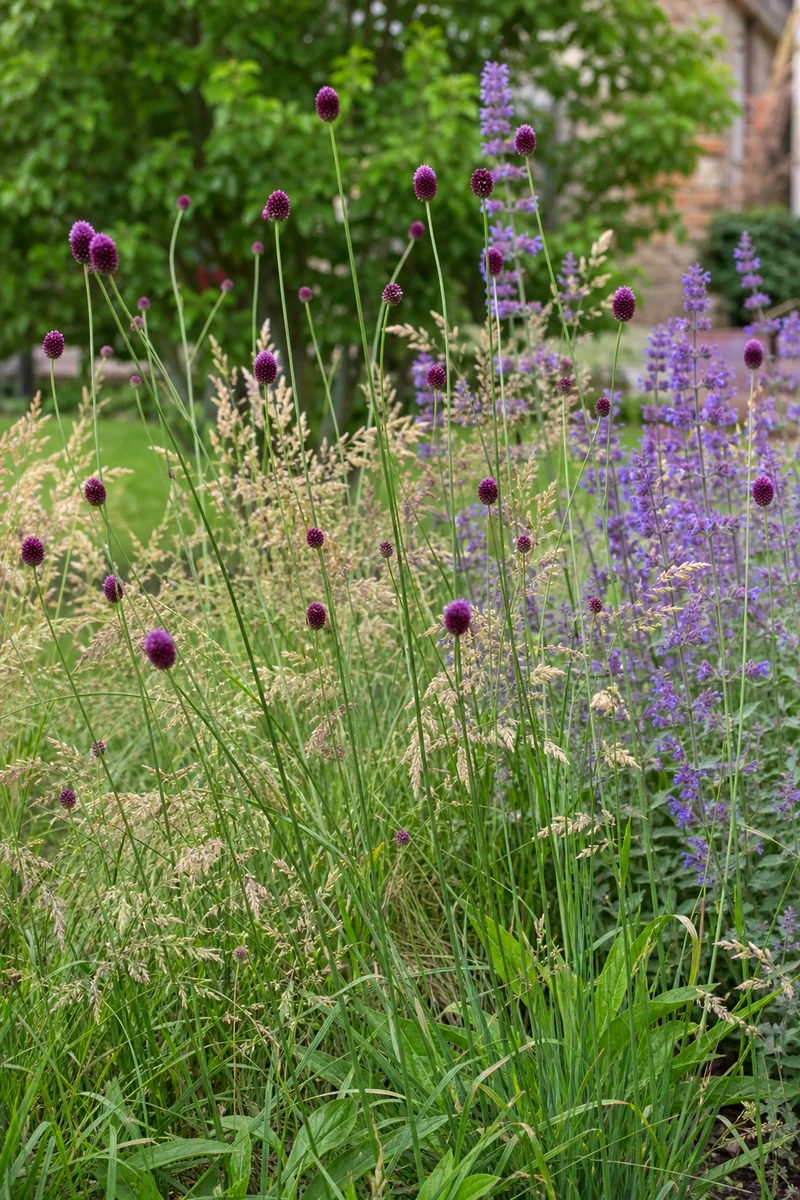
Drumstick alliums, usually Allium sphaerocephalon, bloom later than many spring bulbs. Their slender stems carry egg-shaped flower heads that deepen from green to reddish purple.
They are best woven through perennials rather than planted in stiff clumps. Try them with ornamental grasses, salvias, yarrow, catmint, and other airy plants that can support their vertical lines.
Plant bulbs about 3 to 4 inches deep in full sun and well-drained soil. They are a good choice when you want the bulb season to stretch into early summer without adding anything too bulky.
FAQ About Fall-Planted Bulbs
When is the best time to plant fall bulbs?
Plant most spring-flowering bulbs after the soil cools but before it freezes. In many climates, that means mid to late fall. The goal is to let bulbs root before winter without encouraging too much top growth.
How deep should I plant bulbs?
A good rule is to plant bulbs about two to three times as deep as the bulb is tall. Large tulips and daffodils usually go deeper than small crocuses, squill, and windflowers. Always check the package if you are unsure.
Can I plant bulbs in pots?
Yes. Use a pot with drainage holes and a free-draining potting mix. In cold climates, protect containers from repeated freeze and thaw cycles by moving them to an unheated garage, cold frame, or sheltered spot.
What should I do if squirrels dig up my bulbs?
Plant bulbs deeply, firm the soil well, and cover the area with hardware cloth or chicken wire until the ground settles. Daffodils and alliums are usually less attractive to rodents than tulips and crocuses.
Should I fertilize bulbs when planting?
If your soil is poor, mix compost or a balanced bulb fertilizer into the planting area, not directly against the bulb. Skip surface bone meal if animals dig in your garden, because it can draw attention to fresh planting spots.
One last practical note: label where you plant. Spring bulbs vanish after their leaves die back, and future you will be grateful when it is time to weed, divide, or add perennials.