25 Best Plants for Fall Planters

Fall planters look their best when they stop trying to act like summer containers. Cool weather asks for sturdy foliage, strong shapes, rich color, and plants that won’t sulk the first time the night temperature drops.
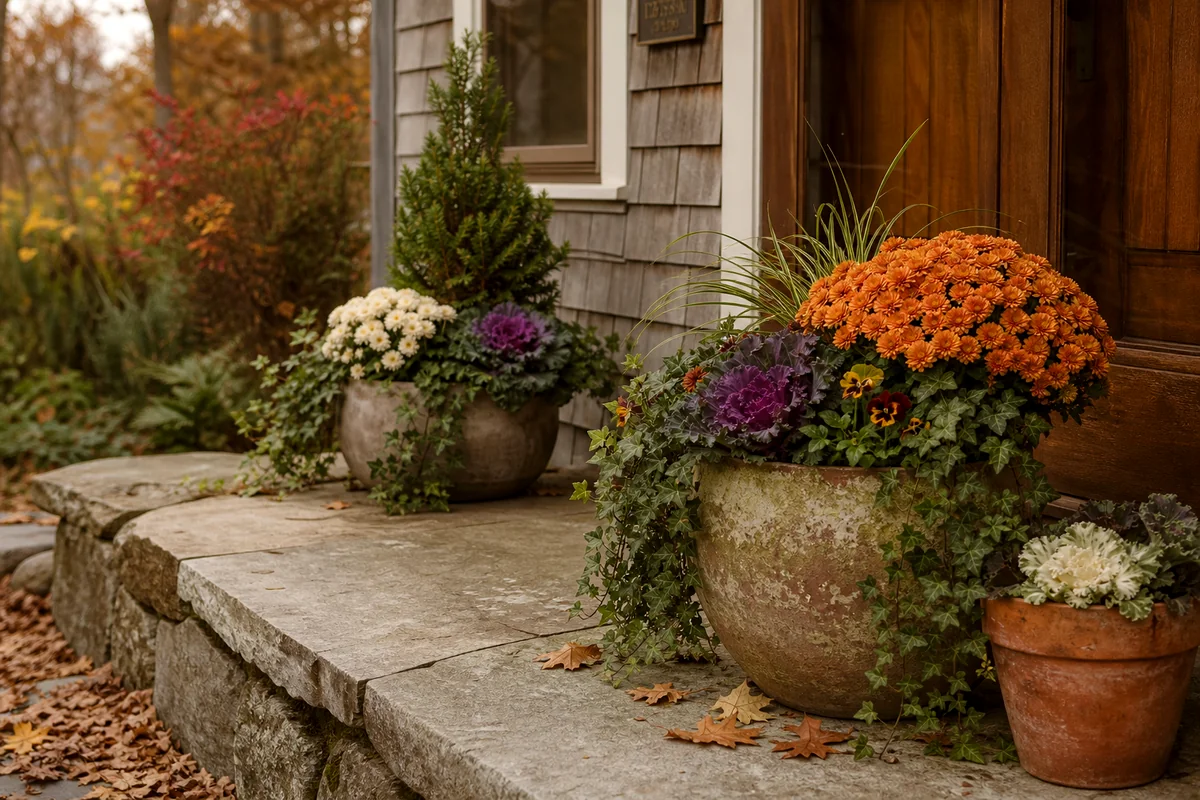
The best plants for fall planters also look good from the curb. Some bring flowers, some bring texture, and a few carry the whole pot long after the first cold snap has flattened the tender stuff.
Chrysanthemums for Instant Fall Color
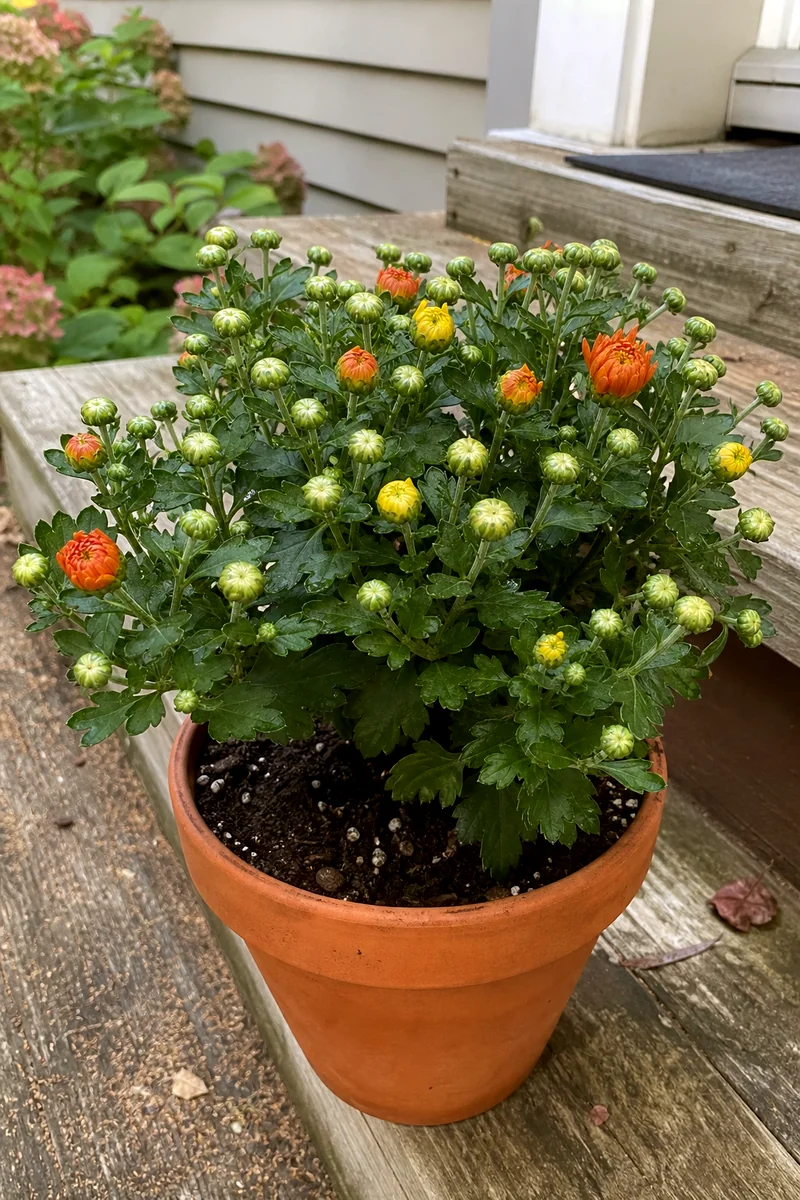
Chrysanthemums, usually just called mums, are the fast fix for a porch that looks tired by September. They come in the familiar fall colors, orange, yellow, red, bronze, pink, purple, and white, and one full plant can make a container look finished in about five minutes.
Here is my honest advice: buy mums with lots of tight buds, not the ones already in full bloom at the garden center. Fully open mums look tempting, but they are often halfway through their show before you get them home.
Keep potted mums evenly moist. Their root balls are dense, and once they dry out hard, water tends to run down the sides instead of soaking in. If a mum wilts badly, set the nursery pot in a bucket of water for 20 minutes, then let it drain.
Don’t count on every florist mum in a fall pot to overwinter. Some do, especially if planted early in the ground, but many are best treated as temporary seasonal color. Enjoy them for what they are. They earn their keep.
Ornamental Kale for Cold-Weather Texture
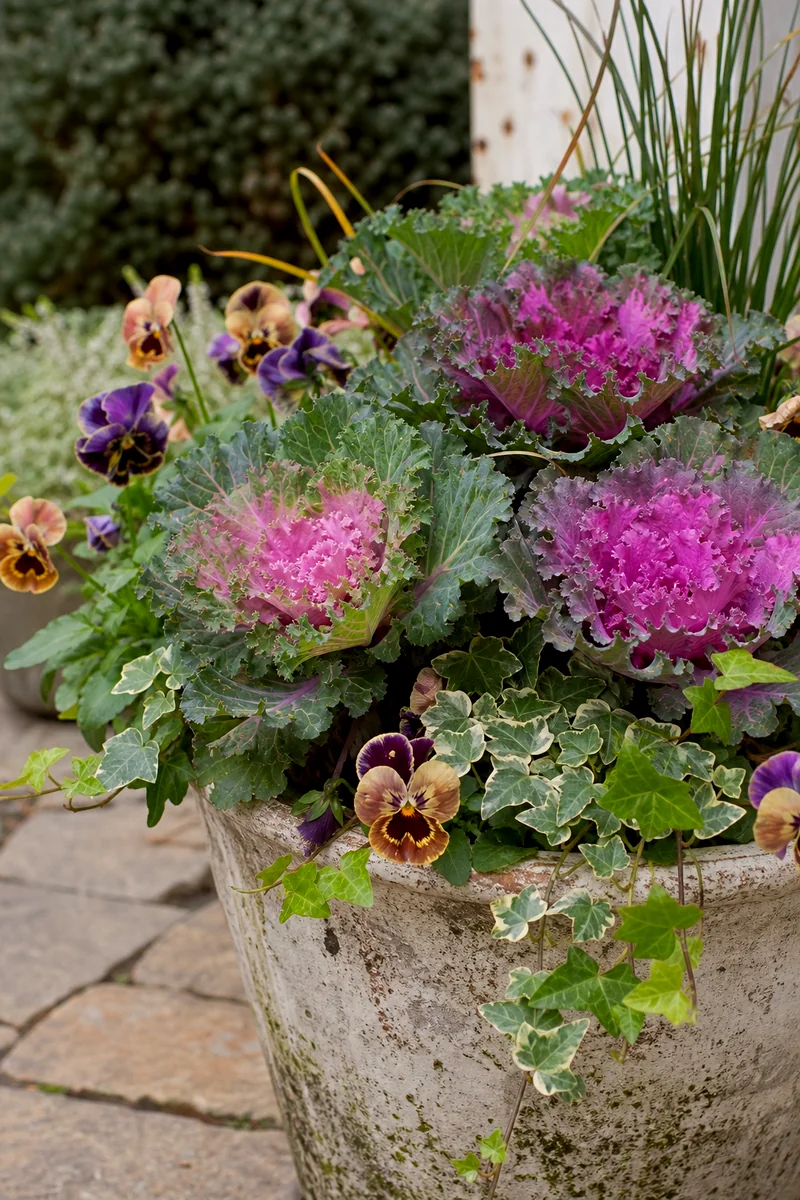
Ornamental kale is grown for looks, not for tender eating. Its ruffled leaves bring texture that flowers simply can’t give, especially in green, white, pink, and purple forms.
The colors usually improve as the weather cools. Chilly nights help deepen the centers, so a plant that looks modest in early fall can become much prettier by late October.
Use ornamental kale as a sturdy centerpiece in smaller pots or as a mid-height filler in larger ones. It pairs especially well with mums, pansies, carex, and trailing ivy.
Give it sun to part sun and regular water. It will tolerate cool weather well, but containers still dry out faster than garden beds, even when the air feels chilly.
Ornamental Cabbage for Bold Rosettes
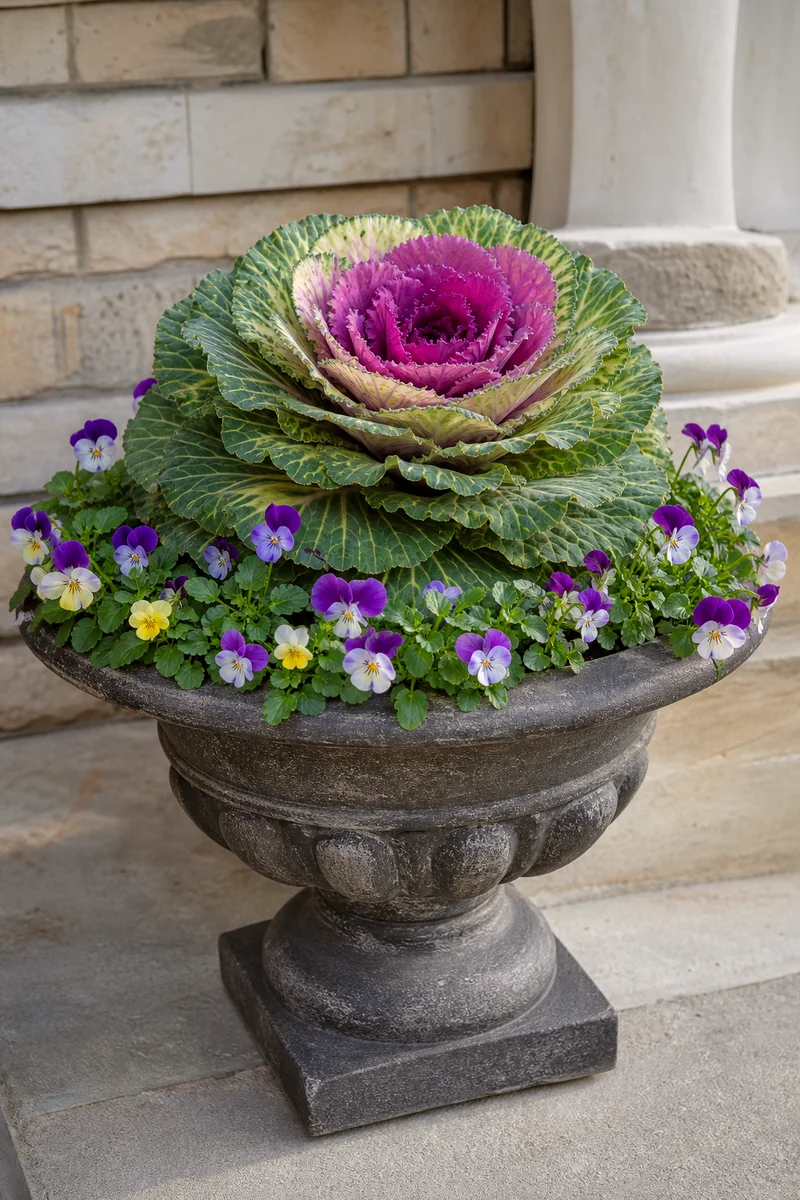
Ornamental cabbage has a rounder, more rose-like shape than ornamental kale. The leaves are smoother and the plant often looks more compact and formal.
That formal shape makes it excellent for symmetrical porch pots. Try one large cabbage in the center of each matching urn, then tuck pansies, violas, or ivy around the edges.
Its strongest colors usually sit in the center of the rosette, with cream, pink, purple, and green layered together. Give the plant a little room so that shape can be seen. If you bury it under trailing plants, you lose the best part.
Purple Fountain Grass for Height and Movement
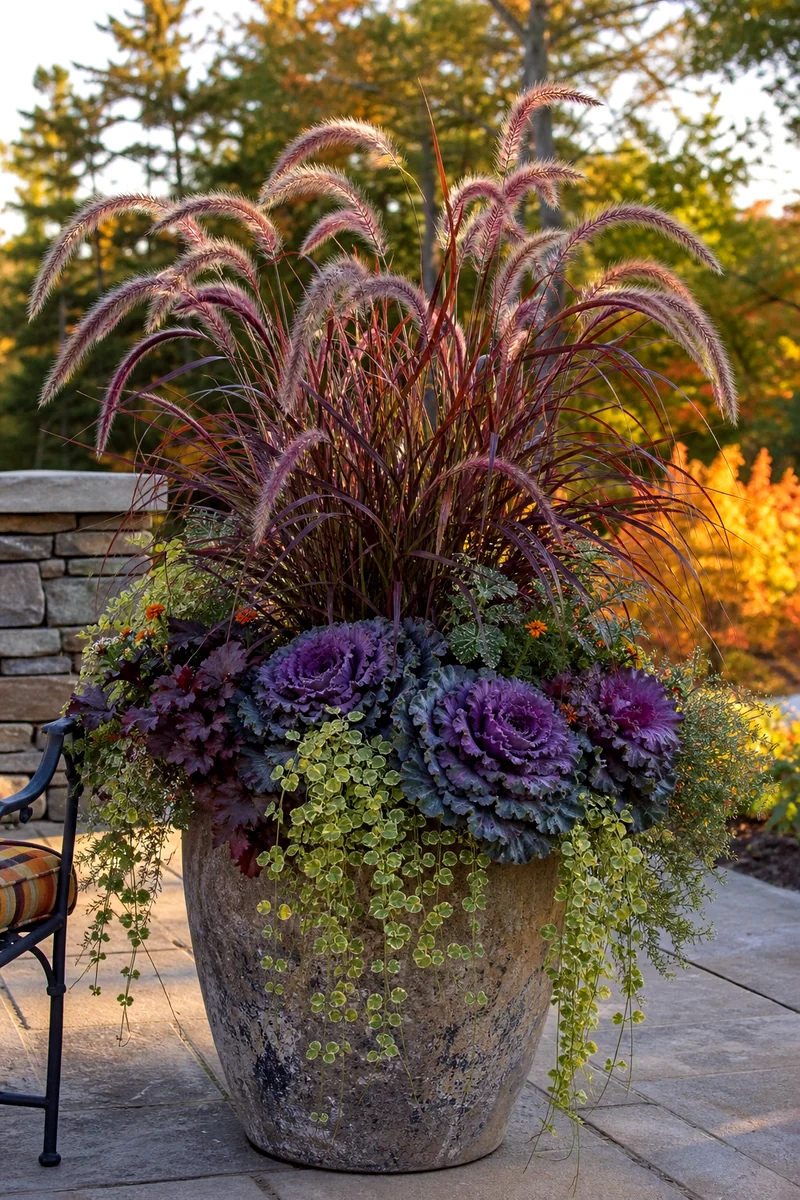
Purple fountain grass is the dramatic thriller plant for fall containers. The burgundy blades arch outward, and the soft plumes catch low autumn light beautifully.
It works best in large pots. In a small container, it can look top-heavy and awkward, like a big hat on a little head. Use it with broad plants such as ornamental cabbage, heuchera, or mums to balance the height.
In cold climates, purple fountain grass is usually treated as an annual. It does not reliably survive freezing winters in pots. That is not a failure, it is just how this plant behaves outside its warm comfort zone.
Pansies for Cheerful Cool-Season Blooms
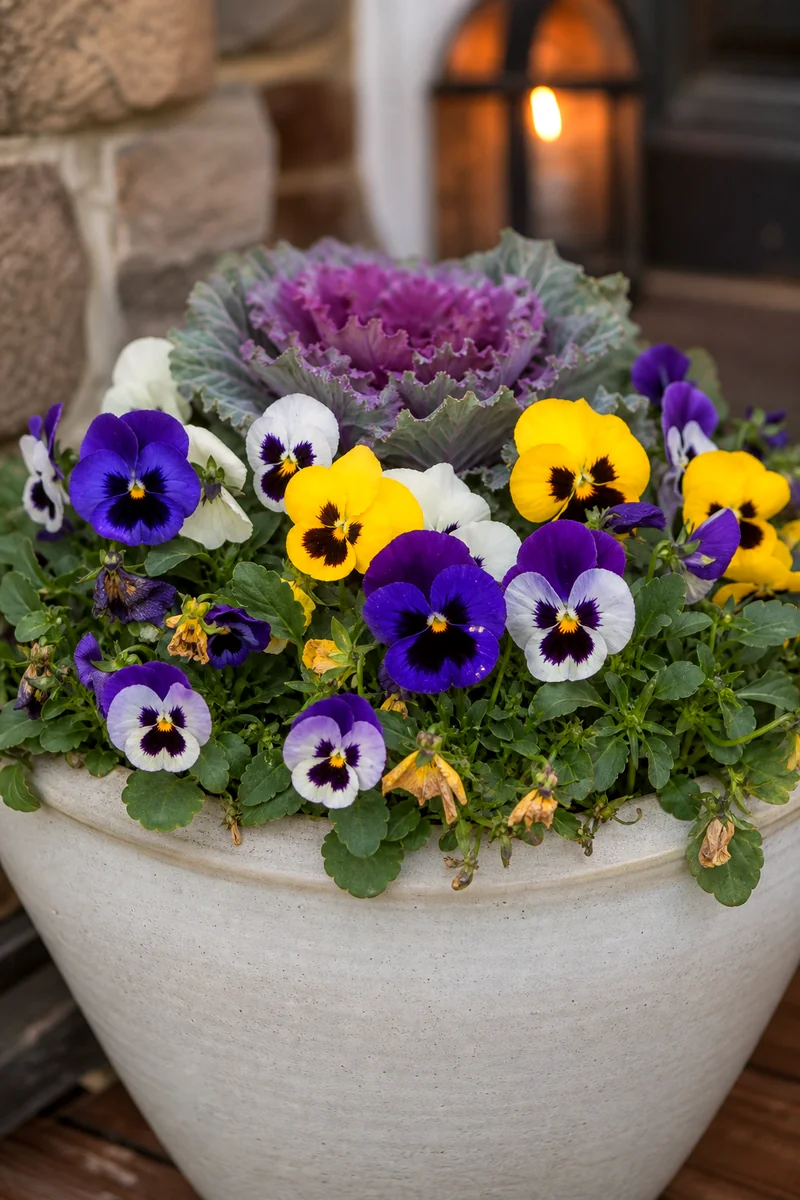
Pansies are one of the most dependable flowers for fall planters because they prefer cool weather. Summer heat can make them stretch and sulk, but fall brings them back into their stride.
Use pansies to fill gaps around larger foliage plants. They are especially useful at the front of a container where their cheerful faces can be seen up close.
Deadhead spent blooms by pinching off the flower and the little stem behind it. This keeps the plant from wasting energy on seed. Water when the top inch of potting mix feels dry, but don’t let them sit in soggy soil.
In mild winters, pansies may keep going for months. In colder regions, they often pause during hard freezes and perk up again during thaws.
Violas for Edges and Overflowing Color
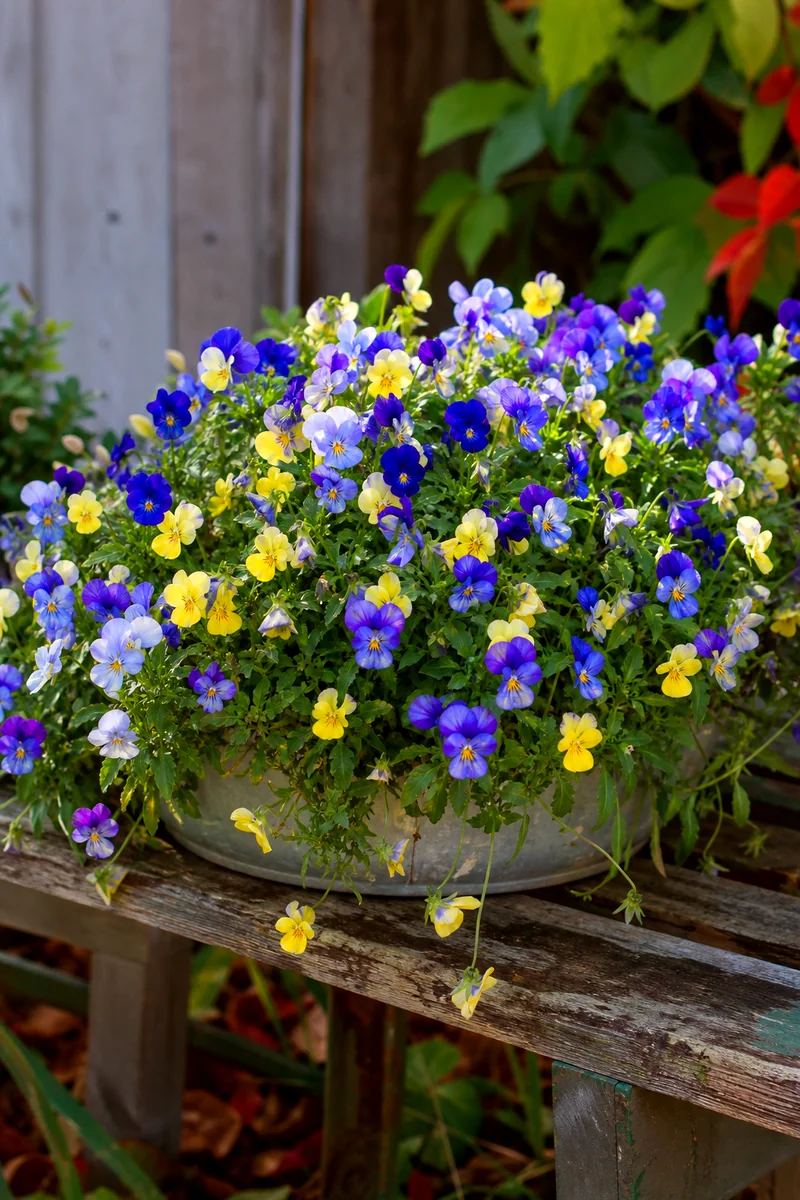
Violas have smaller flowers than pansies, but they often bloom with more abandon. They are wonderful around container rims where they can soften the edge without looking too stiff.
I like violas when a planter needs a more natural, cottage-style look. They mingle well with grasses, kale, ivy, and small evergreens instead of stealing the whole show.
Many violas bounce back after light frosts. A hard freeze can still knock them down, but they are tougher than they look. Keep them watered, pinch off tired blooms now and then, and they will often reward you with steady color.
Heuchera for Long-Lasting Foliage Color
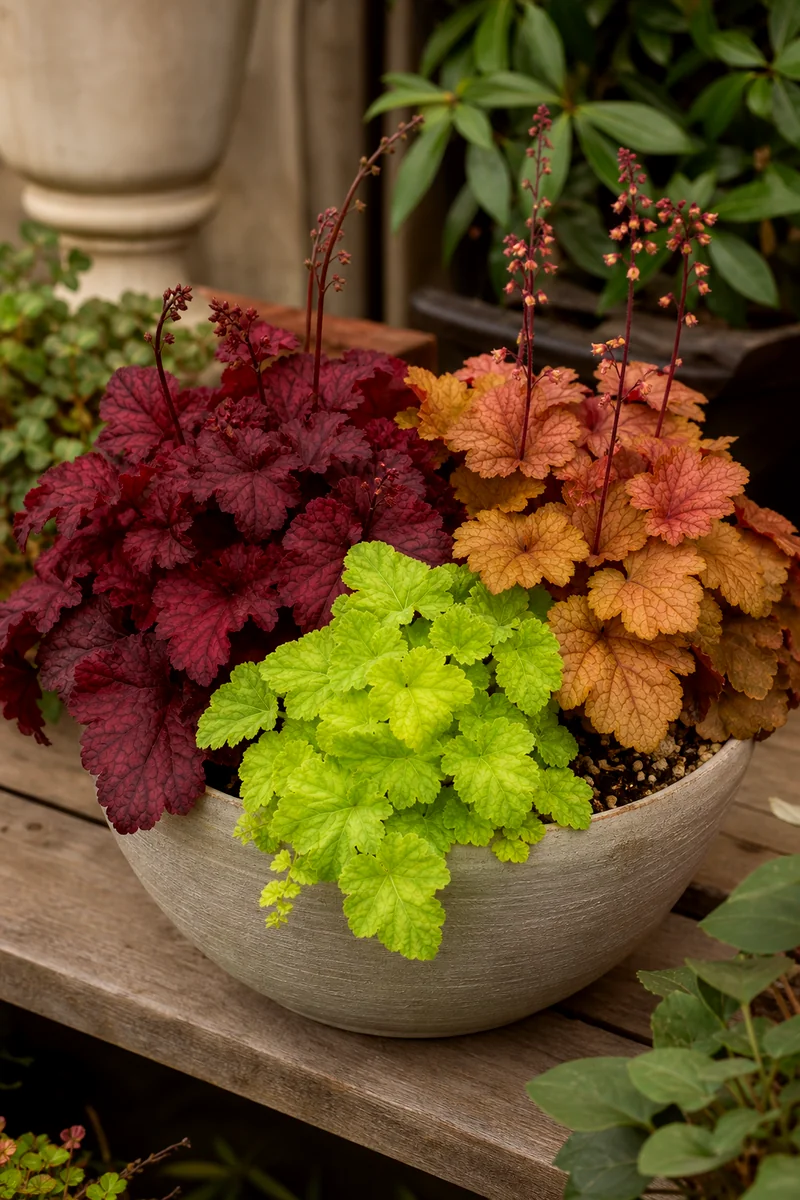
Heuchera, also called coral bells, is one of the smartest foliage plants for fall planters. When flowers start fading, heuchera keeps the color going with leaves in caramel, burgundy, lime, bronze, silver, and purple.
The trick is drainage. Heuchera dislikes sitting wet, especially in a container during cold weather. Use a pot with drainage holes and a good potting mix, not heavy garden soil.
Pair dark heuchera with white mums or silver Dusty Miller. Use caramel and bronze varieties with pumpkins, goldenrod, or orange pansies. Lime forms brighten shady spots, though they may scorch in hot afternoon sun earlier in the season.
Creeping Jenny for Chartreuse Trailing Foliage
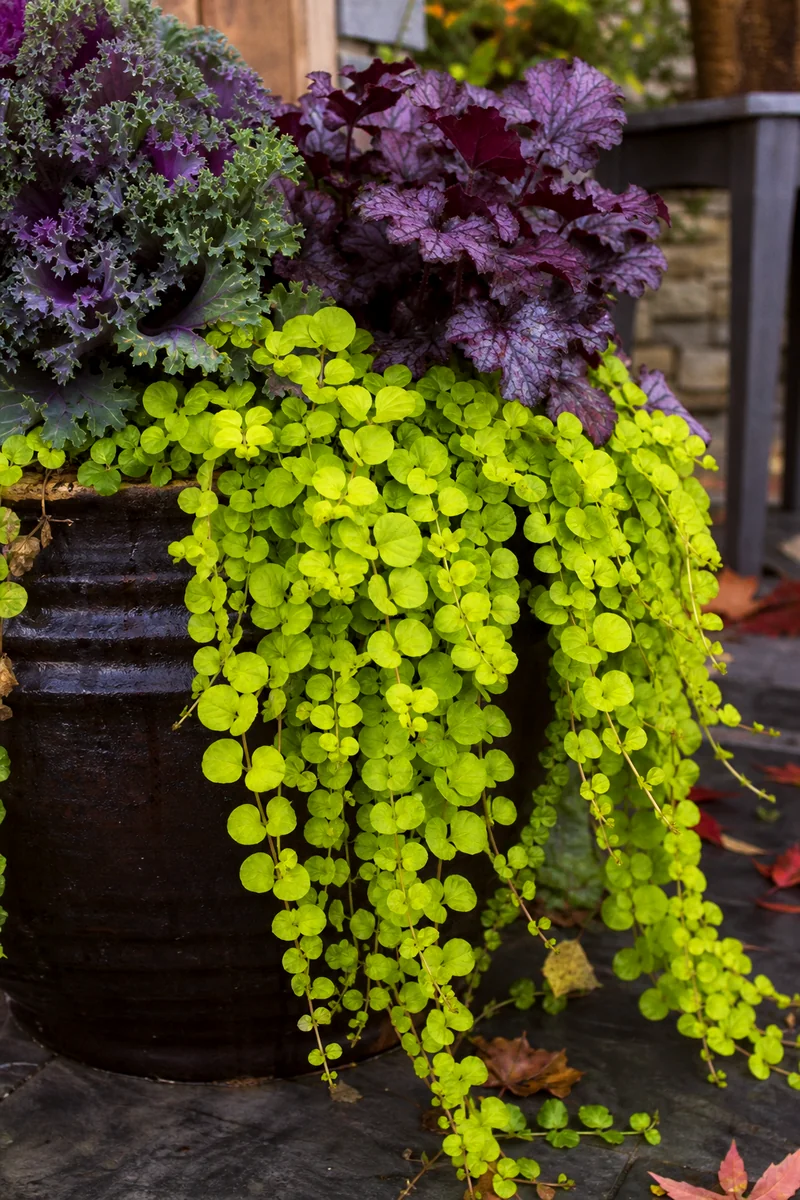
Creeping Jenny brings that sharp chartreuse color that makes a fall planter wake up. It is especially good next to dark mums, purple heuchera, ornamental kale, and black mondo grass.
Use it as a spiller near the container edge. The round leaves trail down quickly, which helps a new planter look full before the other plants have settled in.
It likes consistent moisture, so don’t tuck it into a bone-dry succulent-style arrangement. It can also grow longer than you want. Trim it back without guilt if it starts dragging on the porch.
Sweet Potato Vine for Fast Trailing Drama
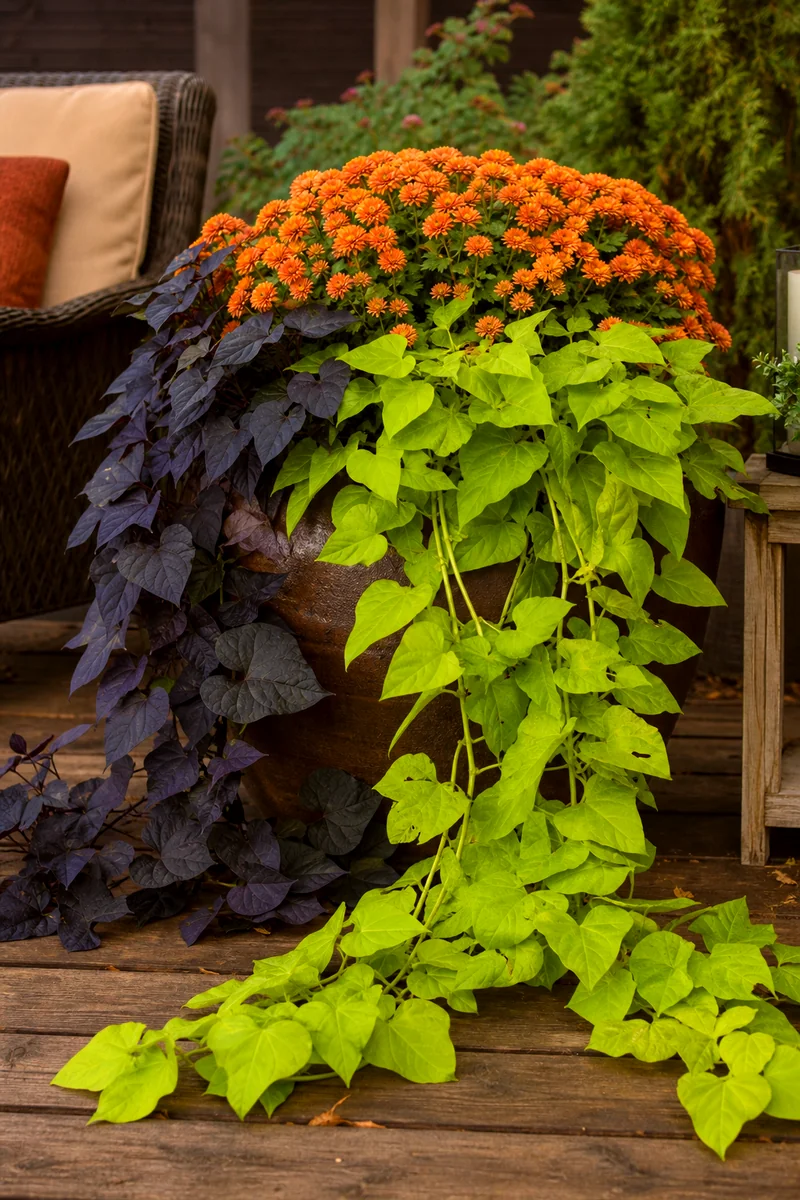
Sweet potato vine is bold, fast, and not shy. Lime green varieties brighten dark combinations, while deep purple forms add moody contrast to orange mums, cabbage, and pale pumpkins.
This is best for early fall or mild climates. Sweet potato vine is frost-sensitive, and a real freeze can turn those lush leaves limp overnight.
Use it when you want quick trailing drama before hard cold arrives. Give it room, because it can grow fast in warm September weather. If it starts swallowing smaller plants, cut it back. It won’t take offense.
Dusty Miller for Silver Contrast
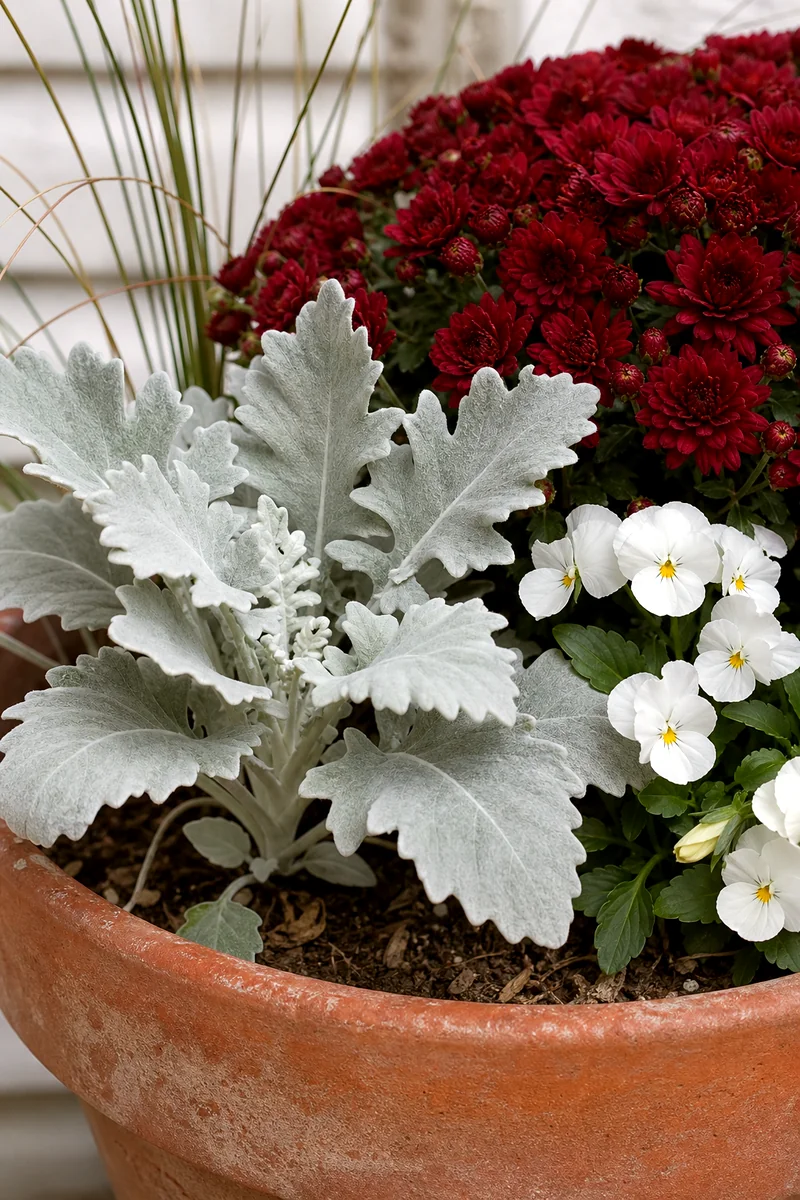
Dusty Miller is the plant I reach for when a fall container feels too heavy. Its silver-gray leaves brighten orange, burgundy, purple, and white color schemes without adding another loud flower.
It tolerates cool weather well and often looks good after other annuals have faded. The fuzzy leaves also add a soft texture that plays nicely against glossy peppers, ruffled kale, and smooth pumpkins.
Drainage matters here too. Dusty Miller can handle dry spells better than wet feet, so don’t plant it in a pot that stays soggy after rain.
Ornamental Peppers for Bright Seasonal Fruit
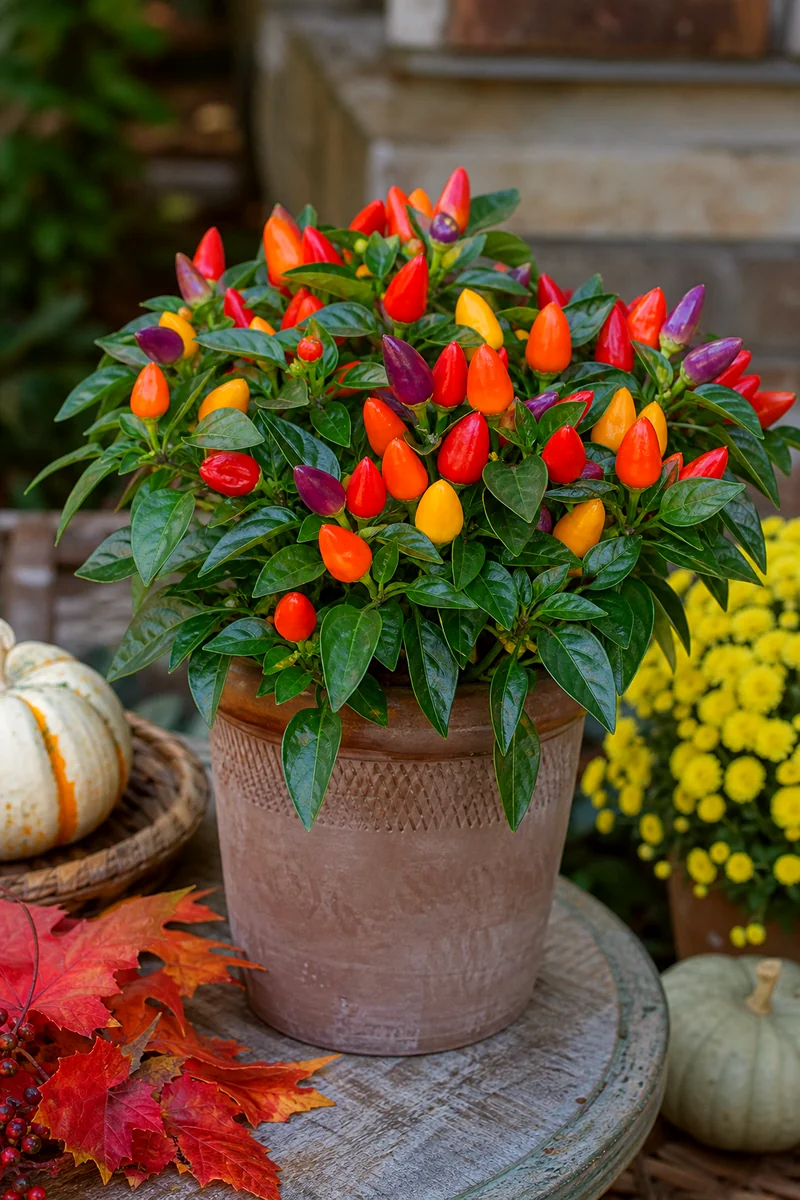
Ornamental peppers bring shiny little fruits in red, orange, yellow, purple, and sometimes several colors on one plant. They make a strong accent in small spaces and look especially good beside dark foliage.
Most ornamental peppers are grown for decoration. Many are extremely hot, even when the fruits look cute and candy-like. Keep them away from curious children and pets who might sample them.
They like sun and reasonably even moisture. Cold weather will eventually slow them down, but for early and mid-fall planters, they add a punch that flowers alone can’t match.
Sedum for Succulent Texture and Autumn Flowers
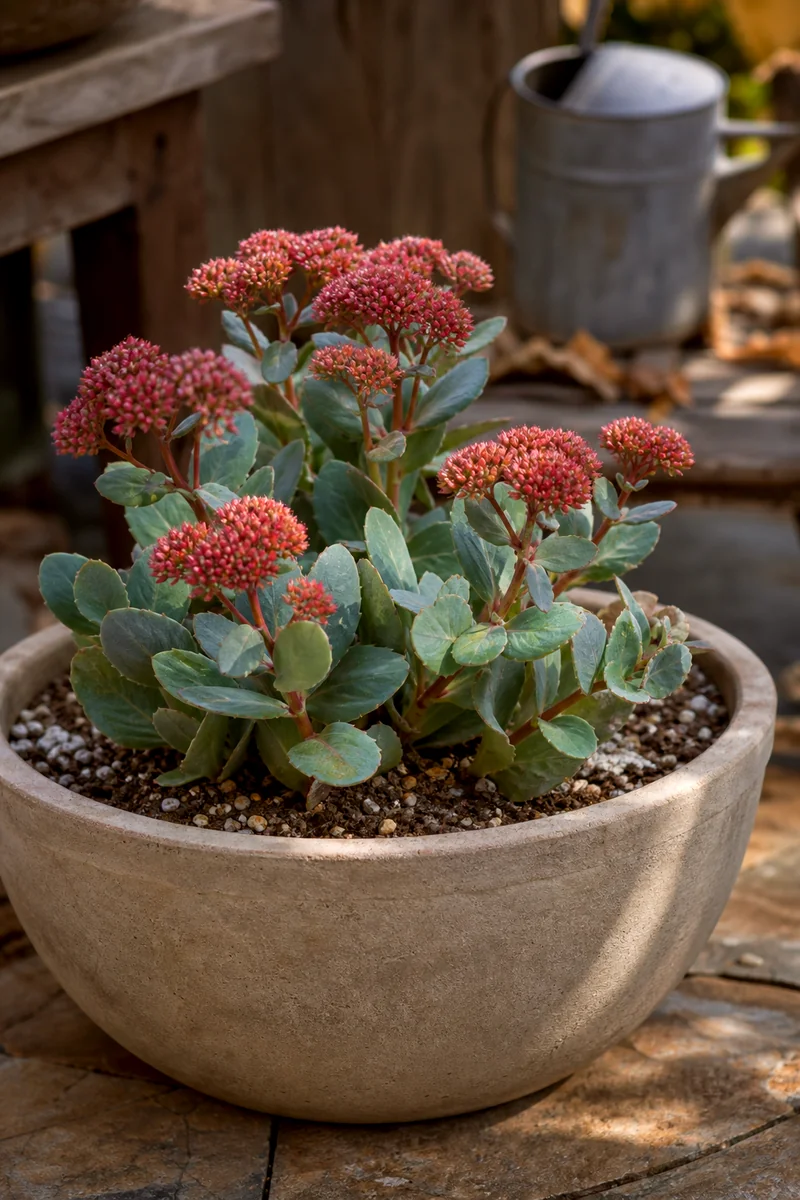
Sedum is a tough choice for gardeners who forget to water now and then. The fleshy leaves store moisture, and many upright varieties produce late-season flower clusters in pink, rust, rose, or burgundy tones.
The biggest mistake is overwatering. Sedum wants sharp drainage. A potting mix that stays wet for days, especially in cool weather, can lead to rot.
Use sedum with grasses, Dusty Miller, heuchera, or dwarf evergreens. It gives a planter a grounded, sturdy look, and the aging flower heads often remain attractive as they dry.
Asters for Late-Season Daisy Blooms
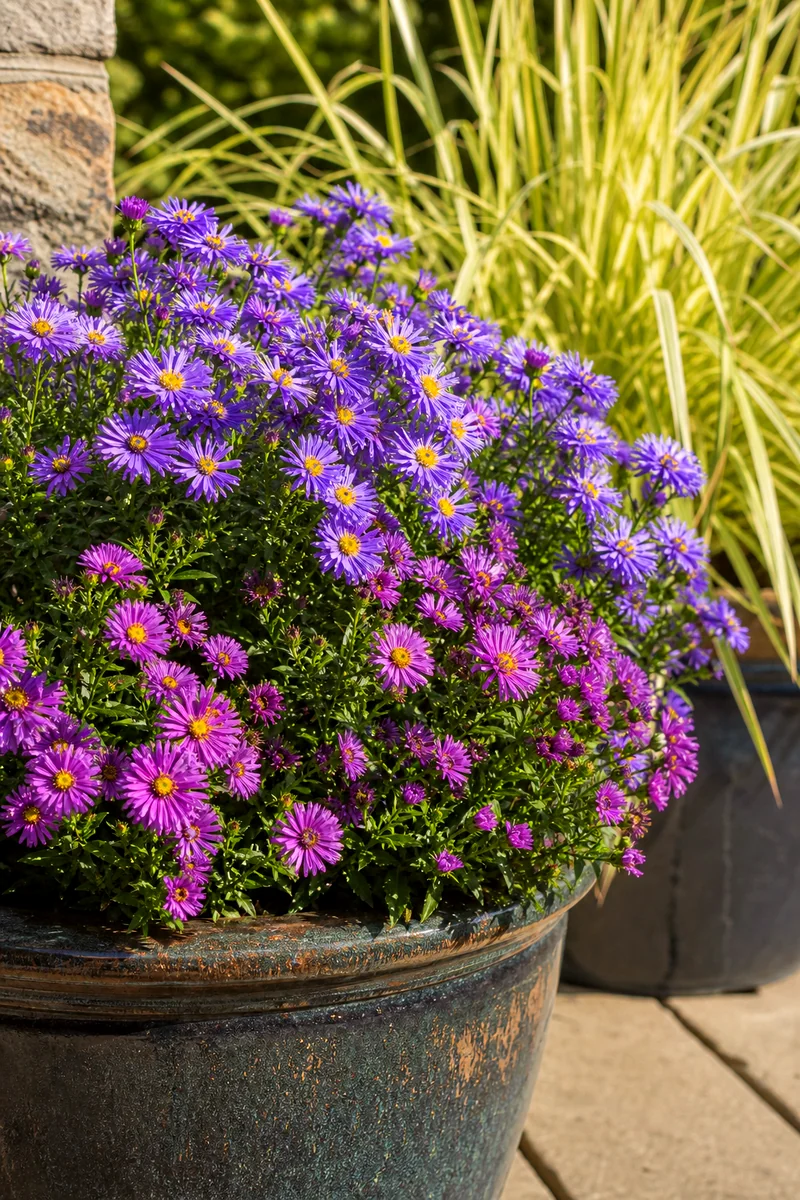
Asters bring fresh daisy-like flowers just when many summer annuals look tired. Purple and blue varieties are classic, but pink and white forms are useful too.
They need good sun to bloom well. In too much shade, they may stretch and flower lightly. Keep the potting mix regularly moist, since aster buds can dry out quickly in small nursery pots.
Asters look best when planted with simpler foliage around them. Let the flowers be the sparkle, then use carex, ivy, cabbage, or heuchera to hold the arrangement together.
Goldenrod for Warm Yellow Fall Color
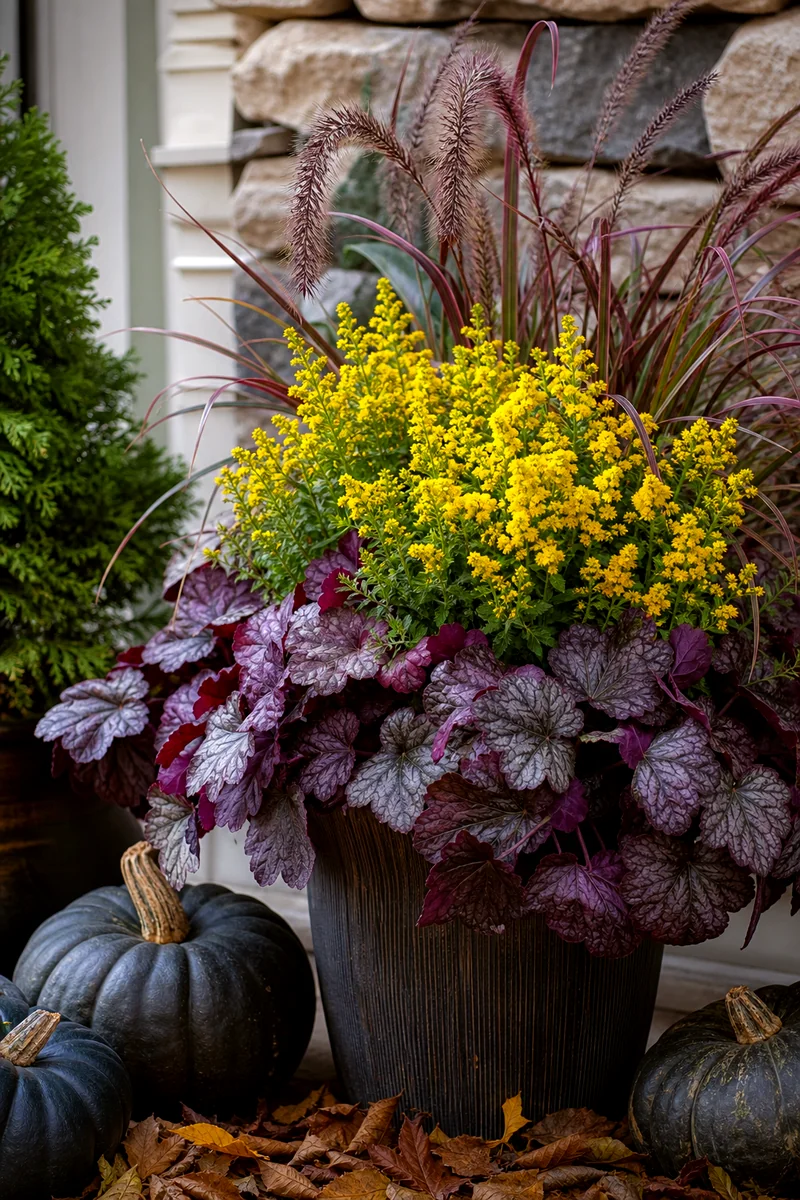
Goldenrod gives fall planters a warm yellow glow that looks terrific with burgundy grasses, purple heuchera, dark pumpkins, and bronze sedges.
It is often blamed for allergies, but that reputation is mostly unfair. Ragweed, which blooms around the same time, has lightweight windborne pollen and is usually the bigger problem. Goldenrod pollen is heavier and more attractive to insects.
Choose compact varieties for containers. Tall garden types can flop or overwhelm a pot. Give goldenrod sun and enough water to keep it from wilting while it settles in.
Carex for Soft Grass-Like Texture
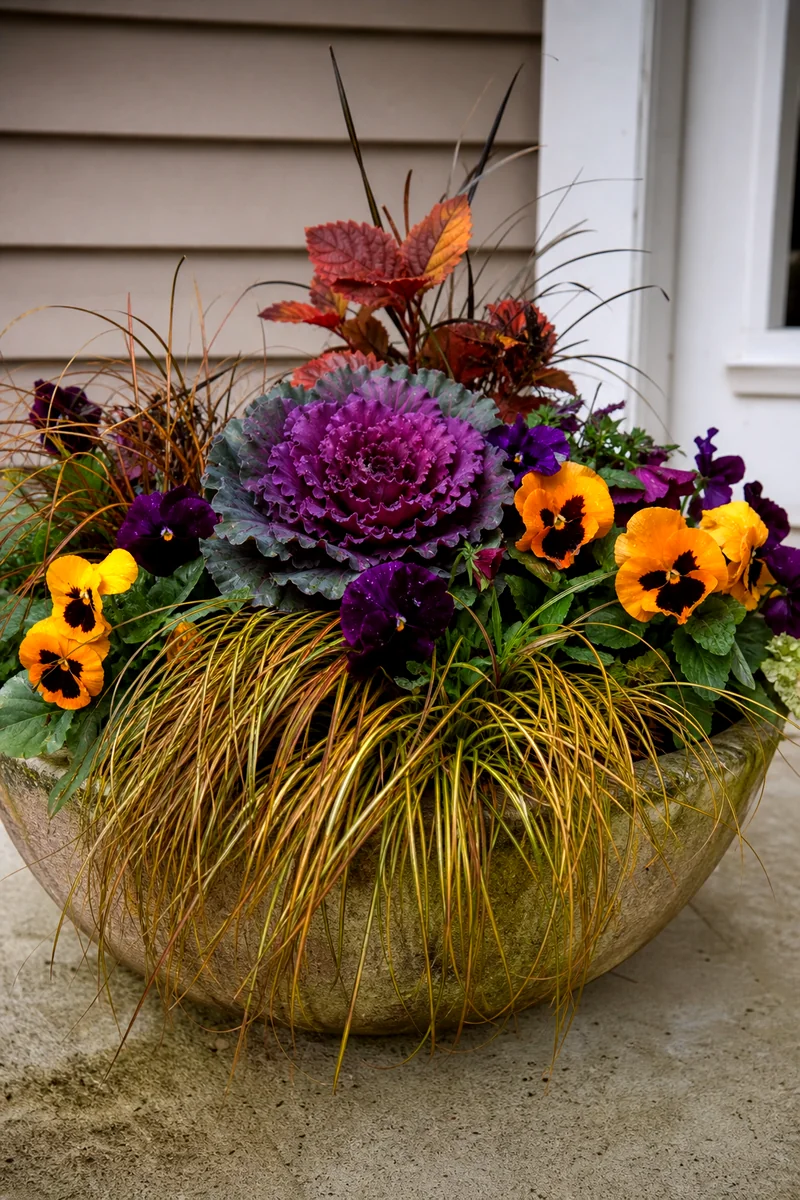
Carex is a sedge, not a true ornamental grass, but in planters it does the same visual job beautifully. It softens hard edges and adds movement without becoming a giant centerpiece.
You will find carex in bronze, green, gold, and variegated forms. Bronze varieties look wonderful with pumpkins and burgundy foliage, while gold forms brighten shaded or muted arrangements.
Many types handle cool weather well, but containers still need watering. Fine foliage dries faster than people expect, especially in windy spots near steps, balconies, and porches.
Japanese Forest Grass for Shaded Fall Pots
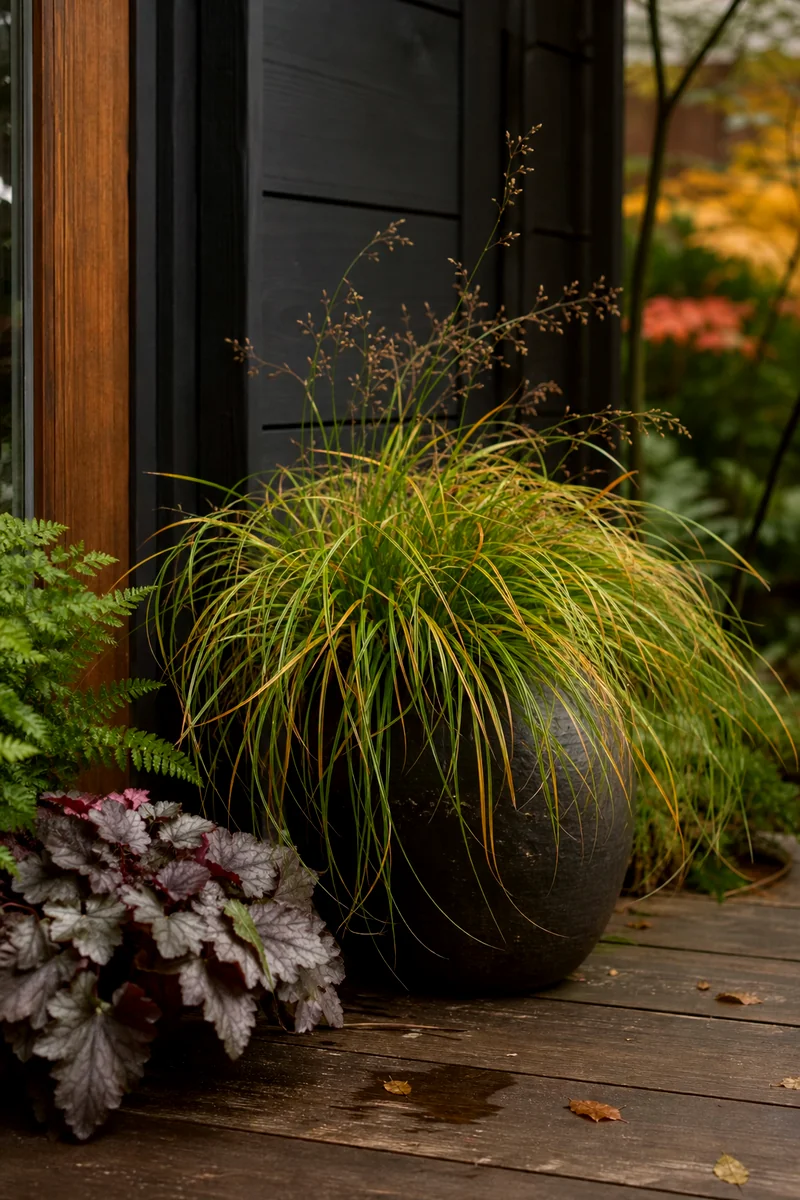
Japanese forest grass is one of the prettiest choices for part shade. Its arching golden or green foliage spills gently over the pot, giving shaded fall containers a graceful look.
It is slower and more refined than flashy annual grasses. That is part of its charm. Use it where you can appreciate the leaf shape, not buried behind a row of loud mums.
Pair it with ferns, heuchera, ivy, cyclamen, or ornamental cabbage. Keep the soil evenly moist, especially while the plant is newly potted.
Ferns for Lush Texture in Cool Shade
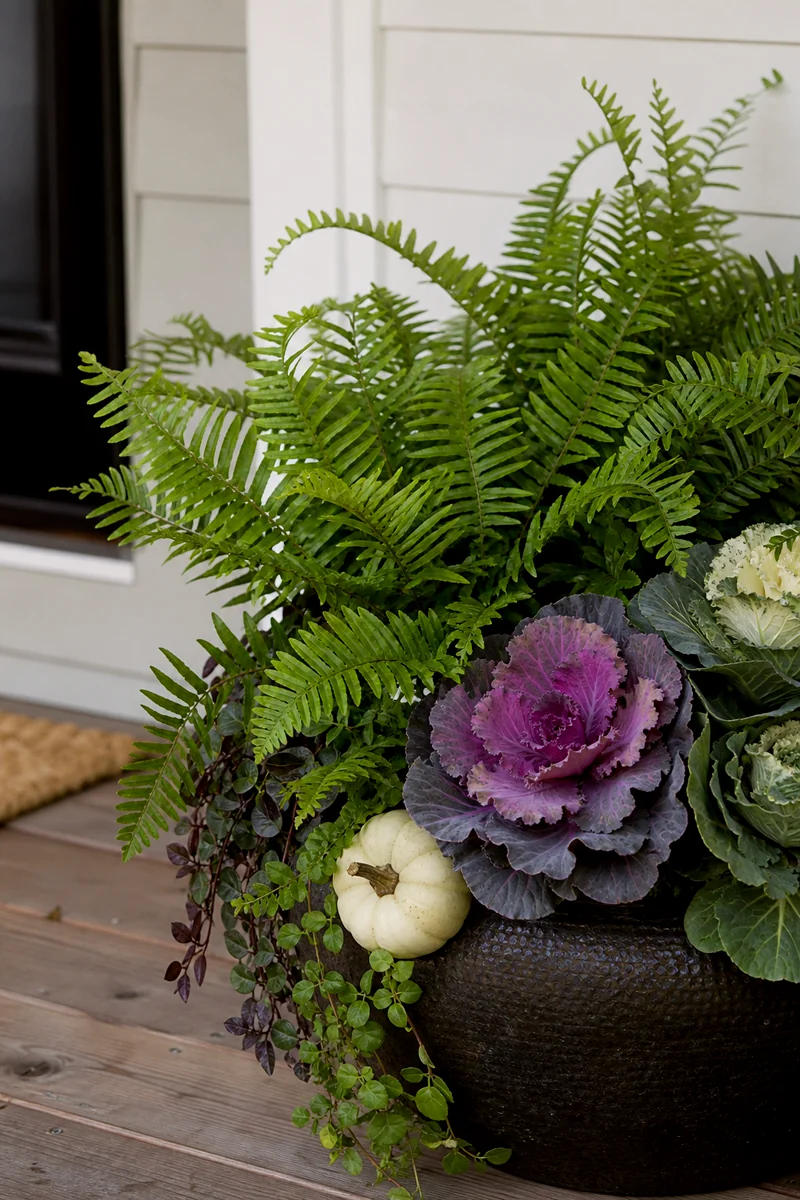
Hardy ferns are excellent for shaded porches, north-facing entries, and covered patios where sun-loving fall flowers struggle. Their fine fronds make chunky cabbage, kale, pumpkins, and broad heuchera leaves look even better.
Choose ferns suited to your climate if you want them to last beyond a short display. Autumn fern, Christmas fern, and Japanese painted fern are common choices, though availability varies by region.
Ferns like moisture, but not swamp conditions. Use a container with drainage and check the soil with your finger instead of watering on autopilot.
Ivy for Evergreen Trailing Edges
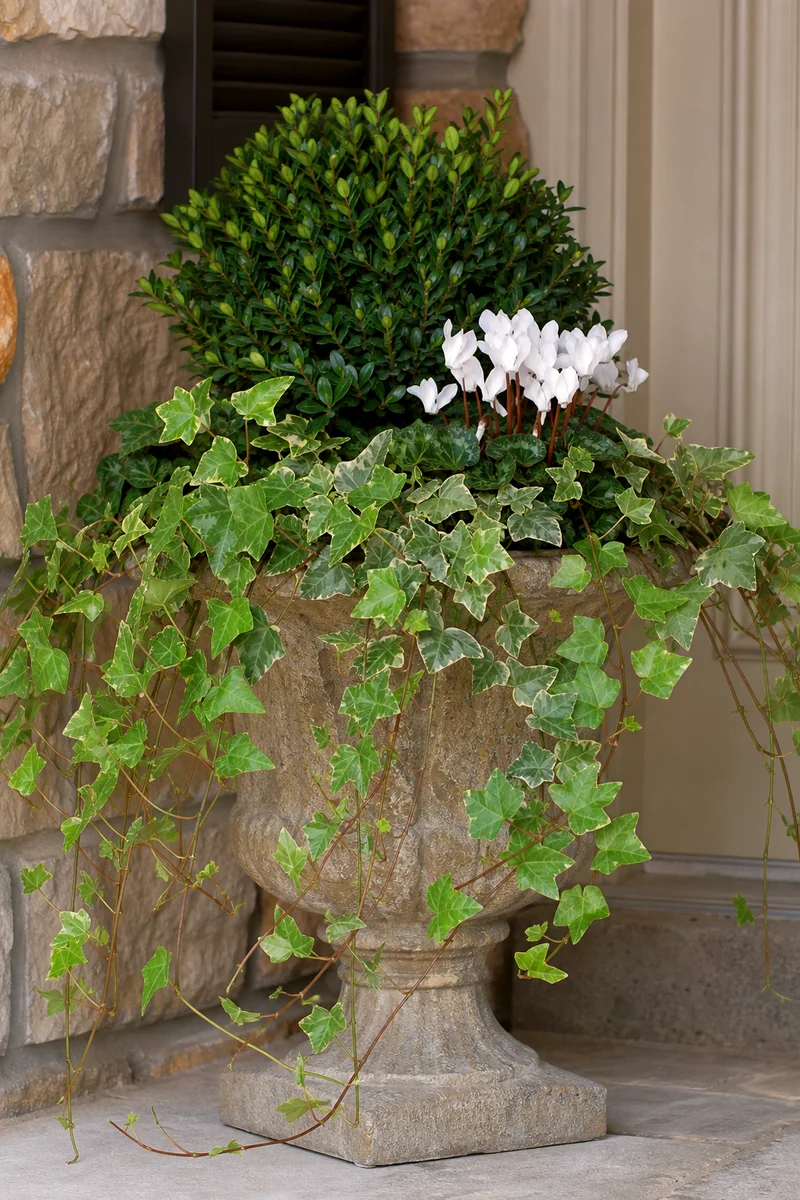
Ivy is a dependable spiller for fall planters. It trails over the rim, fills visual gaps, and can last beyond fall in many climates.
It works with almost anything: mums, cyclamen, cabbage, rosemary, dwarf conifers, and pansies. Variegated ivy brightens shade, while plain green ivy gives a quieter, classic look.
One warning matters. English ivy can be invasive in some regions if it escapes into the landscape. Keeping it in containers helps, but dispose of trimmings responsibly and check local guidance if this plant is a known problem where you live.
Calibrachoa for Mild-Climate Fall Color
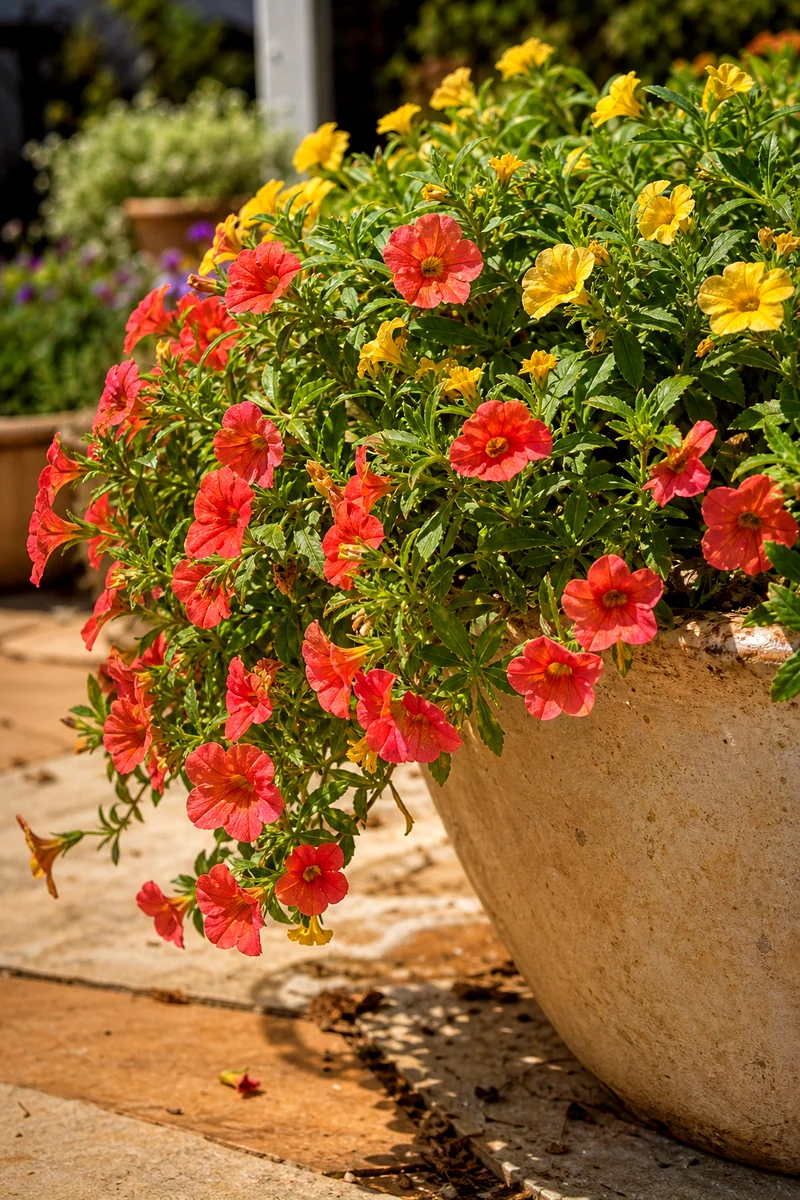
Calibrachoa, often sold as million bells, can keep blooming into fall where the weather stays mild. It likes sun, good drainage, and a potting mix that does not stay soggy.
This is not the best choice for deep cold. Frost can end the show quickly, so think of calibrachoa as an early fall plant or a warm-region option.
Use it at the front of containers where its small petunia-like flowers can trail. It pairs well with grasses, peppers, heuchera, and upright snapdragons.
Snapdragons for Upright Flower Spikes
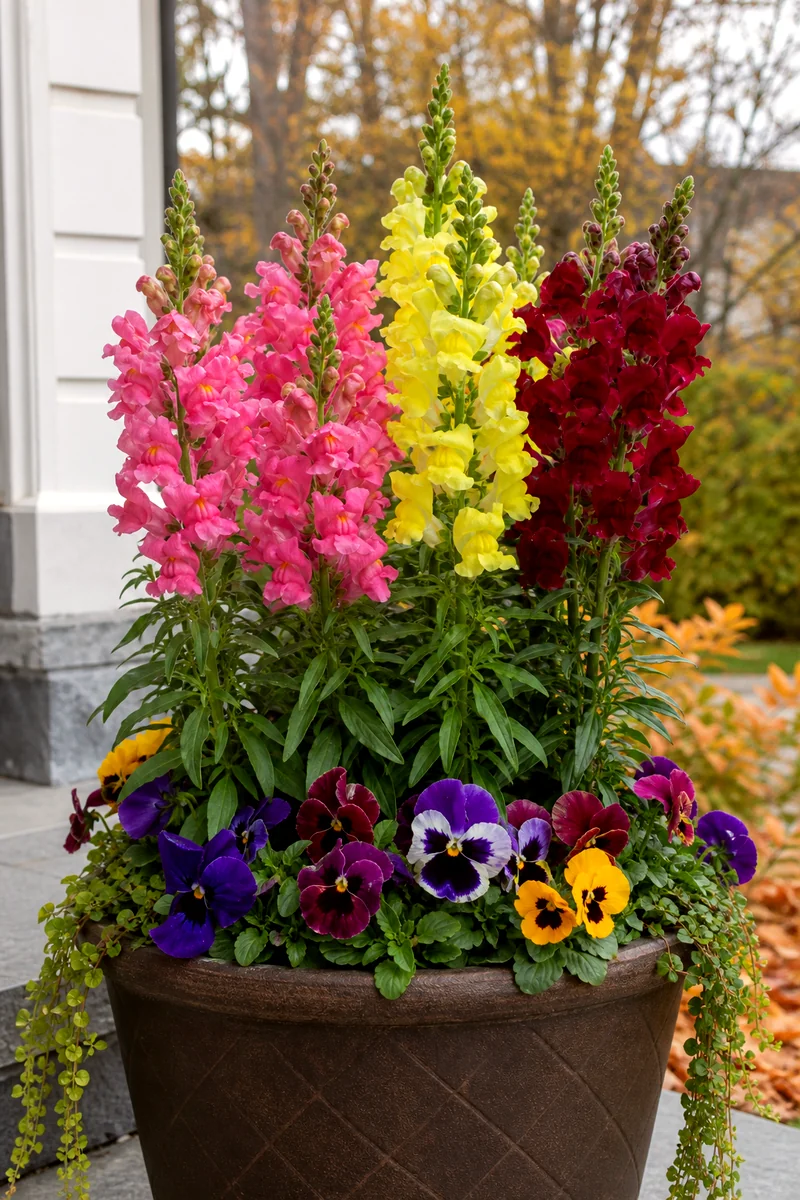
Snapdragons enjoy cool weather and add upright flower spikes without needing a huge pot. They are a good answer when a planter looks flat but you don’t want a large grass.
Plant taller snapdragons near the back of a one-sided container or near the center of a pot viewed from all sides. Shorter varieties can be used as fillers among cabbage, pansies, and heuchera.
Deadhead faded spikes to encourage more flowers. Keep them watered, but avoid soggy soil. In mild climates, snapdragons can look good far longer than many people expect.
Cyclamen for Protected Porch Planters
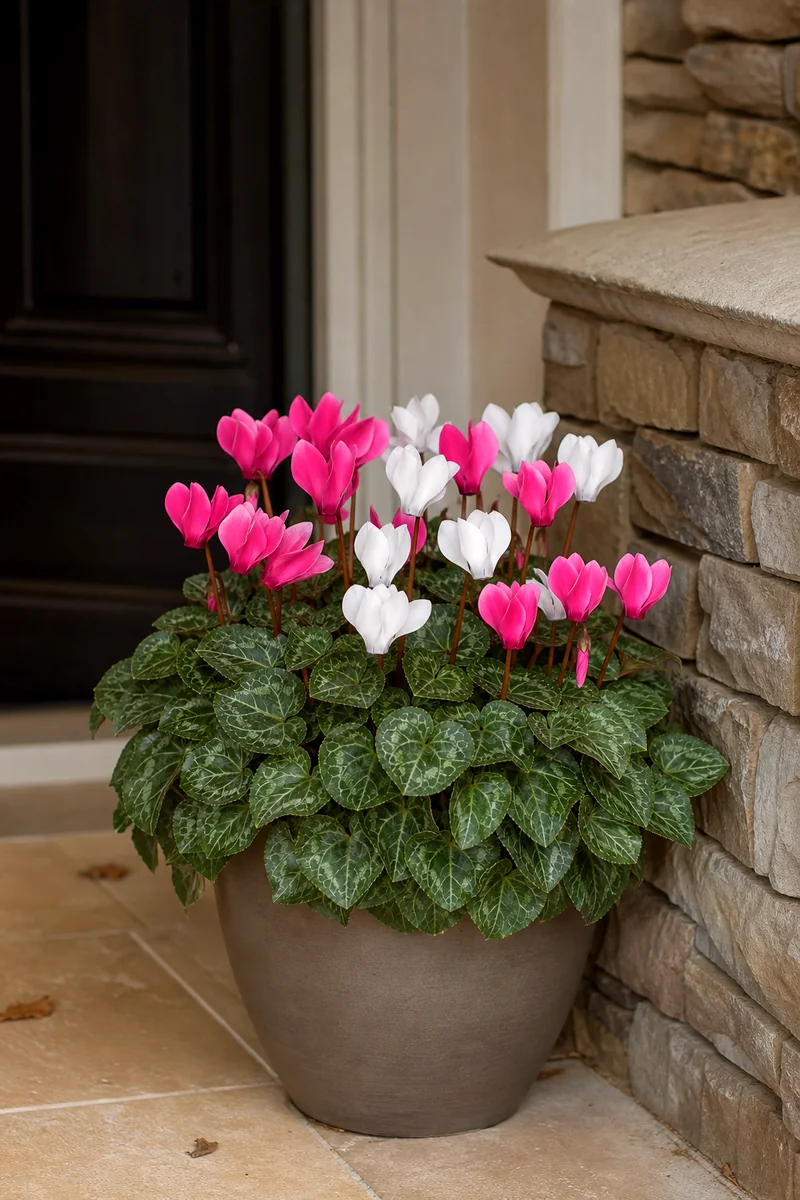
Cyclamen brings elegant flowers in pink, red, white, and purple, often with handsome patterned leaves. It loves cool weather, but it is not a rough-and-tumble plant for every exposed spot.
Use cyclamen in sheltered porch planters where it is protected from heavy rain, hard freezes, and harsh afternoon sun. Too much wetness on the crown can cause problems.
Keep the soil moist but not waterlogged. Water near the edge of the pot when you can, rather than constantly soaking the center of the plant.
Flowering Cabbage Mix for Layered Rosettes
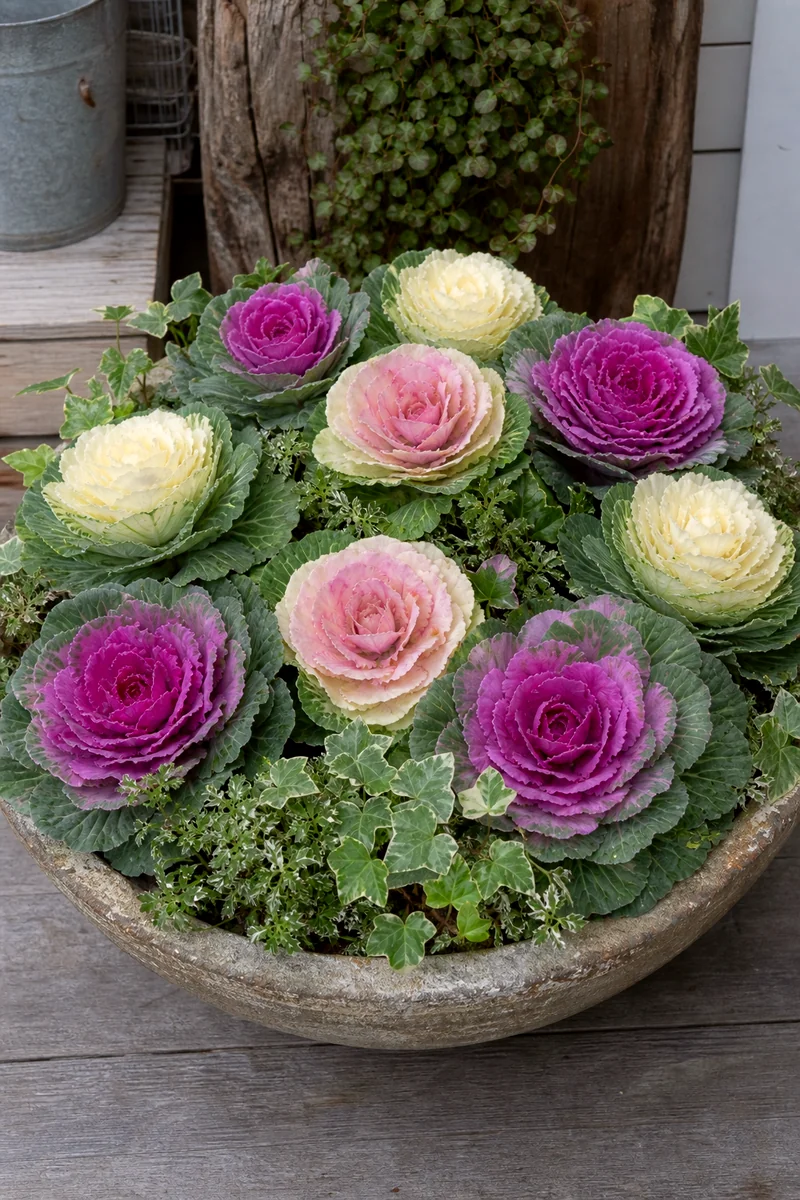
A flowering cabbage mix can look richer than a single cabbage planted alone. Combining green, cream, pink, and purple rosettes gives depth without relying on lots of flowers.
This works especially well in wide bowls, low planters, and porch urns where the rosette shapes can be seen from above. Plant them close enough to look full, but not so tight that air can’t move between the leaves.
Add only a few companions. A little ivy, carex, or Dusty Miller is plenty. Too many extra plants can make the arrangement look busy and hide the cabbage pattern.
Black Mondo Grass for Dark Contrast
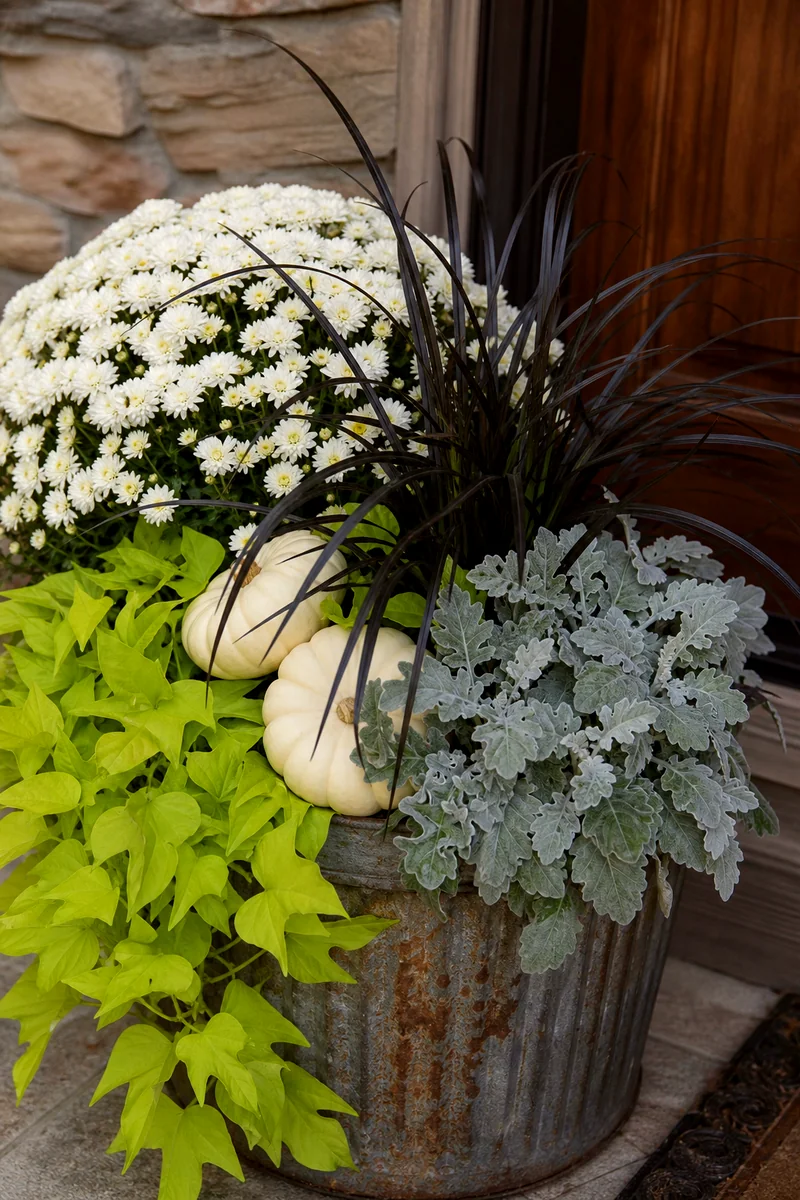
Black mondo grass is a slow-growing plant with nearly black, grass-like foliage. It is not flashy in the usual fall way, and that is exactly why it works.
Use it against white mums, silver Dusty Miller, pale pumpkins, chartreuse Creeping Jenny, or cream ornamental cabbage. The dark leaves make lighter plants look cleaner and brighter.
Buy a full-looking plant if you want impact right away. Black mondo grass grows slowly, so a tiny plug will not fill a fall planter by Thanksgiving.
Rosemary for Structure, Fragrance, and Kitchen Use
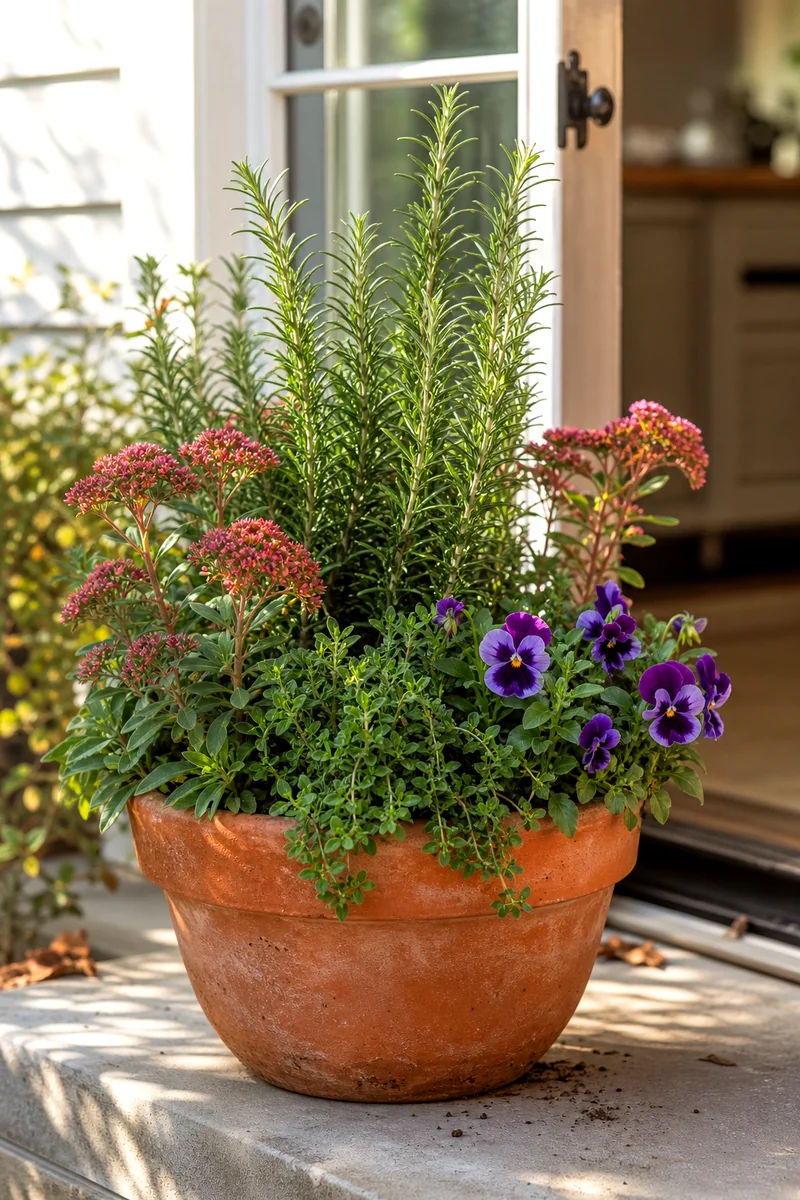
Rosemary gives fall containers upright structure, evergreen color, and that wonderful resinous fragrance you notice when you brush the stems. It is also useful in the kitchen, which is more than most porch plants can say.
Rosemary needs sun and excellent drainage. It hates cold, wet roots more than it hates a little dry weather. Use it with plants that can tolerate similar conditions, such as sedum, Dusty Miller, and some pansies in a sunny spot.
In cold climates, rosemary may need winter protection or indoor care. If you bring it inside, give it your brightest window and don’t drown it with kindness.
Dwarf Evergreen Shrubs for Winter-Ready Planters
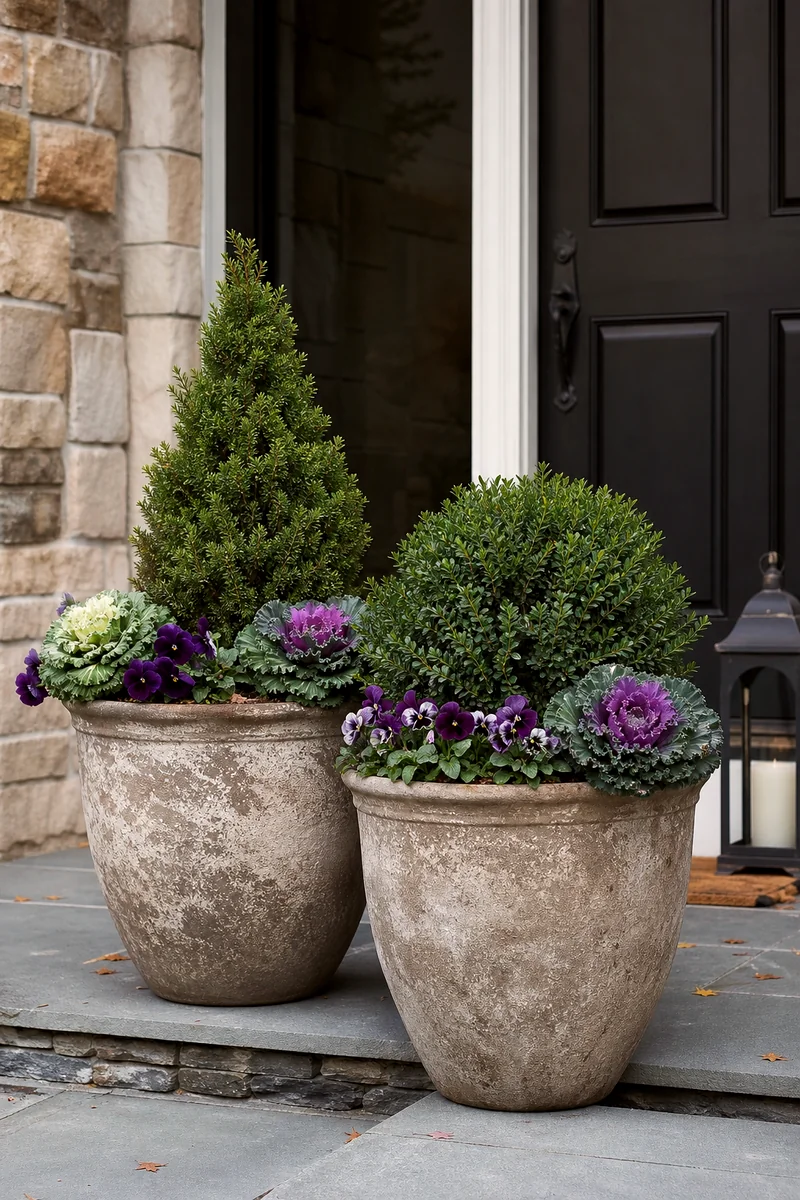
Dwarf evergreen shrubs are the backbone of fall planters that need to carry into winter. Small boxwood, juniper, dwarf spruce, dwarf false cypress, and compact arborvitae can hold their shape long after temporary annuals are removed.
Choose a pot large enough to protect the roots better than a tiny container would. Bigger pots also look more balanced with woody plants. Make sure the drainage holes work before cold rain and freeze-thaw weather arrive.
Water evergreens before freezes if the soil is dry. They still lose moisture through their foliage in cold weather, especially in wind.
For the best display, pair one evergreen with temporary fall plants around the base. When the mums, pansies, or cabbage are finished, pull them out and tuck in cut evergreen boughs, pinecones, or more cold-hardy plants for winter.
FAQ About Plants for Fall Planters
What plants last the longest in fall planters?
Foliage plants usually last longer than flowers. Ornamental kale, ornamental cabbage, heuchera, carex, ivy, ferns, rosemary, and dwarf evergreens often hold up well after tender bloomers fade.
How often should I water fall planters?
Check the soil instead of following a strict schedule. Water when the top inch feels dry. Cool weather slows drying, but windy porches, small pots, and dense root balls can still dry out surprisingly fast.
Can I plant fall planter plants in the garden afterward?
Some can move into the garden, especially heuchera, sedum, ferns, carex, ivy where appropriate, and dwarf evergreens. Mums, rosemary, and ornamental cabbage may or may not survive depending on timing, climate, and variety.
What should I avoid in fall containers?
Avoid using only tender summer annuals if frost is close. Also avoid pots with no drainage, heavy garden soil, and tiny containers that dry out fast or freeze solid quickly.
Do fall planters need fertilizer?
Usually not much. Most fall planters are short-season displays, and cool weather slows growth. A fresh potting mix is often enough. If you fertilize, use a light hand, especially with foliage plants.
A good fall planter does not have to be complicated. Start with one strong plant for structure, add one good color plant, then let texture do the rest.