
ZZ Plant (Zanzibar Gem) Care – The Ultimate Beginner’s Guide

As a tropical plant, the ZZ plant (Zamioculcas zamiifolia) is a plant that has been studied by NASA for its air purification capabilities. It has elegant, dark green leaves with waxy and smooth surface that reflects sunlight, easily adding a touch of freshness and brightness to any room or office.
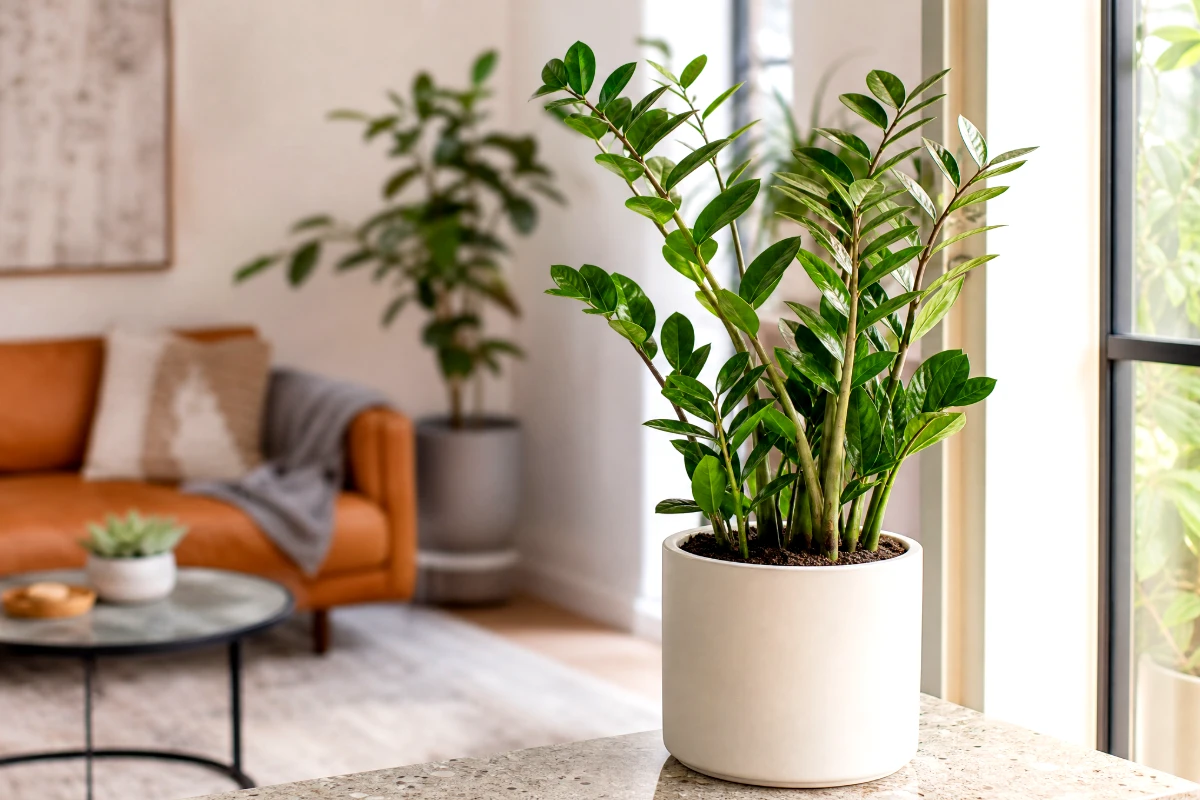
If you’re a beginner looking for a no-fuss houseplant or a no-nonsense office plant, the ZZ plant may be right up your alley — it’s a plant that doesn’t require special attention. No wonder then that it’s one of the most popular indoor plants.
In this article, I’m going to cover the basic needs of a ZZ plant and touch on some peculiarities of this plant.
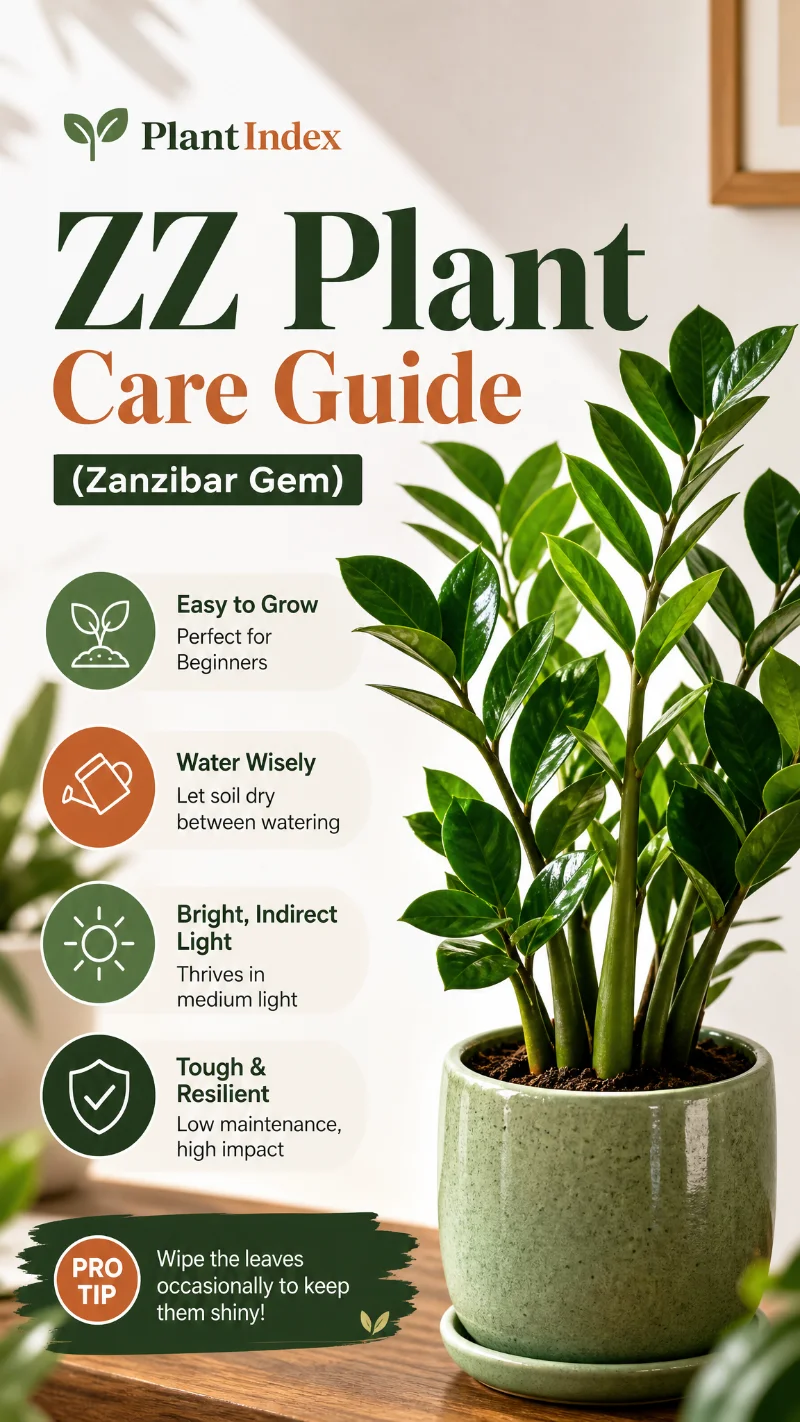
ZZ Plant Care Tips
As I’ll discuss below, the ZZ plant is very easy-going, and it isn’t hard to maintain. Apart from being drought-resistant, it’s also very resistant to common plant diseases.
Plant Size
The ZZ plant grows from tuberous rhizomes that are planted underground. The plant can reach a height of 2 to 3 feet. In exceptional cases, it can grow as tall as 5 feet.
When multiple rhizomes are grown together, the plant matures faster. The plant usually grows around 10 inches in 8-12 months. Therefore, it’s a slow-growing plant that continues to grow until it reaches its full height.
Light Requirements
The ZZ plant enjoys lots of indirect sunlight, and it will thrive in a bright room or office. It also enjoys the fluorescent lights in office buildings. It can survive even in low light conditions although its growth will be much slower.
Watering
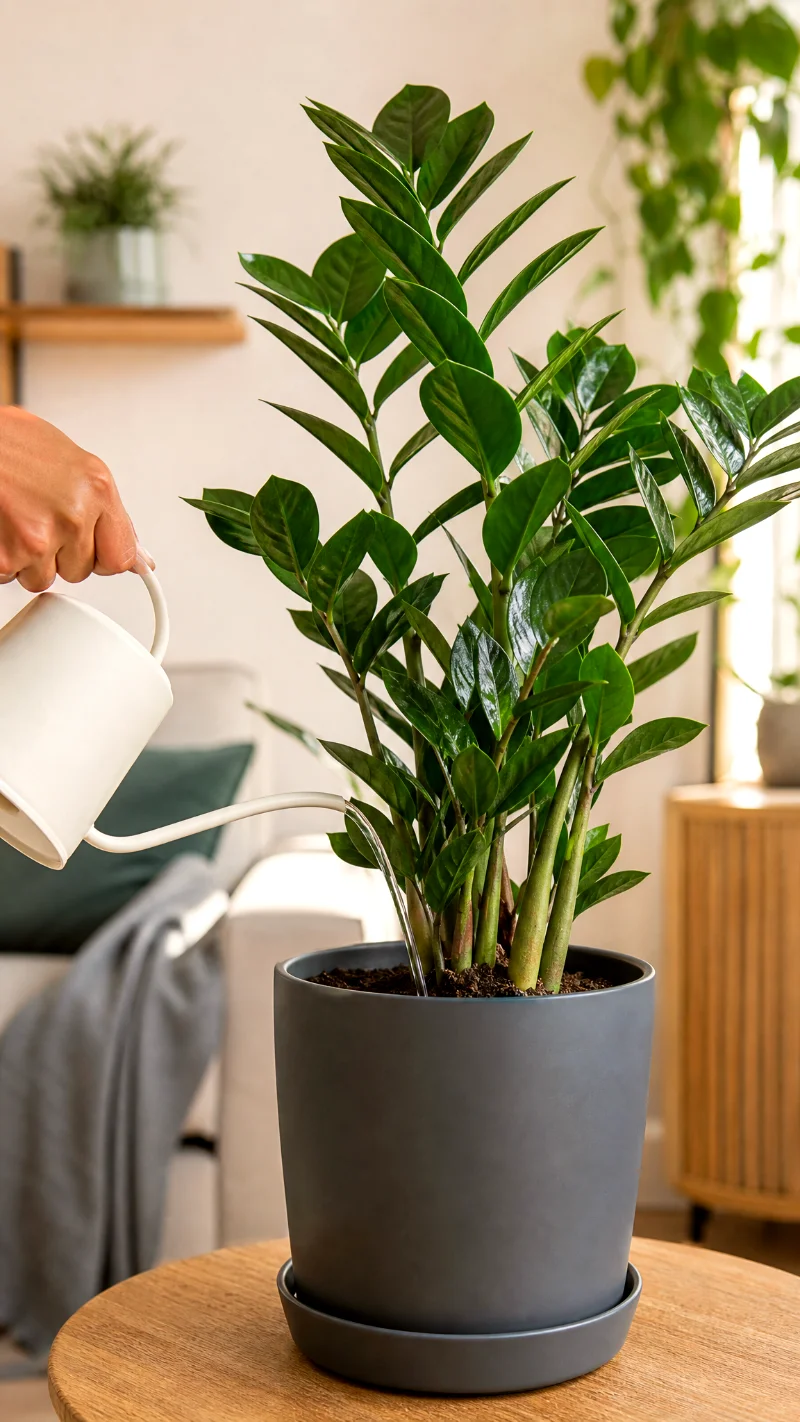
The tuberous rhizomes that the plant grows out of, as well as the fleshy roots and the stems of the plant, store water to sustain the plant’s growth and development. Overwatering is usually a much bigger problem than the plant not getting enough water.
Giving the plant a thorough watering every 2-3 weeks in the summer is usually enough. In the winter, you may reduce watering to every 3-4 weeks.
As a drought-resistant plant, the ZZ plant won’t dry out if you forget to water it here and there. This is always a plus for those who can’t stick to a strict watering schedule.
A good rule of thumb to follow when watering this plant is to leave the soil to dry out between waterings.
Temperature & Humidity
Native to tropical regions, the ZZ plant enjoys warm temperatures and increased humidity. The ideal temperature for a ZZ plant is between 60 °F and 75 °F. This range is what most of us can maintain in our homes.
Keep the plant away from sources of heat and protect it from drafts, both of which can decrease the humidity around the plant.
It’s difficult to meet the humidity requirements of this plant; however, since it’s an adaptable plant, the ZZ plant will do fine even in a dryer environment.
If your plant is starting to show signs of not doing well because of low humidity levels, you can mist the plant a few times a week or use a humidifier in the room.
Don’t use chlorinated water to mist your ZZ plants. Instead, use soft water or distilled water, or rainwater if you can, which is best of all.
Soil Type
When it comes to soil, the ZZ plant isn’t picky. A well-drained potting soil is all it needs. Use a pot with holes in the bottom and use a drainage layer at the bottom of the pot.
You can even create a mix of cactus and succulents soil, potting soil, and coconut coir, for even better results. Good drainage of the soil is essential, the soil can end up soggy and cause rotting of the roots.
Fertilizing
You only need to fertilize your plant during the spring or summer months. Seriously. Don’t overdo it.
You should fertilize once or twice per year with a diluted liquid fertilizer. I constantly see beginners torch their plant’s roots by dumping heavy chemical feeds straight into the pot.
ZZs are slow, stubborn growers. They naturally store exactly what they need in those fat, potato-like rhizomes buried under the soil.
So pump the brakes. Just give them a half-strength dose of standard houseplant food when they actively push out bright green new shoots. That is plenty.
Potting & Repotting
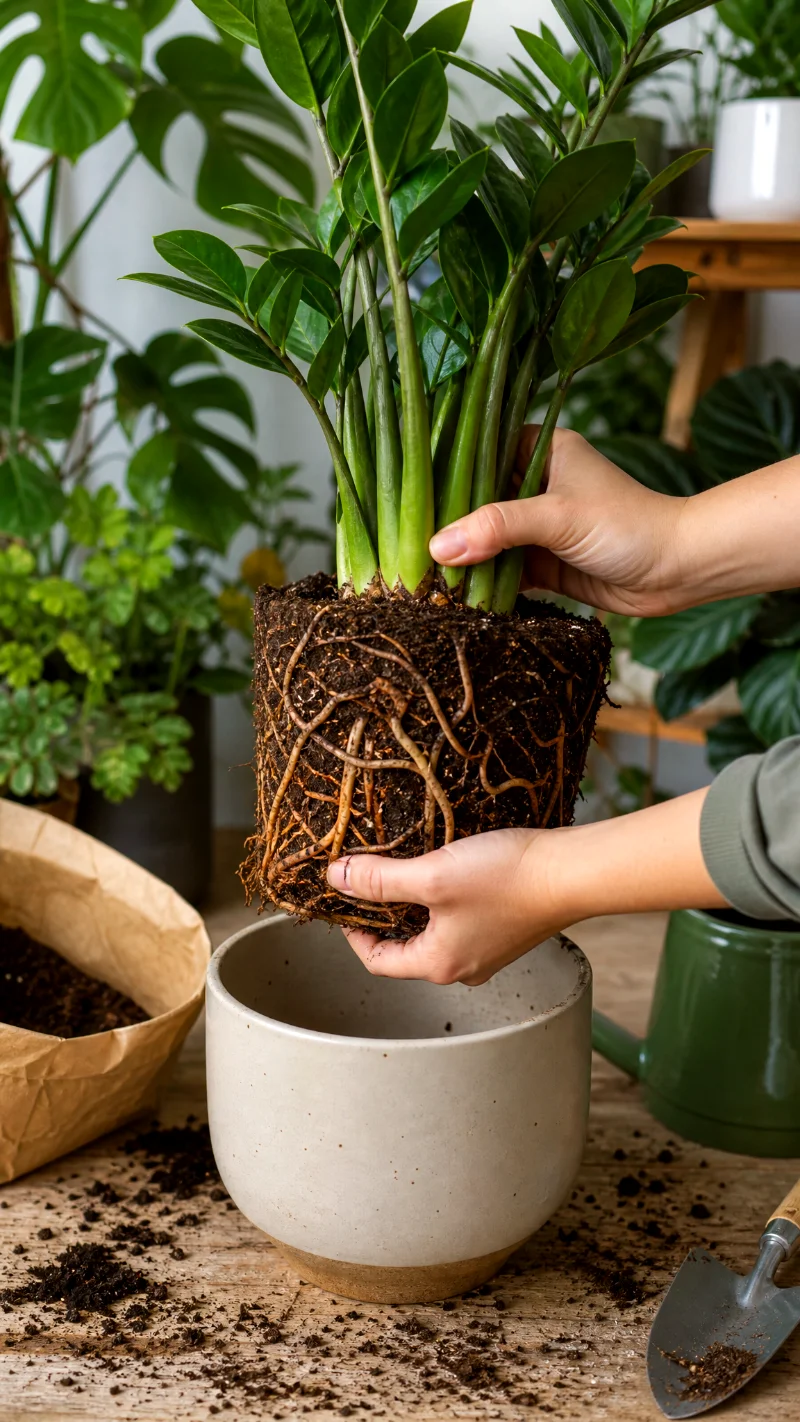
If your ZZ plant outgrows its current pot, you’ll need to transfer it into a bigger pot. But wait until it’s practically bursting.
These tough plants actually love being pot-bound. I always wait until the thick roots physically warp the shape of my plastic nursery pots before I even think about moving them.
You get the best results transplanting during the spring or summer. To give your plant room to grow, pot it up one or two sizes.
Make sure your new container has massive drainage holes. ZZs absolutely hate wet feet.
Mix plenty of perlite or pumice into your potting dirt. A chunky, fast-draining mix saves you from the absolute nightmare of root rot.
ZZ Plant Propagation
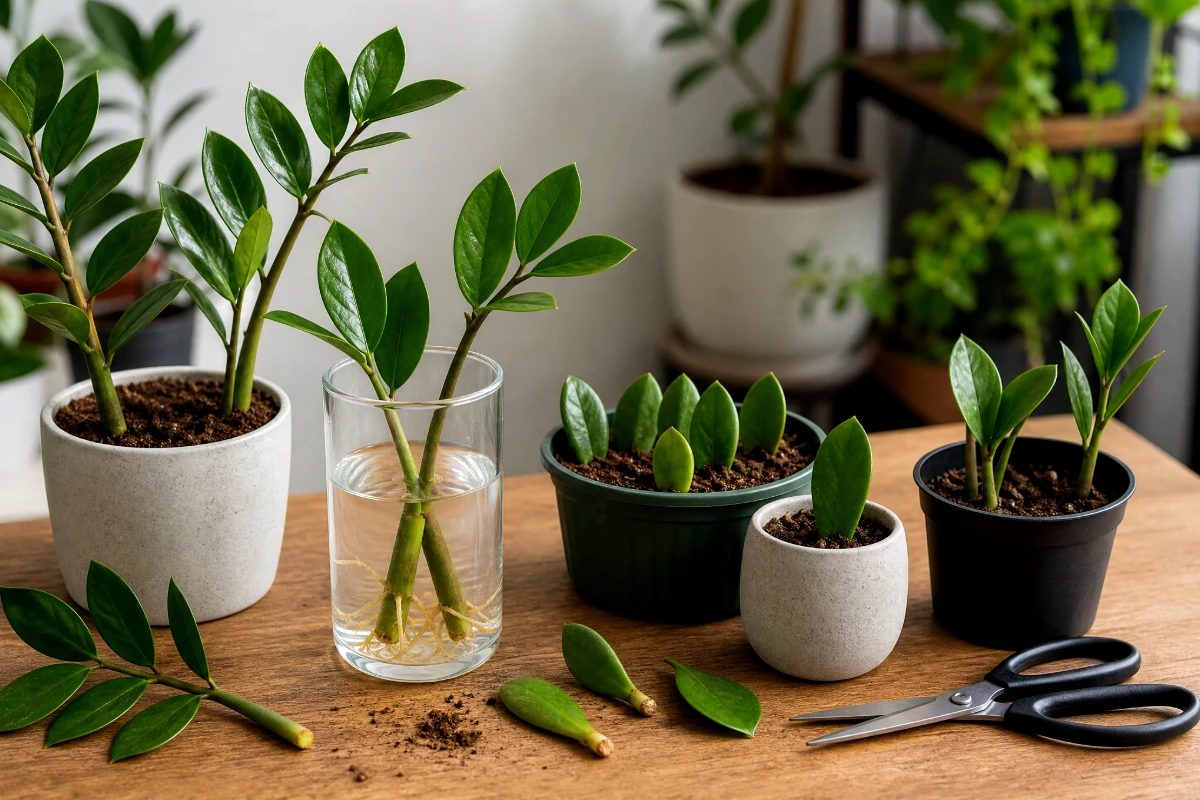
You have multiple ways you can propagate ZZ plants. Some ways heavily test your patience. Others give you a free plant in minutes.
One method is taking a mature stem and rooting it in water, then replanting it. It looks pretty sitting in a glass on your kitchen windowsill. But you’ll wait months for a new rhizome to form.
Another equally efficient method is to divide the plant by its rhizomes and plant them separately. This is my absolute favorite trick.
When you repot, gently pull apart the root ball. Break the fleshy bulbs apart. Make sure each section has a few thick stems attached to it.
Depending on the size of the rhizomes, this creates a slower or faster propagation method. Just shove them straight into fresh, dry soil.
And don’t water them for at least a week. The broken root pieces need dry time to scab over so they don’t rot into mush.
ZZ Plant Diseases & Pests
ZZ plants are extremely resistant to diseases, and you’ll rarely have any problems with any of the common plant diseases.
However, the occasional scale insects may appear on your plants as well, but usually an invasion is not a concern.
Can the ZZ Plant Grow Outdoors?
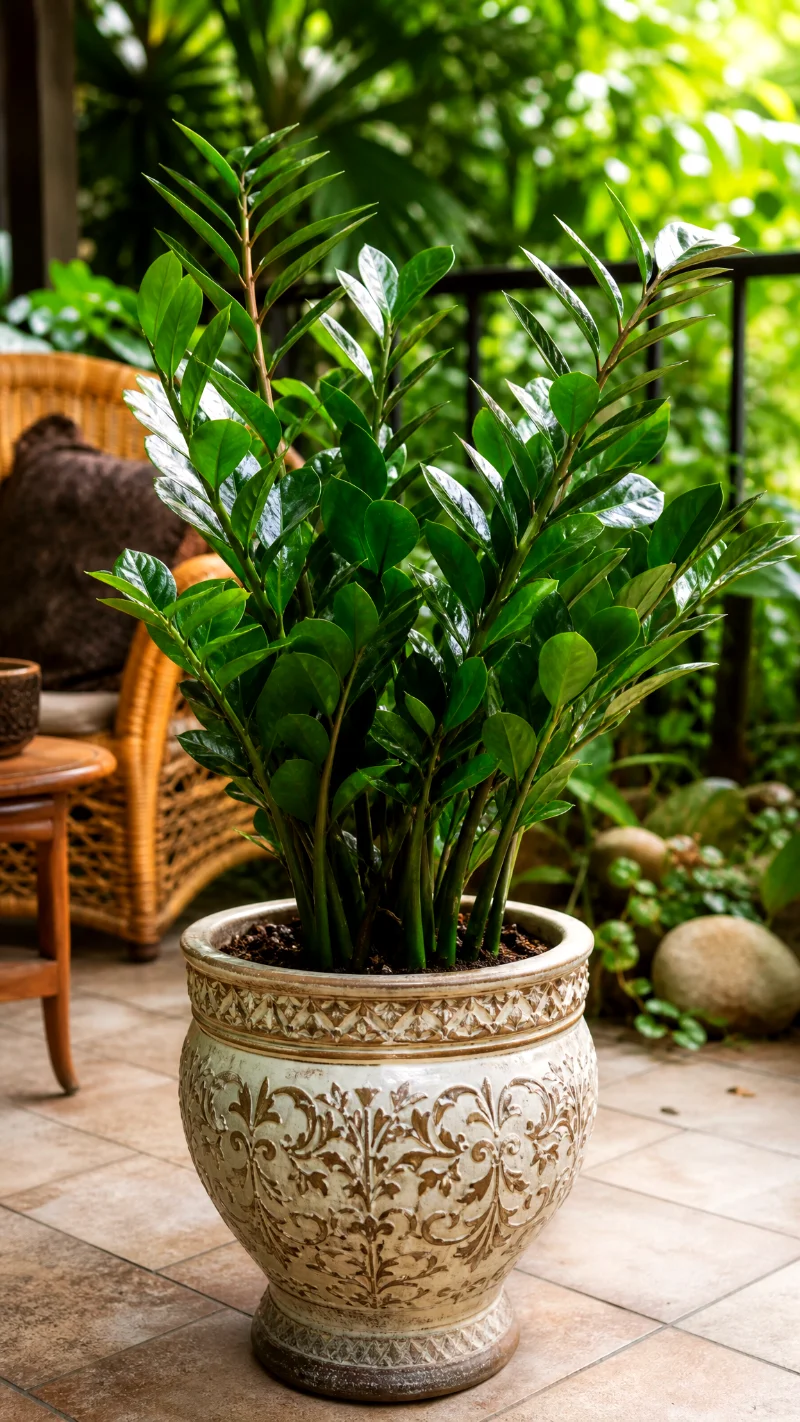
Despite the ZZ plant being an indoor houseplant, under the right conditions, it can survive even outdoors. The most important aspect to consider if you want to plant it outdoors is temperature.
Freezing temperatures will kill the plant. If you live in a region where temperatures never drop below 40°F (5°C), you can plant the ZZ plant outside, but you do have to protect it from the cold.
Any damage caused to the plant by exposure to low temperatures will take years to grow back if the plant survives.
Make sure you avoid direct sunlight and plant your ZZ plant somewhere there’s shade or part shade.
It’s also important that your soil isn’t too heavy and soggy. You’ll need to ensure proper drainage for your plants to thrive.
Once the plant becomes established, you should water it once a month. If there’s rain, you may need to water it less often. Watering is only necessary during the summer months. In winter, the dormant period, there is no need to water your ZZ plant.
That said, the ZZ plant will thrive best if it’s kept indoors, where you can better control its climate and better respond to its needs.
Different Types of ZZ Plants
For long, only a single type of ZZ plant was available. Today, there are a few varieties that you can select from, depending on your preferences:
- ZZ Zenzi variety: This ZZ plant variety is a rarer find, but it’s an elegant and exquisite choice. It has curlier leaves compared to other ZZ plants, and the leaves are more ‘stacked’ close to the top of the stem.
- Zamicro or Dwarf ZZ plant: This variety is perfect for those who like the features of ZZ plants, but don’t want them growing that tall. This variety is a dwarf one that won’t exceed 2 feet.
- Lucky Classic ZZ plant variety: This variety has leaves that aren’t as pointed, and they’re rather roundish.
- Raven ZZ variety: Possibly the most elegant of all the ZZ plant varieties, this plant features raven-black leaves that give the plant an elegant ornamental feel. The leaves don’t grow out black; they turn from light green to blackish as the plant matures.
Although there aren’t so wide varieties of ZZ plants, there are a few to accommodate even more peculiar tastes when it comes to ornamental houseplants
ZZ Plant FAQs
Have some burning questions about the ZZ plant? See below if you can find answers to them:
Is the ZZ Plant Toxic?
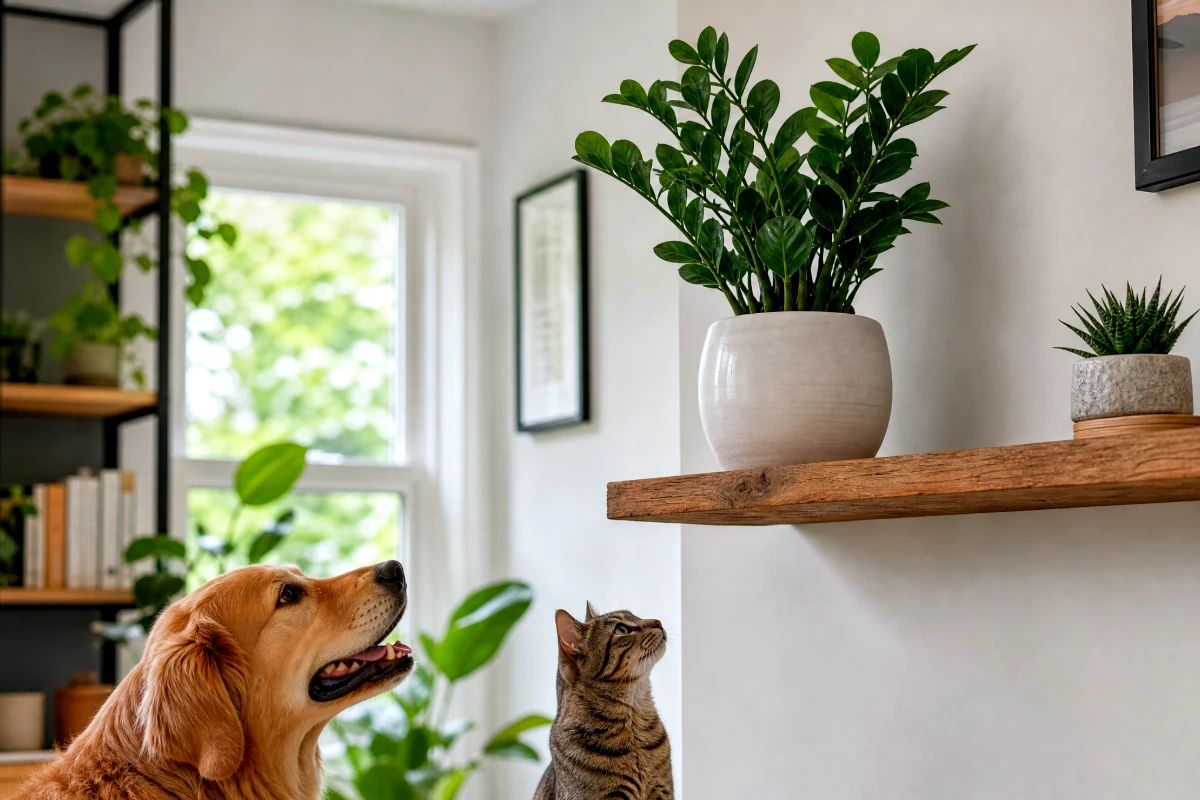
Yes, ZZ plants are toxic, and their ingestion should be avoided by both humans and pets. If ingested, the plant can cause diarrhea, vomiting and stomachache, while direct contact with the plant can cause skin and eye irritation.
The toxicity of the plant is caused by the calcium oxalate crystals in the plant. The sap of the plant causes irritation if in direct contact with skin, so sensitive persons are recommended to wear gloves when handling the plant during repotting.
Does ZZ Plant Clean Air?
Yes, the ZZ plant is an air purifier plant that has the ability to remove Toluene and Xylene from indoor air.
Why Does My ZZ Plant Have Yellow Leaves?
Yellowing leaves on ZZ plants are usually a sign of overwatering, which causes the plant’s roots to rot. Underwatering can also be a cause of yellowing leaves, however, this is rare seeing how the plant can withstand weeks of neglect without any issues.
Another reason for yellowing leaves is that your plant may be rootbound and needs repotting. Likewise, a lack of nutrients can also cause issues like yellowing leaves.
Why Is My ZZ Plant Falling Over?
If healthy, a ZZ plant should stand up tall. If your plant is bending over, the cause is most likely a lack of light. Move the plant to a location where it can get brighter light.


