30 Fall Planters With Mums

Mums make a fall porch look finished fast, but they behave best when you treat them as short-season container plants, not permanent shrubs squeezed into pretty pots.
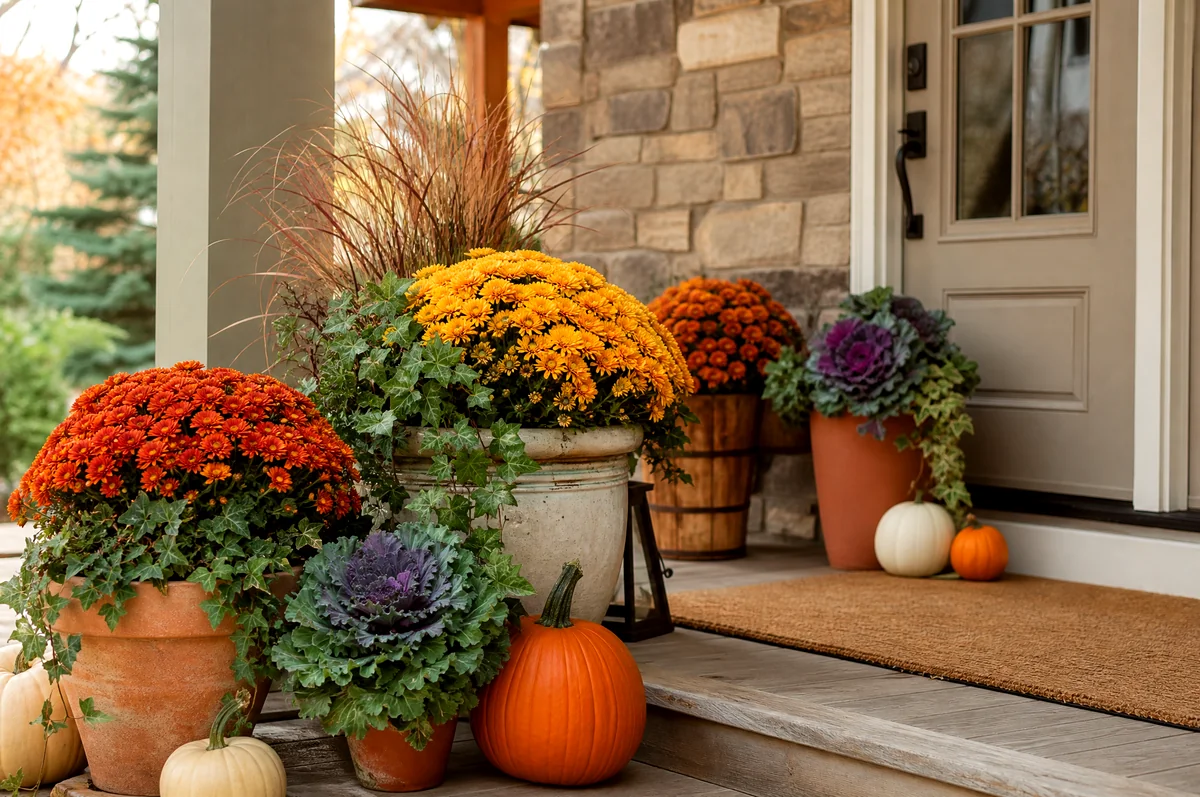
Buy plants with plenty of tight buds instead of ones already in full bloom, give them drainage, and pair them with cool-weather companions that still look good after the first big flush of flowers fades.
A good mum planter needs three things: a clear color plan, enough soil volume to stay evenly moist, and partners that don’t mind the same chilly nights. Start there and the whole container looks much more intentional.
Classic Pumpkin and Mum Planter
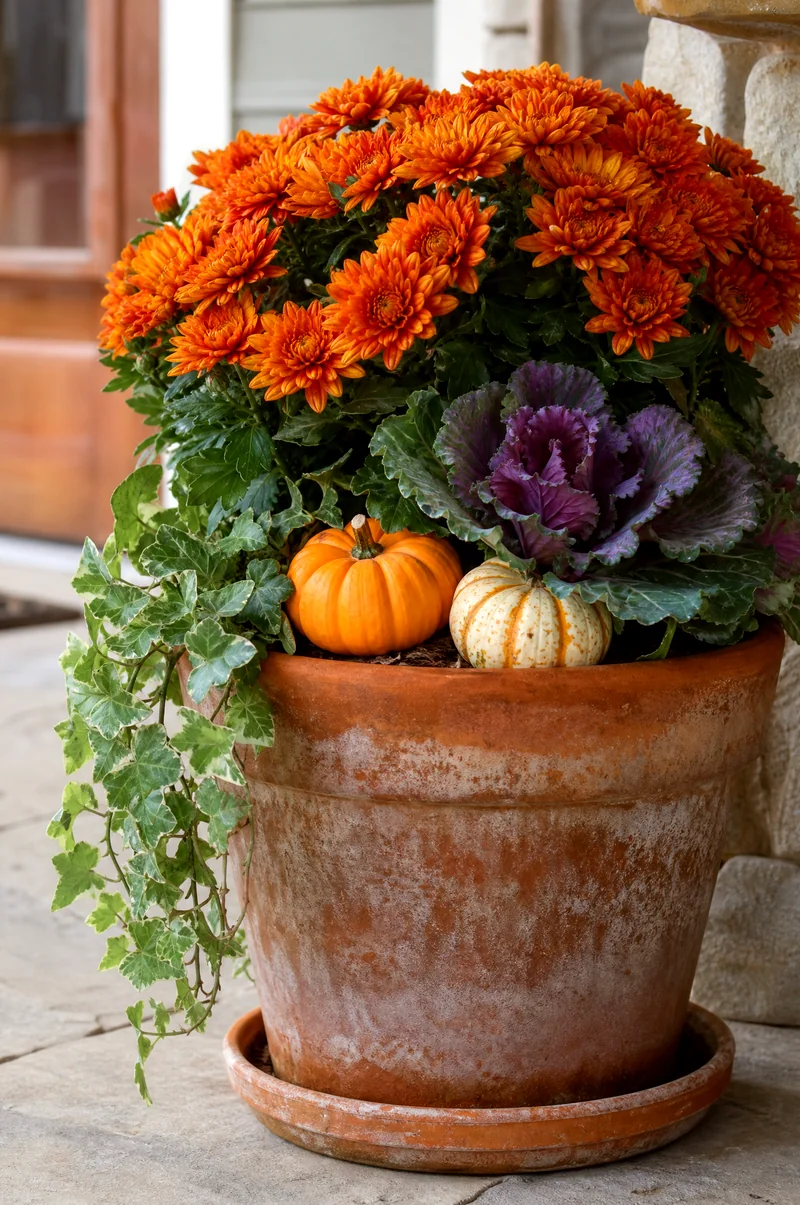
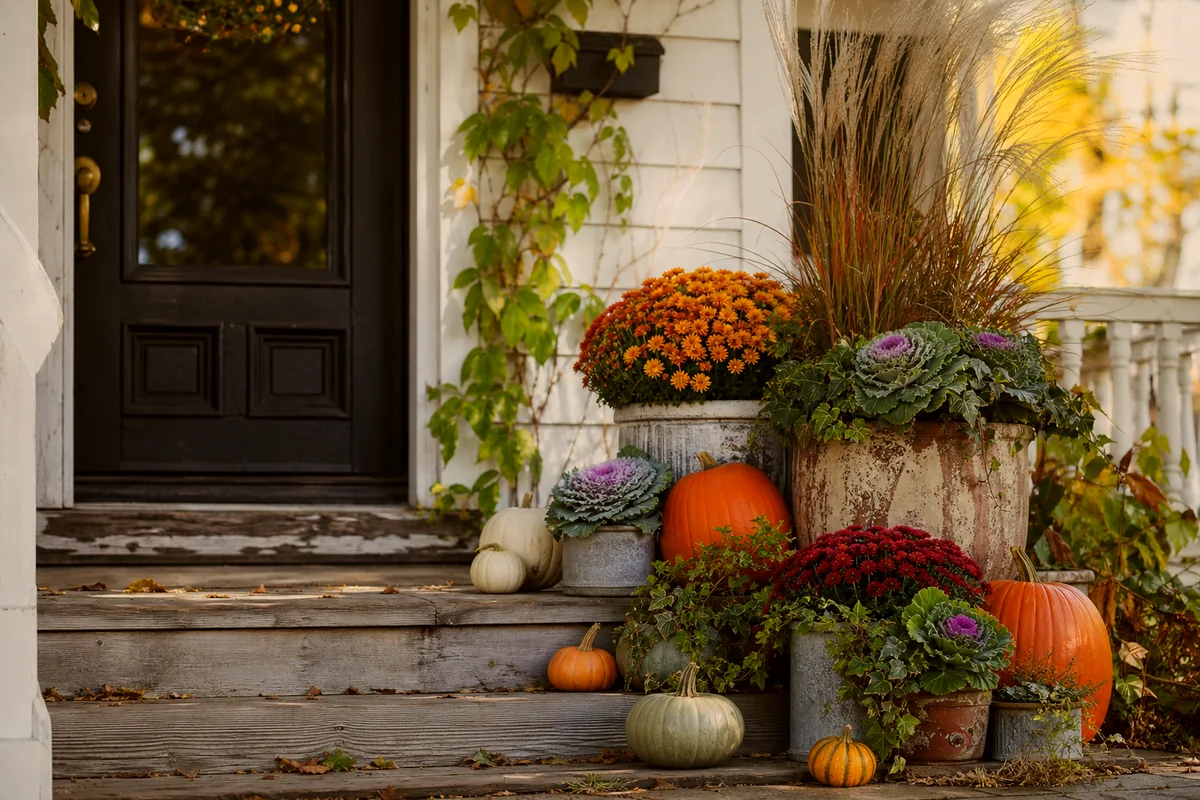
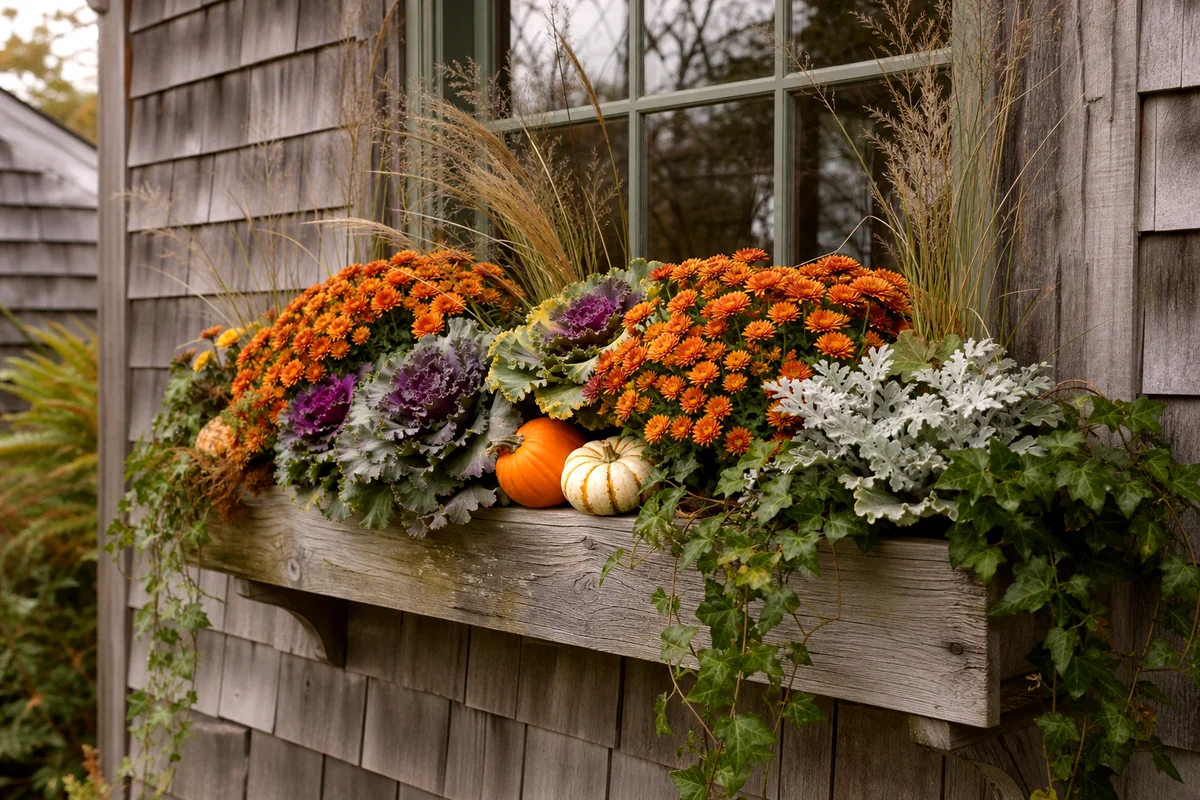
Burnt-orange mums, mini pumpkins, trailing ivy, and ornamental kale are the classic fall porch combination for a reason. The colors are warm, the textures are easy to read from the sidewalk, and a weathered terracotta pot makes everything feel settled rather than staged.
Use a pot with a drainage hole. Mums hate sitting in cold, soggy soil, especially once nights get damp. If the pot is decorative but has no hole, keep the mum in its nursery pot and lift it out to water.
Set mini pumpkins on top of the soil or on small saucers, not half-buried in wet potting mix. Pumpkins rot quickly when their bottoms stay damp. Ornamental kale earns its space here because it keeps its texture long after the mum blooms start to brown.
Burgundy and Lime Mum Planter
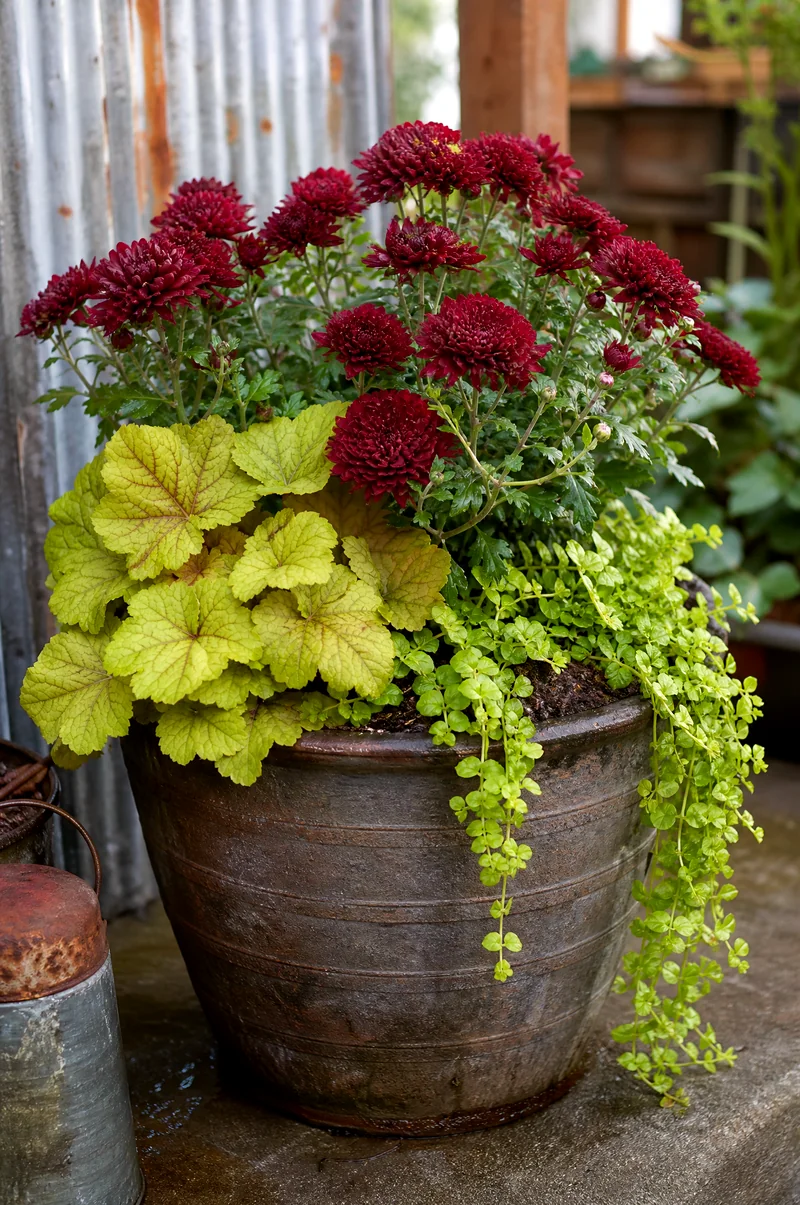
Burgundy mums look richer when you put them beside chartreuse foliage. Chartreuse heuchera and creeping Jenny make the dark flowers pop instead of disappearing into a shadowy corner.
This planter works best in bright light with steady moisture. Heuchera and mums both appreciate soil that is damp but not swampy, while creeping Jenny can handle the edge of the pot where it trails and dries a little faster.
Plant creeping Jenny near the rim and let it spill. Don’t tuck it through the middle of the mum crown. It can smother smaller plants if you let it wander too freely, and mums need airflow around their stems.
White Farmhouse Mum Planter
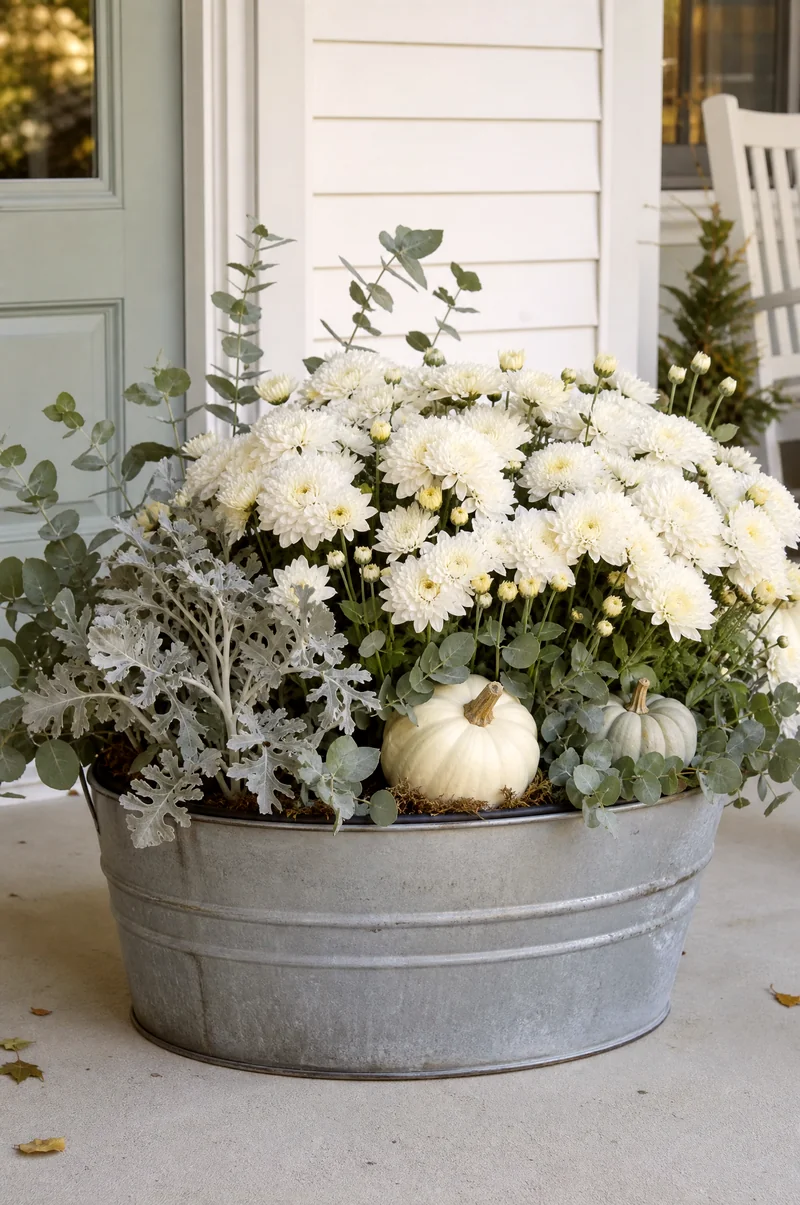
White mums, eucalyptus, dusty miller, and pale pumpkins in a galvanized tub give you that soft farmhouse look without shouting for attention. It is especially good on shaded porches where orange can feel too heavy.
The catch is the metal tub. Galvanized containers often have no drainage, and wet fall soil stays cold for a long time. Drill holes if you can, or use an inner nursery pot set on a shallow layer of gravel so excess water is not trapped around the roots.
Dusty miller and eucalyptus bring silvery texture, which keeps white mums from looking flat. Pale pumpkins should be accents, not filler jammed into every open space.
Tall Grass and Mum Urn
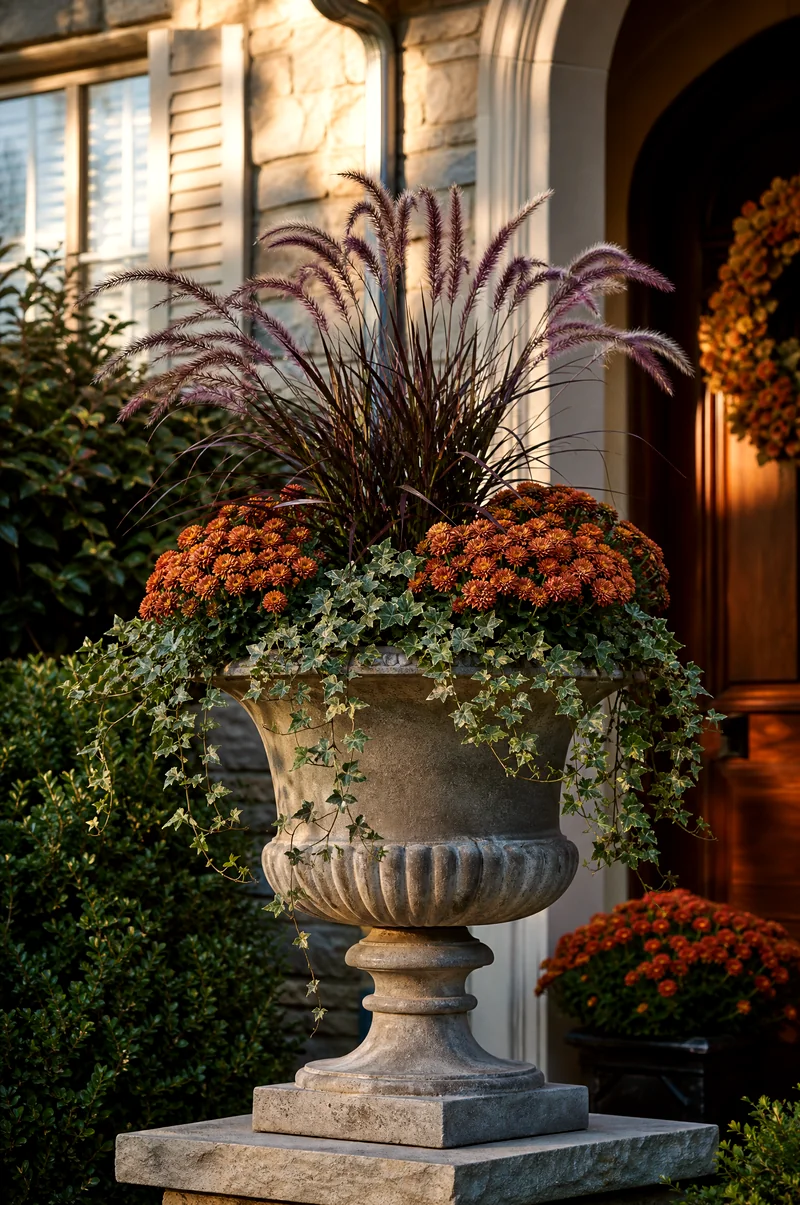
A tall urn needs height, body, and something that spills. Purple fountain grass gives you the height, bronze mums provide the flower mass, and ivy softens the rim.
This is the old thriller, filler, spiller idea, and it still works because it gives the eye somewhere to go. Put the grass in the center or slightly toward the back, pack mums around it, then let ivy trail over the front.
One warning: purple fountain grass is frost tender in many climates. It can look wonderful through early fall, then collapse after a hard freeze. If frost comes early where you live, use a hardier ornamental grass or treat the fountain grass as a temporary showpiece.
Purple Jewel-Tone Mum Planter
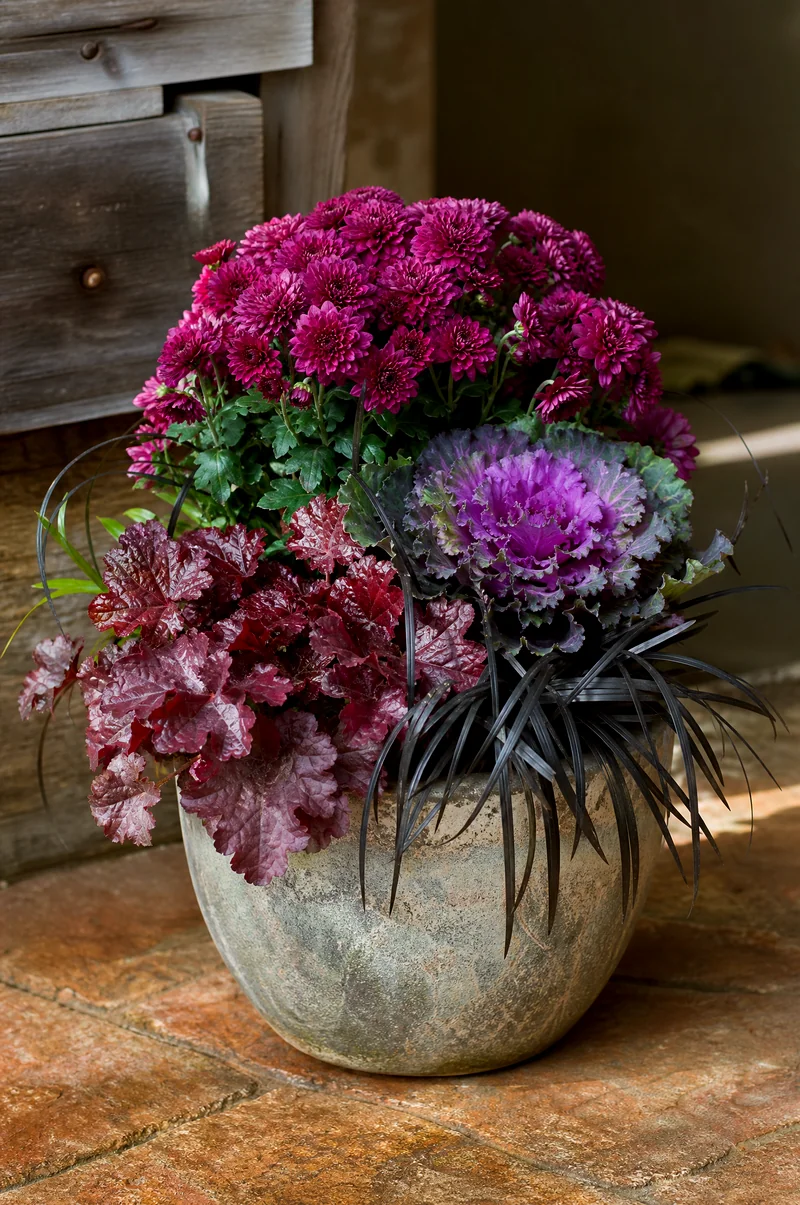
Deep purple mums with ornamental cabbage, black mondo grass, and burgundy heuchera make a dramatic planter, but dark-on-dark designs need careful handling. Otherwise they turn into one shadowy blob.
Give this arrangement bright light, even if it is cool morning sun. The purple flowers and black foliage show much better when light hits their edges.
Ornamental cabbage is the secret here. Its pale centers and ruffled leaves break up all the dark tones and keep the planter readable. Use black mondo grass sparingly near the front where its narrow blades can be seen.
Cottage Garden Mum Basket
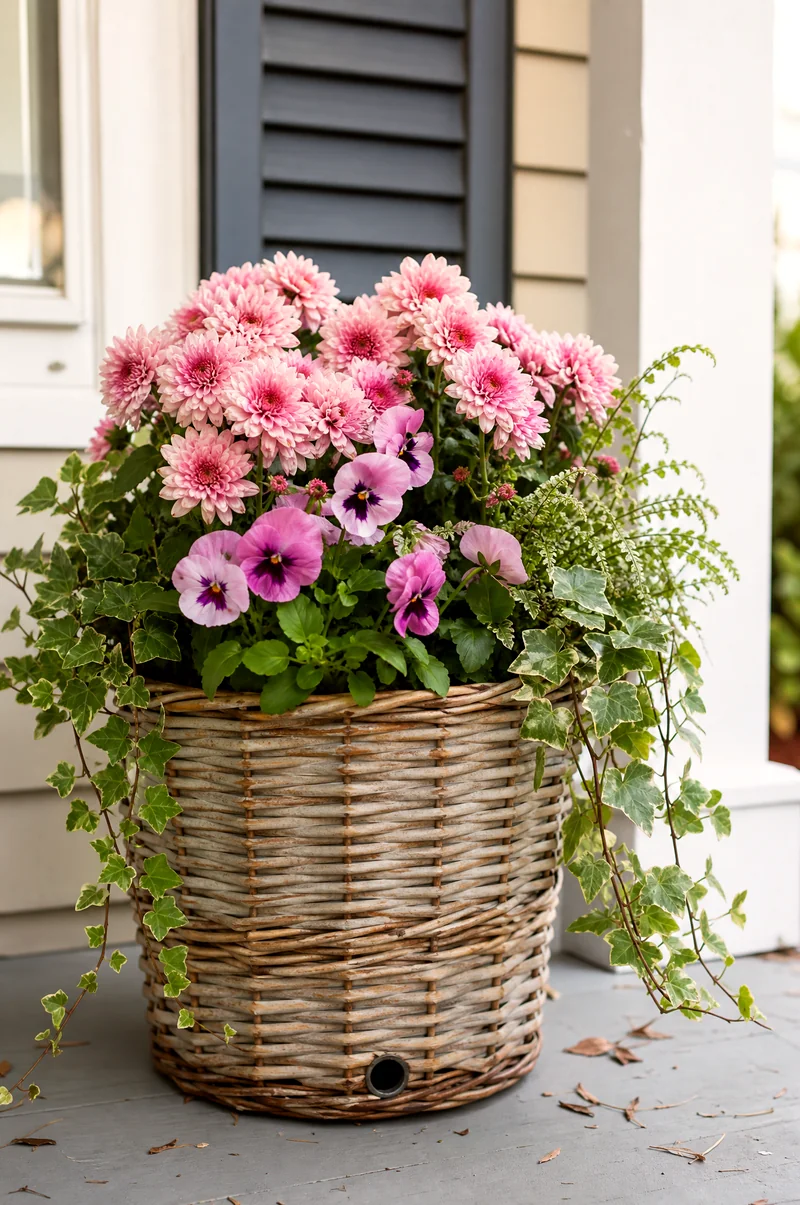
Blush-pink mums, violas, ferns, and trailing ivy in a wicker basket create a softer fall display than the usual orange and yellow porch pot. It suits cottage gardens, small patios, and covered entryways.
Wicker is charming, but water is not kind to it. Line the basket with plastic, coir, or a nursery pot, then make sure water can still drain out. A liner with no drainage simply turns the basket into a soggy bowl.
Violas are useful because they keep blooming in cool weather. Ferns add softness, but they will want more consistent moisture than ivy, so check the basket with your finger before watering.
Apple Harvest Mum Planter
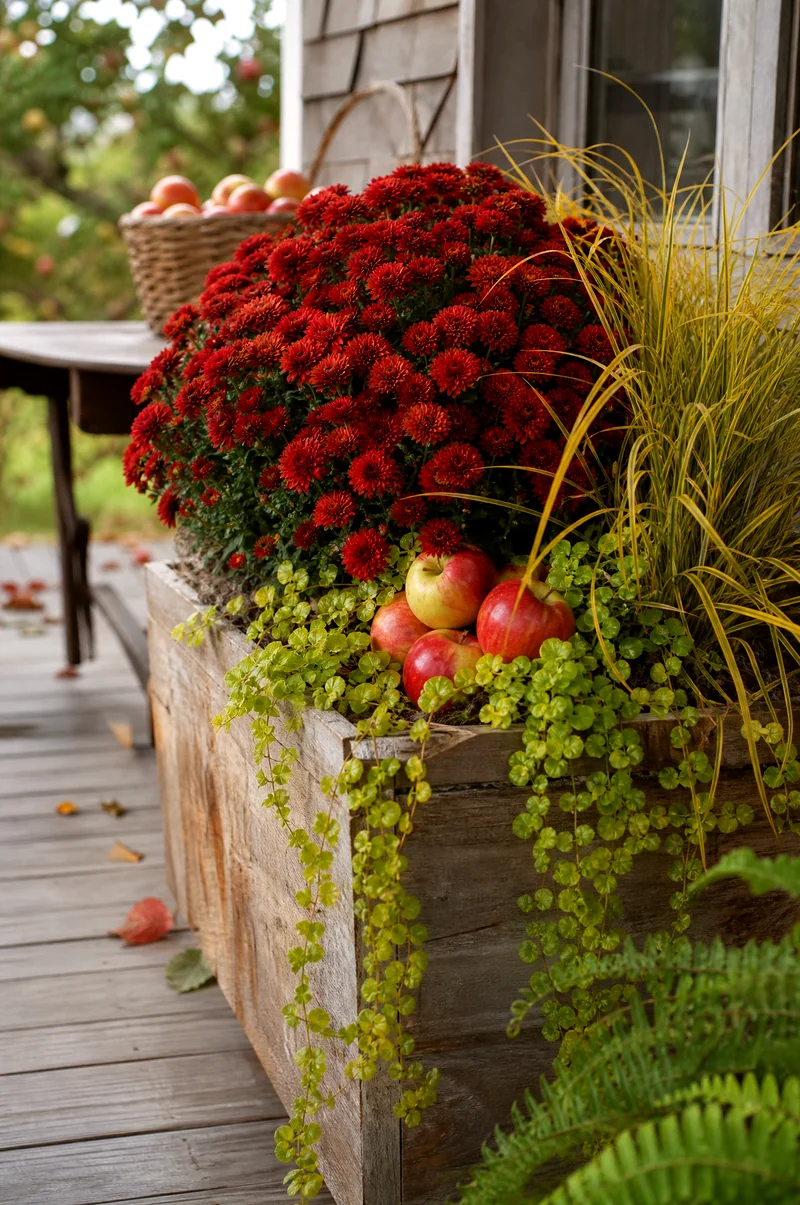
Red mums, small apples, golden sedge, and creeping Jenny in a rustic wooden container feel like a roadside orchard stand in the best way. The red flowers do the heavy lifting, while the apples make it seasonal.
Use apples as decorations, not as something mixed down into the soil. Set them where you can inspect them easily. Once they soften, bruise, or attract wasps, replace them.
Golden sedge gives the planter movement, and creeping Jenny brightens the edge. If your porch gets strong afternoon sun, watch the creeping Jenny closely. In a shallow container, it can dry faster than the mum root ball.
Modern Monochrome Mum Planter
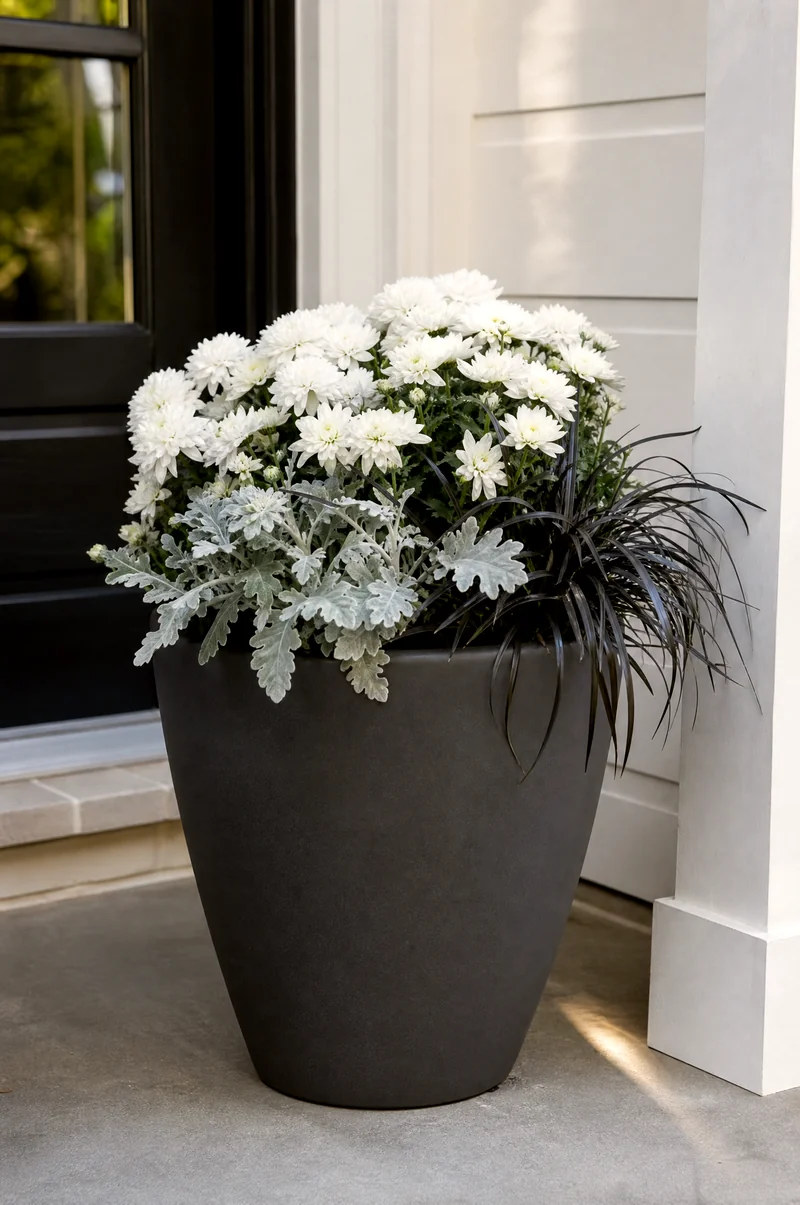
White mums in a charcoal planter can look crisp and modern, especially with dusty miller and black mondo grass. This is a good choice when you want fall without the pumpkin patch color scheme.
Simple color schemes need strong texture. Dusty miller gives soft silver leaves, black mondo grass adds narrow dark lines, and the mums bring rounded flower heads.
Leave a little breathing room between plants. A monochrome container looks better with clean spacing than with every inch stuffed tight. Too much white bloom packed together can read as a single pale mound.
Country Barrel Mum Planter
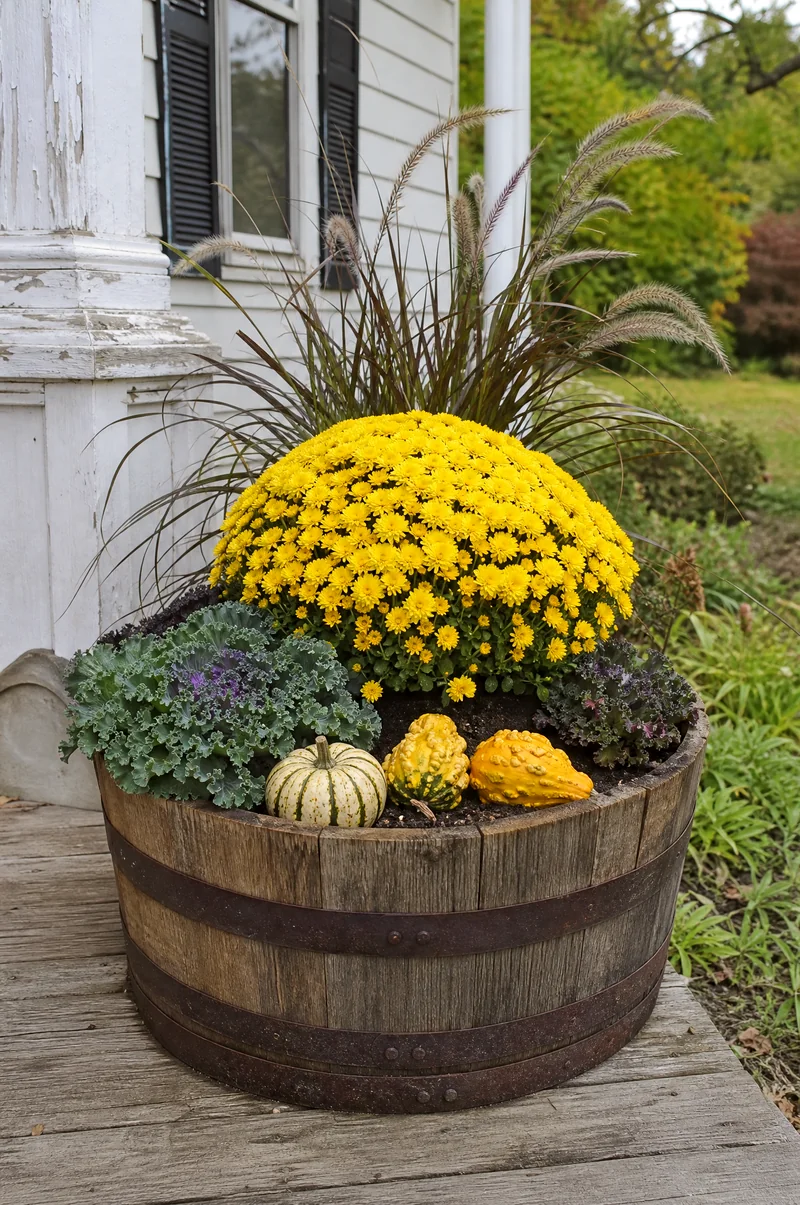
A half whiskey barrel can handle a big fall display: yellow mums, ornamental grasses, kale, and miniature gourds. This is the planter for a wide porch, garden gate, or driveway entrance.
The best part is soil volume. A barrel holds enough potting mix to buffer the roots against sudden drying, which matters during windy fall weather. Tiny pots can wilt in a single breezy afternoon, even when the air feels cool.
Use several mums instead of one giant plant if you want even coverage. Tuck grasses toward the back, place kale where its leaves can be seen, and keep gourds sitting above the soil so they don’t rot.
Copper-Toned Mum Planter
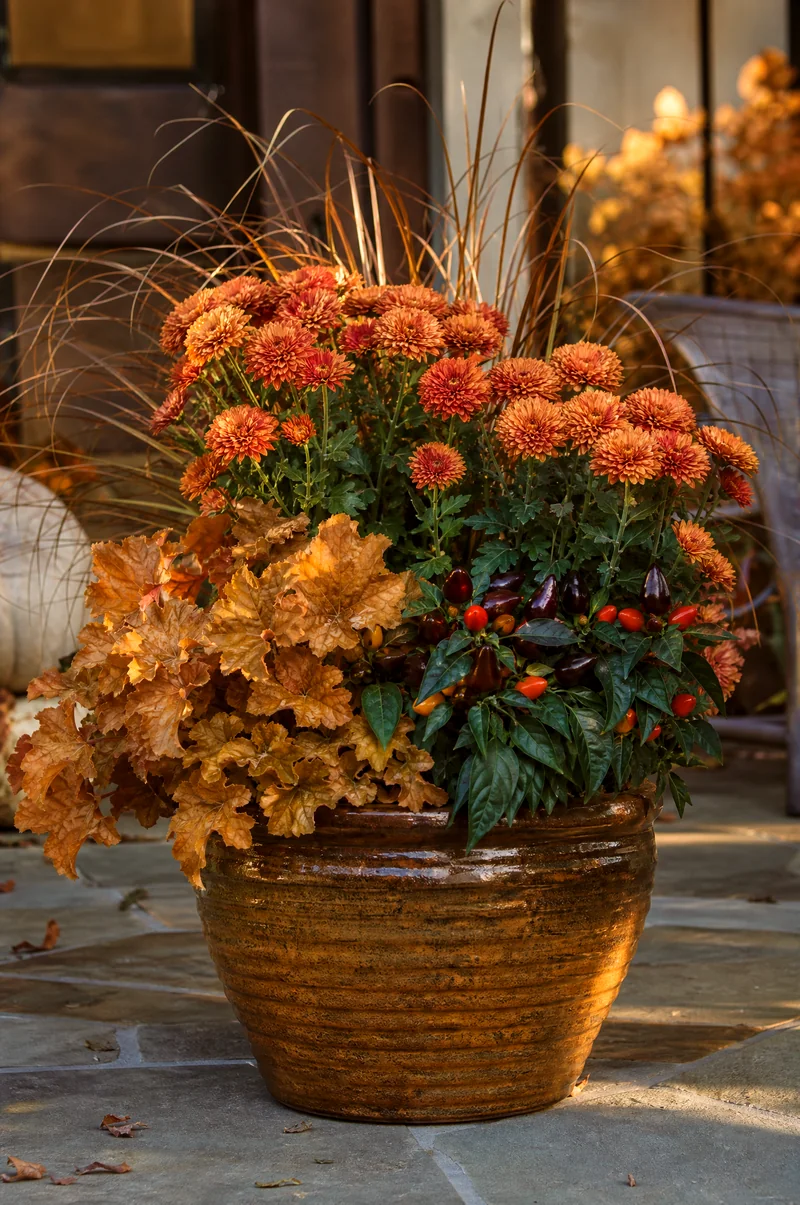
Copper mums, bronze carex, caramel heuchera, and ornamental peppers make a warm autumn container with plenty of depth. It is not loud, but it glows in late-day light.
Carex gives fine texture, heuchera adds broad leaves, and the peppers bring shine. That glossy pepper fruit is a nice contrast to the soft mum petals.
Read plant labels before placing ornamental peppers where children or pets can reach them. Many are grown for looks, and some labels warn against eating. I treat them as decorative unless I know exactly what variety I have.
Mum and Pansy Planter
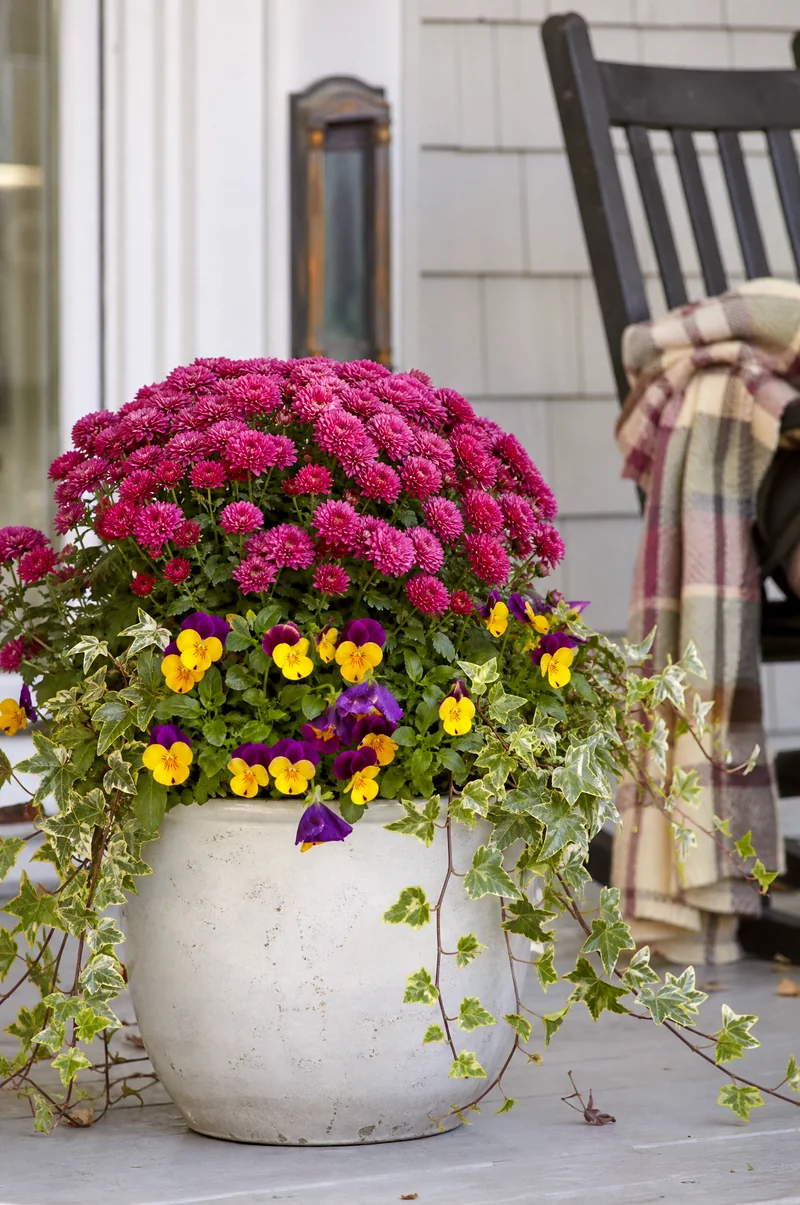
Plum mums with yellow and purple pansies make a cheerful cool-weather pot that holds its color longer than a mum-only container. Ivy trails over the edge and ties the whole thing together.
The reason this pairing works is timing. Mums put on a strong show, then slow down. Pansies often keep flowering through chilly weather, so they carry the planter after the mums are past their peak.
Keep pansies near the front and edges where they get light. If you bury them under a bulky mum, they stretch, sulk, and stop looking worth the effort.
Woodland Mum Planter
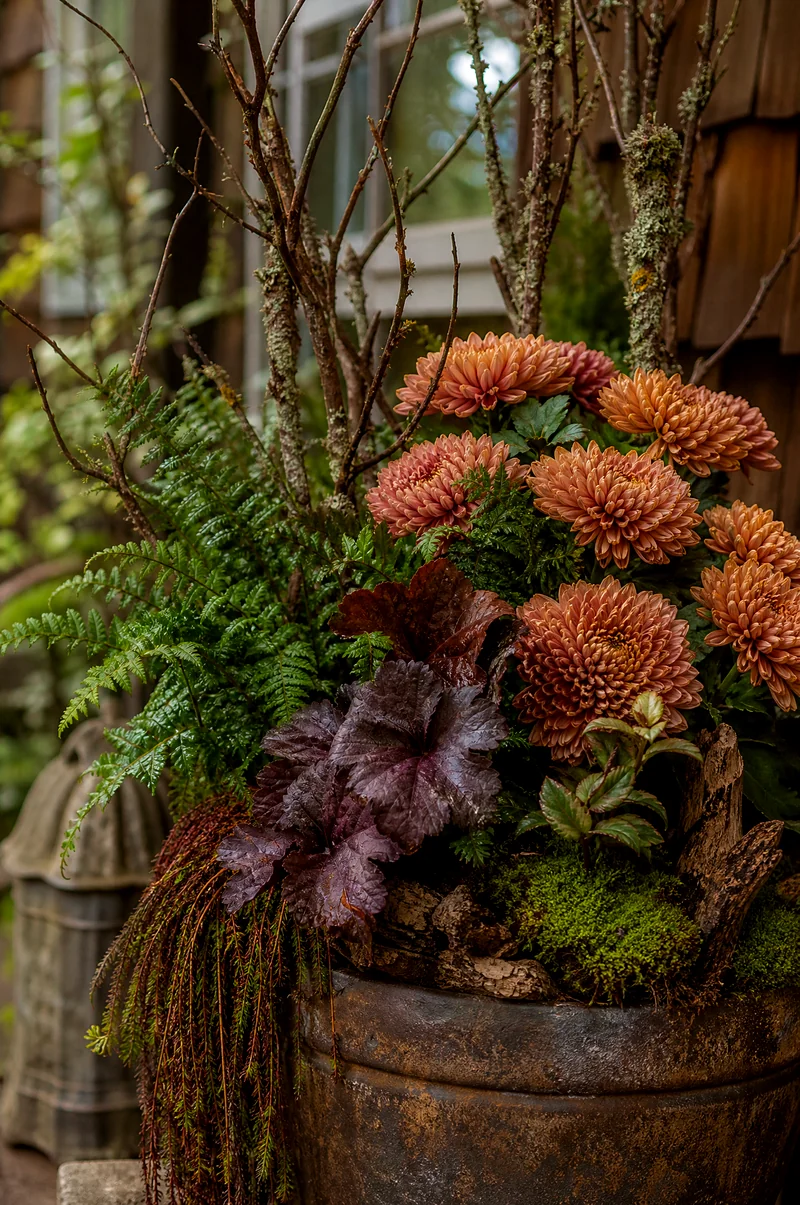
Muted bronze mums, ferns, heuchera, moss, and natural branches make a shaded planter that feels collected from the edge of the woods. This is a lovely option for covered porches and north-facing entries.
Use moss as decoration, not as a sealed blanket over the entire soil surface. Packed moss can make watering harder because water runs off instead of soaking down to the roots.
Branches add height and structure without needing root space. Push them firmly into the potting mix near the back, then place ferns and heuchera where their leaves can arch naturally around the mums.
Pumpkin Tower Mum Planter
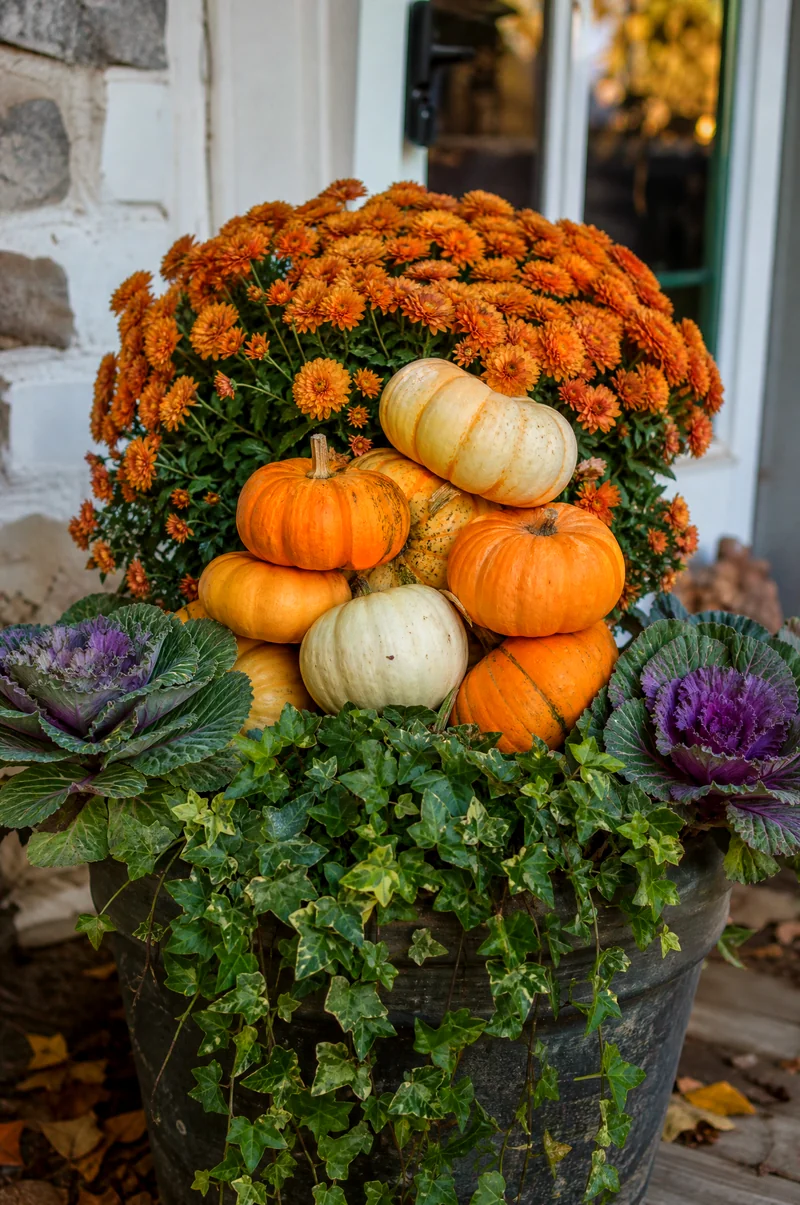
A pumpkin tower planter uses stacked mini pumpkins in front, mums behind them, and ivy with ornamental cabbage around the base. It is festive, but it needs structure or it becomes a wobbling porch hazard.
Choose flat-bottomed pumpkins and stack only as high as the container can support. If the pot is lightweight plastic, add weight at the bottom or skip the tower idea on windy steps.
The mums should be the backdrop, not buried behind the pumpkins. Keep the pumpkin stack slightly off-center, then use ivy to soften the base and cabbage to give weight near the rim.
Pink and Silver Mum Planter
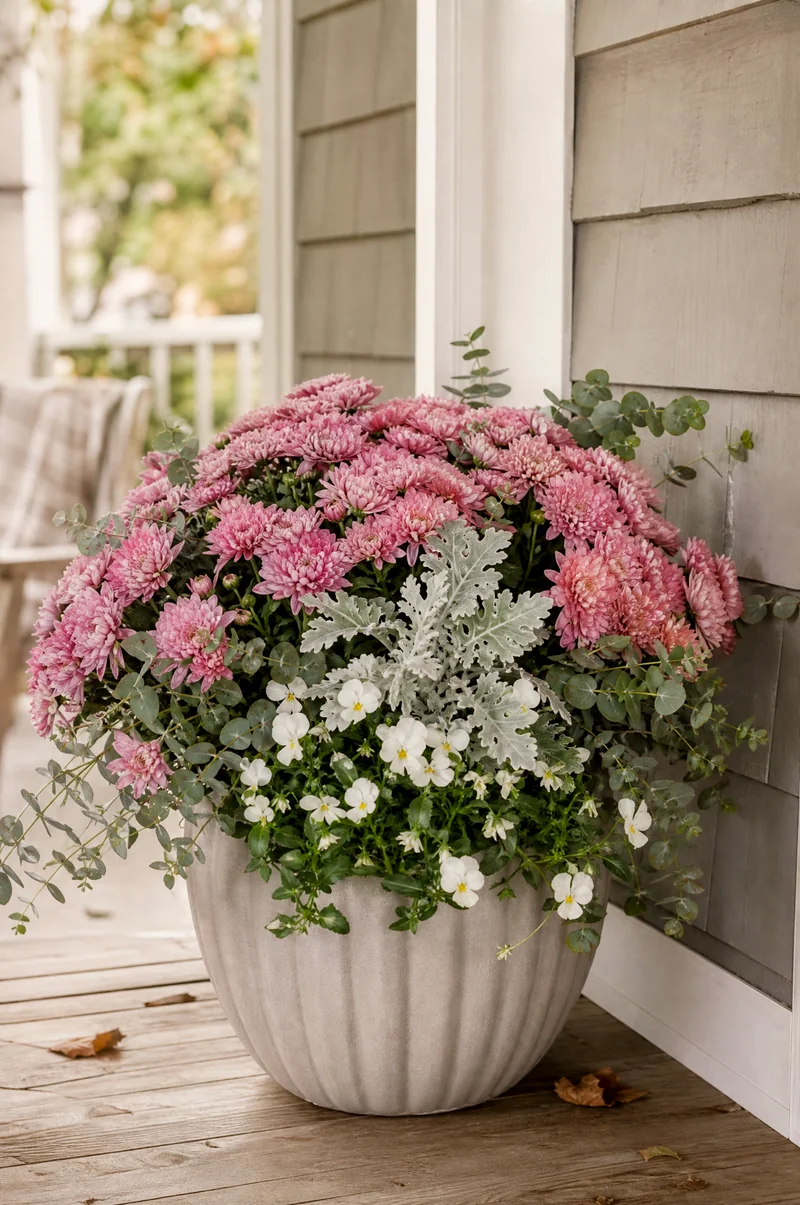
Dusty-pink mums with dusty miller, white violas, and eucalyptus make a gentle fall palette that still feels seasonal. Silver foliage is what keeps it from looking like a spring basket.
This combination is especially useful on shaded porches. Dusty miller and eucalyptus catch limited light, while white violas brighten the lower edge of the pot.
Choose pink mums with a muted tone rather than candy-bright pink. Softer pinks blend better with silver leaves and look more natural beside pumpkins, stone, and weathered wood.
Mum and Ornamental Pepper Planter
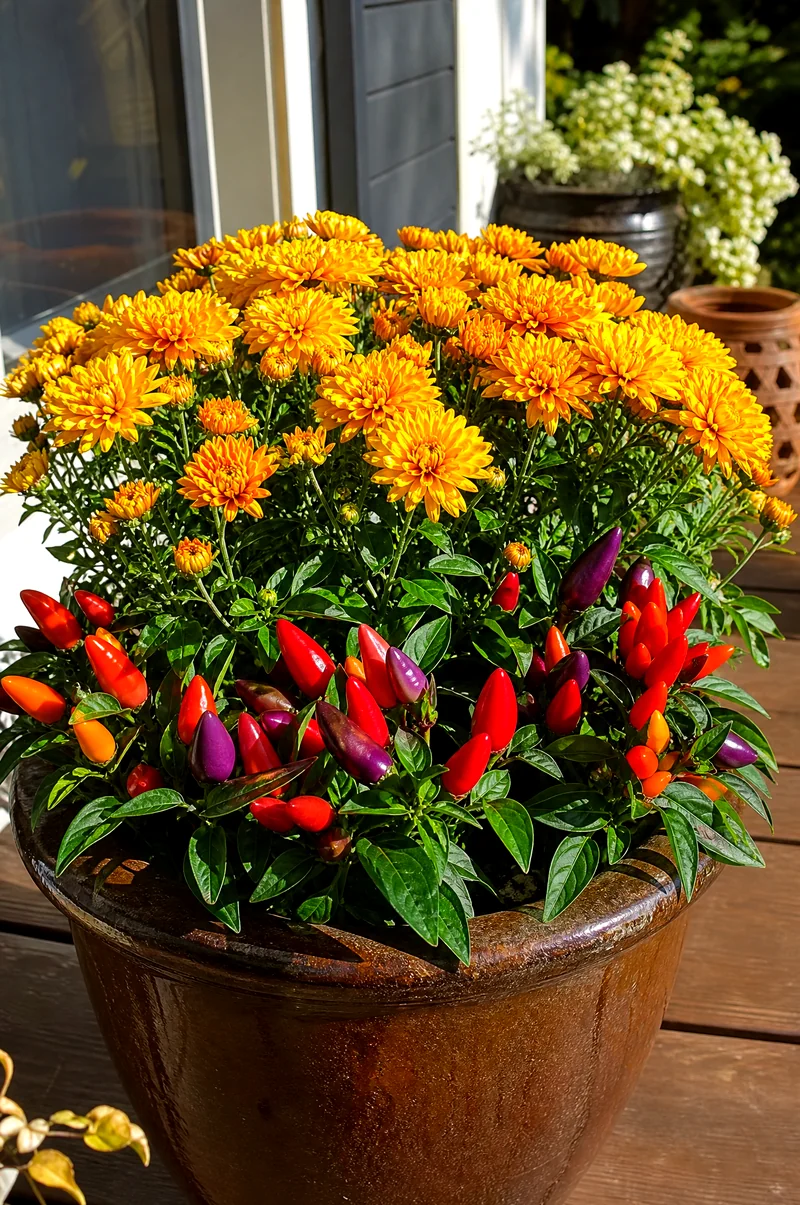
Golden mums and ornamental peppers in red, orange, and purple make a high-energy fall container. The peppers add glossy texture that mums simply don’t have.
This planter performs best with several hours of sun. Ornamental peppers like brighter light, and in too much shade the fruit color can be disappointing.
Use peppers around the front or sides so they are visible. A big mum can swallow them if planted too close. And as with all ornamental peppers, check the label before assuming they are edible.
Rustic Wooden Crate Mum Planter
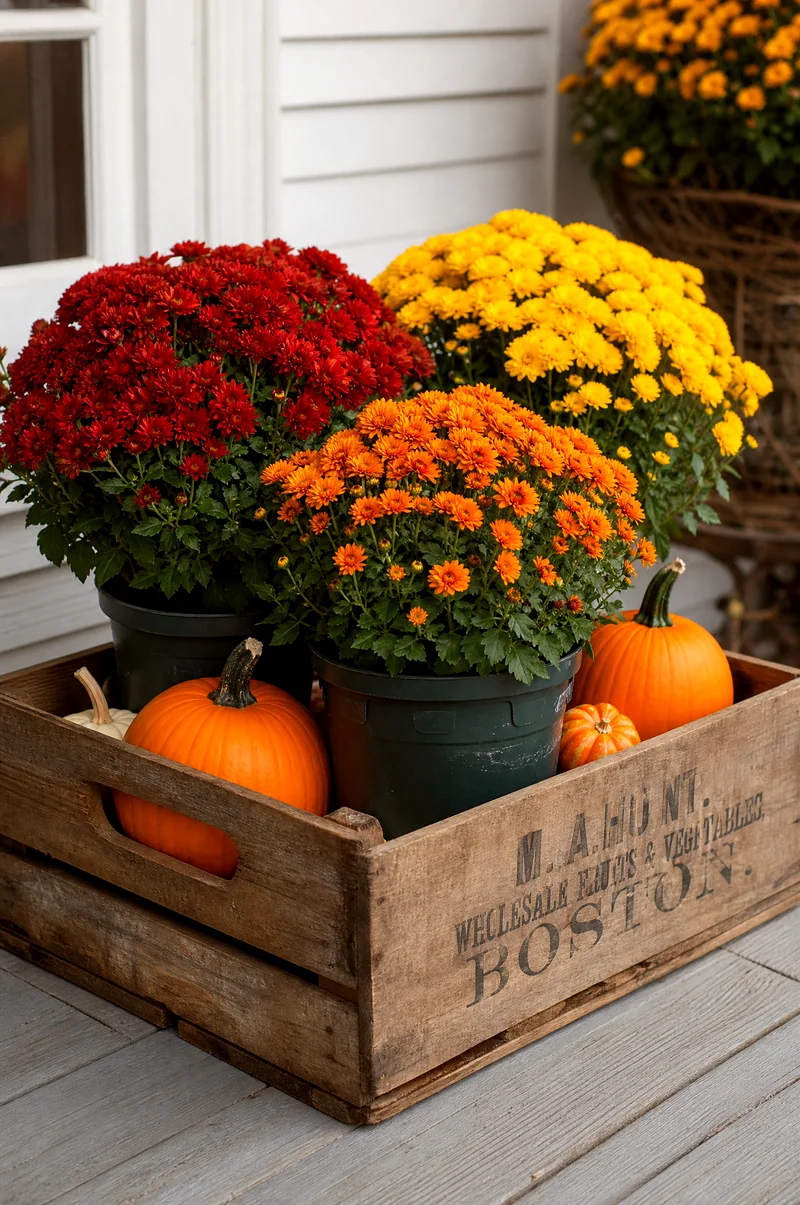
A wooden crate filled with small pots of red, orange, and yellow mums is one of the easiest fall displays to assemble. Tuck pumpkins between the pots and you are done.
I like leaving the mums in their nursery pots inside the crate. It makes watering simpler, lets you replace a tired plant in two minutes, and keeps wet potting mix from sitting directly against the wood.
If the crate has big gaps, line it loosely with burlap or newspaper for looks, but don’t block drainage. Lift each pot to water it well, then let it drain before putting it back.
Green and White Mum Planter
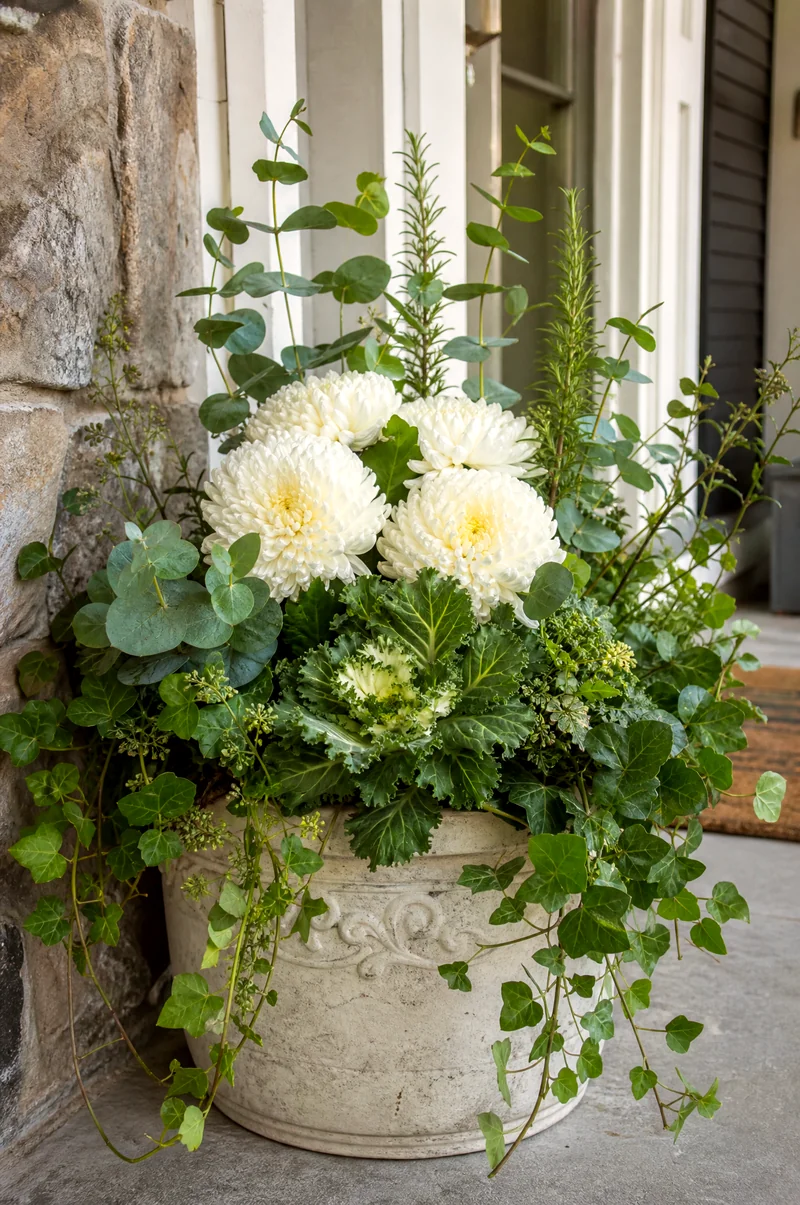
Creamy-white mums with green ornamental kale, rosemary, ivy, and eucalyptus look fresh without feeling too plain. It is a good palette for brick, black doors, and natural wood porches.
Rosemary is the one plant here that needs a little respect. It likes sharper drainage than mums, so it works best as a short-season companion or in its own small pot tucked into the larger arrangement.
Kale and ivy handle cool fall weather well and help the pot stay attractive after the mums fade. Eucalyptus adds height and scent, though cut stems will eventually dry rather than grow.
Moody Black Pot Mum Planter
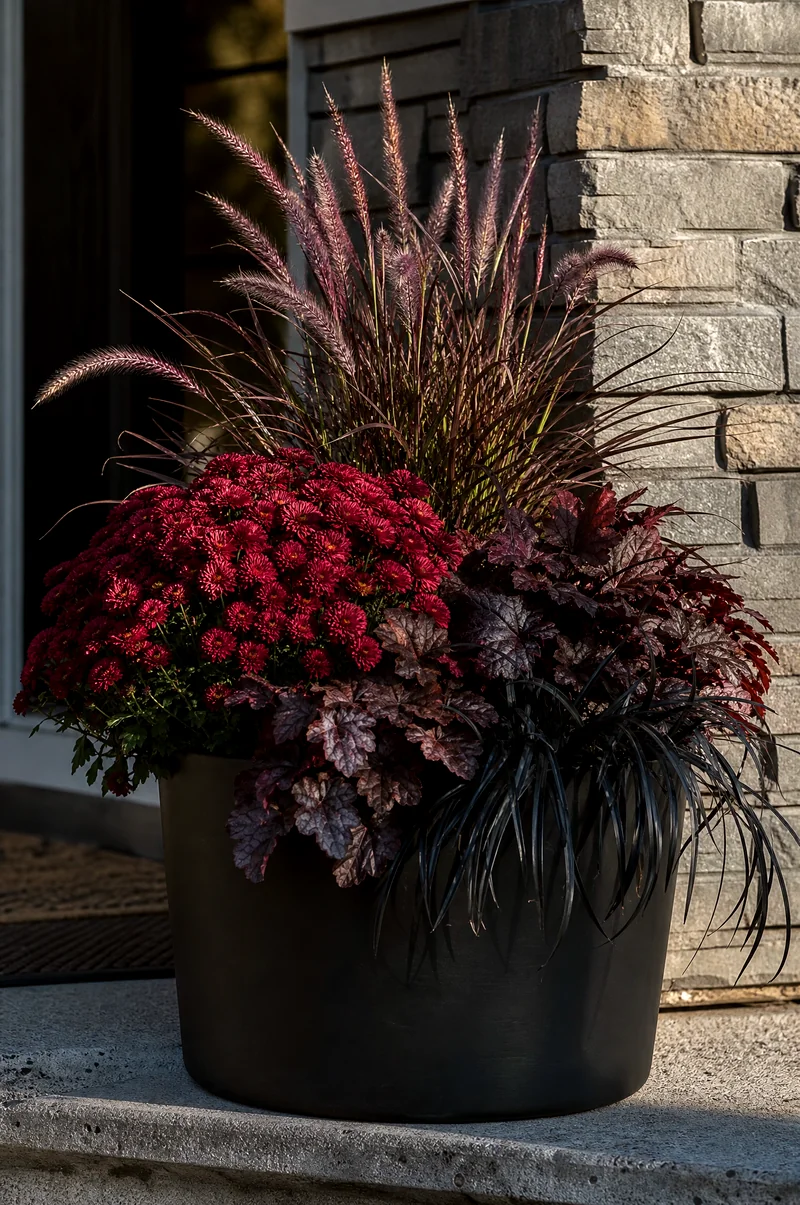
Wine-red mums, purple fountain grass, dark heuchera, and black mondo grass in a matte black pot can look wonderfully moody. It also can vanish from the street if you don’t include enough flower color.
Use a generous mass of wine-red mums and keep the fountain grass upright. The grass gives the eye a vertical line, while the mums provide the color block that makes the planter readable.
Dark heuchera and black mondo grass are better as accents than as the main event. Place them where light catches the leaf edges. A black pot in deep shade can make the whole arrangement look heavier than planned.
Mum and Succulent Fall Planter
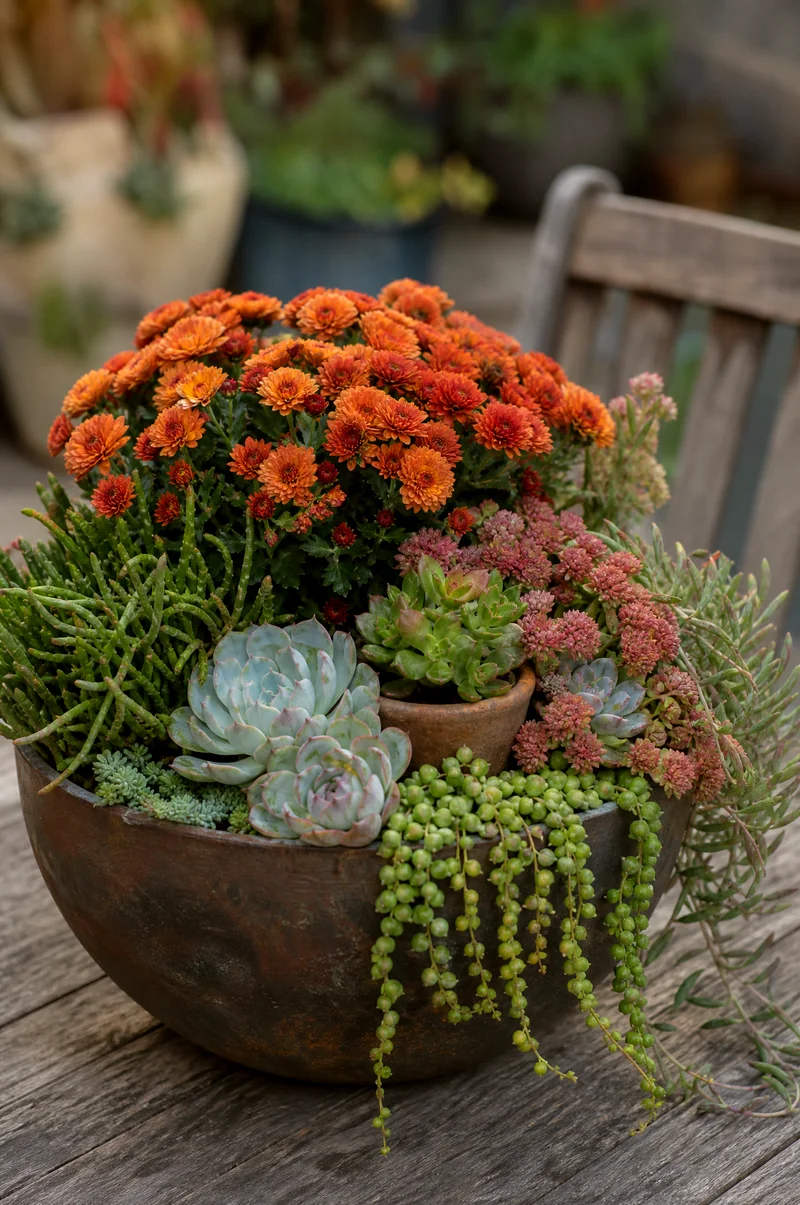
Compact bronze mums with sedum, echeveria, and trailing succulents create a textural fall planter that feels different from the usual porch pot. It can be beautiful, but the watering needs do not match perfectly.
Mums like evenly moist soil. Many succulents prefer to dry out between waterings. For a display that only needs to last a few weeks, you can plant them together and water carefully.
For anything longer, keep the succulents in small separate pots tucked into the planter. That way the mum can get the moisture it needs, and the succulents can be removed before their roots sit wet for too long.
Herb and Mum Planter
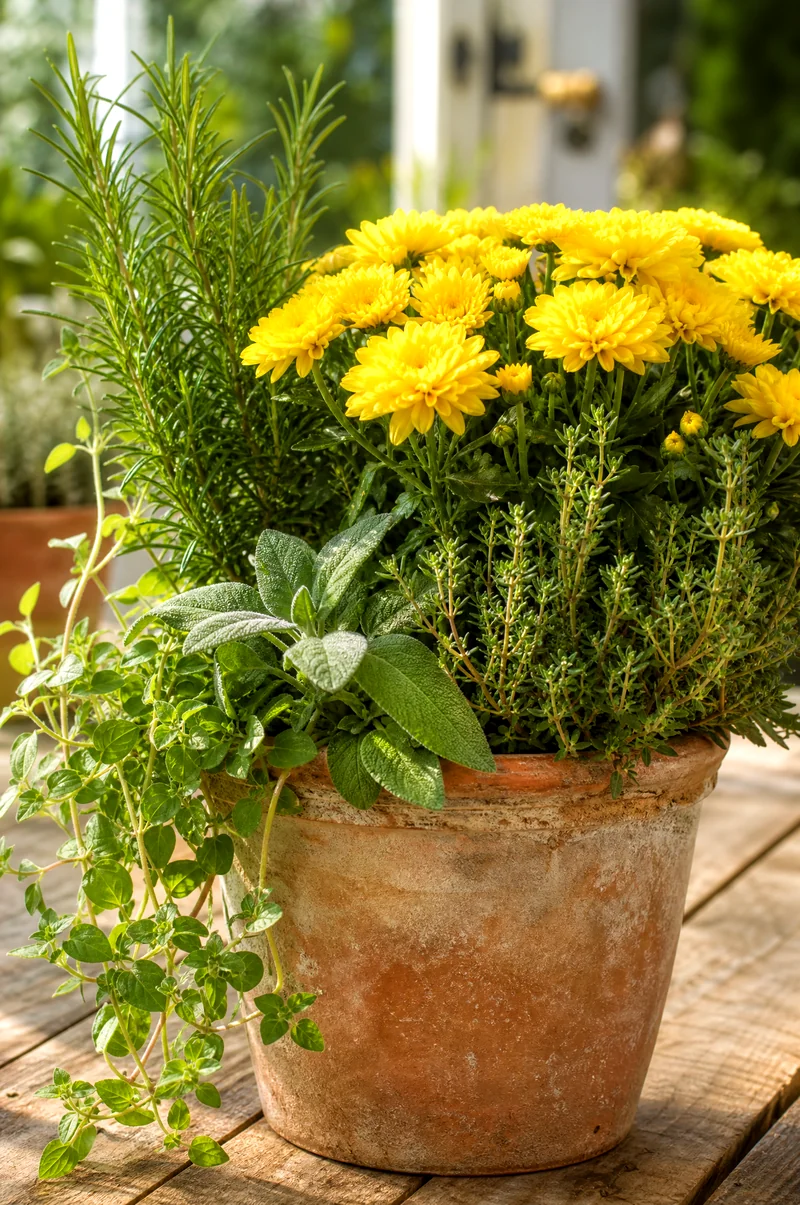
Yellow mums with rosemary, sage, thyme, and trailing oregano make a useful decorative herb planter for a sunny porch. It smells good, looks seasonal, and gives you a few snips for cooking.
The trick is not crowding the herbs under a giant mum canopy. Herbs need light and airflow, especially sage and thyme. Place them around the outer edge where they can grow without being shaded out.
Use a free-draining potting mix and a container with holes. The herbs will last longer if the soil doesn’t stay wet, while the mum still needs enough water to keep its buds from drying before they open.
Oversized Front Door Mum Planter
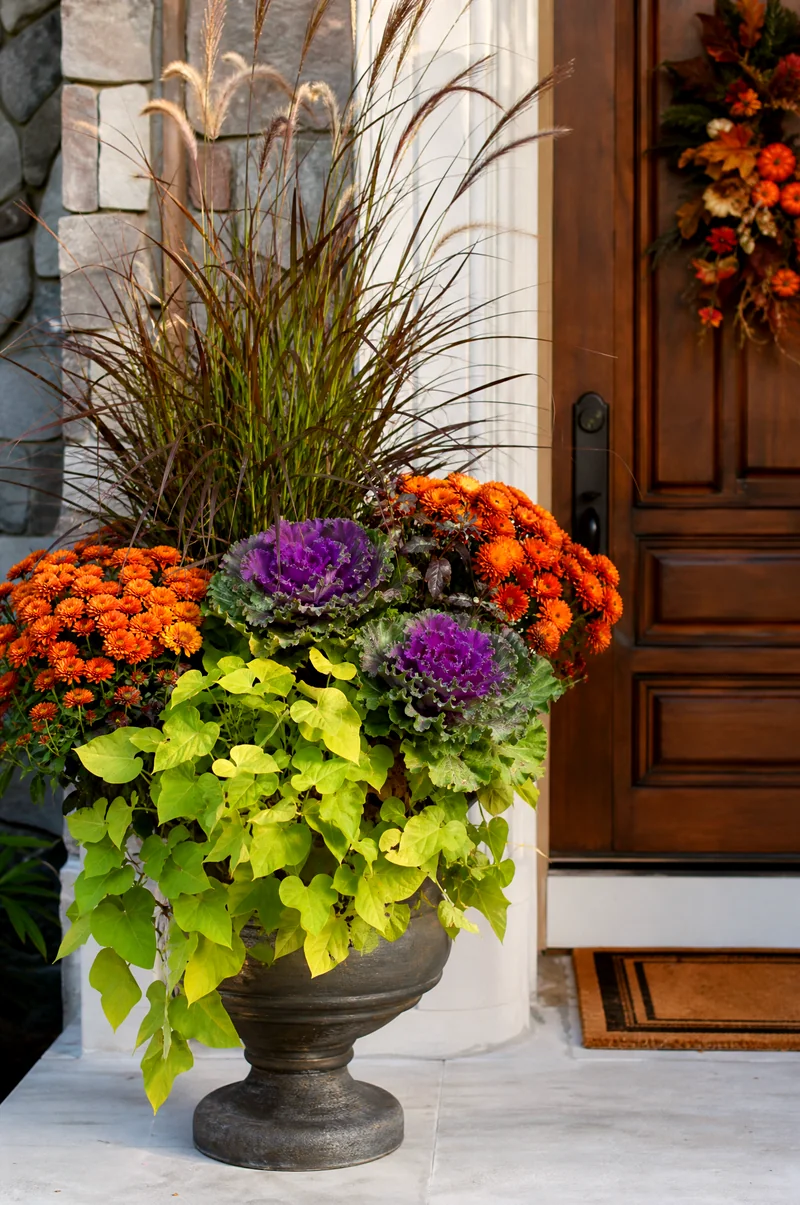
A large entrance planter with tall grasses, orange mums, ornamental kale, and cascading sweet potato vine makes a strong first impression. This is where scale matters.
Small plants in a huge pot look timid. Use several mums, a tall grass with real height, and enough kale to anchor the lower layer. Sweet potato vine gives a dramatic spill, though it will be damaged by frost.
Large planters still need regular watering. They dry slower than small pots, but a big mass of roots and foliage can drink a surprising amount on sunny, windy days. Check the soil a few inches down, not just at the surface.
Mini Mum Tabletop Planter
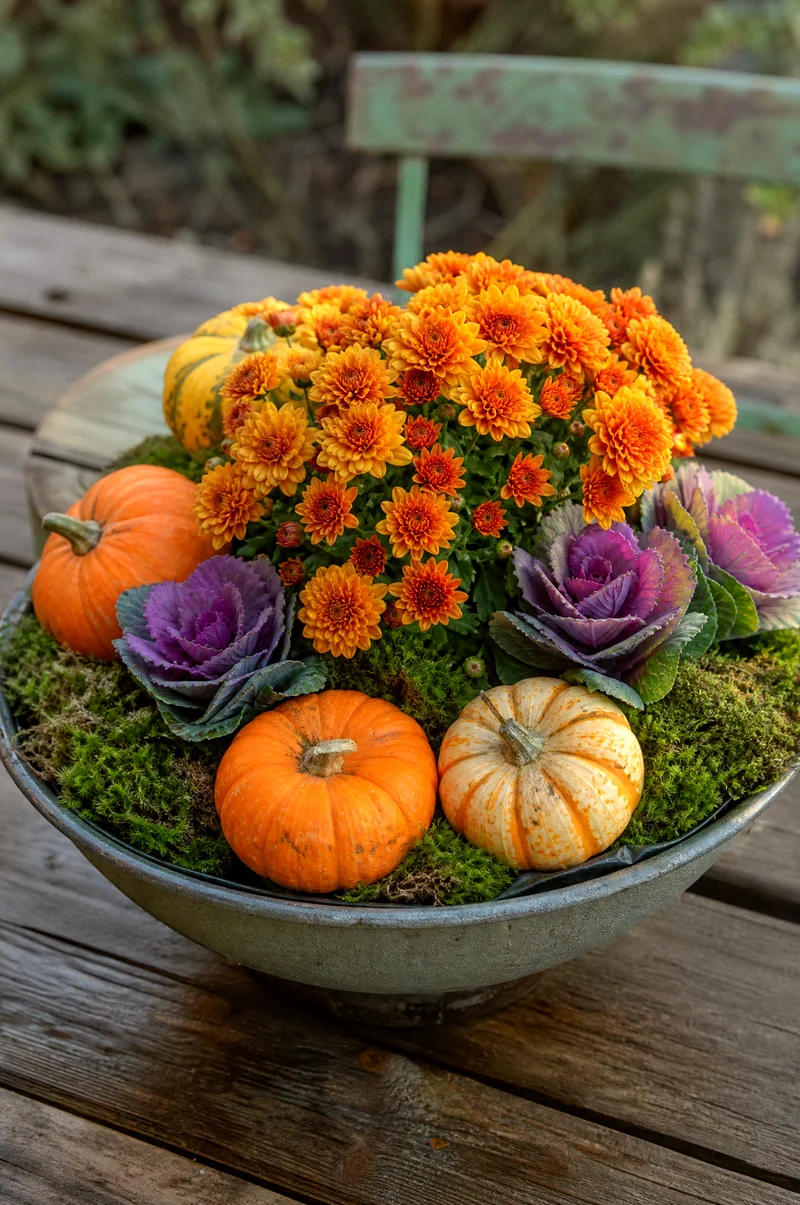
Miniature mums, tiny pumpkins, moss, and small ornamental cabbages in a shallow bowl make a sweet tabletop display for a patio, porch table, or outdoor dinner.
Think of this as a short-term arrangement. Shallow bowls dry unevenly, and many decorative bowls have no drainage. Hidden nursery pots are usually the cleanest solution.
Water carefully at the base of each plant and avoid soaking the moss. If the bowl will sit on a table, use a saucer or waterproof liner so moisture doesn’t mark the surface.
Red and Gold Mum Planter
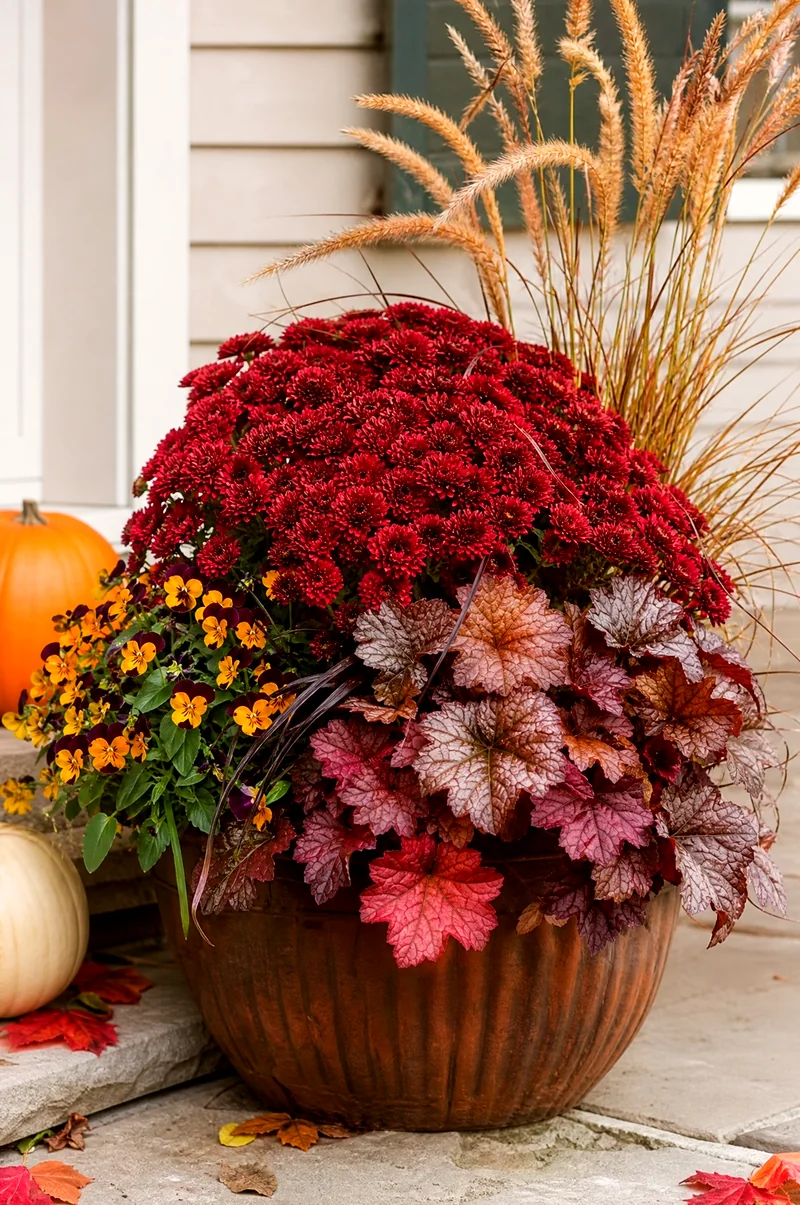
Crimson mums with golden ornamental grass, yellow violas, and bronze heuchera make a rich fall planter without feeling messy. The secret is repeating warm colors.
Gold appears in the grass and violas. Red shows up in the mums and in the warm undertones of the heuchera. That repetition makes the container feel planned instead of like leftover plants from the garden center cart.
Keep the yellow violas near the front where they can bloom freely. The ornamental grass should sit slightly behind the mums so it rises through the display rather than flopping over the flowers.
Blue Pot Mum Planter
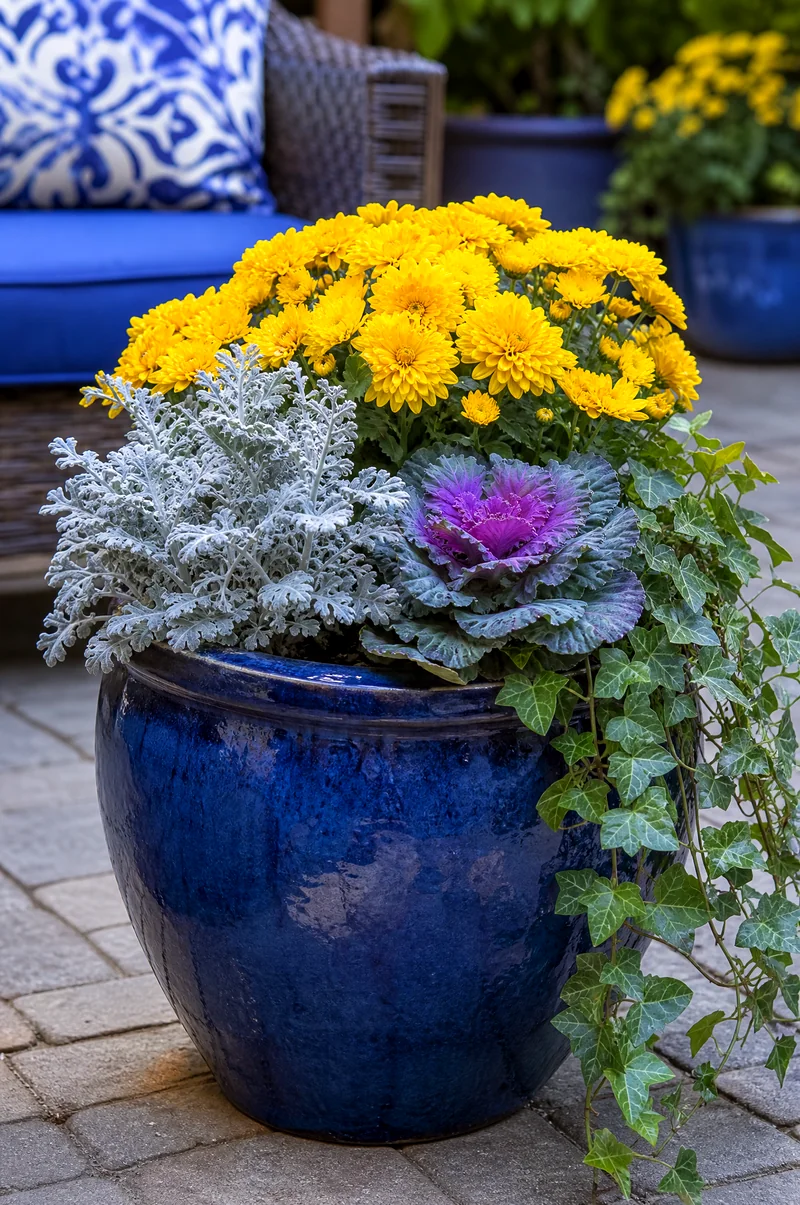
Yellow mums in a deep blue ceramic pot are hard to beat. Add silver foliage, ornamental kale, and ivy, and you get strong contrast without needing many different flowers.
Blue and yellow sit far apart visually, so the mums look brighter than they would in a tan or brown pot. Silver foliage cools the mix down, while kale adds heft near the soil line.
Glazed ceramic holds moisture longer than terracotta. That can help in dry wind, but it can also keep roots too wet during rainy weeks. Always check the soil before watering.
Mum and Dried Grass Planter
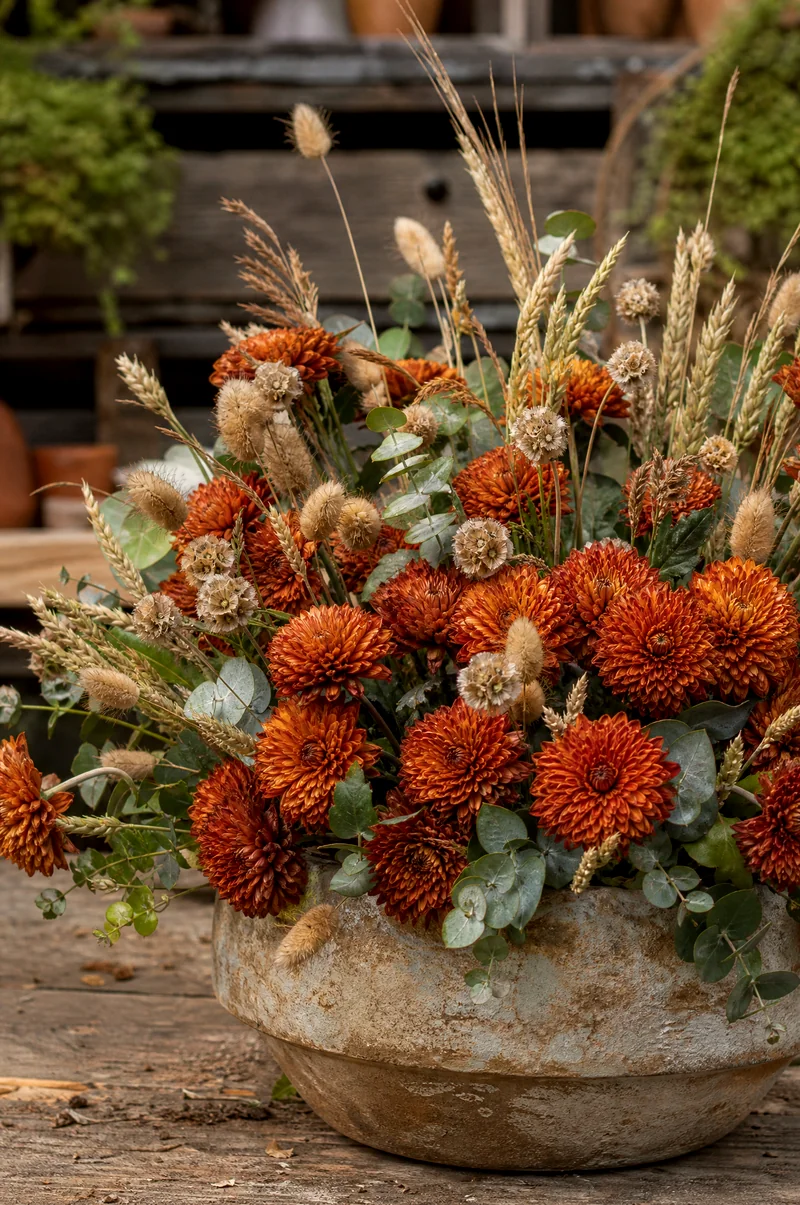
Rust mums mixed with dried wheat, bunny-tail grass, seed heads, and eucalyptus give you a living and dried arrangement with a natural harvest feel.
Insert dried stems around the edges or toward the back, where they won’t sit in the wettest part of the soil. If stems stay constantly damp, they can mold or soften.
Push each stem deep enough to stand securely, or bundle a few with twine before inserting them. Keep the dried materials loose and airy. Too many stiff stems can make the planter look like a craft project instead of a garden container.
Minimalist Single-Color Mum Planter
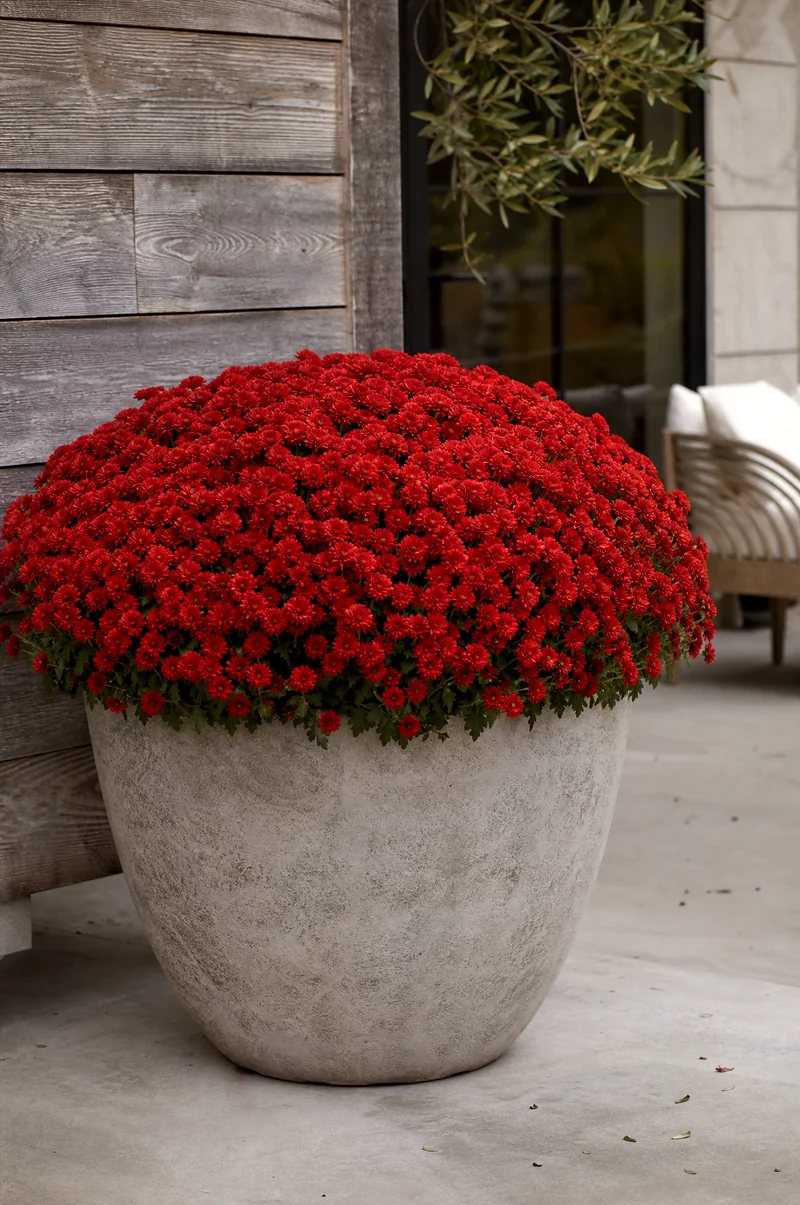
An oversized concrete pot filled with one color of mums is simple, bold, and surprisingly forgiving. Repetition looks polished because the eye understands it instantly.
For fullness, use more plants than you think. Three small mums in a large pot will look lonely. Five or seven, depending on pot size, create that rounded mound people expect from a massed mum display.
Tight spacing is acceptable for a short fall show. You are not trying to grow these plants for years in the same container. You are creating a seasonal bloom mass that lasts several weeks.
Multicolor Mum Container
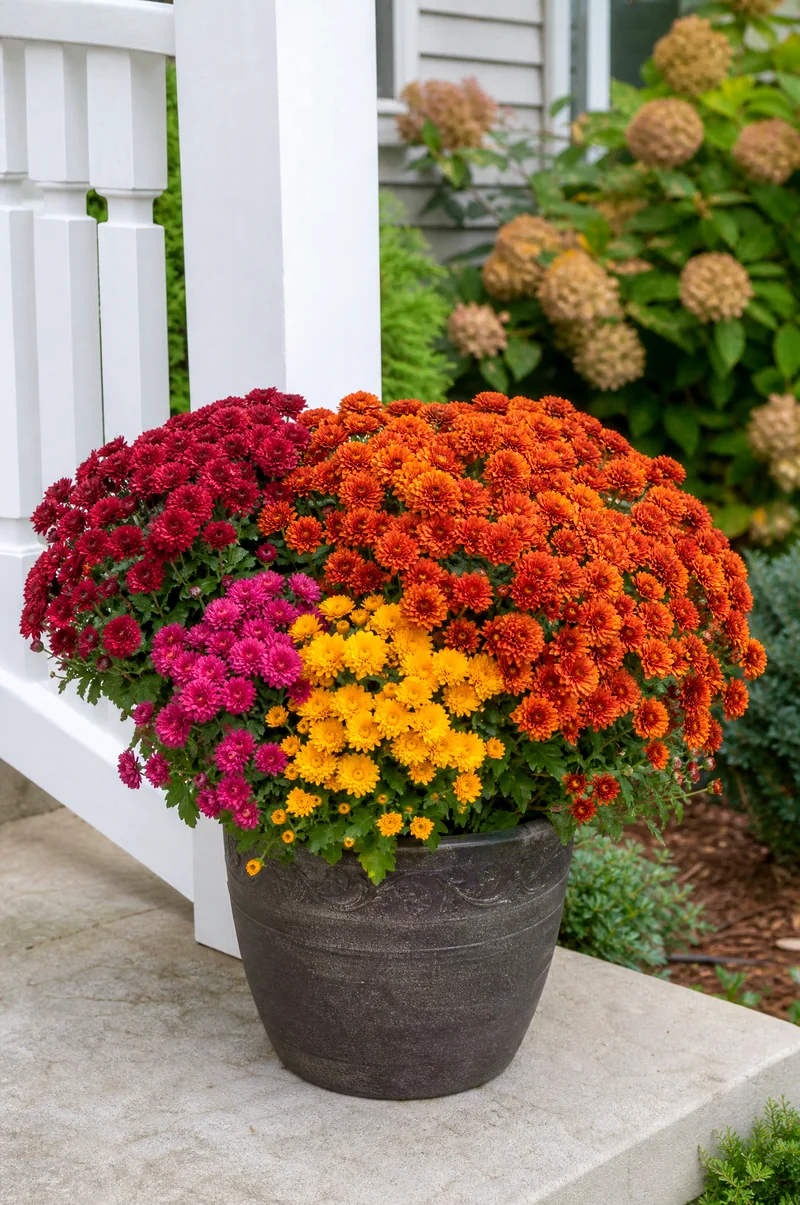
Burgundy, orange, yellow, and pink mums together can be joyful, but they need a plan. Without one, a multicolor container can look like the clearance rack came home with you.
Choose one dominant color, then use the others as accents. For example, let orange take up half the planter, then add smaller sections of burgundy, yellow, and pink.
Repeat at least one color on both sides of the pot if it will be seen from the front. That small bit of balance makes the mix feel intentional without making it stiff.
Mum and Evergreen Planter
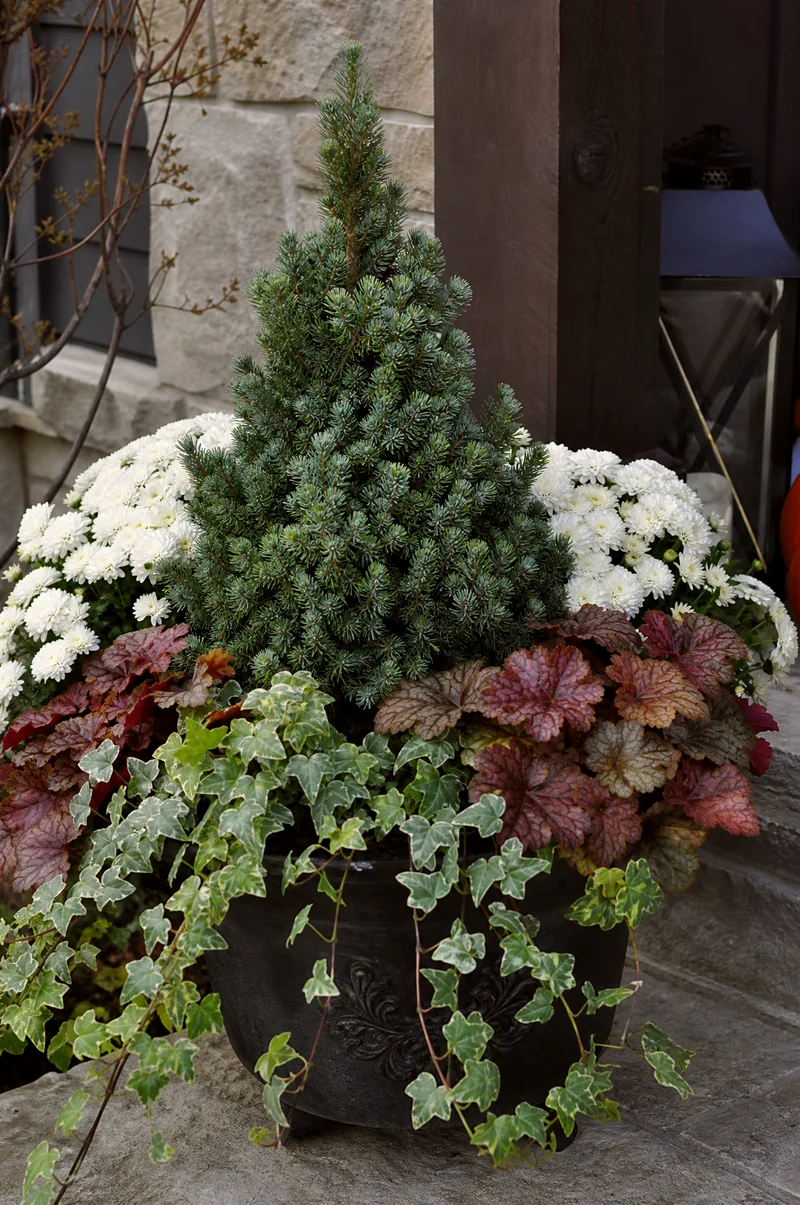
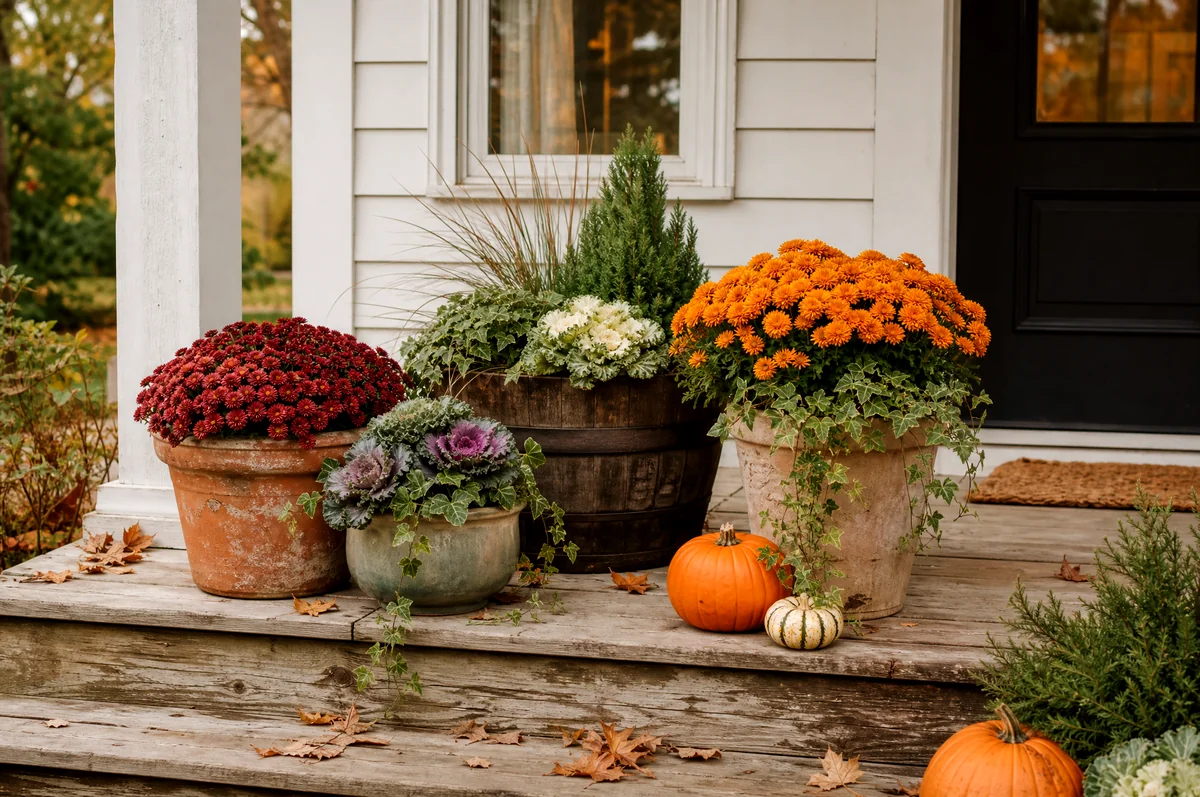
A small dwarf conifer surrounded by white mums, heuchera, and ivy is one of the smartest fall planters because it can shift toward winter after the mums finish.
Plant the conifer slightly off-center or toward the back so it has room to grow. The mums can sit around the front as temporary color.
Once the mum flowers fade, pull those plants out and replace them with cold-season accents such as cut evergreen boughs, twigs, or more heuchera. The conifer and ivy keep the container from looking empty.
Hanging Mum Planter
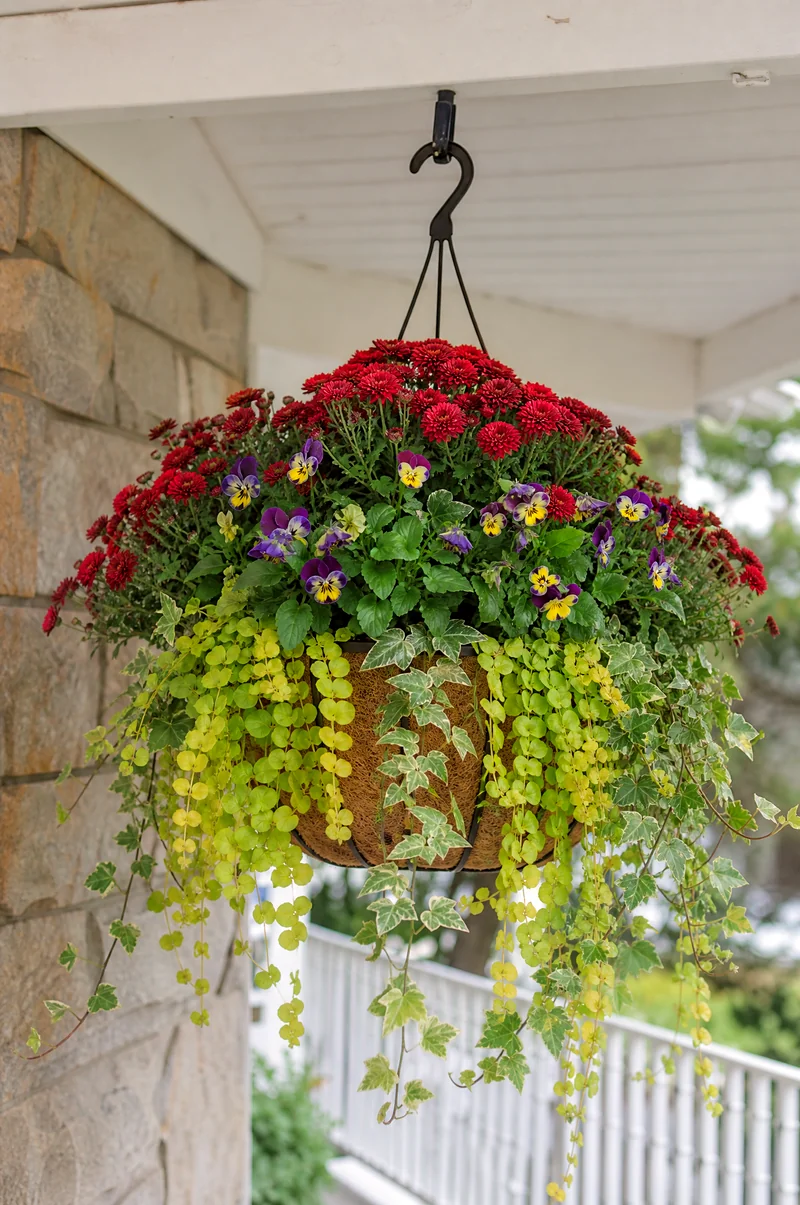
Trailing mums, ivy, creeping Jenny, and compact violas make a hanging basket for porches with no floor space. It gives you fall color at eye level, which is always nice near a doorway.
Hanging baskets dry faster than pots on the ground, even in fall. Air moves around the entire basket, and cool-season potting mix can still dry out in wind.
Use a secure hook rated for the weight of wet soil. A mum basket is heavier than it looks after watering. Keep violas near the outside where they get light, and trim creeping Jenny if it starts to cover them.
Thanksgiving Mum Centerpiece Planter
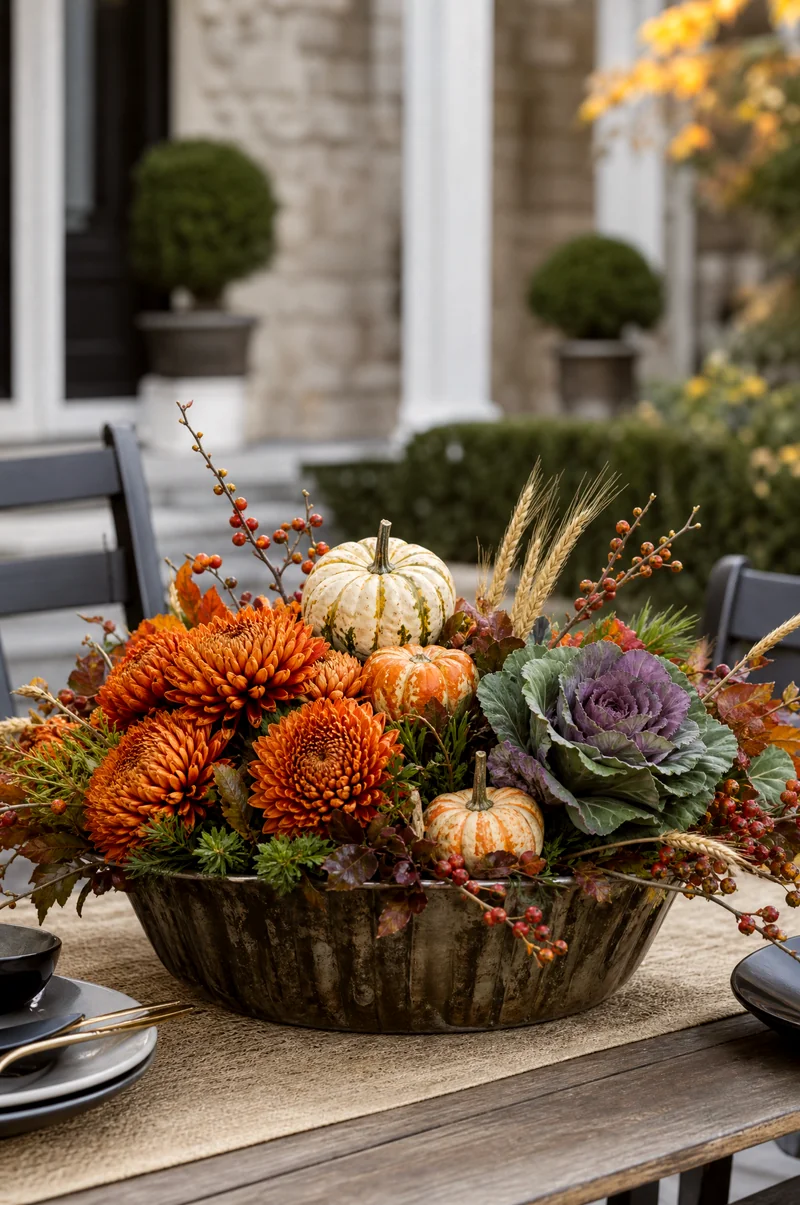
Bronze mums, ornamental cabbage, mini pumpkins, wheat stems, and berry branches in a wide low container make a beautiful Thanksgiving centerpiece for an outdoor table or protected porch.
Keep it low enough for conversation. If guests have to lean around wheat stems to see each other, the arrangement is too tall.
Use a waterproof liner if the container will sit on a table. Water sparingly but thoroughly around the mum root balls, and remove any soft pumpkins before they stain the liner or attract insects.
FAQ
How long do fall mum planters last?
Most mum planters look good for two to six weeks, depending on weather, plant quality, and watering. Tight-budded mums last longer than plants bought fully open.
Should I plant mums or leave them in nursery pots?
Either works. For short displays, leaving mums in nursery pots makes watering, swapping, and cleanup easier. For a fuller planted look, use fresh potting mix and a container with drainage.
How often should I water mums in containers?
Check them every day or two at first. Water when the top inch of soil feels dry, then water deeply until excess drains out. Small pots and hanging baskets dry fastest.
Can fall mums survive winter in pots?
Sometimes, but don’t count on it. Garden mums are more likely to survive when planted in the ground early enough to root before winter. In pots, roots face more freeze and thaw stress.
Do mums need sun or shade?
Mums bloom best with at least several hours of sun. In warm fall weather, a little afternoon shade can help flowers last longer, but deep shade usually means fewer blooms and weaker growth.
A mum planter doesn’t have to last forever to be worth doing. Give it drainage, buy good buds, and let the foliage plants do some of the work after the flowers slow down.