How to Propagate White Princess Philodendron

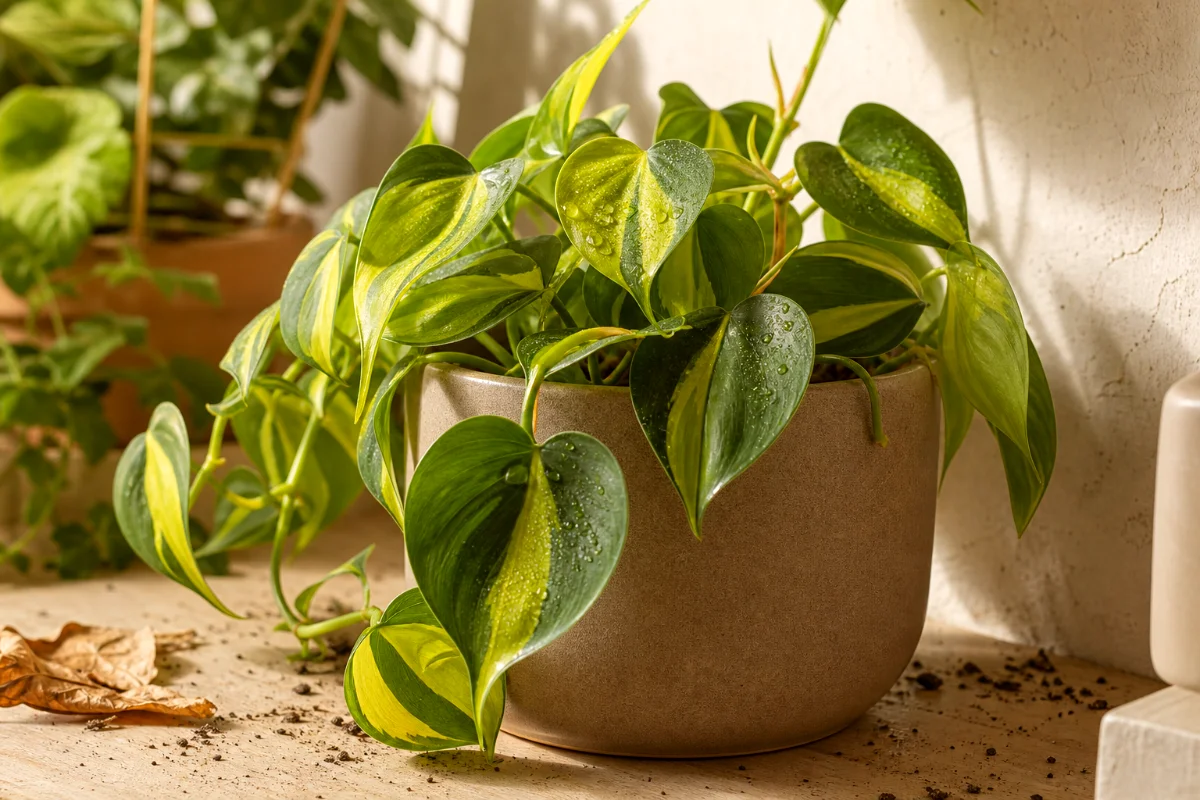
White Princess Philodendron is gorgeous. Also a little dramatic.
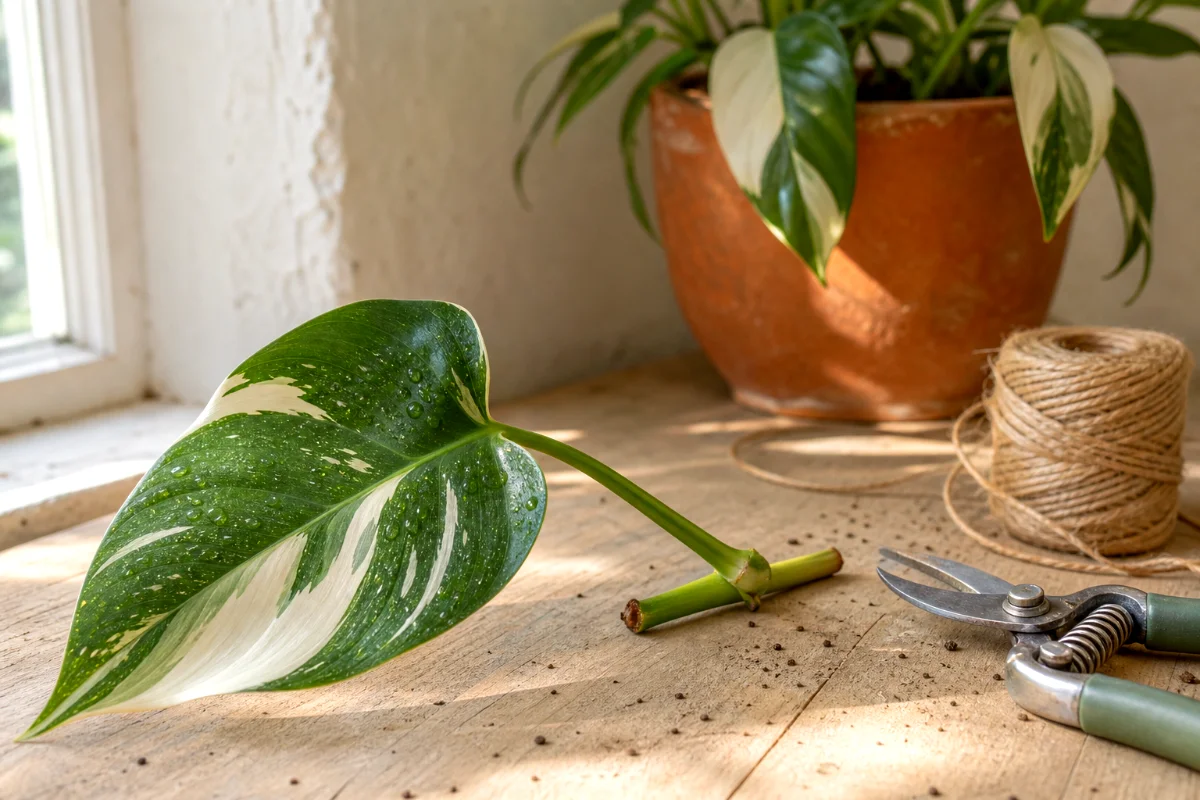
Those green leaves splashed with white and soft pink can make any plant shelf look expensive, but propagation is not about the pretty leaf. It is about the node.
A node is the small bump or joint on the stem where a leaf, aerial root, or new growth point can form. If your cutting has a leaf but no node, it may sit in water looking cute for weeks. It will not grow into a new plant.
So here is the rule I wish every beginner heard first: no node, no new plant.
Best Time to Propagate White Princess Philodendron
Propagate in spring or summer if you can. The plant is actively growing then, which means it has more energy to push out roots.
Can you try in winter? Yes. But expect slower rooting, more sulking, and a higher chance of rot if your home runs cool and dim.
I like to take cuttings on a bright morning, water the mother plant a day before, and avoid cutting a stressed plant. A thirsty, pest-ridden, or freshly shipped White Princess is not in the mood to make babies. Fair enough.
What You Need
- Sharp sterilized shears or scissors
- A healthy White Princess Philodendron with a visible node
- A clean glass jar for water rooting
- Damp sphagnum moss for moss rooting, if you prefer that method
- Filtered or room-temperature water
- A small pot with drainage holes
- Well-draining aroid mix
- Optional cloche, clear bag, or propagation box for humidity
Sterilize your shears before cutting. I use rubbing alcohol and give the blades a quick wipe. It takes ten seconds and saves a lot of heartbreak.
How to Propagate White Princess Philodendron Step by Step
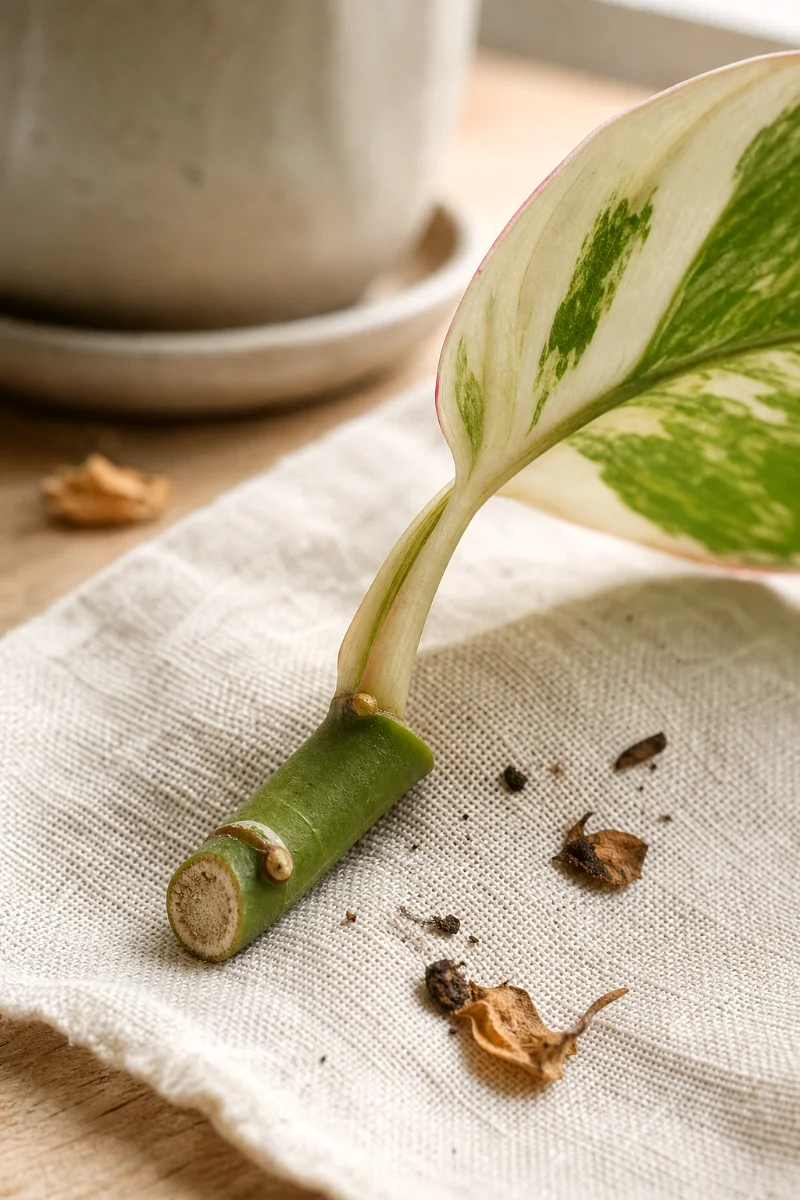
Step 1: Choose a Healthy Stem With a Node
Look for a stem with at least one node and one or two leaves. Two leaves are plenty. More leaves can drain moisture from the cutting before it has roots to keep up.
The best cutting has firm growth, no mushy spots, no pests, and a node you can clearly see. Aerial roots are a bonus, but they are not required.
Do not choose a fully white cutting if you can help it. It looks fancy, sure. But white tissue cannot photosynthesize well, so those cuttings often struggle. A cutting with green on the leaves has a better shot.
Step 2: Cut Below the Node
Using sharp, sterilized shears, cut the stem just below a node. Clean cut. No sawing.
Leave enough stem below the node so it can sit in water or moss without the leaf dipping into moisture. Wet leaves rot fast, and once rot starts, it can run through a cutting before you have time to blink.
Step 3: Let the Cutting Callus
Set the cutting somewhere dry and shaded for 12 to 24 hours. This lets the cut end dry slightly and form a callus.
Is this the most exciting step? Not even close.
But it helps lower the risk of rot, especially with chunky philodendron stems. I skip a lot of fussy plant advice. I do not skip this.
Method 1: Rooting White Princess Philodendron in Water
Water propagation is the easiest method for beginners because you can see what is happening. Roots feel less mysterious when they are right there in a jar.
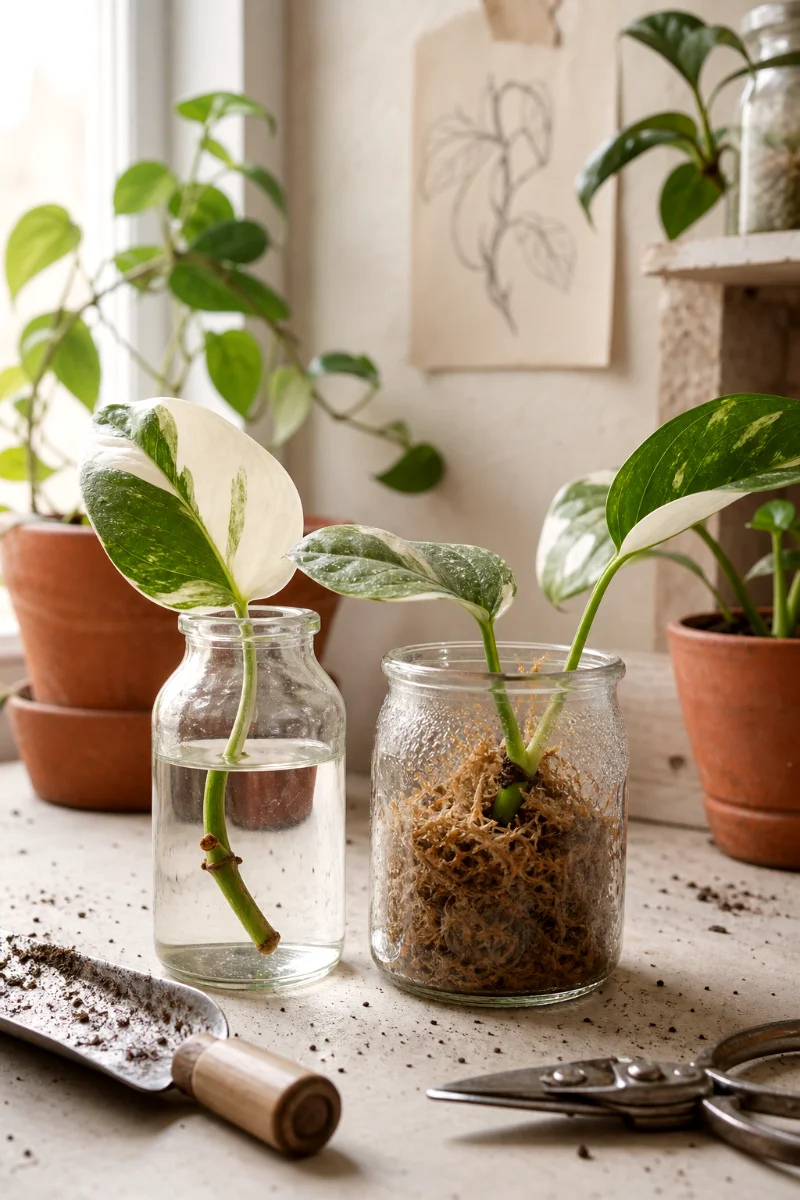
How to Set Up the Cutting
- Fill a clean glass jar with room-temperature water.
- Place the cutting in the jar so the node is submerged.
- Keep all leaves above the water line.
- Set the jar in bright, indirect light.
- Refresh the water weekly, or sooner if it turns cloudy.
Do not place the cutting in hot direct sun. That turns a cute propagation jar into a warm little rot bath. Bright shade near a window is much better.
What Healthy Water Roots Look Like
Healthy roots usually look white, cream, or light tan. They feel firm.
Rotten roots look brown or black and may feel slimy. Bad smell? That is your warning bell.
If you see rot, trim away the mush with sterilized shears, rinse the cutting, let it callus again, and restart in fresh water.
Method 2: Rooting White Princess Philodendron in Sphagnum Moss
Sphagnum moss is my favorite method when I want faster rooting and stronger transition into soil. It holds moisture while still allowing air around the node.
And roots love air. People forget that.
How to Root in Moss
- Soak sphagnum moss, then squeeze it until it feels damp, not dripping.
- Place the callused cutting so the node touches or sits lightly inside the moss.
- Keep the leaves above the moss.
- Place it in bright, indirect light.
- Keep humidity high with a loose clear cover if your air is dry.
Moss should feel like a wrung-out sponge. If water pools at the bottom, it is too wet.
Check every few days. Fluff the moss a little if it compacts. Packed wet moss can suffocate young roots, and then the cutting gets cranky.
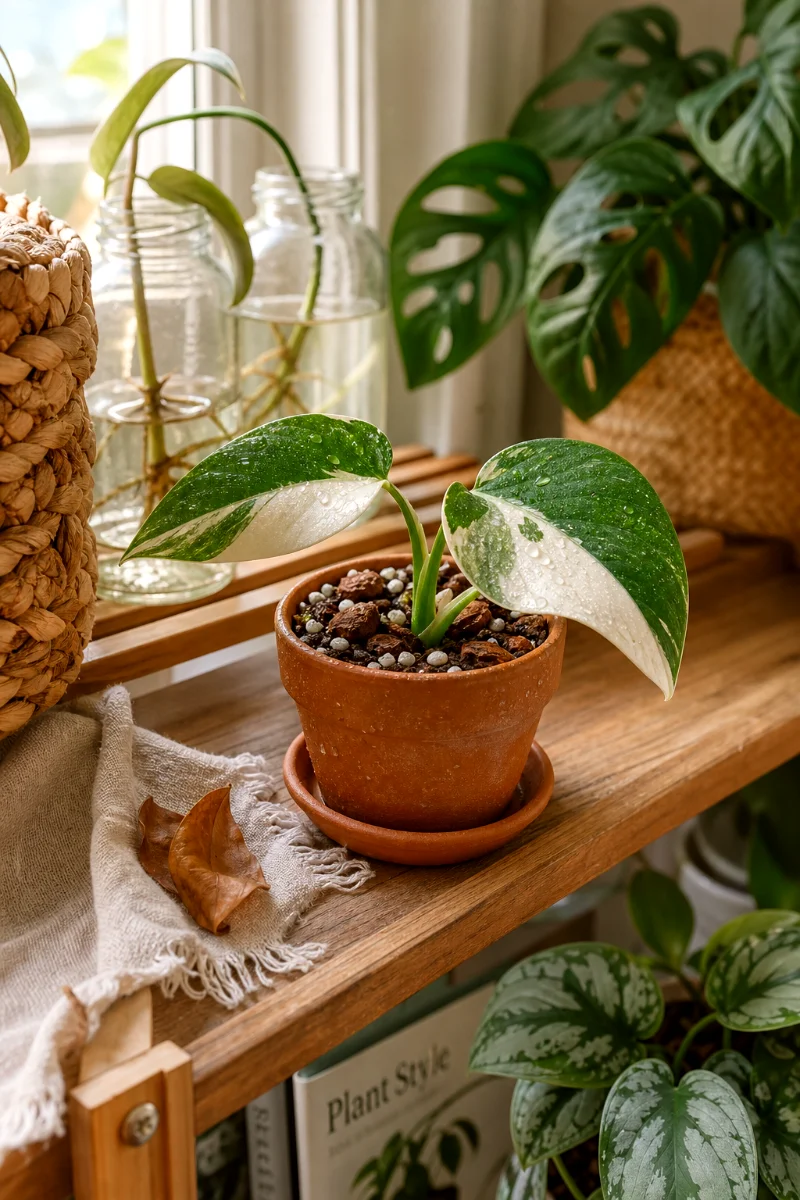
Water vs Moss: Which Method Should Beginners Choose?
If you are brand new, start with water. It teaches you what root growth looks like.
If you have already rooted a pothos or philodendron before, try moss. It often produces sturdy roots and less shock when you pot the cutting into an aroid mix.
- Choose water if you want visibility and simple upkeep.
- Choose moss if you want better airflow and a smoother move to soil.
- Avoid heavy wet soil for fresh unrooted cuttings unless you are very confident with moisture control.
When to Pot the Cutting
Wait until roots are about 2 to 3 inches long. That length gives the cutting enough root system to handle potting without panicking.
Do not wait forever, though. Water roots can get long and fragile. Then they snap when you pot them, and yes, that is as annoying as it sounds.
The Best Potting Mix for a Rooted Cutting
Use a chunky, well-draining aroid mix. White Princess Philodendron hates sitting in dense soggy soil.
A simple beginner mix looks like this:
- 2 parts good indoor potting soil
- 1 part orchid bark
- 1 part perlite
This blend holds some moisture but lets extra water move through. The bark creates air pockets. The perlite keeps the mix from turning into mud.
Use a small pot with drainage holes. Bigger is not better here. A huge pot stays wet too long around a tiny root system, which invites rot.
How to Pot Up the New White Princess
- Add a little aroid mix to the bottom of the pot.
- Hold the cutting gently in place.
- Fill around the roots with mix.
- Firm the mix lightly with your fingers.
- Water until a little drains from the bottom.
- Set the plant back in bright, indirect light.
For the first week, keep the mix lightly moist but not soaked. The cutting is adjusting from water or moss to potting mix, so baby it a bit.
After that, let the top inch or two dry before watering again. White Princess likes moisture, but it does not like wet feet.
Humidity Helps, But Do Not Overdo It
Higher humidity can speed up rooting because the cutting loses less water through its leaves. A clear cloche, a loose plastic bag, or a propagation box can help.
But fresh air still matters.
Open the cover daily for a few minutes. If you see heavy condensation all day or fuzzy mold on the moss, give it more airflow. Warm and humid is helpful. Stale and swampy is trouble.
Light for Propagation
Place your cutting in bright, indirect light. That usually means close to an east-facing window, a few feet back from a south or west window, or under a gentle grow light.
Too little light slows rooting. Too much direct sun burns leaves and heats the water or moss.
White variegation can scorch more easily than green tissue. If the white patches turn tan and crispy, move the cutting a bit farther from the window.
Common Problems and Quick Fixes
The Cutting Is Turning Yellow
One yellowing leaf is not always a disaster. The cutting may be using stored energy while it grows roots.
But if the stem feels soft, check for rot. A firm stem with one tired leaf can recover. A mushy stem needs surgery.
The Stem Is Mushy
Mushy stems mean rot. Cut back to firm healthy tissue with sterilized shears.
Let the cutting callus again for 12 to 24 hours. Then restart in clean water or fresh damp moss.
No Roots After Several Weeks
Be patient, but do not ignore the setup. Check light, temperature, and the node.
- Make sure the node is actually in water or touching damp moss.
- Move it to brighter indirect light.
- Keep it warm, ideally around normal comfortable room temperature.
- Refresh water weekly.
- Avoid letting moss dry bone dry.
Some cuttings root in two weeks. Others take six or more. Plants do not read calendars.
The Leaf Is Wilting
Wilting often means the cutting is losing moisture faster than it can replace it. Raise humidity, reduce leaf load if needed, and keep it out of hot sun.
If the cutting has two large leaves and no roots yet, you can trim one leaf in half. It is not pretty, but it lowers stress.
How to Keep Variegation on a New White Princess
Propagation copies the stem you cut, but variegation can still shift as the plant grows. That is normal.
Choose a cutting from a stem that already shows balanced color. You want green plus white, maybe a blush of pink. Avoid all-white stems and all-green stems if your goal is that classic White Princess look.
Once rooted, give the new plant enough light. Low light often pushes plants to produce greener leaves because green tissue works harder for food.
Aftercare for the First Month
The first month after potting matters. This is when many beginners overwater because they are excited. I get it. I have done it too.
- Keep the plant in bright, indirect light.
- Water when the top inch or two of mix starts to dry.
- Do not fertilize for the first few weeks.
- Keep humidity moderate to high if possible.
- Watch the stem base for softness.
- Avoid repotting again right away.
New growth is the best sign that your cutting has settled in. Not instant new growth. Real new growth, after it has had time to root into the mix.
FAQ
Can you propagate White Princess Philodendron from a leaf?
No. A leaf without a node will not grow into a new plant. It may stay alive for a while, but it cannot produce a new stem and root system.
How long does White Princess Philodendron take to root?
Many cuttings root in about 2 to 6 weeks, depending on warmth, light, humidity, and the health of the cutting. Spring and summer cuttings usually move faster.
Should I root White Princess in water or moss?
Both work. Water is easier for beginners because you can watch the roots. Moss offers great moisture and airflow, and it often helps roots adapt better to potting mix.
Do I need rooting hormone?
You do not need it. A healthy node, clean cut, good light, and steady moisture matter more. Rooting hormone can help, but it will not save a bad cutting.
When should I move the cutting to the soil?
Move it once the roots are roughly 2 to 3 inches long. Use a small pot and a chunky aroid mix with orchid bark and perlite.
Why is my cutting rotting?
Rot usually comes from dirty tools, too much moisture, low airflow, cold conditions, or leaves sitting in water. Trim back to firm tissue and restart clean.