How to Propagate Fiddle Leaf Fig: Easy Water and Soil Methods

Can you propagate a Fiddle Leaf Fig? Yes, you can propagate a fiddle leaf fig, and you don’t need a greenhouse, a botany degree, or fancy equipment.
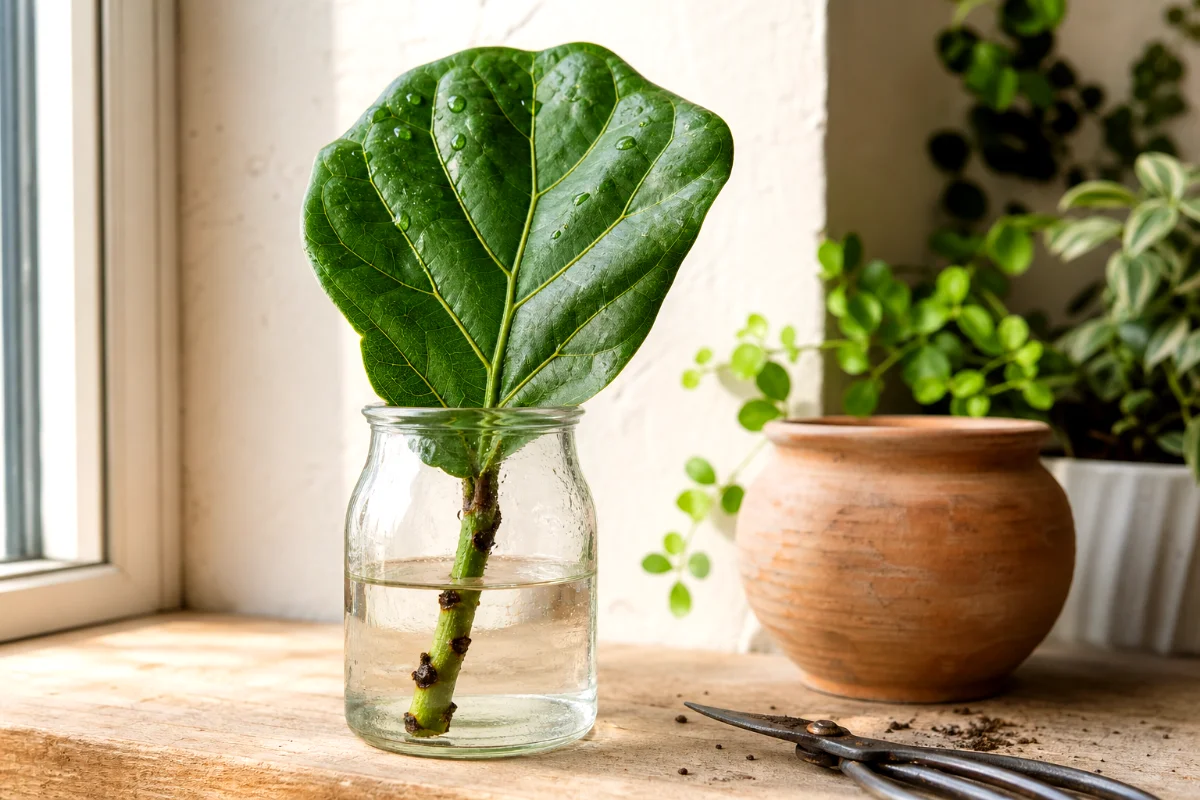
You need a healthy stem cutting, a few nodes, clean tools, bright indirect light, and patience. Lots of patience.
Fiddle leaf figs can be a little dramatic. No surprise there. But propagation works well when you respect three things: nodes, moisture, and light.
The Best Time to Propagate Fiddle Leaf Fig
Propagate your fiddle leaf fig in spring or summer, when the plant grows actively. Warmth and longer daylight help the cutting push out roots faster.
Can you try it in winter? Sure. But I wouldn’t pick that fight unless you have a warm room and strong grow light. Winter cuttings often sit there looking annoyed for weeks.
What You Need Before You Cut
- Sharp, sterilized pruning shears or scissors
- A healthy fiddle leaf fig stem
- A clear glass jar for water propagation
- Small pot with drainage for soil propagation
- Fresh, well-draining potting mix
- Rooting hormone, optional for soil propagation
- Paper towel or cloth for the white sap
- Clean water
Clean tools matter because fresh cuttings act like open doors. Dirty blades can invite rot and disease right into the stem.
Choose the Right Fiddle Leaf Fig Cutting
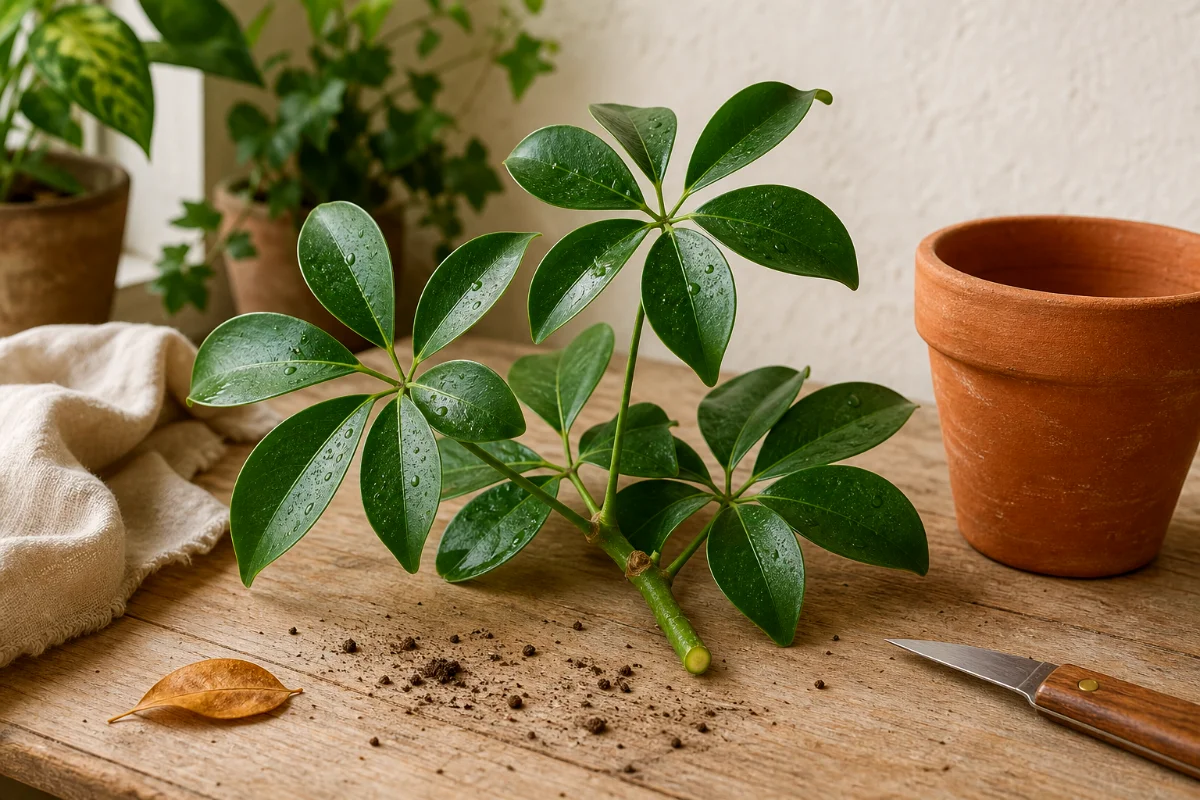
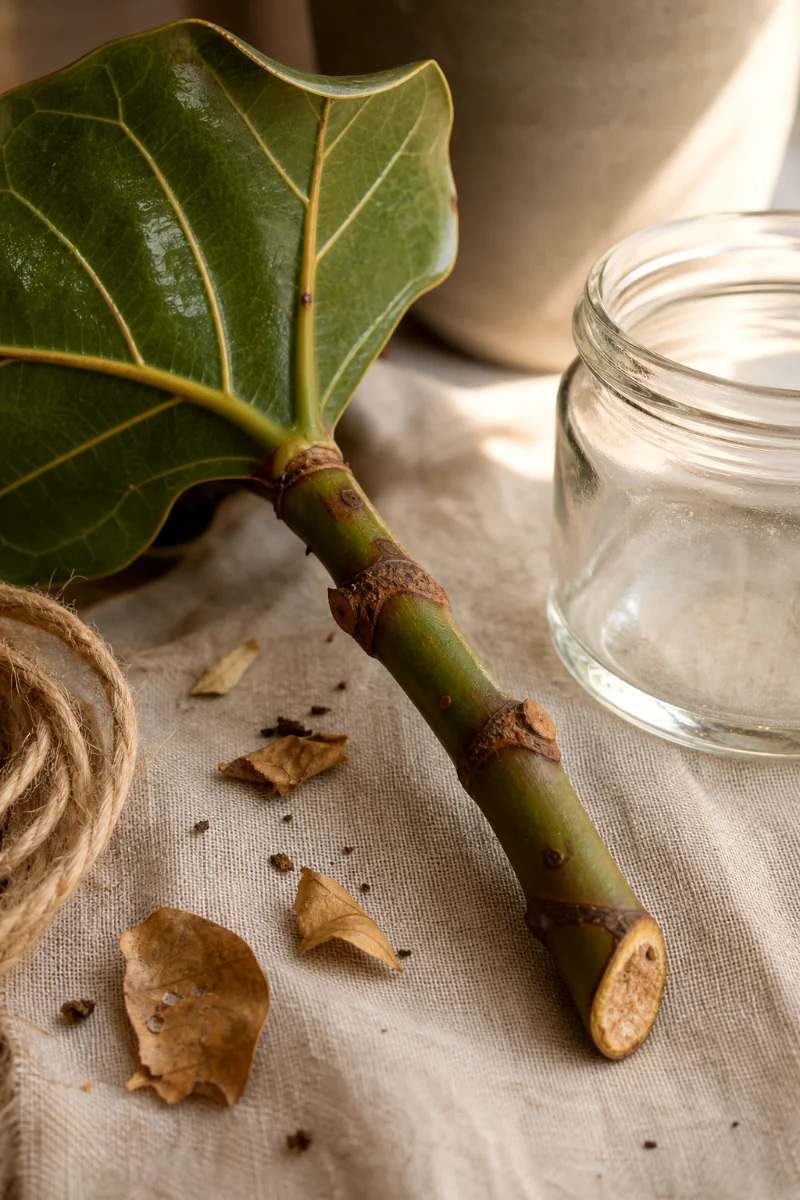
Take a 6 to 12 inch stem cutting with 3 to 4 nodes and at least one healthy leaf. A node is the small bump or ring on the stem where a leaf grows.
That little bump does the real work. Roots grow from nodes, not from a random bare stick. So don’t take a cutting with no nodes and hope for magic.
A good cutting should feel firm, not mushy. The leaf should look green and healthy, not yellow, limp, or spotted.
A Quick Note About Fiddle Leaf Fig Sap
When you cut the stem, it will bleed white, milky sap. That’s normal.
But don’t rub it into your skin or eyes. The latex can irritate skin, so wipe it away with a damp cloth and wash your hands after handling the cutting.
How to Take a Fiddle Leaf Fig Cutting
- Pick a healthy branch with 3 to 4 nodes.
- Sterilize your shears with rubbing alcohol.
- Cut the branch at an angle between two nodes.
- Remove the lower leaves, leaving only 1 to 2 leaves at the top.
- If the leaves are huge, cut each leaf in half across the blade to reduce water loss.
- Let the cut end sit in a dry, shaded spot for 1 to 2 days so it calluses.
That callus step feels fussy, but it helps. A fresh, wet cut can rot fast when you place it straight into water or damp soil.
And yes, cutting a leaf in half looks harsh. I get it. But those dinner-plate leaves lose moisture fast, and a cutting has no roots yet to replace that water.
Method 1: Water Propagation for Fiddle Leaf Fig
Water propagation is the most common method because you can watch the roots grow. Beginners love it for good reason. It takes away some guesswork.
Step 1: Place the Cutting in Water
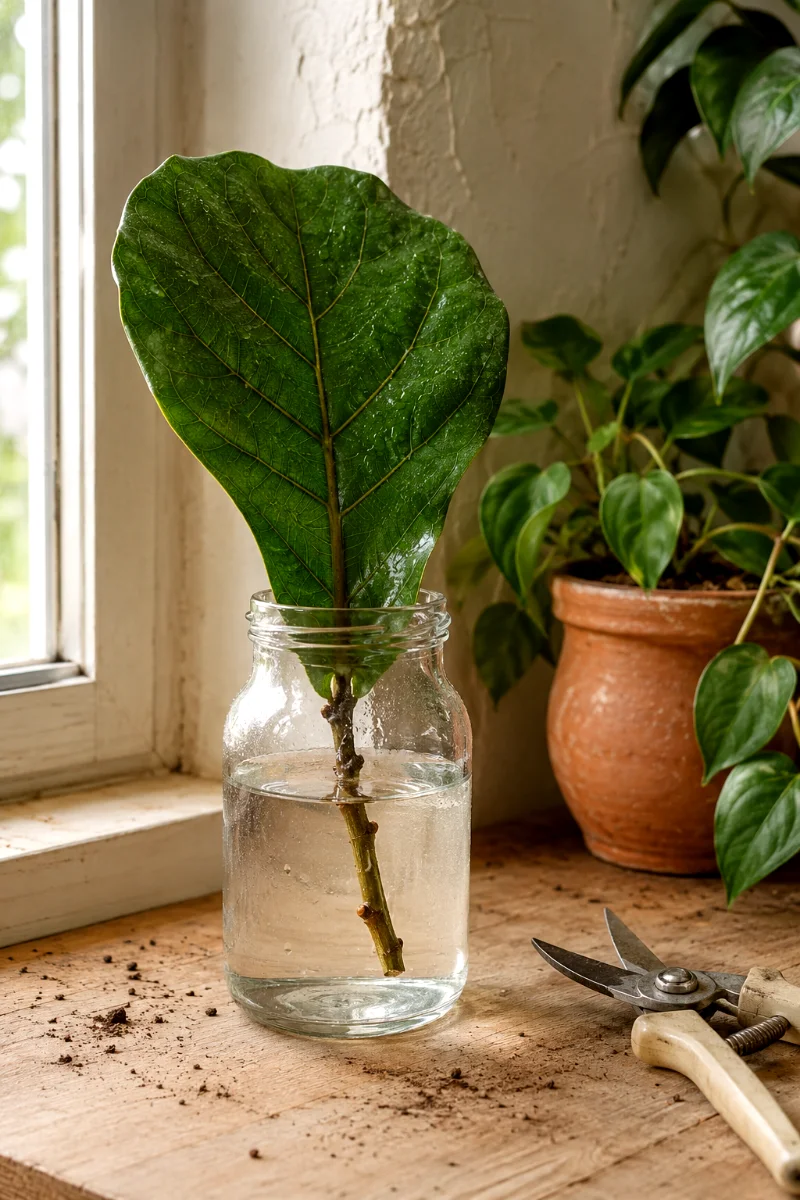
Set the callused stem cutting in a clean glass jar of water. Keep the nodes under water, but keep every leaf above the waterline.
Leaves sitting in water rot. Rotten leaves stink, cloud the water, and make the cutting far more likely to fail.
Step 2: Give It Bright, Indirect Light
Place the jar near a bright window, but keep it out of direct afternoon sun. Direct sun can scorch the leaf and heat the water too much.
A spot a few feet from an east-facing or south-facing window usually works well. If the room feels bright enough to read in without turning on a lamp, you’re probably in the right neighborhood.
Step 3: Change the Water Often
Change the water every 1 to 3 days. Fresh water keeps oxygen moving around the stem and helps prevent slimy buildup.
Don’t just top it off forever. Dump it, rinse the jar, and refill it with clean room-temperature water.
Step 4: Wait for Roots
Roots usually appear in 4 to 8 weeks. Some cuttings move faster. Some sit there like they’re thinking about it.
Look for firm, pale roots growing from the nodes. Once the roots reach about 2 inches long, you can pot the cutting.
Step 5: Pot the Rooted Cutting
Choose a small pot with drainage holes. Fill it with a well-draining mix, then plant the rooted cutting gently.
Don’t cram a tiny rooted cutting into a huge pot. Too much wet soil around young roots can cause rot. A snug pot helps the roots settle in.
Method 2: Soil Propagation for Fiddle Leaf Fig
Soil propagation feels less exciting because you can’t see the roots. But it can work beautifully, especially if you keep humidity steady.
This method also saves the cutting from adjusting from water roots to soil roots later. That said, beginners may find water propagation easier because it offers visible progress.
Step 1: Prepare the Cutting
Take the same kind of cutting: 6 to 12 inches long, with 3 to 4 nodes and at least one leaf.
Remove the lower leaves, keep 1 to 2 leaves at the top, and let the cut end callus for 1 to 2 days.
Step 2: Add Rooting Hormone
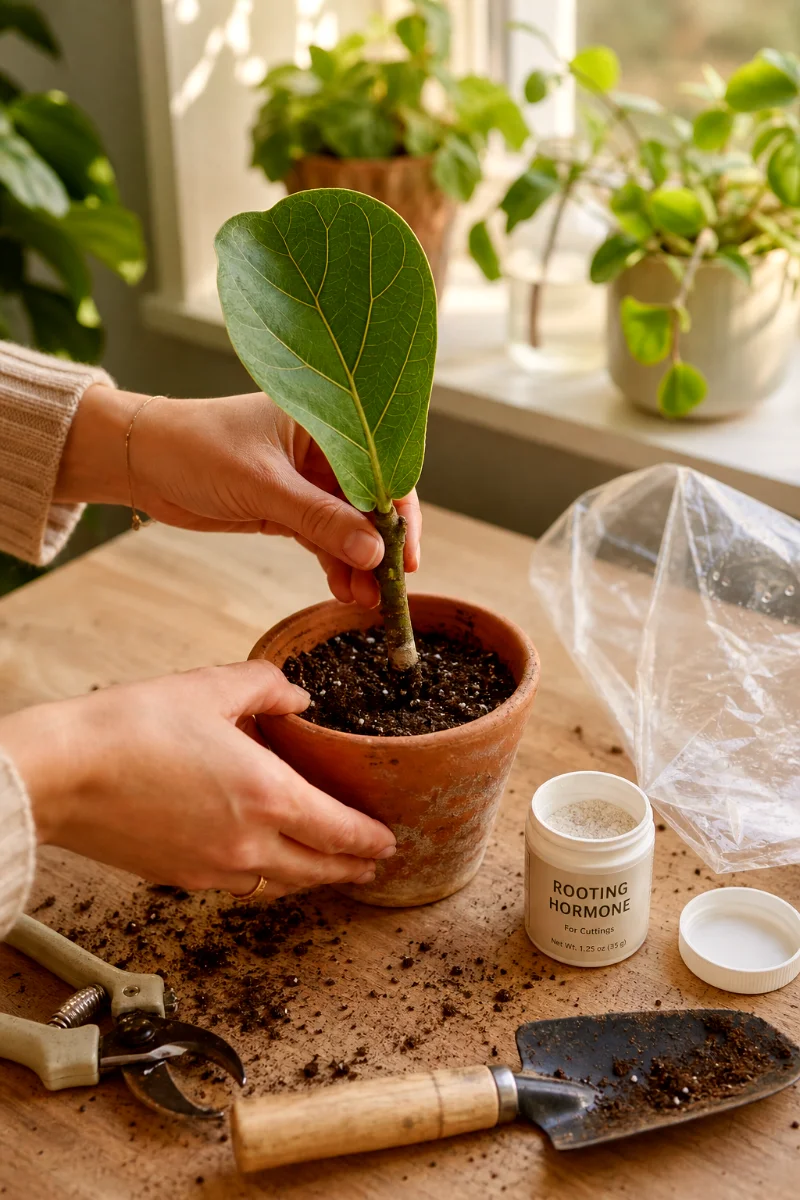
Dip the callused end into rooting hormone. Tap off the extra powder so it doesn’t clump around the stem.
Rooting hormone isn’t required, but it can help the cutting root faster and more evenly in soil.
Step 3: Plant in Moist Potting Mix
Use a small pot with drainage and a moist, well-draining potting mix. Plant the cutting deep enough that at least one node sits below the soil surface.
Firm the mix gently around the stem. Don’t pack it like concrete. Roots need air as much as they need moisture.
Step 4: Add Humidity
Cover the cutting loosely with a clear plastic bag or plastic wrap to hold humidity around the leaf.
But give it air. Remove the cover every few days for a short while to prevent mold. If you see heavy condensation all day long, open it more often.
Step 5: Keep the Soil Moist, Not Soggy
Keep the soil consistently moist while roots form. Moist means slightly damp, not swampy.
You may feel gentle resistance after about 3 to 4 weeks if roots have started forming. Don’t yank the cutting. A light tug tells you enough.
Water vs Soil Propagation: Which Method Should You Use?
If you’re brand new, choose water propagation. Watching roots grow builds confidence, and you’ll catch problems early.
If you’ve propagated houseplants before and you don’t mind waiting without peeking, soil propagation works well too.
- Choose water if you want visible roots and a beginner-friendly setup.
- Choose soil if you want the cutting to root directly in its growing medium.
- Avoid both if the parent plant looks sick, stressed, or pest-ridden.
Here’s my honest gardener opinion: start with water for your first fiddle leaf fig cutting. Once you get one success under your belt, try soil.
How Much Light Does a Fiddle Leaf Fig Cutting Need?
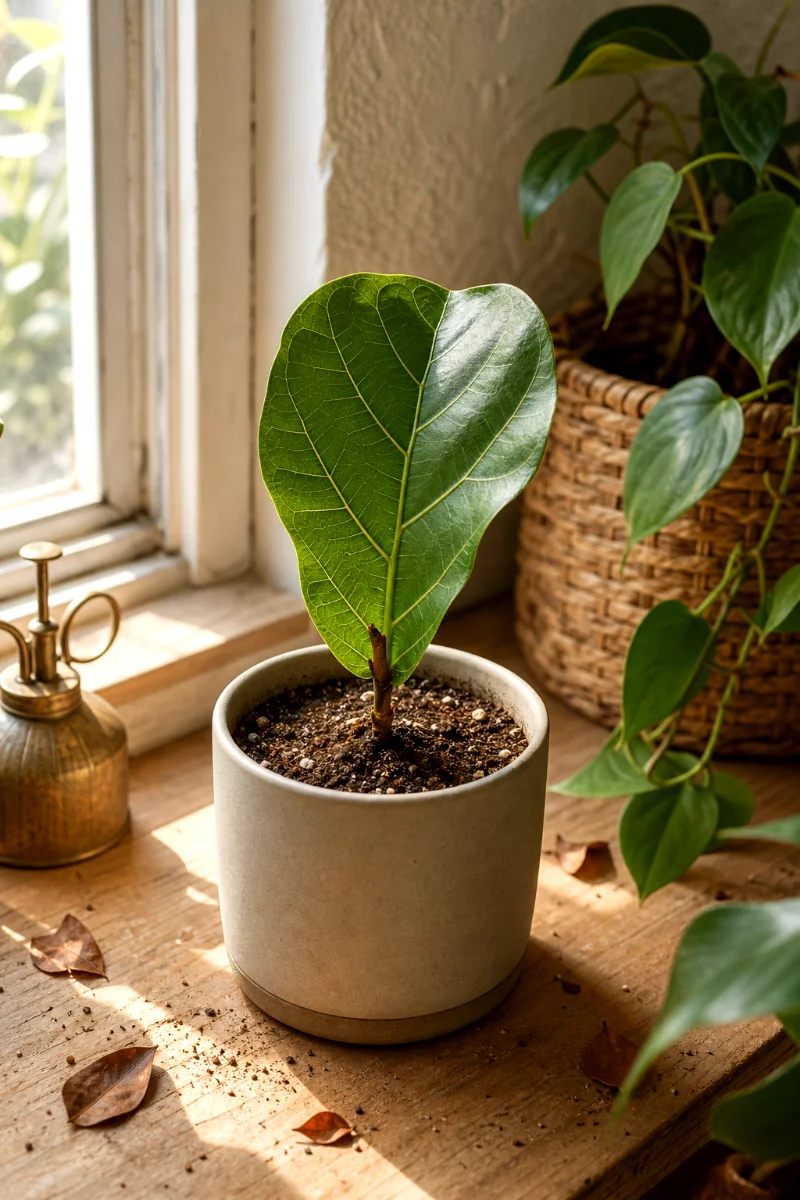
A fiddle leaf fig cutting needs bright, indirect light. This is the sweet spot.
Too little light slows rooting. Too much direct sun cooks the leaf and stresses the stem.
If the cutting leans toward the window, rotate the jar or pot every few days. If the leaf looks bleached, crispy, or scorched, move it back from the glass.
Common Fiddle Leaf Fig Propagation Mistakes
Taking a Cutting With No Node
A single fiddle leaf fig leaf in water may stay green for a long time. It may even grow tiny roots.
But it won’t grow into a new plant without a node. You need a piece of stem.
Skipping the Callus Step
Fresh cuts rot more easily. Letting the cut end dry for 1 to 2 days gives it a better chance.
It looks like nothing is happening. That’s fine. Plant care often rewards the person who can leave things alone.
Letting Leaves Sit in Water
Submerged leaves break down fast. Strip the lower leaves before placing the cutting in the jar.
If one slips under the waterline, remove it right away.
Using a Huge Pot Too Soon
Big pots hold more moisture than small root systems can use. That wet soil can sour and rot new roots.
Start small. Move up one pot size later, once the plant grows actively.
Putting the Cutting in Hot Direct Sun
Cuttings don’t have roots to keep up with water loss. Direct sun can push them past their limit.
Give bright light, not a sunburn.
How to Care for the New Fiddle Leaf Fig After Potting
After potting a water-rooted cutting, keep the soil lightly moist for the first couple of weeks. The roots need time to adjust.
Then let the top inch of soil dry before watering again. Fiddle leaf figs hate sitting in soggy soil.
- Keep it in bright, indirect light.
- Use a pot with drainage holes.
- Avoid fertilizer until you see new growth.
- Rotate the pot weekly for even growth.
- Keep it away from cold drafts and heater vents.
New growth tells you the roots have started doing their job. That’s your green light to begin normal care, slowly.
Why Your Cutting Is Not Rooting
First, don’t panic after two weeks. Fiddle leaf figs often take their sweet time.
If you still see no roots after 8 weeks, check the basics. Did the cutting have nodes? Did you change the water? Did it sit in low light? Did the stem turn soft?
A firm green stem can still root. A black, mushy stem usually won’t.
FAQ
Can I propagate a fiddle leaf fig from a single leaf?
A single leaf may grow roots, but it won’t become a full fiddle leaf fig plant unless it has a node attached. Take a stem cutting instead.
How long does fiddle leaf fig propagation take?
Most fiddle leaf fig cuttings root in 4 to 8 weeks. Soil cuttings may show light resistance around 3 to 4 weeks, but stronger roots take longer.
Should I use rooting hormone?
Use rooting hormone for soil propagation if you have it. You don’t need it for water propagation, though some gardeners still like to dab a tiny amount on the callused end.
Why did my fiddle leaf fig cutting turn mushy?
Mushy stems usually mean rot. The cutting may have skipped the callus step, sat in dirty water, or stayed too wet in soil.
When should I move a water cutting into soil?
Move it when the roots reach about 2 inches long. Handle the roots gently because young roots snap easily.
Can I propagate fiddle leaf fig in winter?
You can, but spring and summer give better results. Winter cuttings root slowly because light and warmth drop.