How to Propagate Amaryllis From Seed: Only for Patient Gardeners

Propagating amaryllis from seed is not the fastest way to get flowers. Not even close.
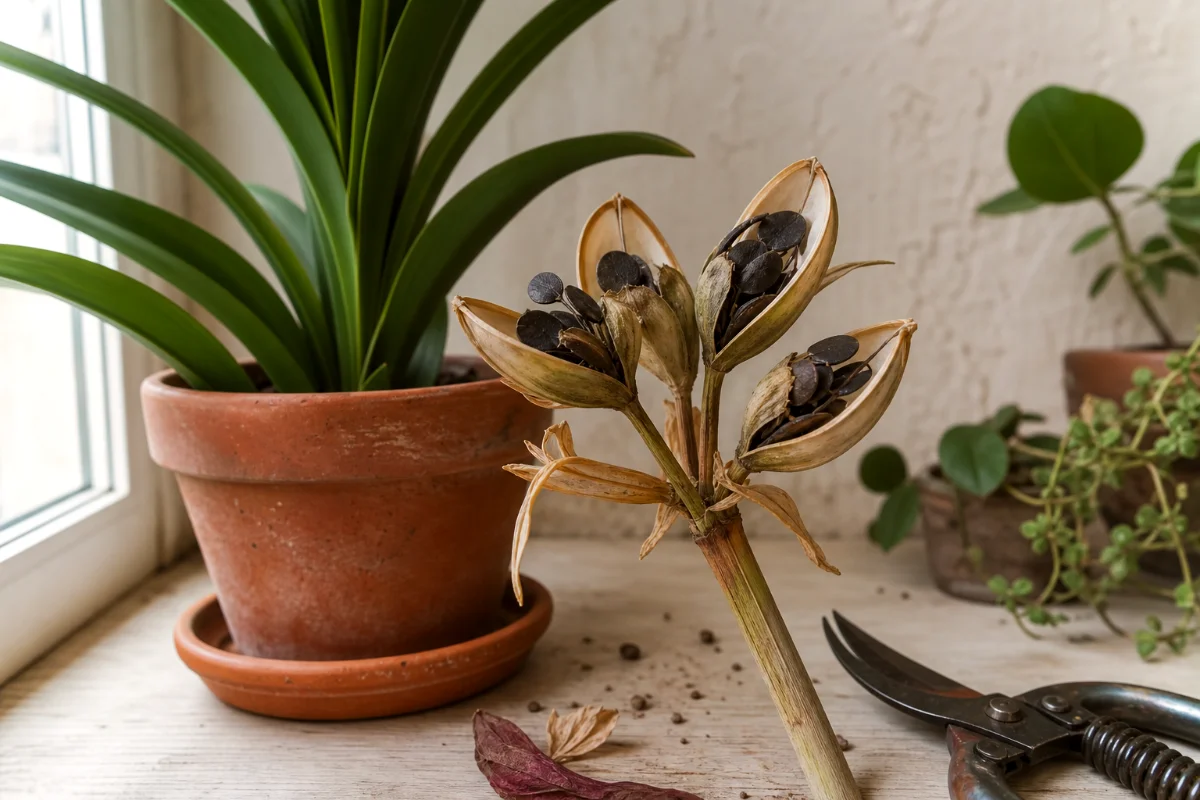
But it is one of the most satisfying ways to grow them. You start with flat, papery black seeds from a dried pod, sow them in a clean seed mix, and raise tiny grass-like seedlings until they form bulbs big enough to bloom.
Fair warning. This is a 3 to 5 year project. If you want flowers next month, buy a bulb. If you want to grow something from scratch and feel ridiculously proud when it finally blooms, seed is your route.
What Amaryllis Seeds Look Like
Amaryllis seeds look a bit like little black flakes of paper. They are flat, thin, and light enough to flutter away if you sneeze near them.
Fresh seeds usually come from a swollen green seed pod that forms after the flower fades. As the pod ripens, it turns yellow or tan and starts to split open. That is your cue.
And yes, seed-grown amaryllis may surprise you. If your plant is a hybrid, the seedlings may not look exactly like the parent. The flower color, shape, size, or markings can vary. I think that is half the fun.
Before You Start: A Quick Reality Check
Here is what beginners should know before they set up the seed tray.
- Fresh seed works best. Amaryllis seed loses strength quickly after harvest.
- Warmth matters. Aim for 70 to 75°F, or 21 to 24°C.
- Moist does not mean soggy. Wet mix invites rot and fungus.
- Seedlings look like grass at first. Do not expect baby bulbs right away.
- Flowers take years. Most seed-grown amaryllis need 3 to 5 years before blooming.
Patience is not optional here. But the actual work is easy.
Step 1: Let the Seed Pod Mature on the Plant
After an amaryllis flower fades, do not cut the flower stalk right away if you want seeds. Let the pod form where the bloom was.
The pod starts green and plump. Over the next several weeks, it slowly swells, then turns yellowish and begins to crack open at the seams.
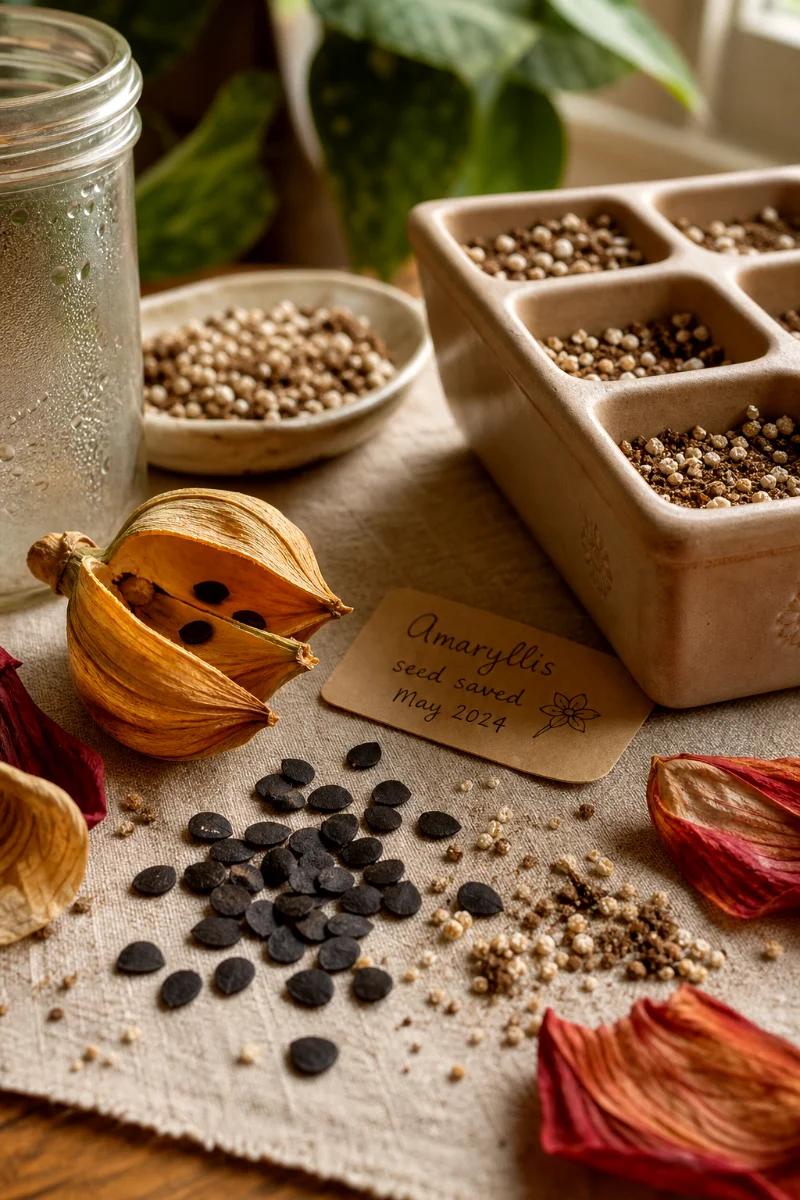
When to harvest the seed pod
Harvest when the pod starts to split but before the seeds spill everywhere. I like to check ripening pods every day once they turn pale.
If you wait too long, the seeds can scatter onto the windowsill, into the pot, or behind the plant stand. Ask me how I know.
What if your plant never makes a pod?
Sometimes amaryllis flowers fade with no seed pod at all. That usually means pollination did not happen.
Next time, try hand-pollinating. Use a small paintbrush or cotton swab to move yellow pollen from one flower to the little sticky tip in the center of another flower. It takes ten seconds, and it greatly improves your odds.
Step 2: Collect and Dry the Papery Black Seeds
Open the ripe pod gently over a plate or clean sheet of paper. Inside, you should find flat, black, papery seeds stacked loosely inside the chambers.
Spread the seeds in a single layer and let them air dry for a day or two. Do not bake them. Do not place them in harsh direct sun. Just let normal room air do the job.
Then plant them soon. Fresh is best with amaryllis seed.
Step 3: Choose the Right Seed-Starting Mix
Use a sterile seed-starting mix or fine vermiculite. This matters more than beginners think.
Garden soil often carries fungal spores, fungus gnat larvae, weed seeds, and random bits of trouble. Tiny amaryllis seedlings do not have much strength at first, so a clean mix gives them a safer start.
My preferred mix
For amaryllis seeds, I like a light, airy mix that holds moisture without turning into mud.
- Sterile seed-starting mix
- Fine vermiculite
- A small amount of perlite if the mix feels heavy
Skip rich compost for this stage. Baby seedlings need moisture, air, and cleanliness more than a feast.
Step 4: Sow the Seeds Lightly
Fill a shallow tray or small pot with damp seed mix. Press the surface flat with your fingers so the seeds make good contact.
Lay the amaryllis seeds on top of the mix. Space them about an inch apart if you have room, though they can grow fairly close together during their first year.
Cover them lightly with about 1/4 inch of seed mix or vermiculite. Do not bury them deeply. These seeds sprout best when they sit near the surface where warmth and air can reach them.
Should you soak amaryllis seeds first?
You can, but you do not have to. Fresh amaryllis seeds usually germinate well when sown right away in moist mix.
If the seeds seem dry, you can soak them in room-temperature water for a few hours before planting. I would not leave them floating for days unless you enjoy growing mold as a side hobby.
Step 5: Keep the Tray Warm and Evenly Moist
Place the tray in a warm spot around 70 to 75°F. A seedling heat mat helps if your house runs cool, especially in winter.
Keep the mix consistently moist, not soggy. That phrase gets tossed around a lot, so here is what it means in real life: the mix should feel like a wrung-out sponge, not a swamp.
Covering the tray with a clear lid or loose plastic can help hold humidity. But open it daily for a little fresh air. Stale, damp air encourages fungus.
Best light before germination
Keep the seeds in bright, indirect light while you wait. A windowsill with strong filtered light works well.
Avoid hot direct sun through glass. It can cook a covered tray faster than you think.
Step 6: Watch for Grass-Like Sprouts
Amaryllis seeds usually sprout in 2 to 8 weeks. Many fresh batches show life in 2 to 6 weeks, but slower seeds can take longer.
The first shoots look like skinny green blades of grass. Tiny. Plain. Easy to miss.
Do not tug on them to check progress. Seedlings hate that. If you see green, they are working.
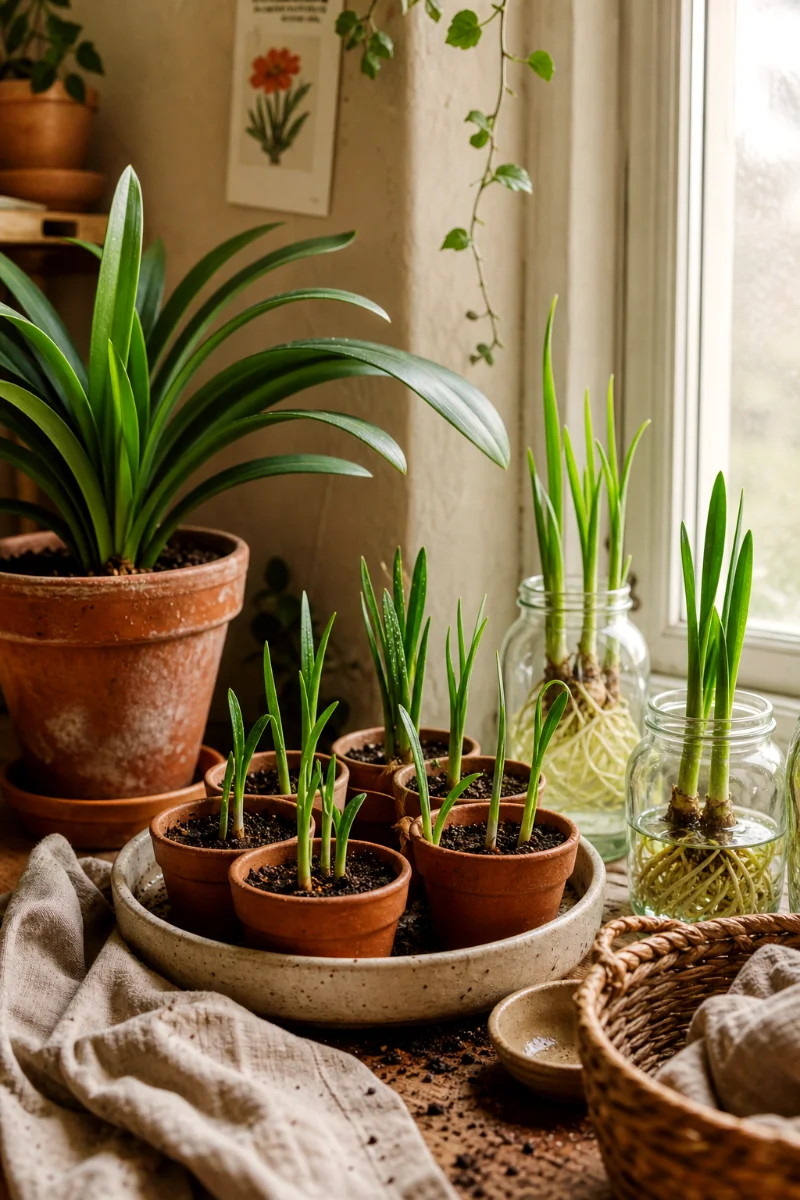
Step 7: Give Seedlings More Light After They Sprout
Once sprouts appear, move the seedlings into brighter light. A sunny window can work if it is not scorching, but grow lights give steadier results.
Weak light makes seedlings stretch, flop, and sulk. Strong but gentle light helps them build leaves, roots, and eventually small bulbs at the base.
How long should grow lights stay on?
If you use grow lights, run them for about 12 to 14 hours a day. Keep the lights close enough to be useful, but not so close that they heat or bleach the leaves.
Your seedlings should look upright and green. If they lean hard toward the light, rotate the tray or move the light closer.
Step 8: Water Seedlings Like a Careful Gardener, Not a Nervous One
Young amaryllis seedlings need regular moisture. They should not dry into dust.
But overwatering causes more problems than underwatering at this stage. Soggy mix can rot the young roots and invite damping off, which is the heartbreaking seedling collapse that every gardener meets sooner or later.
Water when the surface starts to feel slightly dry. Use a gentle stream, a spray bottle, or bottom watering so you do not knock the tiny seedlings flat.
Step 9: Start Feeding Once They Are Growing Well
When seedlings have settled in and are making steady green growth, feed them monthly with a diluted balanced fertilizer.
Use half strength or weaker. Seedlings are small, and strong fertilizer can burn tender roots.
I prefer light, regular feeding over heavy feeding. Amaryllis seedlings need time to build bulbs, not a chemical shove.
Step 10: Transplant When Seedlings Have Two Leaves
Once each seedling has two leaves, you can move it into its own small pot. You do not need to rush.
Amaryllis seedlings tolerate close quarters during the first year, and sometimes they grow better in a little community tray because the moisture stays more even.
How to pot them up
- Water the tray a few hours before transplanting so the roots slide out more easily.
- Lift seedlings gently with a spoon, plant label, or small dibber.
- Hold the seedling by a leaf, not the tiny bulb or roots.
- Plant it at the same depth it was growing before.
- Water lightly and keep it in bright, indirect light for a few days.
Use small pots. A huge pot stays wet too long around a tiny root system.
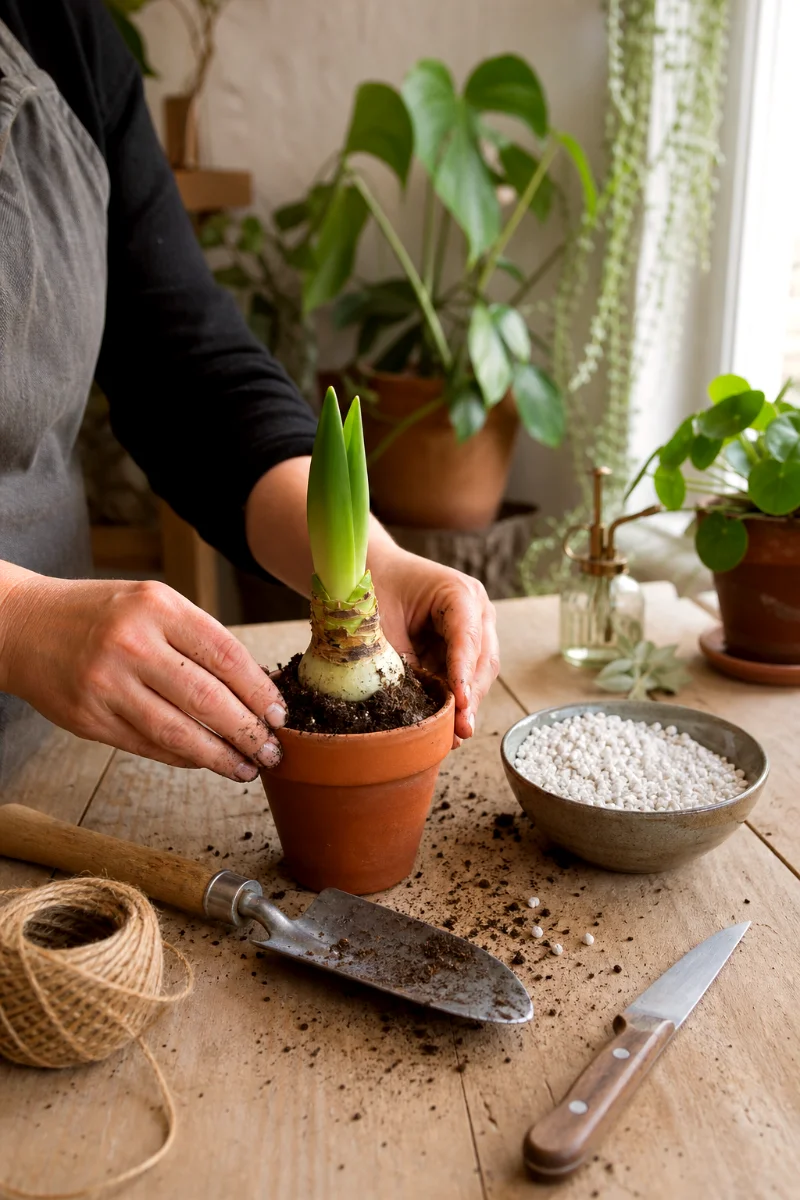
Year One Care: Build Leaves, Then Build Bulbs
In the first year, your main goal is not flowers. It is foliage.
Every green leaf feeds the young bulb. The more steady, healthy growth you get, the faster the bulb sizes up.
- Keep seedlings warm during active growth.
- Give them bright light or grow lights.
- Water when the mix begins to dry at the surface.
- Feed monthly with diluted balanced fertilizer.
- Do not force a dry dormancy in their first year.
That last point matters. Mature amaryllis bulbs often get a rest period, but baby bulbs need time to grow. Let them keep their leaves as long as they want to keep growing.
How Long Until Seed-Grown Amaryllis Bloom?
Most seed-grown amaryllis bloom in 3 to 5 years. Some bloom a little sooner if they get excellent light, warmth, and steady care. Some take longer because plants enjoy keeping us humble.
The bulb needs enough size and stored energy to push a flower stalk. Until then, your job is simple: grow leaves, grow roots, grow the bulb.
When the bulb reaches a good size, usually several inches across, you can treat it more like an adult amaryllis and give it a seasonal rest before bloom time.
Common Mistakes When Propagating Amaryllis From Seed
Using old seed
Old amaryllis seed often germinates poorly. Plant seeds as soon as possible after harvest.
Planting too deep
These seeds do not need a deep grave. A light 1/4 inch covering is enough.
Keeping the mix too wet
Moisture helps seeds sprout. Soggy soil kills seedlings. There is a big difference.
Not giving enough light after germination
Seedlings need bright light once they emerge. A dim corner will not cut it.
Expecting identical flowers
Seeds from hybrid amaryllis can produce all sorts of flower variations. If you want an exact copy of the parent, offsets are the better method.
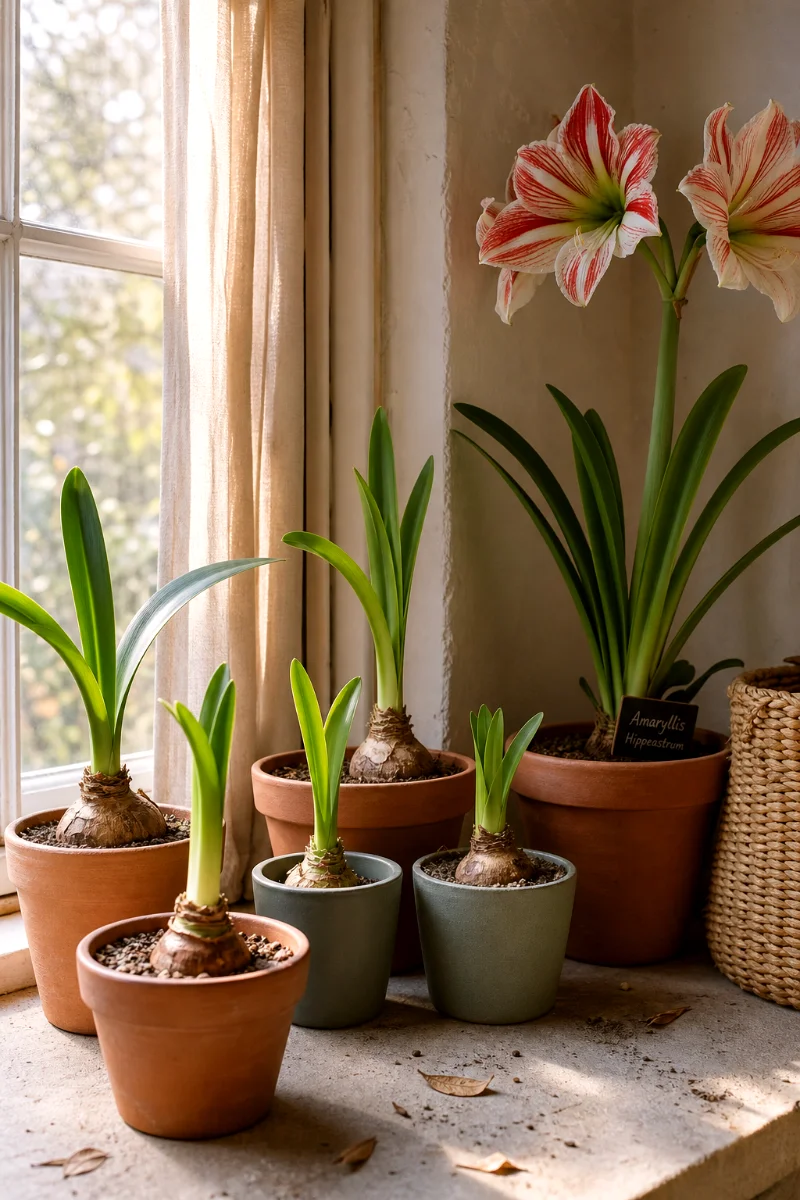
Do Seed-Grown Amaryllis Need Dormancy?
Not at first. Young seedlings should keep growing as long as they have leaves, warmth, water, and light.
Once the bulbs mature, you can use a rest period to encourage blooming. But for the first couple of years, I let seedlings grow without forcing them to sleep.
FAQ
Can you grow amaryllis from the seeds in the pod?
Yes. Let the pod ripen until it turns yellow and begins to crack open, then collect the flat black seeds inside. Dry them for a day or two and plant them soon.
How long do amaryllis seeds take to germinate?
Most amaryllis seeds sprout in 2 to 8 weeks. Fresh seed in warm, moist conditions often sprouts in 2 to 6 weeks.
What temperature do amaryllis seeds need?
Aim for 70 to 75°F, or 21 to 24°C. Warmth helps the seeds wake up and grow steadily.
Do amaryllis seeds need light to germinate?
Keep them in bright, indirect light. Cover the seeds lightly with about 1/4 inch of mix or vermiculite, then increase the light once they sprout.
When should I transplant amaryllis seedlings?
Transplant seedlings when they have two leaves, or let them grow close together through the first year if they look healthy and uncrowded enough.
Will seed-grown amaryllis look like the parent plant?
Not always. Hybrid amaryllis seedlings can bloom in different colors or forms than the parent plant.
How long until amaryllis grown from seed flowers?
Expect 3 to 5 years. Good light, steady watering, and monthly diluted feeding can help the bulbs reach flowering size sooner.