How to Propagate Lucky Bamboo the Right Way

Lucky bamboo looks fancy, but it propagates like a champ if you give it clean water, bright shade, and a tidy cut.
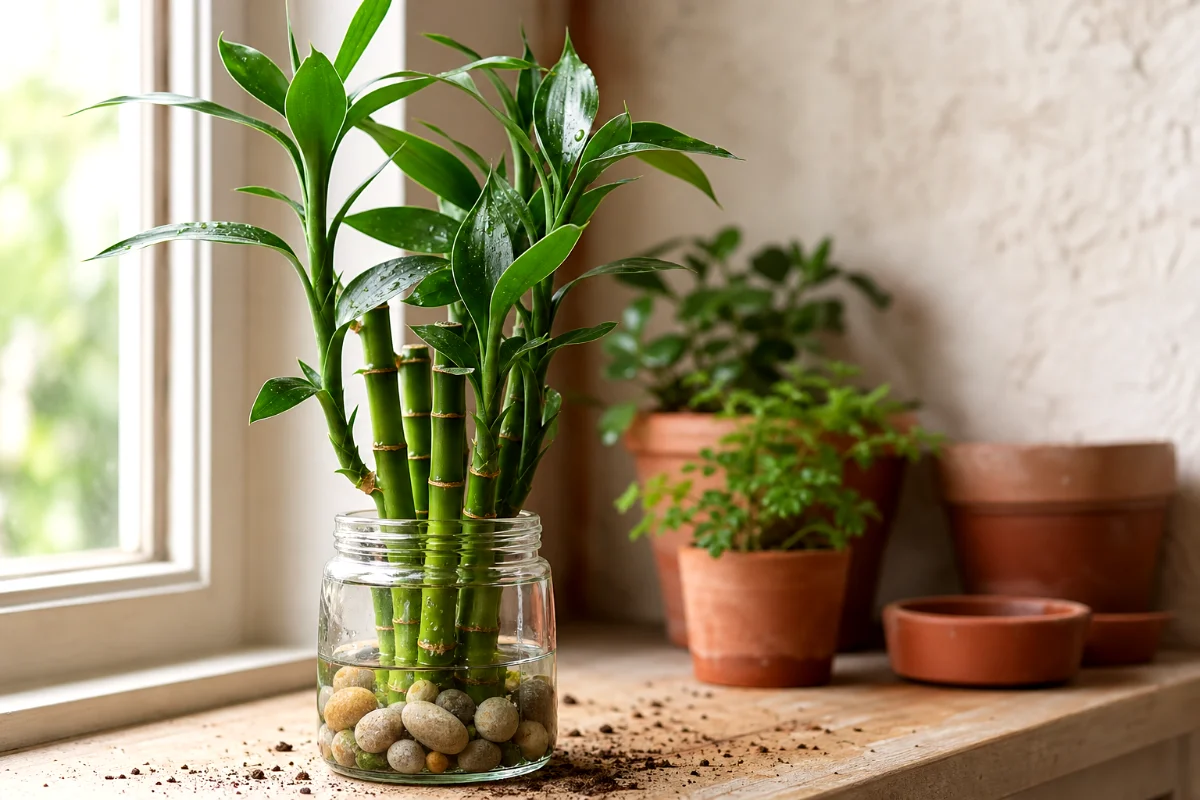
First thing, though. Lucky bamboo isn’t true bamboo. It’s Dracaena sanderiana, a tropical houseplant that roots well from cuttings, especially from healthy side shoots. Good news for beginners. This is one of the friendlier plants to practice on.
The simplest method is this: take a 4 to 6 inch cutting from a healthy offshoot, remove the lower leaves, and place the bare stem in water or moist potting mix. Roots usually show up in 2 to 4 weeks.
What You Need Before You Cut
Don’t grab the kitchen scissors from the junk drawer. I know it’s tempting. Dirty blades can push bacteria into the cut, and lucky bamboo does not appreciate that kind of nonsense.
- Sharp, clean pruning shears or scissors
- Rubbing alcohol for sanitizing blades
- A clear glass jar, vase, or small bottle
- Distilled, bottled, filtered, or rainwater
- Small pebbles or gravel to hold the cutting upright
- Moist, well-draining potting mix if rooting in soil
- Paraffin wax for sealing the parent stalk
Clear glass helps you watch the roots, but it also lets in light, which can grow algae. So enjoy the root show, but keep up with water changes.
Best Time to Propagate Lucky Bamboo
Propagate lucky bamboo when the plant looks strong, green, and actively growing. Spring and summer usually give you the fastest results, but indoor plants can root in any season if your home stays warm.
A weak, yellowing, or mushy plant needs care first. Cuttings borrow energy from the parent plant, so start with a plant that has something to give.
Step-by-Step Lucky Bamboo Propagation
1. Select a Healthy Shoot
Look for a dark green offshoot growing from the main stalk. Choose one that’s at least 4 inches long. Bigger isn’t always better, but tiny shoots dry out and sulk more easily.
The shoot should feel firm, not soft. Leaves should look green, not bleached, brown-tipped, or curled from stress.
2. Sanitize Your Shears
Wipe your shears with rubbing alcohol before you cut. Do it even if they look clean.
Plant cuts are open doors. Clean tools help keep rot, bacteria, and fungal problems from walking right in.
3. Make the Cut Close to the Parent Stalk
Cut the offshoot as close to the main parent stalk as you can without gouging the stalk. Aim for a clean, smooth cut.
No sawing. No crushing. One confident snip works best.
4. Remove the Lower Leaves
Trim off the lower leaves so you expose a section of bare stem. Leave a few leaves at the top.
This matters because submerged leaves rot fast. Rot clouds the water, feeds bacteria, and can ruin a perfectly good cutting before roots ever have a chance.
5. Root the Cutting in Water
Water propagation is the method I recommend for most beginners. It’s forgiving, easy to monitor, and honestly, it’s fun to watch the roots appear.
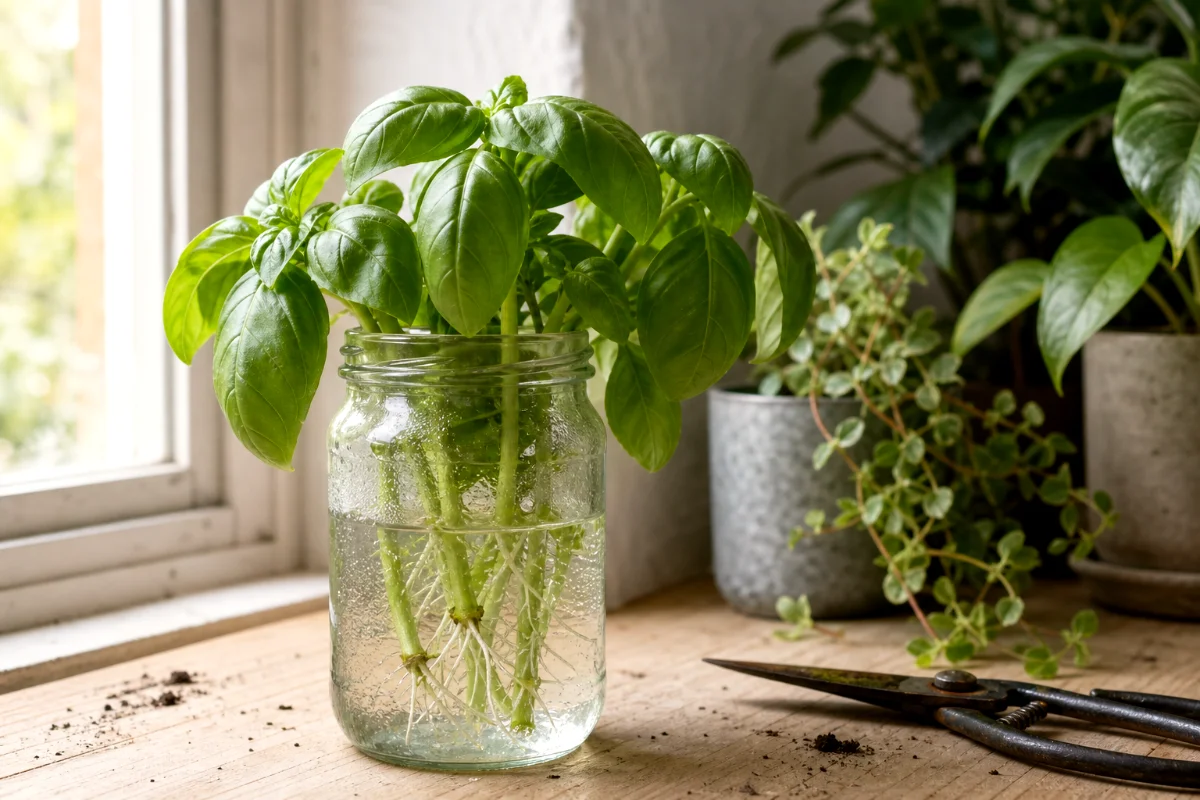
Place the cutting in a jar with distilled, bottled, filtered, or rainwater. Make sure the bottom node sits below the waterline. Add pebbles or gravel around the stem to keep it standing straight.
Keep the leaves above the water. Always.
6. Change the Water Weekly
Change the water once a week. If it turns cloudy, smells sour, or grows green film, change it sooner.
Fresh water keeps algae and bacteria down. It also gives the cutting a cleaner place to form roots. I’ve seen many lucky bamboo cuttings fail from stale water, not from bad cutting technique.
7. Keep It in Bright, Indirect Light
Place the jar in bright, indirect light. A bright room near a window works beautifully, as long as harsh sun doesn’t hit the leaves.
Direct sun can scorch lucky bamboo. The leaves may turn pale, crispy, or yellow along the edges. Think bright shade, not sunbathing.
Rooting Lucky Bamboo in Soil
You can also root lucky bamboo directly in soil. It works, but beginners sometimes find it less satisfying because you can’t see root growth happening.
Use a small pot with drainage and a moist, well-draining potting mix. Push the bare lower stem into the mix so at least one node sits below the soil surface.
Keep the soil lightly moist, not soggy. Wet soil without enough air can rot the cutting. And once rot starts, it’s a headache.
Water vs Soil: Which Method Should You Pick?
Pick water propagation if this is your first try. You can see the roots, spot problems early, and adjust quickly.
Pick soil propagation if you already know your watering habits and want the cutting to adapt to soil from day one. Soil-grown roots are usually sturdier, but the process gives you less visual feedback.
How Long Lucky Bamboo Takes to Root
Most healthy lucky bamboo cuttings root in 2 to 4 weeks. Sometimes you get little white bumps first. Those are root initials, and they’re a good sign.
Cool rooms slow things down. Stale water slows things down. A cutting taken from a tired plant may take longer, too.
Be patient. But don’t ignore it. Check the stem base every few days for mushiness or bad smells.
The Water Really Does Matter
Tap water can cause trouble for lucky bamboo, especially if your local water contains chlorine, fluoride, or lots of minerals. Some plants tolerate it. Lucky bamboo often throws a fit.
Use one of these instead:
- Distilled water
- Bottled spring water
- Filtered water
- Rainwater collected in a clean container
If you must use tap water, let it sit out overnight. That can help some chlorine evaporate, but it won’t remove fluoride. So if your leaf tips keep browning, suspect the water first.
Seal the Parent Plant After Cutting
After you remove the offshoot, seal the cut area on the parent stalk with a little paraffin wax. Use just enough to cover the wound.
This helps keep moisture loss and disease problems down. It also gives the parent plant a cleaner recovery. Think of it like putting a tidy cap on the cut.
Can You Propagate the Main Lucky Bamboo Stalk?
Yes, you can propagate the main stalk, but I don’t suggest it as your first move unless the plant is leggy or damaged.
Cut a section of main stalk with at least one node. Place it in water with the node submerged. It can sprout new growth, but it usually takes longer than a branch cutting.
Main stalk cuttings need patience. They may sit there looking like nothing is happening for weeks. Then one day, a tiny green nub appears. Plants love drama.
Common Lucky Bamboo Propagation Mistakes
Using Dirty Tools
Dirty tools can introduce bacteria into fresh cuts. Clean your blades before every cutting session, not just when they look grimy.
Leaving Leaves Underwater
Submerged leaves rot. Rotten leaves foul the water. Bad water rots stems. It’s a little chain reaction, and it’s easy to avoid.
Putting Cuttings in Direct Sun
Bright indirect light roots cuttings nicely. Direct sun cooks them, especially in glass containers where the water can warm up fast.
Forgetting Weekly Water Changes
Still water turns stale. Change it weekly and rinse the container if you see slippery film on the glass or pebbles.
Using the Wrong Water
If new roots look weak or leaf tips brown quickly, switch to distilled, filtered, bottled, or rainwater. Lucky bamboo can be picky about water chemistry, and I don’t argue with picky plants. I adjust.
How to Know Your Cutting Is Healthy
A healthy cutting stays firm and green. The top leaves may pause for a while, but they shouldn’t collapse or turn mushy.
Watch for these good signs:
- Small white root bumps near the lower node
- Fresh white or cream-colored roots
- Firm green stem tissue
- Leaves that stay upright
- No sour smell in the water
If the bottom turns brown and soft, cut back to healthy tissue if possible and restart in fresh water. Use a clean jar. Don’t reuse smelly water or slimy stones.
Moving Water-Rooted Lucky Bamboo to Soil
You don’t have to move lucky bamboo to soil. It can grow in water for a long time if you keep the water clean and use the right kind.
But if you want to pot it, wait until the roots are about 1 to 2 inches long. Then plant it in a small pot with drainage and lightly moist potting mix.
Go gentle. Water roots are tender. Press the soil around them just enough to hold the stem upright.
Aftercare for New Lucky Bamboo Plants
Keep new plants in bright, indirect light. Avoid cold drafts, heating vents, and blazing window sun.
If you’re growing in water, keep the roots covered and change the water weekly. If you’re growing in soil, water when the top inch of mix starts to feel slightly dry.
Don’t feed right away. Let roots form first. A young cutting needs stability more than fertilizer.
FAQ
Can I propagate lucky bamboo from a leaf?
No. Lucky bamboo won’t grow a new plant from a single leaf. You need a stem cutting with a node.
Why is my lucky bamboo cutting turning yellow?
Yellowing often points to harsh tap water, too much direct sun, or stress from a weak cutting. Switch the water, move it to indirect light, and check the stem for softness.
Do lucky bamboo cuttings need fertilizer to root?
No. Skip fertilizer until roots form. Too much feeding in the early stage can stress the cutting and dirty the water.
Can I propagate lucky bamboo in regular potting soil?
Yes, if the mix drains well. If it stays soggy, blend in perlite or use a lighter houseplant mix.
How many cuttings can I take from one lucky bamboo plant?
Take only what the plant can handle. One or two healthy offshoots from a strong plant is usually safe. Don’t strip a small plant bare.
Should I use rooting hormone?
You usually don’t need it. Lucky bamboo roots well in clean water when you use a healthy cutting with a submerged node.