Hydrangea Color Guide: How Soil pH Turns Blooms Blue, Pink, or Purple

Here’s a secret that blows people’s minds at the garden center. The same hydrangea can bloom deep blue in your yard and hot pink in your neighbor’s.
Same plant. Same tag. Wildly different flowers.
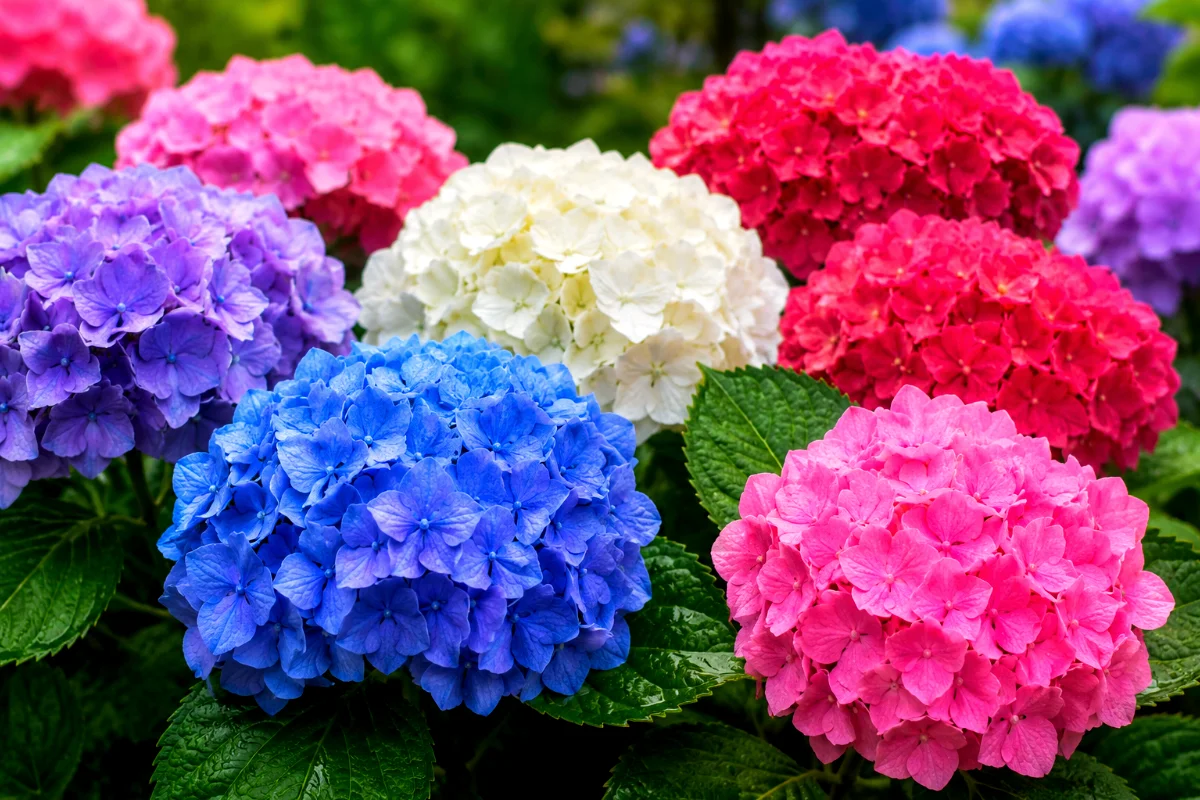
It’s not magic. It’s chemistry happening right under your feet. And once you get it, you can paint your blooms the color you actually want.
Let me show you how.
What Actually Changes the Color
People say “soil pH” and stop there. But that’s only half the story.
The real player is aluminum. Your hydrangea pulls aluminum out of the soil, and that aluminum is what flips the flowers blue. No aluminum reaching the roots? You get pink.
So where does pH come in? Think of it as a gatekeeper.
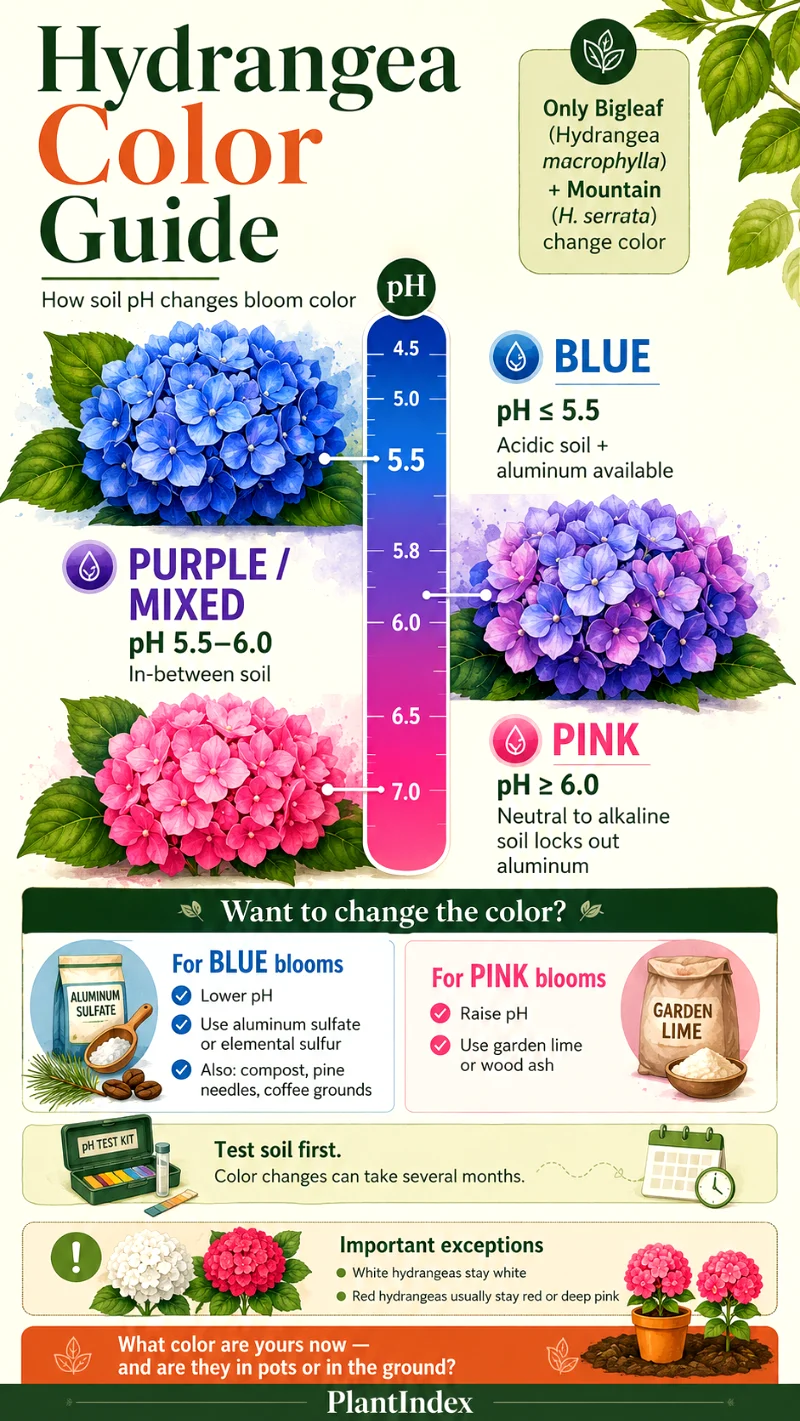
- Acidic soil (low pH) sets the aluminum free, so the plant drinks it up. Hello, blue.
- Alkaline soil (high pH) locks the aluminum away where roots can’t grab it. Now you’ve got pink.
That’s the whole trick. pH doesn’t color the flower directly. It just decides whether the aluminum gets an invite.
This matters more than you’d think. You can have perfectly acidic soil and still get pink blooms if there’s barely any aluminum in your dirt to begin with. I’ve seen it happen. Folks dump sulfur for months and wonder why nothing shifts.
Not Every Hydrangea Plays This Game
Big one here. Most people don’t know this and waste a whole season fighting a plant that was never going to change.
Only two types actually respond to pH:
- Bigleaf hydrangeas (Hydrangea macrophylla): the classic mophead and lacecap types
- Mountain hydrangeas (Hydrangea serrata): smaller, hardier cousins
If you’ve got either of those, you’re in business. Everything else? Read on, because the rules are different.
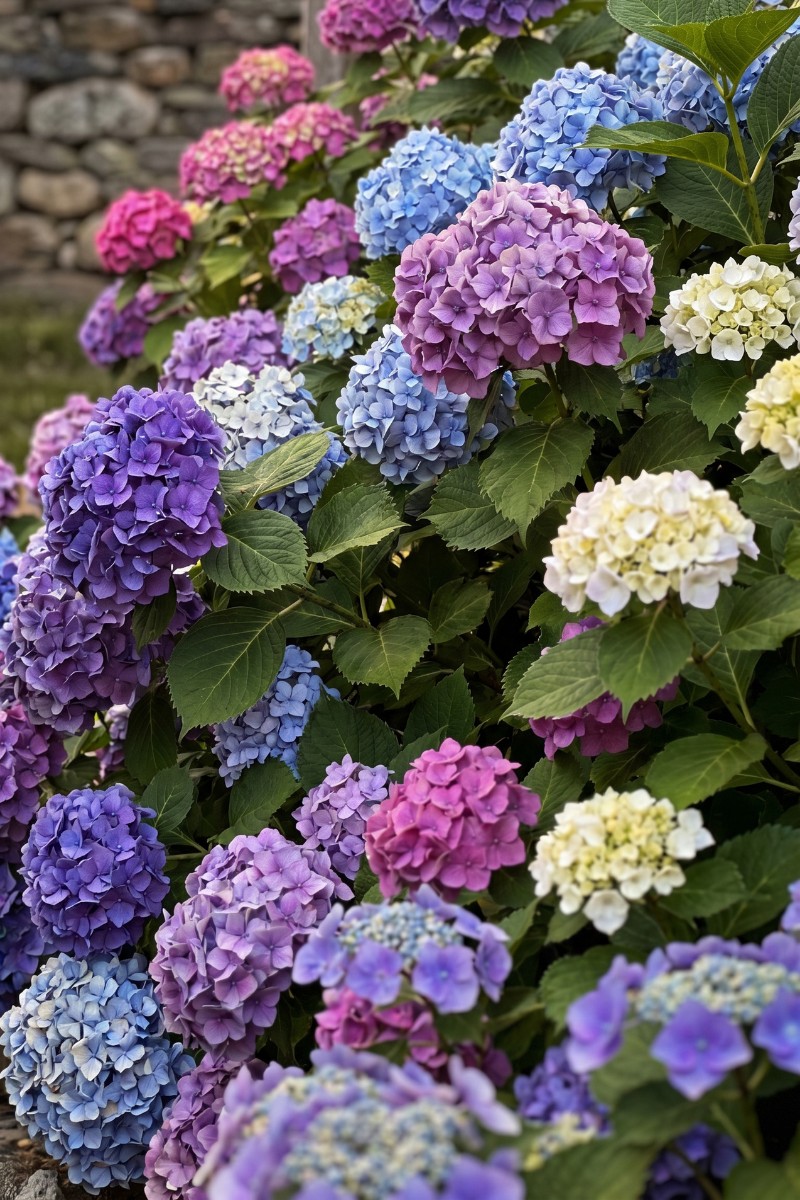
White Hydrangeas Won’t Budge
Got a big snowball ‘Annabelle’ or a cone-shaped ‘Limelight’? Those are smooth and panicle hydrangeas. They bloom white no matter what your soil does.
You can pour aluminum sulfate on them till the cows come home. Still white.
But here’s a fun wrinkle nobody warns beginners about. Many white varieties age into pink or rose as the season cools down. That’s not pH at work. It’s temperature and the natural aging of the bloom. So if your ‘Limelight’ turns dusty pink in fall, relax. It’s doing exactly what it’s supposed to.
Trying to turn a white hydrangea blue is the number one wasted effort I see. Don’t. The plant simply doesn’t carry the pigment that reacts to aluminum. Save your sulfur for the bigleaf out back.
Red Hydrangeas Stay Stubborn
Reds and deep magentas tend to hold their color too. They’re bred to resist aluminum uptake, so they shrug off your pH games. You might nudge them slightly, but don’t expect a fire-engine red to go true blue. It won’t.
The Quick Color Chart
Here’s the rough map for bigleaf and mountain types:
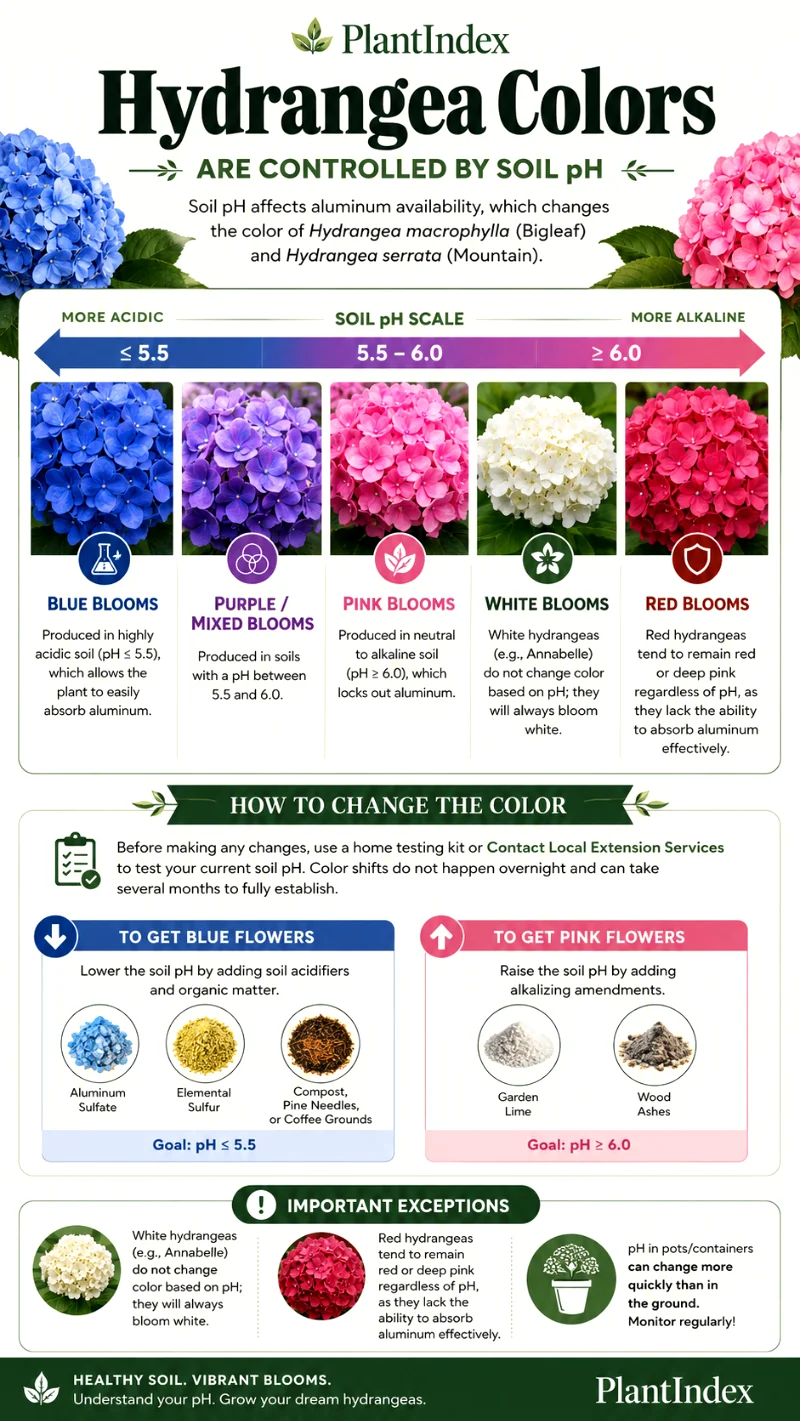
| Bloom Color | Soil pH | What’s Happening |
|---|---|---|
| Deep Blue | 4.5 to 5.5 | Aluminum flows freely |
| Lavender / Purple | 5.5 to 6.0 | The in-between zone |
| Pink | 6.0 to 6.5 | Aluminum starts locking up |
| Crimson / Hot Pink | 6.5 to 7.2+ | Aluminum fully blocked |
Treat these as guideposts, not gospel. Soil is messy and every yard’s a little different.
How to Turn Your Hydrangeas Blue
You want blue? You need acid, and you need aluminum.
The fastest route is aluminum sulfate. It does double duty: it drops the pH and hands the plant the aluminum it craves. Follow the package rate exactly. This stuff is strong, and too much will scorch the roots and brown the leaf edges. Go slow.
The gentler route:
- Elemental sulfur lowers pH over time without the burn risk
- Pine needles and pine bark mulch nudge things acidic as they break down
- Acidic compost or peat-based mixes help hold the line
So which do I reach for? On a young or stressed plant, sulfur every time. On a tough, established shrub that I want blue now, a careful dose of aluminum sulfate in spring.
Water it in well. Then wait. We’ll talk timing in a sec.
How to Turn Your Hydrangeas Pink
Pink is easier in most cases, because you’re shutting aluminum out instead of feeding it in.
Raise the pH with:
- Garden lime (dolomitic lime is the usual pick): slow and steady
- Wood ash: works, but use it lightly because it’s potent and can spike pH fast
Sprinkle lime around the base, work it gently into the top inch of soil, and water. Repeat in small doses across the season rather than dumping it all at once. Plants hate sudden swings.
One heads-up. If your soil is naturally loaded with aluminum, getting clean pink can be a battle. Containers make it way easier (more on that below).
The Purple Middle Ground
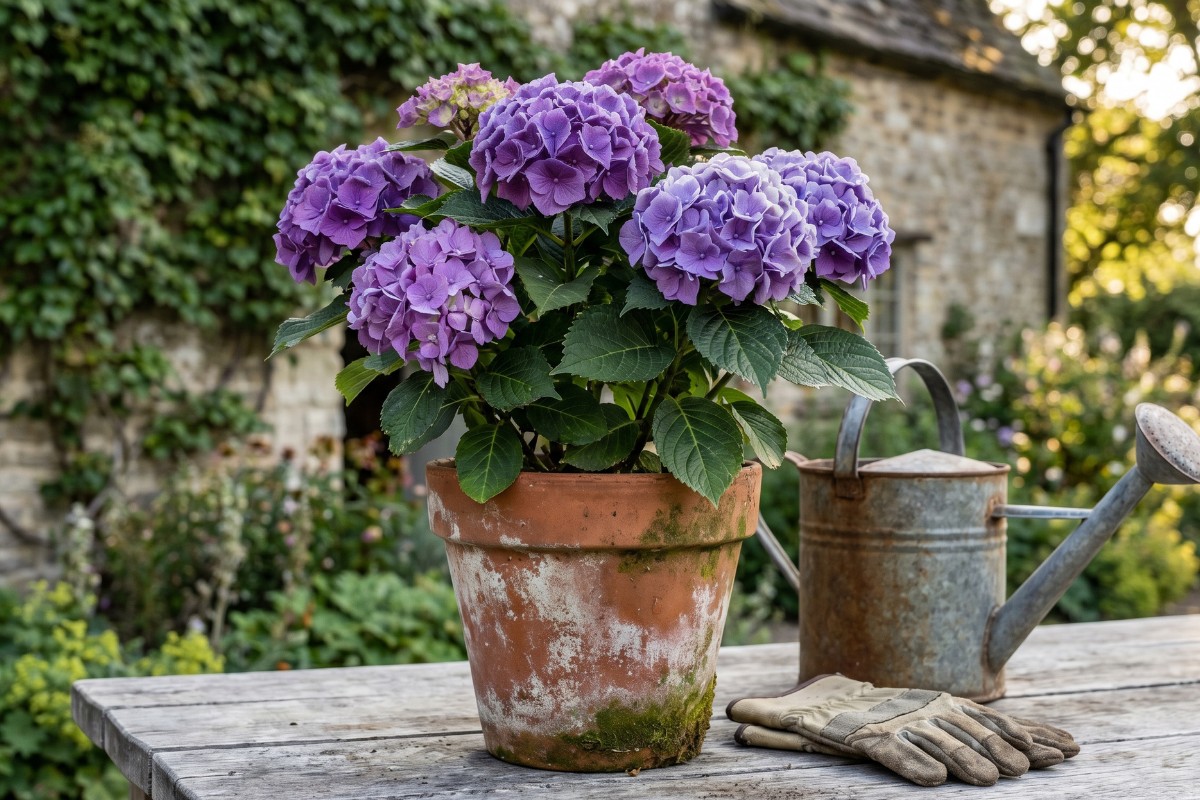
Want that dreamy lavender-purple? You’re aiming for a pH around 5.5 to 6.0, the spot where aluminum partly flows.
Honestly? Purple is the hardest color to dial in on purpose because it’s a balancing act. Many gardeners land on it by accident while transitioning between blue and pink. If you get it, enjoy it. Chasing it perfectly will drive you a little nuts.
Coffee Grounds: Let’s Bust the Myth
Everybody tells you to toss coffee grounds on your hydrangeas for blue blooms. I love a good coffee-ground tip. But let’s be straight about what they actually do.
Used (brewed) coffee grounds are nearly pH neutral. Most of the acid washed out into your cup. So they’re not going to acidify your soil in any meaningful way on their own.
What they are good for:
- Adding organic matter and improving soil structure
- Feeding worms and microbes
- A mild slow nitrogen boost as they break down
So sprinkle them by all means. Just don’t expect them to flip a pink hydrangea blue. That’s the part the internet leaves out. If you want a real pH shift, sulfur or aluminum sulfate is doing the heavy lifting. The coffee grounds are a nice side dish, not the main course.
Fresh, unbrewed grounds are slightly more acidic, but who’s throwing away good coffee?
Test Before You Touch Anything
Don’t guess. I’ve watched people acidify soil that was already acidic and wonder why their blue went… bluer-then-sickly.
Two easy options:
- A home soil test kit from the garden center: cheap, fast, good enough
- Your local extension office: many will test soil for a small fee and tell you exactly what’s going on, including aluminum levels
Test first. Then act. It’s the difference between gardening and gambling.
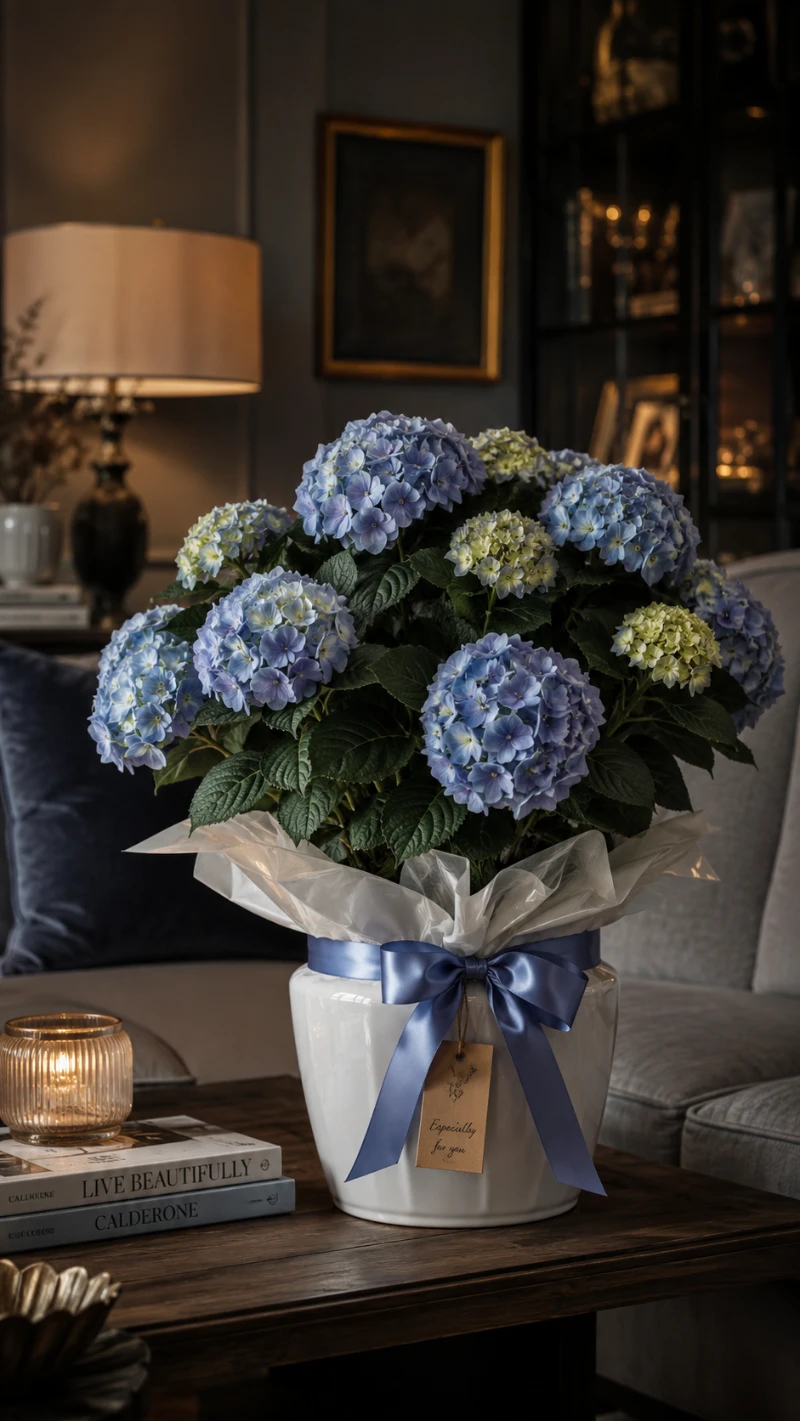
Containers Are Your Cheat Code
Here’s hard-won advice that saves beginners a ton of frustration. If you’re serious about controlling color, grow your bigleaf hydrangea in a pot.
In a container you control the entire soil mix. No fighting your yard’s natural chemistry. Acidic potting mix plus a touch of aluminum sulfate gives you reliable blue. Switch to a limed mix and you’ve got pink. Easy.
In the open ground you’re working against everything around the plant: old building lime leaching from a foundation, hard tap water, the soil your whole neighborhood sits on. It can be done. It’s just slower and stubborner.
The Part Nobody Tells You: It Takes Time
This is the expectation-setter that prevents heartbreak.
Color shifts do not happen overnight. You’re not flipping a switch. You’re slowly retraining a living plant and the soil it lives in.
Expect:
- A few months minimum to see movement
- Sometimes a full season or two for a complete change
- Gradual shifts, often blotchy at first, before the color evens out
And blooms already open won’t change. Only new growth responds. So start your treatments in fall or very early spring, before the buds set, to see results that same year.
Patience here isn’t a virtue. It’s the whole job.
FAQ
Can I make a white hydrangea blue?
No. White varieties like ‘Annabelle’ and ‘Limelight’ don’t carry the pigment that reacts to aluminum. They bloom white regardless of pH.
Why are my hydrangea blooms two different colors on the same plant?
Usually uneven soil. One side of the root zone is more acidic than the other, so the aluminum reaches some flowers and not others. Totally normal.
Do coffee grounds really turn hydrangeas blue?
Not on their own. Brewed grounds are roughly neutral. They improve your soil but won’t shift color the way sulfur or aluminum sulfate will.
How long until my hydrangea changes color?
Anywhere from a few months to two full seasons. New blooms show the change first. Existing flowers stay the color they opened.
My soil is acidic but my flowers are still pink. What gives?
Your soil probably lacks aluminum. Low pH alone isn’t enough. There has to be aluminum for the roots to absorb. Add aluminum sulfate to supply both.
Is aluminum sulfate safe for my plant?
In the right dose, yes. Overdo it and you’ll burn roots and brown the leaves. Always follow the label rate and water it in.
So go check what type you’ve actually got, run a quick soil test, and start small. Your hydrangeas will tell you the rest. You just have to read what the color’s saying.