
Peace Lily Leaves Turning Yellow – Reasons & Fixes

Lush green foliage with white flowers is what makes peace lilies one of the most recognizable and popular houseplants. It’s understandable then that seeing your peace lily plant’s leaves turning yellow would cause you to worry.
The good news is that most causes of yellowing leaves can be managed and addressed by changing your plant care routine.
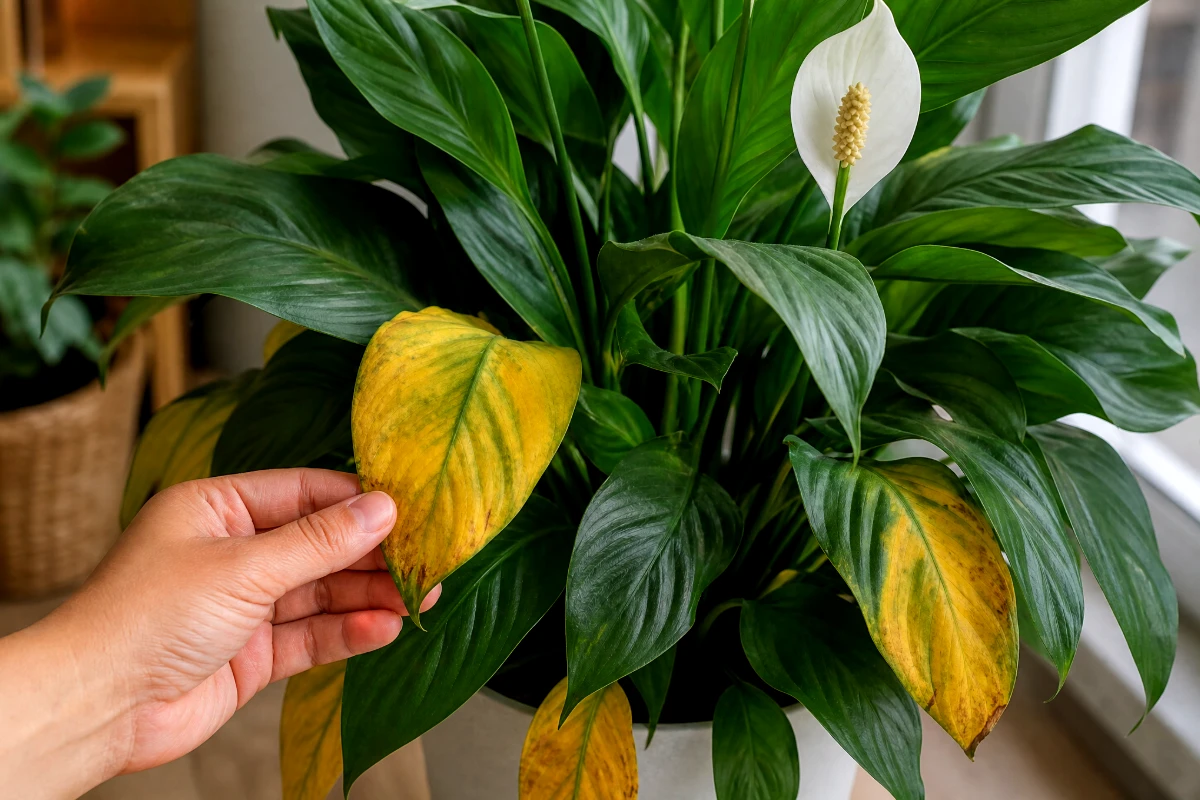
I will cover the possible causes of leaves turning yellow on your peace lily and offer my recommendations on how to fix this issue.
By checking each case, you may zero in on the issue and help your peace lily plant bounce back to good health.
Hopefully, my article will accomplish two things: keep you from panicking over something that could be as simple as aging leaves, and quickly identify the cause behind yellowing leaves.
Possible Causes of Peace Lily Leaves Turning Yellow
Here’s an overview of the issues that may be behind leaves turning yellow on your peace lily plant:
- Diseases and/or pests
- Overwatering or underwatering
- Light issues
- Temperature shock or transplant shock
- Lack of nutrients
- Water quality issues
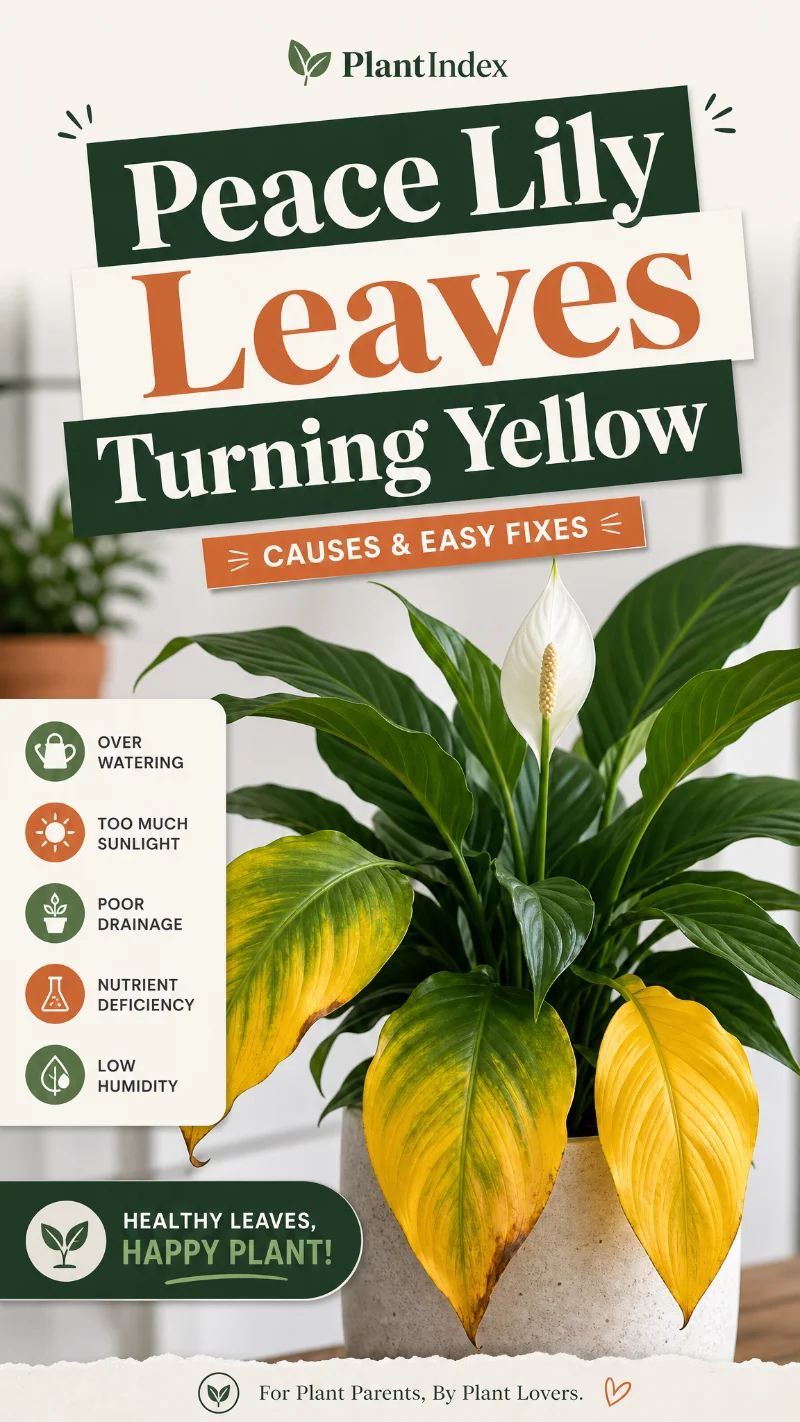
All these things can be an explanation for why your peace lily has lost its lush green color, and it’s displaying yellow leaves instead.
Find out what you can do to remedy this issue below:
Are Diseases or Pests Causing Your Peace Lily Leaves to Turn Yellow?
The immediate reaction to seeing a plant that isn’t doing well is to think of a disease or pest as being responsible for it.
Pests aren’t a huge issue with peace lilies, especially because the plant isn’t prone to attracting them. But then and now, aphids, mealybugs, and spider mites may appear on your plant.
If left unchecked, an infestation can develop that can and will cause the leaves of your peace lily to turn yellow.
In case of a mild infestation, wiping the leaves clean will usually help get rid of the problem. More severe cases will need treatment with an insecticide.
If there aren’t obvious signs of an infestation, the problem may be caused by a disease. There are two particularly dangerous fungi for peace lily plants, namely the Cylindrocladium spathiphyllum and the Phytophthora parasitica.
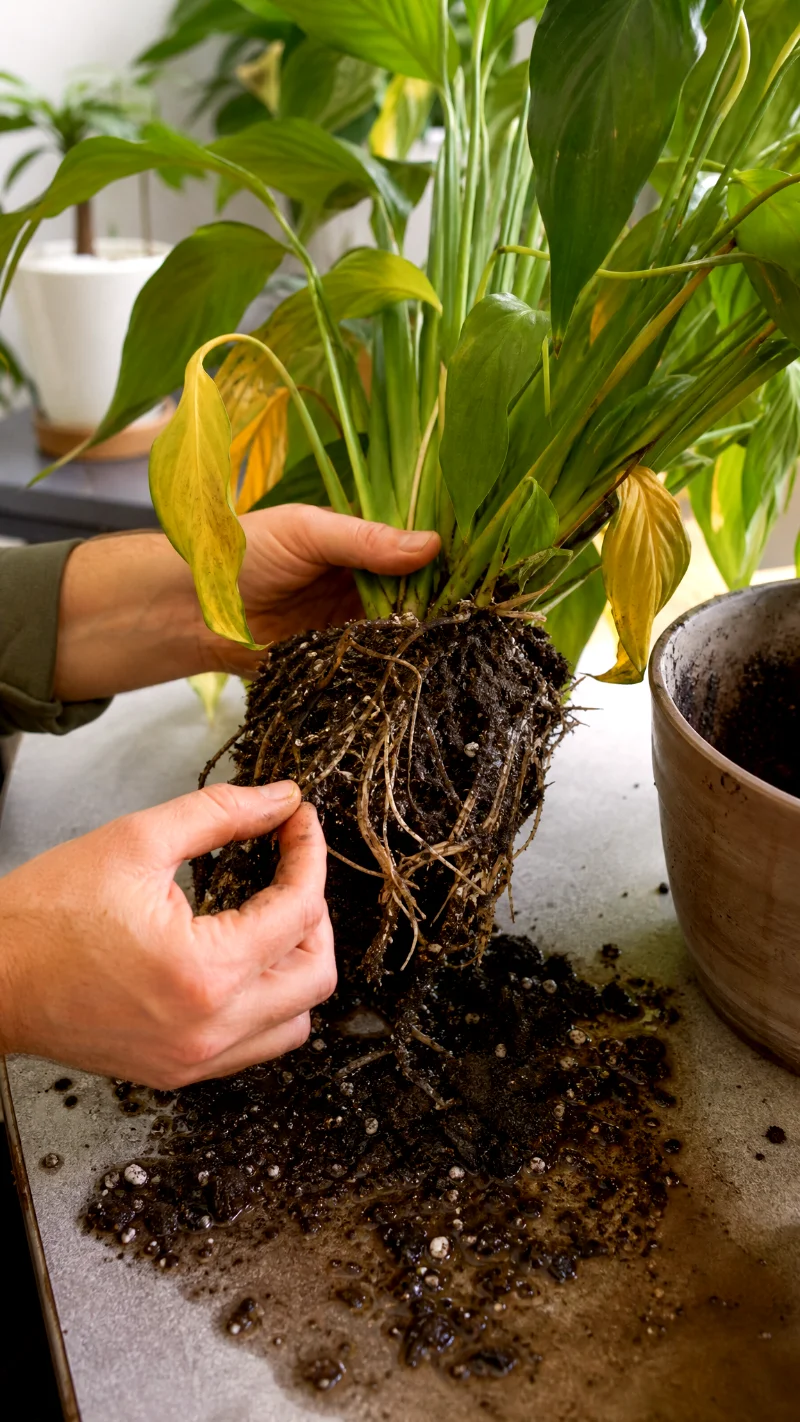
Both will attack the plant at its roots, causing root rot. These fungi live in the soil of your plant, and certain conditions, like overwatering, will help them thrive.
Because there’s no treatment for root rot caused by fungi, your best bet is prevention, which you can do by allowing the soil to dry out between watering sessions.
Once the roots are rotting, there is no going back from that, and you can’t save your plant. Therefore, don’t water these plants too liberally.
Which brings us to the next point on our list of possible causes of peace lily plant leaves turning yellow:
Can Overwatering or Underwatering Change the Color of Your Peace Lily Plant?
Undoubtedly, watering will have a huge impact on the health of your peace lily. Overdoing it or not giving your plant enough water will eventually cause symptoms that will change the health and appearance of your plant.
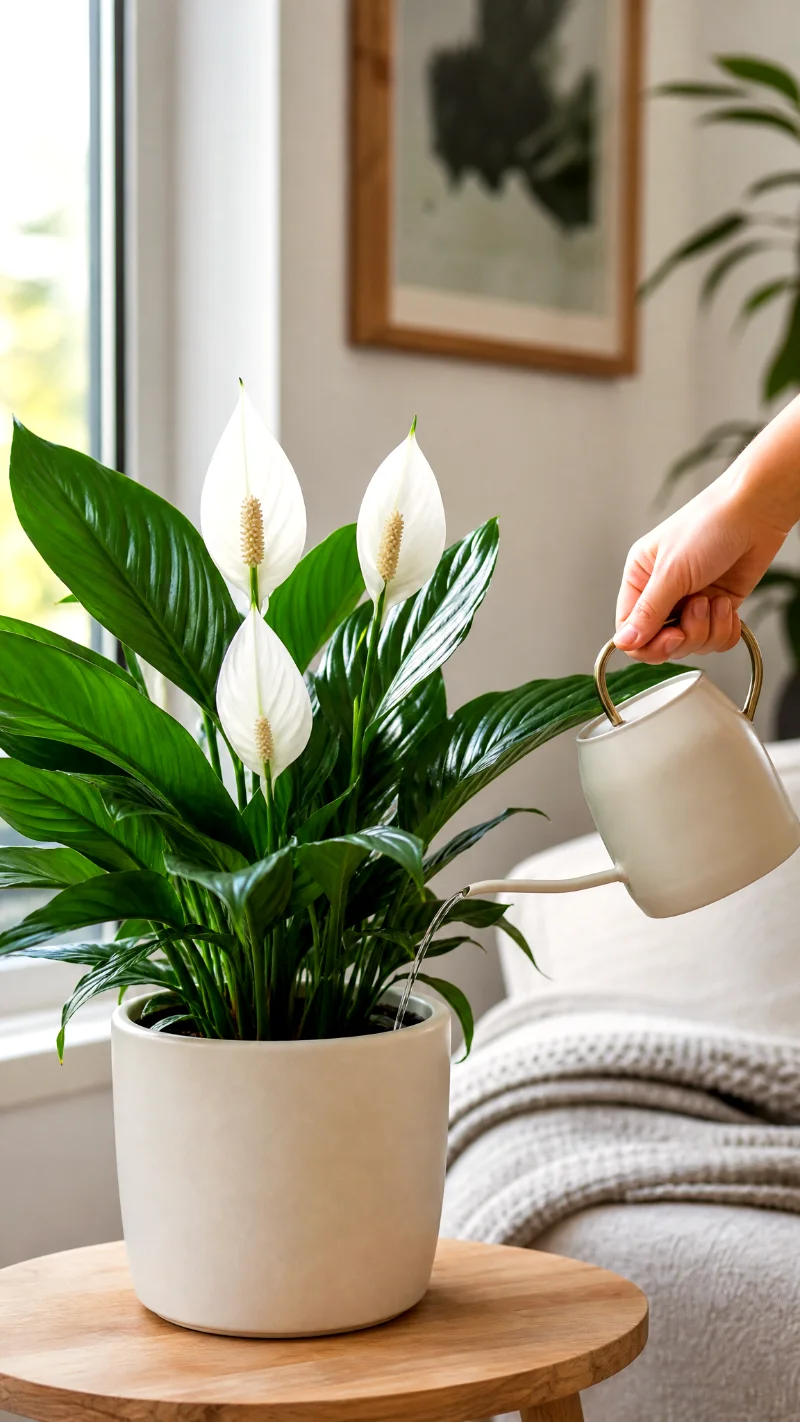
I’ll start with discussing overwatering, which is a far more common issue than underwatering. If your peace lily is in a potting soil that doesn’t drain well or you’re actually overdoing the watering, the problem will escalate to root rot, and one of its late symptoms will be yellow leaves.
A well-draining soil mix that holds a bit of moisture and a pot that’s fitted with draining holes will help prevent situations when you’re inadvertently overwatering your peace lily.
I always check to see if the top of the soil has dried a bit before adding more water to my plant. If the soil is still moist on the top, it’s even more moist at the roots.
Underwatering is also a concern, as this too can cause the leaves to switch from a deep green to a pale, yellowish color. If the soil is too dry, the leaves will start to collapse and then turn yellow.
Don’t worry, adjusting your watering schedule will help the plant get back to its former shape. Peace lilies are quite forgiving in this sense.
Can Too Much Light Cause Peace Lily Leaves to Turn Yellow?
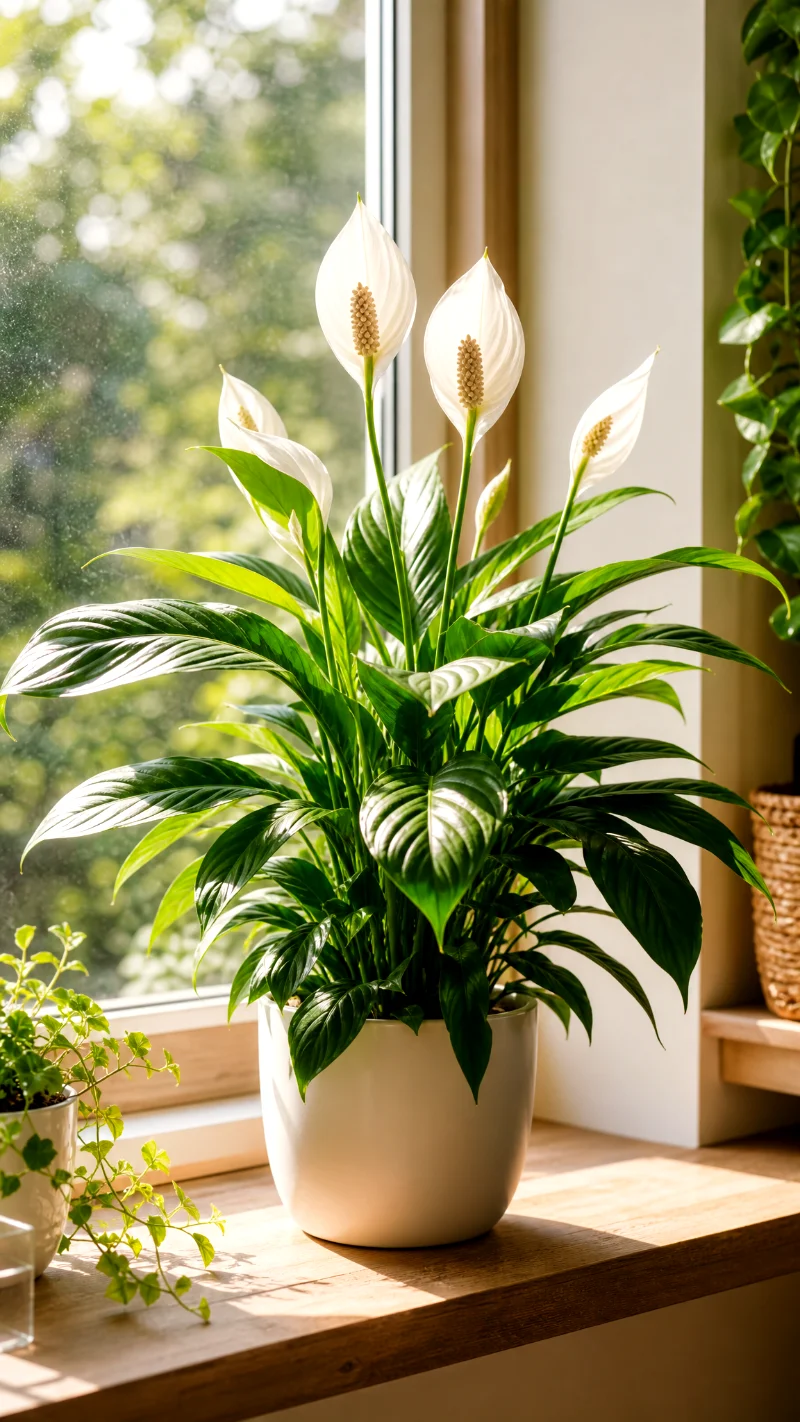
Very few houseplants will tolerate strong direct light, and peace lilies are no exception. While the plant does like bright light, it must be indirect light or filtered light to keep the plant from scorching.
If you suspect your peace lily is getting too much direct light, move it to a different location. But don’t go to the other extreme, which is complete shade. While peace lilies can tolerate dimmer light conditions, complete shade will not cut it for them.
Can Low Temperature or Transplant Shock Cause Yellow Leaves?
The safe temperature range for peace lilies is between 65 and 85 °F. Therefore, extremes like below 45 F or cold drafts spell trouble for your peace lilies.
Leaf yellowing can be caused by exposure to low temperatures, which acts as a shock factor to your plant.
Another thing that can “shock” the plant into yellowing is related to transplant shock. If you’re repotting at a different time than the start of the growing season, some yellowing may appear.
Give your peace lily some time and a bit of extra care, and it will reward you with new growth that is healthy and green.
Usually, the plant will not be so sensitive to repotting, especially if you’re doing it at the right intervals and allow the plant to become slightly root-bound, but it can be a possible explanation that will help rule out other conditions.
Can Lack of Nutrients Cause Peace Lily Yellowing?
Rarely do peace lilies need feeding; therefore, lack of nutrients may be an unlikely cause of leaf yellowing unless the soil of your peace lily is completely devoid of any nutrients and other possible causes have been ruled out.
Iron and magnesium deficiencies are easily noticeable because the leaves of the plant will turn yellow, but not the veins.
If you do use fertilizer for your peace lilies, you should take care not to overdo it. Peace lilies will occasionally need a bit of fertilizing in late winter, but only every 6 weeks or so.
Can Water Quality Issues Cause Leaf Yellowing?
I can’t say that peace lilies are sensitive to water quality, but they do occasionally take issue with chlorine and high mineral content, both of which can cause leaves to turn yellow.
Letting the water sit overnight will allow chlorine to evaporate, or using a bit of dechlorinator used for aquarium water will also help.
If you can, use rainwater as a great alternative source for your peace lilies or filtered water, which you can find in stores, or you can get in the comfort of your home by installing a point-of-use water filter.
+ 1 Reason Why Peace Lilies May Be Turning Yellow: Old Leaves
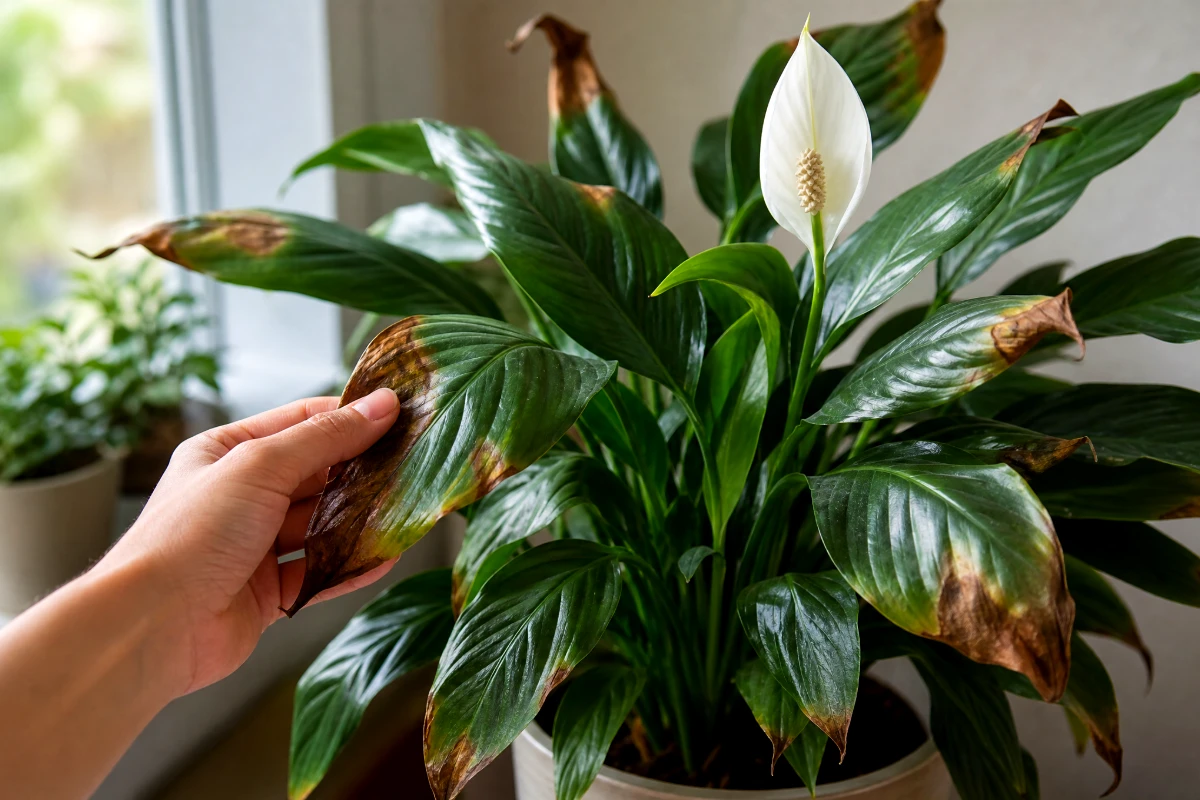
Old leaves will, of course, turn yellow, but this isn’t a problem, and it’s a natural process whereby the plant focuses its energy on new growth and cuts off the supply to old leaves.
These leaves will eventually dry and fall off, but if you don’t like the sight of them, you can cut them off at the base.
As you can see, there are quite a few things that can explain why your peace lilies aren’t the deep green color you’re accustomed to.
Some of these problems can be fatal to the plant, while others are easy to manage.
When trying to figure out what may be causing issues, you can examine your plant care routine to check if there’s something you shouldn’t be doing or should be doing differently.
Some issues will have accompanying symptoms as well, not just yellow leaves. For example, bug infestations are visible to the naked eye, a lack of water will also cause the leaves to droop, moist soil can be a sign of overwatering, etc.
Focus on identifying these signs as well to have a better understanding of what’s happening to your plant.
Getting to the root of the problem is much easier than you may think; it just takes a bit of patience and a keen eye for spotting trouble.


