
50 Types of African Violets (Rare & Common Saintpaulia Varieties)

When we say African Violet, it comes to mind a compact, violet-flowered plant with velvety leaves. But there are many African Violet varieties, and some of them look almost identical.
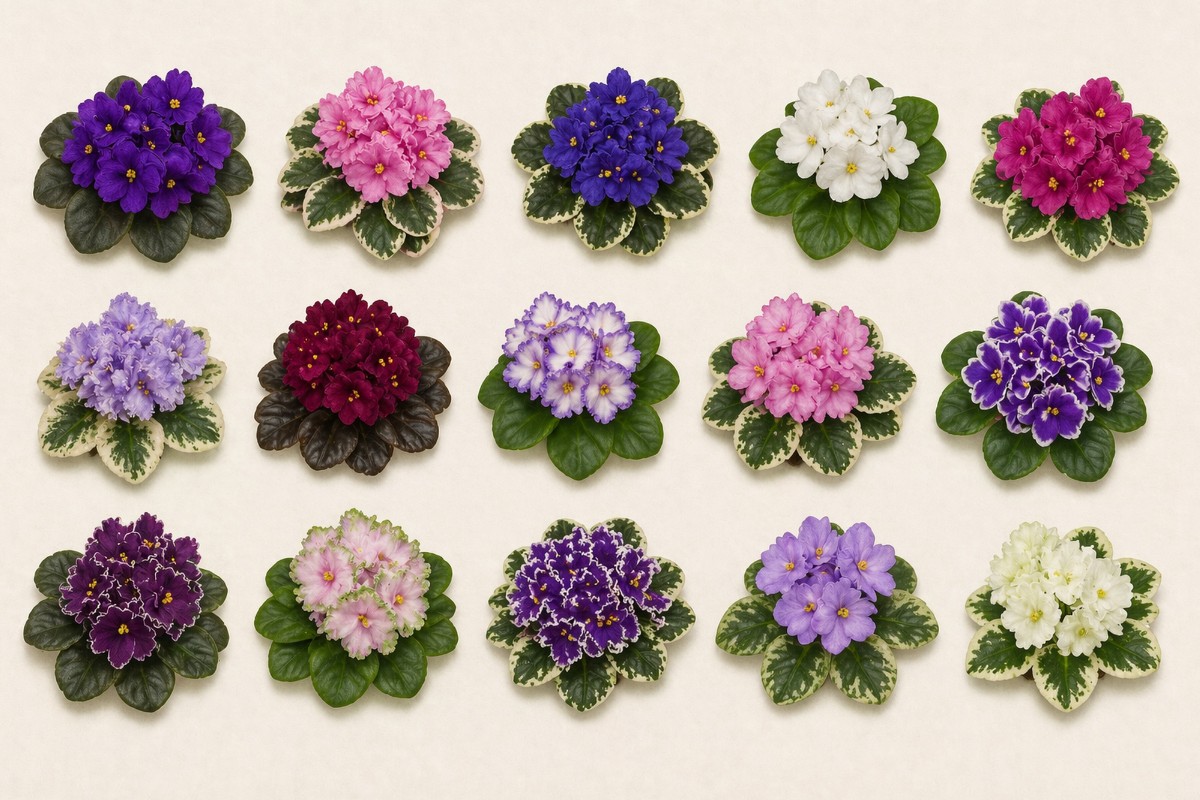
The African Violet Society of America has more than 16,000 varieties in its database. These varieties are grouped by their growth and by their flowers.
In this article, I will present to you these two groups and the types of African Violets these groups include.
African Violet Varieties by Growth
There are two types of African Violets categorized by growth: rosette and trailing.
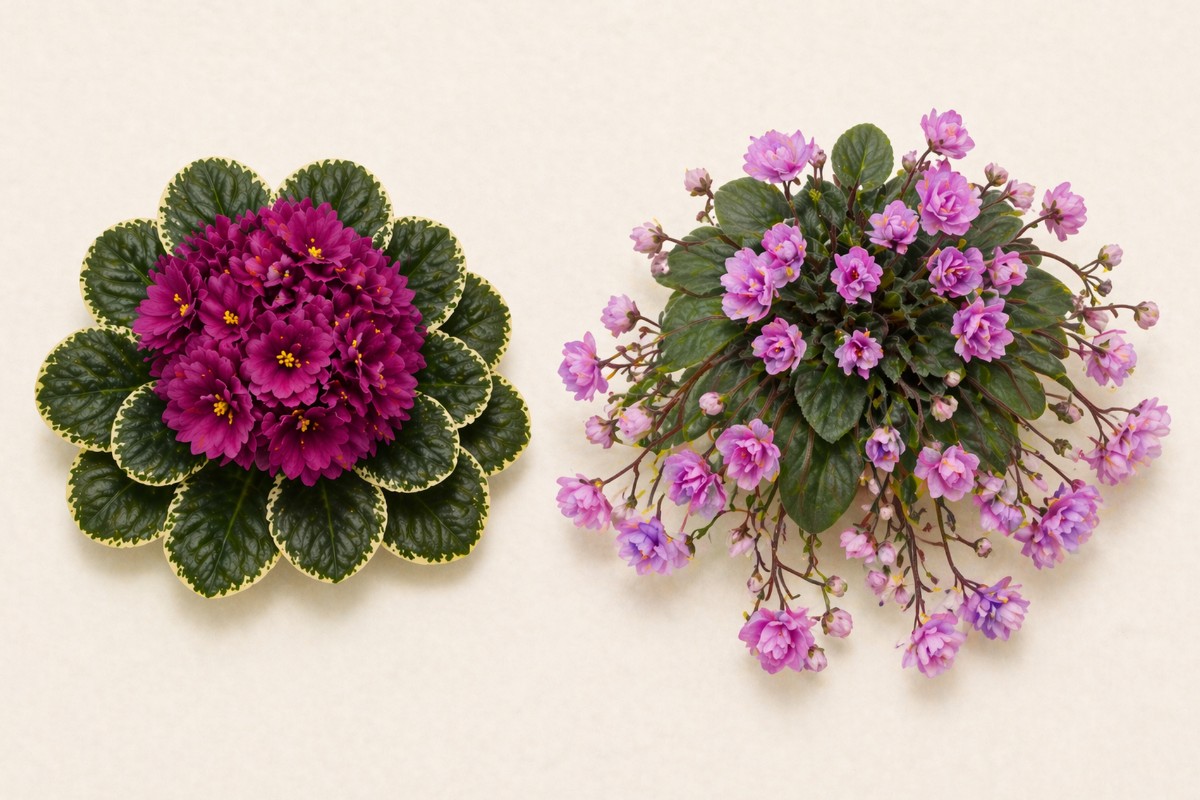
– Rosette African Violets
Rosette African Violets are known as single crown plants. The leaves grow outwards from the center stalk in a circular pattern. The stem and its internodes are short.
The leaves of a Rosette African Violets grow close to the surface of the soil and this can only have five symmetrical spirals of leaves that are clustered closely at the base of the plant.
The flowers of the Rosette African Violets grow within the center of the plant.
– Trailing African Violets
Trailing African Violets are multi-crown plants. These have multiple stems from the same plant roots.
Each stem has leaves and because they are not strong enough to grow upright, they grow semi-vertical. The leaves on the stems grow circularly as the Rosette African Violets’ leaves.
Trailing African Violets can have a cascading growth because they grow sideways; therefore, these can be grown in a hanging basket. This style of growth gives the plant trailing characteristics.
The main stem and intermodal space of this type of African Violets are longer than the Rosette stems.
Trailing African Violets can be miniature, semi-miniature, or standard size, depending on the size of the leaves.
The flowers of the Trailing African Violets grow from each crown and this gives it a bushy look.
African Violet Varieties by Flowers
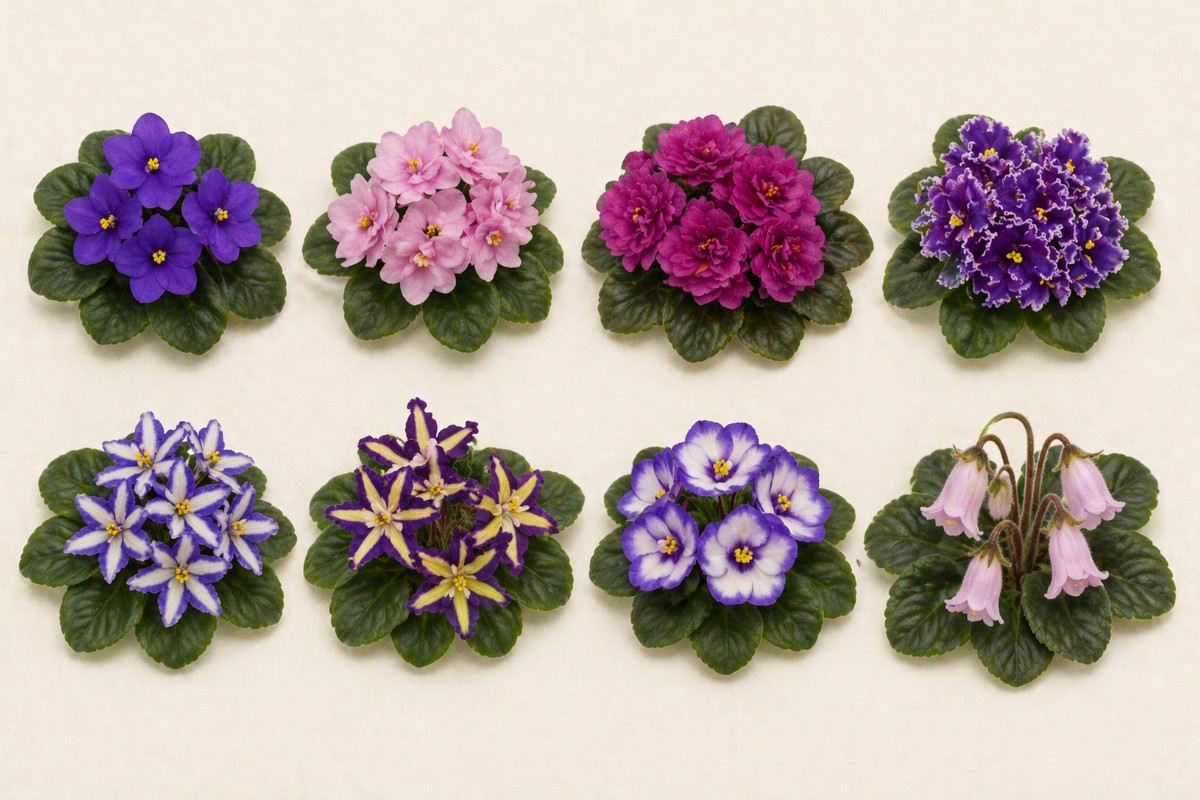
The African Violet varieties are classified by the number of petals on flowers and the shape as well, and all these groups can be found in many colors.
– Single Flowers
An African Violet that has single flowers, in this case, means that every flower has a single layer of petals. Each flower has five petals. 2 petals are smaller, 3 petals are bigger and in the middle of the flower, we can see the reproductive organs, 2 stamens, and a pistol.
– Semi-Double Flowers
Semi-double flowers have between 5-10 petals. They have the 5 petals in the first row, and then a few extra crests or clusters of petals in the center.
These extra petals usually curl up and they don’t open fully like the first 5 petals.
– Double Flowers
Double flowers have more than 10 full-size petals and have 2 complete rings of petals.
The reproductive organs in the center of the flower can be hardly seen, as the petals form a full flower.
– Frilled Flowers
The frilled flowers of the African Violets can be single, semi-double, or double flowers, but the petals are frilled/lacy at the edge.
– Star Shaped Flowers
Star-shaped flowers, as their name states, look like a star. There are 5 petals that are all equal in size and are evenly spaced.
– Wasp Shaped Flowers
These flowers look a bit different from the usual African Violet flowers. However, the wasp-shaped flowers have 5 petals just like the single flowers.
The difference is that the top two petals are much smaller and narrower, and are twisted as well.
– Cup Shaped Flowers
The cup-shaped flowers are similar to star flowers. All the petals are joined together and like this, they form a shallow cup.
– Bell-Shaped Flowers
Bell-shaped flowers have 5 petals just like single flowers; however, these petals are grown together and form a narrow bell shape.
African Violet Flower Colors – A Rainbow of Blooms
African violets offer much more than just their namesake color. You can find these plants in beautiful shades of purple, pink, white, blue, red, and lavender.
Unique Patterns
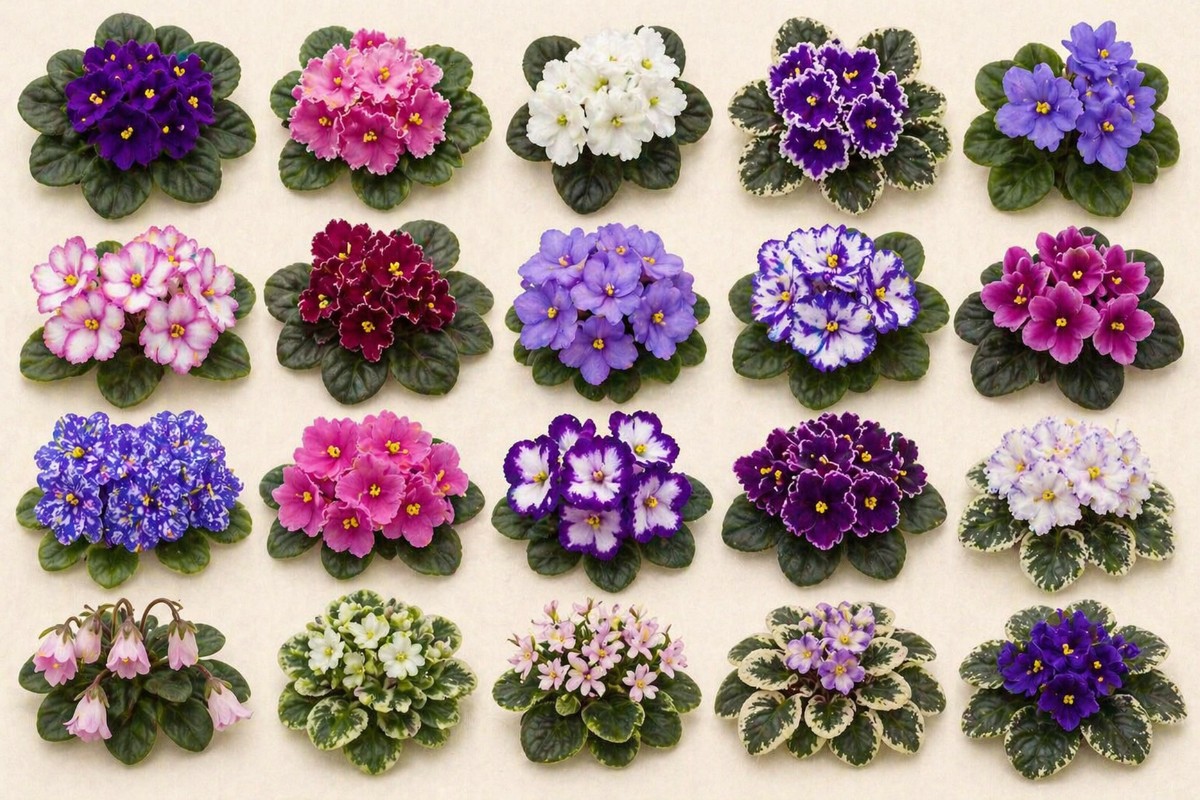
Many varieties boast bicolored or multi-colored flowers. Some combine vibrant hues, like red-violet and white. Breeders also create striking patterns. Look for these popular styles:
- Geneva: These flowers have a distinct white edge.
- Fantasy: These blooms feature fun, speckled colors.
- Thumbprint: These show off a bright eye of color in the center.
- Dark-Eyed: These sport a deep, contrasting center.
Beautiful Foliage
The flowers usually steal the show, but the leaves deserve your attention too. African violet foliage grows in many shades of green. The leaves range from light to deep, rich greens. Some striking varieties even feature variegated leaves. These unique plants display cream or white markings mixed right into the green.
Which is the Rarest African Violet Species?
As I mentioned earlier, the African Violet Society of America‘s database contains more than 16,000 varieties.
The rarest African Violet species is the Streptocarpus afroviola (Saintpaulia pusilla), which is native to Tanzania.
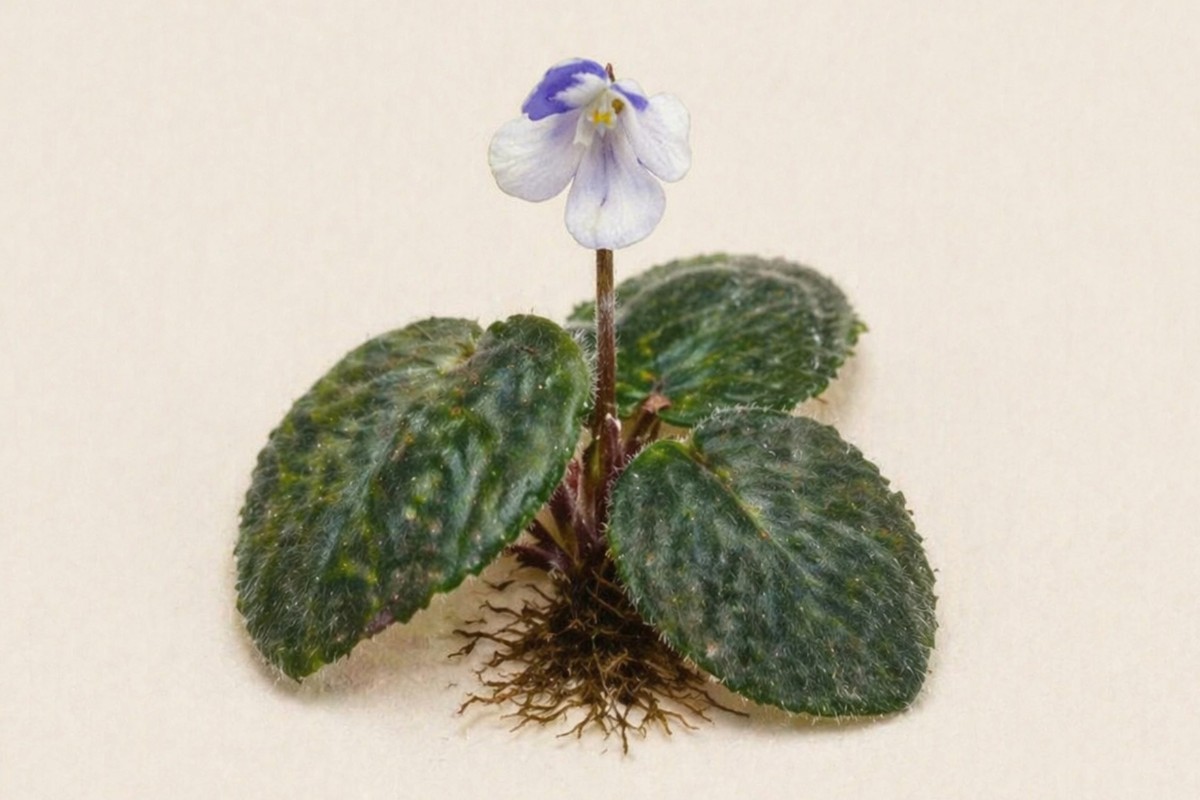
Adolf Engler first described this African Violet in 1900. It grows on four Tanzanian mountains: Uluguru, Ukaguru, Nguru, and Udzungwa.
However, researchers found Streptocarpus afroviola at only a single site on both the Ukaguru and Nguru mountains. This species thrives on shady, moss-covered rocks in the montane rainforest at altitudes of 1,300 to 1,500 meters (4,270 to 5,740 feet).
African Violet Varieties with Photos
I’ve been growing African violets for longer than I care to admit. They get a bad rap as fussy old-lady plants. They’re not. Give them the right light and the right water, and they’ll bloom their hearts out almost year-round.
But here’s the thing nobody tells you. The variety you pick matters more than your green thumb. Some stay tiny forever. Some spill over the pot like a waterfall. And, some throw flowers the size of a silver dollar.
So let’s walk the bench together. I’ll tell you what each one actually does, not just the catalog fluff.
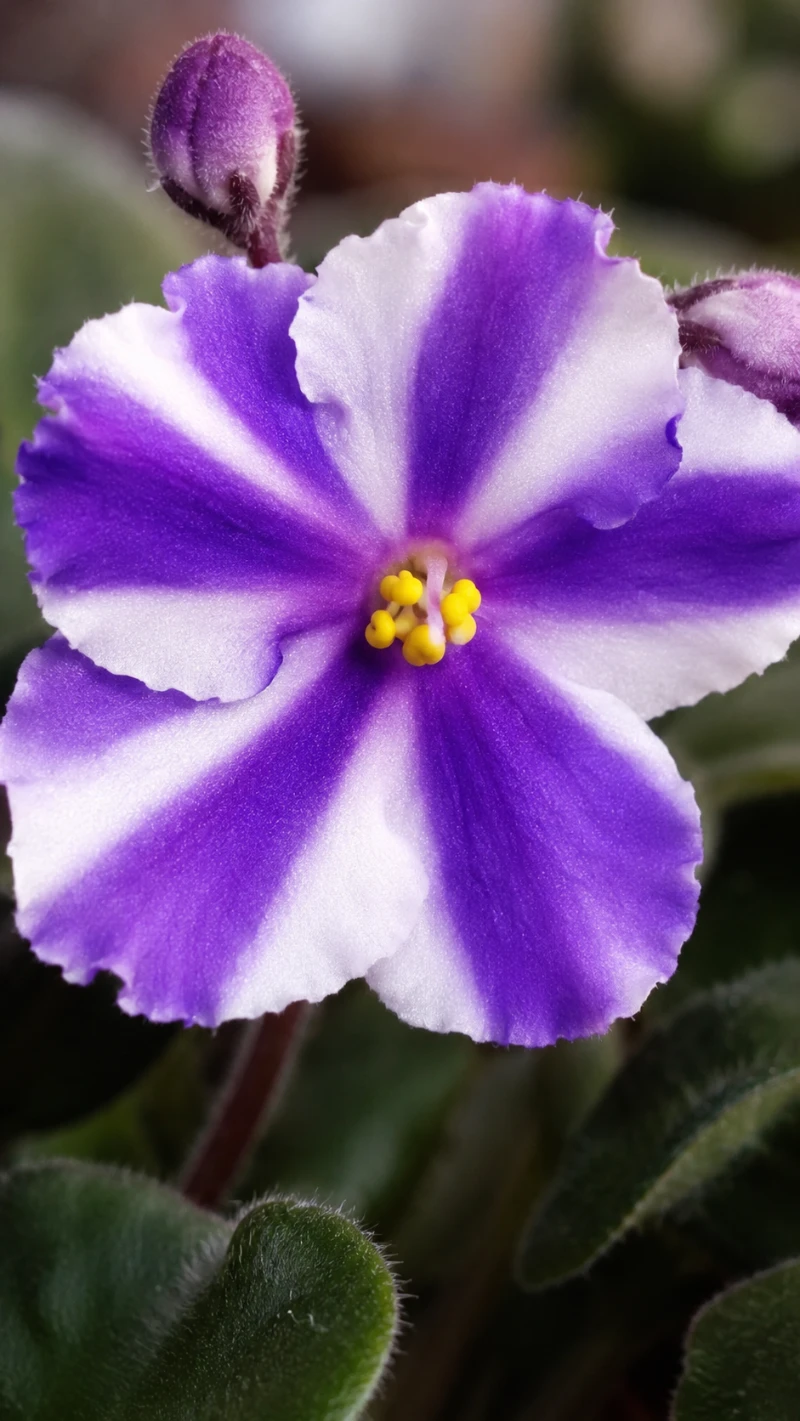
How to Read This List Before You Shop
A quick word on size, because it trips people up.
- Standard violets sprawl 8 to 16 inches across. They need a real pot and a real shelf.
- Semi-miniatures top out around 6 to 8 inches. Perfect for crowded windowsills.
- Miniatures stay under 6 inches. Micro-minis barely hit 3.
- Trailers grow multiple crowns and drape, so they want a wide, shallow pot.
Match the size to your space first. A gorgeous standard violet crammed into a 2-inch pot is a sad, stunted thing. Trust me on that one.
The Standard-Size Stunners
These are the big personalities. Give them room and they reward you with show-quality flushes.
Amethyst
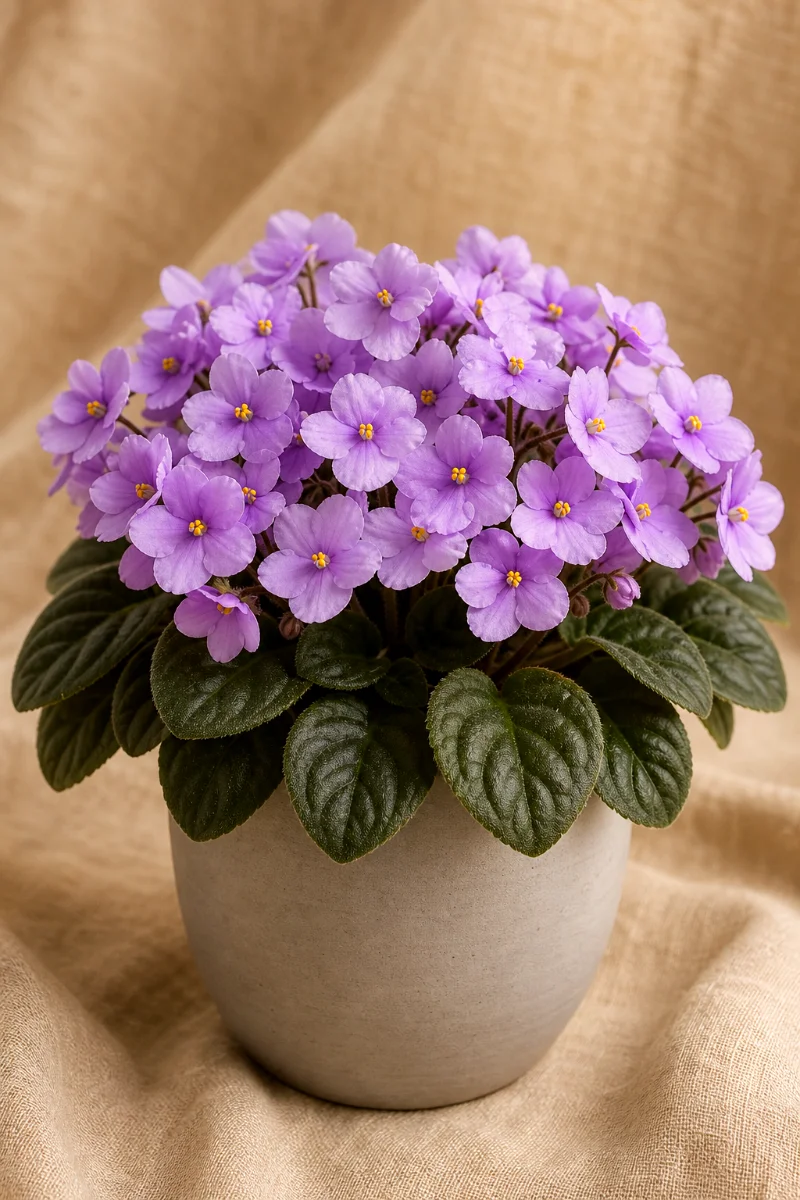
- Foliage Color: Dark green, quilted, heart-shaped
- Flower Color: Pale, light purple
- Flower Type: Single
Keeps it simple and classy. Single pale-purple blooms, one to a stem, over dark green quilted leaves shaped like little hearts. A great starter violet because it doesn’t ask for much.
Crimson Ice
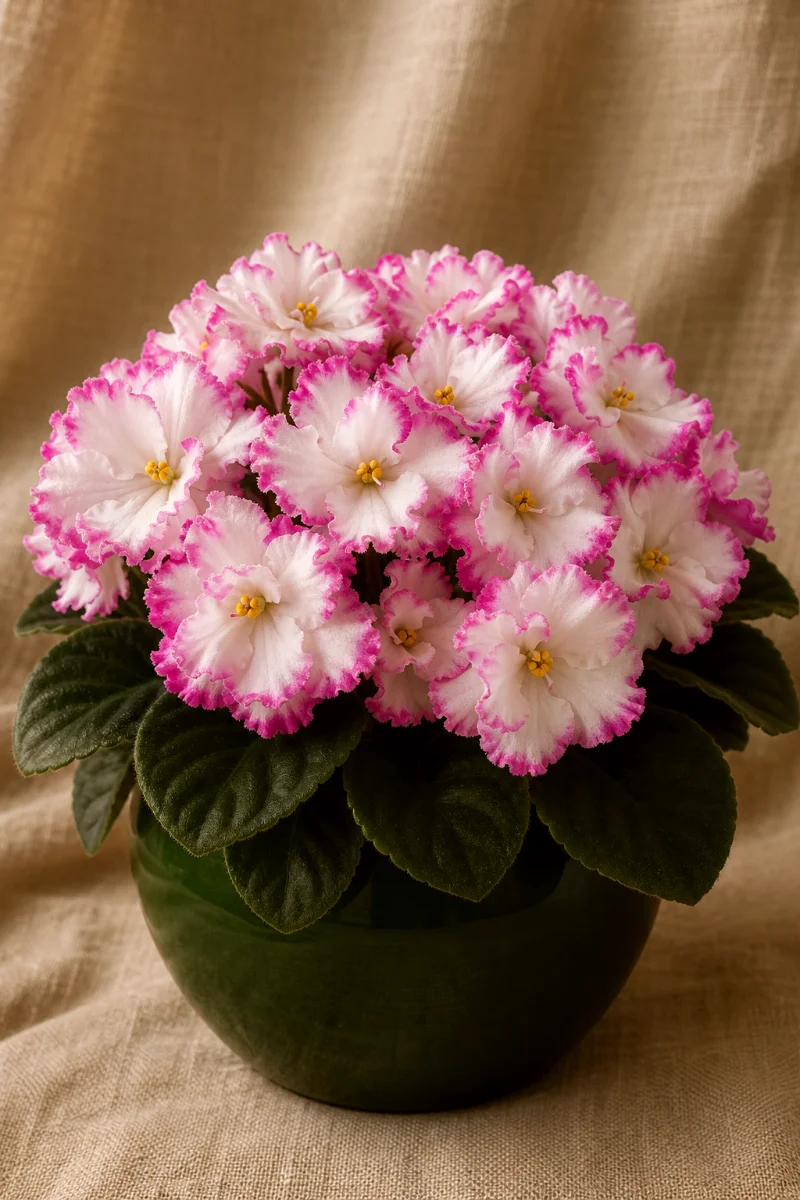
- Foliage Color: Solid deep green, slightly heart-shaped
- Flower Color: White, dipped in bright fuchsia
- Flower Type: Large single, ruffled
A real looker. Big ruffled white singles, with petals dipped in hot fuchsia, and no two flowers dip exactly the same way. The leaves stay solid deep green, so nothing competes with the show up top.
Devotion
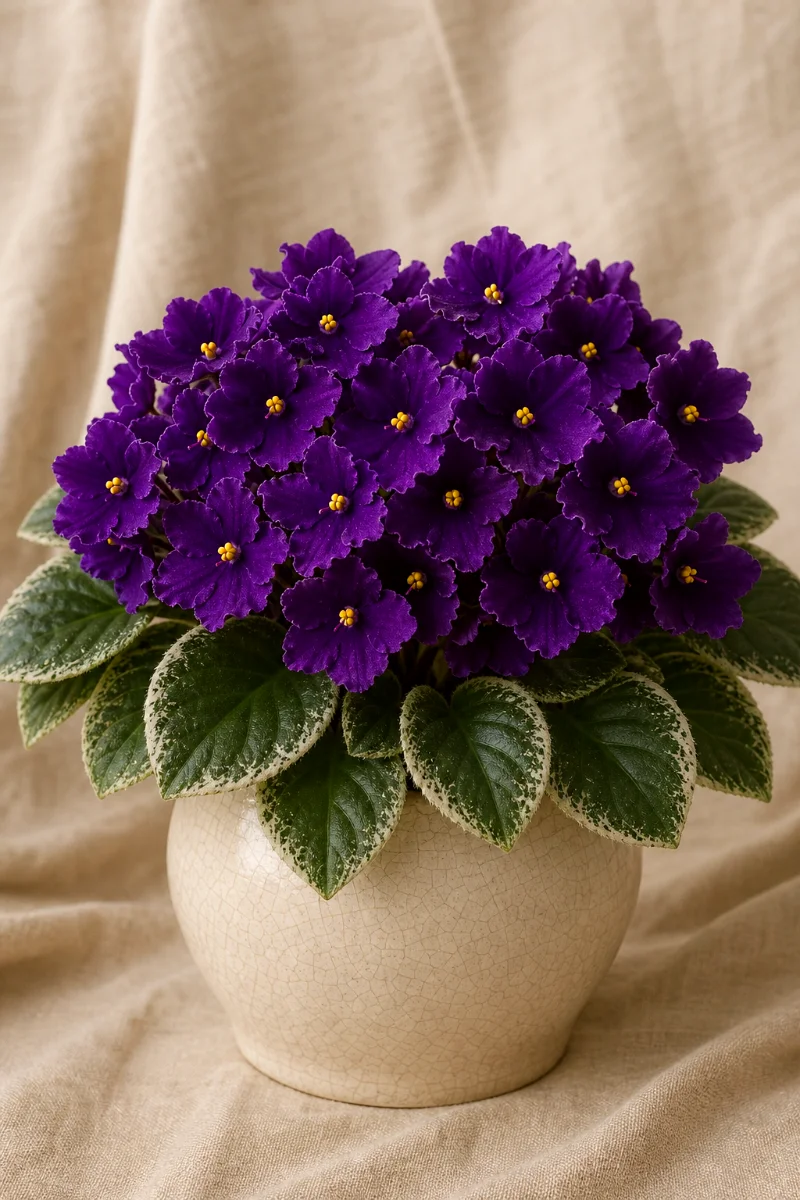
- Foliage Color: Variegated green with speckled white edges
- Flower Color: Deep, dark purple
- Flower Type: Single, wavy-edged
Runs dark and moody. Deep purple petals with a slight wave, bright yellow stamens popping in the middle. The leaves are variegated with speckled white edges, which is its own quiet treat.
Diamond Tiffany
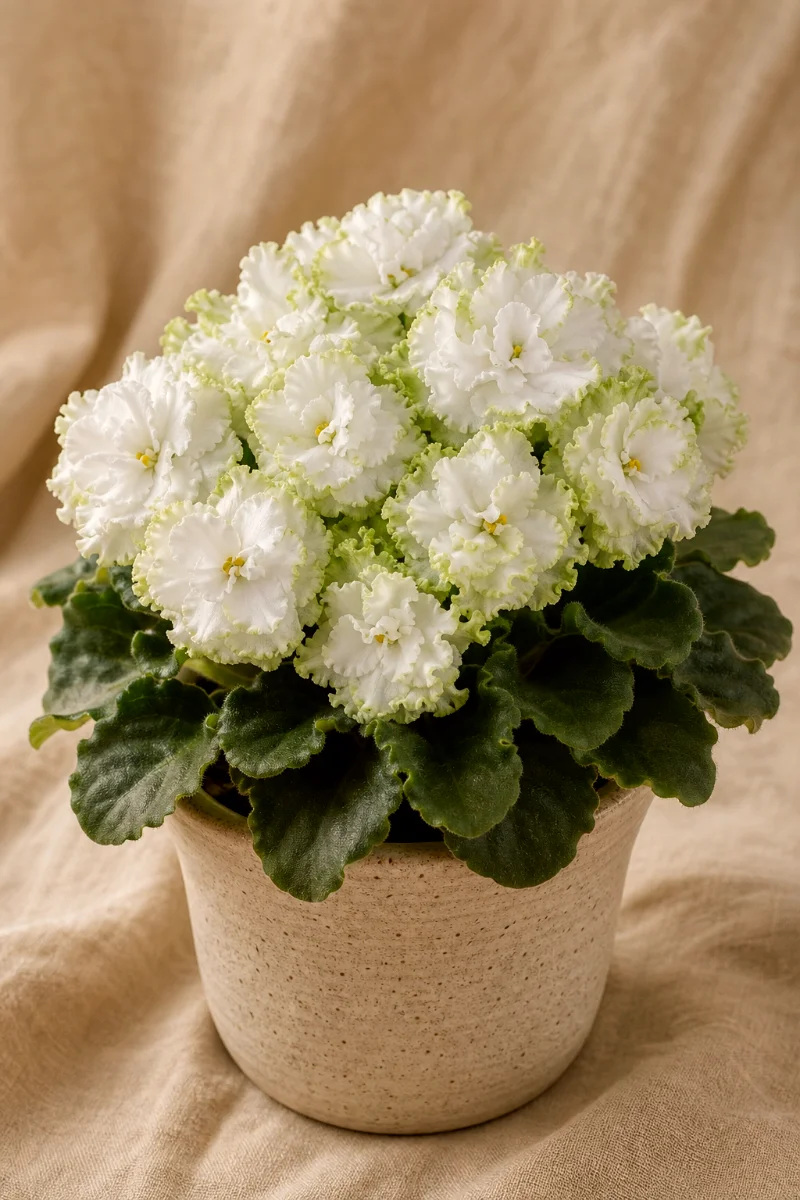
- Foliage Color: Deep green, slightly ruffled
- Flower Color: White with pale green edging
- Flower Type: Oversized semi-double, densely ruffled
The wedding-cake violet. Oversized, densely ruffled, white semi-doubles with a whisper of pale green on some petals. It can take its time to bloom, but oh, when it does.
EverGrace
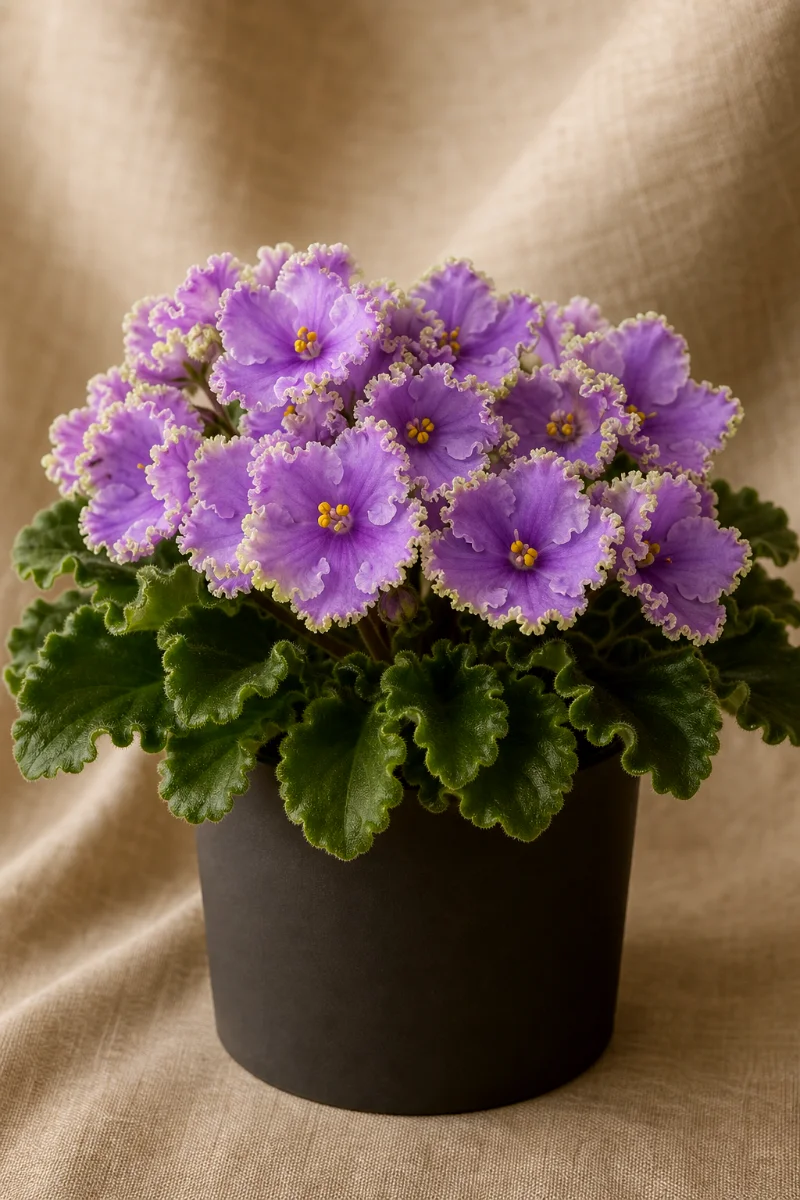
- Foliage Color: Solid green, ruffled
- Flower Color: Light purple with greenish-white edging
- Flower Type: Large single, ruffled
Grows a wide, generous rosette and tops it with big ruffled light-purple flowers edged in greenish white. Give this one elbow room, because it spreads into a broad plant.
EverLove
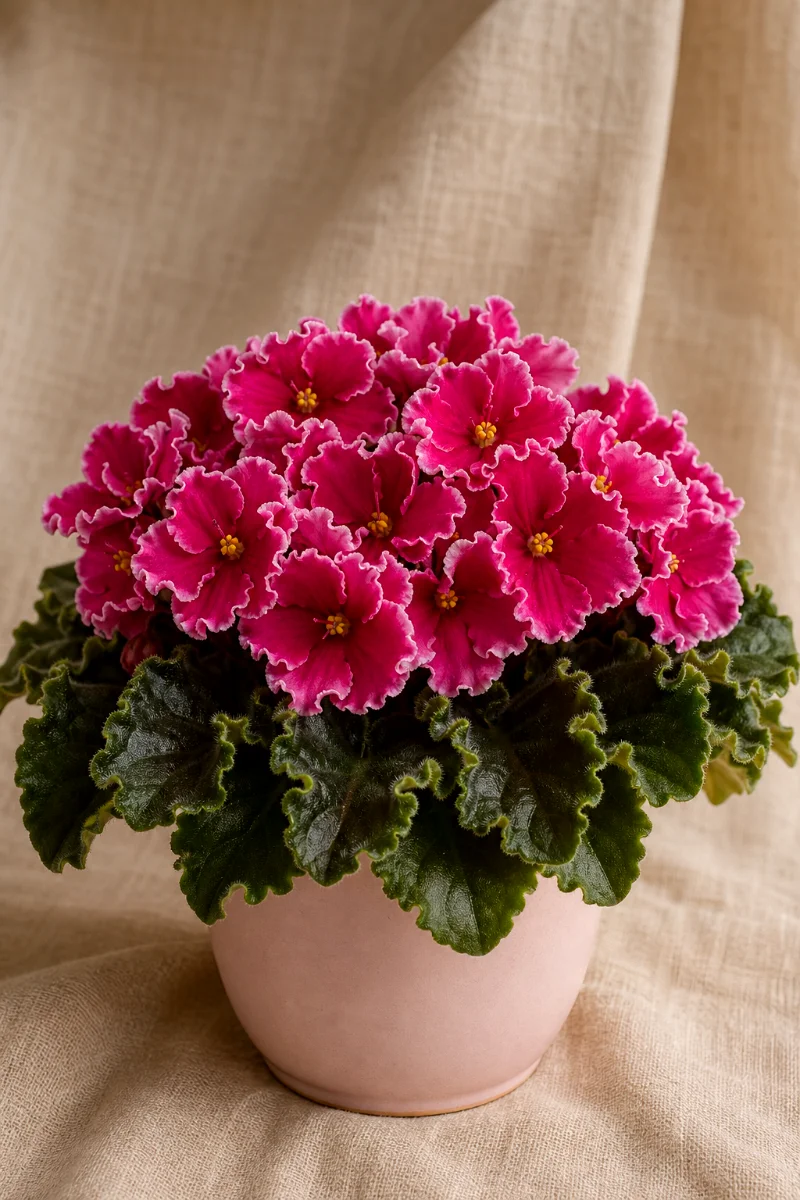
- Foliage Color: Deep green, very wavy edges
- Flower Color: Deep, dark pink with pale ruffled edges
- Flower Type: Single, ruffled
Deep pink, ruffled, with pale frilly edges and yellow stamens peeking through. The leaves have very wavy margins, so even out of bloom it’s got texture.
First Kiss Blush
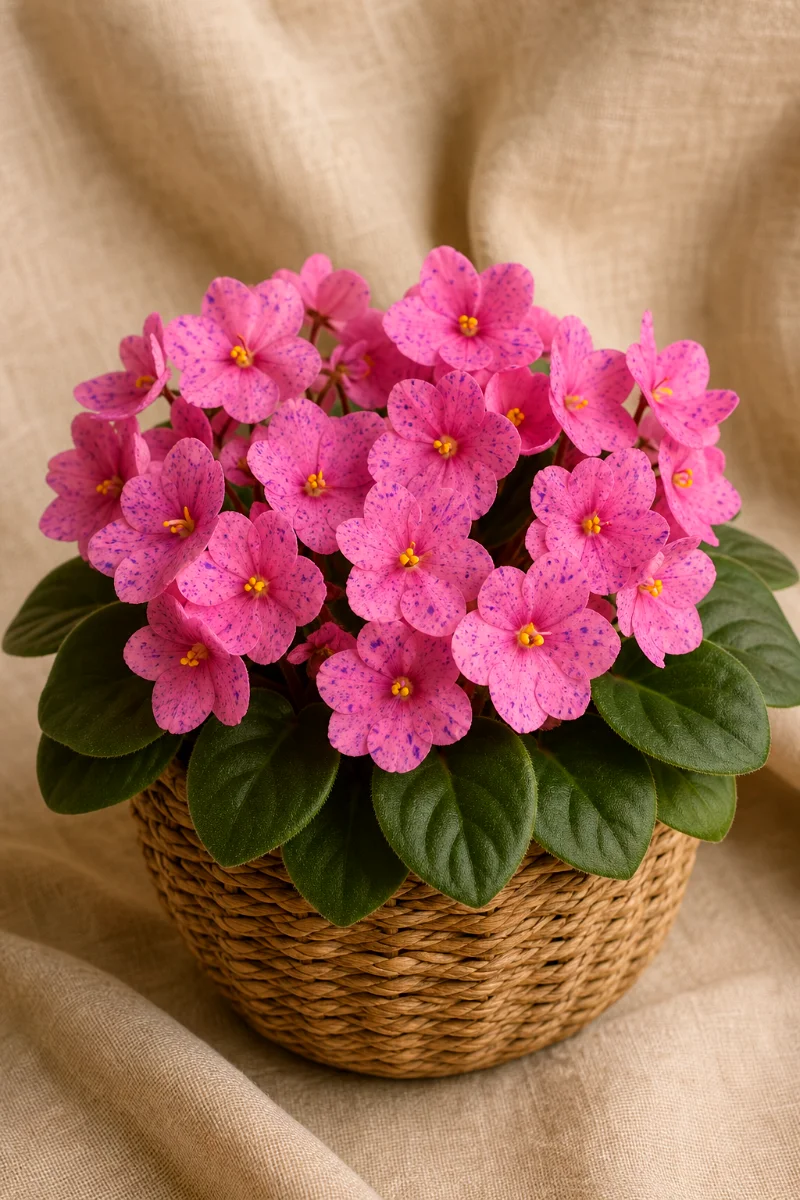
- Foliage Color: Solid green, heart-shaped
- Flower Color: Medium pink with purple fantasy freckles
- Flower Type: Single
Wears freckles. Medium pink petals scattered with little purple fantasy speckles and a sunny yellow center. Cheerful as anything on a gray morning.
Harlequin
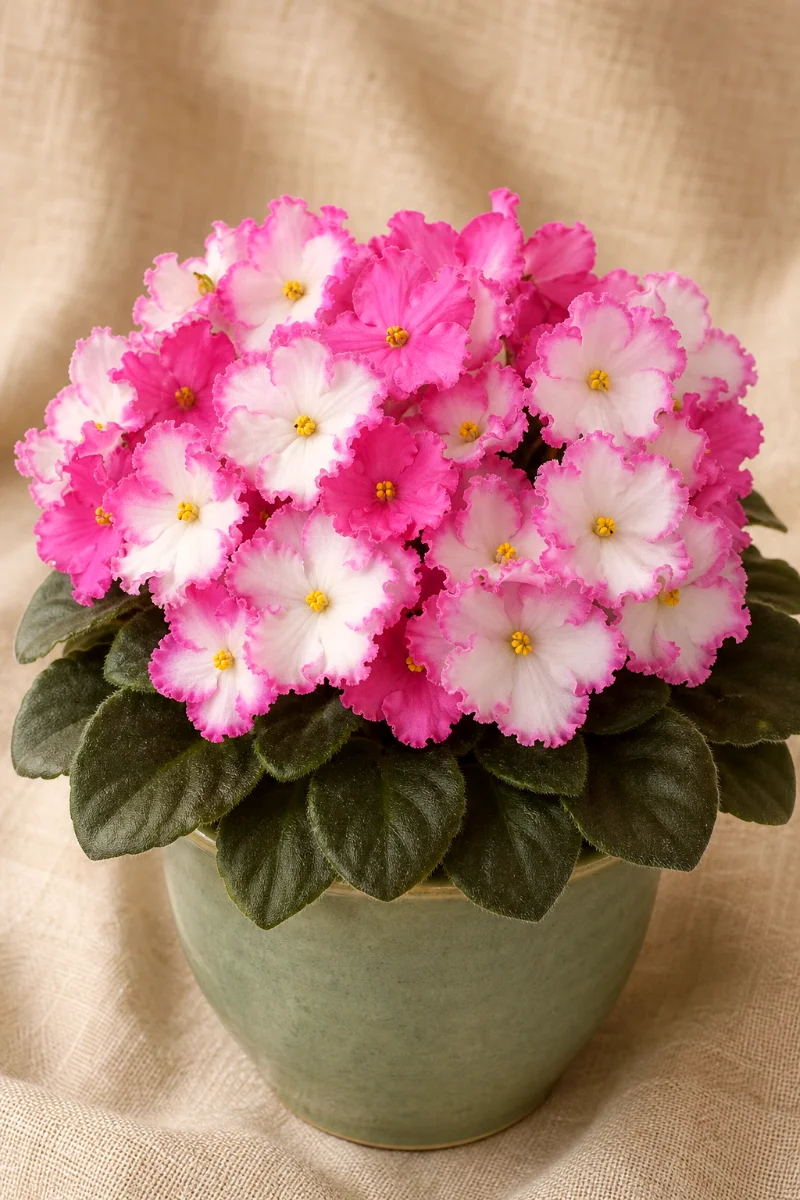
- Foliage Color: Deep green, hairy
- Flower Color: White with dark fuchsia margins (some fully pink)
- Flower Type: Large single, lightly ruffled
Plays with color. Mostly white, lightly ruffled, with dark fuchsia margins, though some flowers go fully washed pink. It’s a touch unpredictable, which I happen to love.
High School Sweetheart
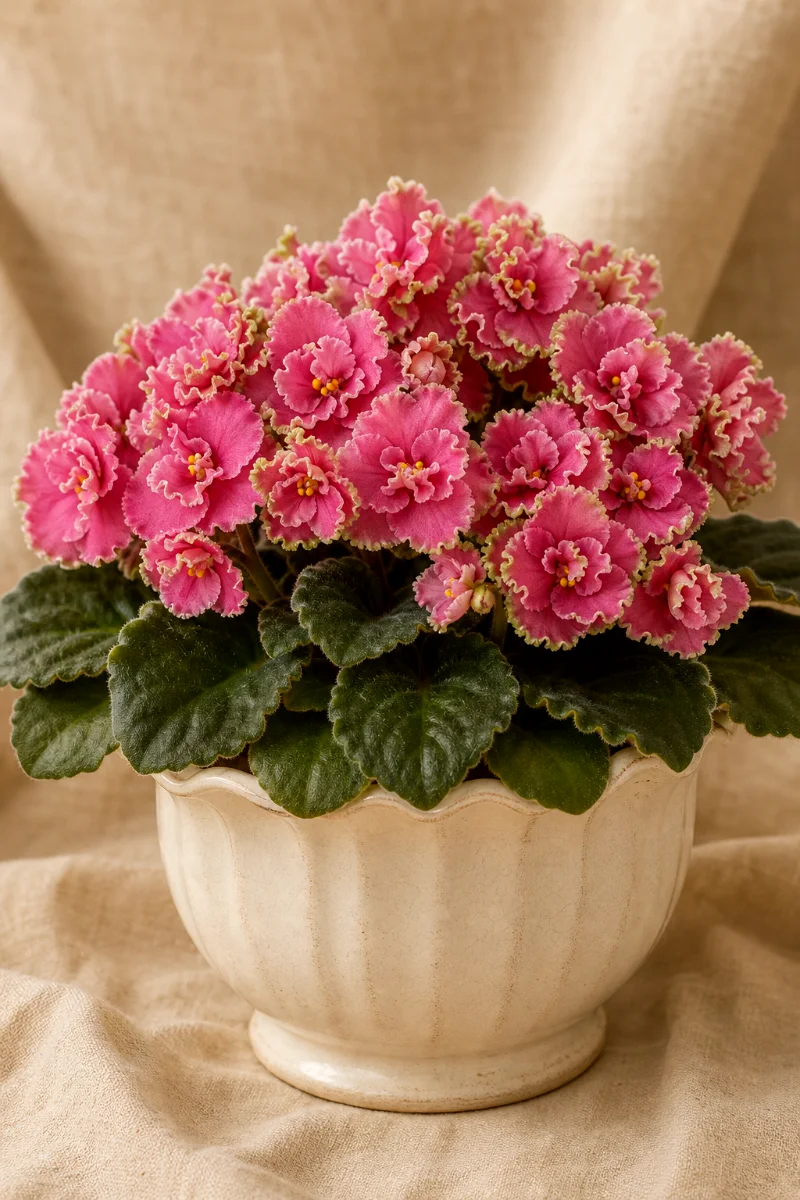
- Foliage Color: Dark green, lightly ruffled
- Flower Color: Dark pink with greenish-white edges
- Flower Type: Semi-double, ruffled
A sweet dark-pink semi-double with greenish-white frilly edges. Tidy grower. Reliable bloomer. Hard to go wrong with it.
Julia
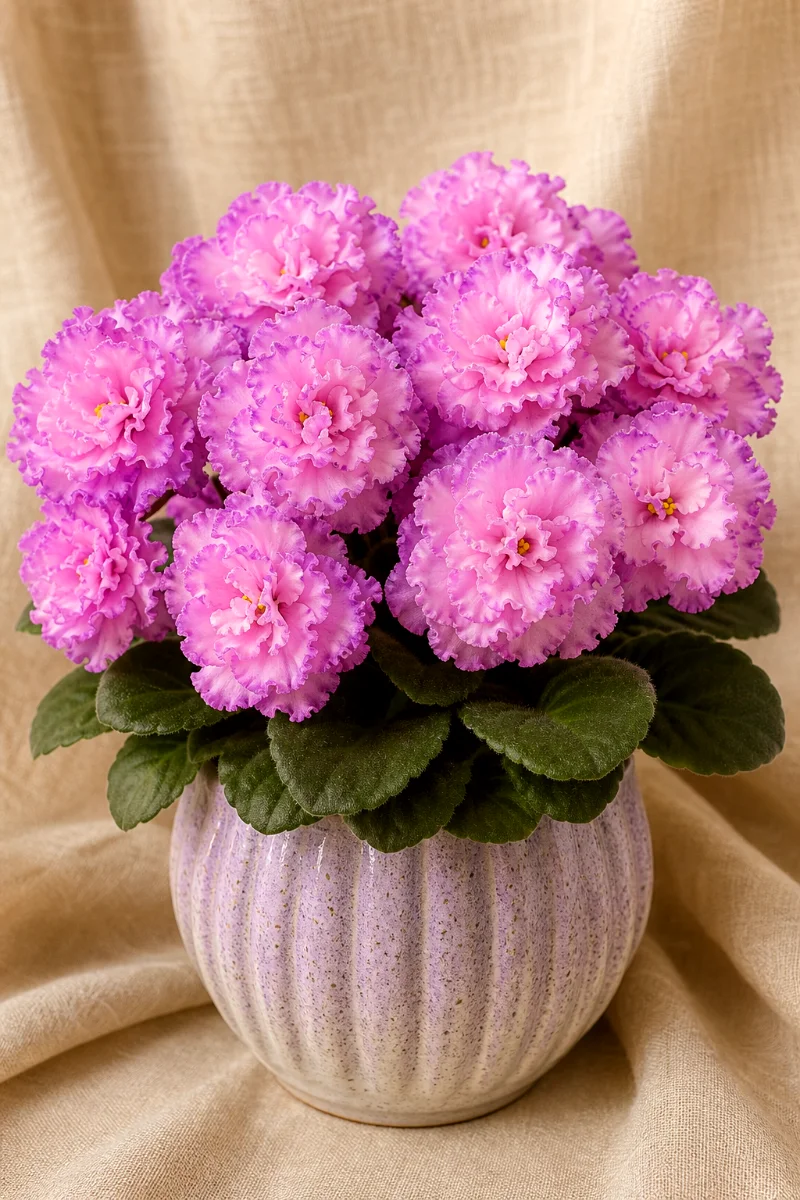
- Foliage Color: Dark green
- Flower Color: Light pink with a light purple border
- Flower Type: Very large double, ruffled
Packs petals like nobody’s business. Very large light-pink doubles with a soft purple border, so full they look almost round. A real centerpiece plant.
Lonestar Twilight
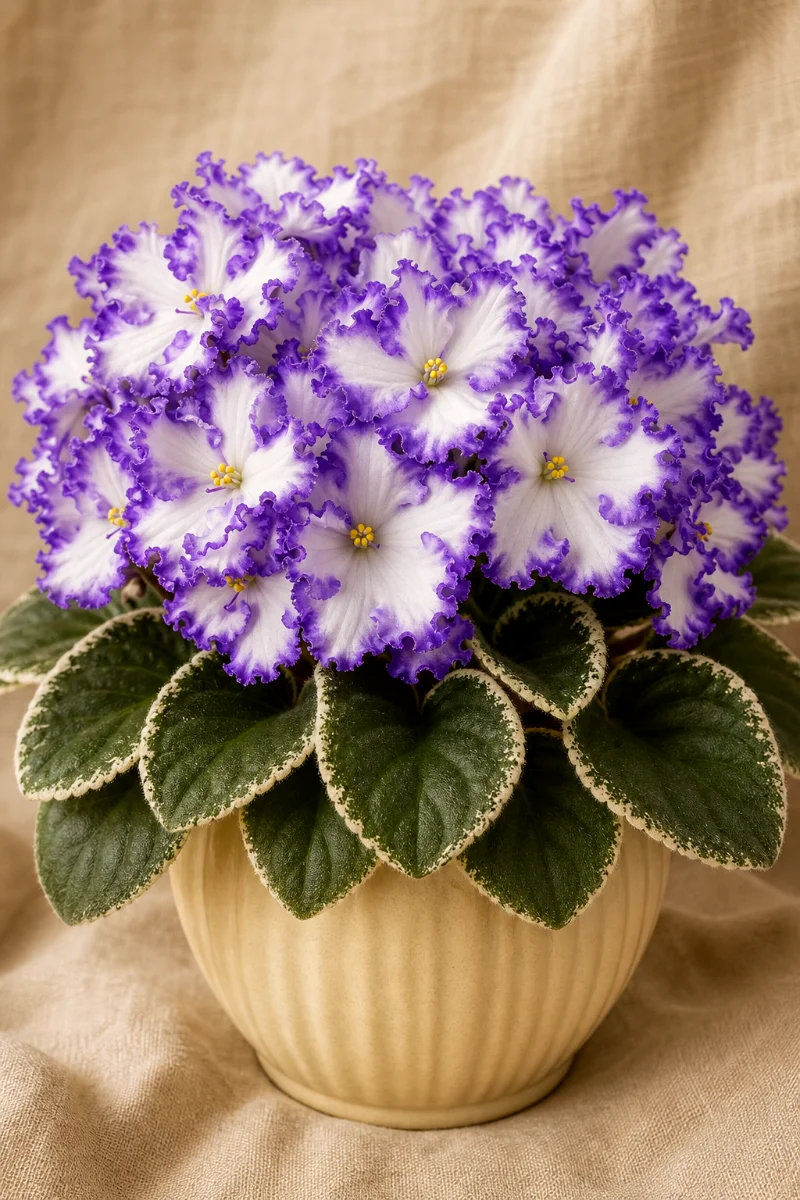
- Foliage Color: Deep green, heart-shaped, hairy, fine white variegated margin
- Flower Color: White with a deep purple border
- Flower Type: Large single, ruffled (corrugated edges)
One of my favorites for drama. White corrugated-edge petals with a bold deep purple band and a finely variegated white leaf margin. Striking from across the room.
Music Box Dancer
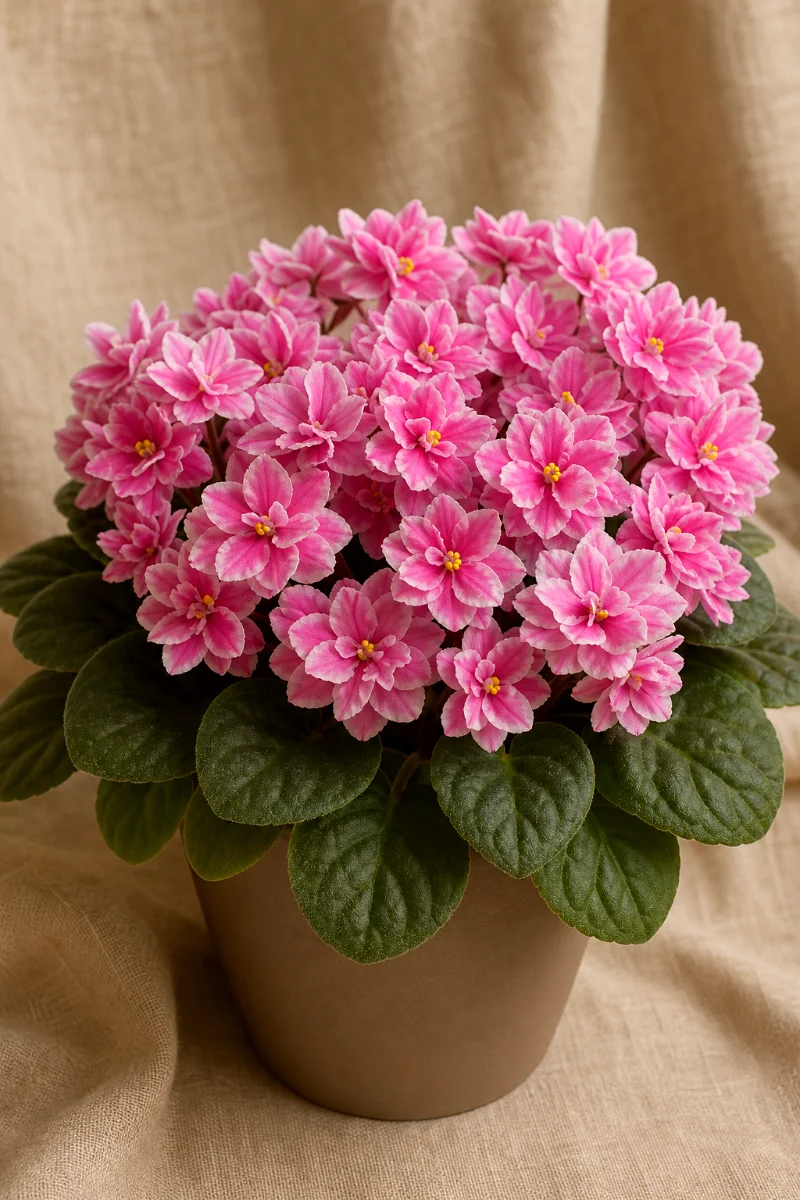
- Foliage Color: Medium green, quilted
- Flower Color: Rose-pink with faded white borders
- Flower Type: Semi-double to double, star-shaped
It dances, alright. Star-shaped rose-pink semi-doubles fading to white at the edges. It can hit a foot wide, so don’t tuck it in a corner.
Ness’ Forever Pink
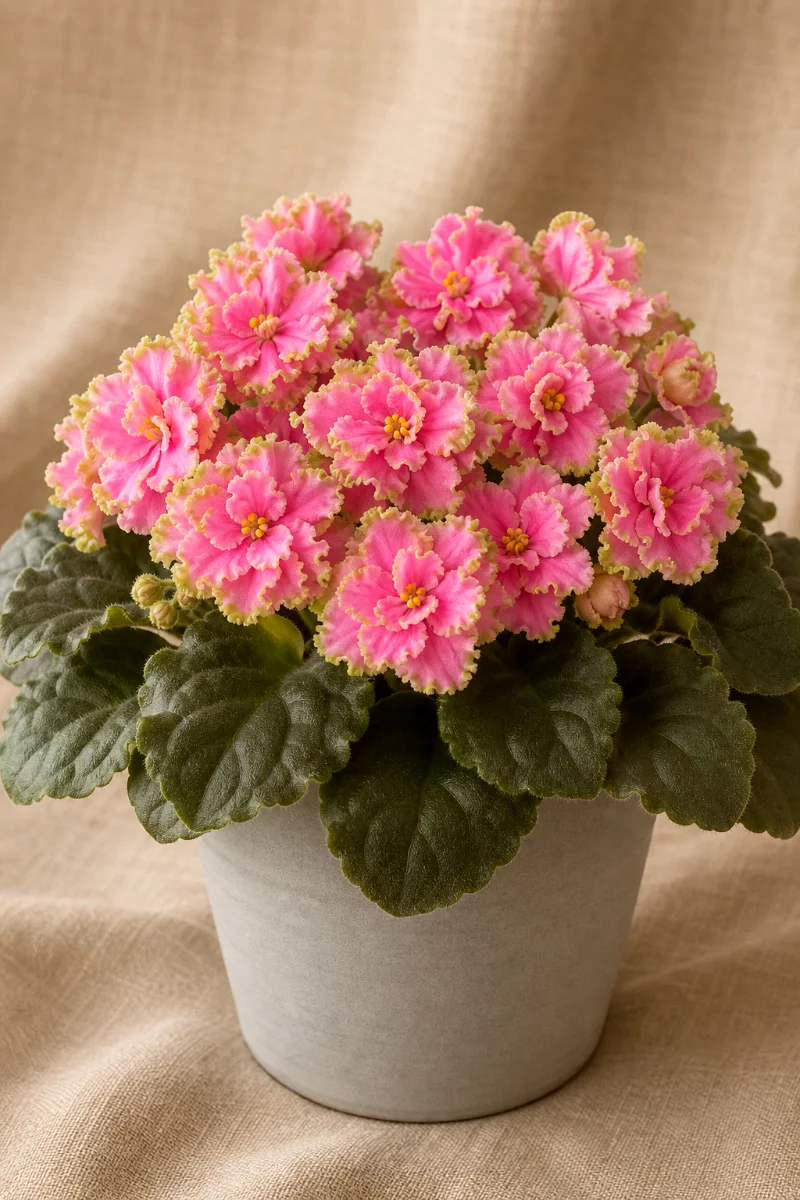
- Foliage Color: Quilted with scalloped edges
- Flower Color: Pink with light green edges
- Flower Type: Semi-double, ruffled, star-shaped
A big, happy pink star with light green edges. The leaves are quilted with slightly scalloped edges. Plan for it to get large.
Nightfall
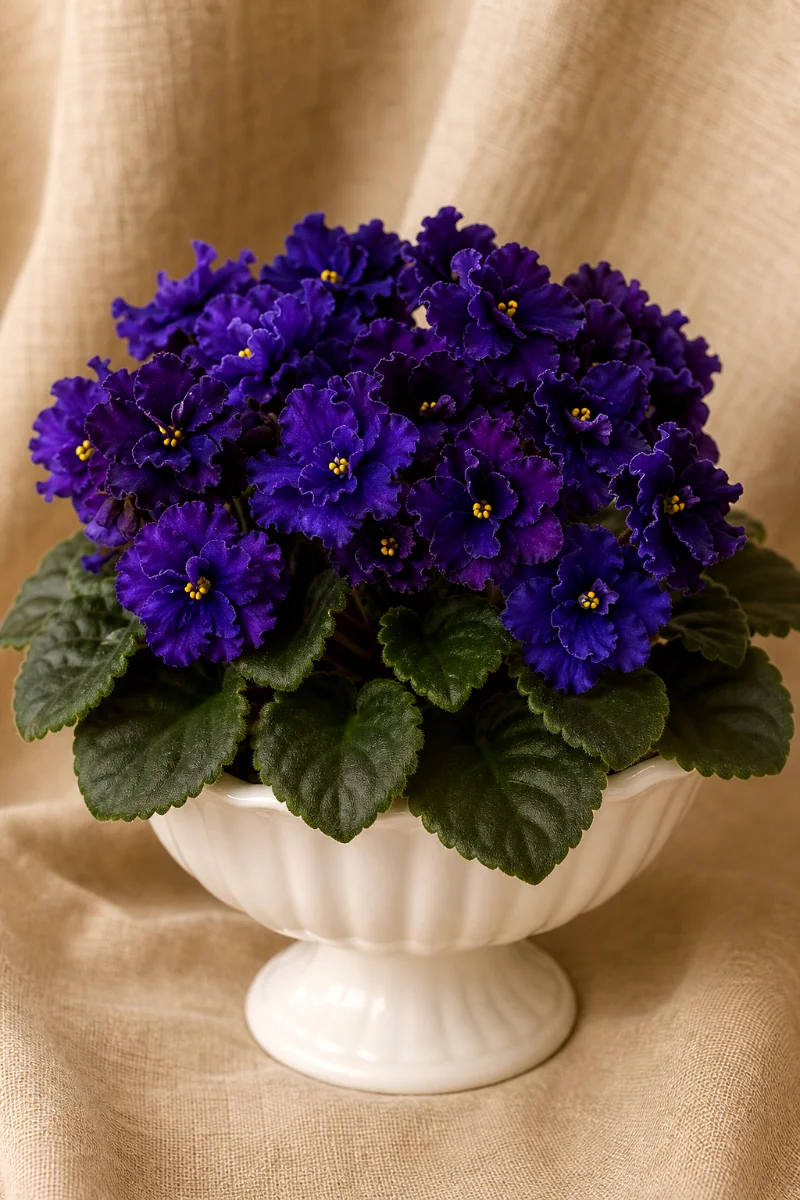
- Foliage Color: Round, dark green, slightly serrated
- Flower Color: Dark blue to deep purple
- Flower Type: Semi-double to double, frilled
Earns its name. Frilled blooms in dark blue to deep purple with little yellow pops. Velvety and rich, and the round toothed leaves give it a tidy shape.
Pow Wow
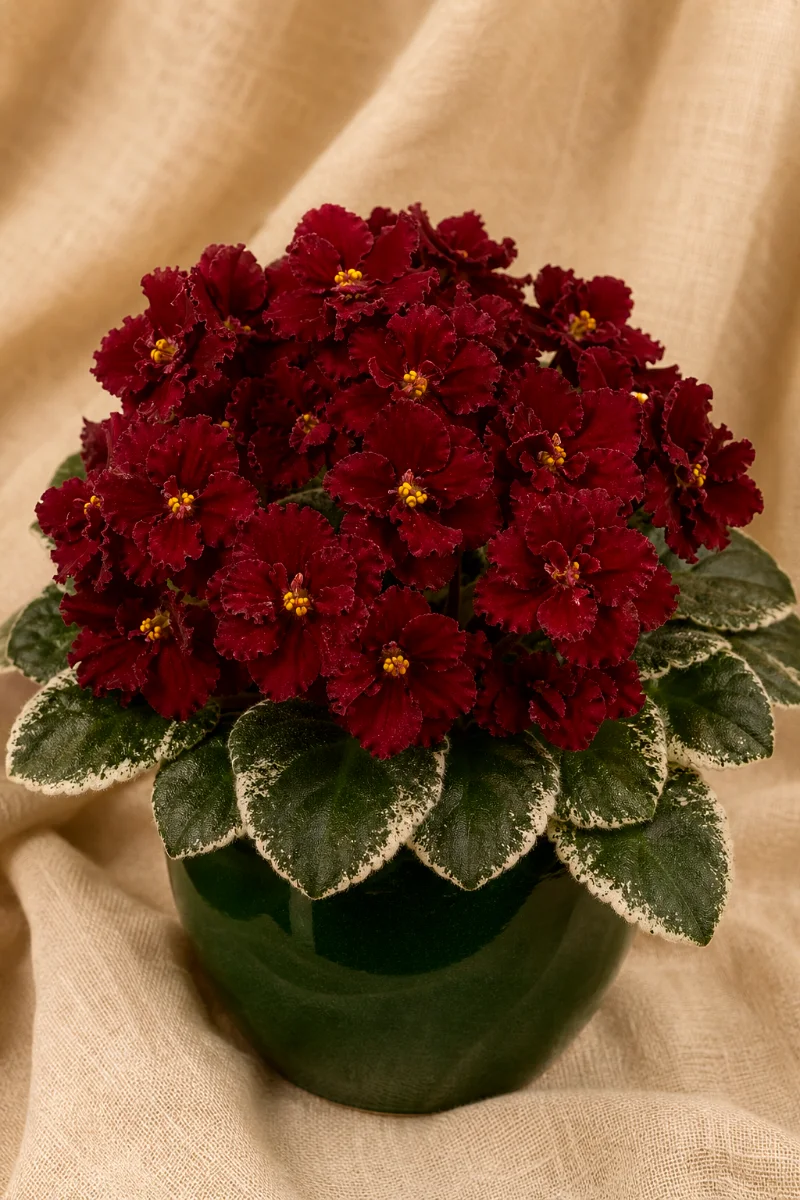
- Foliage Color: Deep green, variegated with heavy white speckling
- Flower Color: Dark maroon, burgundy red
- Flower Type: Semi-double, ruffled
The maroon firecracker. Big ruffled burgundy-red semi-doubles over heavily white-speckled variegated leaves. Some leaves come out nearly all white, which honestly steals half the show.
Quilting Bee
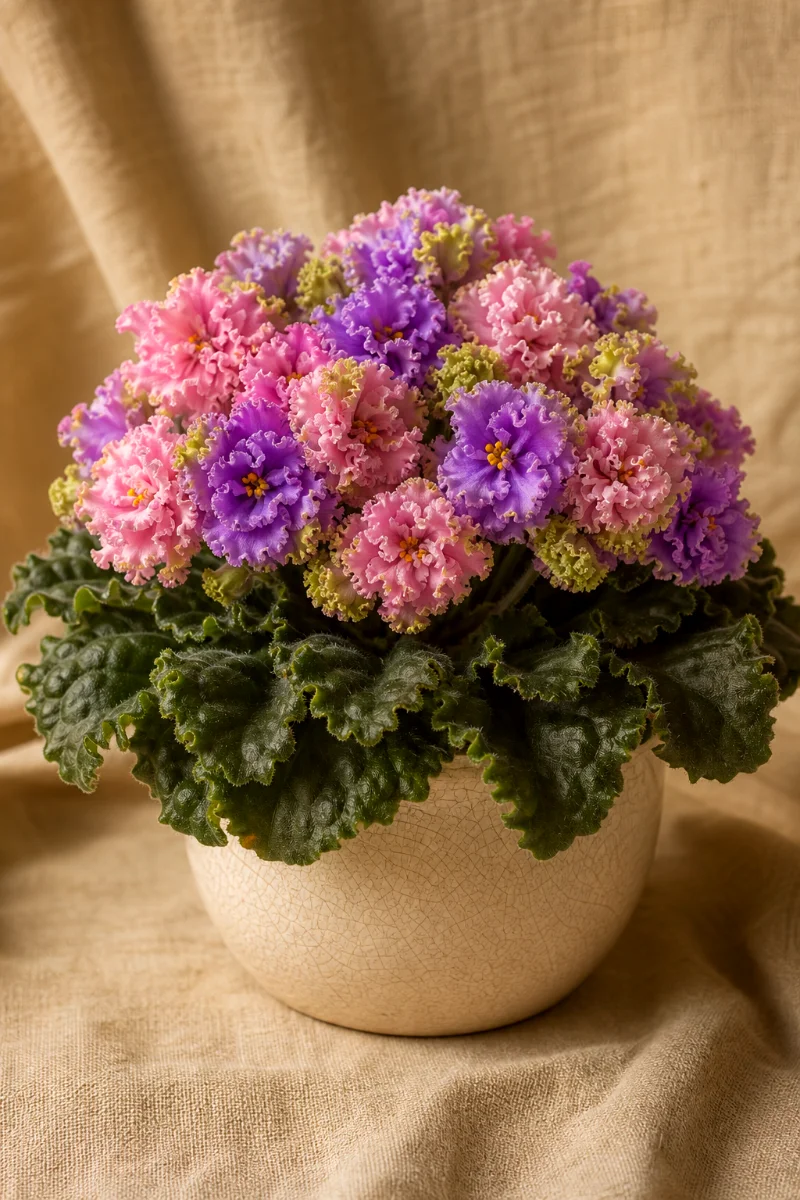
- Foliage Color: Dark green, quilted, ruffled
- Flower Color: Antique pink and lilac-violet with hints of pale green
- Flower Type: Double, frilled, heavily ruffled
Texture overload, in the best way. Frilled, heavily ruffled doubles in antique pink and violet with hints of pale green, sitting on quilted, ruffled leaves. A plant for people who love fuss.
Radiant Glow
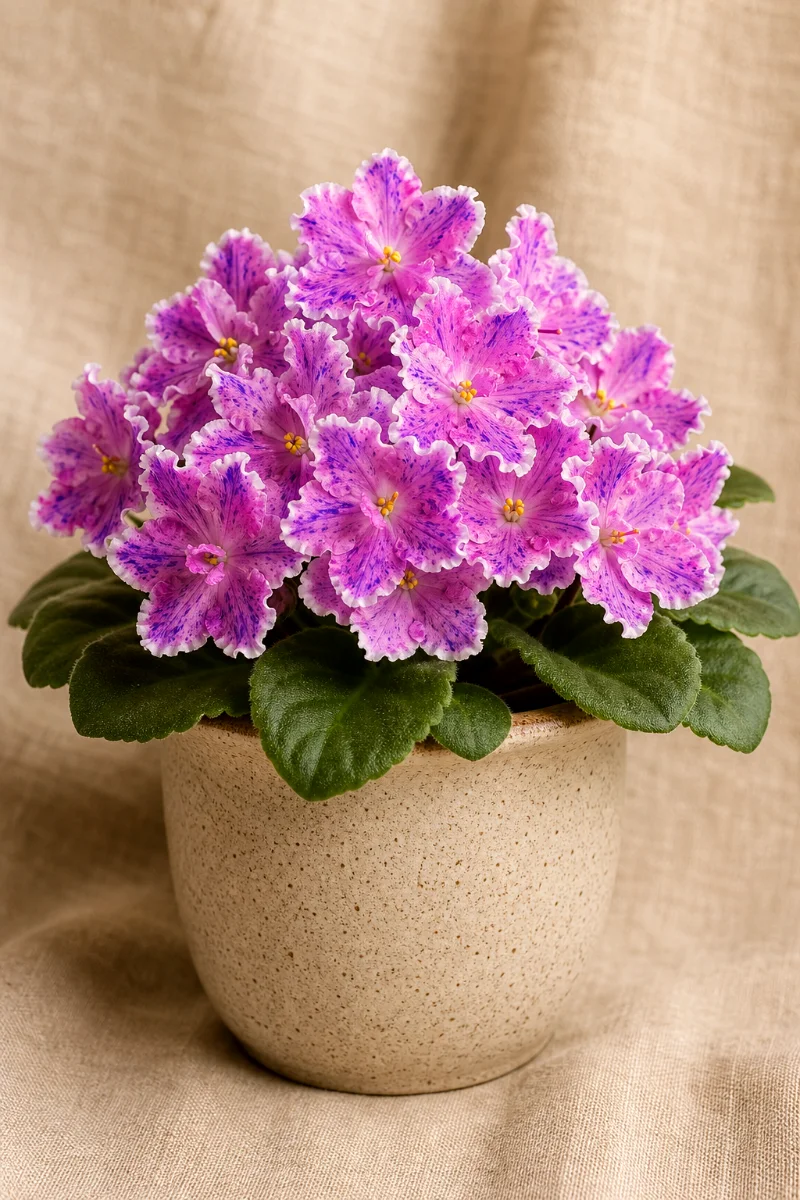
- Foliage Color: Solid green
- Flower Color: Pink to lilac with white edges and dark purple spots
- Flower Type: Star-shaped, slightly ruffled
Shifts pink to lilac, with white edges and little dark purple spots. Star-shaped and softly ruffled. Solid green leaves keep it grounded.
Silver Romance
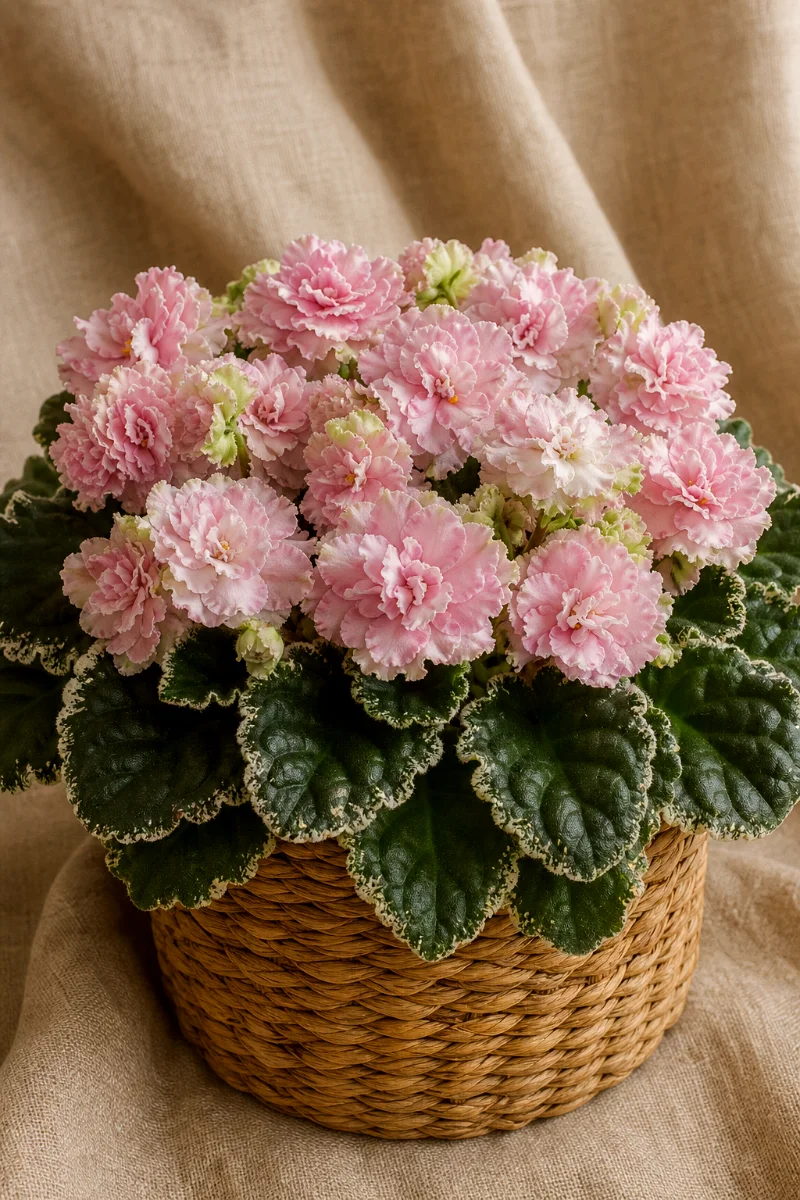
- Foliage Color: Large, quilted, slightly ruffled, deep green with speckled white border
- Flower Color: Soft dusky pink with white and pale green highlights
- Flower Type: Large, intensely double
The romantic of the bunch. Large, intensely double dusky pink flowers with white and pale green highlights. Big quilted variegated leaves. It needs space, but it earns it.
Summer Twilight
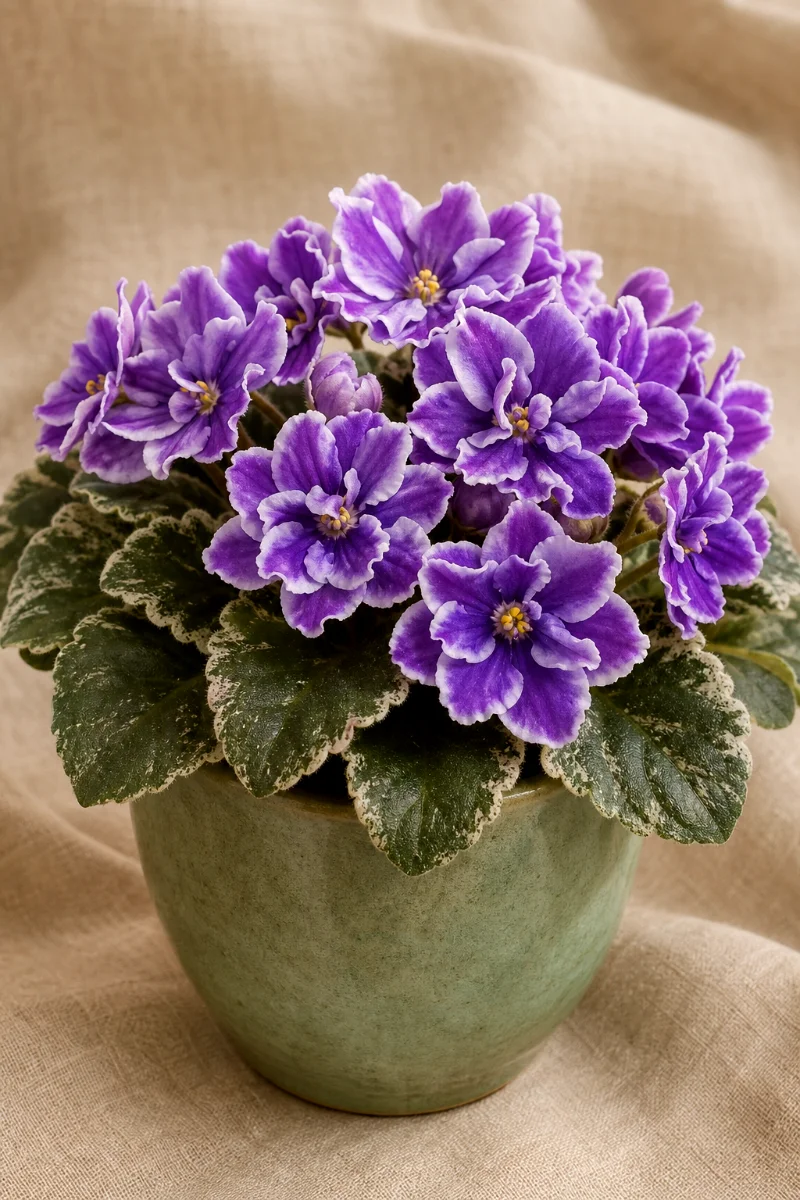
- Foliage Color: Large, lightly ruffled, rich green with greenish-white speckles
- Flower Color: Purple with bold white edges
- Flower Type: Large semi-double, slightly ruffled
Purple with bold white edges and a light ruffle. The variegated, greenish-white-speckled leaves are nearly as pretty as the blooms.
Zephyr
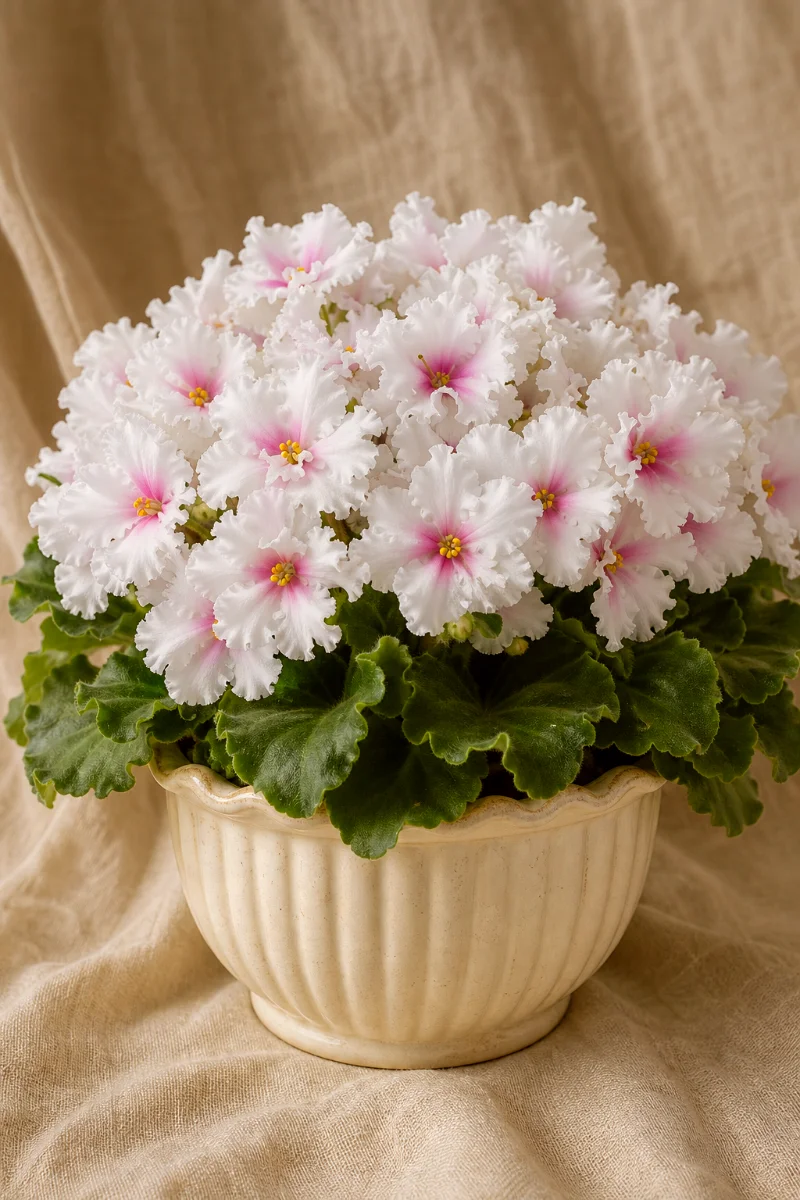
- Foliage Color: Medium green, slightly ruffled
- Flower Color: White with a soft pink blush at the center
- Flower Type: Large, star-shaped, highly ruffled
Breezy and light. Big star-shaped flowers, heavily ruffled, mostly white with a soft pink blush in the center. A gentle one for a calmer color scheme.
Semi-Miniatures and Miniatures
Small footprint, full-size personality. These are the ones I push on anyone with a tiny apartment.
Cherry Princess
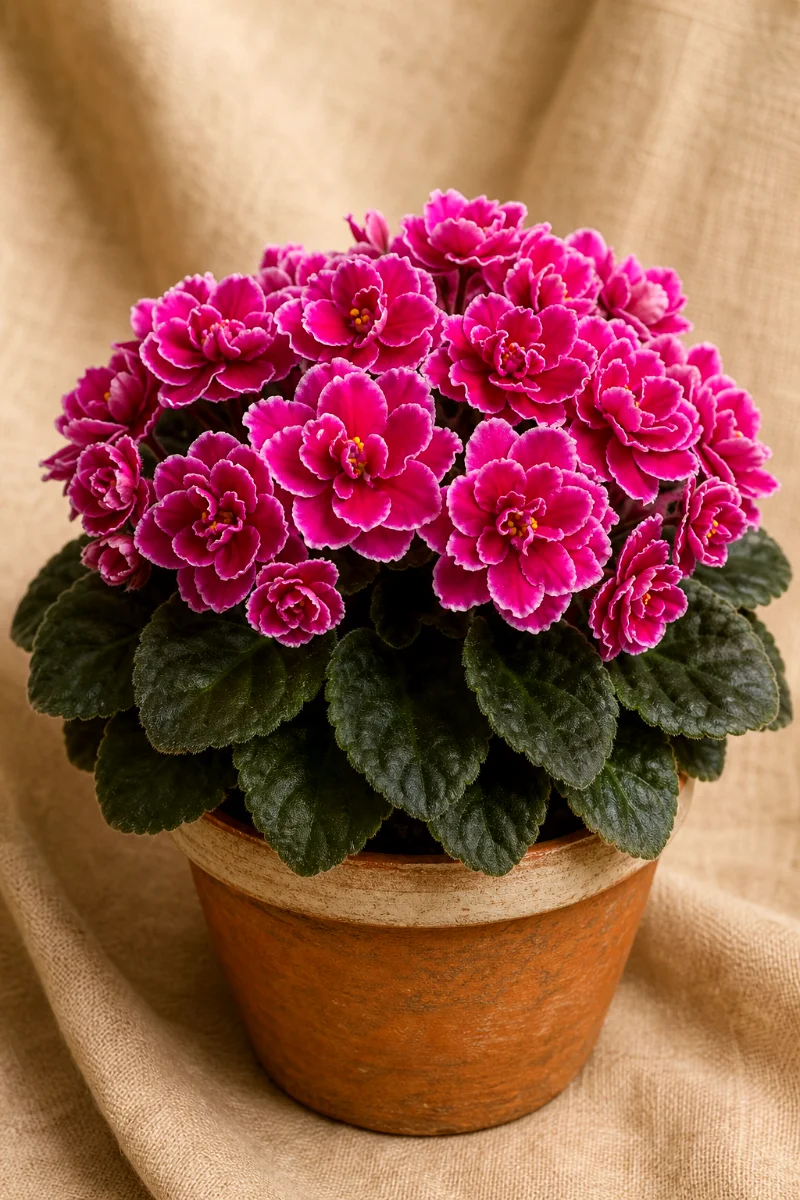
- Foliage Color: Deep green, quilted, slightly scalloped
- Flower Color: Deep fuchsia with white edging (or white with fuchsia stripes)
- Flower Type: Semi-double to double
A stunner and a bit of a project. Deep fuchsia with white edging, or white with broad fuchsia stripes down each petal. Heads up: the striped ones are chimeras, so they won’t come true from a leaf cutting. You have to root a sucker to keep the pattern.
Irish Flirt
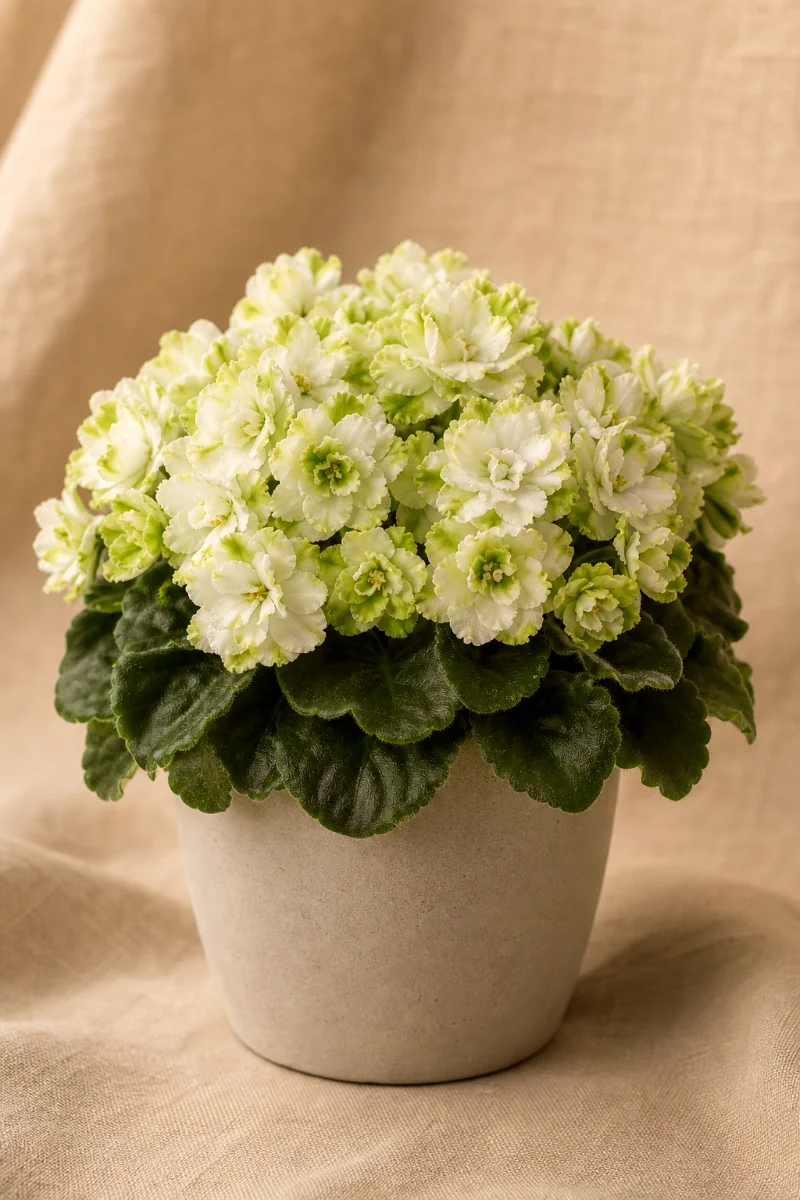
- Foliage Color: Compact, solid dark green, heart-shaped, lightly ruffled
- Flower Color: White bordering on pale green, mixed white-and-green
- Flower Type: Large double to semi-double, ruffled
The green one everybody asks about. Showy white doubles edged and patterned in green, on compact dark leaves. Green flowers freak people out at first. They shouldn’t. It’s charming.
Little Intermezzo
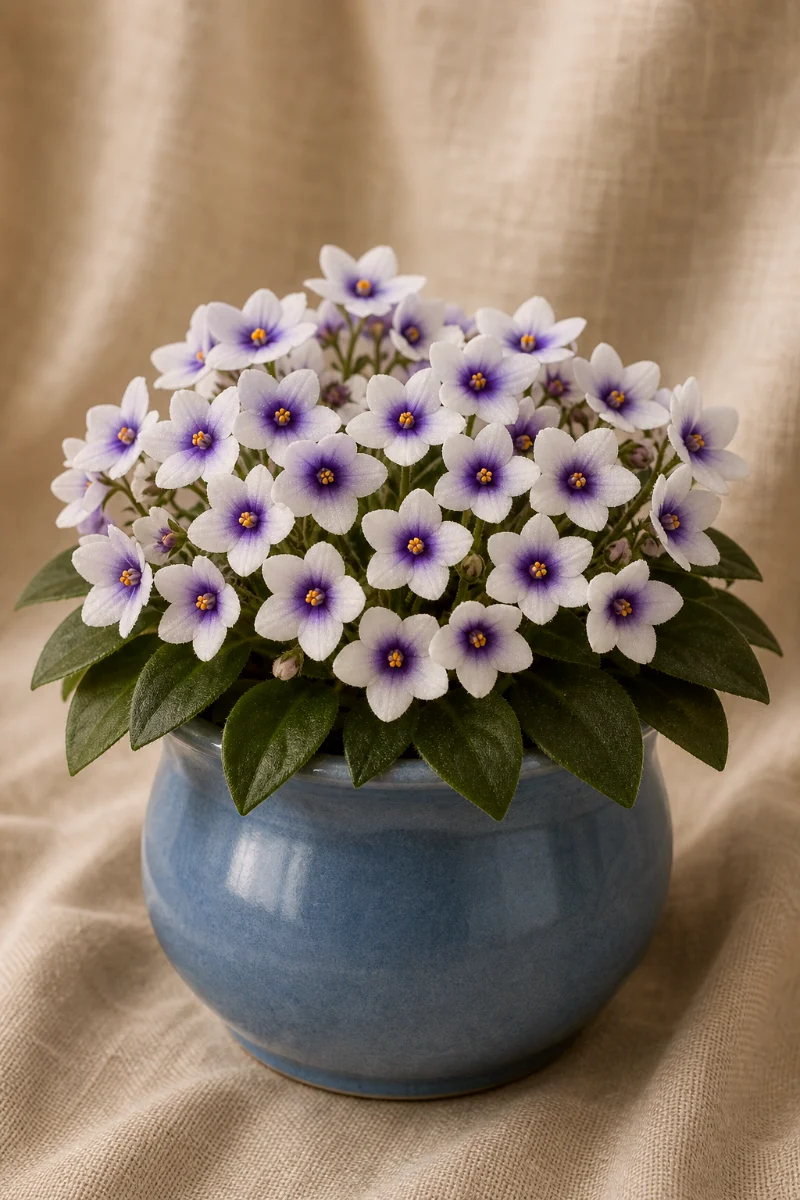
- Foliage Color: Dark green, plain, pointed
- Flower Color: Frosty white with a dark purple-blue eye
- Flower Type: Single, star-shaped
A newer mini from Optimara, out in 2020. Frosty white star petals with a dark purple-blue eye. Stays around 2 to 4 inches. A jewel box of a plant.
Little Maya
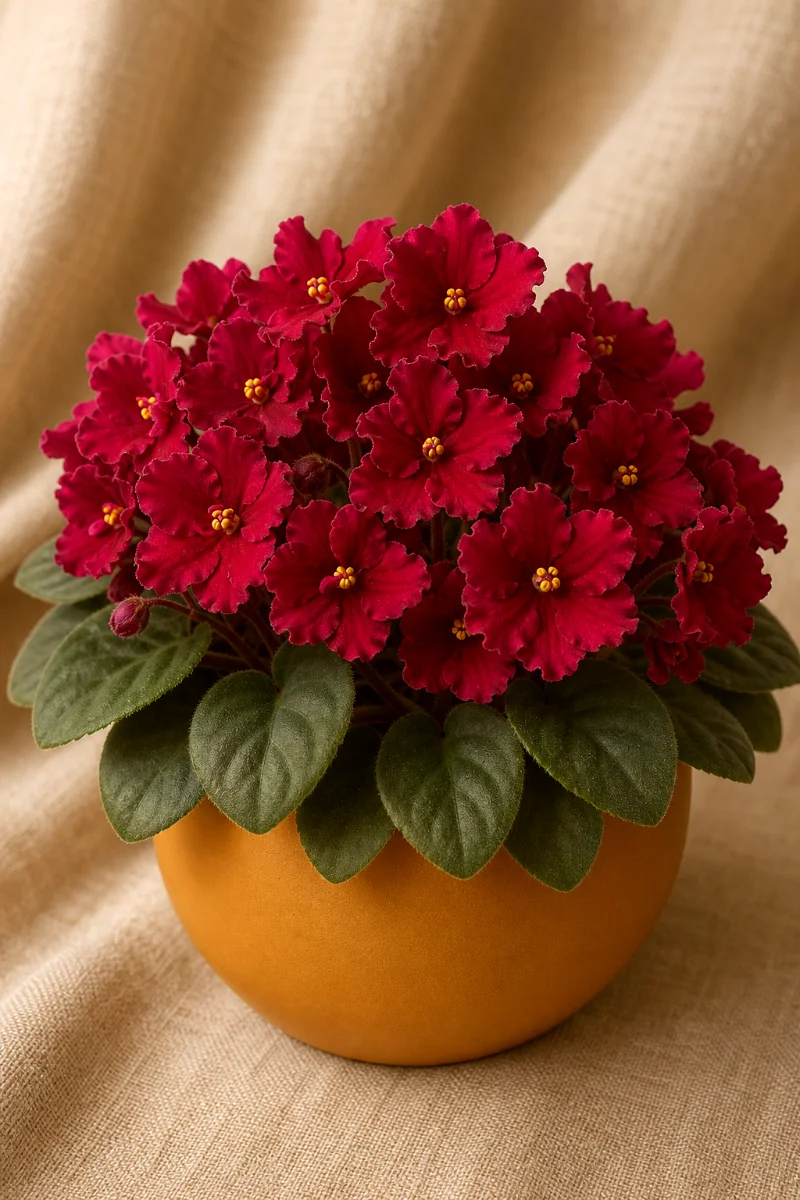
- Foliage Color: Solid green, heart-shaped
- Flower Color: Dark reddish-pink, almost red
- Flower Type: Single, slightly ruffled
Dark reddish-pink, almost red, with the slightest ruffle and yellow stamens. It stays small and tidy. Great for a grow-light shelf.
Little Ruby
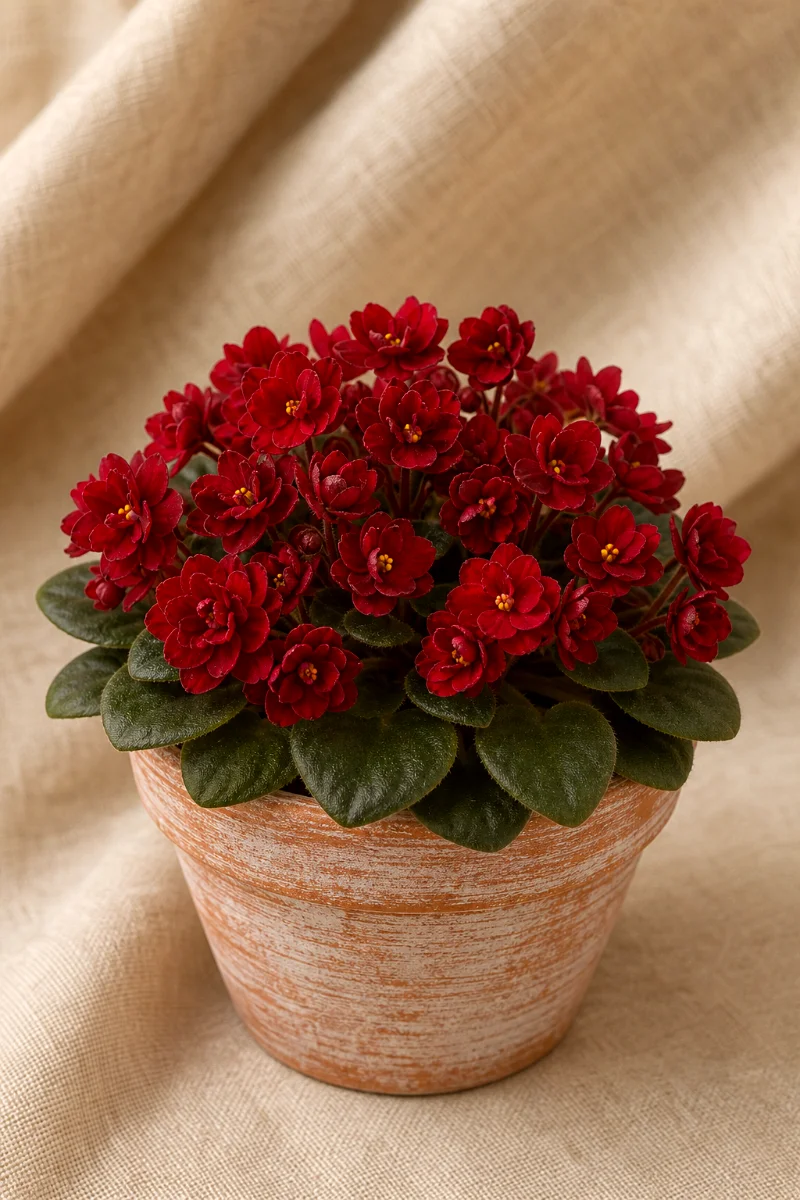


- Foliage Color: Deep green, heart-shaped
- Flower Color: De